
There is something special about a pilgrimage route that doesn’t lead to Santiago de Compostela, but starts there. While thousands of pilgrims set down their backpacks at the cathedral, there are people who keep walking. Westward. Toward the coast. Toward the place where the Romans believed the earth came to an end.
The Camino Finisterre is the only pilgrimage route that begins in Santiago. And for many pilgrims who walk it, that is precisely why it is the most beautiful one.
In this article I explain what the Camino Finisterre involves, how to prepare for it, and whether you should include Muxía. From personal experience: I walked this route and guide it with small groups.
What Is the Camino Finisterre?
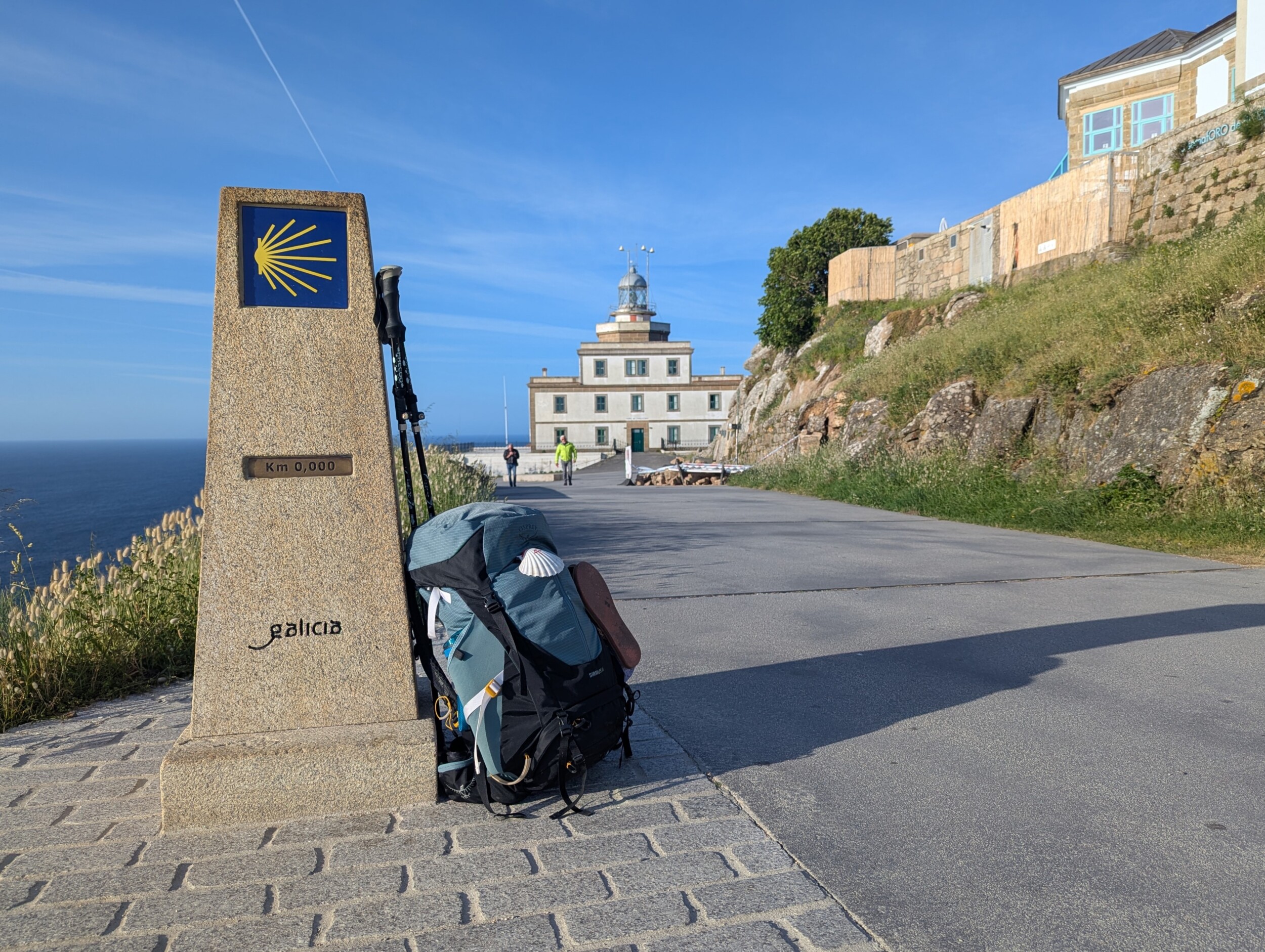
The Camino Finisterre is a pilgrimage route of approximately 90 kilometres, from Santiago de Compostela to Cabo Finisterre on the Atlantic coast of Galicia. The name comes from Latin: finis terrae, the end of the earth. In the Middle Ages, pilgrims believed this was literally the edge of the world.
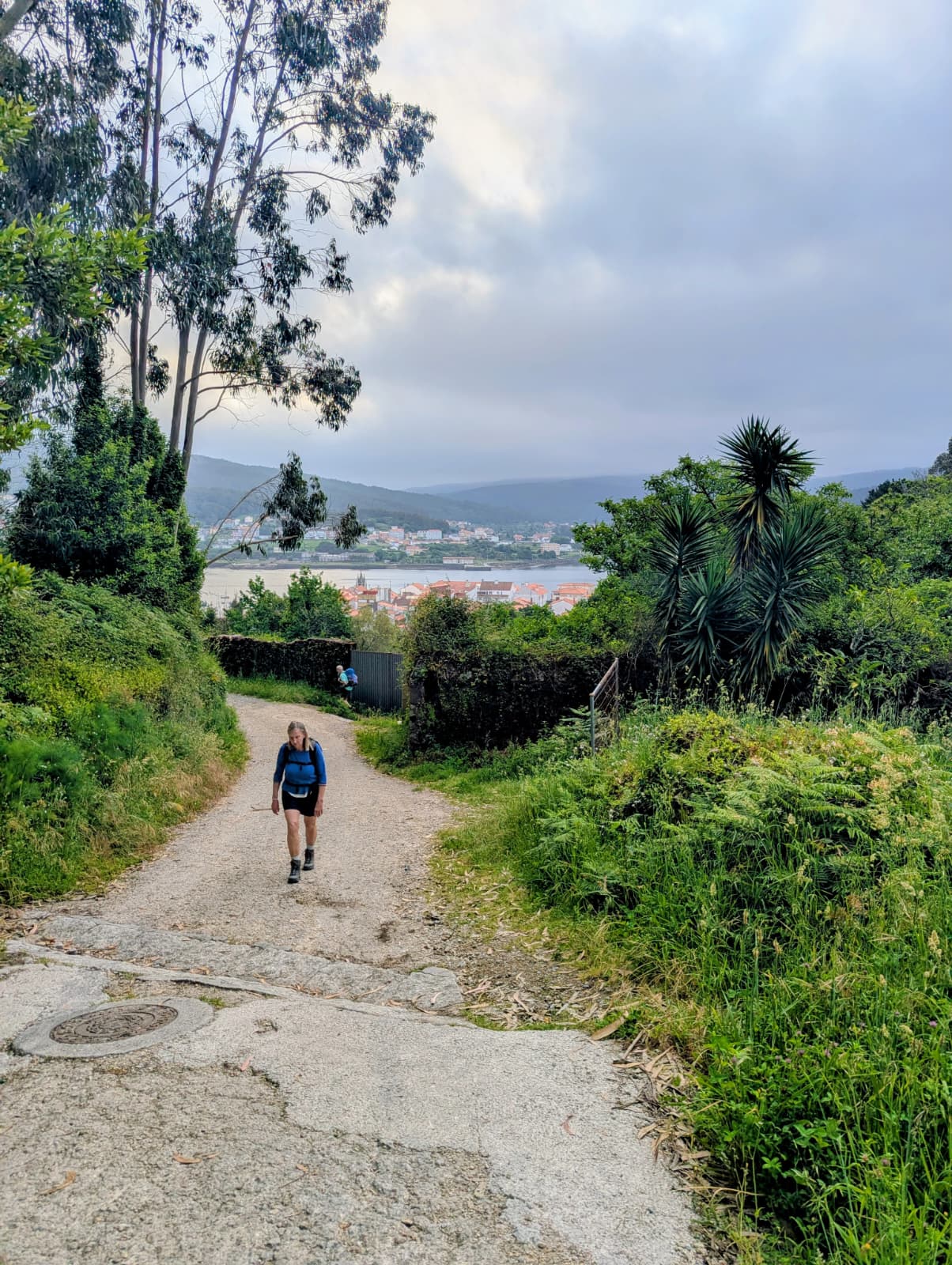
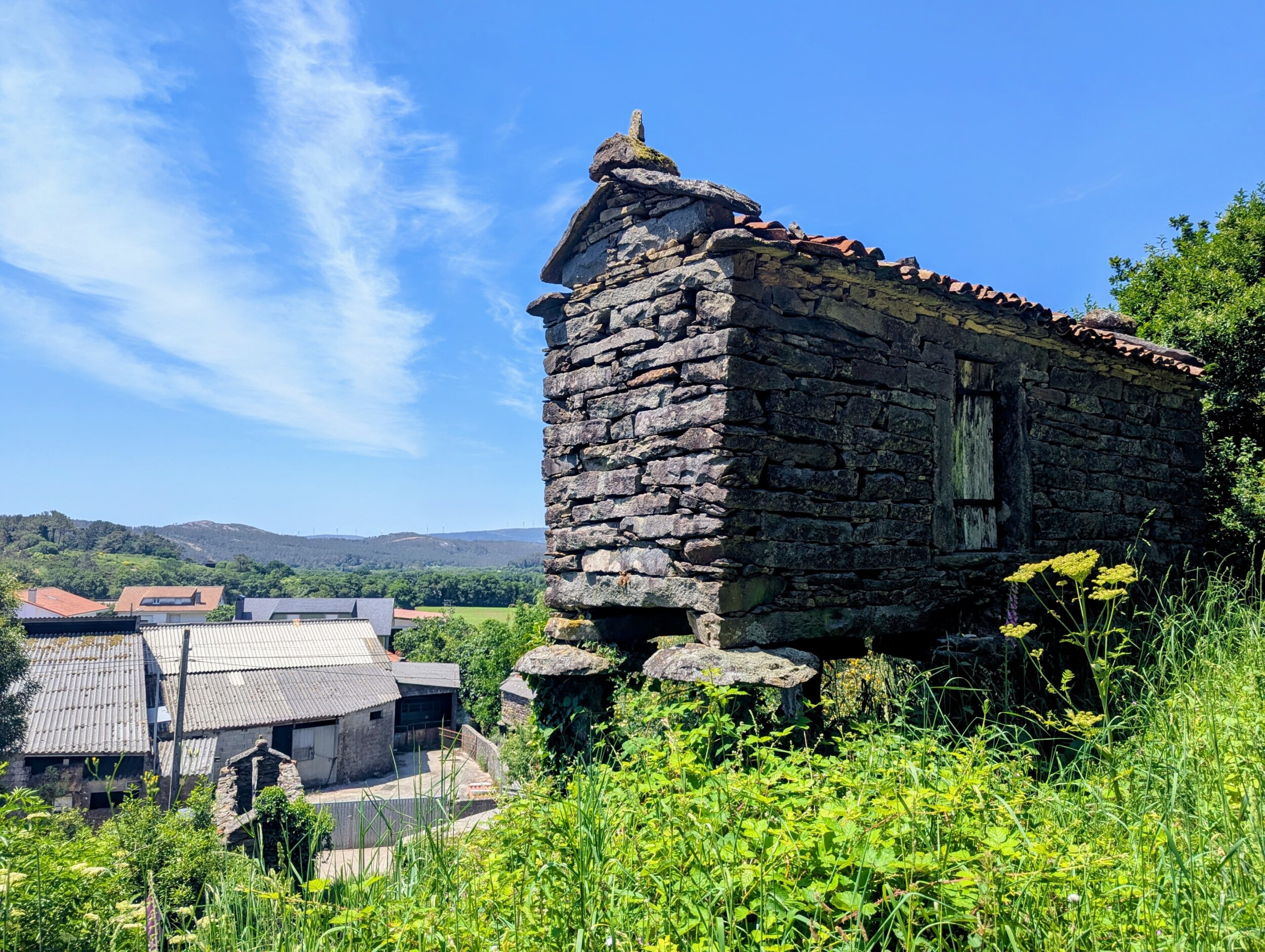
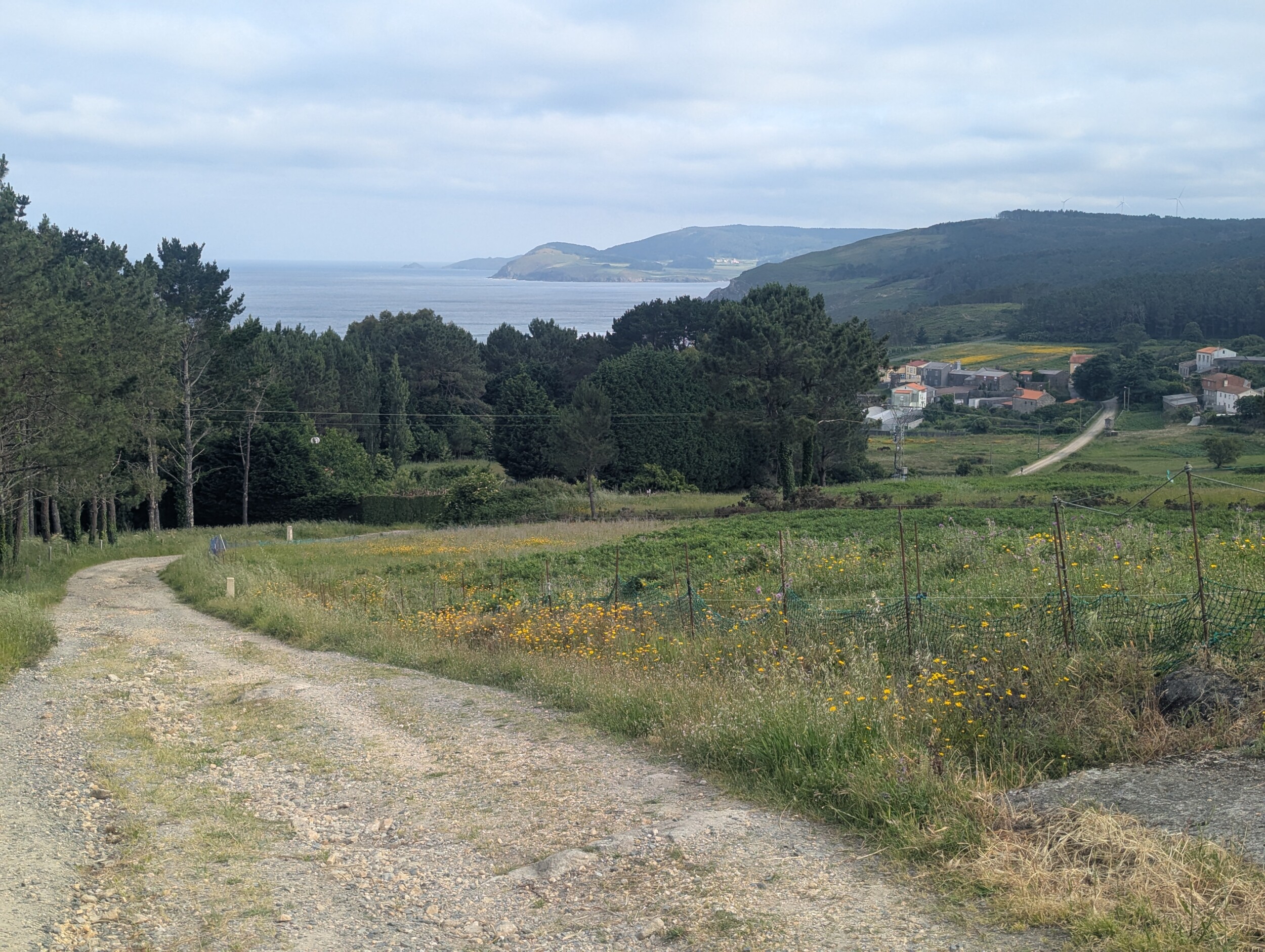
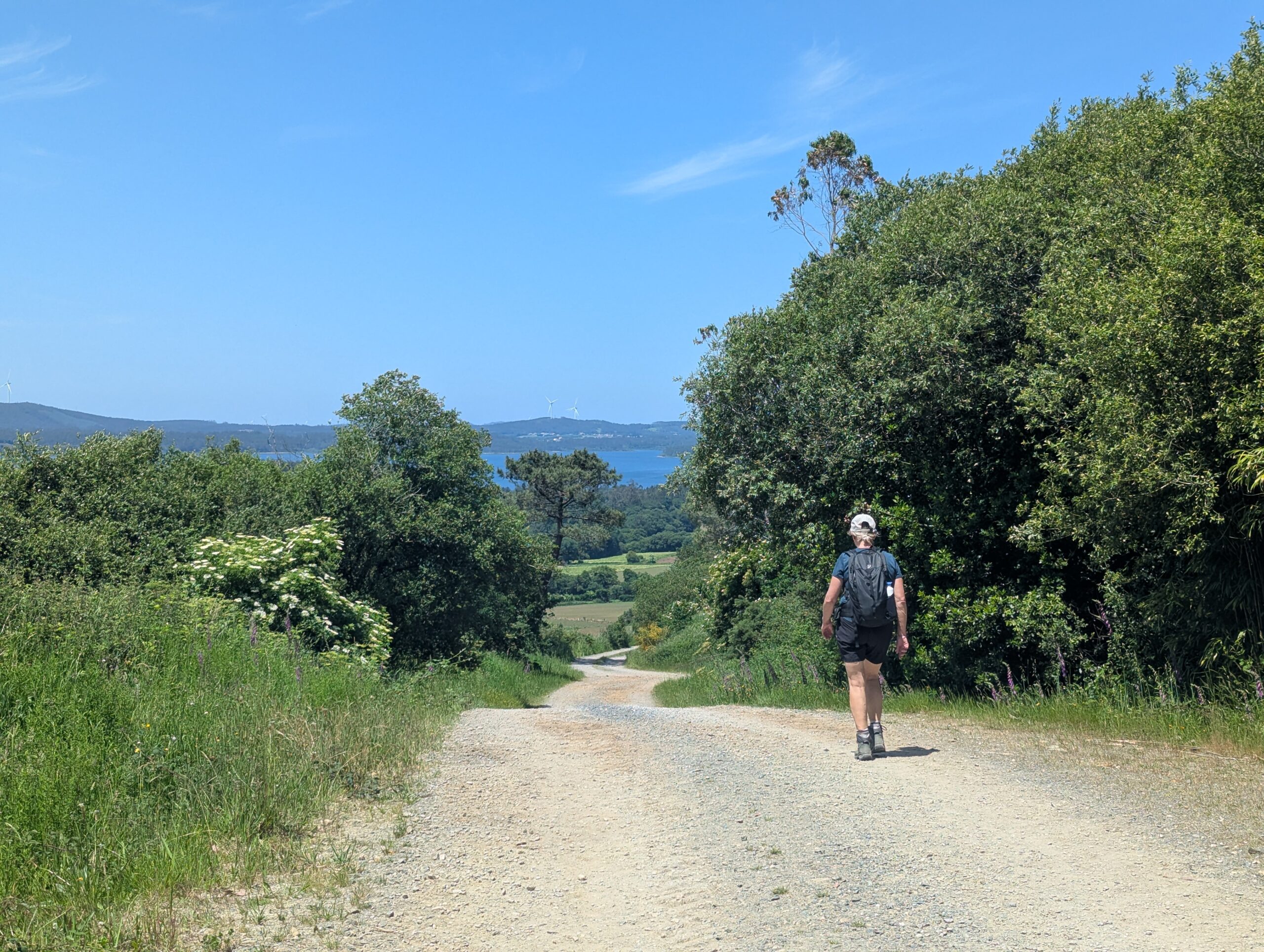
The route passes through the green interior of Galicia, along small villages, eucalyptus forests and hills, until the ocean suddenly appears on the horizon. That transition, from quiet inland paths to the rugged Atlantic coast, is what makes the route so special.
You do not receive a Compostela here, but your own certificate: the Fisterrana. And if you also visit Muxía, you receive the Muxiana.
Why the Camino Finisterre Feels Different from the Francés
On the Camino Francés you walk with hundreds, sometimes thousands of pilgrims at a time. The albergues are full, the stages are well-known, the route is streamlined. That has its charm, but also its drawbacks.
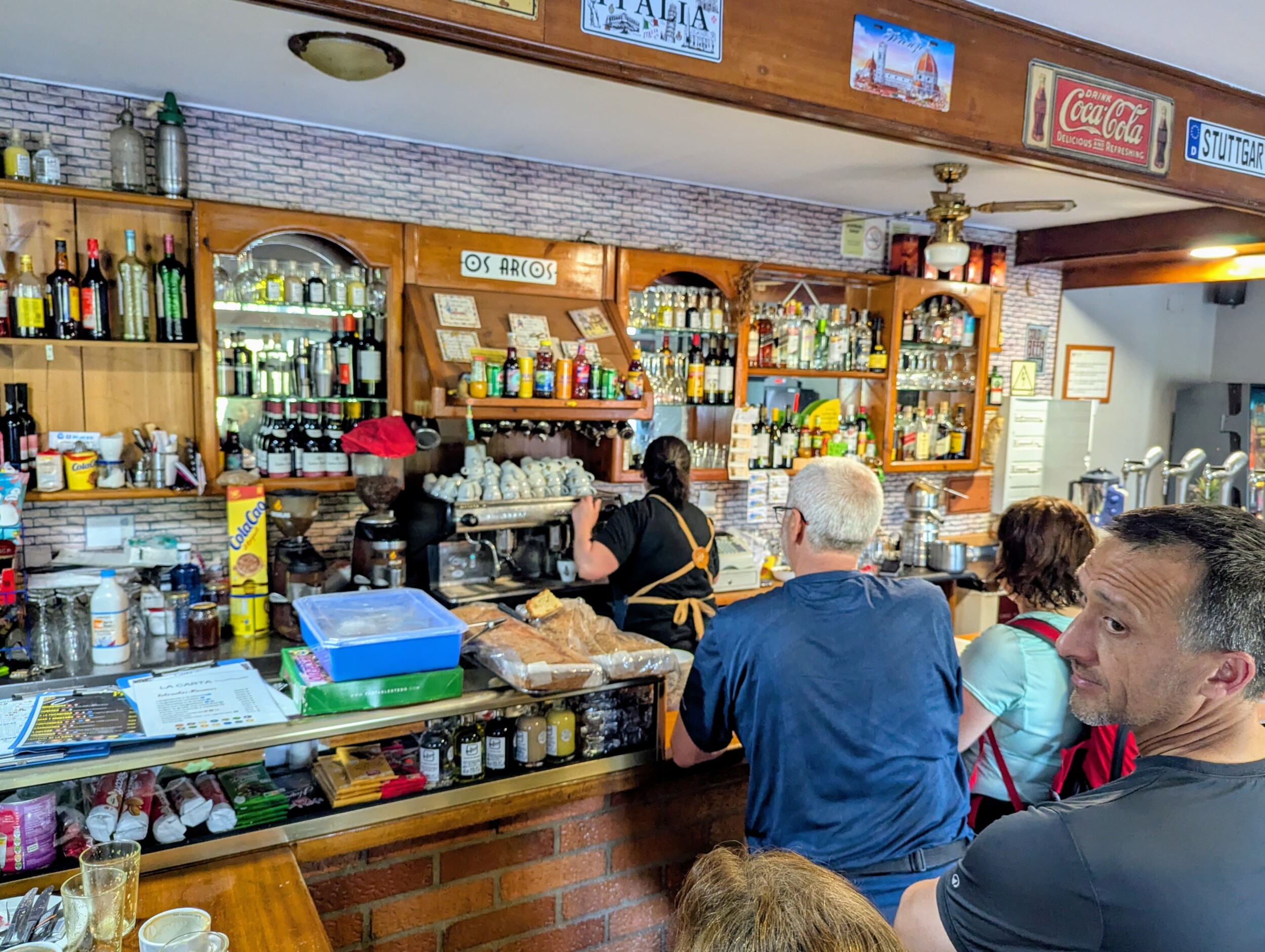
The Camino Finisterre is quieter. Calmer. You are not moving with the current; you are walking away from Santiago, while everyone around you is arriving. That creates a very different feeling. No finish line pulling you forward. More of a gentle wind-down, a slow fade. The infrastructure is more limited. Fewer albergues, fewer cafés, fewer people. That requires a little more planning, but also gives more space to process what you have just experienced.
I walked the Camino Finisterre for the first time in 2025, alone, after three group trips on the Francés. Without anything booked, without a plan. In Muxía I chose a luxury hotel, a deliberate choice after the simplicity of the route. It felt as though I was returning to what the Camino once was: quiet, unknown, yours alone.
The Stages of the Camino Finisterre
The route is typically walked in 3 to 4 days. The most common breakdown is:
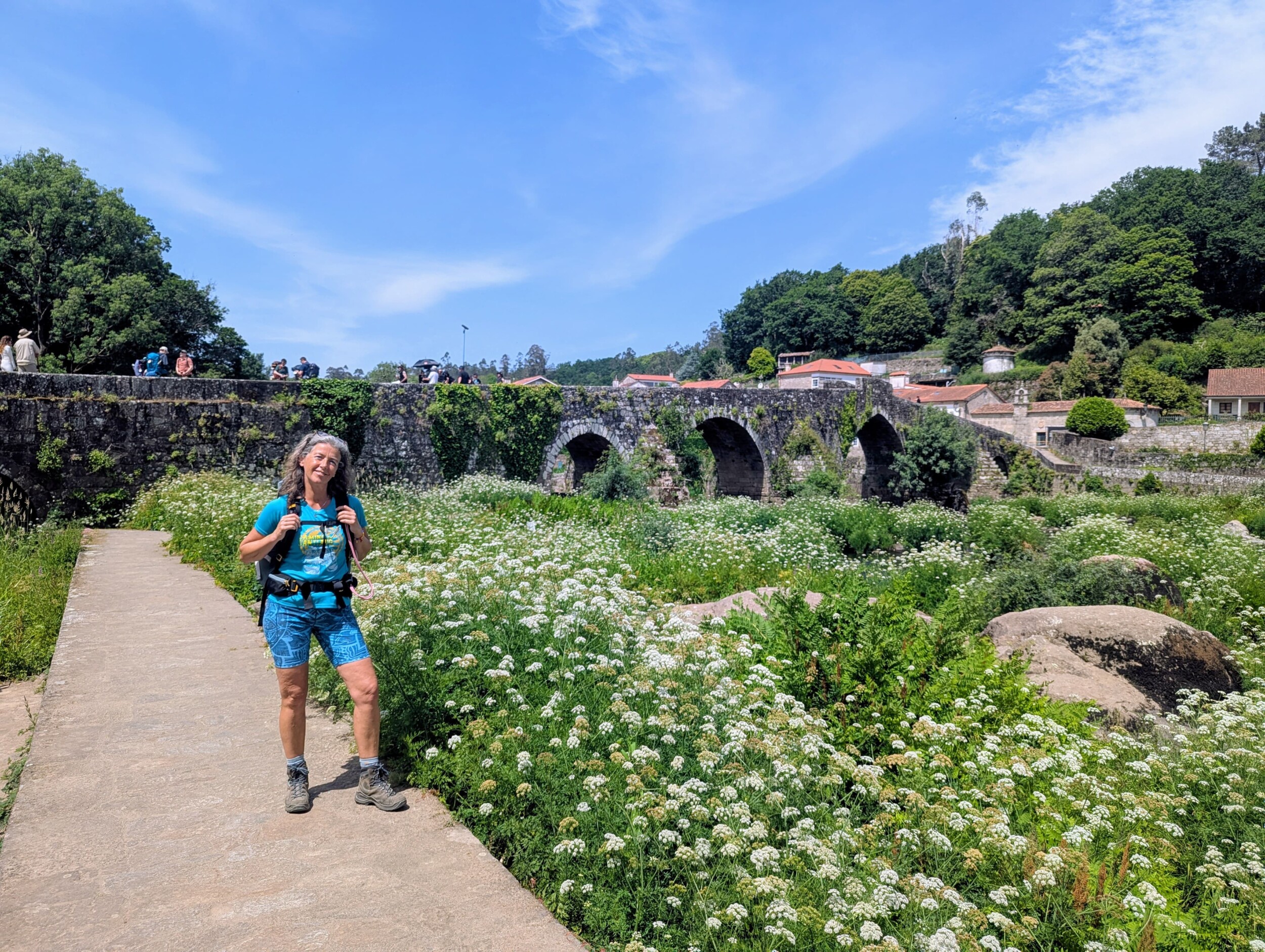
Stage 1: Santiago de Compostela to Negreira (22 km) You leave Santiago through a park and descend toward eucalyptus forests. Within ten minutes you are out of the city, and that feels like liberation. Along the way you pass Ponte Maceira, a medieval village with a stone bridge over the Tambre river. The stage ends in Negreira, a small town with adequate facilities.
Stage 2: Negreira to Olveiroa (33 km) The longest stage. Lots of forest, lots of silence, few shops. This is the day that tests your fitness. You can split it into two shorter days if you have the time. Along the way you pass Maroñas and small hamlets you will not find anywhere else.
Stage 3: Olveiroa to Cee/Corcubión (21 km) Halfway through this stage comes the decision point: you choose whether to head to Finisterre or to Muxía (more on that below). The descent to the coast is the most beautiful part of the day: open heathland that gradually gives way to views of the Costa da Morte. At Cee you reach the ocean for the first time.
Stage 4: Cee to Finisterre (16 km) The final stage. You walk along the bay and upward over cliffs, watching the lighthouse slowly draw closer. The last 3 kilometres to kilometre marker 0.0 are symbolic: every step counts. At the lighthouse, at the true end of the road, stands a stone marking the zero point. That moment is yours.
To get back into Finisterre from the lighthouse, you walk an additional 3 km.
Finisterre or Muxía, or Both?
This is the question almost everyone asks. My honest answer: both are worth it, but for very different reasons.
Finisterre is the symbolic endpoint. The lighthouse, kilometre marker 0.0, the sunset over the ocean. There is nothing beyond this point. That feeling, standing at the edge of the earth while the water stretches out before you, is unique and irreplaceable. The village feels busier, including day visitors who arrive by bus, but that does little to diminish the moment at the lighthouse.
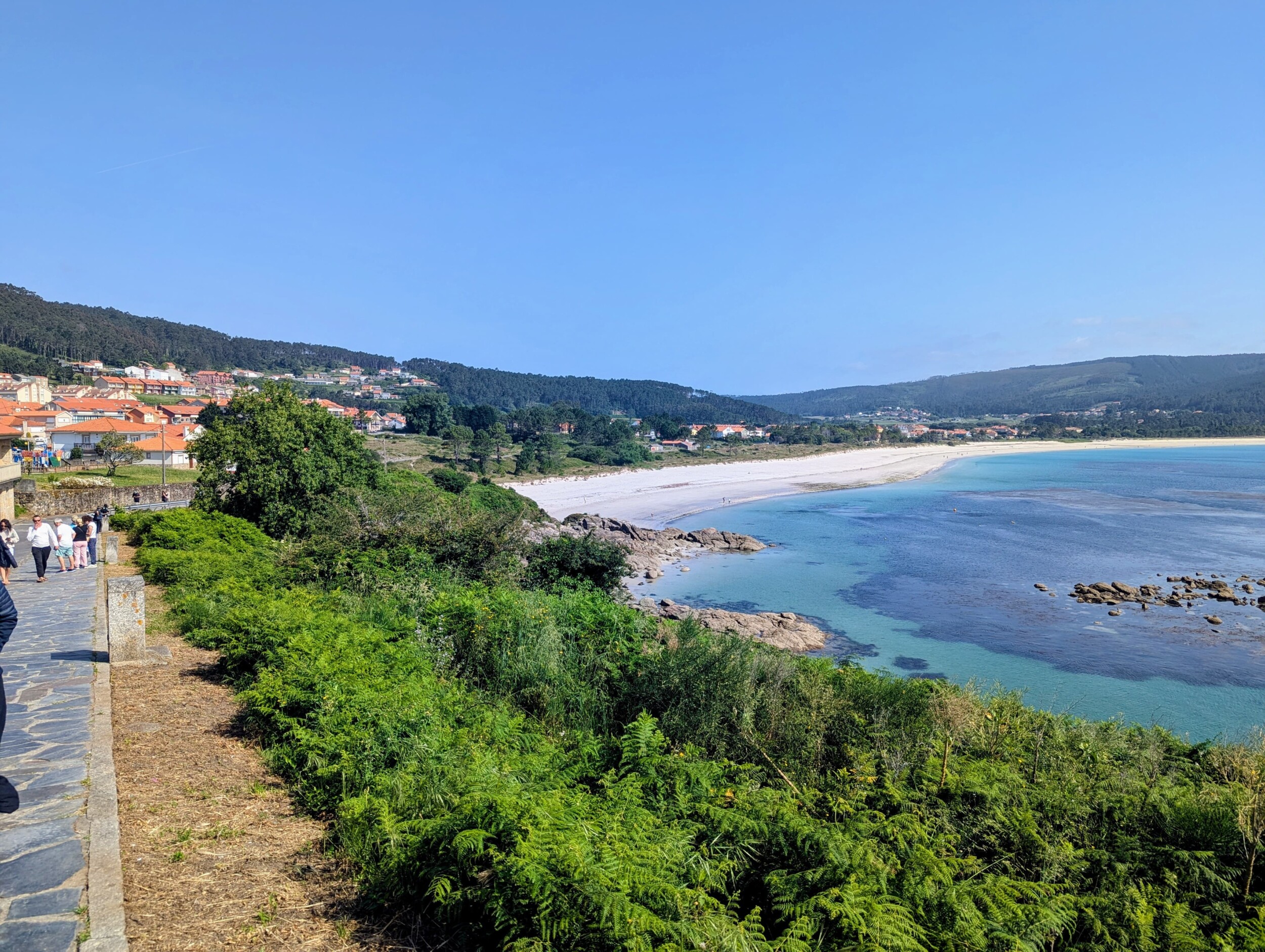
Finisterre has a lovely centre, a square, a harbour and several beaches. There are also a number of good restaurants where you can eat very well.
Muxía I initially found more beautiful as a village. The church of the Virxe da Barca stands on the rocks, half in the water, surrounded by the waves of the Atlantic Ocean. It is an intimate, small fishing village without the larger tourist crowds of Finisterre. Around it there is more nature: rugged coastline, rocky headlands, the vastness of the Costa da Morte that I feel more keenly here than in Finisterre.
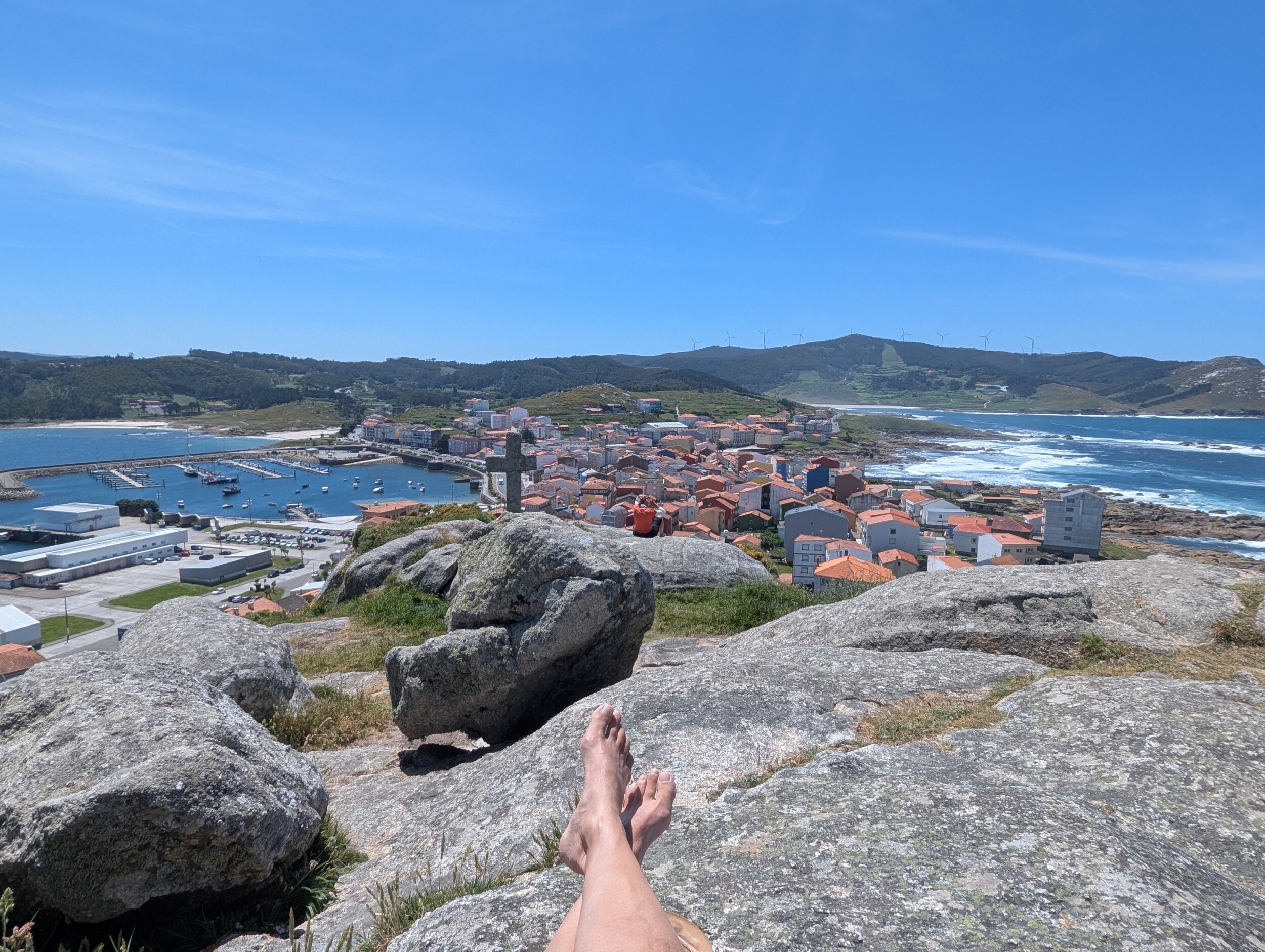
There is a coastal stage from Finisterre to Muxía, around 29 kilometres along the coast. The route is wonderful, with more than enough donativo spots and small restaurants along the way. The bus between Finisterre and Muxía is the alternative for those who prefer a rest day.
On the Zinvol Reizen group trip we walk to Finisterre and visit Muxía. But the trip offers flexibility: you can walk the coastal stage or take the bus. Everyone makes their own choice.
Who Walks the Camino Finisterre?
The route attracts a different group of people than the Francés. Many of the pilgrims who walk it have already completed a longer Camino and are not ready to stop walking. Or to stop thinking.
- There are people who choose it as their first Camino: shorter, quieter, a good introduction to what pilgrimage is without the crowds of the Francés.
- And there are pilgrims who walk it as the conclusion of a period in their lives. To leave something behind at the ocean.
- The Camino Finisterre is also very manageable for beginners. The stages are moderately challenging, the terrain is varied but not technical.
When to Go
April to June and September to October are the ideal months. The weather is mild, the route is quiet and accommodation is available without too much trouble. Summer is warmer and busier, particularly in the coastal towns. Winter is green but wet.
How Long to Stay
Allow a minimum of 4 days for the route itself. Add an arrival day in Santiago and a departure day. Including Muxía and some buffer, a week is a comfortable total.
Where to Stay
Along the route, pilgrim albergues are the most authentic option. Guesthouses and small hotels are also available, particularly in Negreira, Olveiroa, Cee and Finisterre. In Muxía there are a few small hotels and a hostel. Albergues cost €12 to €18 per night; a simple hotel runs €40 to €70.
On every trip I bring my own reusable water bottle #ad. My mission is to eliminate single-use plastic, and refilling instead of throwing away is one of the easiest ways to contribute as a traveller. A foldable bag #ad for small purchases also helps to avoid unnecessary plastic waste along the way.
Practical Tips for the Camino Finisterre
- When to go? April to June and September to October are the best months. The weather is pleasant, the route is quiet and the coast is at its most beautiful. Summer can get warm and the coastal towns get busier. Walking the route in winter is possible but Galicia can get a lot of rain.
- How long do you need? Allow 4 to 5 days for Santiago to Finisterre, including Muxía and a rest day. For Finisterre alone, 3 to 4 days is sufficient.
- What does it cost? An albergue costs an average of €12 to €18 per night. Food and drink for one stage comes in at €20 to €30. Budget €50 to €60 per day if you are living simply.
- How do you book accommodation? Accommodation options are more limited than on the Francés. In high season it is wise to book ahead, especially in Negreira and Olveiroa. Those who want to stay flexible can reserve the day before to be sure of a bed after a day of walking. After the split toward Finisterre or Muxía, accommodation is less of an issue.
- What certificate do you receive? On arrival in Finisterre you collect the Fisterrana at the Concello de Fisterra or the information office. You need your pilgrim’s passport with stamps from along the way. In Muxía you collect the Muxiana at the pilgrim’s office in the village or at your albergue at the weekend.
- Where do you get your first stamp? I initially assumed it would be at the cathedral, which seemed logical. They no longer give stamps there, and you are directed to the pilgrim’s office at Rua das Carretas 33.
- Do you need walking poles? Yes, I recommend them. The route has several steep descents, particularly toward the coast, and when you are also carrying your backpack, poles make it considerably more comfortable.
Would you like to walk the Camino Finisterre but prefer not to arrange everything yourself? I guide small groups of up to 7 pilgrims on this route. Take a look at the walking trip Camino de Finisterre.
Also read
- Camino de Santiago: Complete Guide for Your First Pilgrimage
- Camino de Santiago Packing List for Women: What to Pack
- Travel Guide for Accommodation on the Camino de Santiago
- Complete Your Pilgrimage Healthy and Happy
- Why Collecting Stamps on the Santiago Route is So Special
This article contains affiliate links. If you book or purchase something through one of these links, we may receive a small commission at no extra cost to you.