
I walked my first Camino de Santiago in 2016. Thirty-five days from Saint-Jean-Pied-de-Port to Santiago de Compostela, 800 kilometres on my own two feet. I never really stopped after that. As a guide, I’ve now walked the route more than nine times, and I still learn something new every time.
In this guide I’ll walk you through everything you need to know before you start. Which route should you choose? What does a Camino cost? How hard is it, really? And what does a pilgrimage like this actually do to you?
📋 Camino de Santiago – quick overview
├ Most popular route: Camino Francés (780 km, 30-35 days)
├ Cost: roughly €30-50 per day
├ Best time to go: April-June & September-October
├ Minimum for the Compostela: 100 km on foot or 200 km by bike
└ Safety: very safe, including for women walking alone
I get a lot of questions about walking the Camino, and I’ll answer them all in this guide. If you’re planning to walk the Camino de Santiago, this article is meant to help you prepare well before you go.
What Is the Camino de Santiago?
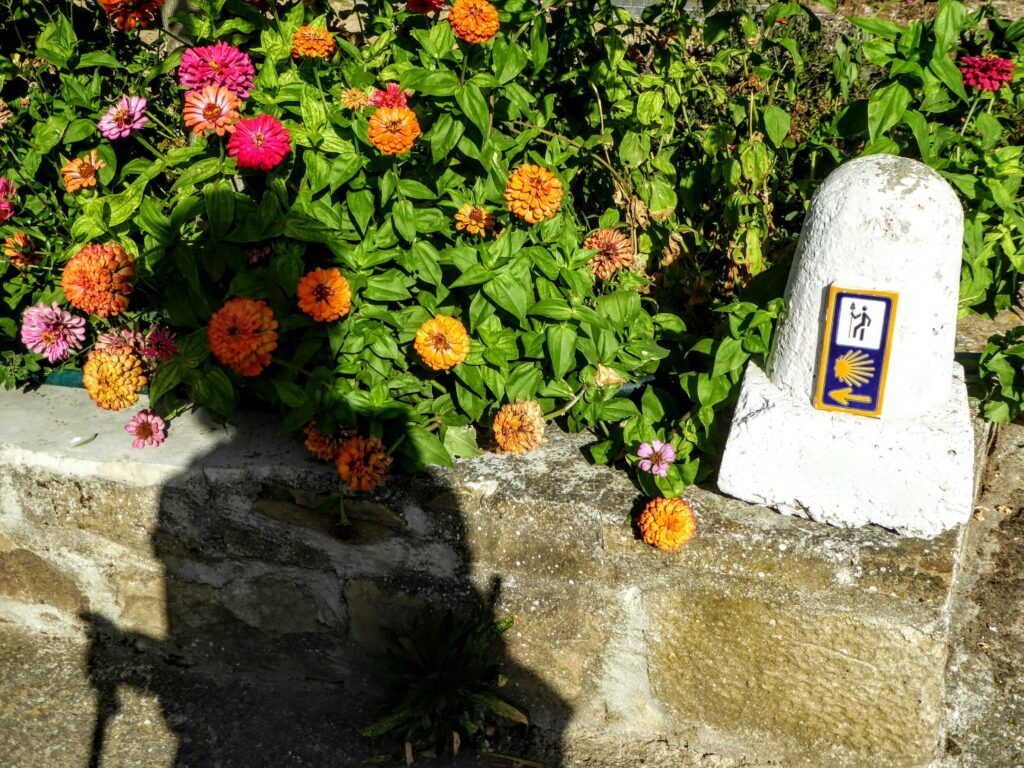
The Camino de Santiago is a network of pilgrimage routes that all converge on the cathedral of Santiago de Compostela in northwest Spain. According to tradition, the remains of the apostle St. James rest there. For more than a thousand years, pilgrims from across Europe have walked toward this one point.
In 2025, 530,919 pilgrims received their Compostela, the highest number ever recorded, and for the second year running international pilgrims outnumbered Spanish ones. They’re not all religious. You’ll meet athletes, people looking for silence, people marking a turning point in their life, and people who simply want to walk. The Camino doesn’t ask anything of your beliefs. Just your legs, and eventually your head too.
The Main Camino Routes
The Camino isn’t one road. It’s a network. Below are the routes walked most often, from most to least popular.
Camino Francés
The best-known route. Roughly 46% of all pilgrims choose the Camino Francés. You start in Saint-Jean-Pied-de-Port on the French side of the Pyrenees and walk 780 kilometres across northern Spain: over the mountains, through the vineyards of La Rioja, across the flat Meseta, past Pamplona, Burgos and León, all the way to Santiago de Compostela.
This is the route I guide. Read everything about the first 200 km of the Camino Francés →
Camino Portugués
The second most popular route. You can start in Lisbon (600+ km) or in Porto (240-280 km). The Portuguese coastal route is the fastest-growing Camino in the world, together with the central Portuguese route accounting for more than a third of all Caminos walked in 2025. Lighter and gentler in character, with beautiful landscapes and fewer crowds than the Francés.
Read my account of the Camino Portugués from Porto to Tui →
Camino Primitivo
The oldest route. King Alfonso II walked it in the 9th century. You start in Oviedo and walk through mountainous Asturias and Galicia. Demanding, with 8,000 to 9,000 metres of elevation gain over 320 kilometres, but deeply authentic. I walked this route in May 2026 and felt briefly transported back to my very first pilgrimage. Quiet paths, just enough fellow pilgrims for that familiar sense of togetherness, and beautiful trails to follow.
Camino del Norte
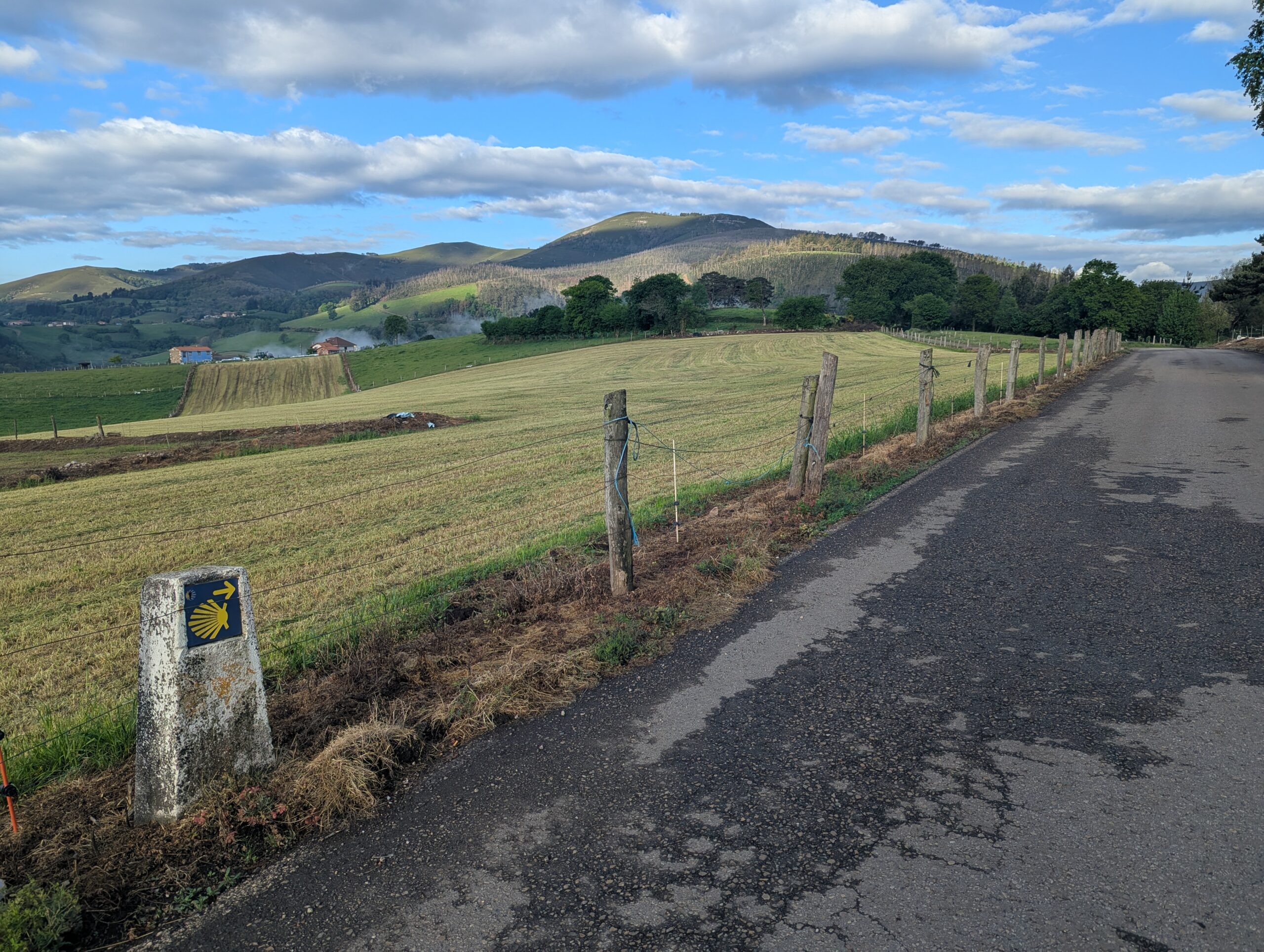
Along the Cantabrian coast, through the Basque Country, past San Sebastián and Bilbao. Spectacular views, but physically demanding because of the constant climbing and descending. Accommodation is less abundant than on the Francés, since there are fewer villages and fewer pilgrims.
Via de la Plata
The longest official Camino: 960 kilometres, starting in Seville. It follows an old Roman trade route. Very few pilgrims choose this route, some days feel intensely solitary, and summer heat can be extreme. This one is for experienced Camino walkers and people specifically looking for solitude.
Camino Inglés
The shortest Camino recognised for the Compostela: 120 km from Ferrol, or 75 km from A Coruña. Ideal if you want to taste Camino life without committing to weeks away.
How Many Kilometres Do You Walk per Day?
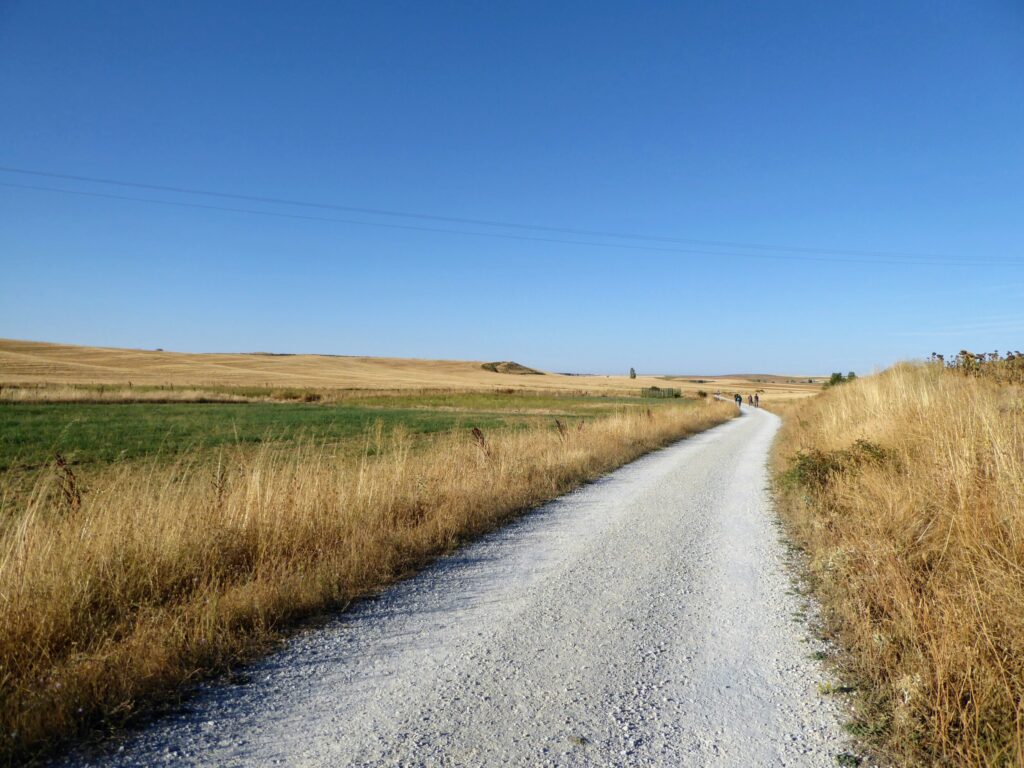
That’s up to you. The “official” stages are usually 20 to 30 kilometres a day. On the Camino Francés there are so many hostels that you can stop almost anywhere. My shortest day was 14 kilometres and five blisters; my longest was over 40. That freedom is exactly what makes the Camino special.
An average of 20-25 km per day is realistic for most people.
How Long Does the Camino Take?
That depends on your route and your pace.
- Camino Francés (780 km): 30-35 days
- Camino Portugués from Porto (240 km): 10-14 days
- Camino Primitivo (320 km): 14-18 days
- Camino Inglés (120 km): 5-7 days
You don’t have to walk the whole route. Many people walk a section, such as the last 100 or 200 km, and come back for the rest later. That’s exactly how I guide the Camino Francés from Saint-Jean-Pied-de-Port →: the first stretch as a starting point, so you can continue on your own later.
What Does the Camino de Santiago Cost?
Budget roughly €50 per day if you stay in hostels and eat simply.
Rough daily breakdown:
- Hostel (albergue): €12-25
- Meals (including the evening pilgrim’s menu): €20-225
- Extras (coffee, ibuprofen, blister plasters): €5-10
You can bring the cost down by cooking for yourself and using donativo hostels. You can spend more by choosing hotels and restaurants. The Camino adapts to your budget.
Read the full camino budget article
💰 **Budget Breakdown per day:**
– Albergue: €12-20
– Food: €25-35 (incl pilgrim menu)
– Occasional extras: €5-10
Totall: ±€50 per day
When Is the Best Time to Walk the Camino?
April through June, and September through October. The weather is pleasant, every hostel is open, and you’ll catch the best “donativo” moments: locals along the route offering fruit, coffee, or music.
Summer (July-August) is hot and busy. Winter is quiet but cold, and some hostels close.
My personal preference: April/May or September, just outside the peak.
Where Do You Sleep on the Camino?
In an albergue, a pilgrim’s hostel. Pilgrims sleep in dormitories with bunk beds and shared showers, often with a kitchen. Cheap, social, and full of character. You’ll be sleeping next to people from dozens of countries, which brings everyone together fast.
Want more privacy? Hotels and pensiones exist too, but you’ll pay more and miss part of the pilgrim experience.
Booking ahead is possible but not always necessary. In the busy months, and on the last 100 km, it’s wise to book at least one night in advance. This site comes in handy: Gronze.com gives a good overview of albergues per route.
Read everything about sleeping in a hostel on the Camino de Santiago →
Is the Camino Hard?
Physically, most people manage fine with the right preparation. Blisters are common, and your legs adjust quickly in the first few days. The stages are manageable on an average fitness level.
The toughest Caminos are the Primitivo and the del Norte. The most mentally challenging is the Francés, because of the Meseta: 250 kilometres of nearly flat, wide-open plain that goes on for days. I actually loved that stretch.
What I see more often than an injury: people doubting themselves. The Camino challenges you mentally. But that’s also exactly why it affects so many people the way it does. Honestly, those doubts are strongest beforehand and on day one, then tend to melt away.
Is the Camino Safe, Including for Women Walking Alone?
Yes. The Camino is one of the safest walking environments in the world. Incidents happen, as they do anywhere, but relative to the number of pilgrims walking, they’re minimal. Because you’re rarely truly alone, you can always fall in with other walkers on busier stretches.
Spain has also introduced extra police monitoring along the Camino, particularly in Galicia. You can also download the AlertCops app, which lets you get in touch with the police quickly if needed.
Read everything about safety for solo female pilgrims on the Camino →
What Do You Pack?
The rule of thumb for your backpack is that it shouldn’t weigh more than 10% of your body weight. If you weigh 70 kg, that’s 7 kg, water included.
The essentials:
- Good, broken-in hiking boots
- Quick-drying clothing (3-4 sets)
- A silk liner for the hostels
- Blister plasters and tape
- Pilgrim’s passport (credencial)
- A small first-aid kit
Don’t want to carry all your luggage yourself? Luggage transport is possible through companies that move your bag ahead for a small fee per stage.
Read the full packing list →
Everything about luggage transport on the Camino →
The Pilgrim’s Passport and the Compostela
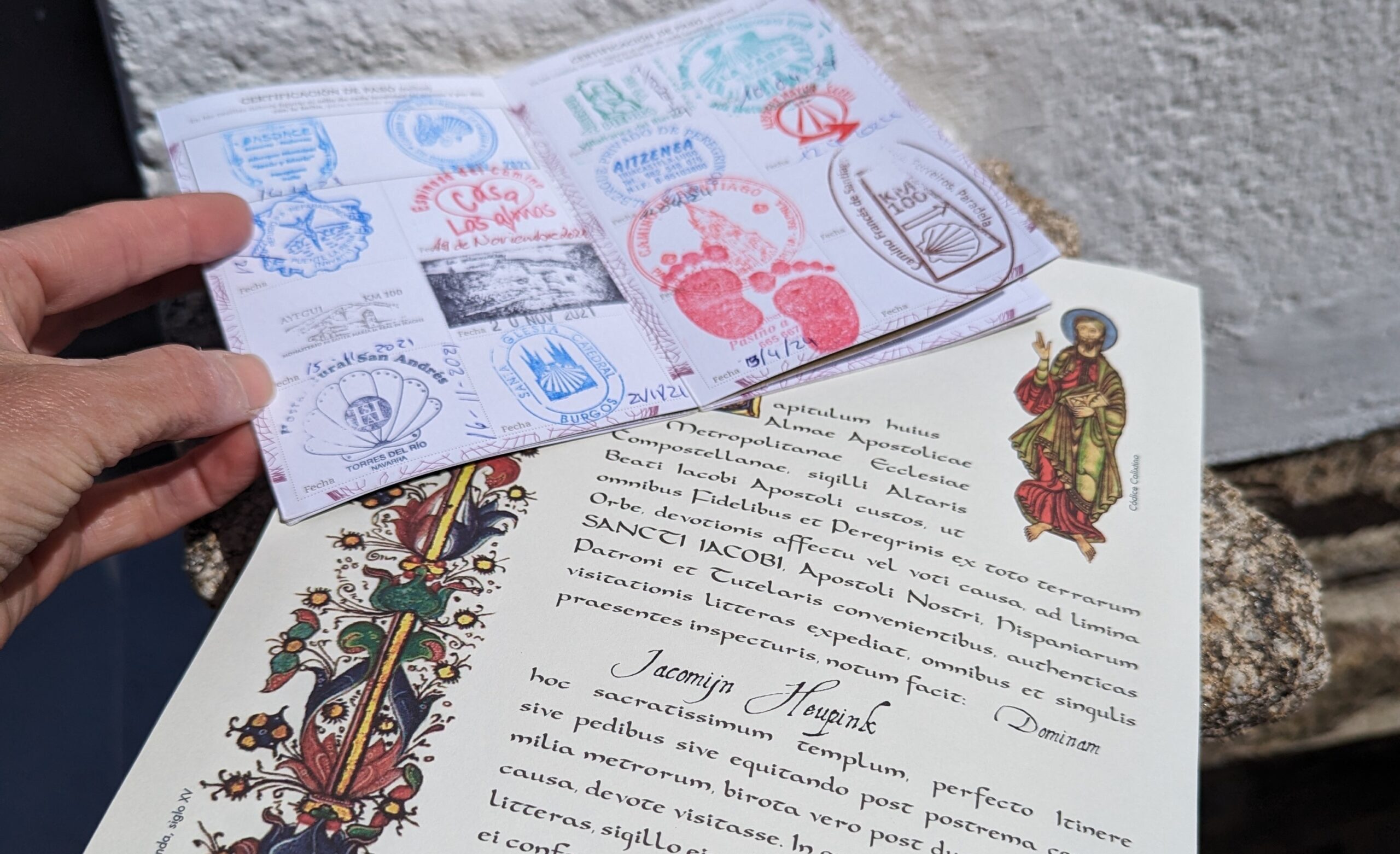
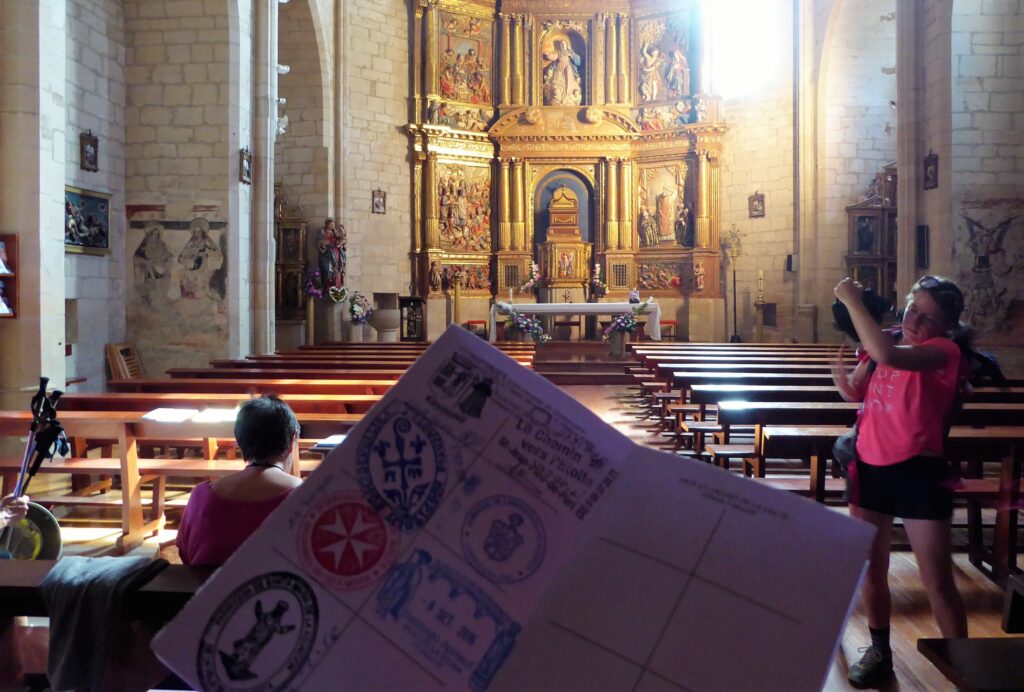
To receive your Compostela, the official certificate, you need a credencial: the pilgrim’s passport. Along the way you collect stamps in it, at least two per day during the last 100 km.
You can request the credencial from your local pilgrim association, at certain churches, or at the first albergue at the start of your route.
You pick up your Compostela at the Pilgrim’s Office in Santiago: Rúa das Carretas 33. Go there individually, even if you’re walking in a group. The volunteers take a moment for a personal chat, that’s part of the tradition.
Read all about why we collect stamps in a passport →
All you need to know for you visit to the pilgrim office →
Arriving in Santiago de Compostela
You walk onto the Praza do Obradoiro. The cathedral stands in front of you. It’s a strange feeling: you’ve arrived. After days, weeks, sometimes months of walking, there’s suddenly no yellow arrow left to follow.
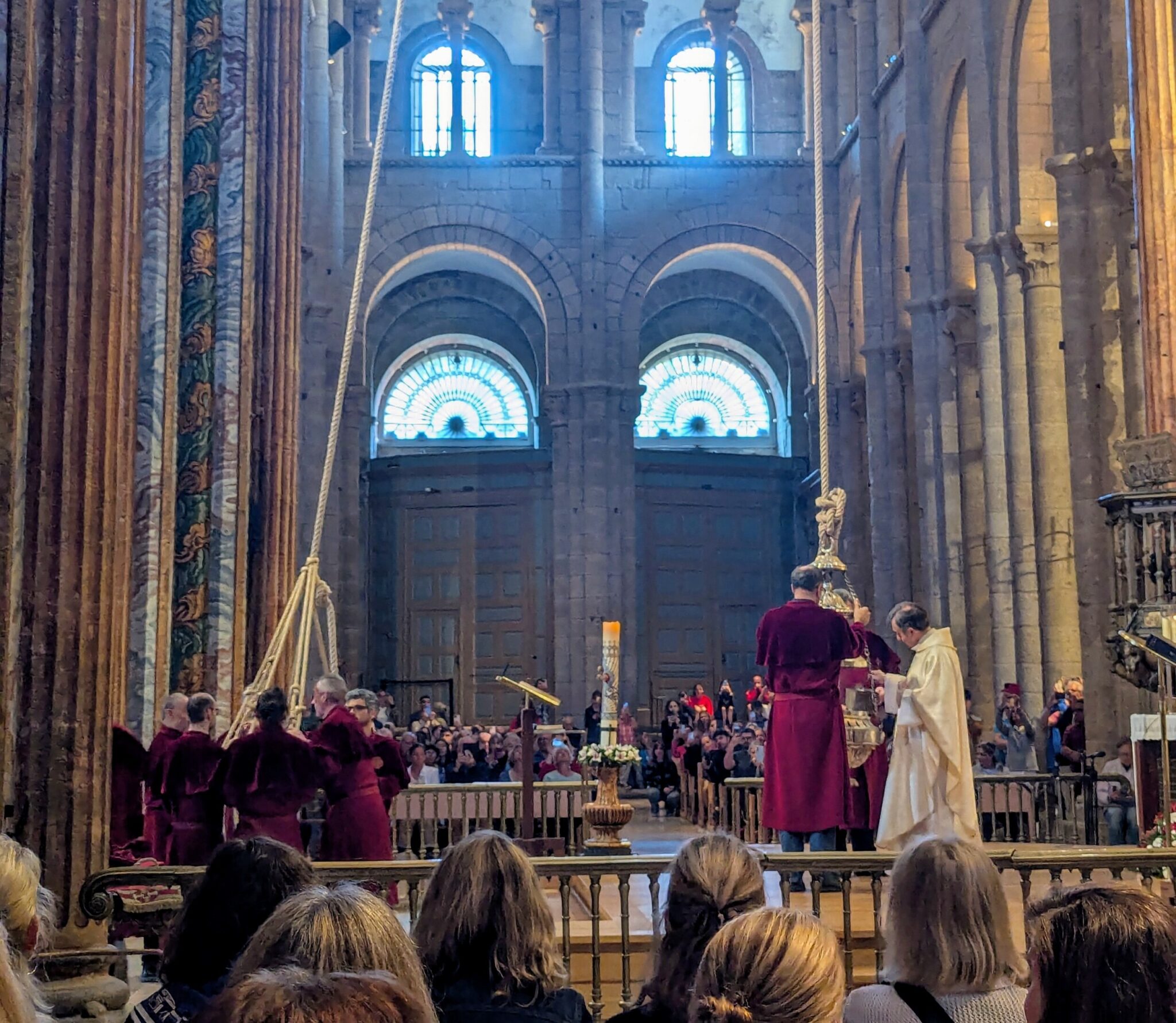
Every day at 7:30 am, 9:30 am, noon, and 7:30 pm there’s a pilgrim’s mass in the cathedral. With a bit of luck, you’ll see the botafumeiro, the world’s largest thurible, 1.5 metres tall and 53 kilos, swinging through the church. I’ve witnessed it several times, and it never stops being impressive.
Read everything about arriving at the Praza do Obradoiro →
Extra tip: Try to arrive in Santiago de Compostela on a weekday. I’ve now arrived on a weekend a number of times, and there are always events on the Praza do Obradoiro in front of the cathedral. If you’re walking onto that square after a long journey, it’s not much fun when it’s packed with people who aren’t pilgrims.
The Dutch / Flemish Living Room
When you’ve received your Compostela, you’re also warmly invited to have a cup of coffee or tea on the first floor in the office. Here sit two volunteers with whom you can briefly talk about your pilgrimage. You’ll meet other pilgrims who have also arrived from other routes perhaps. It’s a nice conclusion to your pilgrimage.
Where the Dutch and Flemish have their own huiskamer at the Pilgrim’s Office, other nationalities have organized themselves too, just outside the office rather than inside it. American Pilgrims on the Camino, the Confraternity of Saint James in the UK, the Canadian Company of Pilgrims, the Camino Society Ireland, and the Australian Friends of the Camino all support pilgrims from their own countries, before, during, and after the walk. Most of them issue credenciales, organize meetups once you’re back home, and are worth looking into before you leave.
After Santiago: Camino Finisterre
For many pilgrims, Santiago isn’t the real ending. They walk on to Finisterre, the “end of the world” according to the Romans, or to Muxía, a small coastal town with a striking pilgrimage church. Both lie roughly 90 km from Santiago.
I also guide this route as a small-group trip. It’s quieter than the approach to Santiago, the landscape is wide and dramatic, and reaching the Atlantic coast feels like a genuine finish line.
Read everything about the Camino Finisterre →
Walking Alone or With a Guide?
Most pilgrims walk alone, or quickly become part of an informal group. That’s how I did it the first time too. But for people who want to go for the first time but keep hesitating, or who’d rather leave the preparation to someone else, I offer small-group guided trips. Small scale, max. 8 participants, with room to walk at your own pace.
See the guided Camino Francés →
What Does the Camino Do to You?
There’s a life before the Camino, and a life after it. Really.
Not because you come home suddenly enlightened. But because doing the same thing every day for weeks, “get up, walk, stop, sleep”, creates space. Space to think. To let go of things. To notice what’s actually going on underneath.
Slowing down on the Camino, being literally slow in a forward motion day after day, is so good for us.
As a walking coach, I see how movement and the landscape help people reach new insights. Not through talking, but through walking. The Camino does that on its own.
Join me on pilgrimage:
- Walk the last 200 km to Santiago
- Or walk from Santiago to Finisterre / Muxia
Ready to start your Camino de Santiago journey? With proper planning and preparation using this guide, your pilgrimage will be an unforgettable experience. Last updated: October 2025