
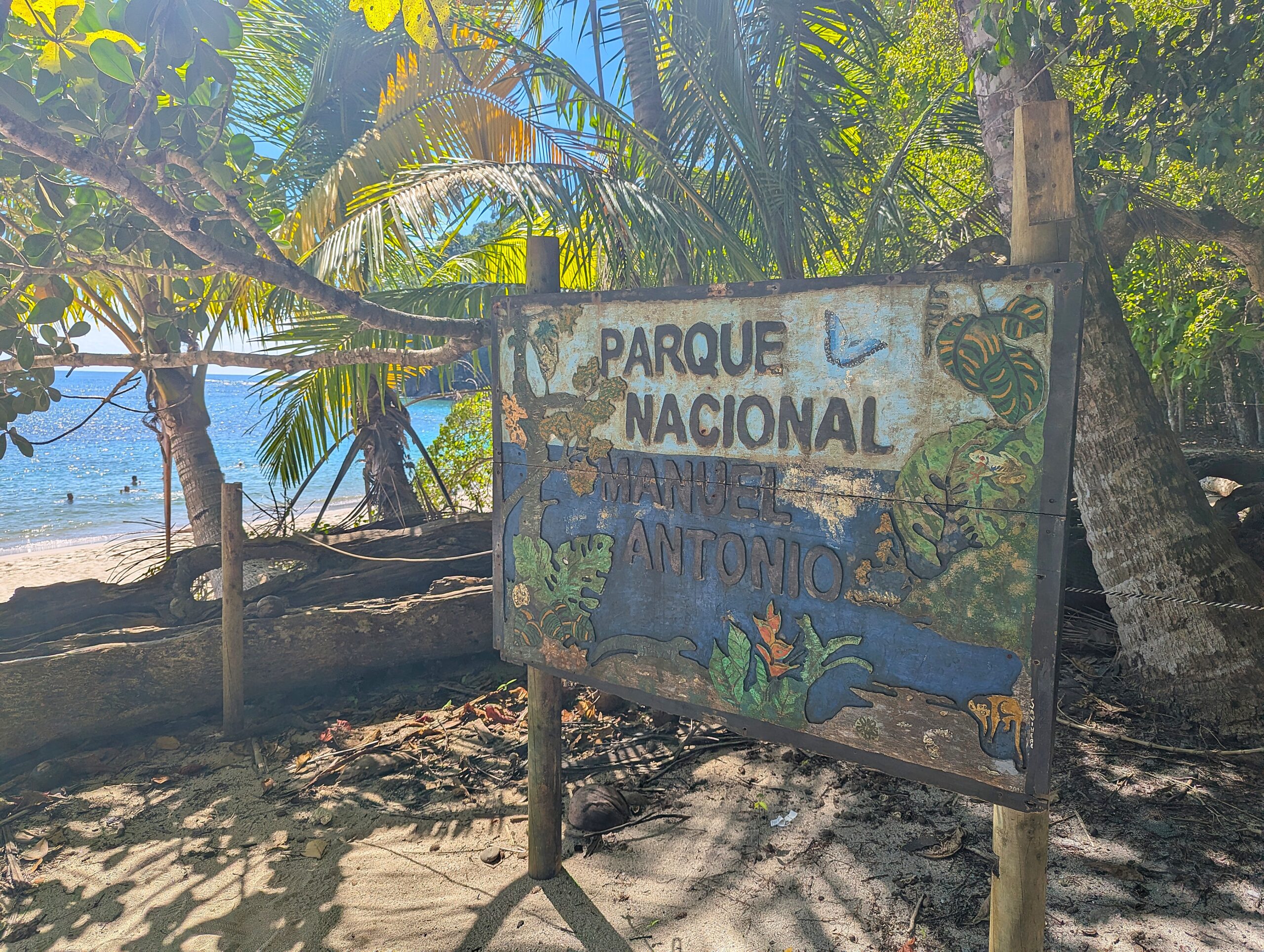
Manuel Antonio National Park appears on virtually every Costa Rica itinerary. As the country’s smallest yet most visited national park, attracting hundreds of thousands of visitors annually, it’s a destination that sparks fierce debate. I visited this famous park from Quepos, and I’ll be honest: of all the national parks I visited in Costa Rica, I enjoyed Manuel Antonio the least. Not because of the nature itself, but because the masses of tourists overshadow the wildlife experience.
Glamping La Comarca: Green Base Near Quepos
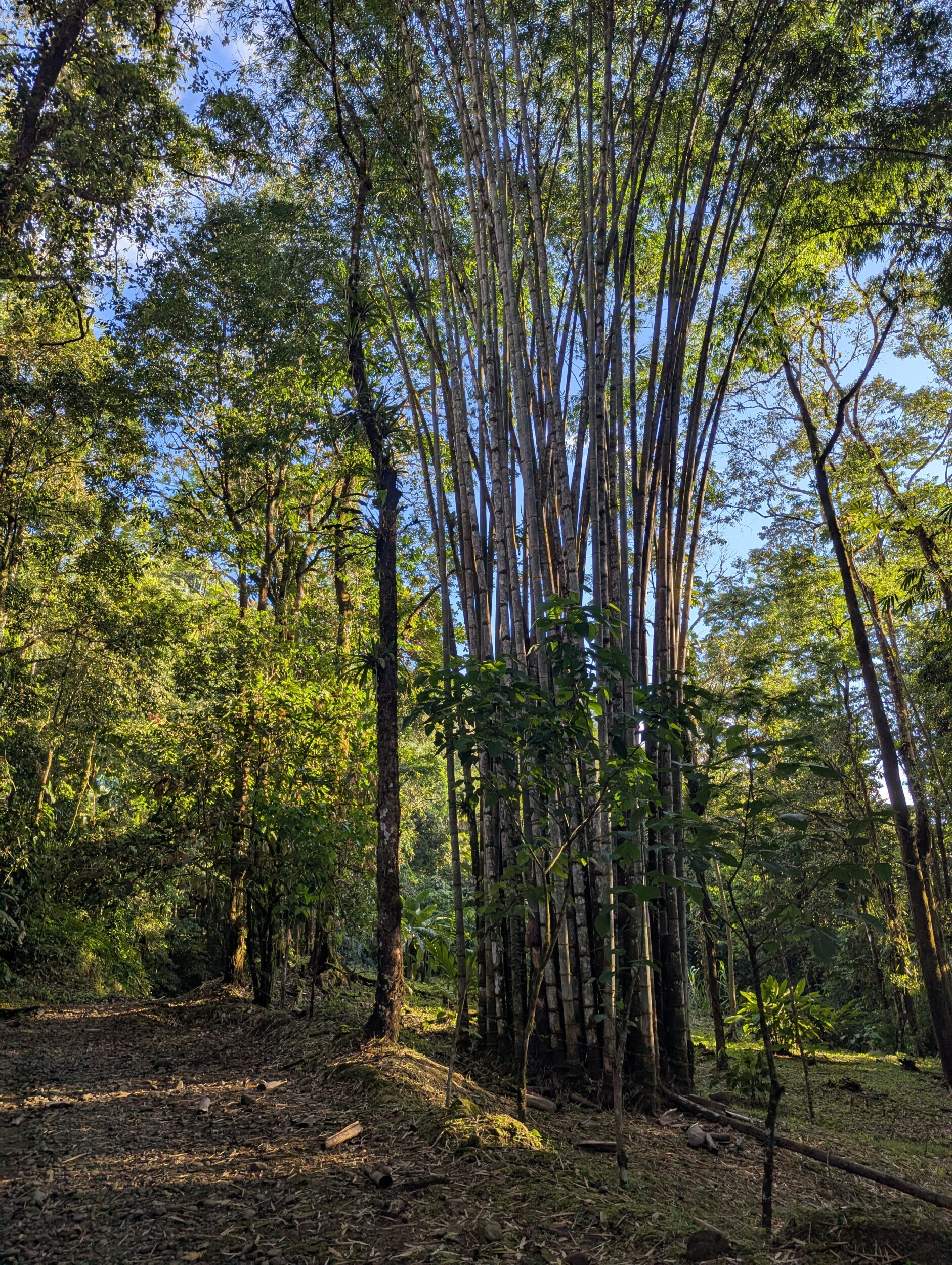
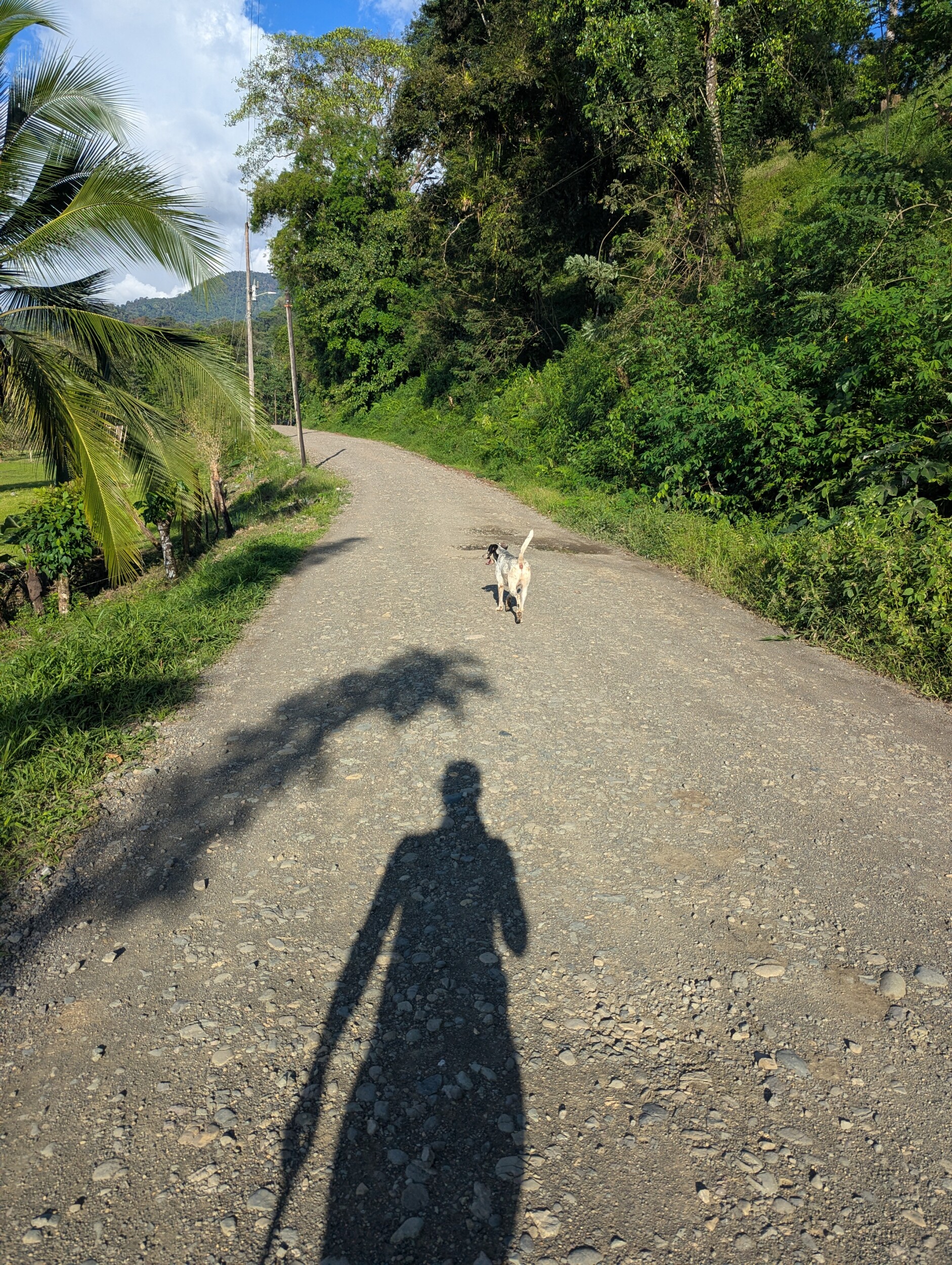
For our visit to the region, we stayed at Glamping La Comarca, an accommodation in the hills around Quepos. The location offered peace and greenery – a welcome counterpoint to the crowds at the nearby national park. From here, I did a roughly 2-hour hike through the surrounding area. I was supposed to reach a viewpoint but took a wrong turn somewhere. Still, I found it a beautiful walk, exploring Costa Rica’s interior without encountering another tourist.
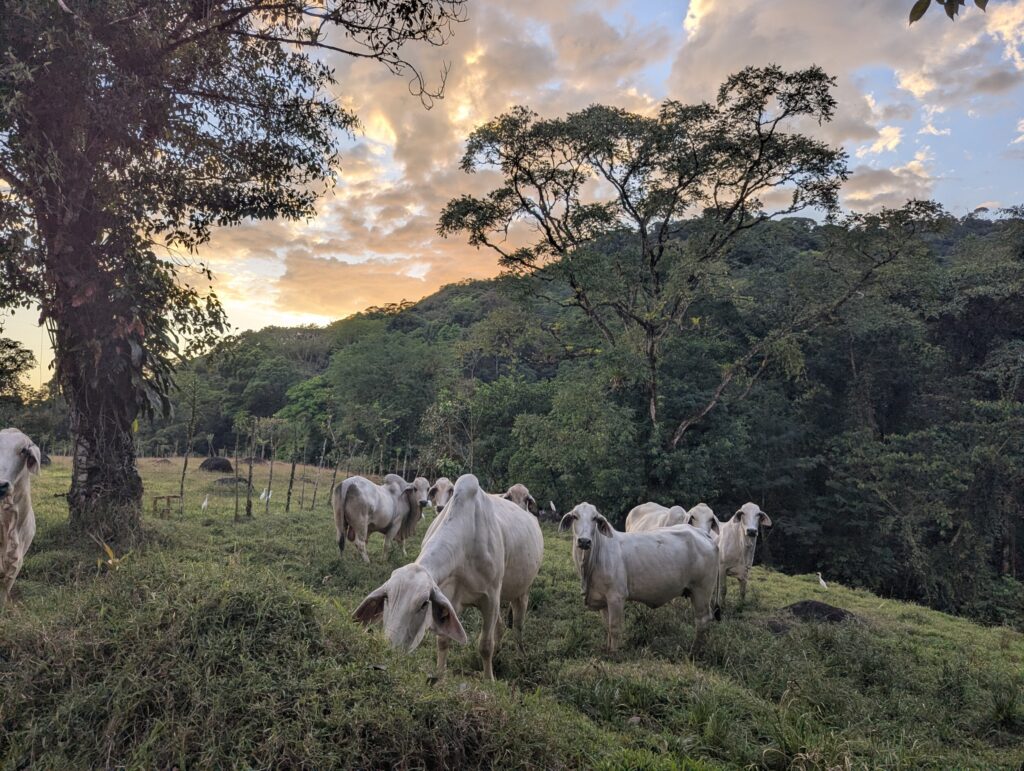
Quepos itself is a port and fishing village that serves as the gateway to Manuel Antonio. The town has its own character with local restaurants and facilities, but most visitors use it primarily as a base for the national park.
Manuel Antonio National Park: When Crowds Overshadow Nature
Let me start with what this park does have: beautiful beaches, a unique combination of rainforest and coast, and relatively easy-to-spot wildlife. The problem isn’t what the park offers, but how you experience it.
Of all the national parks I visited in Costa Rica – think Corcovado, Arenal Volcano NP, or Monteverde – Manuel Antonio was by far the most crowded. The main route, Sendero Perezoso (Sloth Trail), is packed with groups of tourists and their guides. People are photographing everywhere, and the intimate nature experience you find in other parks is completely absent here.
Guide or No Guide?
At the entrance, and even before you reach it, guides are offered everywhere. These guides take you along Sendero Perezoso and have good telescopes with which you can see sloths high in the trees. They know the spots where animals hang out and can also show you other wildlife. With a guide’s help, we saw snakes elsewhere that we would never have spotted otherwise.
Without a guide, it is difficult to spot much on the busy Sendero Perezoso. The animals are high up, well camouflaged, and with all the tourists talking, you can hardly hear the sounds of nature.
Know that guides leave you at the beaches – that’s where the tour ends. So you get help spotting animals on the busiest trail, but for the rest of the park you’re on your own. For many visitors, this means they only see the main trail and then head to the beach.
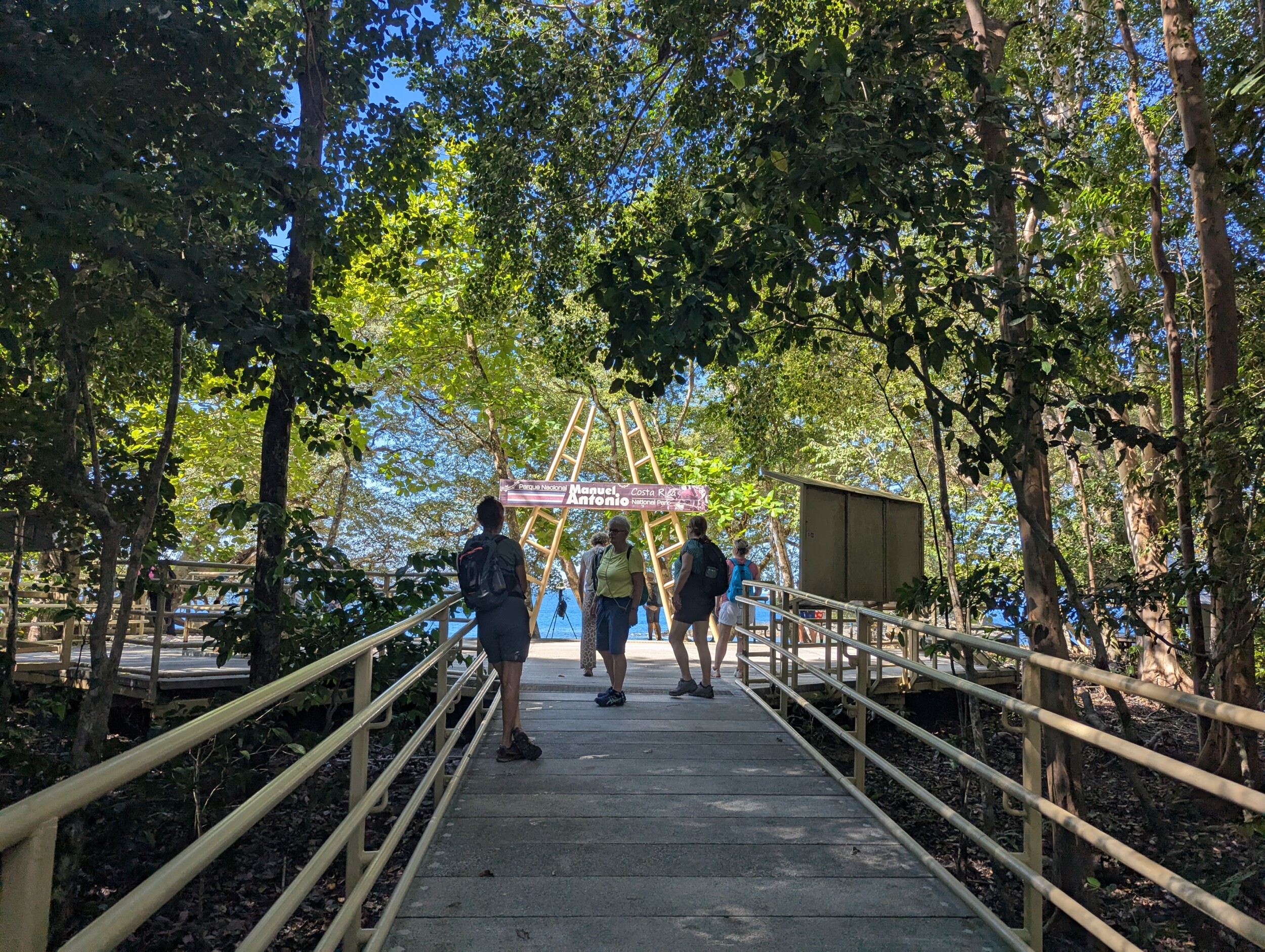
My experience: A guide is useful if you really want to spot wildlife and have little experience finding animals in the jungle. Without a guide, we would have missed many animals in other parks. But you pay quite a bit (around $45-70 per person on top of entrance), and after the tour on the main trail, their guidance ends. So we chose not to take a guide this time and walked around ourselves.
Book the ticket with a guide (if you choose a guide, it is best to arrange this in advance) Or book your ticket via the official SINAC website
The Must-Visit Spot: Punta Catedral Peninsula
Here comes my most important tip for those going independently or wanting to see more after the guided tour: leave the crowded Sendero Perezoso behind and walk through to the peninsula. This headland, which looks like a whale’s tail, is where Manuel Antonio delivers on its promise.
As soon as we left the busy main trail and walked up the Punta Catedral Trail, everything changed. The crowds stayed behind, peace returned. Here we finally heard the sound of the jungle: birds, rustling leaves, and the crack of branches under the weight of monkeys moving through the trees.
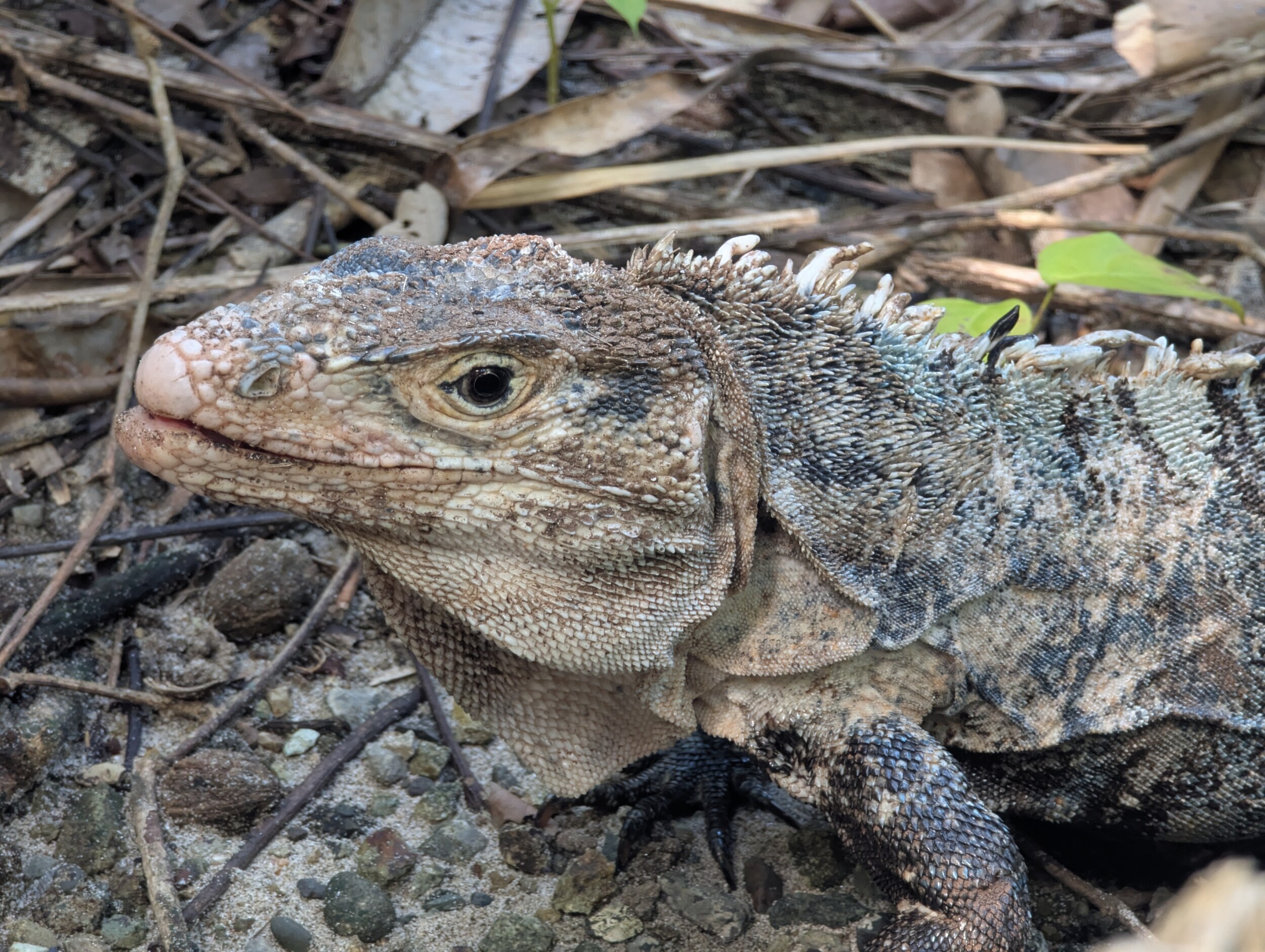
This part of the park has some elevation gain – not challenging, but enough to discourage the masses who prefer to stay on the flat main trail. There are several viewpoints where you look out over the coast and surrounding greenery. And more importantly: here it feels like you’re actually in nature, not in a busy outdoor attraction.
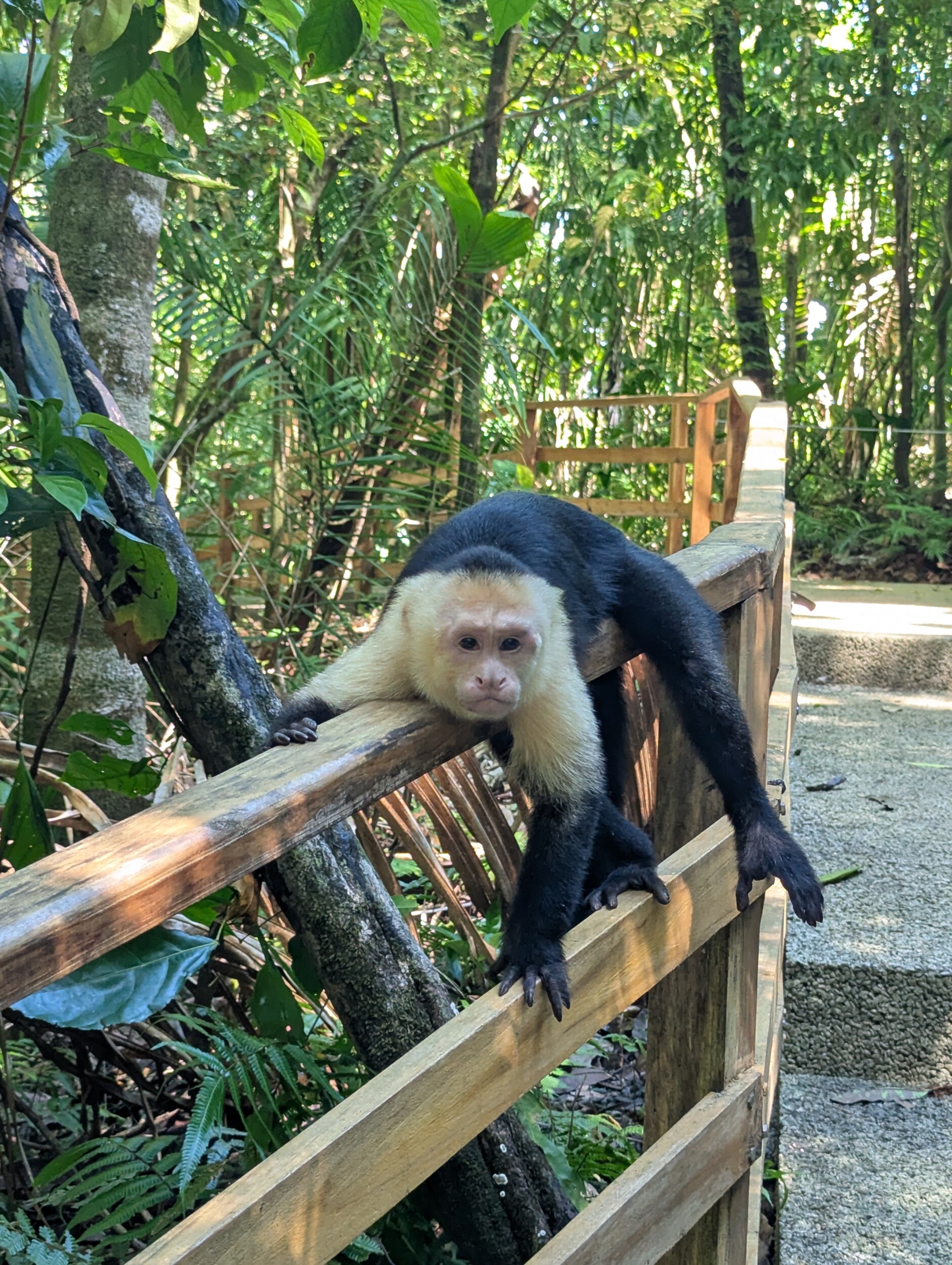
On the peninsula, we saw monkeys at close range, even very close and quite amusing! One was lying on the trail railing and dragged himself over it 🙂
Here we got the feeling of a real encounter with nature, instead of organized animal-spotting sessions on the main trail. We sat on the trail resting for quite a while and heard and saw quite a bit pass by like monkeys, birds, and an agouti came walking past.
The Beach: The Other Saving Grace
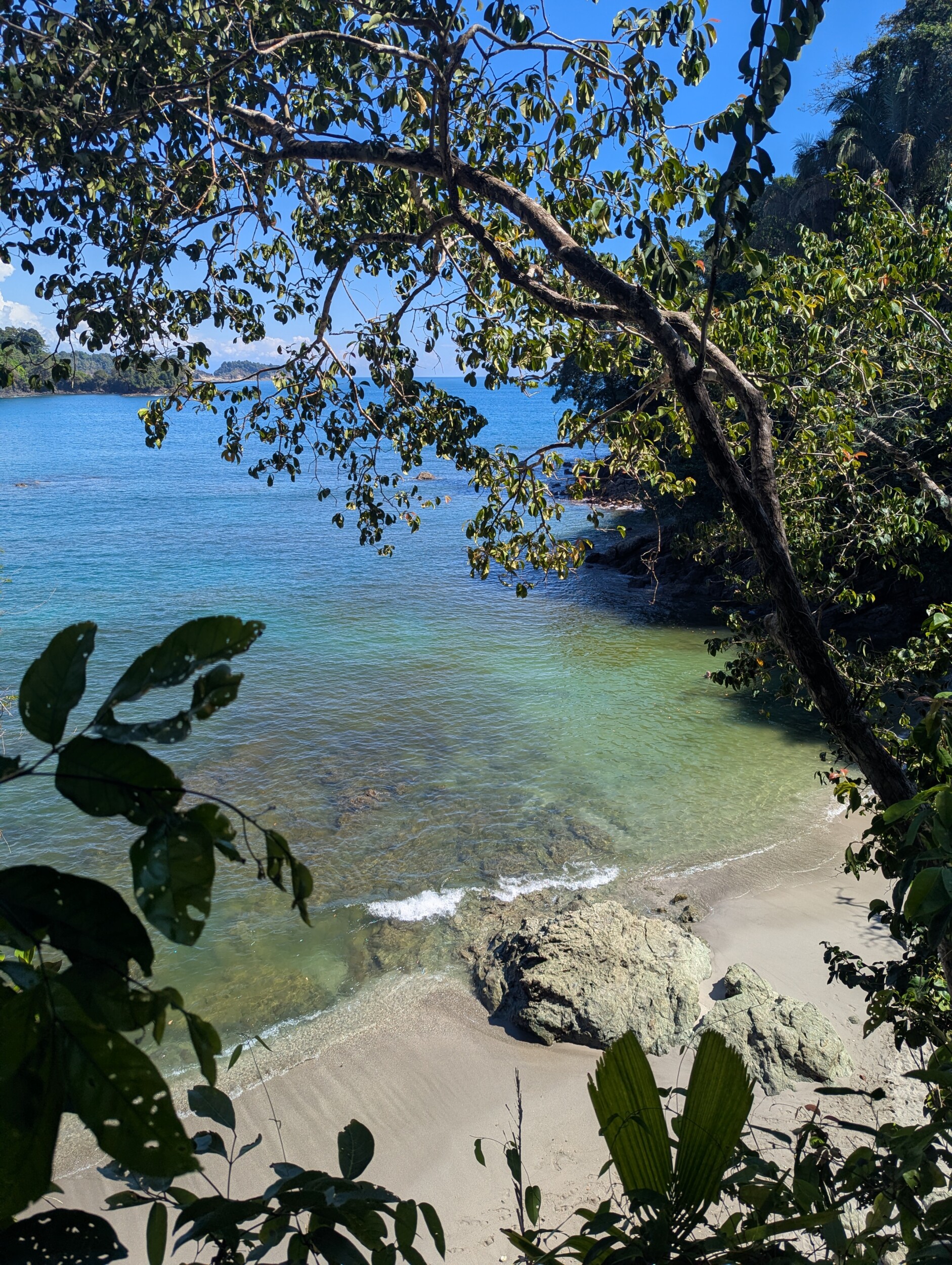
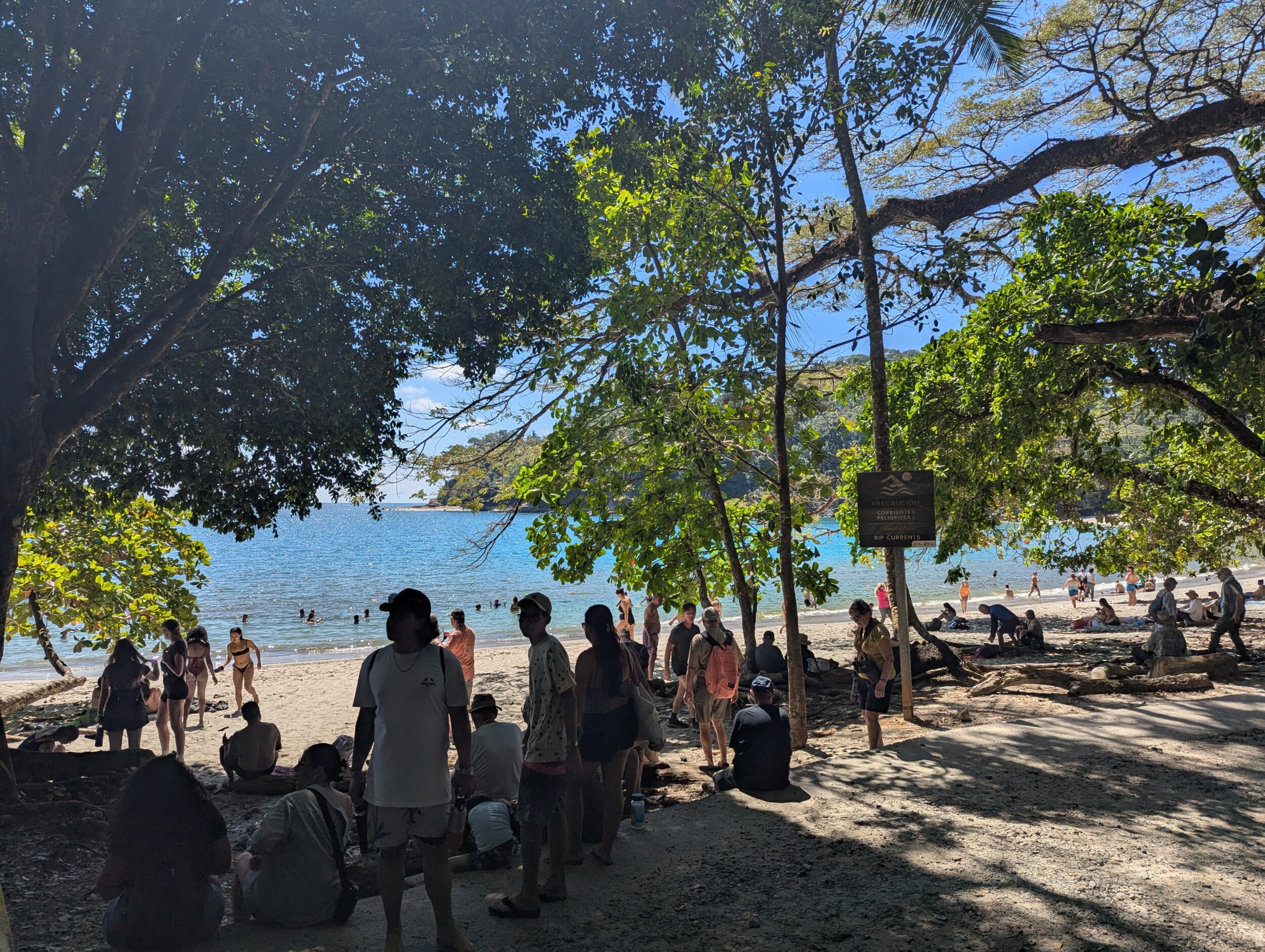
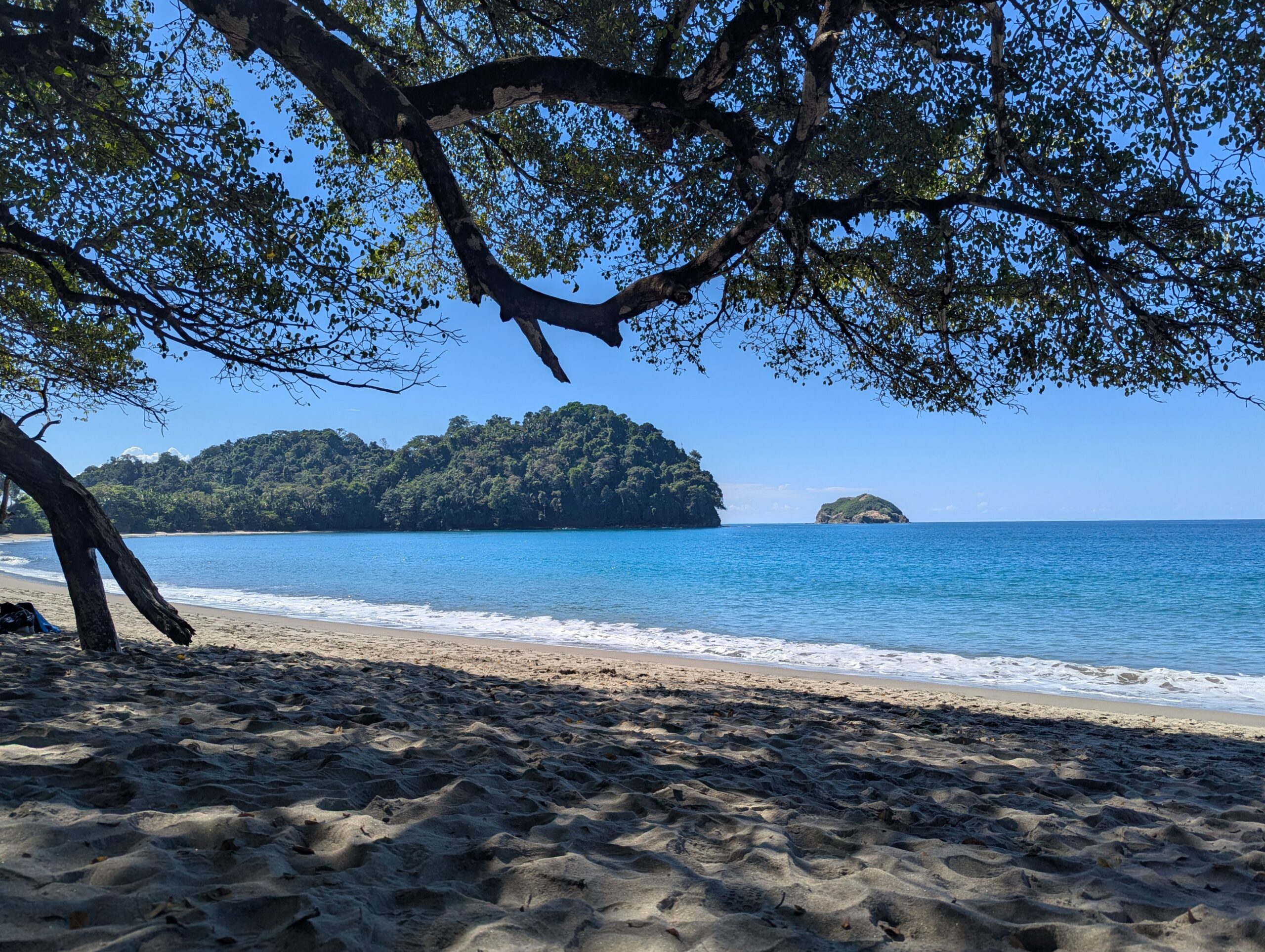
The big plus of Manuel Antonio is without doubt the beach inside the park. White sand, clear turquoise water and palm trees – it looks like a tropical postcard. We swam extensively here and that was definitely a highlight of our visit. We sat on the beach where nobody, really almost nobody was swimming. This while the beach on the other side was packed.
Tip: If you want to go swimming, head to Playa Espadilla Sur. It’s quiet and there are changing rooms and toilets halfway along the beach. Playa Manuel Antonio is overcrowded and really not recommended. If you pass by there first, just keep walking a little further!
Playa Manuel Antonio is a small sheltered bay. Compared to the rougher beaches on the Pacific coast, this water is calmer. For children, this might be a better option, although the sea, once through the surf, was also lovely on the other side.
Wildlife Watching: The Reality
On the main trail, sloths hang high in the trees and are only clearly visible with binoculars or a telescope. This is where a guide is valuable – they know exactly where to look and have professional telescopes so you can still see the animals well. We also saw snakes and other wildlife with their help that we would have missed ourselves.
Without a guide, it’s difficult to spot much on the busy Sendero Perezoso. The animals sit high, are well camouflaged, and among all the talking tourists you barely hear the signals from nature.
We saw, because people were standing looking at a tree, eventually a sloth with a baby. It sat so high in the tree that we couldn’t get a sharp photo of it and actually only saw it well through binoculars. To me, I can’t really cross off the sloth as seen, in real life!
Practical Reality: Access and Costs
- Tickets: Online reservation required via SINAC system, choose a specific time slot
- Entrance fee: $18 for adults (on the high side for Costa Rican standards)
- Guide: $45-70 per person extra, book at entrance or online in advance
- Opening hours: 7:00-16:00, closed on Tuesdays
- Visitor limit: 600 visitors on weekdays, 800 on weekends
- Advice: Definitely walk the loop on Punta Catedral Peninsula
Warning: You are not allowed to bring plastic into the park. If you have a disposable water bottle with you, you are not allowed to bring it in. You are also not allowed to bring food or sweets into the park.
Make sure you carry a nice bottle #ad throughout the trip. Don’t participate in single-use plastic anymore.
There’s a restaurant at the end of Sendero Perezoso where you can sit, behind fences and thus protected from wildlife.
Mangrove Boat Tour Quepos: Peace on the Water
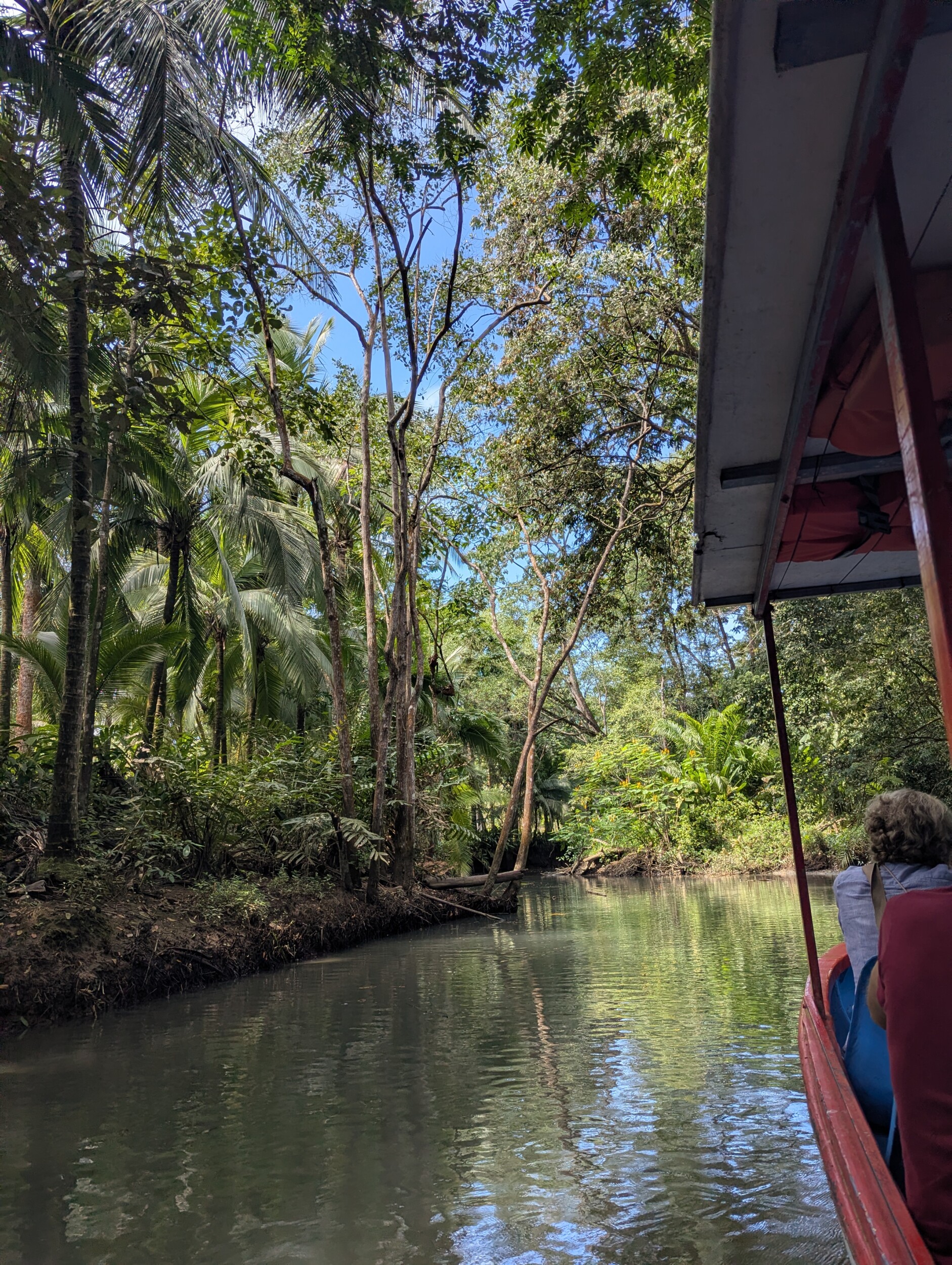
A breath of fresh air compared to the busy park was the boat tour through the mangroves from Quepos. Here it was wonderfully quiet and nature got space. Among the mangrove roots hide birds, crabs, monitor lizards and sometimes crocodiles. We didn’t see that crocodile but we did see a big snake lying high in a palm tree.
These types of tours offer insight into a completely different ecosystem. No spectacular highlights, but a peaceful way to experience Costa Rica’s coastal nature without the masses.
Book your mangrove tour near Quepos
Food and Drinks in the Region
El Gran Escape in Quepos is an excellent choice for lunch. We ate here and it was delicious – know that the portions were enormous! Good food without the excessive tourist prices and atmosphere you encounter closer to the park.
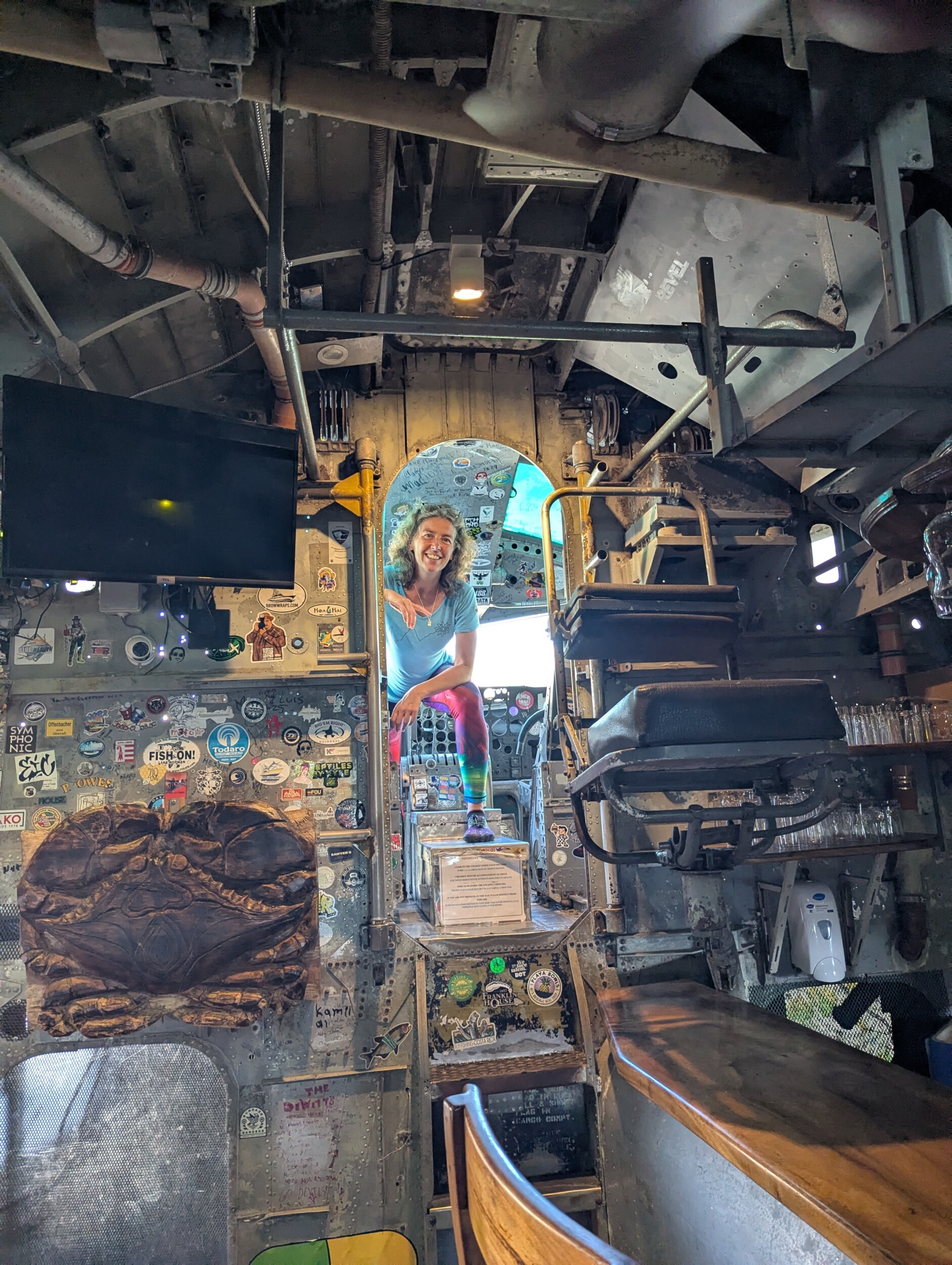
El Avion is located along the road from Quepos to Manuel Antonio and is a bar-restaurant with a special story. The terrace is built around an old airplane (hence the name) and offers a nice view over the coast. It’s a popular stop for a drink or meal, especially for sunset. Expect tourist prices, but the setting and view make it worthwhile.
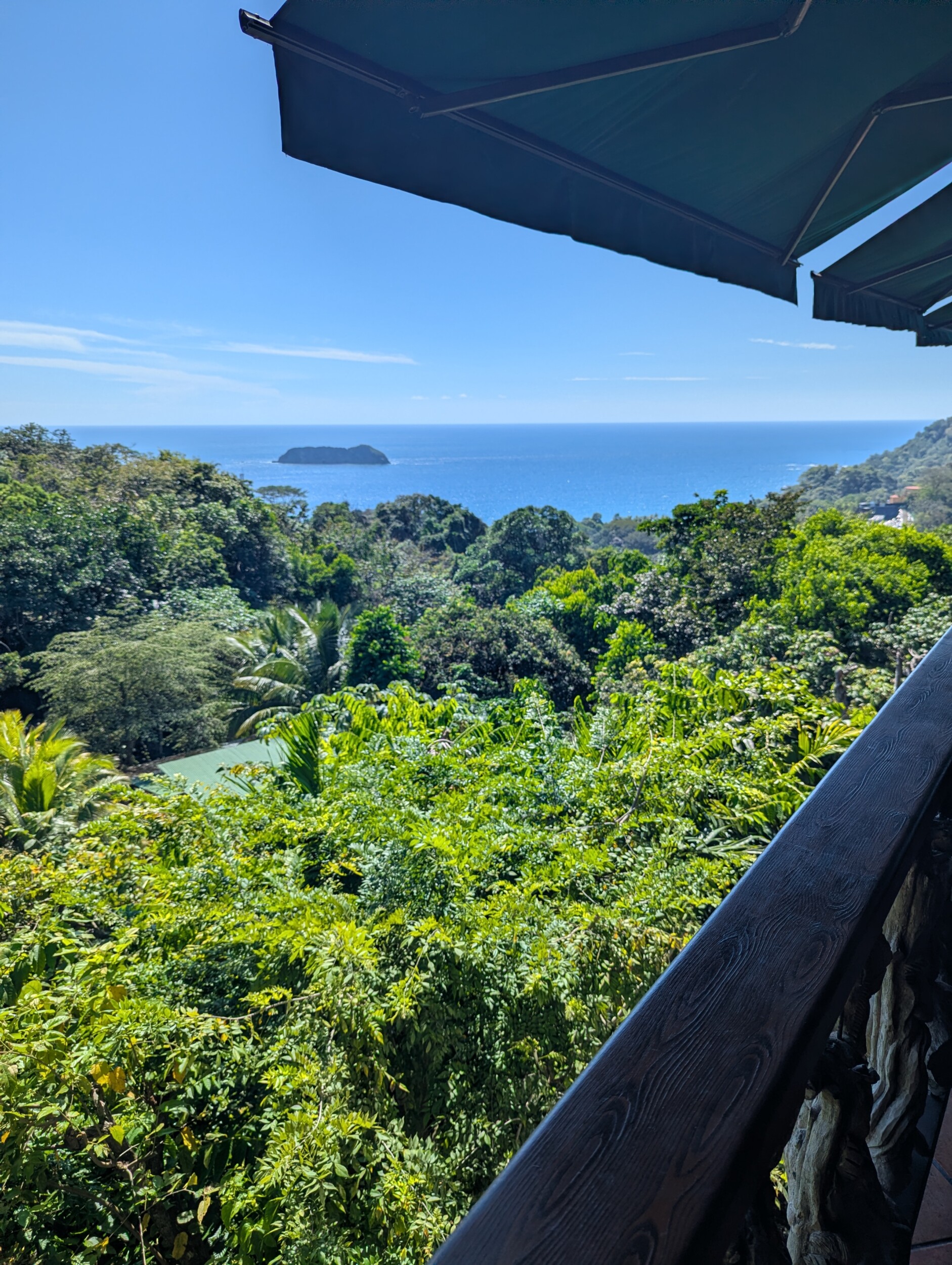
Quepos town centre also has good local restaurants, especially for fresh fish. These are often much more authentic and affordable than the options directly at the national park. The strip near the park itself mainly has tourist restaurants, including Café Milagro, which I read is a good choice for breakfast.
Is Manuel Antonio Worth Visiting?
Consider Manuel Antonio if:
- You want a first introduction to Costa Rica’s nature and easy accessibility is important
- The beach is a priority – because it really is beautiful
- You’re willing to spend money on a guide for wildlife spotting
- You’re willing to walk to Punta Catedral and leave the masses behind
- You have limited time and are in the area
Skip Manuel Antonio if:
- You don’t want to deal with large groups of tourists
- You’ve visited or will visit other Costa Rican parks
- Budget is an issue (entrance + guide gets expensive quickly)
- Crowds and commercialization bother you during nature experiences
Alternatives and Additions
Better parks for nature experience:
- Corcovado National Park (South Pacific) – wild nature, less accessible but much more authentic
- Arenal Volcano National Park + Hanging Bridges – spectacular combo of volcano/rainforest and the hanging bridges (read about my visit)
- Monteverde Cloud Forest – completely different ecosystem, less crowded
Combine smartly: If you’re in the region anyway, make a loop:
- Mangrove tour in Quepos
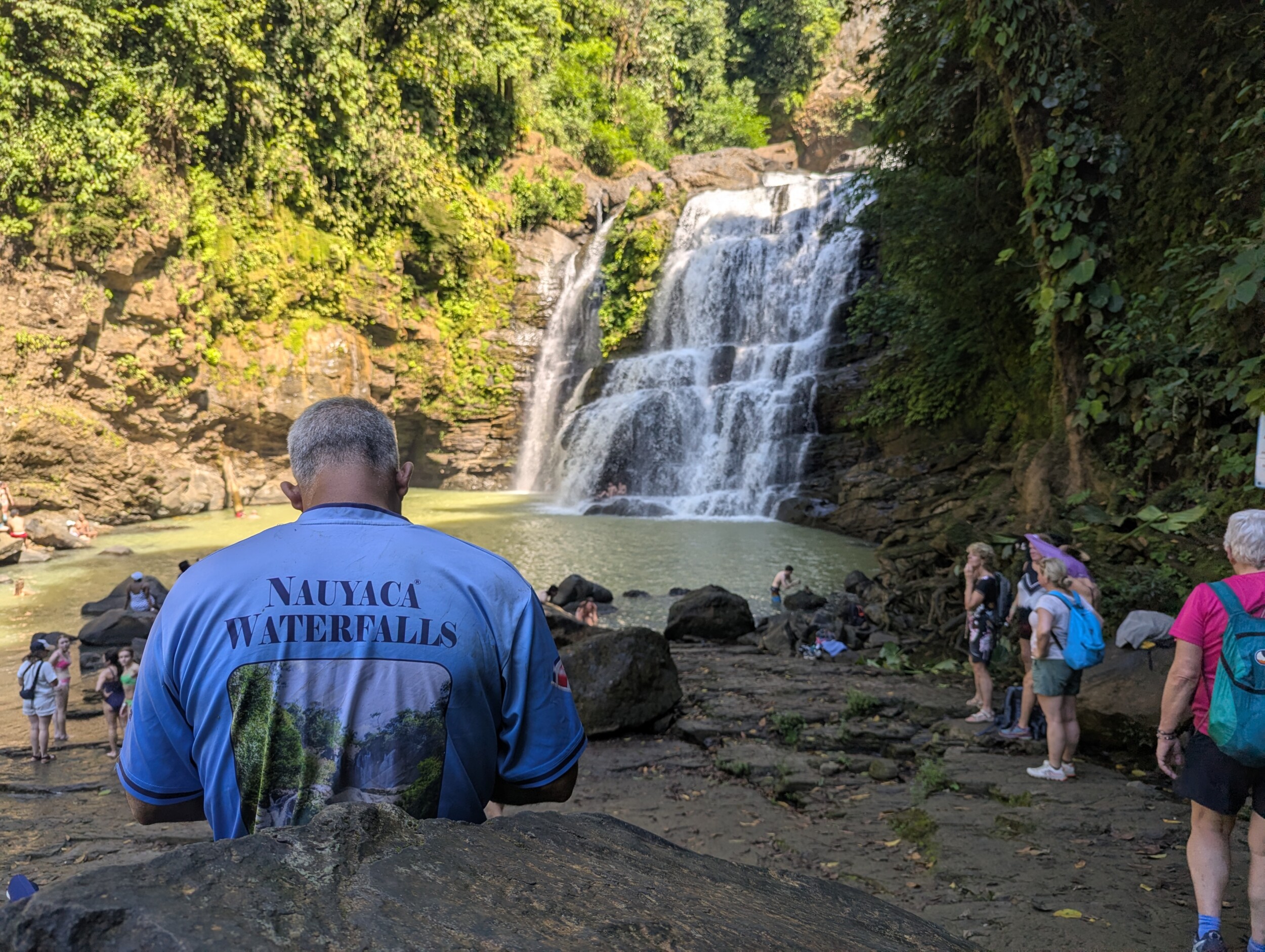
- Nauyaca waterfalls (direction Dominical) – active hike and beautiful nature experience
- Uvita for whale watching (July through November) and quiet beaches
Quepos and Surroundings: Practical Tips
Getting there:
- From San José: 3-3.5 hours drive by rental car via well-paved roads
- Public transport: Direct buses from San José (±5 hours)
- Local: Bus between Quepos and Manuel Antonio runs every 20 minutes (±$0.50)
Accommodation:
- Stay in the hills around Manuel Antonio for peace and views (La Comarca River Glamping or Guest House Pura Vida for example)
- Quepos center for budget and more local atmosphere
- Book well in advance in high season (December-April)
My Conclusion
Manuel Antonio National Park is beautiful, no doubt. The beach is gorgeous and with a guide you spot wildlife you’d otherwise miss. The Punta Catedral peninsula offers a real nature experience. But the main trail is the most commercialized piece of nature in Costa Rica, and you notice it painfully.
The key to a good experience in Manuel Antonio:
- Consider a guide if you have little experience with wildlife spotting – they see what you miss
- Go early to avoid the biggest crowds
- Invest time in Punta Catedral after the main trail – there you’ll find peace and authentic jungle experience
- Enjoy the beach – because it’s truly beautiful
- Eat in Quepos at El Gran Escape for good lunch without tourist prices
- Stop at El Avion for the unique setting and view
If this is your first stop in Costa Rica, it will probably amaze you. If you’ve already visited other parks, the crowds will disappoint you. The combination with a mangrove tour and staying in quieter areas around it made the visit complete for me, but Manuel Antonio itself wouldn’t be my first choice for a second visit to Costa Rica.
My advice: Go for the beach, take a guide if you want to spot wildlife, and discover Punta Catedral for the real nature experience. But adjust your expectations and realize this is Costa Rica’s least ‘wild’ national park.
This article contains affiliate links. If you book or purchase something through one of these links, we may receive a small commission at no extra cost to you.