
Finisterre sits at the tip of a peninsula in Galicia, wedged between the Atlantic Ocean and the notorious Costa da Morte. The name says it all: the end of the earth. The Romans called it Finis Terrae because they believed the world stopped here. We know better now, but the feeling holds. Stand here with the ocean in front of you and you’ll understand why people have been making their way to this place for centuries.
Finisterre — or Fisterra, as the Galicians call it — is a small fishing village with narrow streets, a lively harbour and beautiful beaches. For many pilgrims it marks the end of the Camino. But you don’t have to have walked here to feel something.
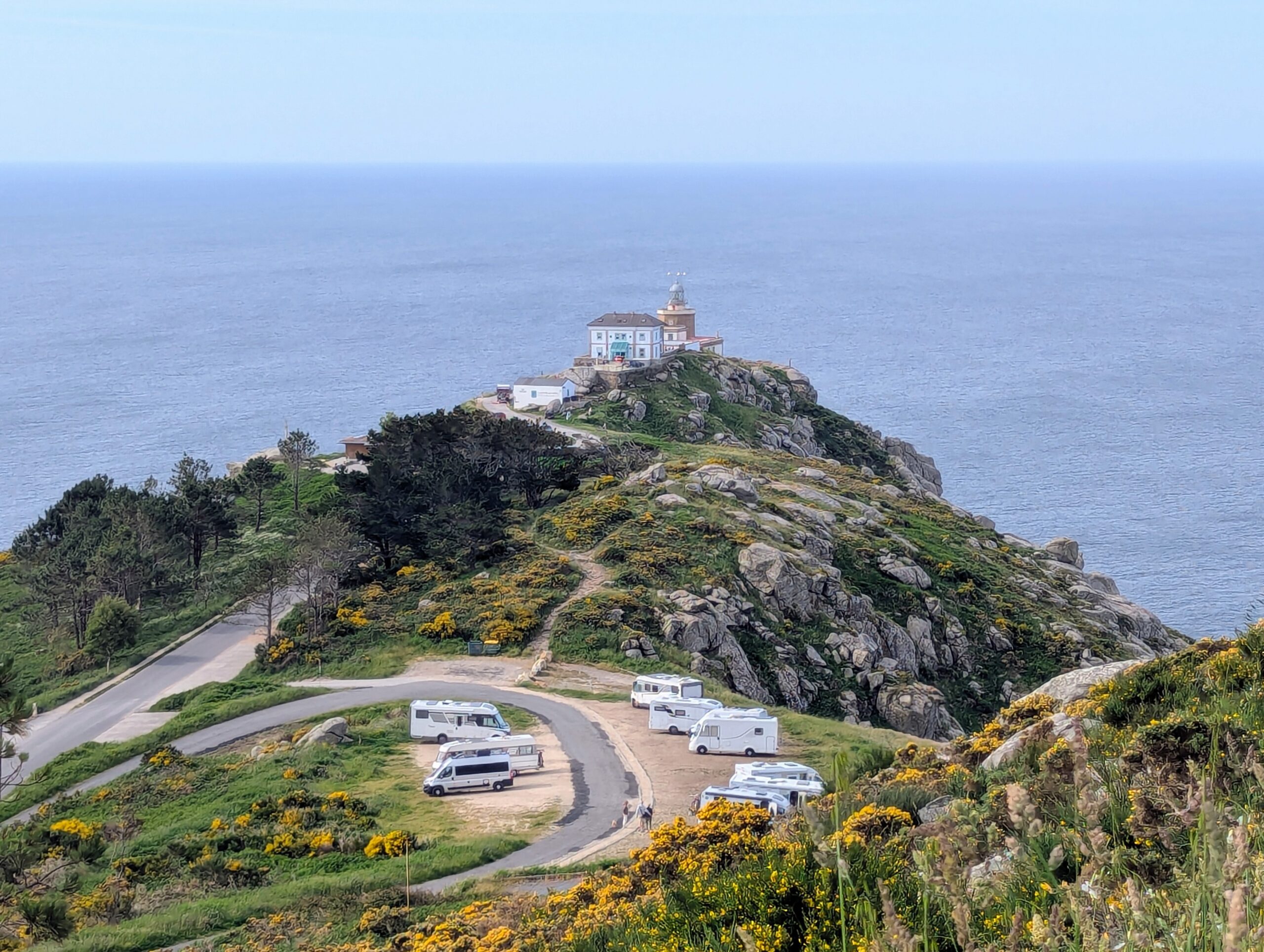
Things to Do in Finisterre: Cabo de Finisterre, the Lighthouse and the 0.00 km Marker
The cape lies just over three kilometres outside the village, at the end of a narrow road along the coast. Here stands the lighthouse of Fisterra, built in 1853 and still in use today. From the rocks beside the lighthouse you look out over an ocean with no visible end. On a clear day you can see the coastline of Portugal in the distance. In fog, the atmosphere is darker but just as powerful.
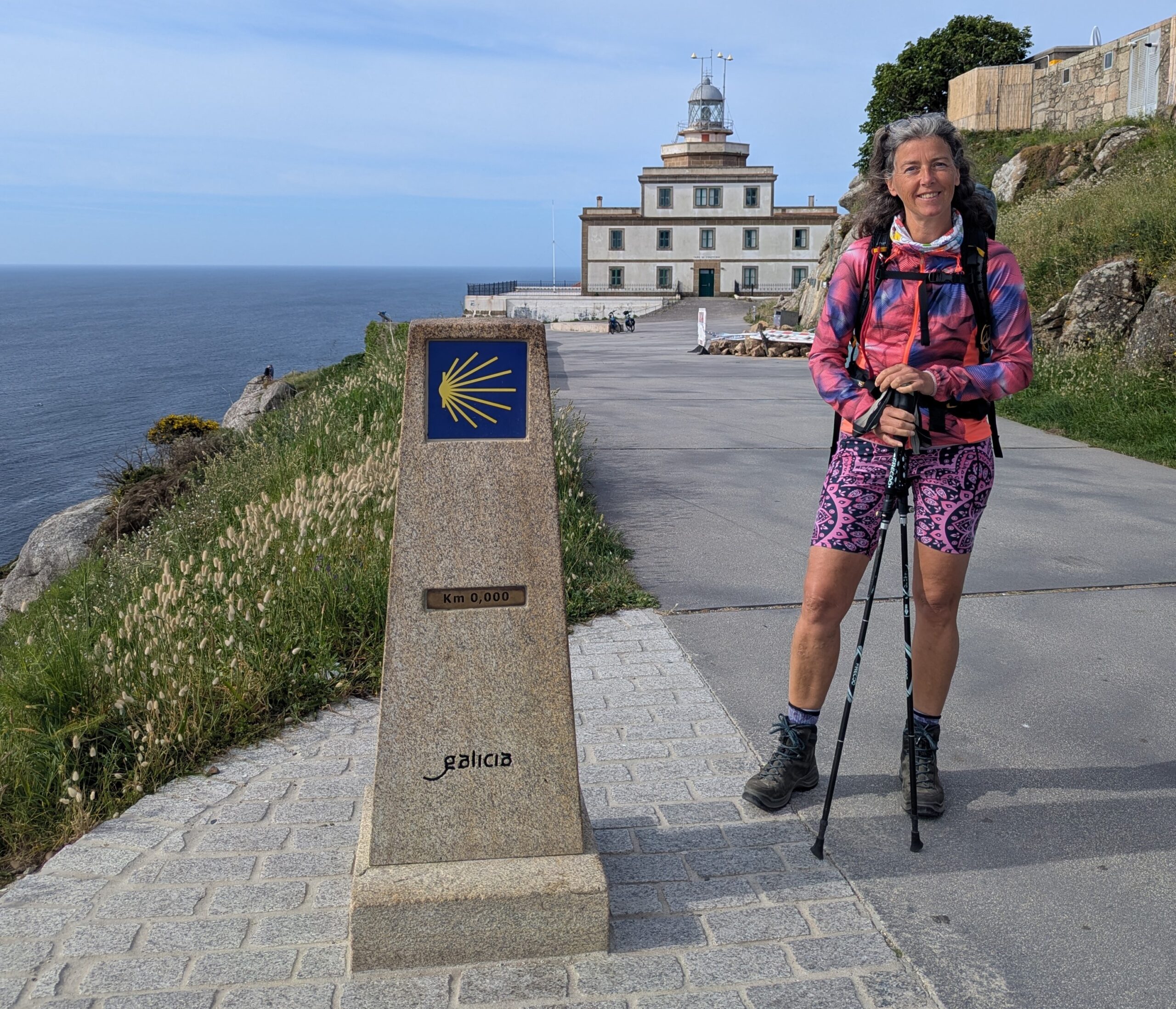
Finisterre is best known for the 0.00 km marker of the Camino Finisterre. Pilgrims come here to mark the completion of their journey. But even if you arrive by bus or car, this point carries something with it. Something symbolic that is hard to put into words.
Walk past the marker, along the lighthouse, towards the very tip of the cape, and you’ll find two small monuments. First, a tiny bronze walking boot placed on a rock with the ocean behind it. A simple but striking image. The story behind it is less poetic: the boot was placed there to discourage pilgrims from leaving their actual shoes at the cape. The symbolic gesture is beautiful; the practice was messy and no longer appropriate. The bronze boot is the tidy compromise.
Further on, at the absolute end point, a stone cross on a plinth. People leave small stones and personal objects at its base, much like at the Cruz de Ferro along the Camino. It is a place to sit. To close something, or let something go.
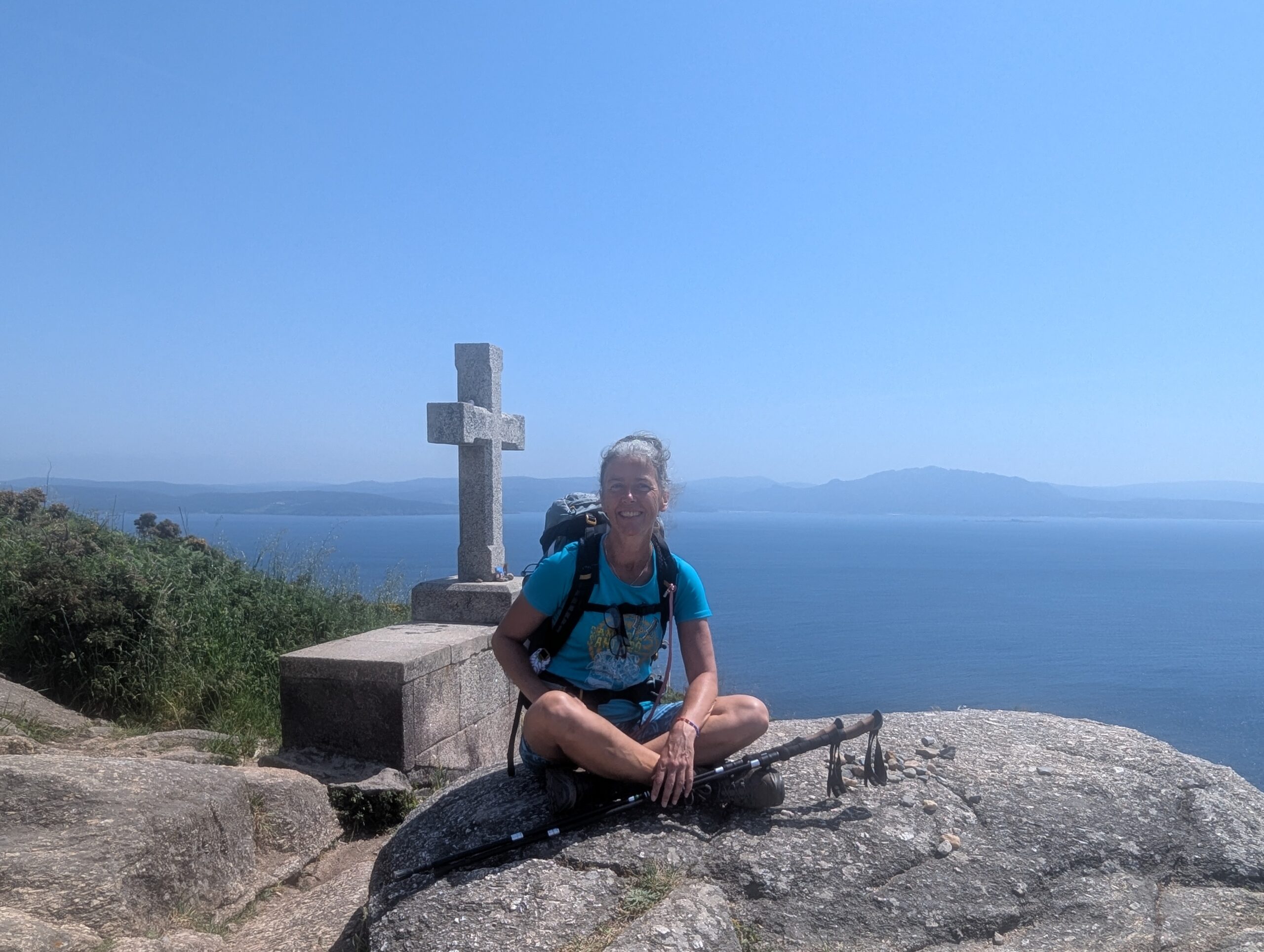
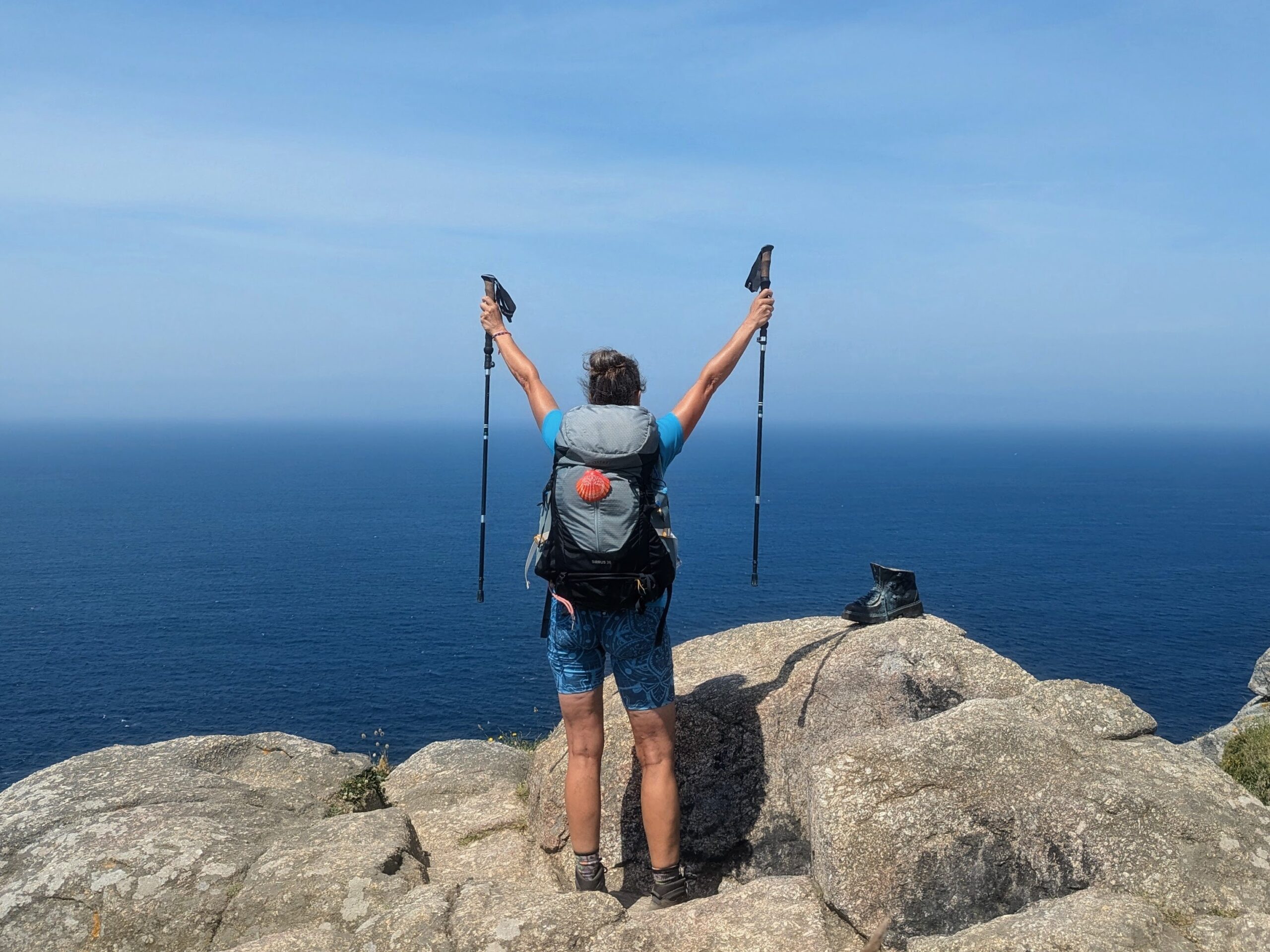
You don’t have to have walked here to feel that.
Practical tip: search for “Faro de Finisterre” on Google Maps, not “Cabo de Finisterre.” The second option sends you to a different location, far from the lighthouse.
One more thing: just like in Santiago, a bagpipe player often performs near the lighthouse. The sound of bagpipes with the Atlantic as a backdrop makes arriving at this point feel complete.
The Beaches of Finisterre
Finisterre has four beaches, each with its own character. They are within walking distance of each other but feel completely different.
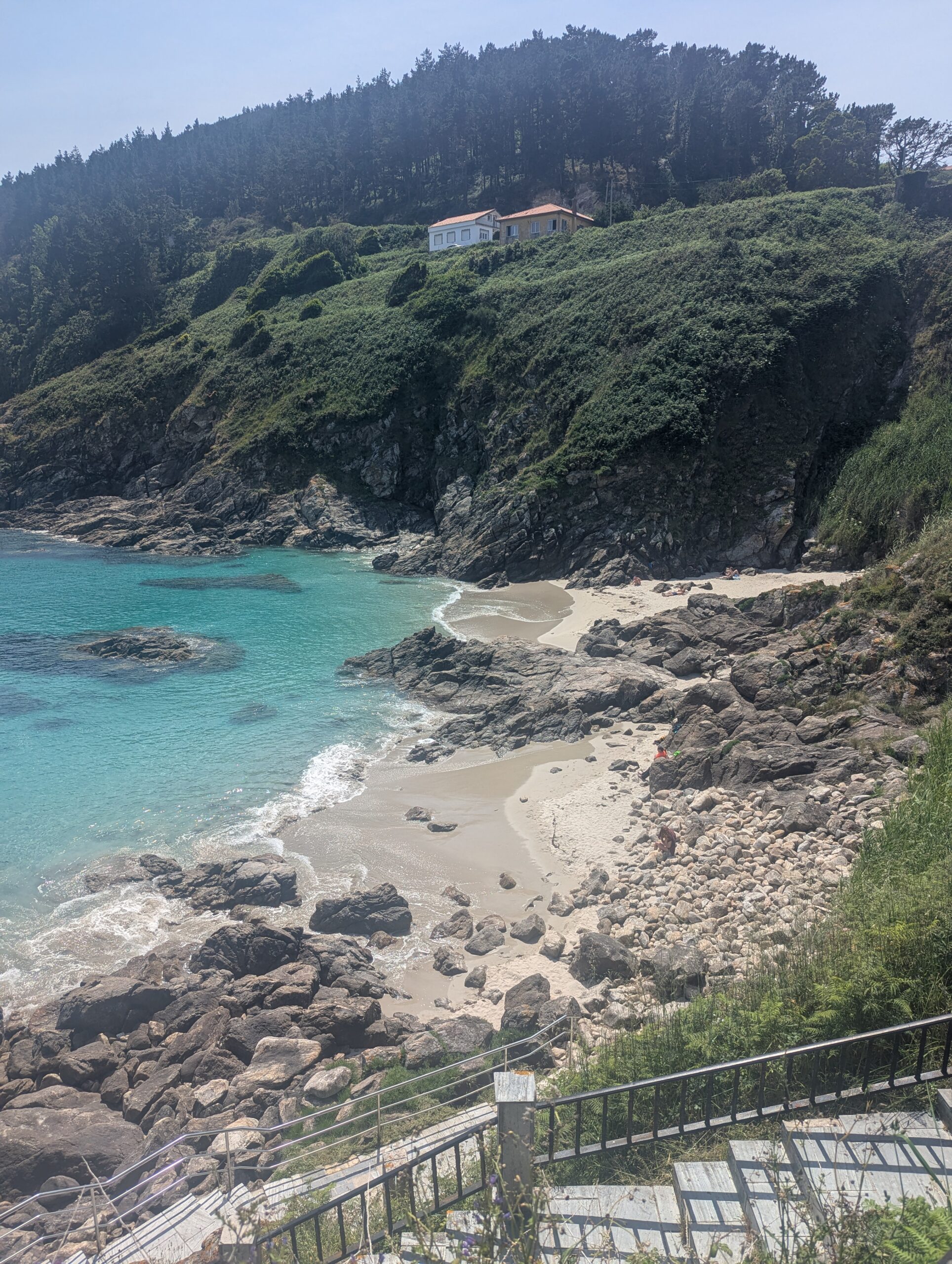
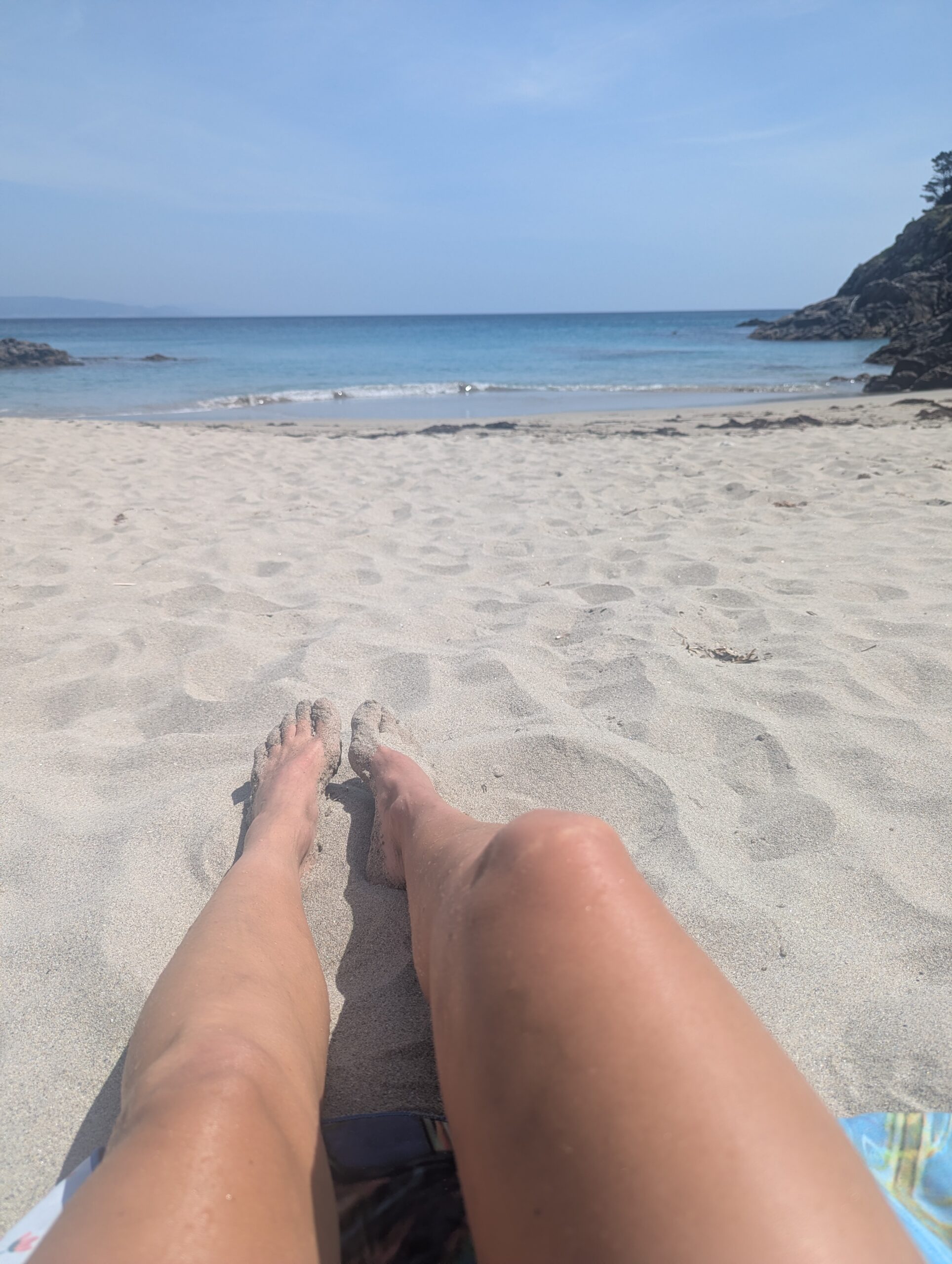
Praia Corveiro is the most beautiful of the four. It lies sheltered, tucked between rocks, at the foot of the Iglesia de Santa María das Areas. The water is turquoise and calm, the spot is atmospheric and rarely overcrowded. I swam here and spent a long time lying on the sand after a full day of walking from Cee. If you look carefully at the map you can find the steps that lead down to this little beach. A friendly Galician woman pointed me in the right direction when I asked, because I had walked straight past the half-hidden path.
Praia de Ribeira is the beach in the village itself. When I visited it was not particularly inviting, with quite a lot of seaweed on the shore. It is more of a working harbour beach than a swimming beach.
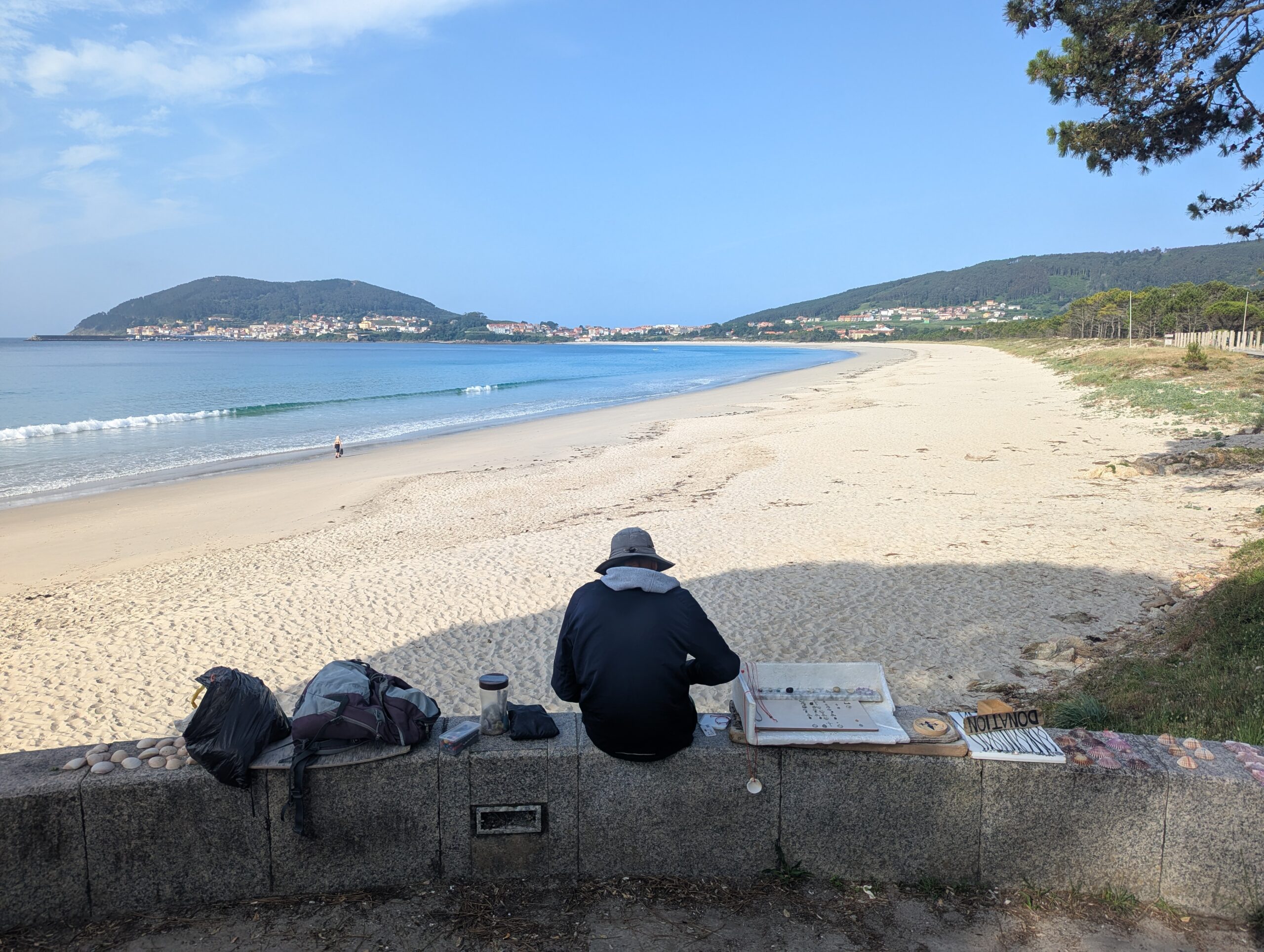
Praia da Langosteira is the first beach you reach when you walk or drive into Fisterra. It is long and wide, with sand stretching far in both directions. This is where pilgrims traditionally wash their feet on arrival. And if you are lucky, you might find a scallop shell here.
Praia do Mar de Fóra faces the open Atlantic. Wide, raw, with strong surf and powerful currents. Swimming is strongly discouraged here. But it is a beautiful beach to walk along, and one of the finest spots in the area to watch the sunset.
Walking Through the Village
Fisterra is small. An hour of wandering is enough to explore the centre, but there are enough small shops and coffee spots to keep you longer than you planned. The narrow streets in the old part of the village run down to the harbour, the Praia de Ribeira. Fishing boats lie moored here. Life goes on, even when pilgrims and tourists are around.
At the harbour stands a large anchor monument, the Ancora. Not a highlight in itself, but it gives the harbour its character.
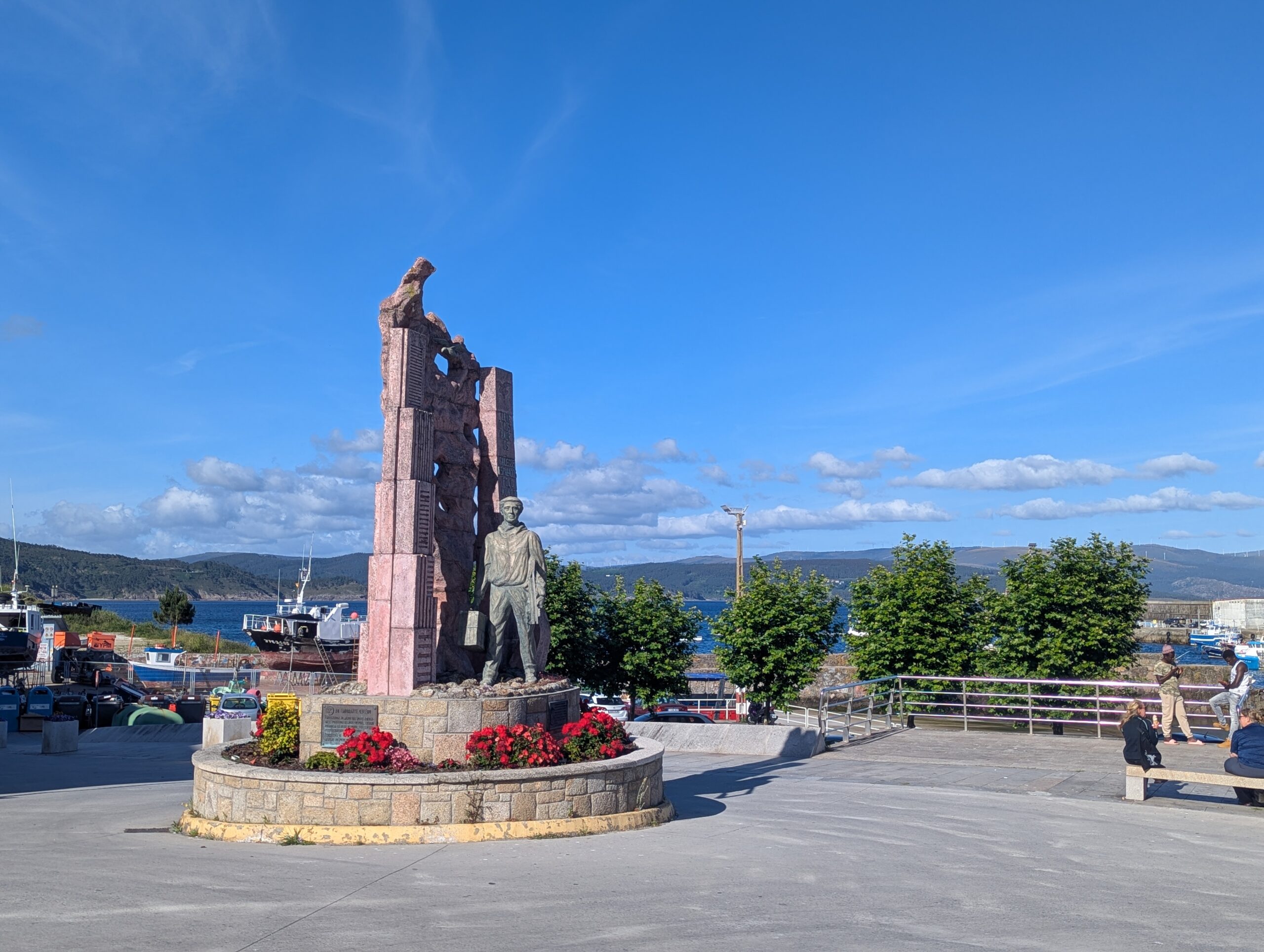
Also hard to miss: the Monumento ao Emigrante, which stands prominently at the busiest junction in the village. This is also where you will find the bus station and a small information point — useful if you are planning to continue to Muxía.
In the centre lies the Plaza de Arasolis, the main square. A good place to sit for a while. At the edge of the village, on the road towards the lighthouse, stands the Iglesia de Santa María das Areas. More on that church below. Just before the church you will find Praia Corveiro.
The small fishing museum in the village is worth a visit if you want to learn more about the maritime history of the Costa da Morte. Affordable, and better than it looks from the outside.
An Ice Cream at Bajo 14 Helado
Personal tip: go to Bajo 14 Helado for an ice cream served in a bubble waffle. I had one of the best ice creams of my entire trip there. It was generous enough to replace my lunch and absolutely worth it. After a long day of walking, why not.

Eating at the Harbour
Along the harbour you will find a row of good restaurants with sea views. I have eaten at several of them on different visits and found the quality consistently good. On my last trip we ordered fresh salads to share, so everyone could try a bit of everything, along with good bread. A simple dinner that was genuinely excellent.
Iglesia de Santa María das Areas
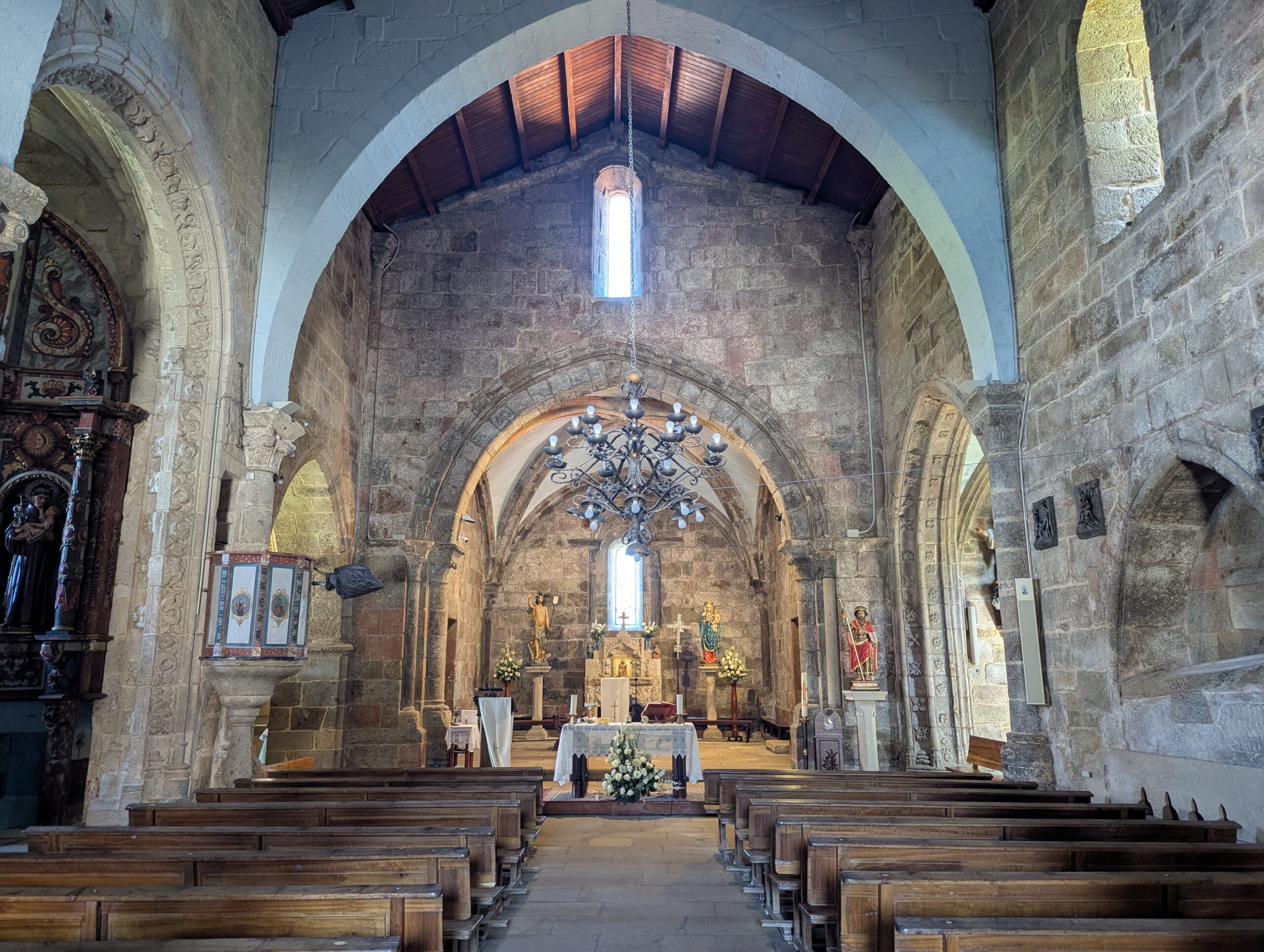
At the edge of the village, on the road towards the lighthouse, stands the Iglesia de Santa María das Areas. A Romanesque church from the twelfth century, extended over the centuries with Gothic and Baroque elements. Praia Corveiro lies just in front of it.
But the church is more than its architecture. I was there during a service. The priest, who was Asian, made it remarkably personal: near the end of the service he invited everyone to come forward and gather in a circle around the altar. He asked each of us, one by one, where we were from. Then he gave us his blessing. It was a small gesture that moved me more than I expected, in a place that marks an ending for so many people. Whether you are religious or not.
The Sunset
The lighthouse is the classic spot. In the evening, pilgrims and visitors gather to watch the sun drop into the ocean. In June, the sun sets late here, sometimes close to midnight. It can get busy, but it remains a remarkable moment if you are closing a period of walking.
For something quieter, head to Praia do Mar de Fóra. The same light, fewer people, further from the village.
Day Trip: Ézaro Waterfall
About thirty minutes by car from Finisterre lies the Ézaro waterfall, the only waterfall in Europe that flows directly into the ocean. A remarkable sight, especially after a rainy period. It is on my list for a future visit.
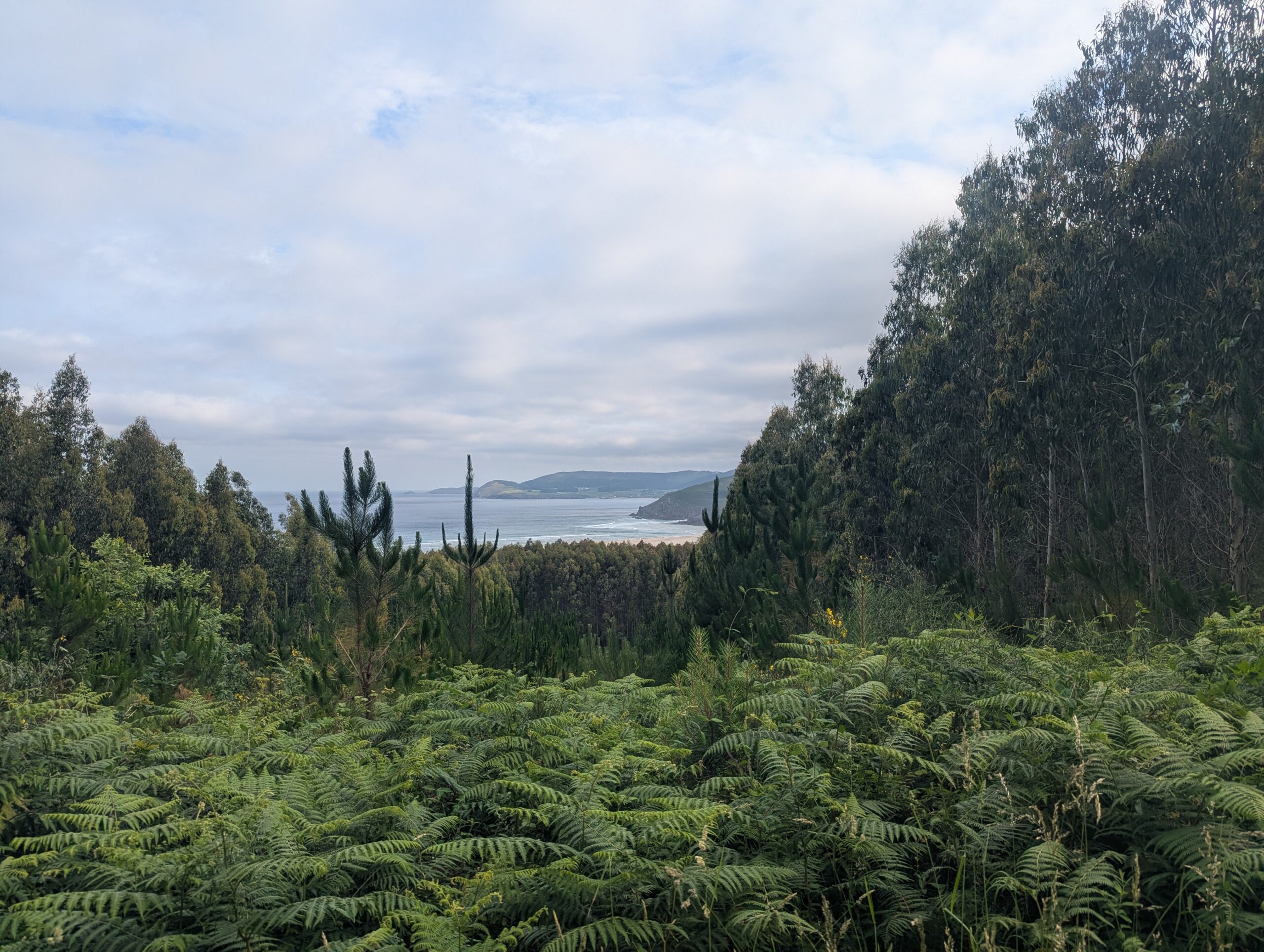
Muxía lies around 30 kilometres along the coast and is an alternative symbolic end point for Camino pilgrims. The Santuario da Virxe da Barca stands on a rocky headland above the sea. If you have an extra day, walking the coastal route from Finisterre to Muxía is without doubt the most beautiful way to get there. The route is close to 30 kilometres with several lovely stops along the way. I walked it myself and can recommend it wholeheartedly.
How to Get There
From Santiago de Compostela, Monbus runs several buses a day to Fisterra. The journey takes roughly two to three hours. Tickets are inexpensive and can be booked online. There is no train to Finisterre.
If you have a hire car, the drive from Santiago takes about an hour and a half.
How to Continue
Walking to Muxía? The coastal route of nearly 30 kilometres is a beautiful walk with several good stops along the way. I can recommend it without hesitation.
Prefer the bus? Buses to Muxía depart daily from the bus station near the Monumento ao Emigrante. There is also an information point at the station where you can check current timetables and get further travel advice.
When to Go
The best time to visit is between May and September. July and August are busier but more reliably sunny. May and June are pleasant: not yet crowded, the light is beautiful and the Costa da Morte is at its greenest. September is quiet and warm.
In winter, Finisterre is quiet but still impressive. Come prepared for wind, rain and few places open.
How Long to Stay
One day is enough for a first visit. With an overnight stay you can watch the sunset in the evening and explore the village the next morning without rushing.
Where to Stay
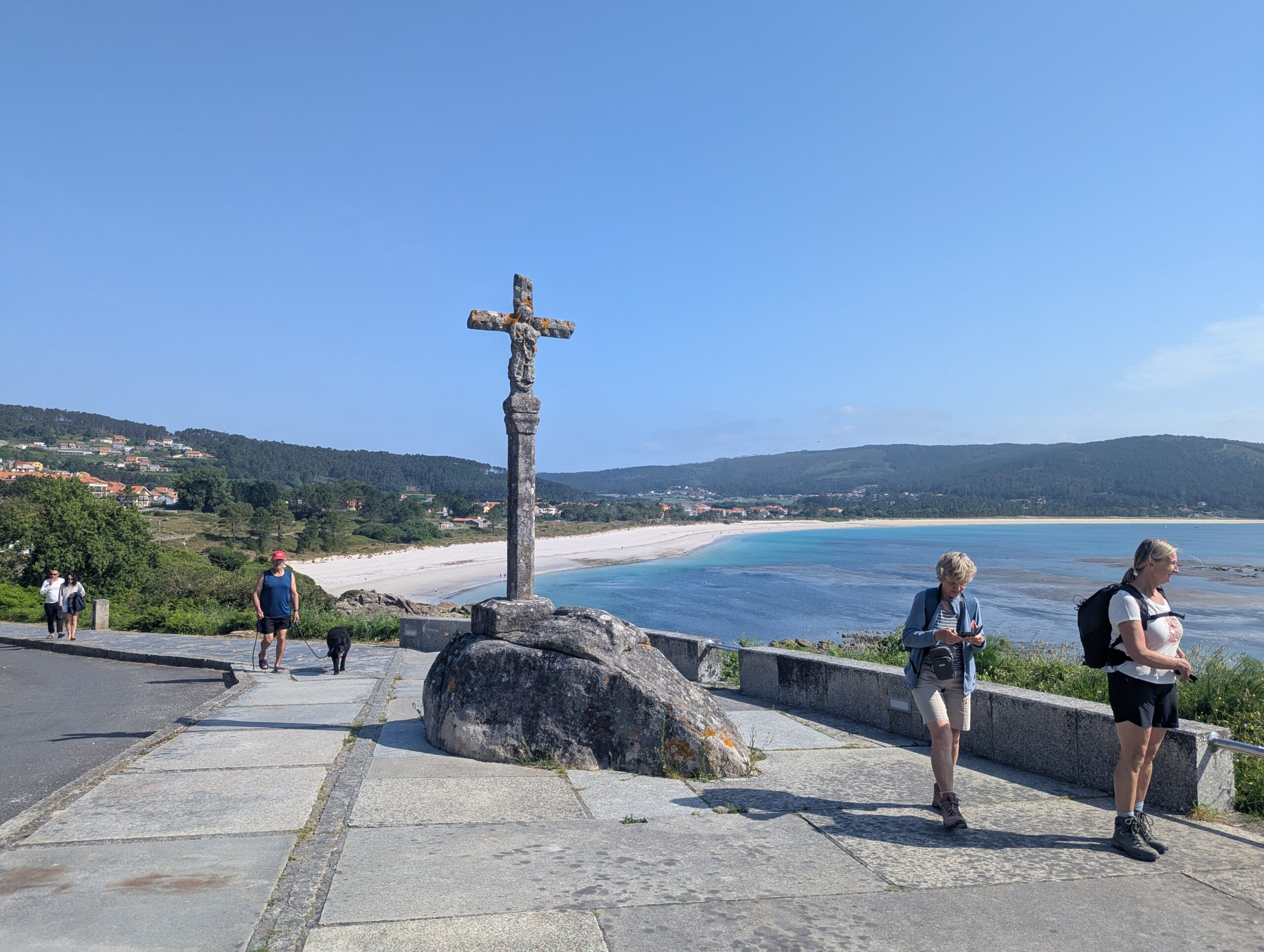
Are you a pilgrim staying in an albergue, or do you want a little more comfort at the end of your journey? I have stayed at Pensión Finistellae and Albergue Arasolis. If you want more of a holiday feeling, Hotel Sempre Fisterra has a great location in the village close to the harbour. Cabañas Fisterra is the most comfortable option if you prefer to be outside the centre, with views over Praia da Langosteira and a private outdoor pool.
On every trip I bring my own reusable water bottle #ad. My goal is to cut out single-use plastic, and refilling instead of buying is one of the easiest ways to do that as a traveller. A foldable bag #ad for small purchases also helps reduce unnecessary plastic waste along the way.
This article contains affiliate links. If you book or purchase something through one of these links, we may receive a small commission at no extra cost to you.
Also read