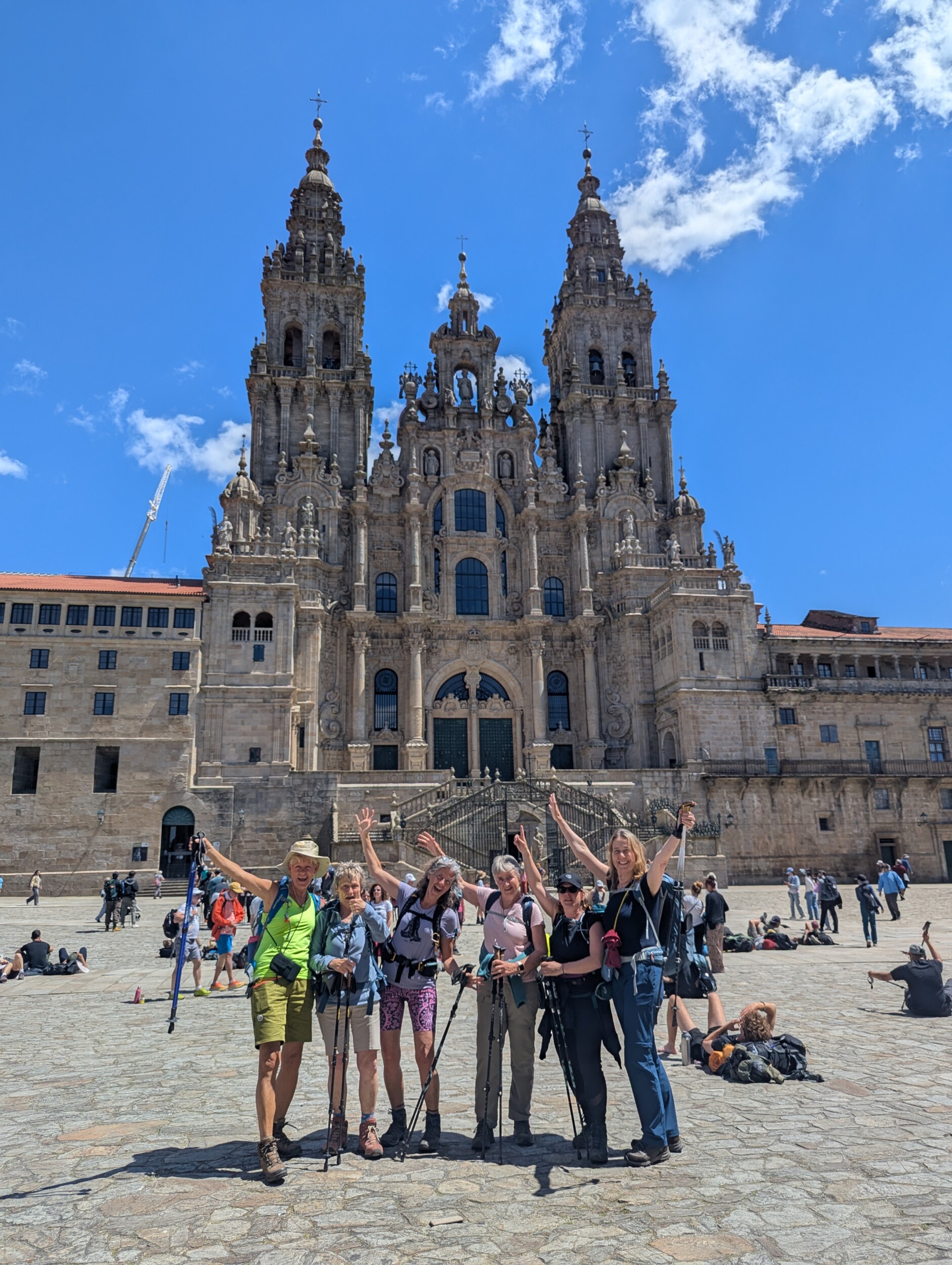
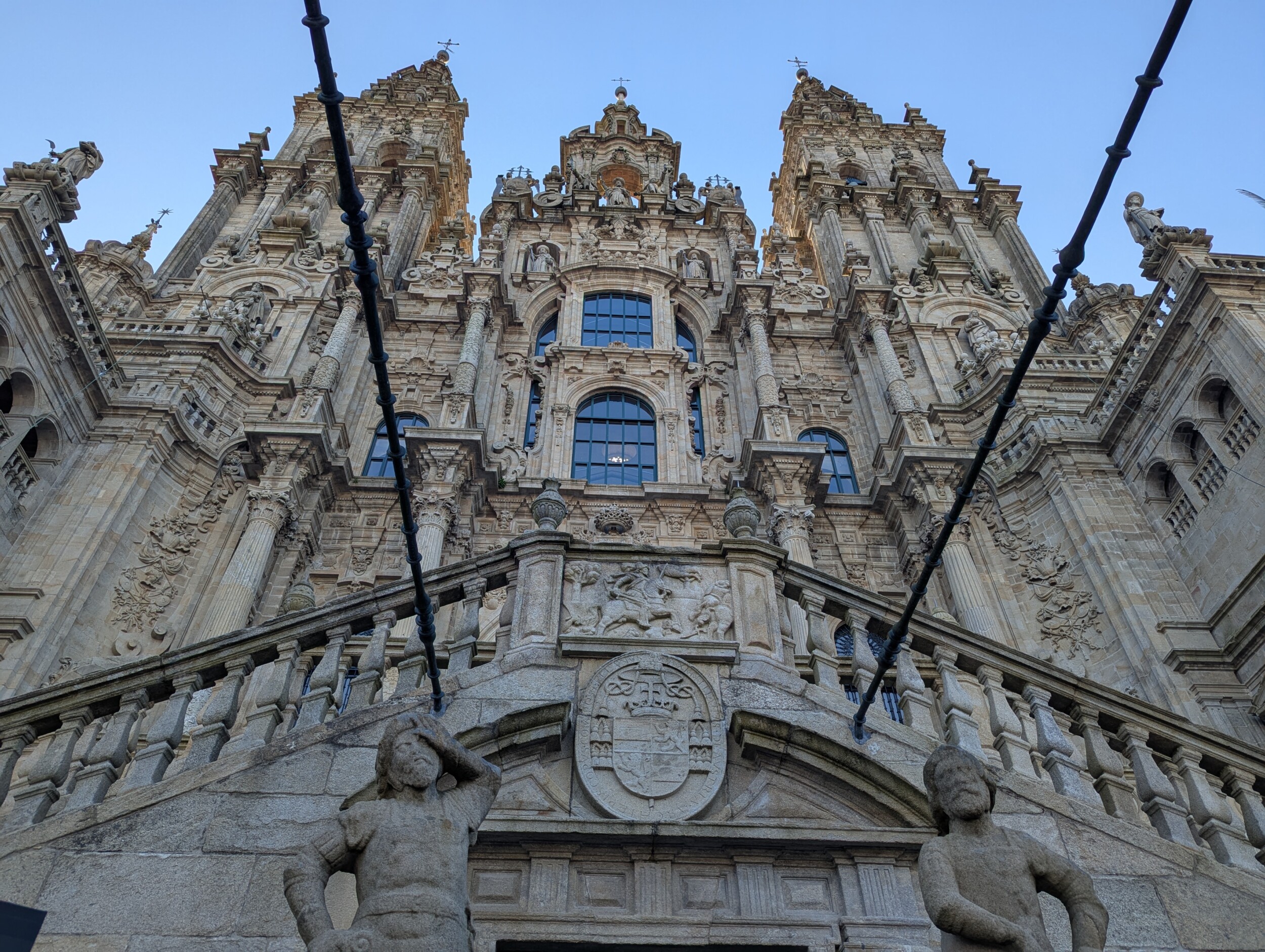
Do you know that feeling when you think your pilgrimage is over, but there’s actually so much more to discover? That’s how I felt when I stood in Santiago de Compostela in May 2025. After walking the last 200 kilometers of the Camino Frances as a guide and organizer of my pilgrimage tour, I stood there with a strange feeling.
Read this personal account of three days walking the Camino Finisterre from Santiago de Compostela. This complete Camino Finisterre guide includes detailed stage-by-stage descriptions, practical tips, costs, and everything you need to plan your own pilgrimage to the End of the World.
After my first complete Camino in 2016, I walked shorter sections multiple times. By now, I had guided groups of pilgrims several times along the last 200 kilometers of the Camino Frances. In 2025, I chose to walk alone again for the first time, from Santiago to Finisterre.
For the first time since 2019, I walked alone on a camino in Spain again. Without a plan, without having arranged anything. And instead of resting between pilgrimage tours 3 and 4 in spring 2025, I decided to continue walking to what the Romans considered the end of the known world: Finisterre.
And truly, it felt like I was back in 2016, when everything was still new and unknown.
Why Walk the Camino Finisterre After Santiago?
The Camino Finisterre feels different from all other pilgrimage routes. This walking guide covers the 89-kilometer journey from Santiago de Compostela to what the Romans called “the end of the world” – Cape Finisterre. It’s an extension, an epilogue to your Camino story. Where other Camino routes lead you to Santiago, this pilgrimage route takes you away from the crowds, to the wild coast of Galicia.
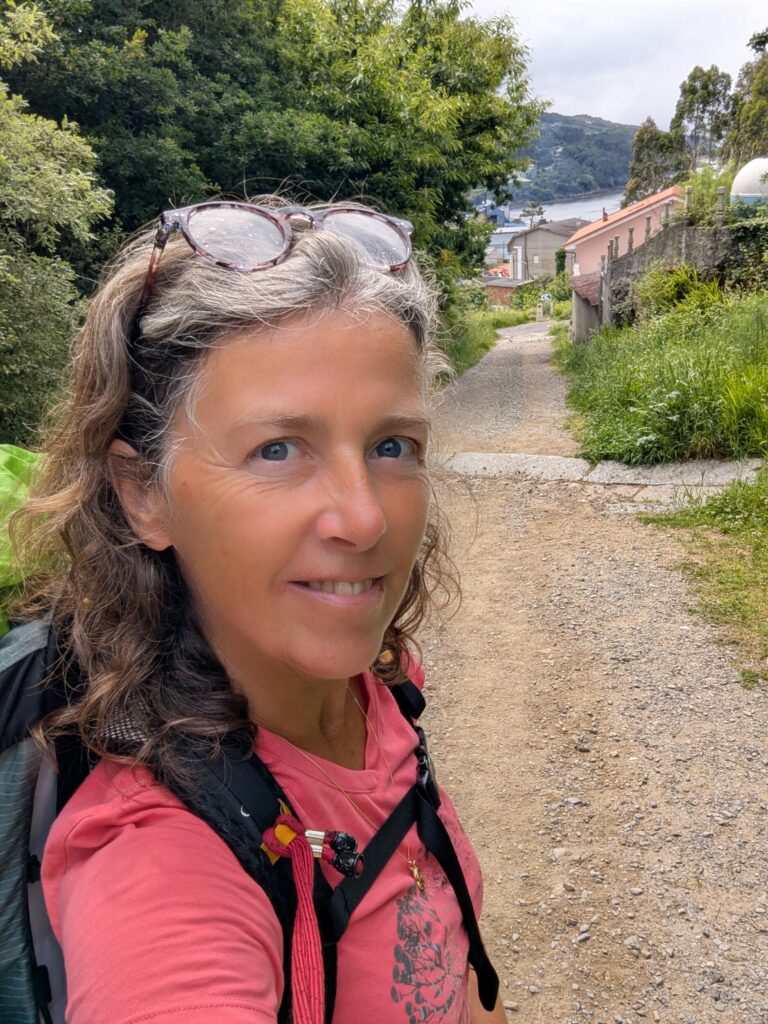
Walking again without a plan, without a schedule, without responsibility for others was wonderful! On a very quiet Camino too, it truly felt like a gift. Emotionally, I was again the fresh pilgrim I was in 2016, that wonderful feeling of complete freedom and uncertainty at the same time. When everything was still new, when each day brought a surprise.
The Camino Finisterre Walking Route: Essential Facts
- Total distance: 89.5 kilometers from Santiago de Compostela to Finisterre
- Walking duration: 3-4 days walking at a comfortable pace
- Extension to Muxía: Extra 28 kilometers possible for those wanting to visit both endpoints
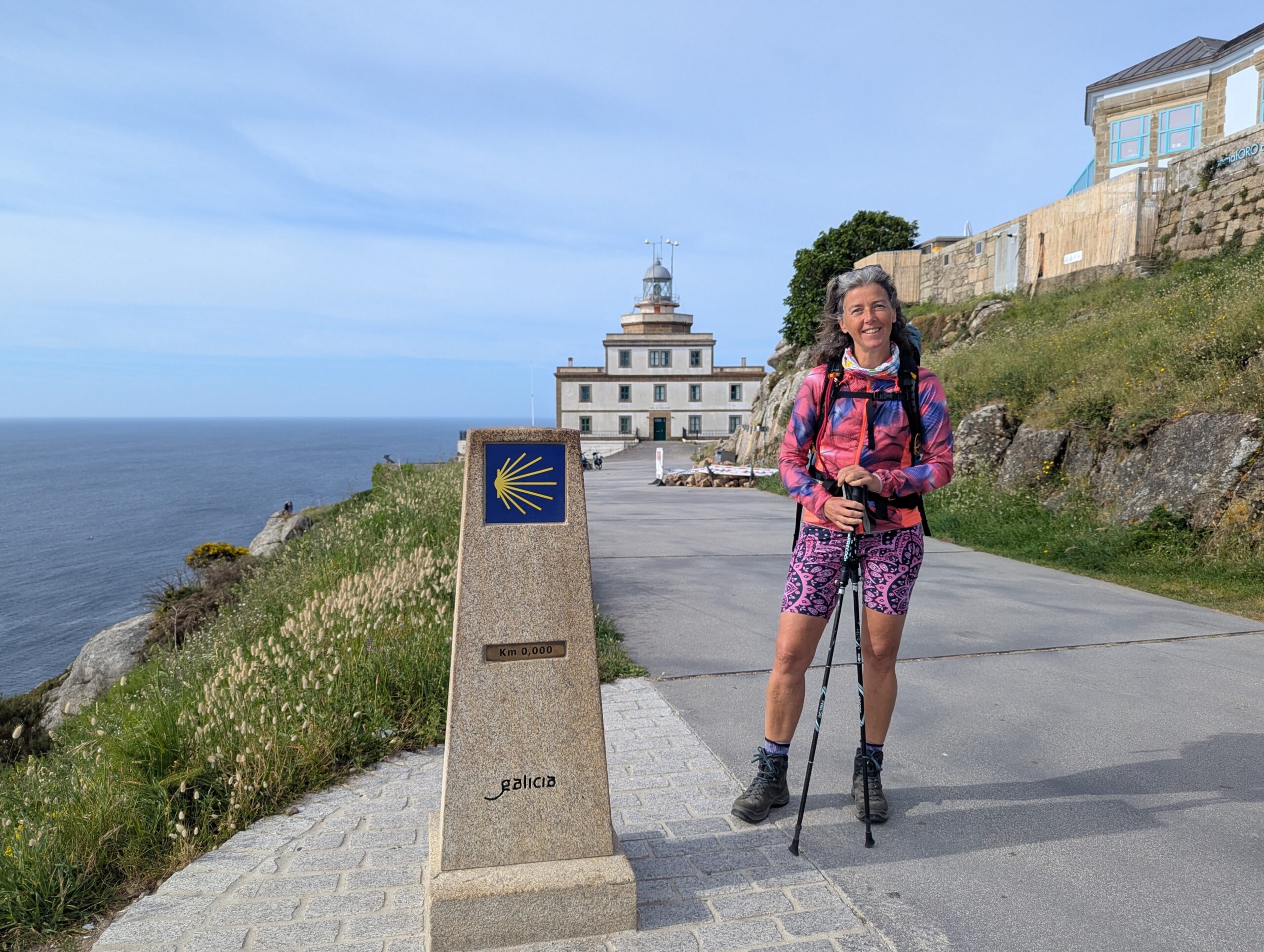
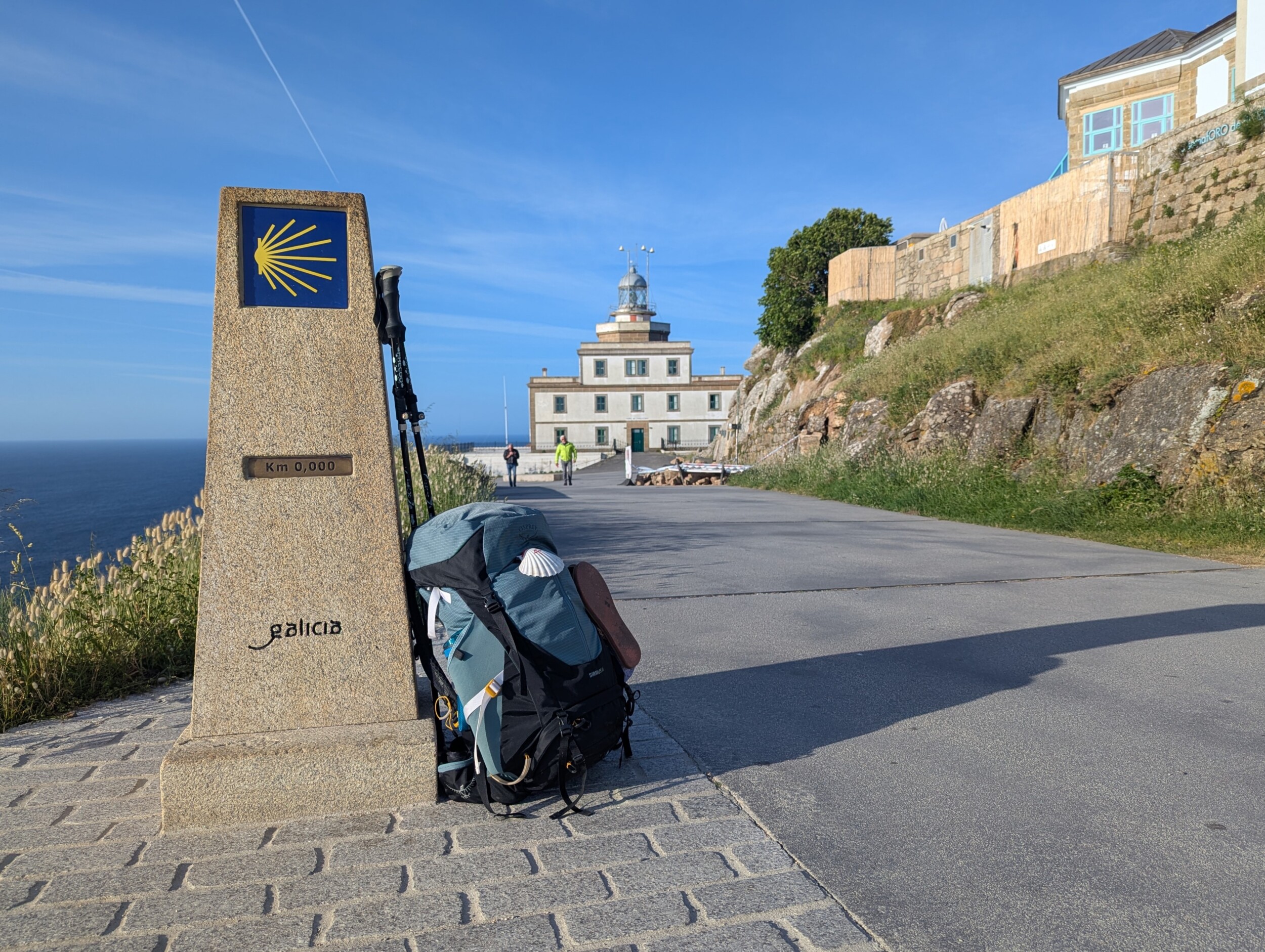
- Special feature: Ends at the symbolic kilometer marker 0.0 – The end of Europe
- Difficulty: Moderate, with some challenging elevation changes (suitable for pilgrims with basic fitness)
How to Walk the Camino Finisterre: Complete Stage-by-Stage Guide
Stage 1: Santiago de Compostela to Negreira (21 km)
Walking time: 5-6 hours | Elevation gain: 215m climb to Alto do Mar de Ovellas
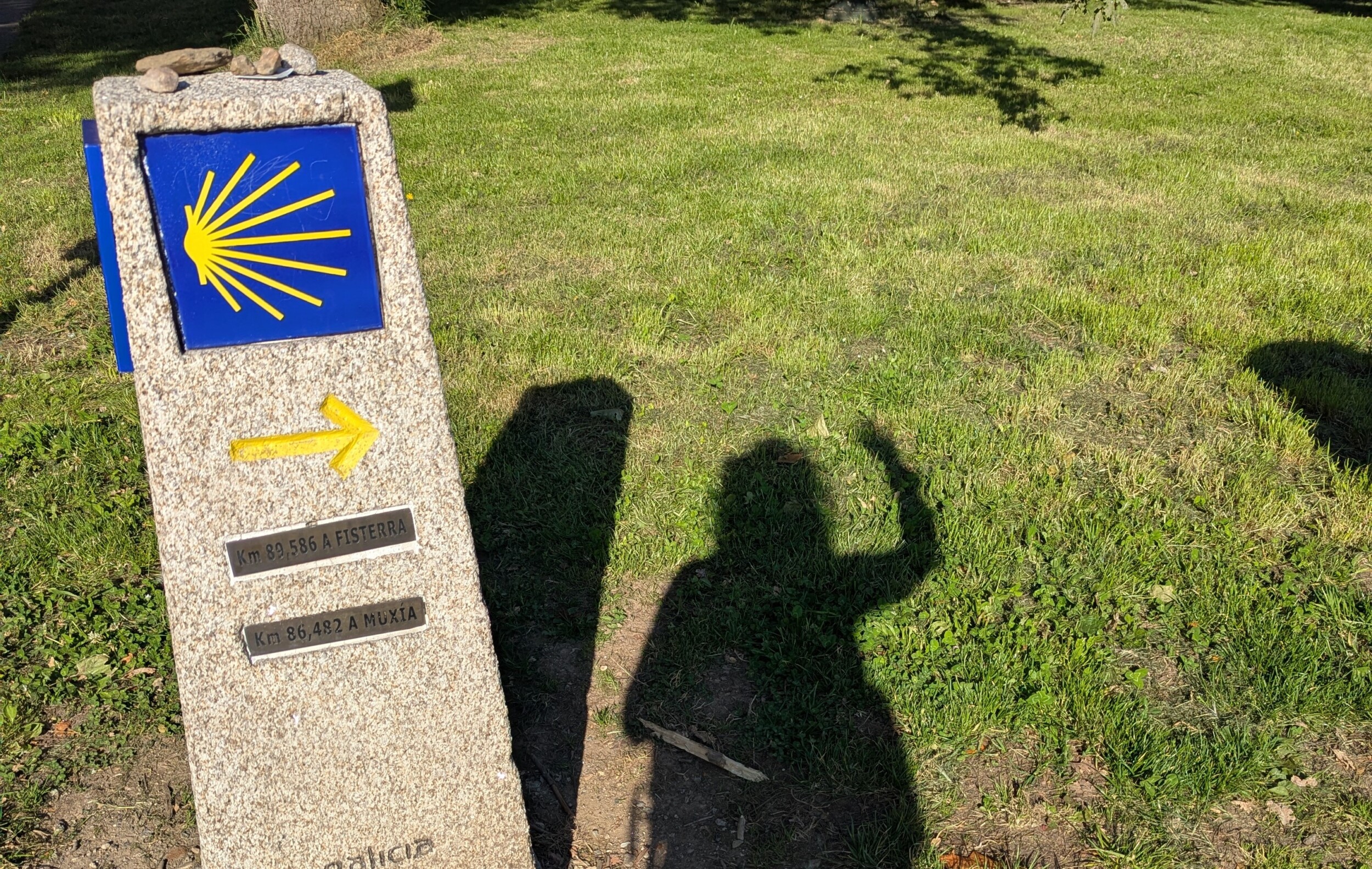
Route highlights:
- Ponte Maceira: 12th-century bridge, one of Spain’s Most Beautiful Villages
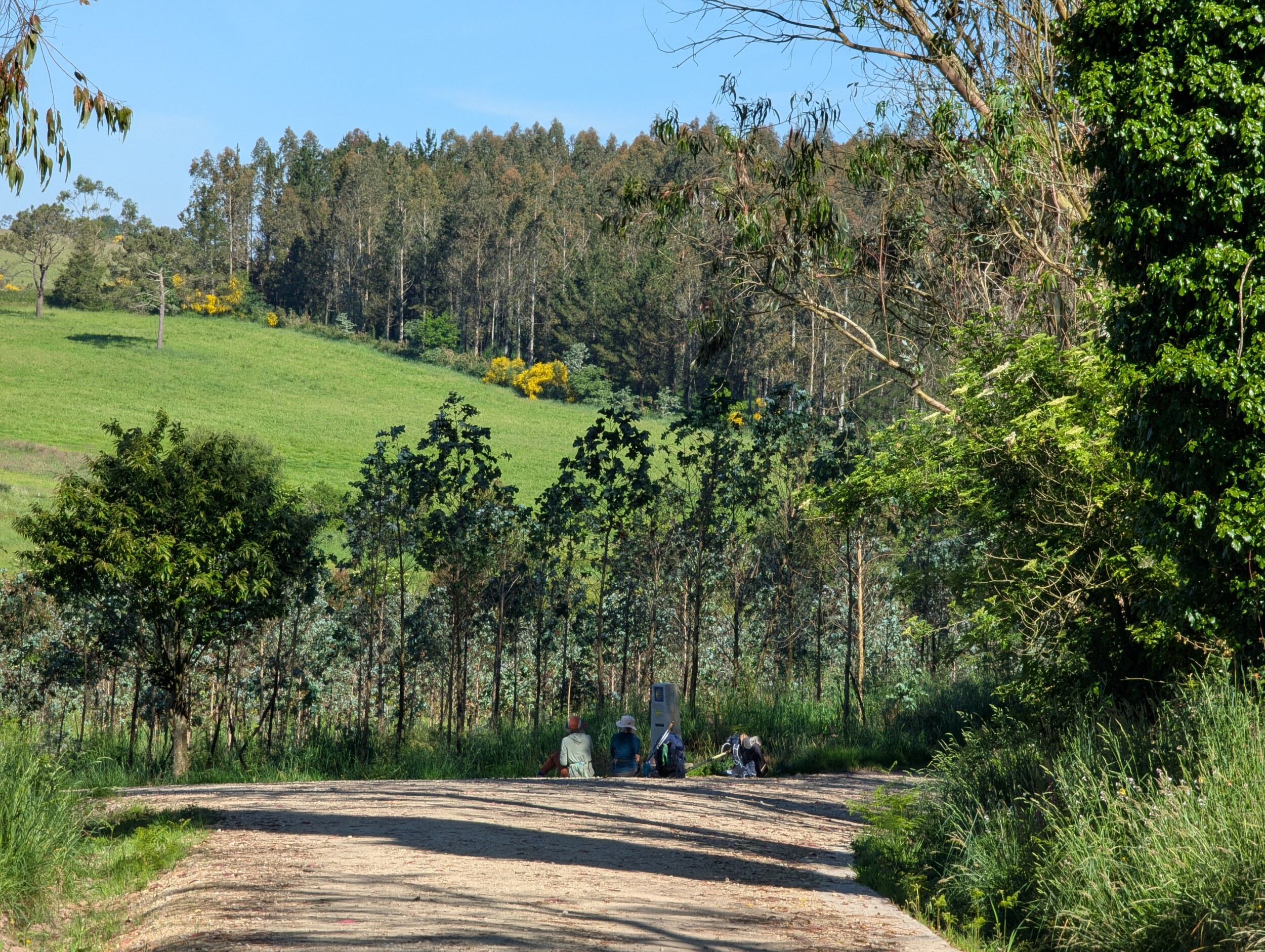
- Eucalyptus forests: Lovely walk through fragrant forests
- Alto do Mar de Ovellas: 215 meter climb – the toughest section of the day
Quickly Out of Santiago: Finally Peace
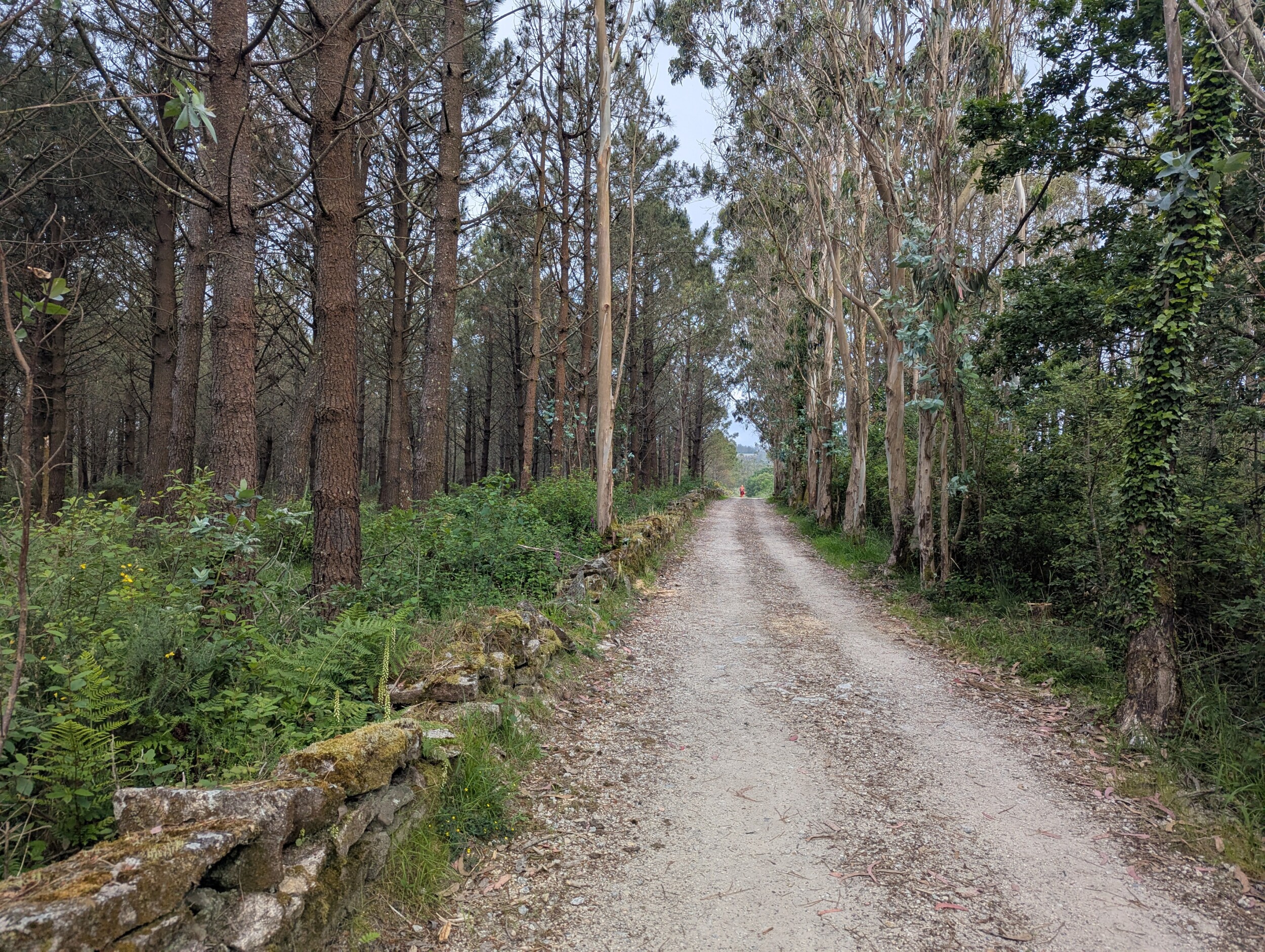
What a relief it was to leave Santiago behind me. From the Camino Frances, you walk through the city for about an hour, but from the cathedral towards Finisterre, you’re through a park within ten minutes and descending towards a eucalyptus forest. It felt like liberation.
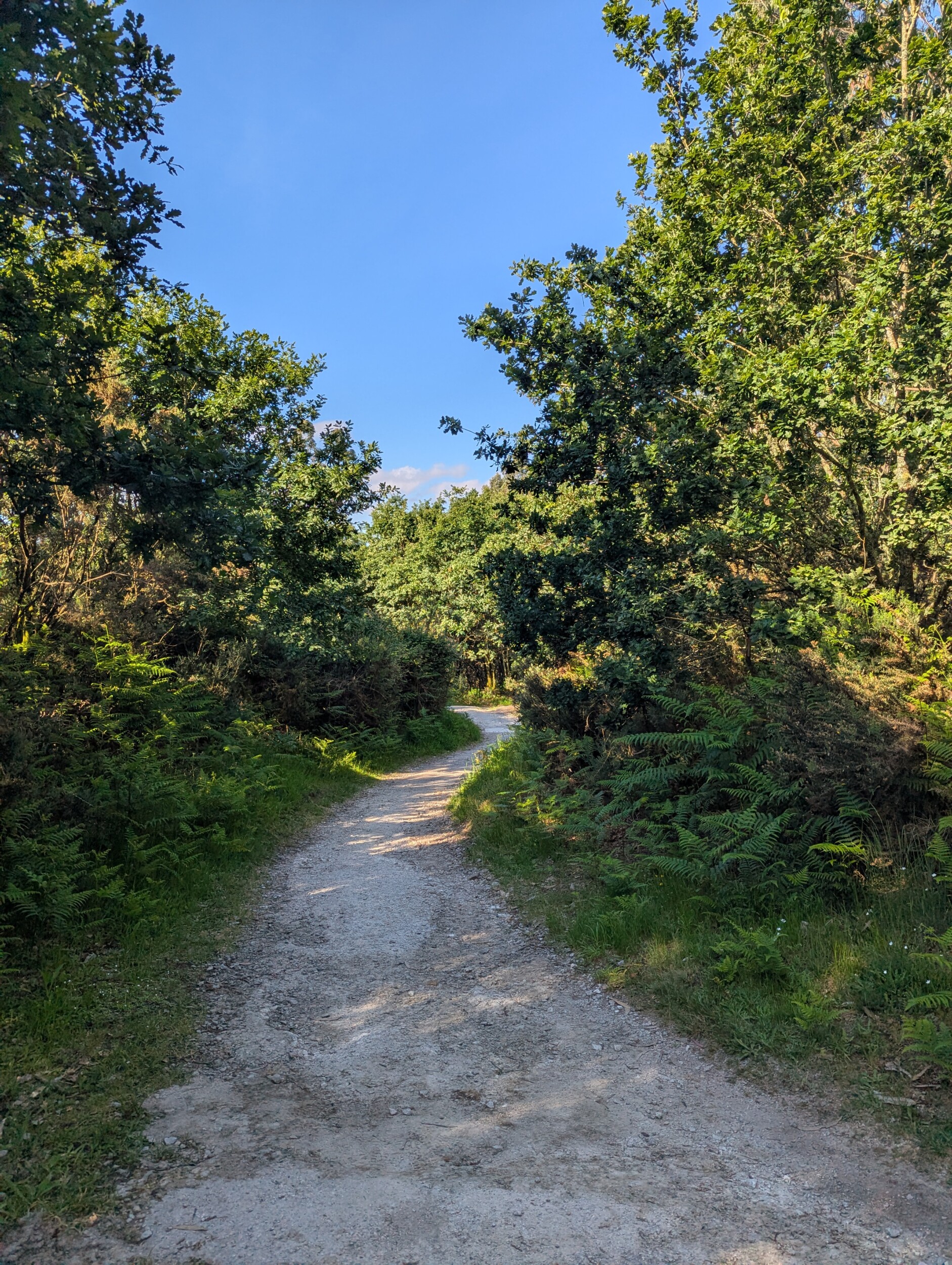
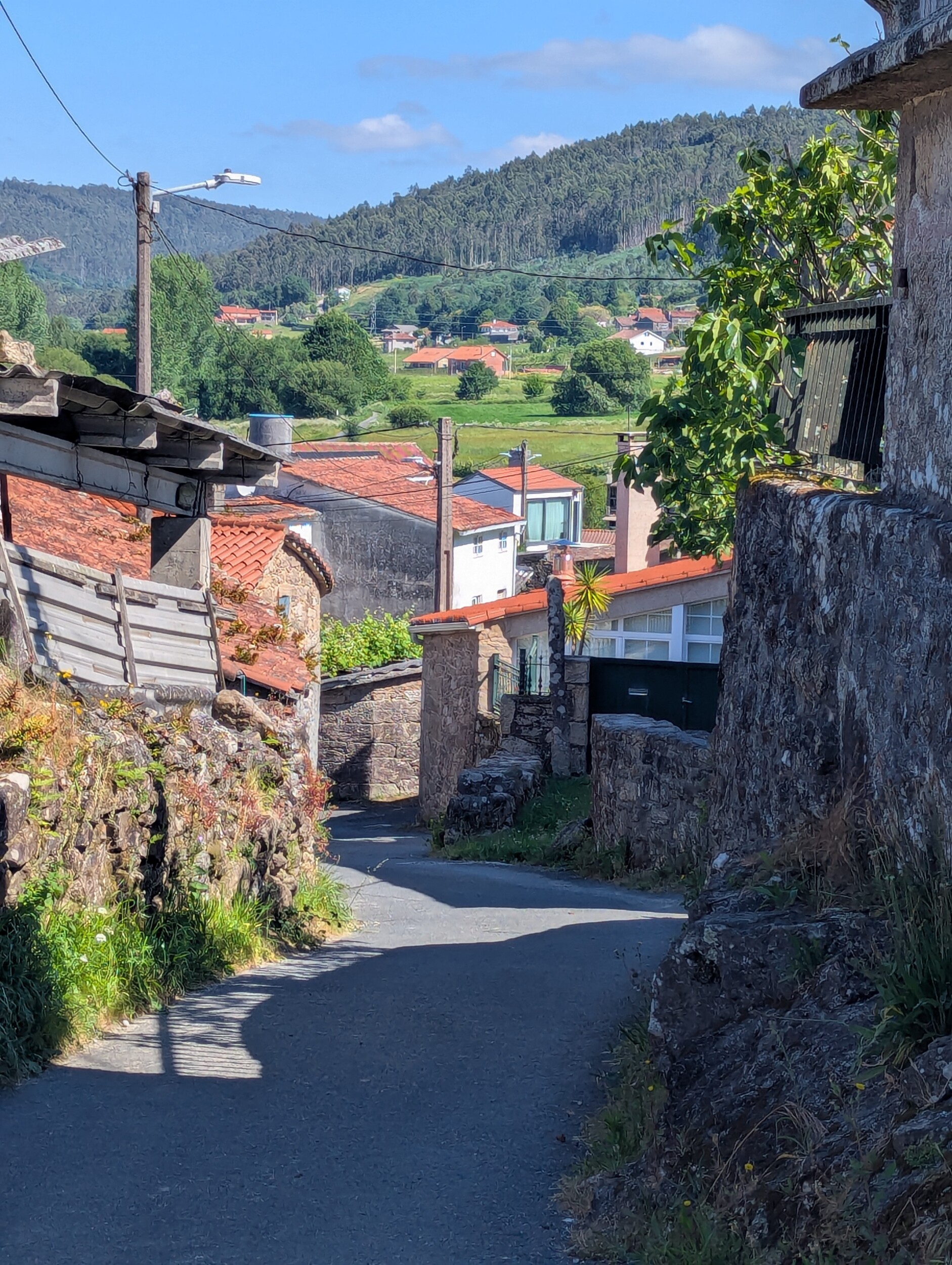
The eucalyptus forest embraced me immediately. That scent, that soft light filtering through the leaves. It was as if nature was welcoming me for this new pilgrim adventure. In Quintans, just after Castelo, I ate a delicious cheese sandwich with cafe con leche, of course. I had walked about 11 km by then.
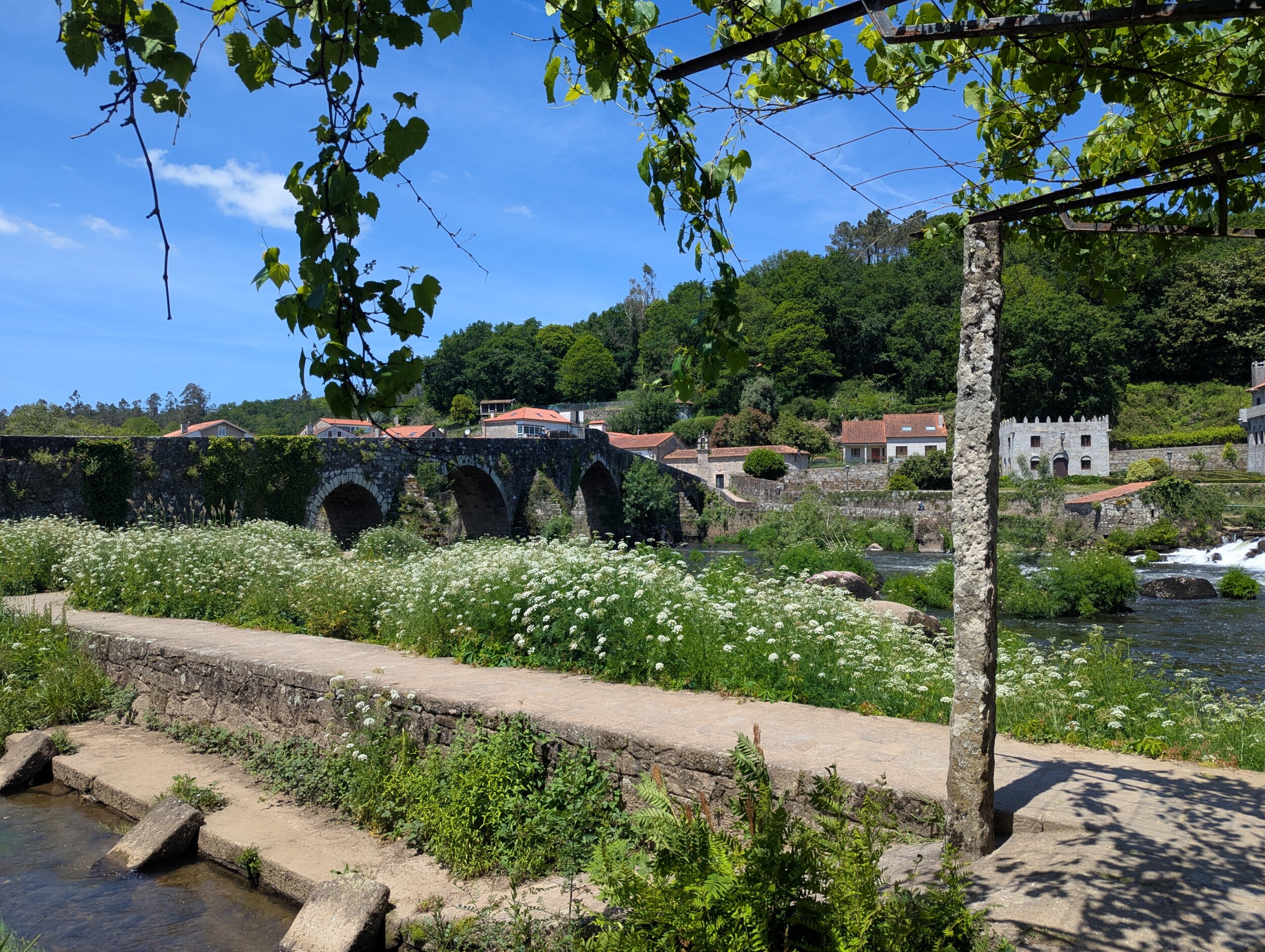
Ponte Maceira: A Fairytale from a Bygone Era
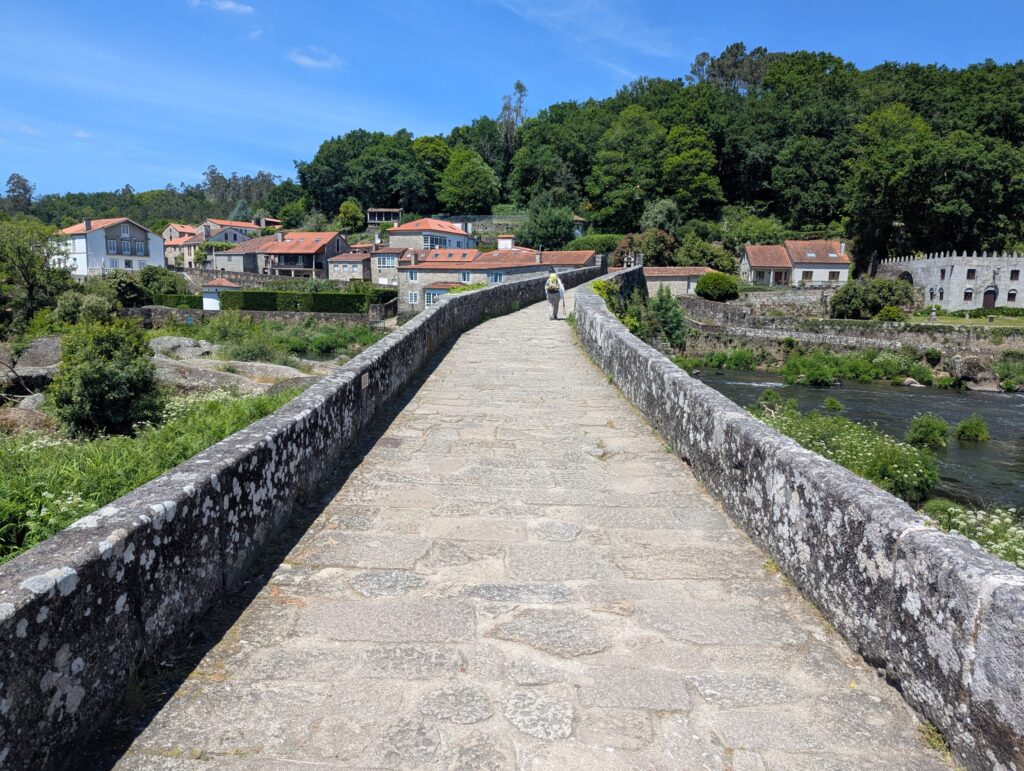
When I continued walking, I arrived at Ponte Maceira after about 6 km. What a beautiful place.
Imagine this: you walk along winding paths and suddenly you see it, a medieval stone bridge spanning the Tambre river, surrounded by traditional Galician houses. The water babbling underneath, the old watermills on the bank… It felt like I was stepping into a fairytale.
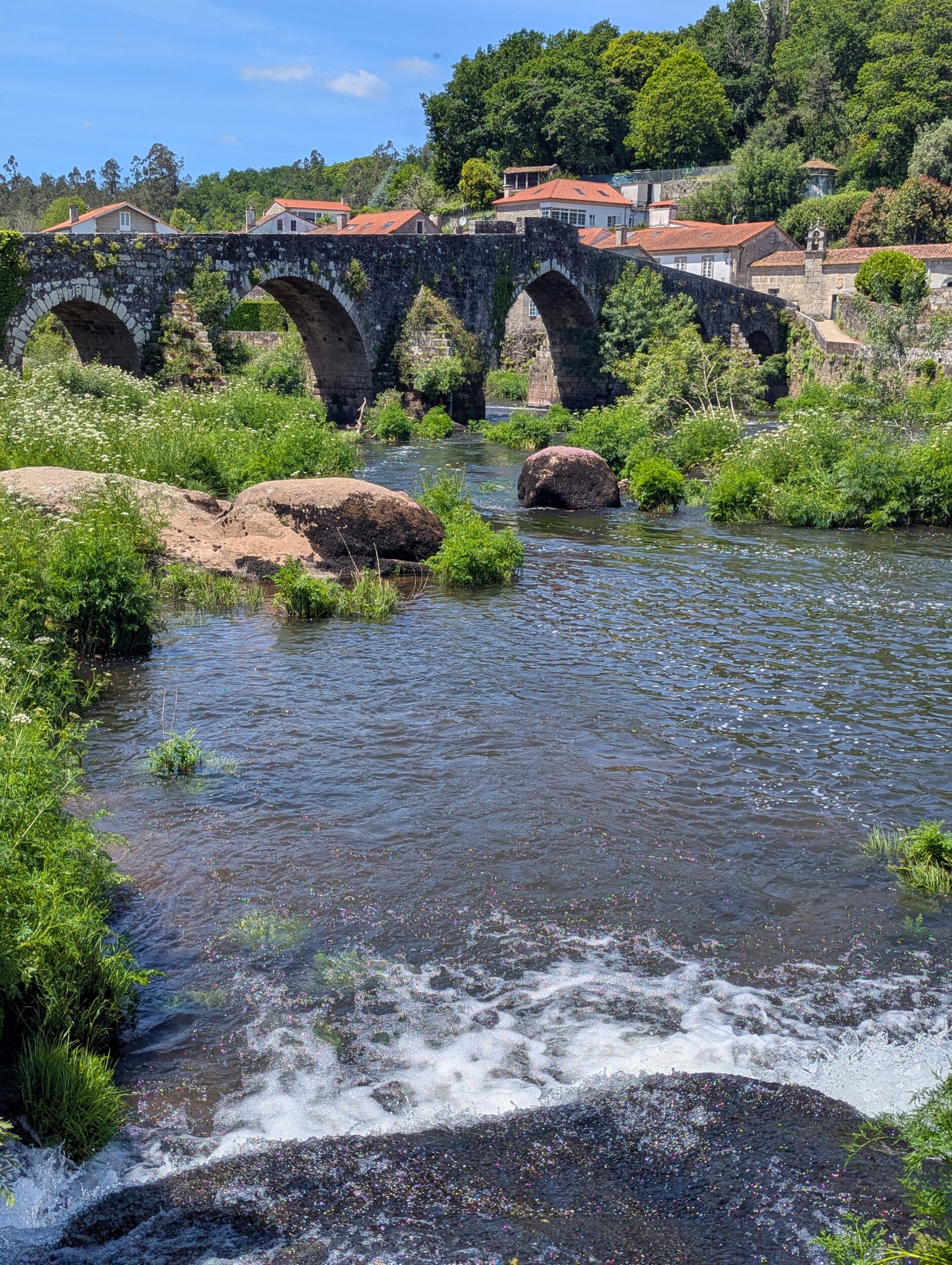
Practical tip: This is also a stamp point for your pilgrim passport. At the restaurant just before the bridge, you can get a stamp. This is a very different way of collecting than on the Camino Frances. You can of course walk with the same pilgrim passport as on the Frances, but I had a passport for only the Camino Finisterre.
After this beautiful break at Ponte Maceira, it was still 4 km of walking before I arrived in Negreira. I dove into the first albergue which turned out to be a bull’s eye. In the afternoon, I briefly explored Negreira and saw the Pazo de Coton. A medieval fort located exactly on the camino. The fort itself couldn’t be seen, but the walls around it and the shops that once sat in it gave a beautiful picture of the time.
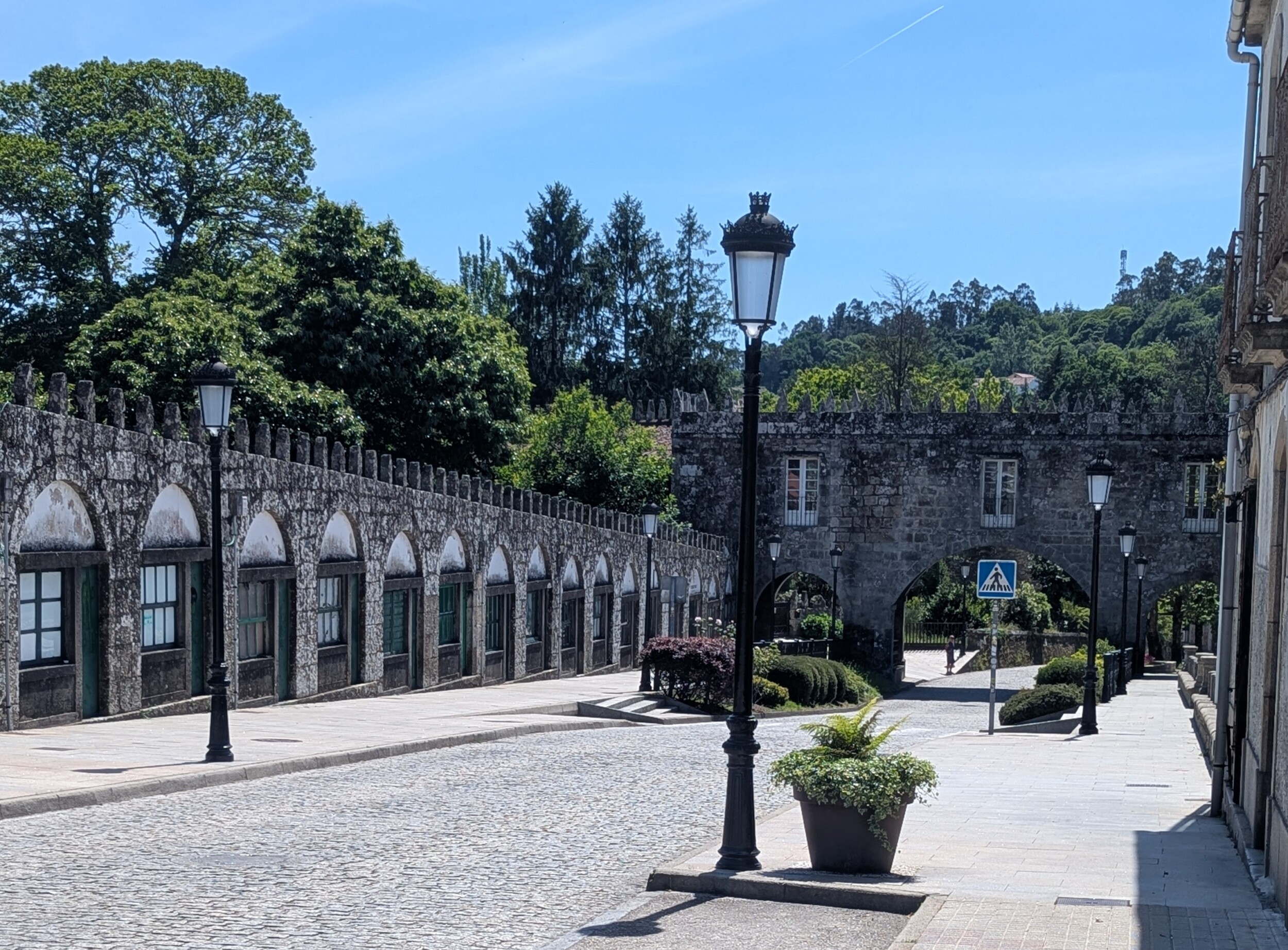
Accommodation Negreira: Albergue Coton (€15) – Excellent choice! Towel, shampoo and body lotion included. Very nice, hospitable albergue.
Stage 2: Negreira to Olveiroa (33 km) – The Longest Walking Day
Walking time: 8.5 hours | Elevation gain: 892 meters climbing
This longest stage of the Camino Finisterre walking route tests your stamina, but rewards you with beautiful nature and special encounters along the way.
Route Choice: Adventure or Safety?
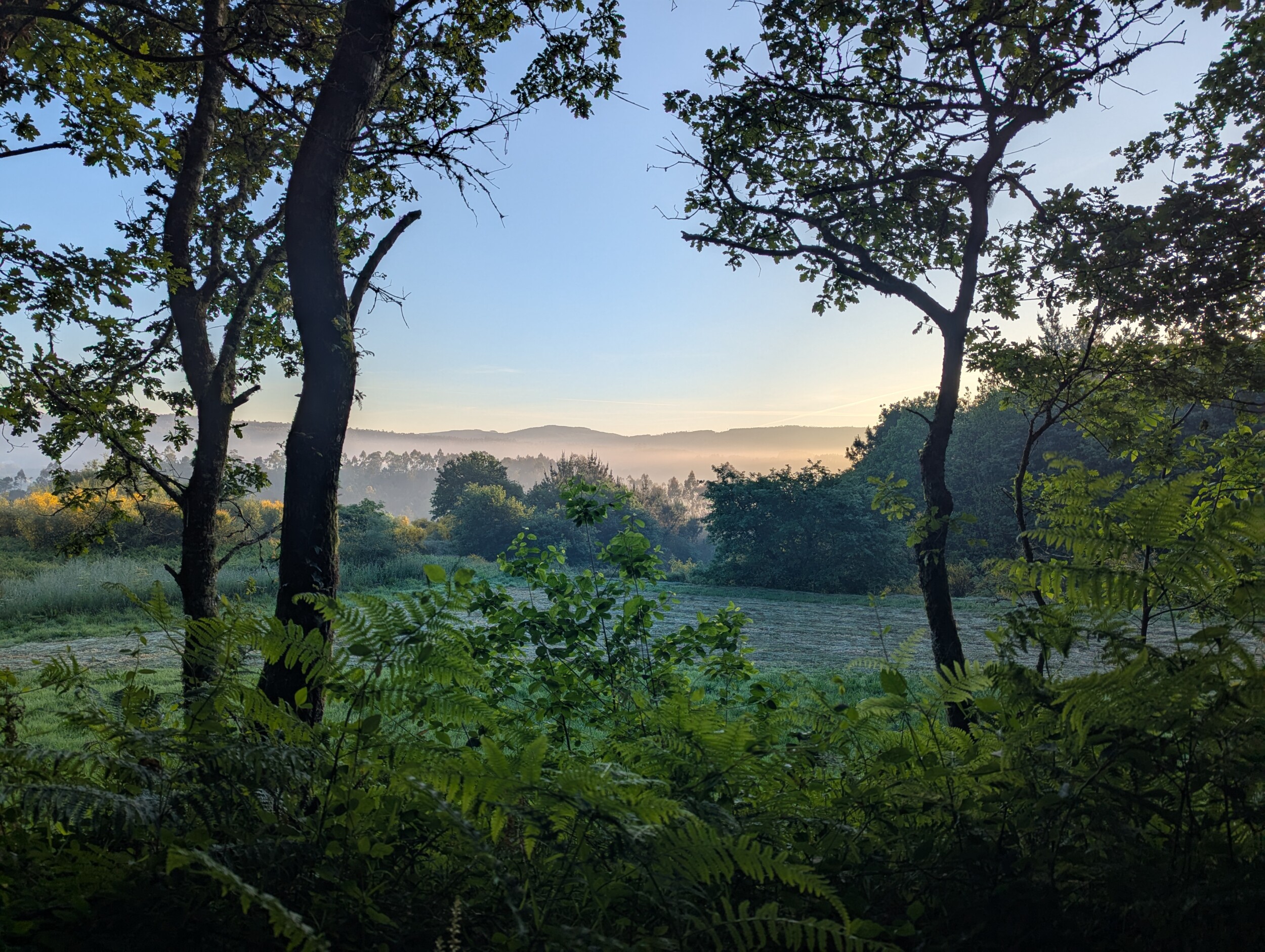
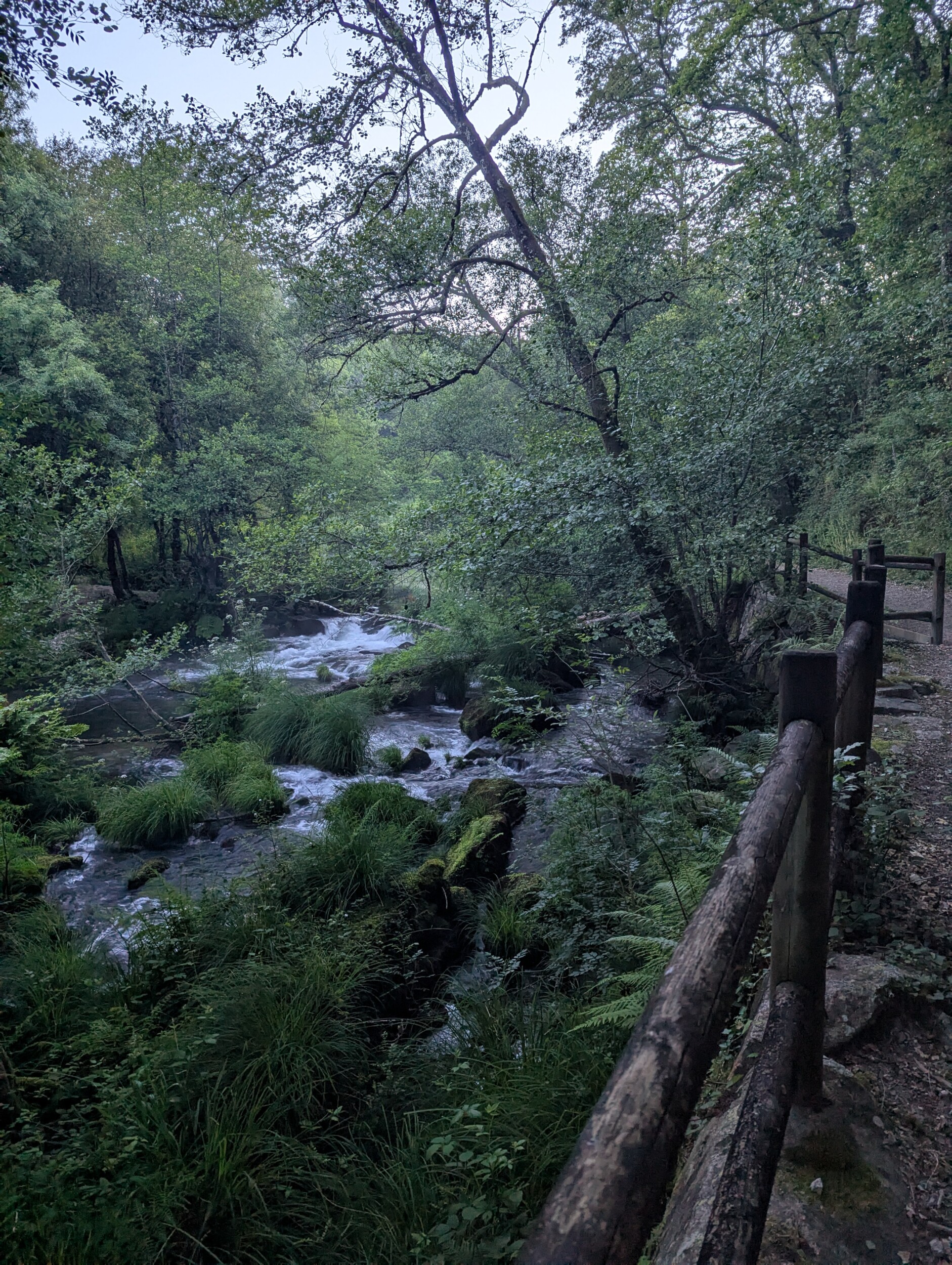
When leaving Negreira, I got my first choice: the official route or the alternative route along the water. My app promised that the route along the water was more beautiful and had no asphalt. I naturally chose adventure.
And yes, it was beautiful. But… some arrows were missing or I didn’t see them. Several times I had to check my phone to see if I was still on track. Tip for future pilgrims: If you want to start calmly in the morning, choose the main route. Do you love nature? Go for the route along the water.
Signe: A Story That Touches
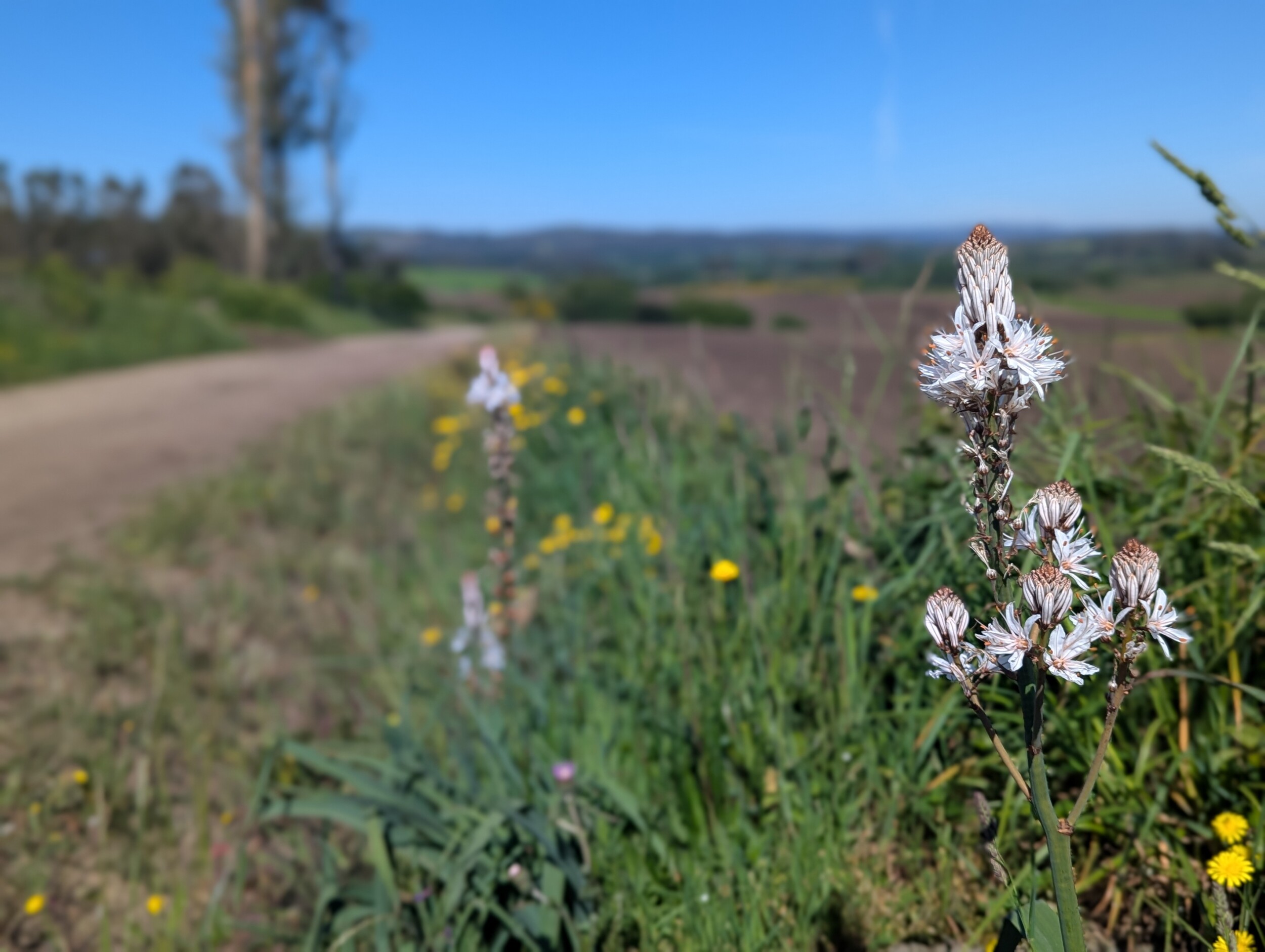
There I met Signe again, a Danish woman my age who had walked the entire Camino Frances. I had also had coffee with her yesterday. She was at home dealing with PTSD after being attacked by a patient in the psychiatric facility where she worked. “Walked the entire Frances and so happy about it,” she told me while we had coffee together again, now at a donativo place. We walked together through the beautiful green landscape, long stretches without seating, through forests and meadows. When we finally came to a small village, Signe took a break and I walked on.
Fellow pilgrims come and go, but this encounter touched me.
Santa Mariña: Halfway Heaven (22 km)
Eventually, I walked on to Santa Mariña where I had lunch. This was Signe’s endpoint she told me that morning. A tiny place that’s truly a beautiful spot to spend the night.
Where to eat and drink: Multiple options available. I chose left of the route, but there are also restaurants on the right by the main road.
Sights: Beautiful historic church and cemetery that breathes the centuries-old pilgrimage tradition.
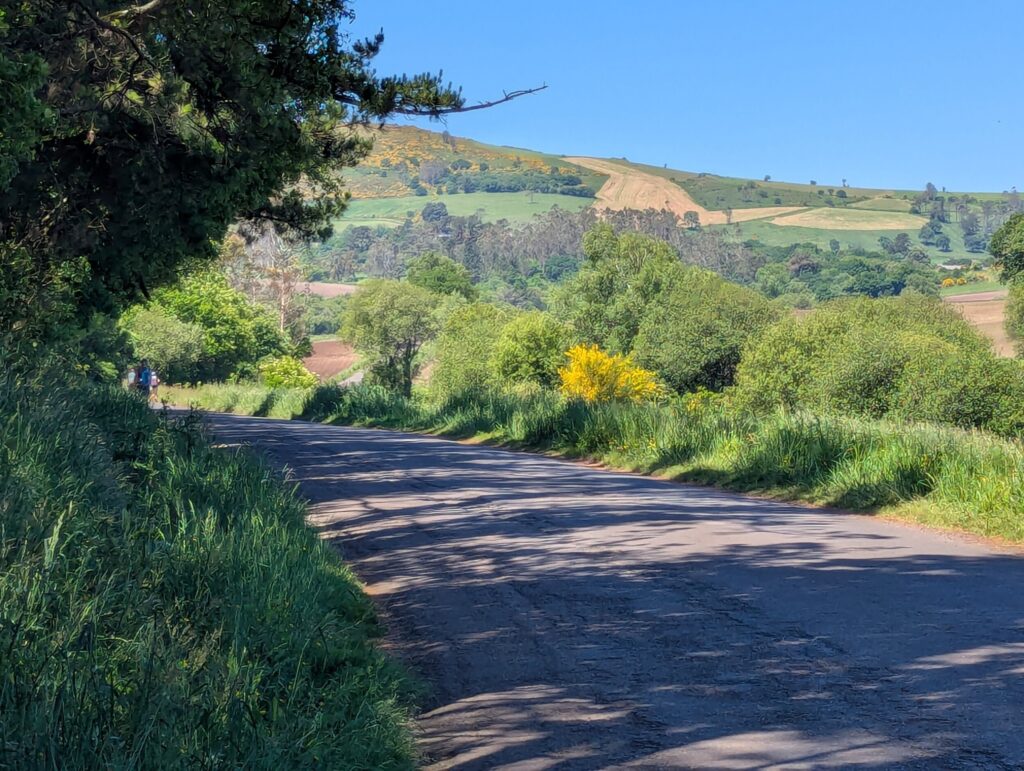
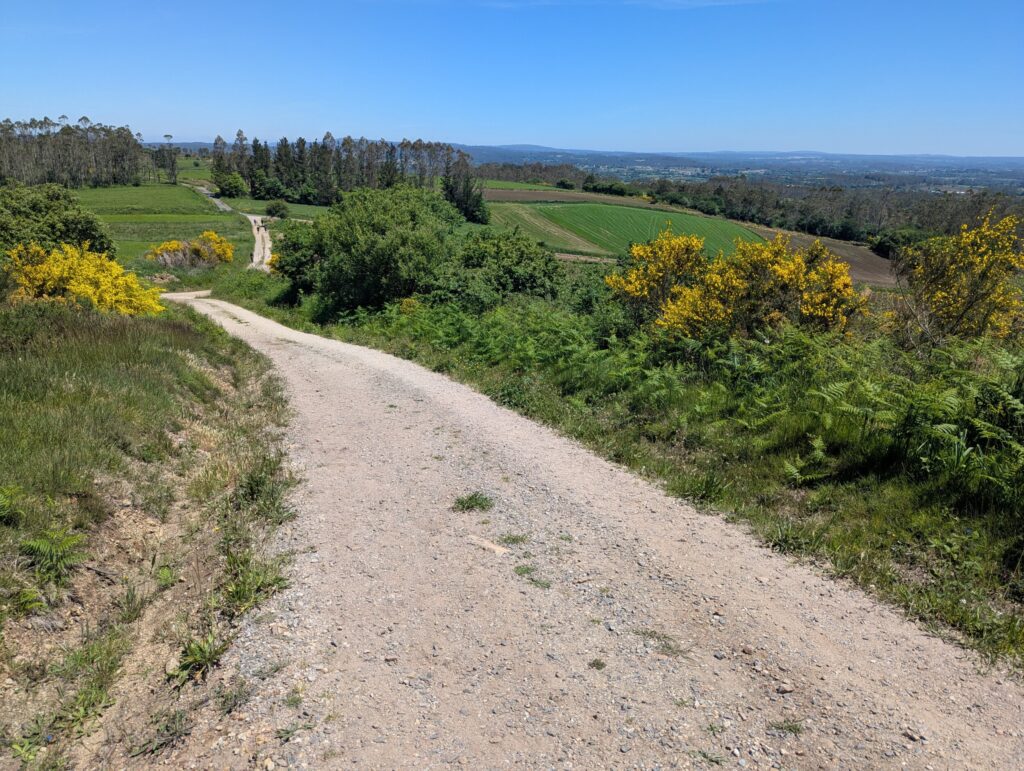
After this, I walked a few more hours on the old pilgrimage route. Along the way, I got beautiful views over several lakes. It was quite a climb and of course descent again to get there. Meanwhile, I spoke with the retired New Zealand police officer again, until I took a stop at a terrace and he walked on. At the end of the afternoon, I arrived in Olveiroa and saw the New Zealander again in the same albergue.
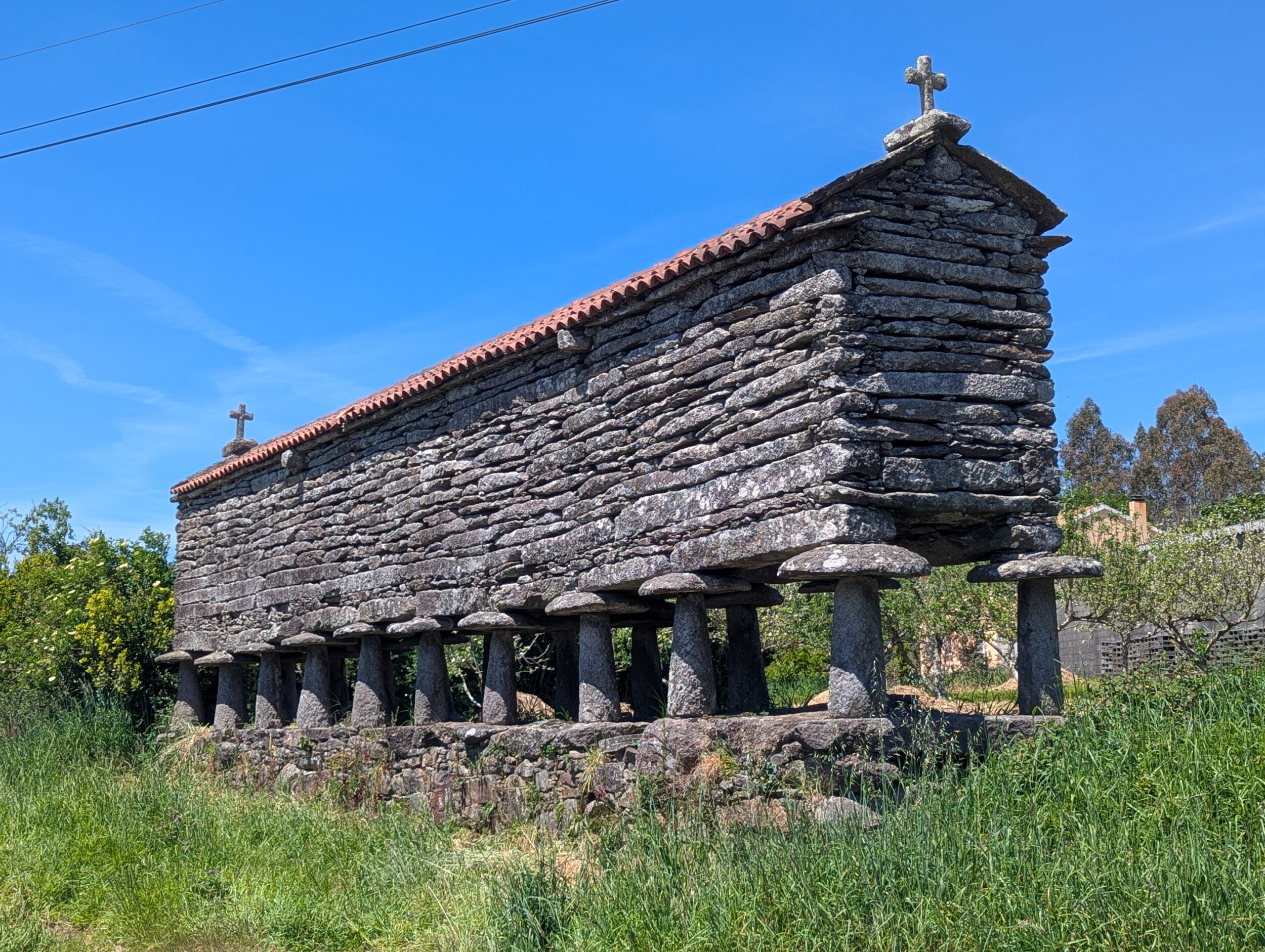
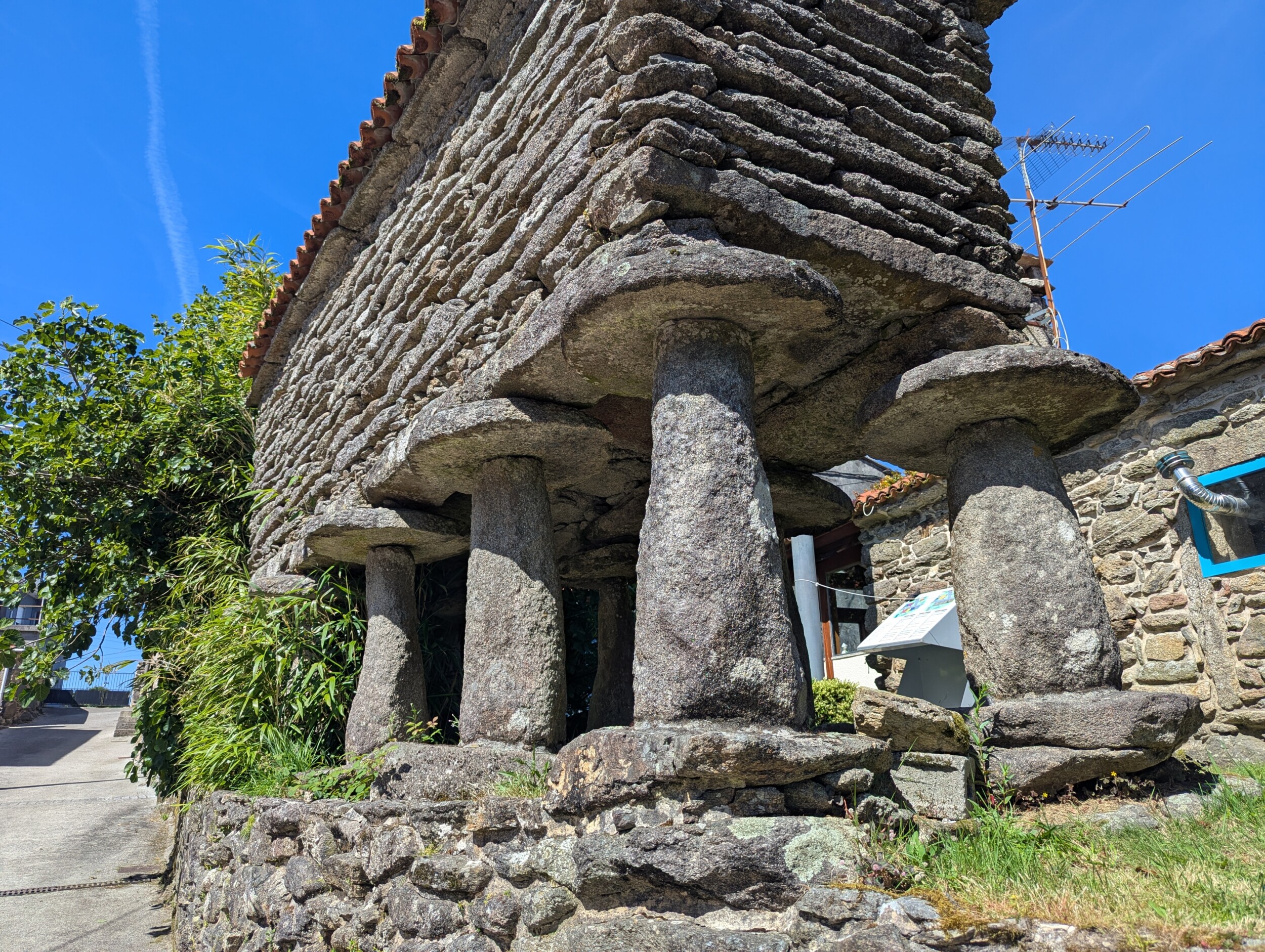
Olveiroa is also a beautiful place. Really walk through the small streets, it’s full of old hórreos. Truly beautiful!
Olveiroa: Medieval Endpoint
Accommodation experience: Casa Manolo (€15) – Basic service, disinterested staff. No towel or shampoo. But 4 good bathrooms. Tip: Walk through to albergue Casa Loncho by the hórreos, which looked more welcoming. I wasn’t inside but did have my dinner on the terrace there.
Sights: Ancient hórreos (Galician barns), church of Santiago, chapel of Saint Lucia.
Stage 3: Olveiroa to Finisterre (32 km) – Walking to the End of the World
Walking time: 7-8 hours | Elevation change: 450m (alternating up/down to the coast)
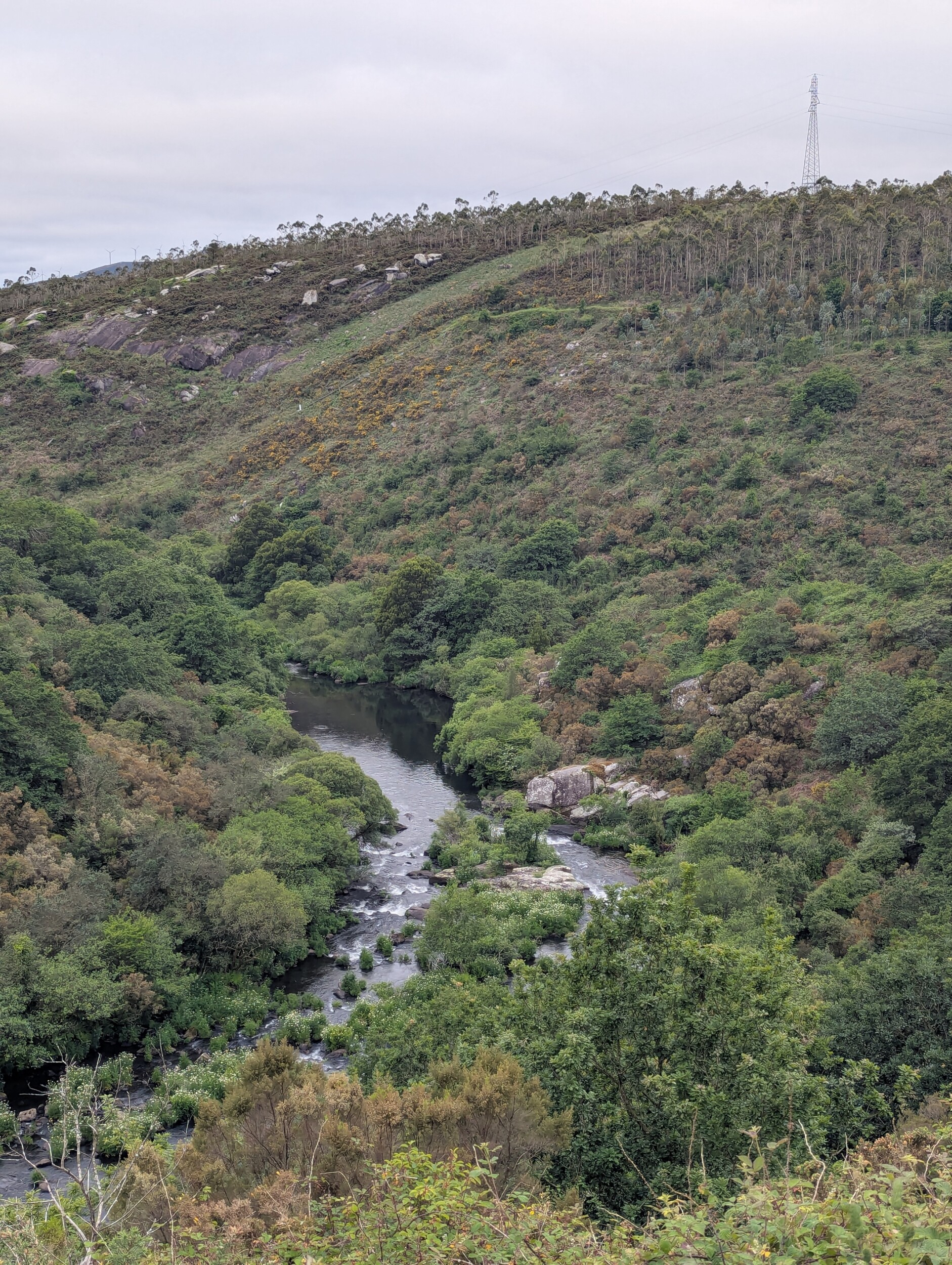
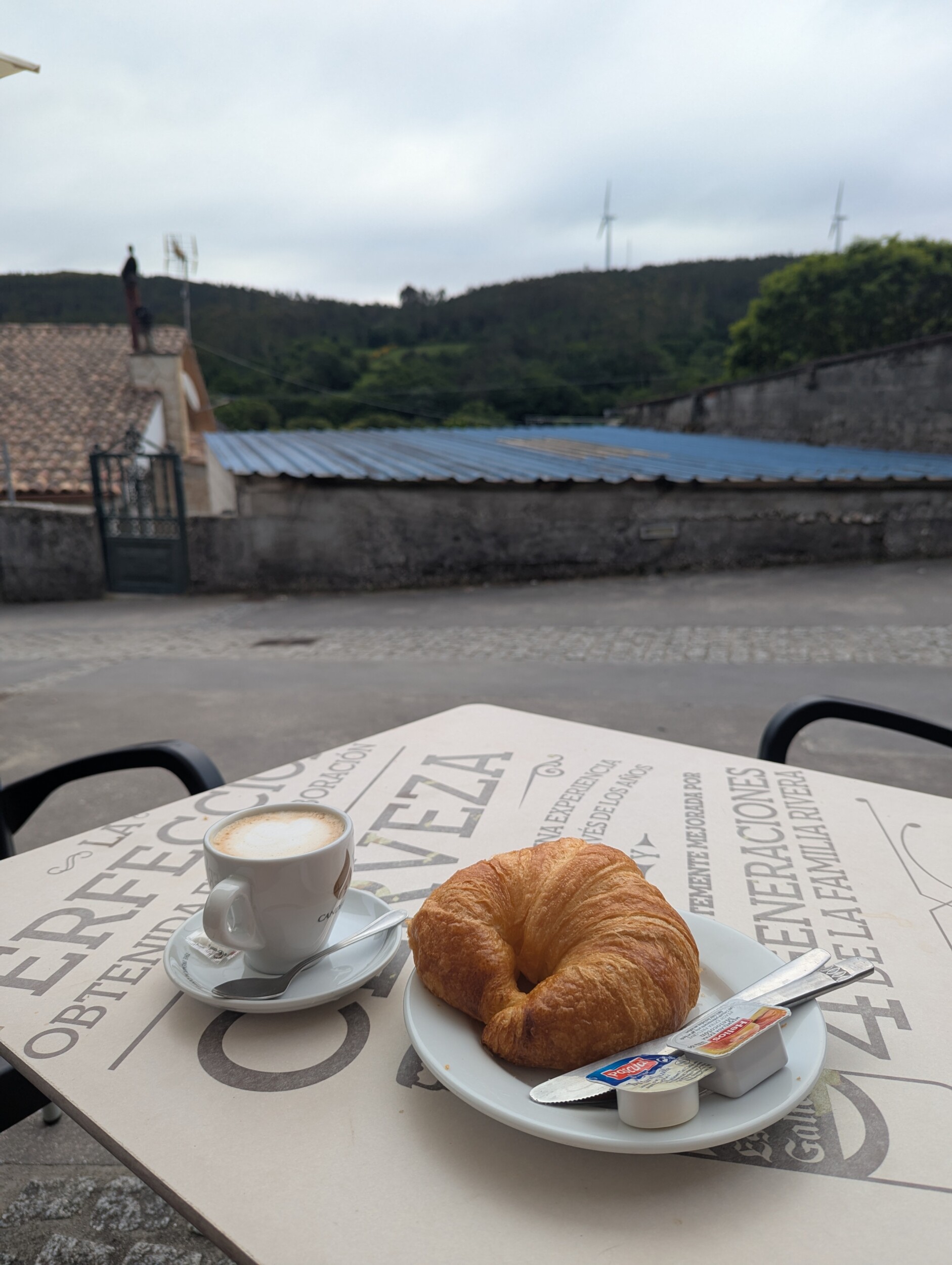
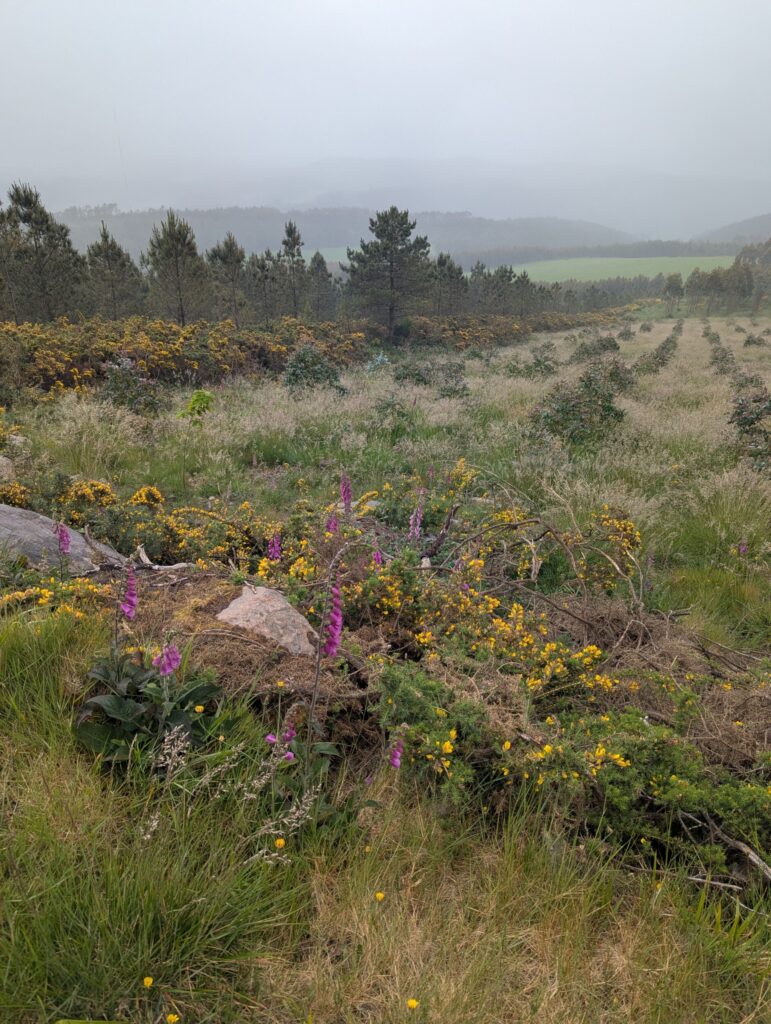
The pilgrimage route from Olveiroa was beautiful, long roads and many green vistas. Here and there a stall along the road where you could buy jewelry and shells. I had rain again for the first time in ages. After the heat of recent days, absolutely not a punishment.
Hospital: The Big Choice
Just past Hospital, I got the choice that every pilgrim on this route must make: Finisterre or Muxía?
The split explained:
- Left = Finisterre route: Via Cee to Finisterre (32 km), then optionally on to Muxía
- Right = Direct Muxía route: Directly to Muxía as endpoint (31 km)
Both routes are about equally long as you can see, but the feeling and final destination are different. If you go right, you choose Muxía as your symbolic ‘end of the world’, with the mystical Santuario da Virxe da Barca as the last destination.
I went left to Finisterre where you naturally walk to the famous 0 kilometer marker at the lighthouse. I heard several pilgrims say that you had to do Finisterre first and then Muxía. And that was also my plan.
What do you choose as an endpoint on the Camino Finisterre?
Which route to choose on the Camino Finisterre?
- Choose Finisterre (left) if you want to see the iconic kilometer marker 0.0
- Choose Muxía (right) if you love mysticism and spirituality
- Ideal: First to Finisterre, then on to Muxía (extra 28 km)
Are you coming with me in 2026 to do this pilgrimage too? I have this trip planned for late May & Sept 2026.
While I slowly started getting blisters, I had that stubborn feeling: I’ll walk on, I’m not going to spend another night somewhere. In hindsight, these are moments I learn from again. I may take my time! I may listen to my body.
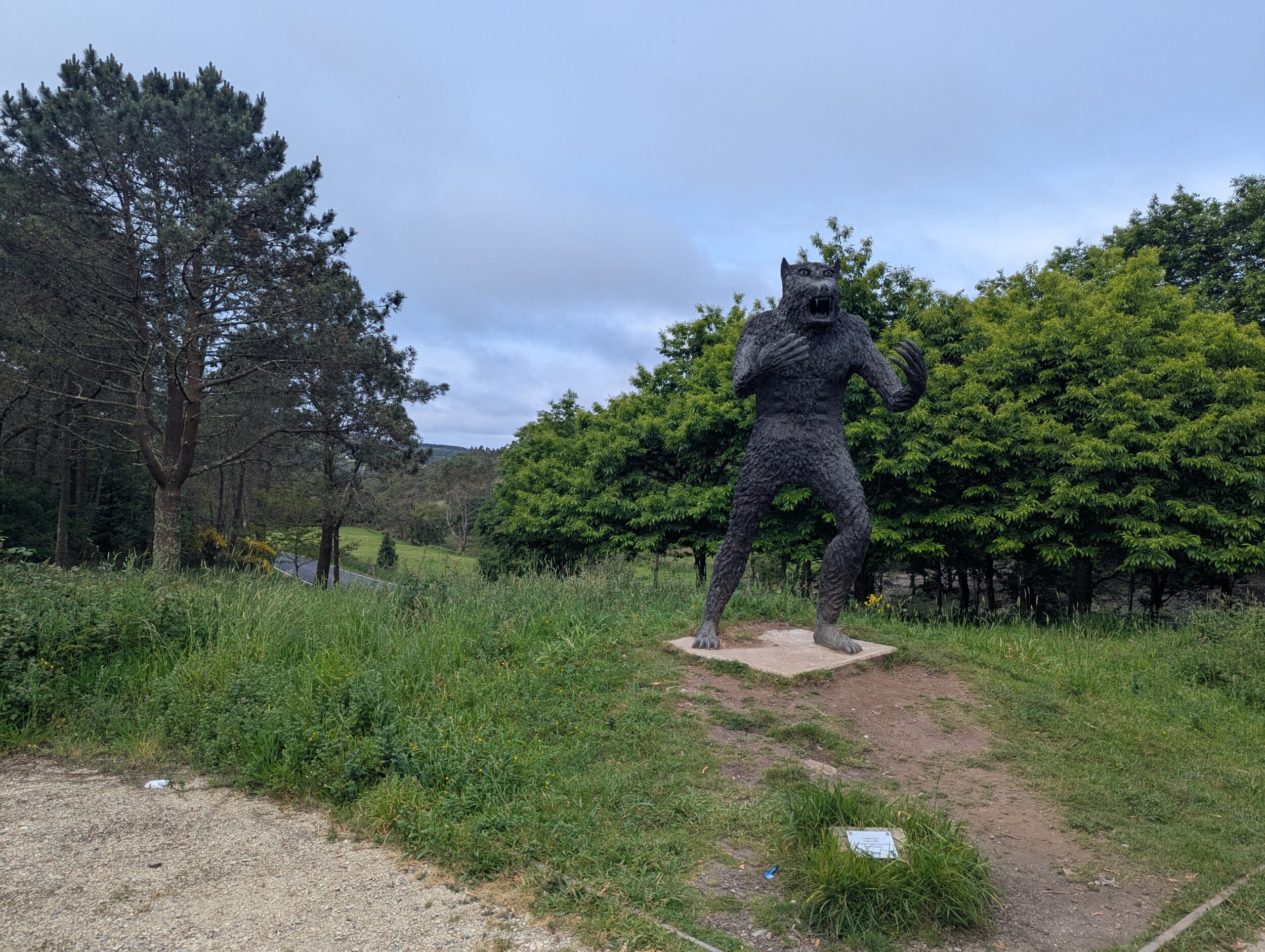
Vákner: The Werewolf Statue
Along the way, I passed Vákner, an impressive 5-meter-high werewolf statue in the middle of the forest. This statue refers to the old legends of this mysterious part of Galicia.
After the Vákner statue, it started to cloud over again, I got rain and quite a lot of it too. The views were truly beautiful though. I came across a church where I could shelter and could take a stamp. When the rain lessened, I continued.
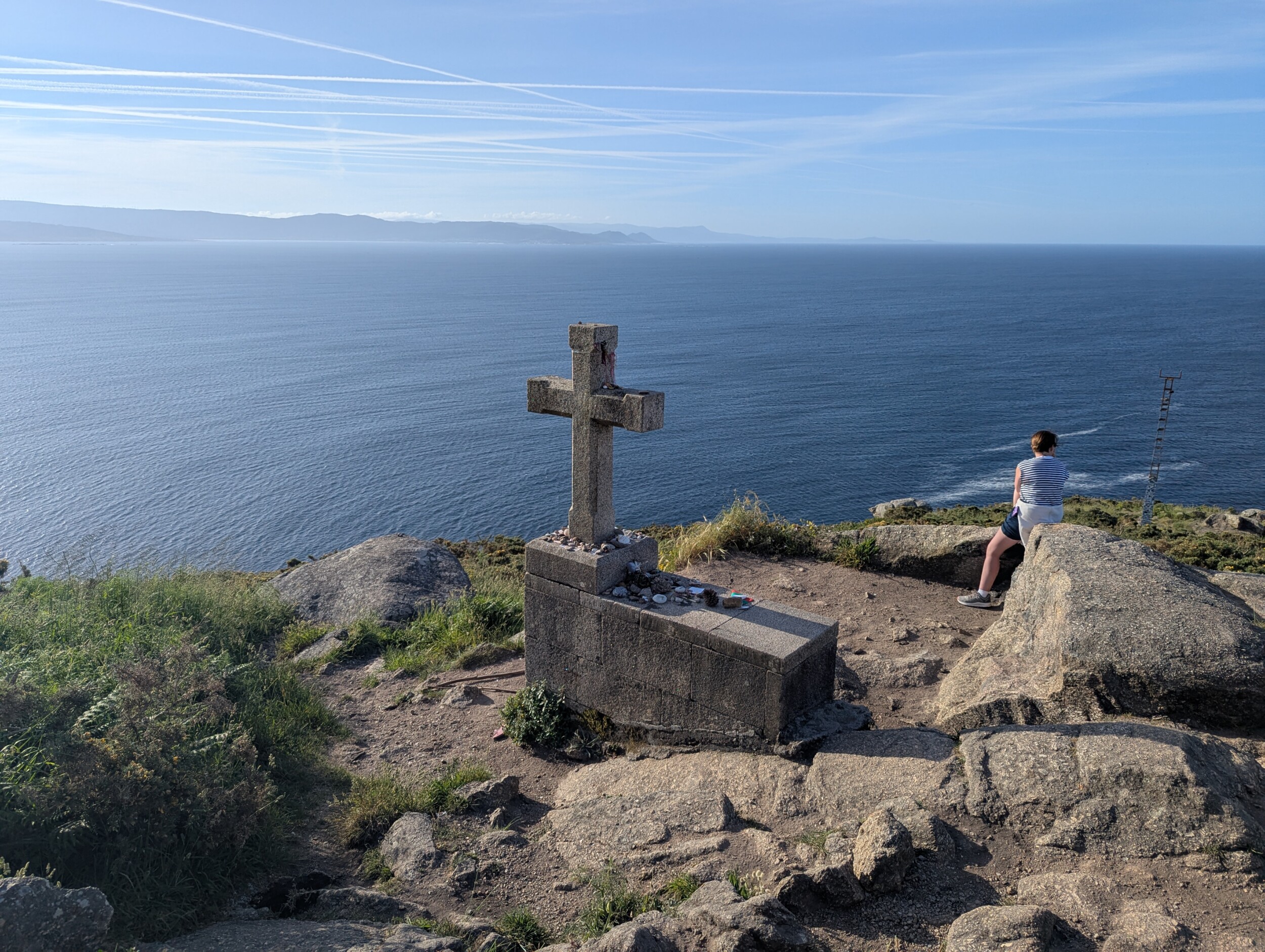
At some point, I could turn right onto a narrow path to a viewpoint. A beautiful old Celtic cross was waiting for me there and I briefly enjoyed the view. It had become dry again and shortly after I also got the sea in view and the feeling that you’re approaching the endpoint!
Cee: A Missed Opportunity
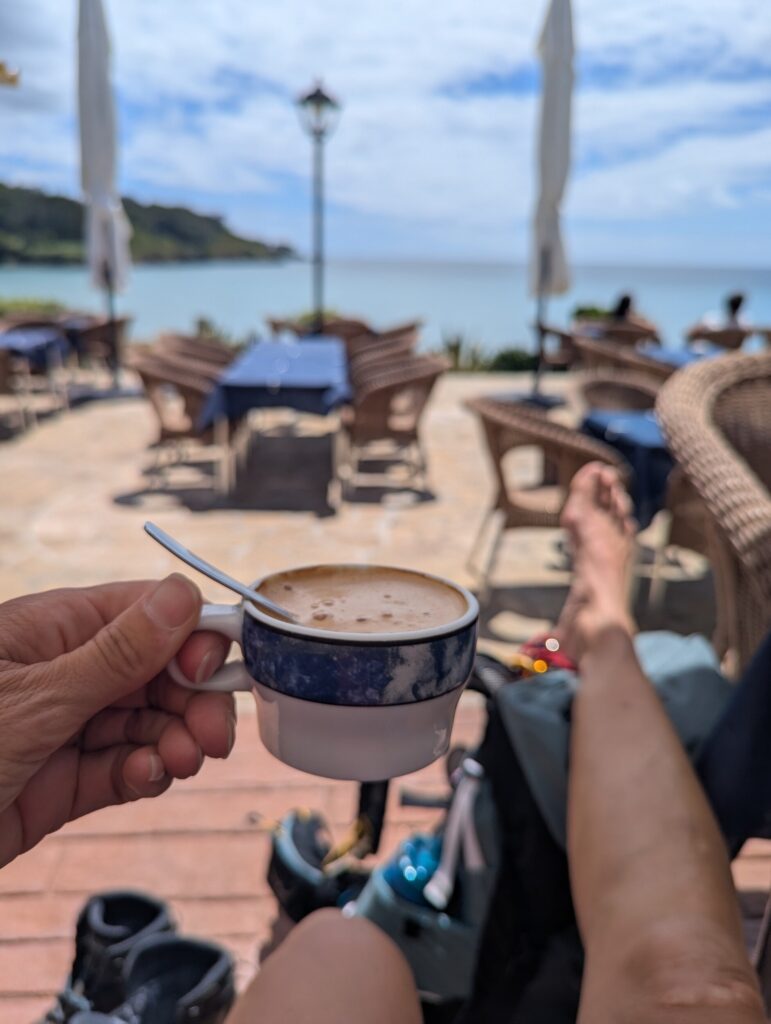
Why stop here: Cee is a former whaling port, beautifully situated on the coast. Perfect for an extra overnight stay. I had extensive lunch on a terrace there, it was busy with a Sunday market. The town is beautifully situated on the coast.
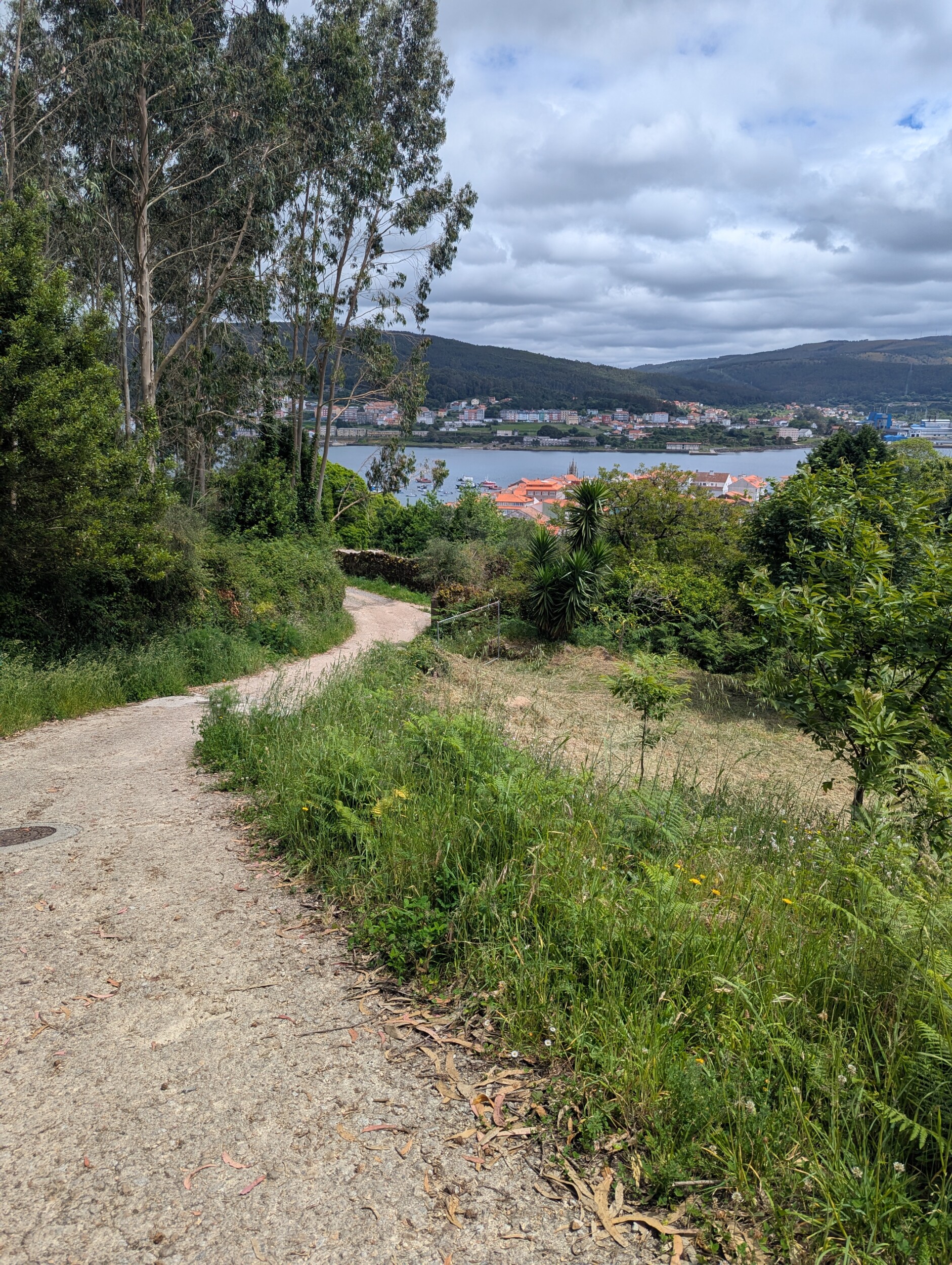
My mistake: In hindsight, I should have stayed here one night. Tip for you: Give yourself the rest in Cee in an albergue or hotel.
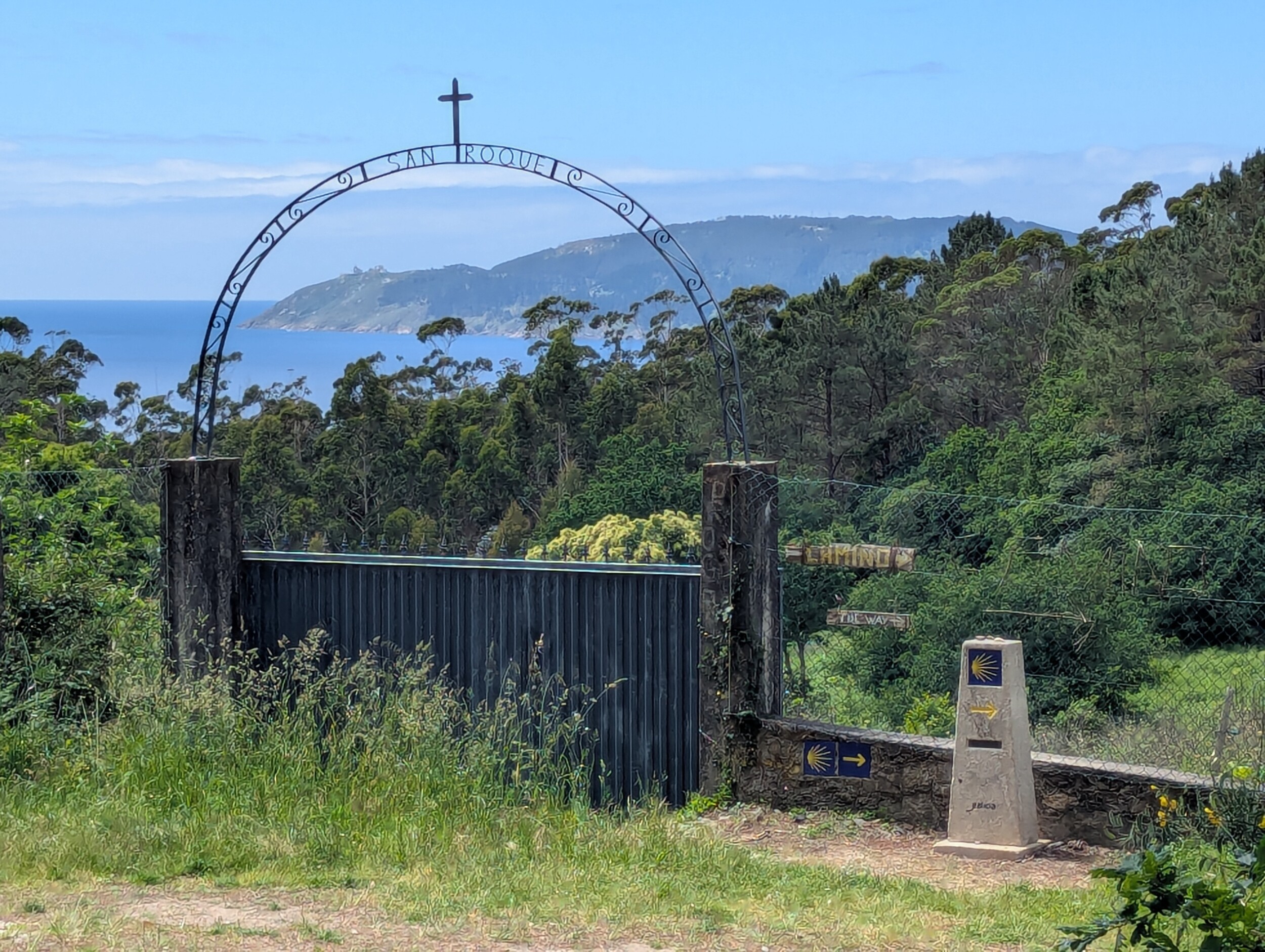
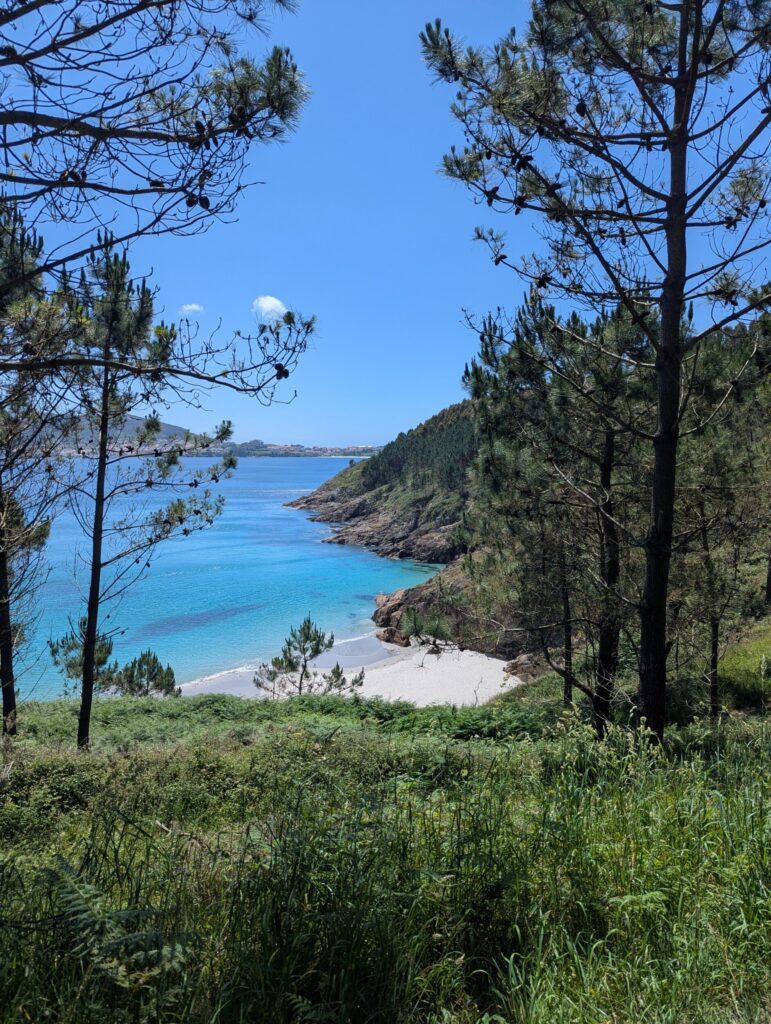
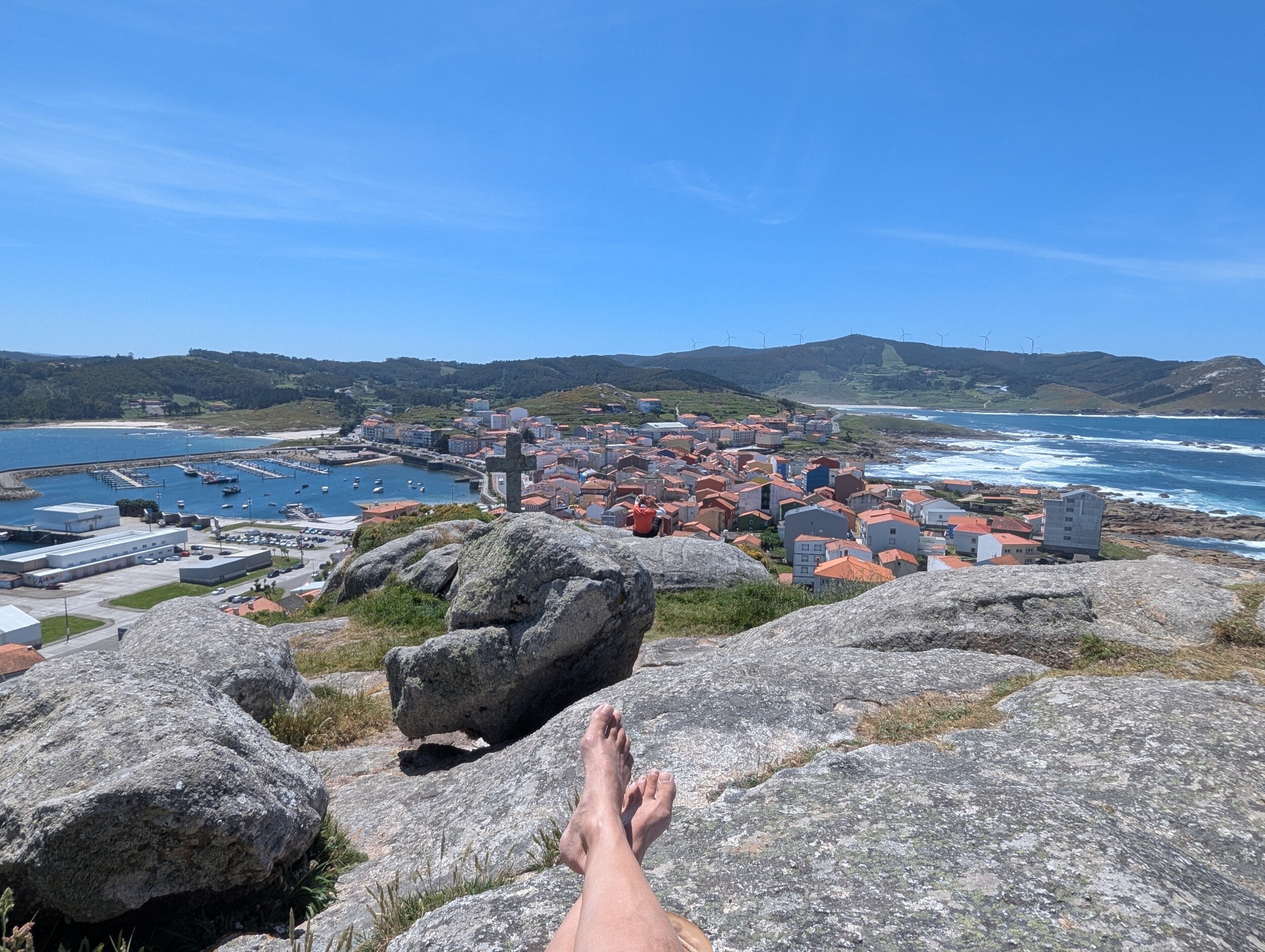
From Cee to Finisterre is about 13 km, which makes for a good afternoon of walking. It’s truly a beautiful walk through nature, along the coast and past various coves. If you take more time, you can enjoy more wonderful breaks at the beach.
Finisterre: The Real End
Accommodation: Albergue Arasolis (€12) – Cheapest of the trip! Nice albergue in the center. 2 bathrooms for 16 people, enough when I was there, but can get tight. If you stay a few nights in Finisterre as the end of your pilgrimage, consider a nice hotel with sea view.
Unexpected Blessing in the Church
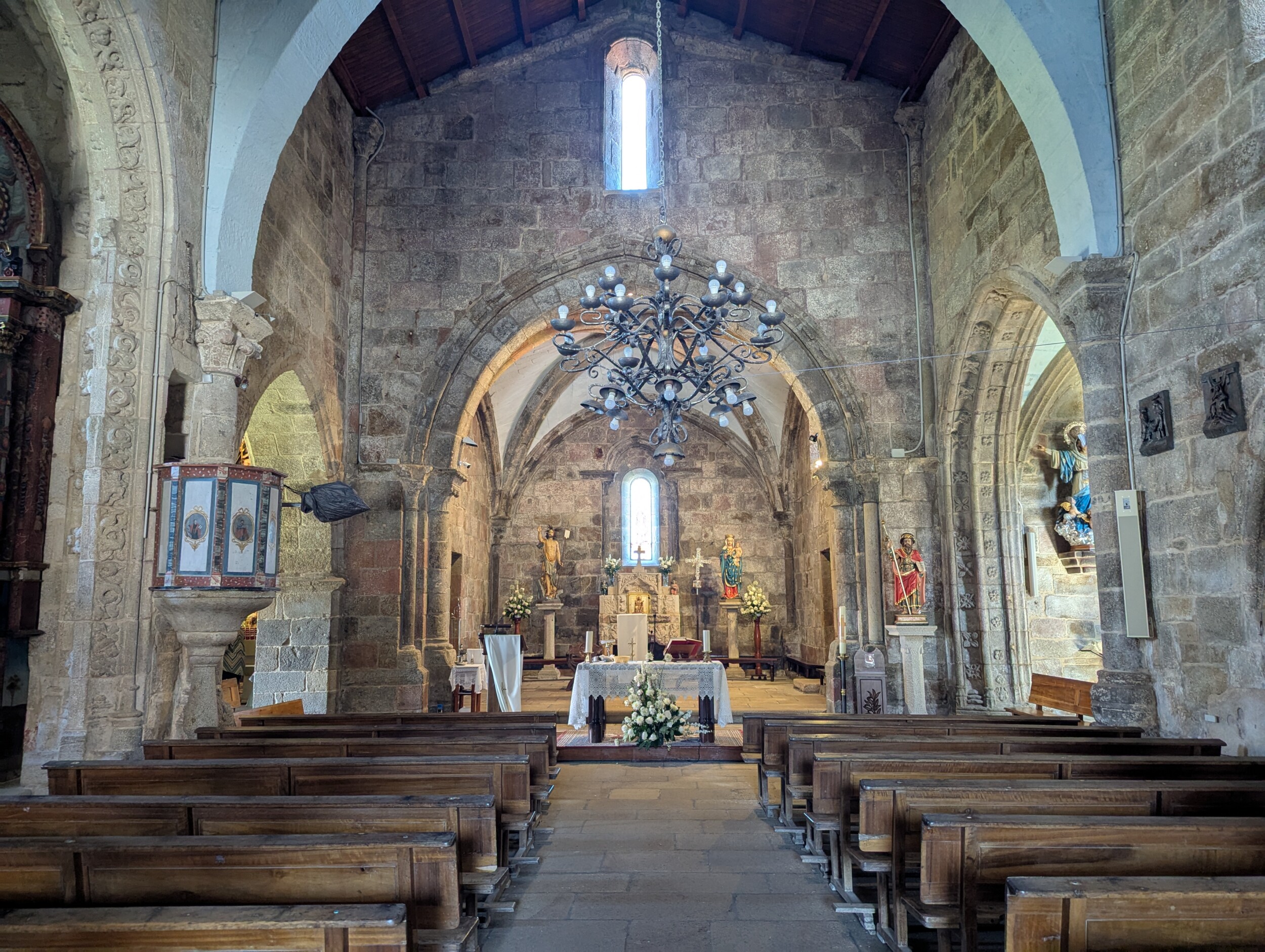
That evening I attended a church service that I will never forget. A small church, intimate atmosphere. At the end, the Asian priest asked us all to come forward to stand in a circle for the blessing. He laid his hands on my head and murmured soft words, I didn’t understand them, but I felt them. He went around the entire circle like this, giving each pilgrim a personal blessing. Such an intimate moment, so unexpected after all those kilometers.
Kilometer 0.0: The Official End
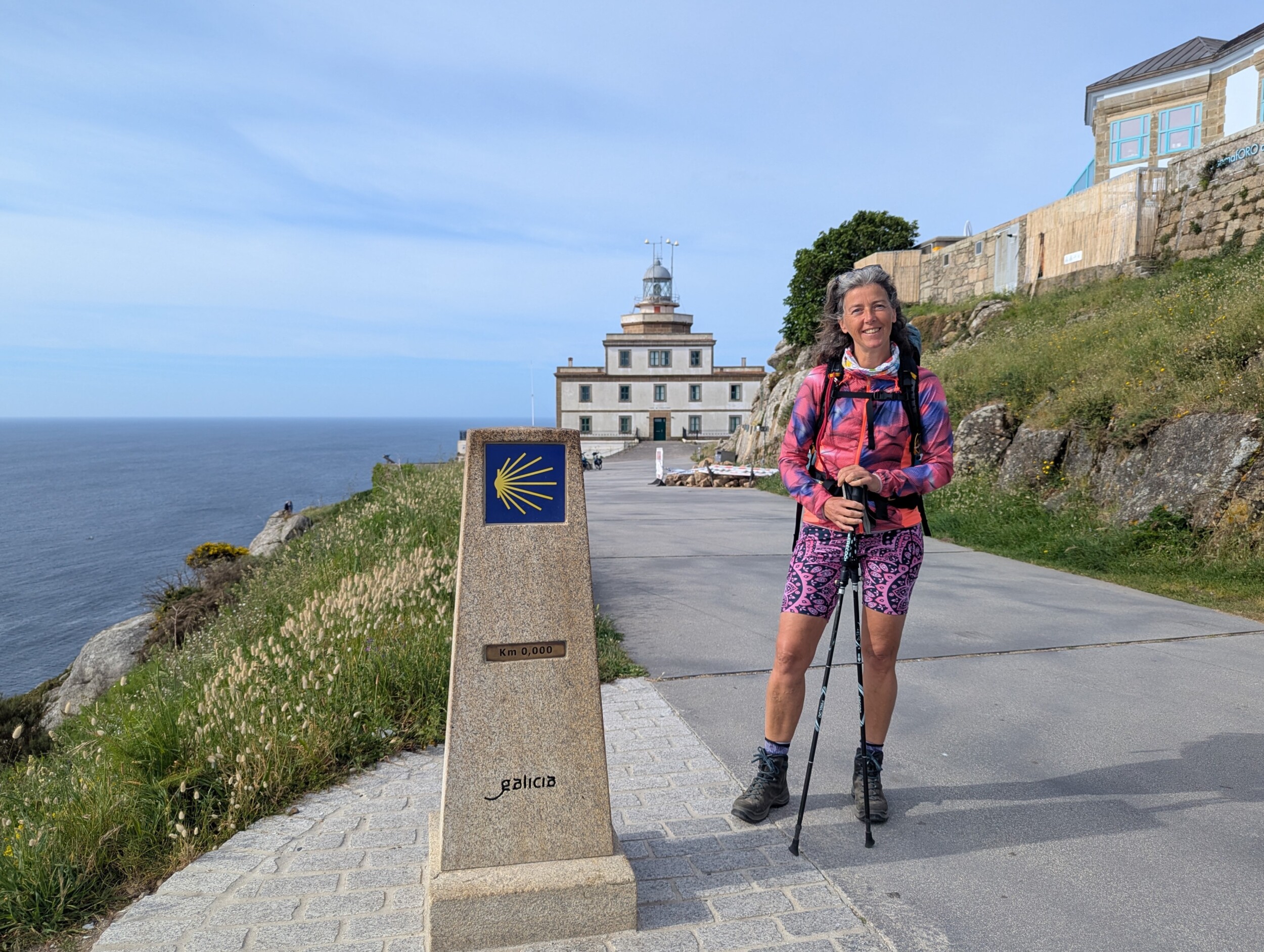
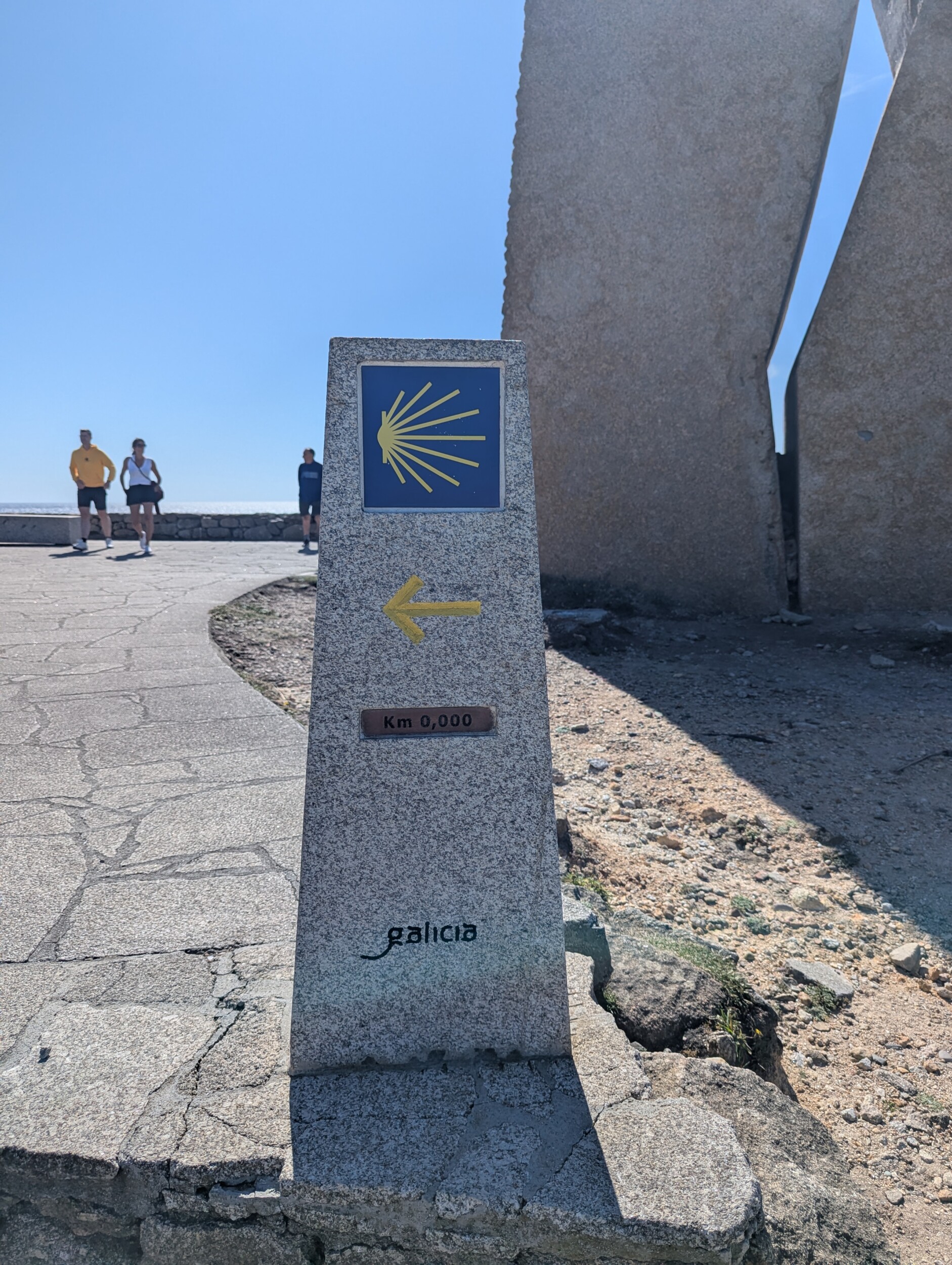
The next morning I walked to the lighthouse. Slightly uphill, 3 kilometers from the center. And then I was there: kilometer marker 0.0.
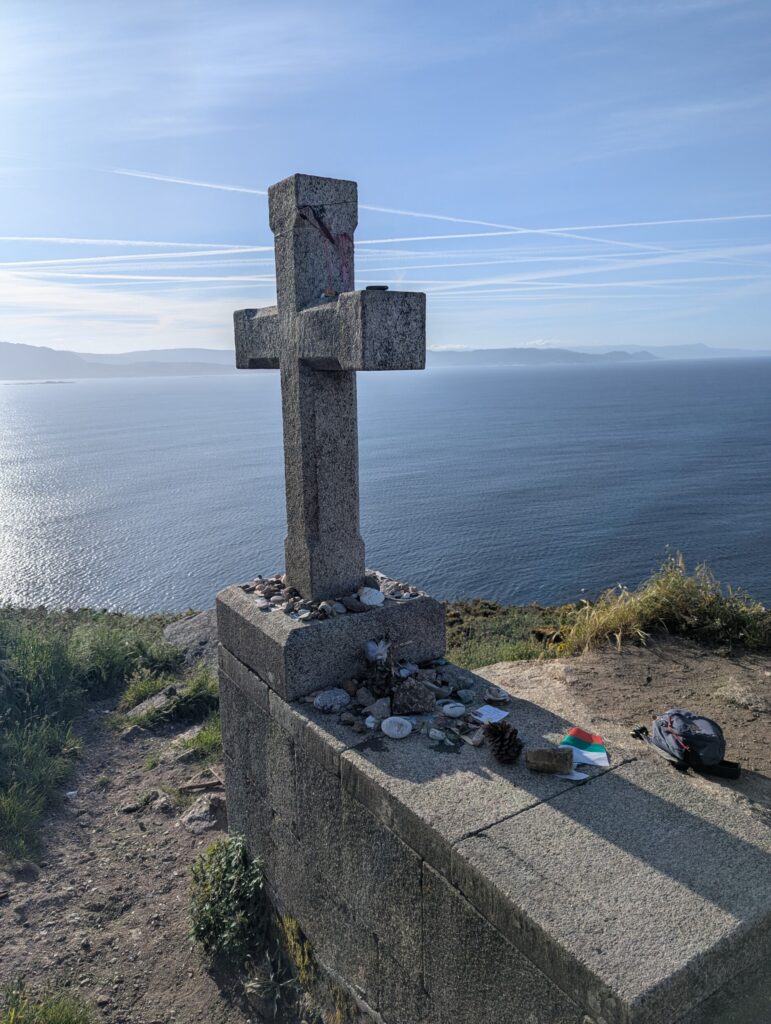
The iconic lighthouse stands there at 146 meters height as a symbol of the end of Europe. As I stood there, I felt something that’s hard to describe. Completion? Humility? Gratitude? A place where so many pilgrims before me have stood…
Perfect Breakfast at the End of the World
After reaching kilometer 0.0, I had a wonderful breakfast at the Hotel El Semaforo de Finisterre by the lighthouse. What a special place to finish your Camino, with a view over the infinite Atlantic Ocean, knowing that you’ve truly reached the end of Europe. That combination of physical completion and culinary pleasure made the moment complete.
I saw a few pilgrims at breakfast who had spent the night here. That makes the end of your journey quite special! Check out the El Semaforo de Finisterre hotel!
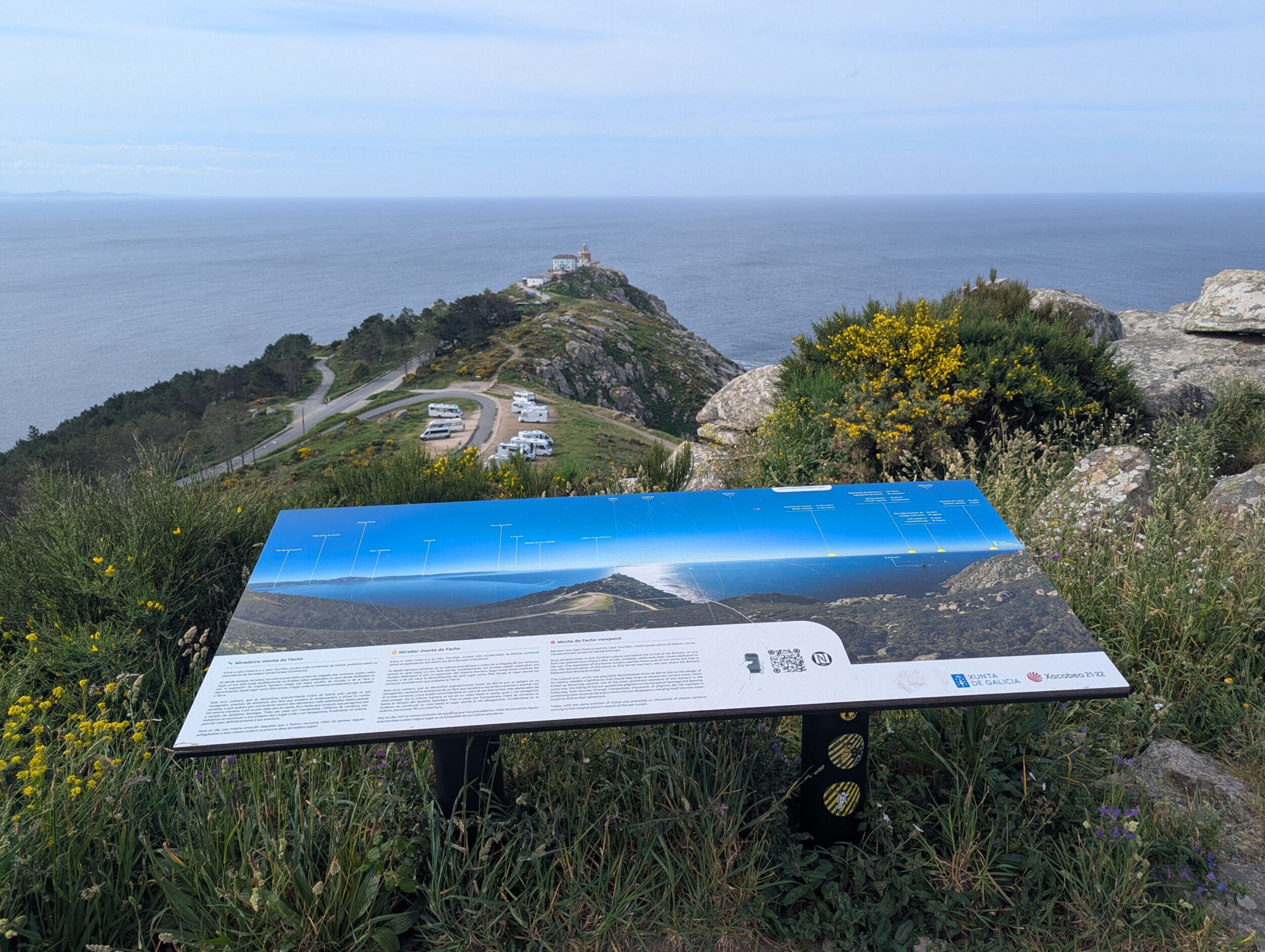
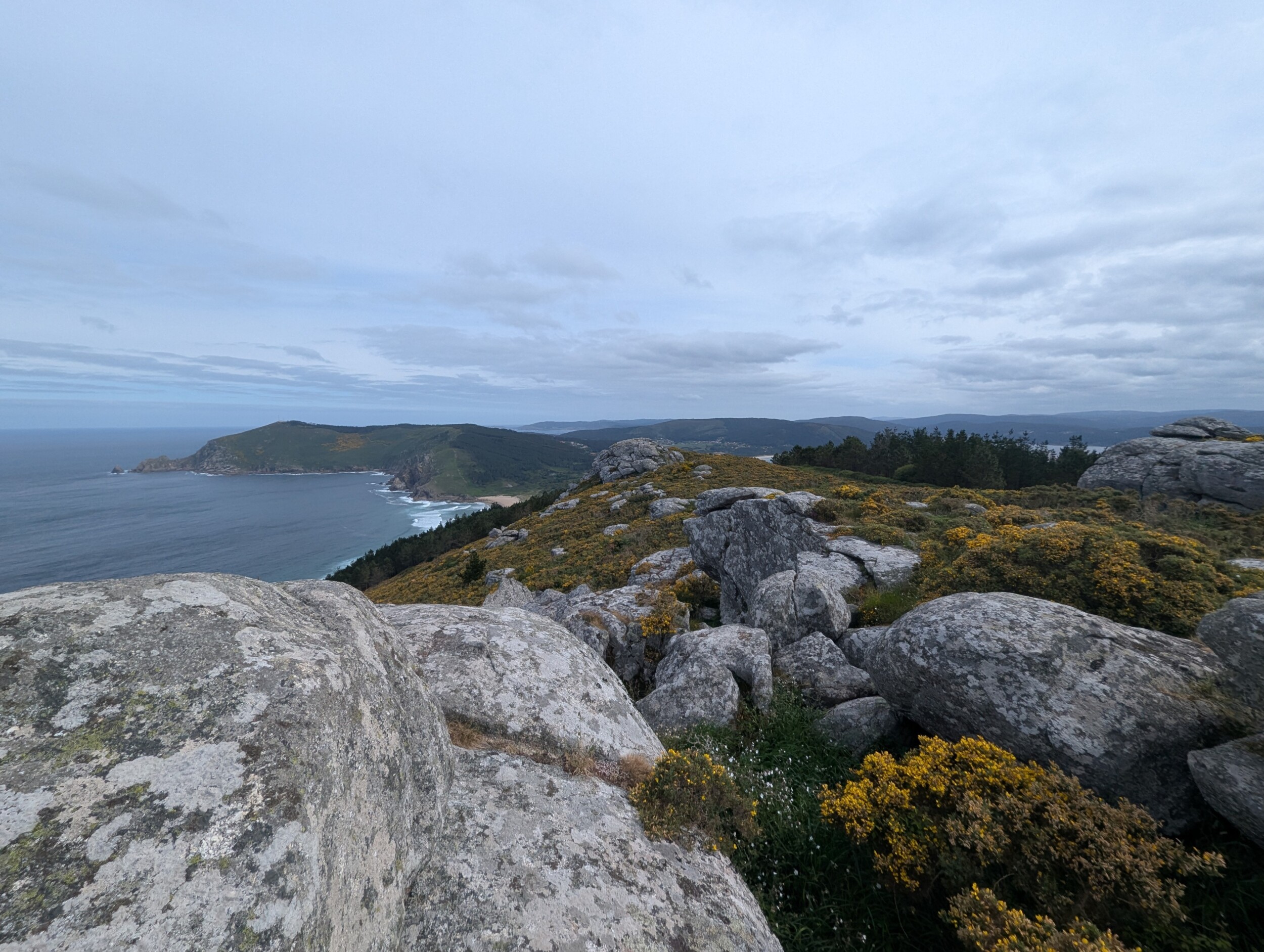
Walking back to Finisterre, I took the path along the top. This gives you beautiful views back over the end of the world… But also beautiful vistas over the surroundings. Truly recommended!
Muxía: The Mystical End (by Bus)
Instead of walking on foot to Muxía, my feet really had enough, I chose the bus. Muxía is 28 kilometers from Finisterre and has a completely different, mystical energy.
Bus Finisterre → Muxía
Practical: 3-4 buses per day (41 min, €2.60-5.00). Monbus (online tickets) and Arriva (cash payment). Popular times: 11:15 and 17:00. I took the 12 o’clock bus with Arriva. On weekends they run less frequently, check the times at the info stand by the bus stop. ( GPS busstop )
Accommodation in Muxía: I stayed at Hostal Habitat Muxia II, a nice place where I booked 2 nights (€60 per night). Well rested and comfortable after the intensive walking days.
Santuario da Virxe da Barca: Where Sea and Spirituality Meet
The Santuario da Virxe da Barca (Virgin of the Boat) stands on a rocky ridge above the surf. According to legend, the Virgin Mary landed here in a stone boat to meet the apostle James.
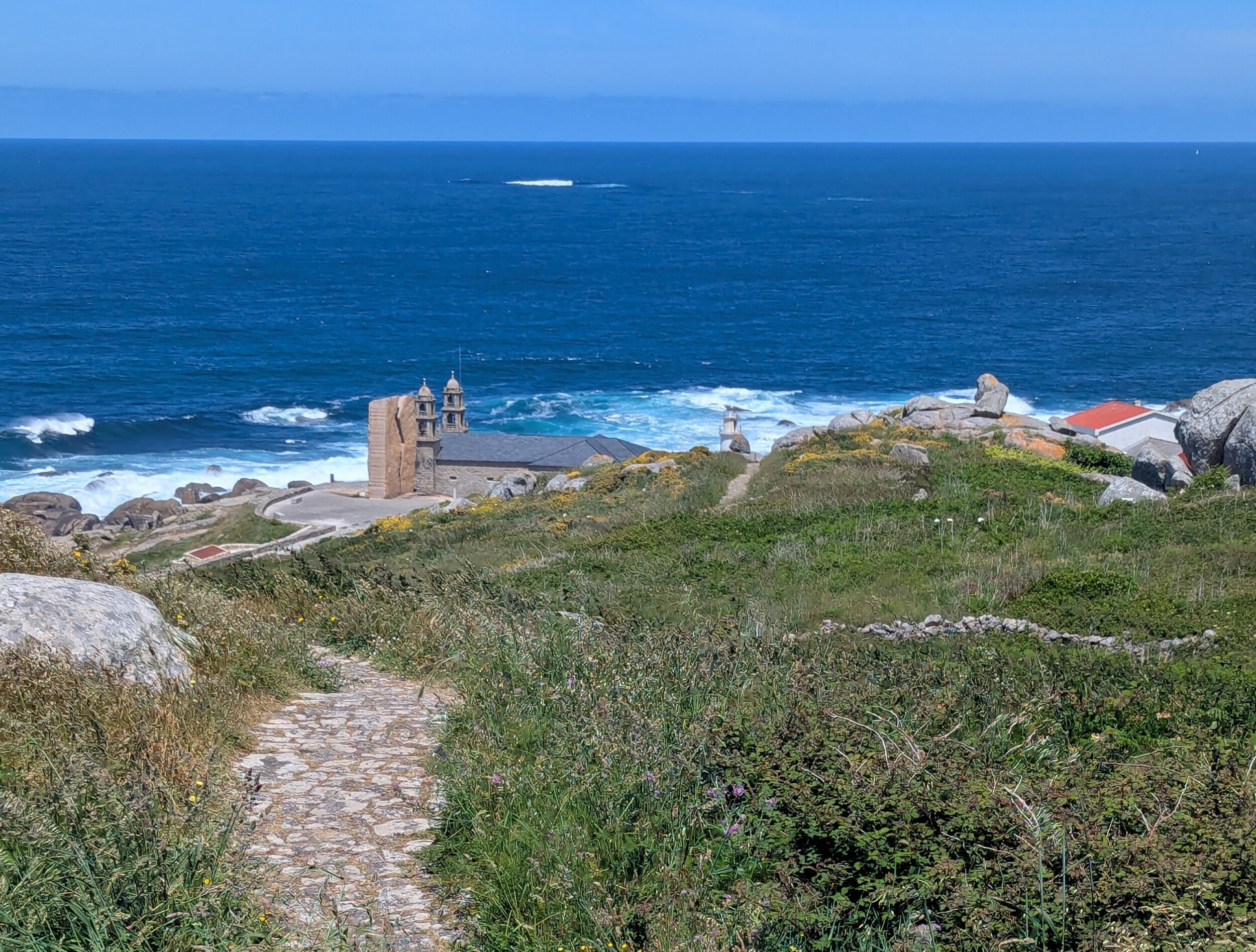
In heavy weather, the waves crash against the church walls, nature and spirituality merge here completely.
A Ferida: The Wound That Heals
On Monte Corpiño stands A Ferida, an impressive artwork of a broken sculpture. “The wound” stands there against the backdrop of the infinite ocean as a silent witness to pain and recovery.
Complete Camino Finisterre Planning Guide: Everything You Need to Know
Best Time to Walk the Camino Finisterre
- Optimal months: April-June and September-October
- Weather: Pleasant walking weather (15-25°C)
- Crowds: Fewer pilgrims than in July-August
- Facilities: All accommodations and restaurants open
Avoid: December-February (lots of rain, some accommodations closed)
Camino Finisterre Costs: Complete Budget Guide (2025)
Accommodation per night:
- Albergues: €12-15 (basic facilities)
- Pensiones: €60 (private room)
- Hotels: €60+ (comfort)
Food per day:
- Self-cooking: €8-12
- Restaurant lunches: €10-15
- Pilgrim menus: €12-18
- On the road (coffee, drinks, snacks): €7-12
Total budget 4 days (accommodation + food on the road + Muxía overnight): €100-200
Essential Packing List for Walking the Camino Finisterre
Essential:
- Hiking boots (well broken in)
- Rain gear (Galicia can have a lot of rain)
- Towel (not all albergues provide this)
- Basic first aid kit
- Power bank for phone/GPS
Camino-specific:
- Pilgrim passport for stamps
- Shell for recognition
- Walking poles (hilly terrain)
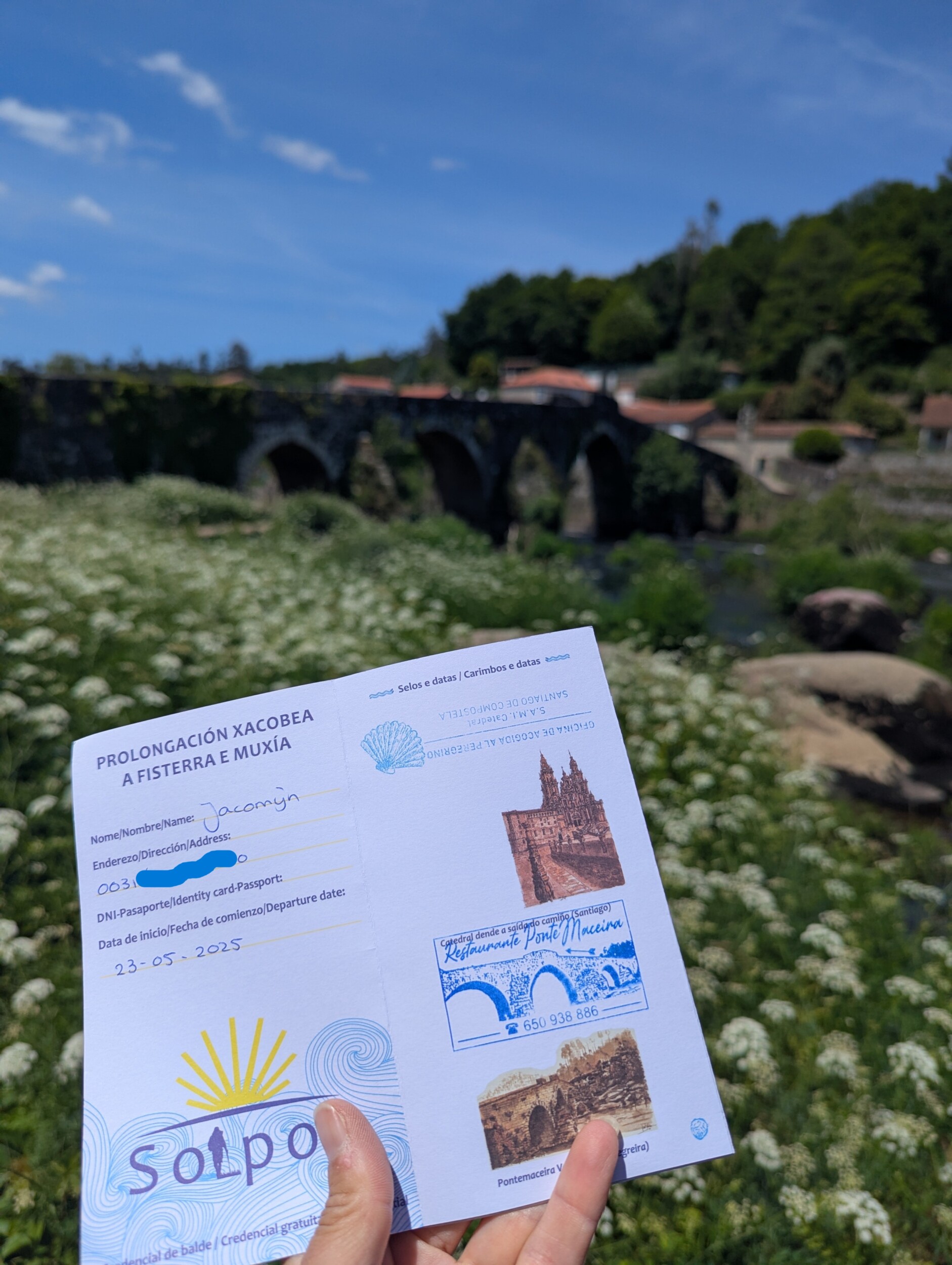
Read everything about collecting stamps in your pilgrim passport and why it is so special
Safety for Female Pilgrims
As a woman alone, I felt completely safe on the Camino Finisterre route:
Why safe:
- Excellent signage
- Regular villages with facilities
- Other pilgrims for social safety
- Well-developed infrastructure
My safety tips:
- Share your route with someone at home
- Trust your intuition
- Join other pilgrims if you’re uncertain
Camino Finisterre vs Other Camino Routes: Which Should You Walk?
| Aspect | Camino Finisterre | Camino Frances |
|---|---|---|
| Crowds | Quiet | Busy (especially last 100km) |
| Distance | 89 km (3-4 days) | 800 km (30+ days) |
| Difficulty | Medium | Easy-medium |
| Unique Selling Point | Ends at ocean | Classic pilgrimage route |
| Best for | Pilgrims seeking peace | Social pilgrimage experience |
Deeper Meaning: Why Finisterre Is So Special
Historical Context
Roman times: For the Romans, Cabo Finisterre was literally “finis terrae”, the end of the earth. They knew no land more westerly than this dramatic coast.
Middle Ages: Pilgrims continued their journey after Santiago to watch the sunset here, a symbol for the completion of their spiritual journey.
Today: Even though we know that Portugal’s Cabo da Roca is actually the westernmost point of Europe, Finisterre retains its mystical and symbolic meaning.
Spiritual Dimension
Traditional rituals (now adapted):
- Burning clothes: Now prohibited (fire hazard + pollution)
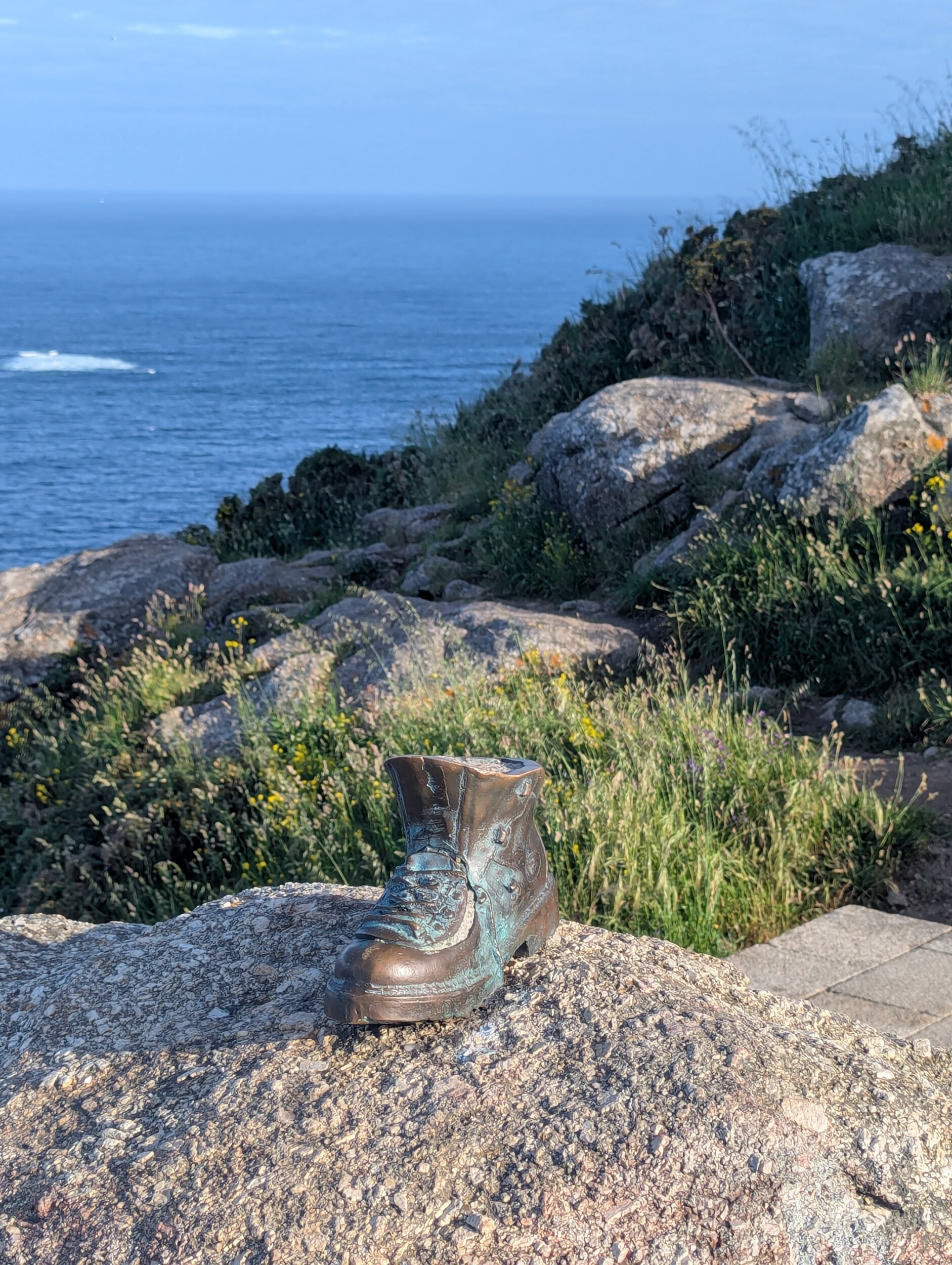
- Throwing shoes in the sea: Now replaced by symbolic monument, the small shoe on stone
- Sunset meditation: Always a good idea
- Personal reflection by the ocean: Timeless tradition
Modern meaning: The Camino to Finisterre symbolizes letting go of what you no longer need and embracing renewal. The small shoe monument reminds us of the old traditions but now respects nature and safety.
Walking the Camino Finisterre: Route Extensions and Options
Option 1: Continue to Muxía (Extra day)
Route: Finisterre → Lires → Muxía (28 km)
Highlights:
- Rugged coastline of Costa da Morte
- Authentic fishing villages Lires and Muxía
- Mystical rocks and “magical” stones
Option 2: Complete triangle (Back to Santiago)
Route: Finisterre → Muxía → Santiago (Extra 3-4 days) Total: Approximately 150 km For whom: Adventurous pilgrims with extra time
Option 3: Bus combinations
Practical:
- Santiago → Finisterre (bus)
- Walk Finisterre → Muxía
- Muxía → Santiago (bus)
Frequently Asked Questions: Walking the Camino Finisterre
Q: Can I do the Camino Finisterre without previous Camino experience? A: Yes, but 33 km on day 2 like I did is tough for beginners. Consider 4 days instead of 3 and spend the night in Cee.
Q: Are there enough accommodations? A: There’s less capacity than on the Camino Frances, but outside July-August usually no problems.
Q: Can I buy equipment along the way? A: I encountered few good shops, Negreira and Cee were larger places where you have a chance. Take important items from Santiago.
Q: Is it mandatory to walk another Camino first? A: No, but most pilgrims do Finisterre after Santiago for the symbolic value.
Start Planning Your Camino Finisterre Walking Adventure
Are you considering walking from Santiago to Finisterre? Do it. Even if you’re tired, even if you think you’re ‘done’.
Next steps for planning your Camino Finisterre:
- Check the weather forecast for Galicia (bring rain jacket)
- Download a camino app (Buen Camino or Camino Ninja) for the route
- Book your accommodations in advance during peak season
- Inform your home front about your walking route and planning
The feeling of standing at kilometer marker 0.0, with the Atlantic Ocean before you and the knowledge that you’ve truly arrived at the end of Europe, was truly worth it! After all these years walking the camino, I’m really super happy that I finally went. And… I’ll definitely walk it again and will choose Muxía as the endpoint then!
Are you inspired to walk your own Camino Finisterre? This complete walking guide has given you all the practical information you need. Share your plans in the comments or ask your questions.
I’m happy to help you further with practical tips and motivation for your adventure to the end of the world. ¡Buen Camino!
Read More About the Camino:
- What is your budget for the Camino de Santiago?
- Everything for your visit to Santiago de Compostela
- Making friends on the Camino
- Packing list for your pilgrimage in Spain
- Pros and cons of warm/cold weather on the camino