
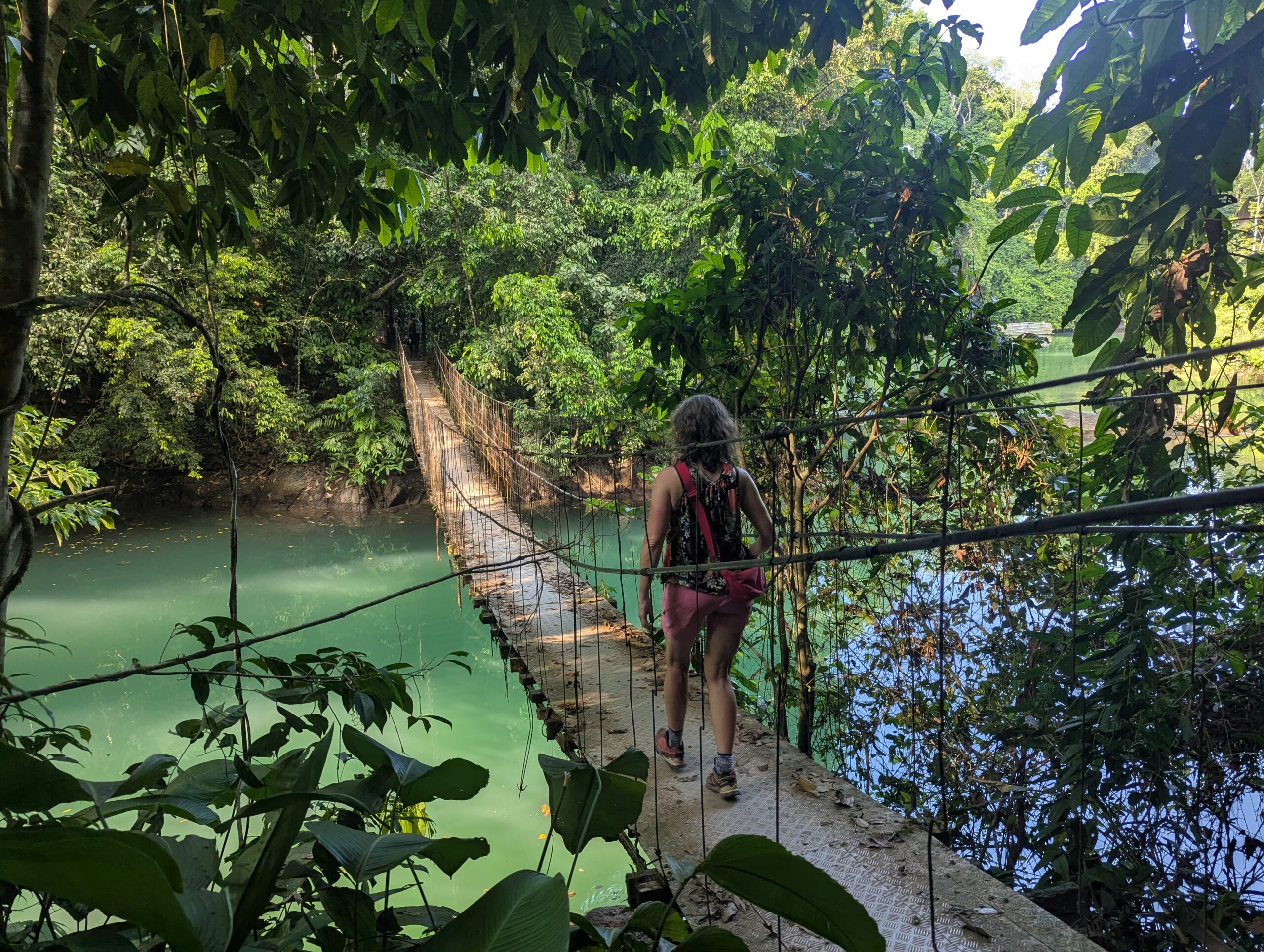
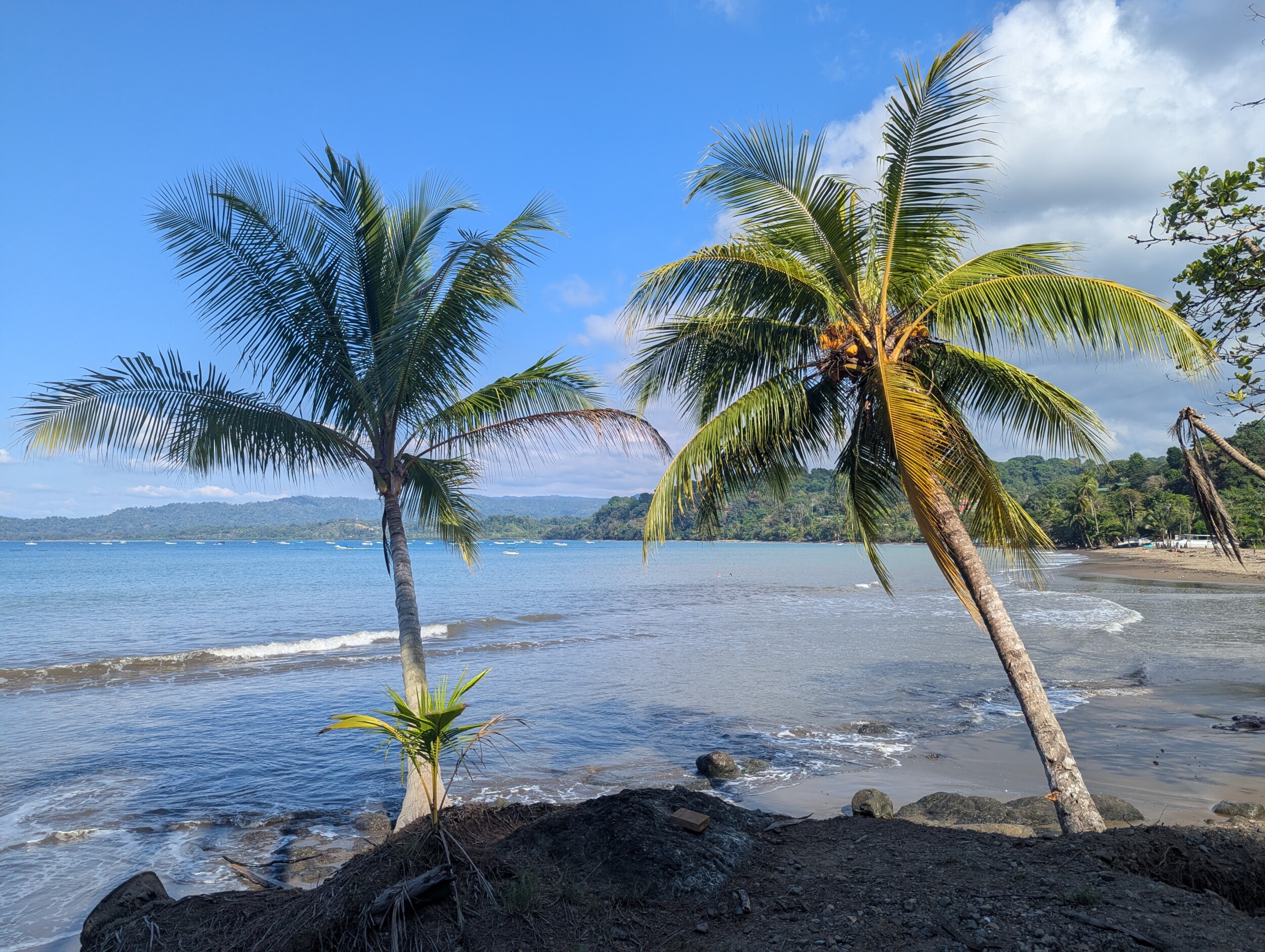
Tucked away on the remote Osa Peninsula, Drake Bay Costa Rica is where the rainforest meets the sea and wildlife is everywhere around you. There are no paved roads, no ATMs, and no masses of tourists. What you will find are empty beaches with scarlet macaws overhead, snorkel spots with sharks and sea turtles, and jungle trails where you encounter more animals than people.
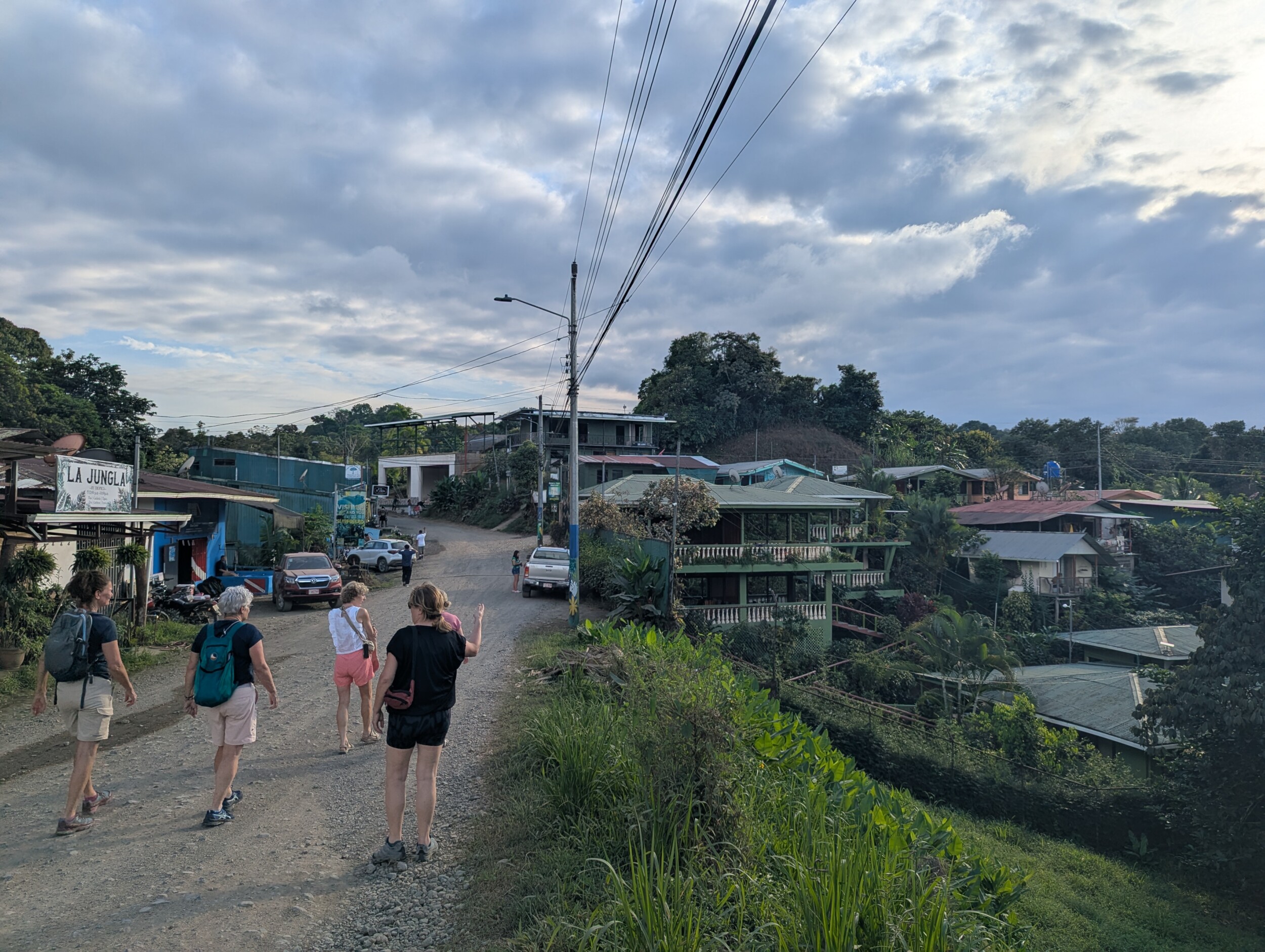
The bay takes its name from Sir Francis Drake, the English explorer who sheltered his ships here in 1579. The actual fishing village is called Agujitas, but everyone simply calls it Drake Bay.
Why Drake Bay – Costa Rica?
While popular destinations like Tamarindo and Manuel Antonio are flooded with tourists, Drake Bay still feels authentic and wild. This small fishing village is the gateway to Corcovado National Park, which National Geographic has called “the most biologically intense place on earth.”
No paved roads. No ATMs. And no crowds. Crystal-clear water, untouched rainforest beaches, and an overwhelming abundance of wildlife. Drake Bay is the place for travelers seeking a real nature experience without the tourist trail.
Snorkeling at Caño Island
One of the highlights of any visit — and the most booked tour in the area — is a snorkeling trip to Caño Island (Isla del Caño), a biological reserve roughly 20 kilometers offshore. The water clarity here is exceptional, and the marine life is unlike anything else on Costa Rica’s Pacific coast.
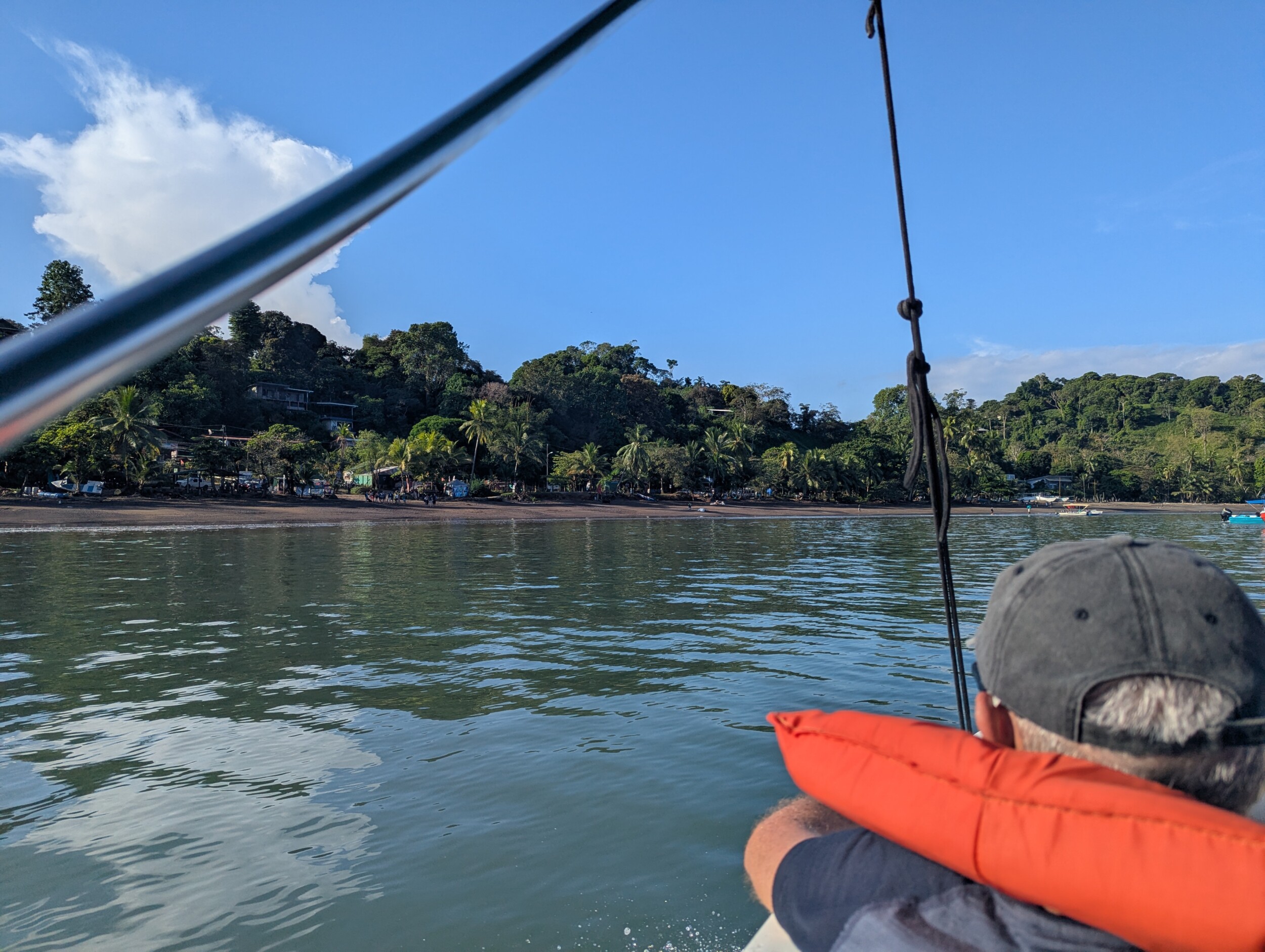
The boat ride takes about an hour and is an adventure in itself. We regularly spotted dolphins along the way, and we were lucky enough to see a whale with her calf — one of those moments that stays with you. Humpback whale sightings are not unusual during the whale season (July–November and December–April).
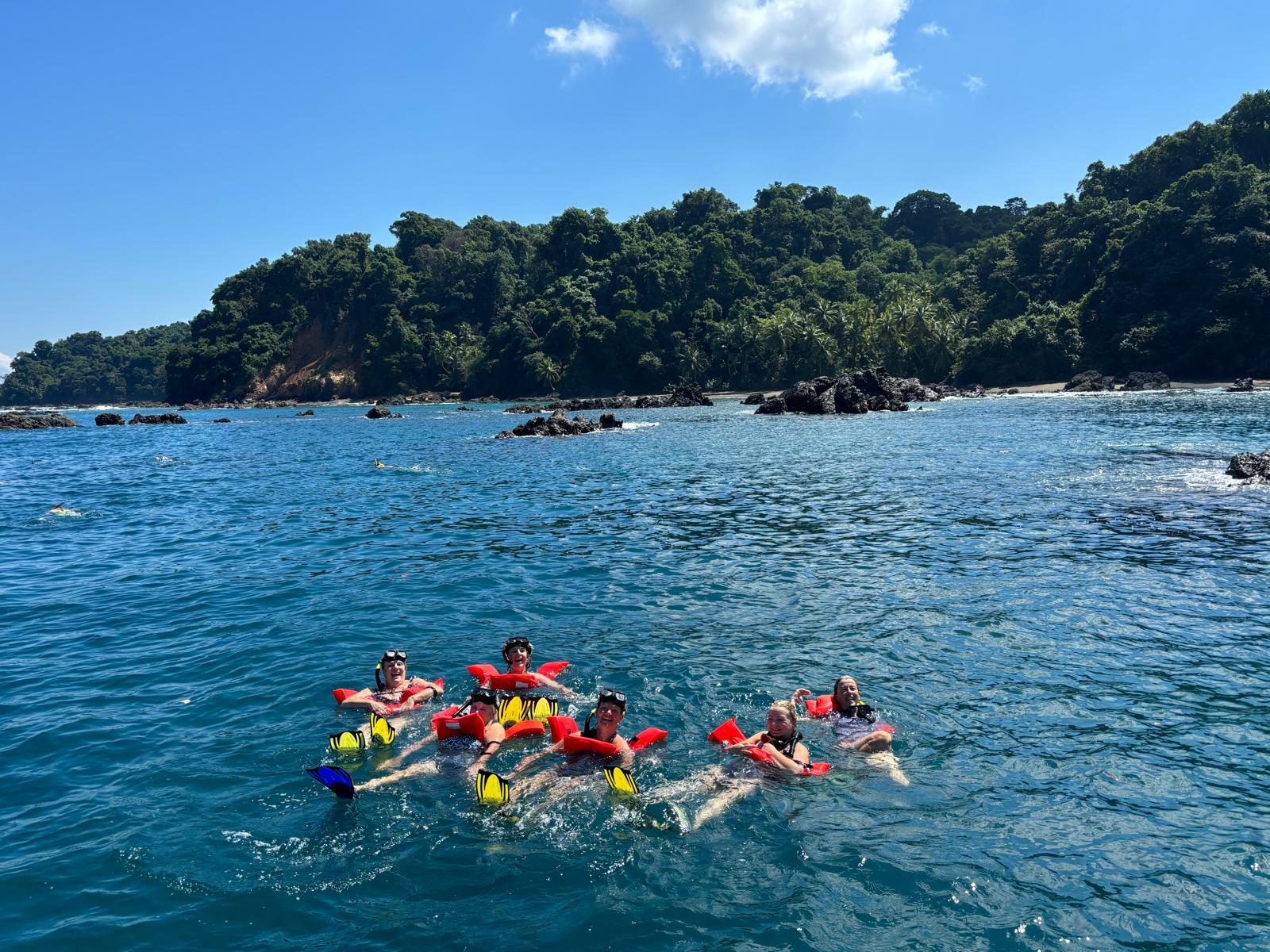
At the island, you do two snorkel sessions of about 45 minutes to an hour each, with a rest on the beach in between. From the beach, a short trail leads up to a viewpoint with a beautiful panorama over the sand, jungle, and sea.
Visibility in the water is often up to 24 meters. We saw whitetip reef sharks gliding calmly across the seafloor, a few groups of sea turtles, schools of fish, and various colorful tropical species. Small rays moved along the bottom, and a moray eel was tucked between the rocks.
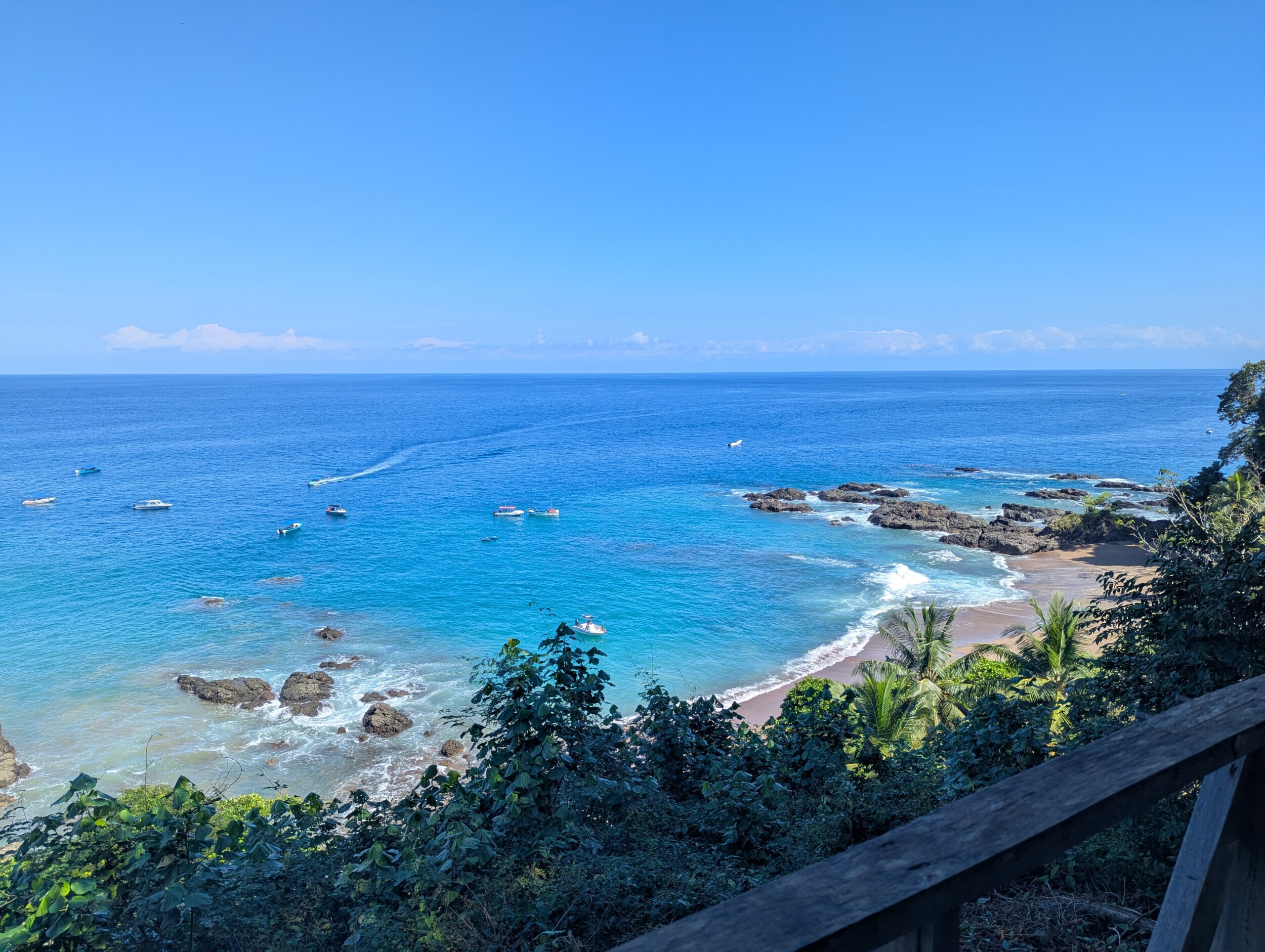
The coral itself is less spectacular than, say, the Red Sea or the Caribbean — mostly grey and brown tones, with little live coral remaining. But snorkeling this close to sharks and sea turtles in such a stunning setting made for a genuinely wonderful day.
Most tours depart at 7:00 AM and return around 14:00. Lunch is often served at Playa San Josecito, a beautiful beach on the mainland. Budget $70–125 per person including snorkel gear, guide, and lunch. You can book this tour in advance — recommended, as spots fill up fast in high season.
Tip: If you’re prone to seasickness, sit towards the back of the boat — you’ll feel the waves less there.
The Drake Bay Coastal Trail: Free Hiking Through a Rainforest Paradise
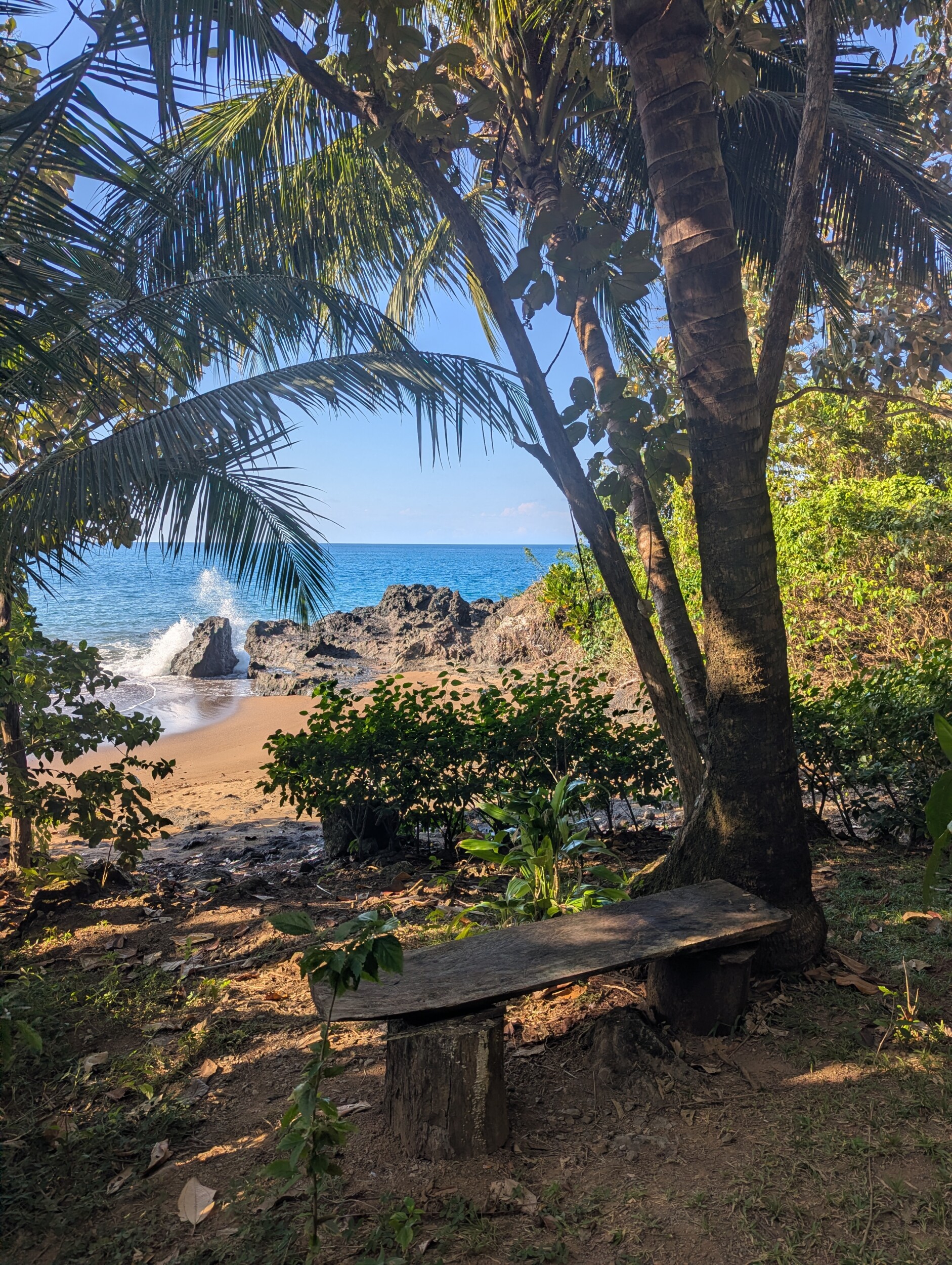
While a day tour to Corcovado National Park can cost $180 per person, the Drake Bay Coastal Trail is completely free — and arguably just as impressive. This 11-kilometer trail winds along the coastline between the village of Drake Bay and San Pedrillo, alternating between jungle and deserted beaches.
The route and hanging bridges
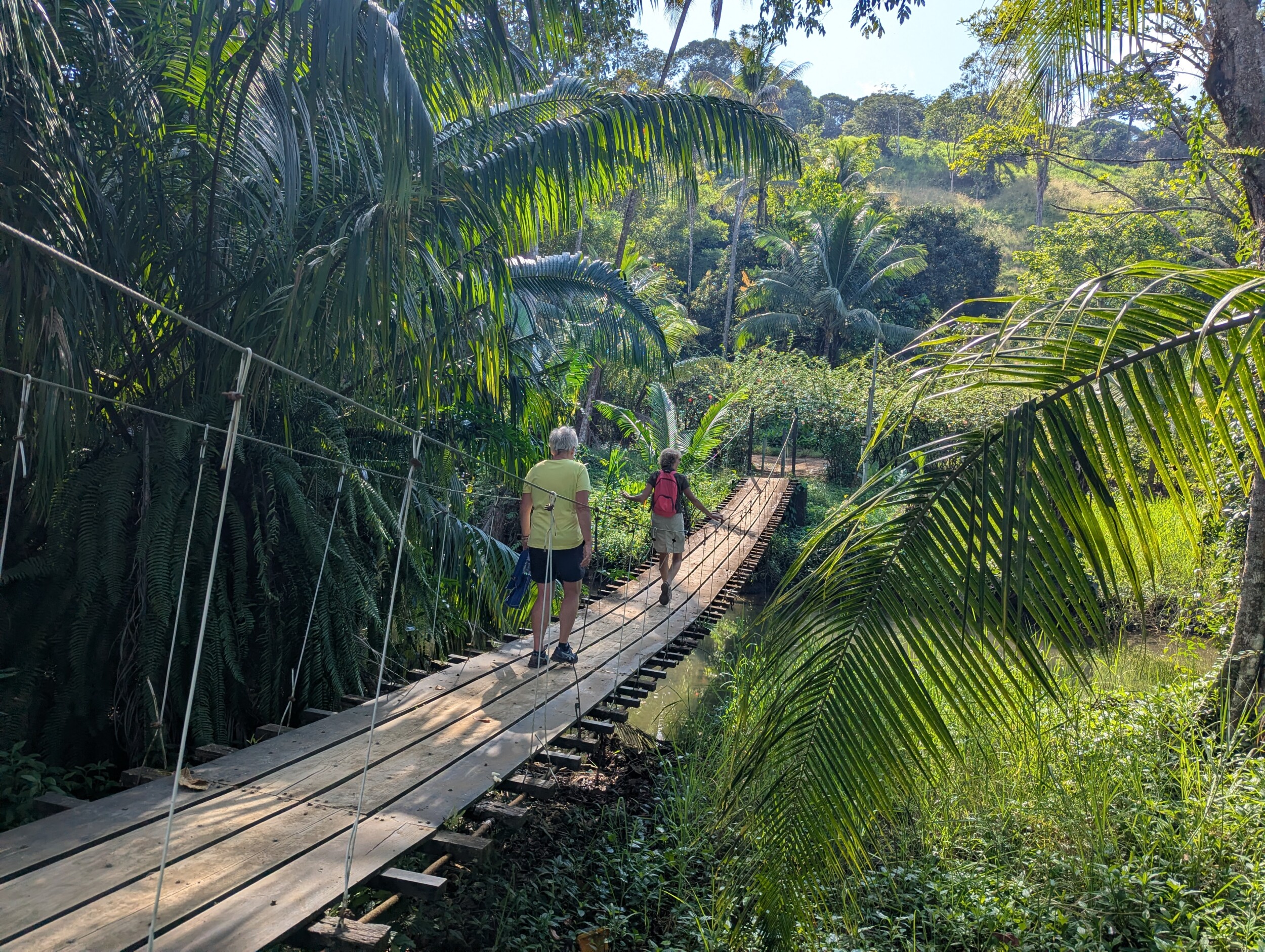
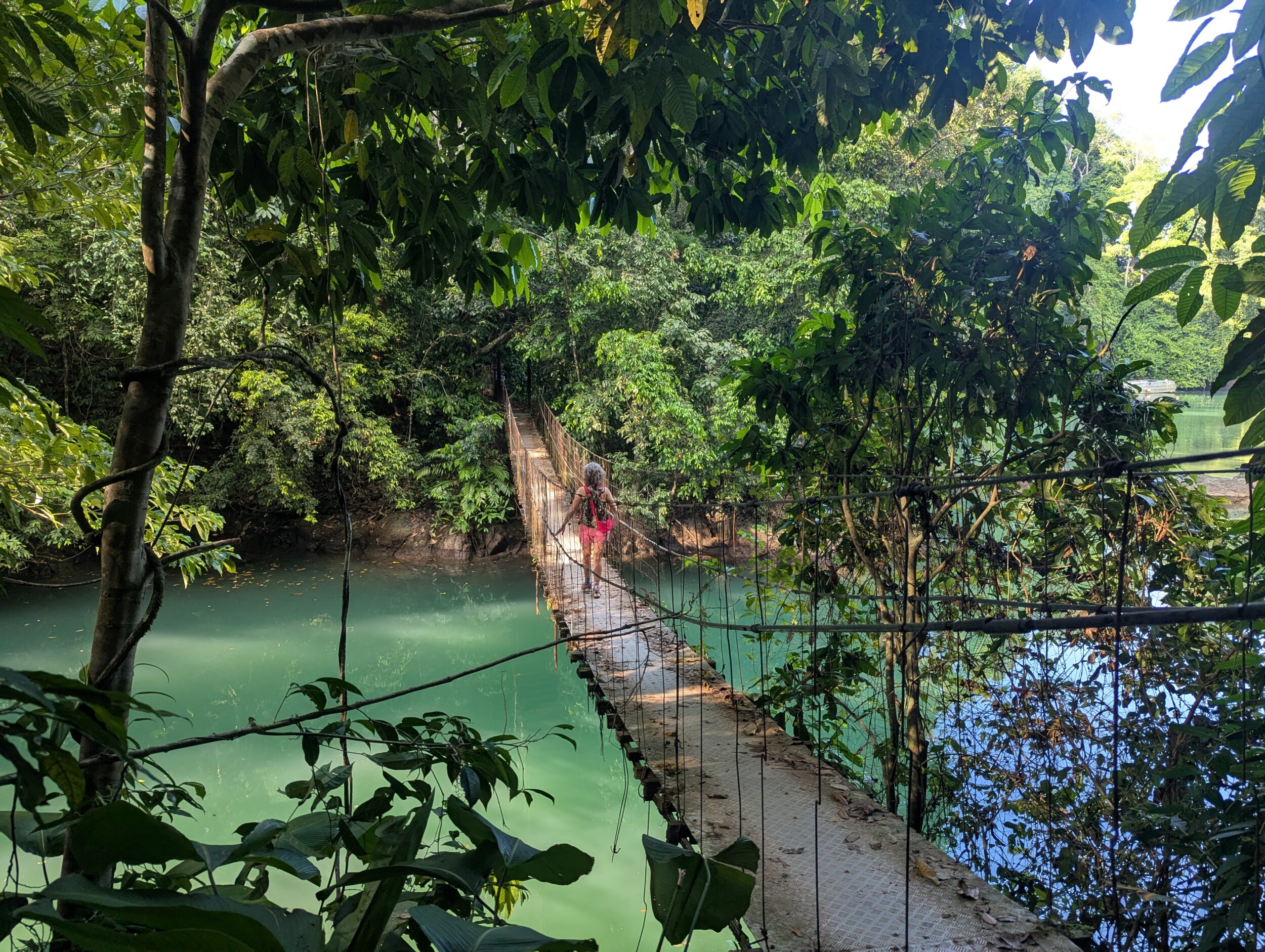
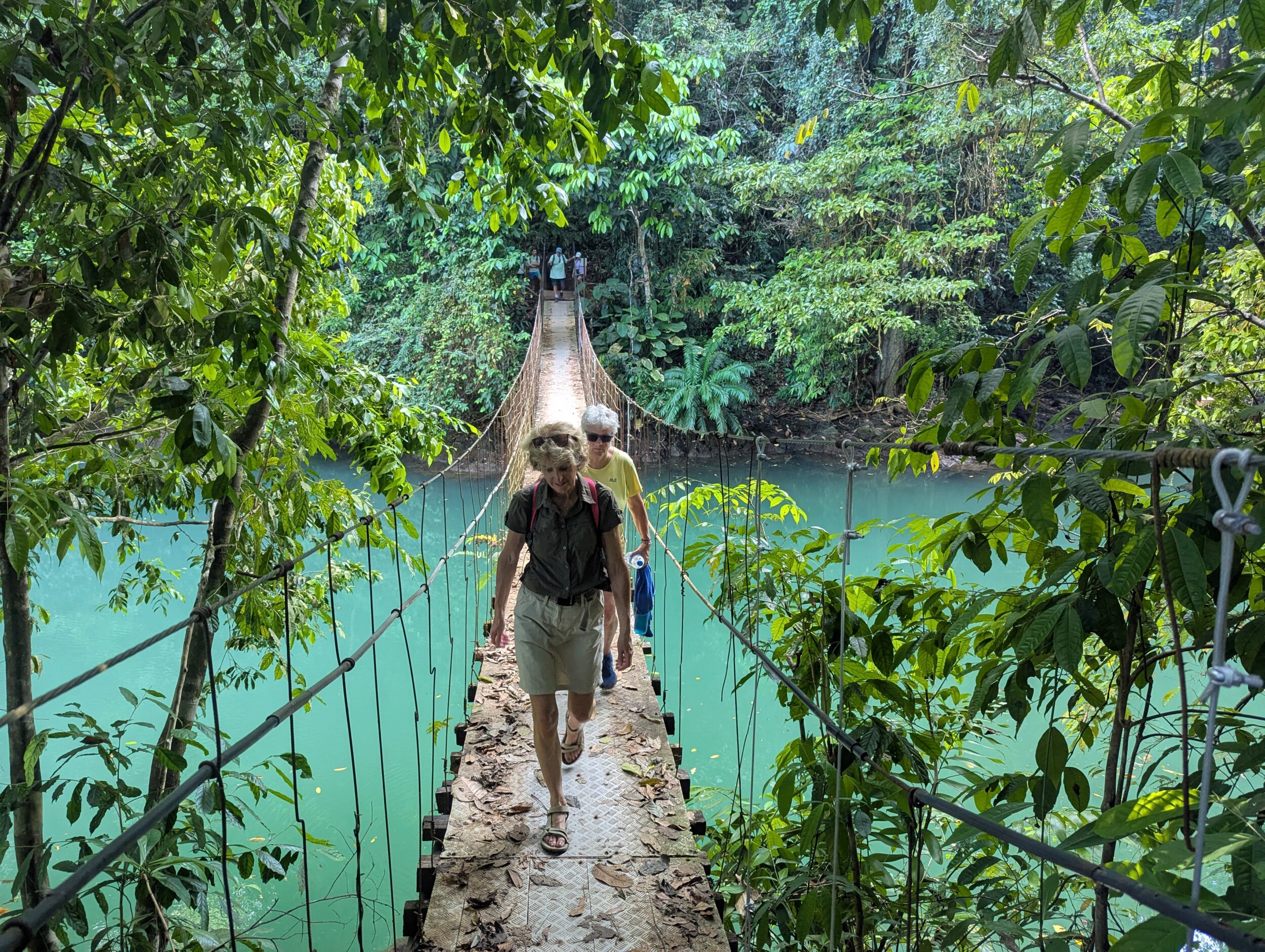
The trail starts at the southern beach of Drake Bay. You cross a small hanging bridge near Kalaluna Bistro, then a larger one just past Aguila de Osa Inn. After that, the landscape becomes wilder and more remote. The path moves between jungle, sandy beaches, small river crossings, and rocky coastline.
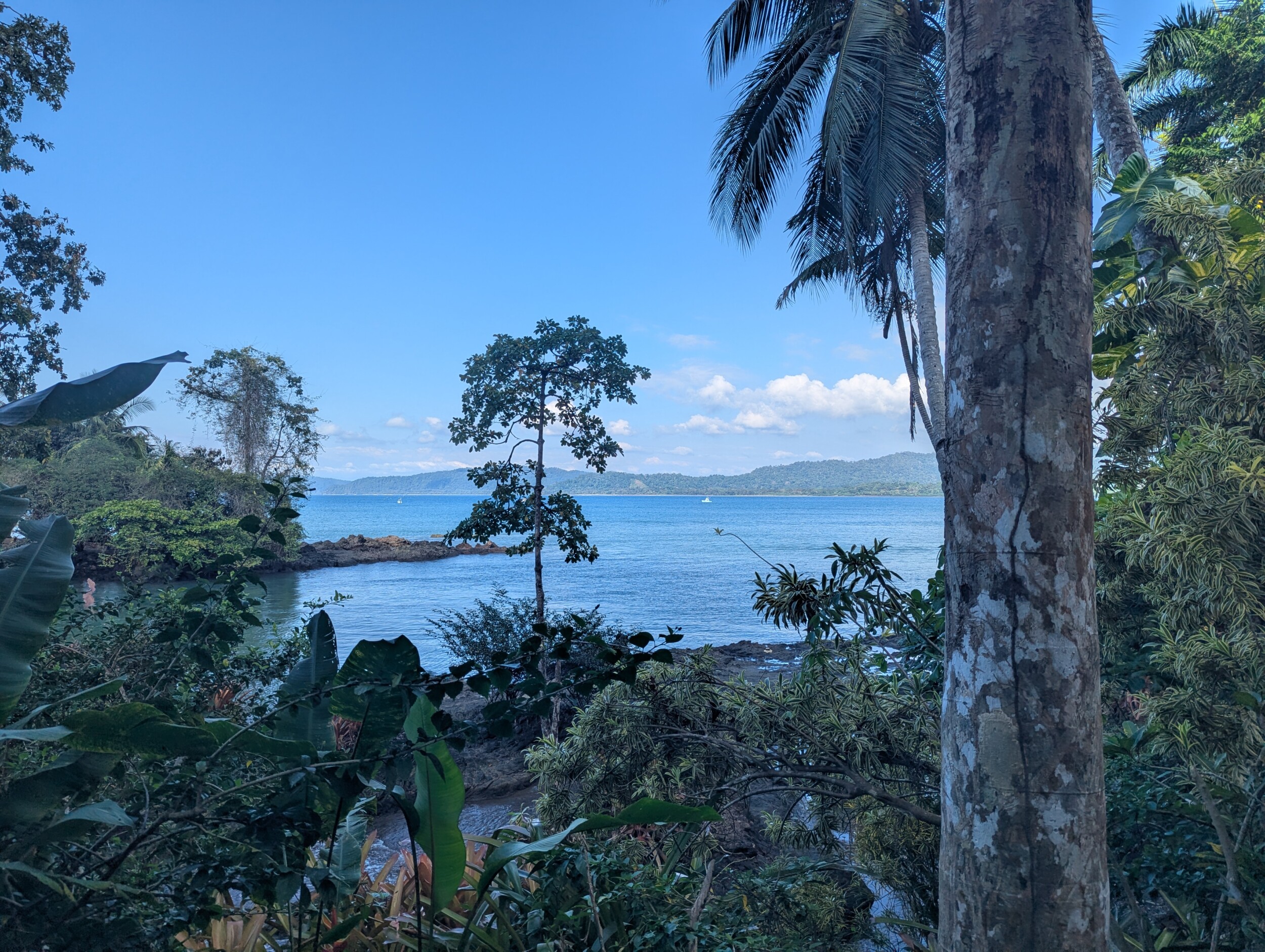
If you walk to the end point at San Pedrillo, you pass around 25 small beaches in total. We walked a lovely stretch in the late afternoon. After a few beaches, we turned back.
Wildlife along the way
The area borders Corcovado National Park, so wildlife encounters are frequent. We came across capuchin monkeys in the trees, and if you’re lucky, you’ll hear howler monkeys before you see them — their calls carry for kilometers. We heard plenty of birds, including scarlet macaws with their vivid red, blue, and yellow feathers, and toucans with their enormous, colorful bills.
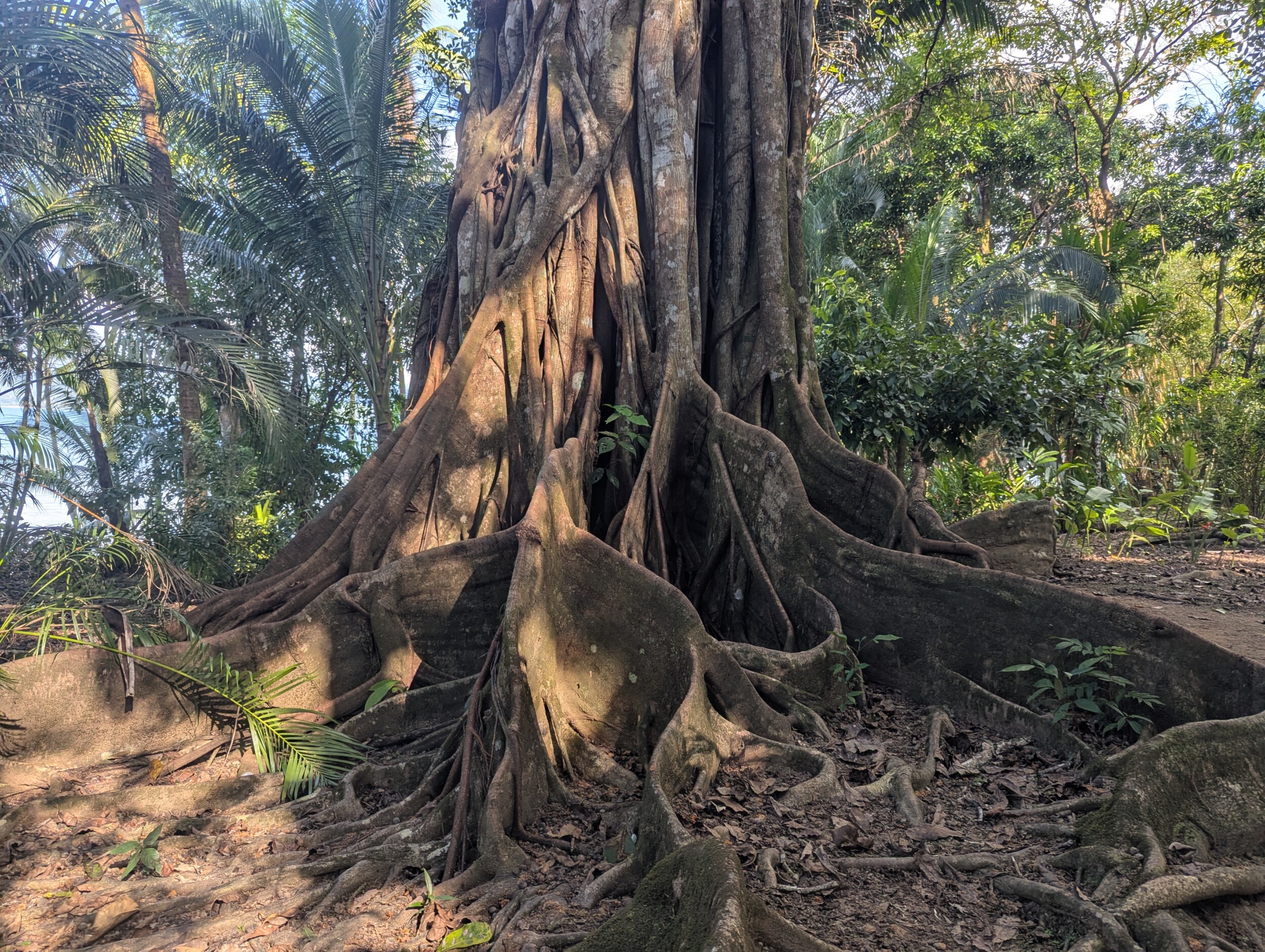
With some luck, you might also spot sloths, anteaters, or even a tapir.
The most beautiful beaches
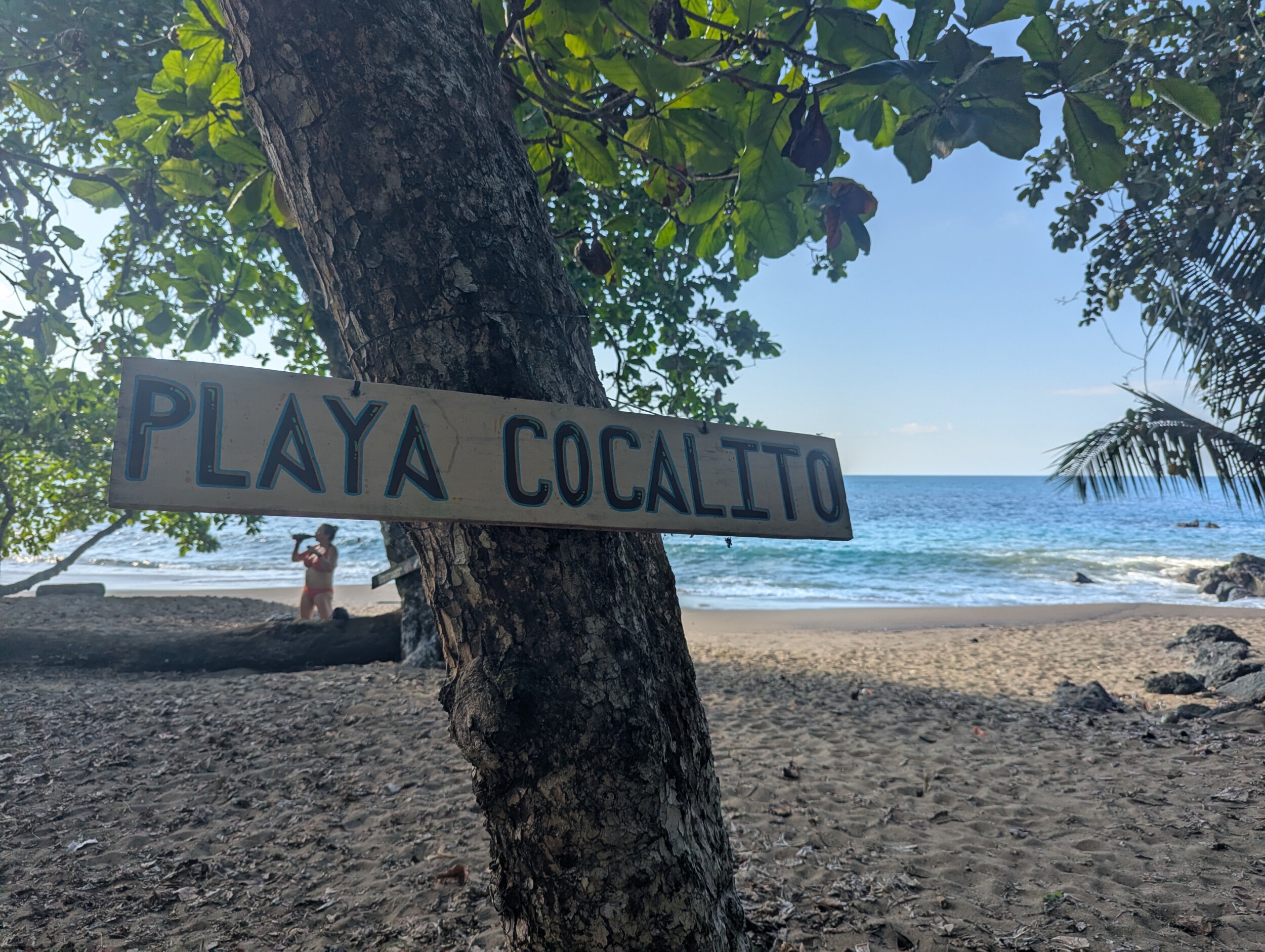
Playa Cocalito is reached after about 30 minutes of walking — quieter than the main beach and a perfect first swim stop. Playa San Josecito (after 2–2.5 hours) is considered by many to be the most beautiful beach on the Osa Peninsula. The U-shaped beach has soft golden sand and calm water sheltered by rock formations offshore. Scarlet macaws often come here to feed on fruit in the almond trees.
Practical: walk one way
The official walk takes about 6 hours without stops — add at least an hour and a half for wildlife photography, swimming, and taking in the views.
A useful tip: walk from Drake Bay to San Josecito and arrange a boat back during the midday hours. Snorkel and dive boats returning from Caño Island stop here for lunch. This works especially well in dry season when there are plenty of tours running. Make an arrangement in advance or ask on the spot — reckon on $10–20 per person.
- Bring plenty of water (at least 2 liters), sturdy walking shoes, swimwear, sunscreen, and mosquito repellent.
- Start early (7:00–8:00 AM) before the heat kicks in, and check the tide — at high water, Rio Claro can be tricky to cross.
Night Tour: The Jungle After Dark
When the sun goes down, a completely different world comes alive. Around 80% of rainforest animals are nocturnal — and a night tour reveals what you would never see during the day.
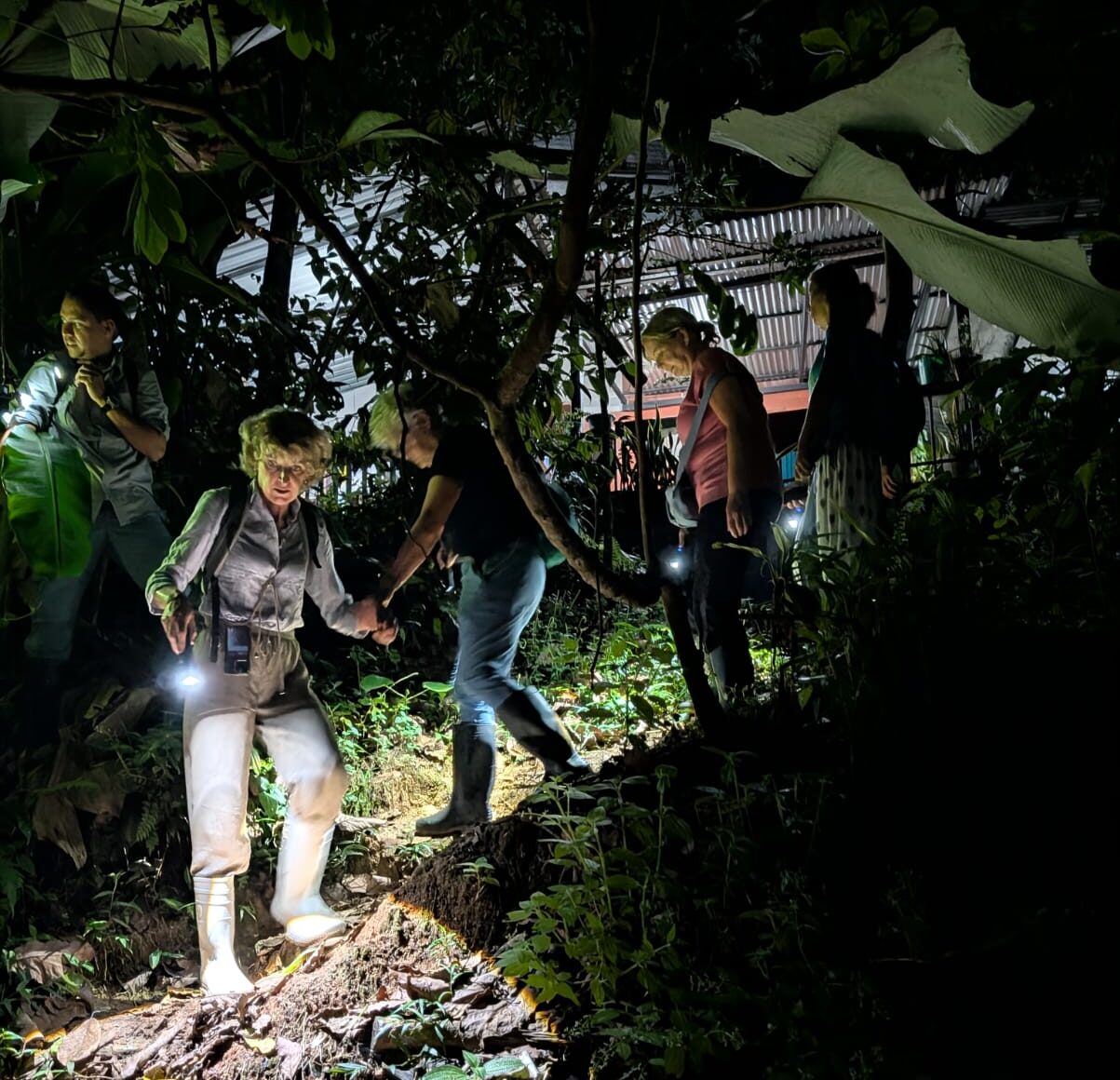
We set out around 19:00, equipped with rubber boots and flashlights. Just minutes from the village centre, we entered a private nature reserve. The shift in atmosphere is immediate: different sounds, a different humidity, the tension of not quite knowing what’s in the dark around you.
Our wildlife encounters
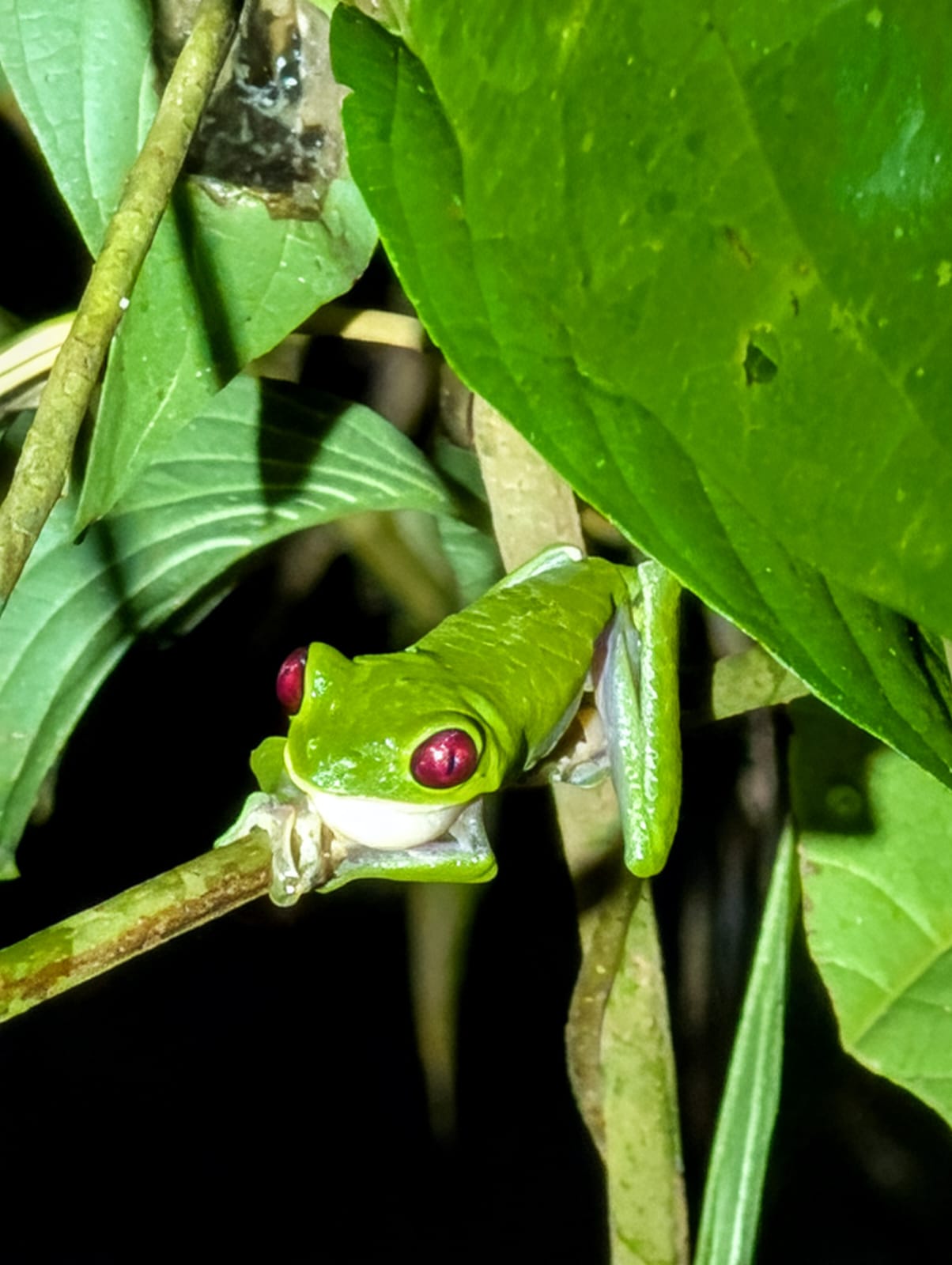
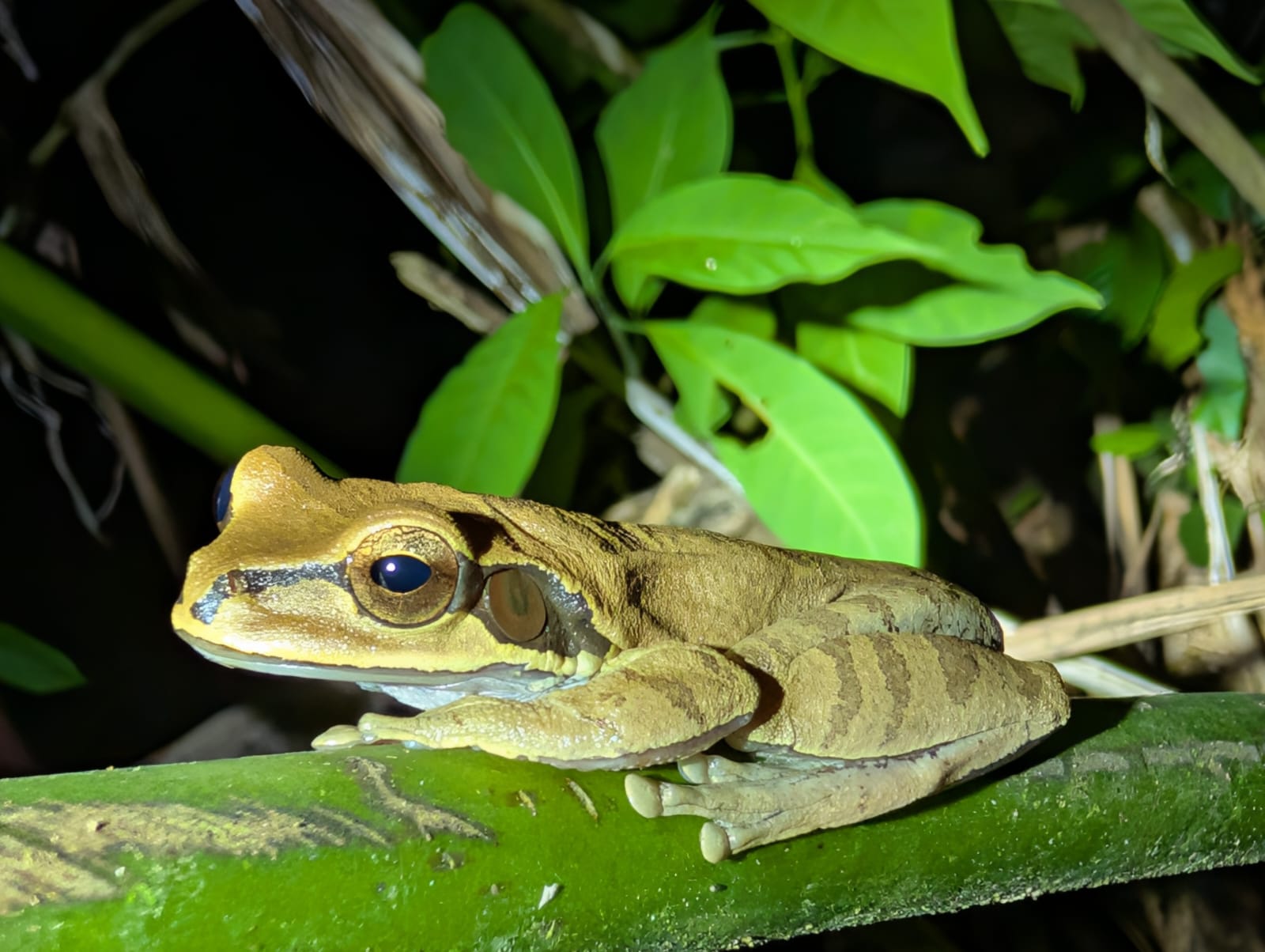
We were walking in a line, all shining our torches, when someone called out: I see something! We hadn’t even gone 10 meters from our starting point. Our guide showed us a frog and explained its role in the night ecosystem. A little further on, we spotted a clutch of frog eggs underneath a leaf.
The moment the red eyes of a tree frog light up in your flashlight beam is one you don’t forget quickly. The red-eyed tree frog is the icon of Costa Rica — a vivid green body, neon-red eyes, and orange-blue feet. We saw several, perfectly camouflaged on leaves until you were looking at them up close.
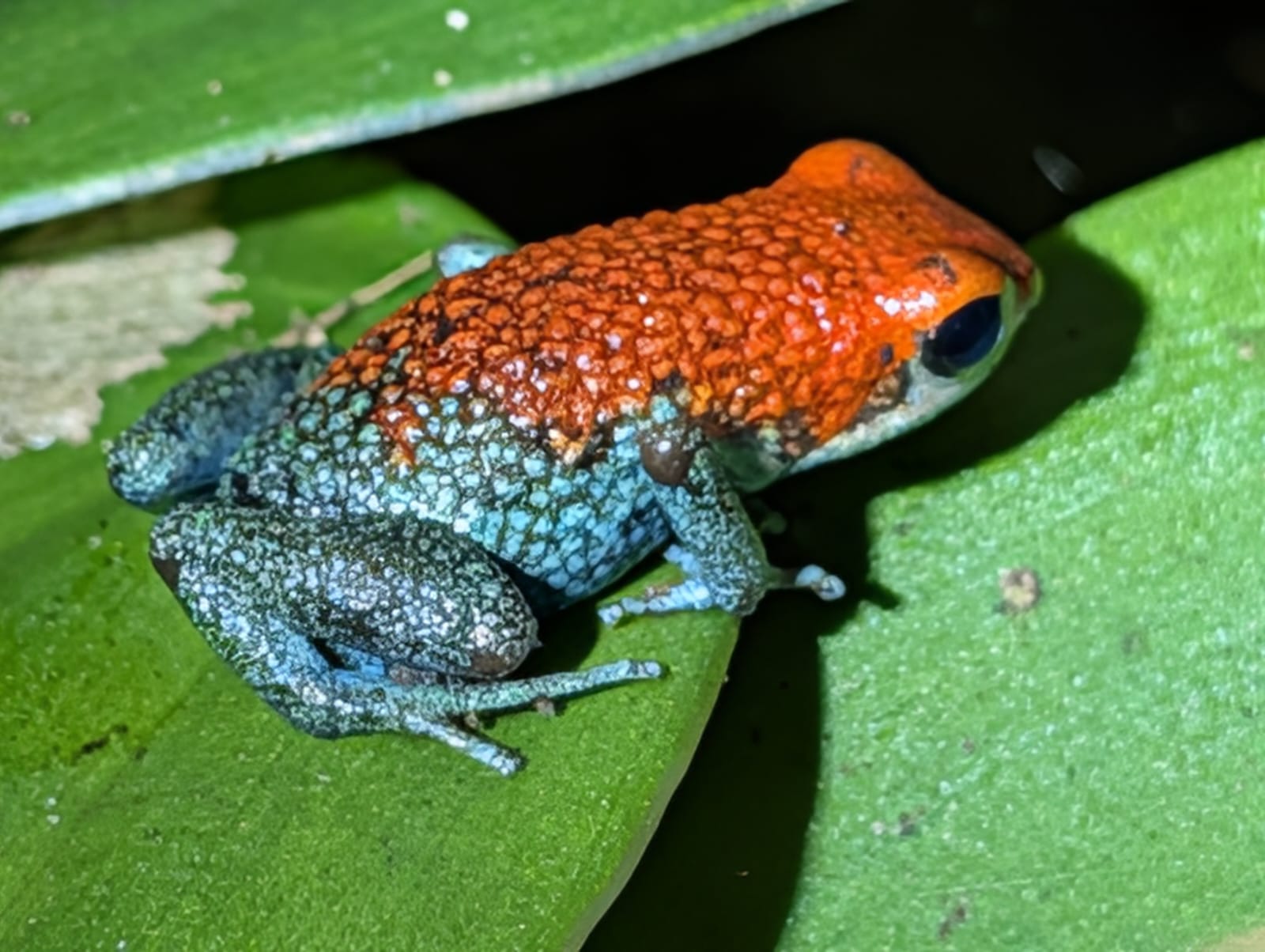
We also spotted the strawberry poison dart frog — a frog no bigger than your fingertip.
The absolute highlight was a tamandua (lesser anteater) we watched climbing a tree. These nocturnal insect hunters are rarely spotted. Our guide was visibly excited — it’s not every evening you see a tamandua. With their long snout and powerful claws, they move surprisingly nimbly through the trees in search of ants and termites.
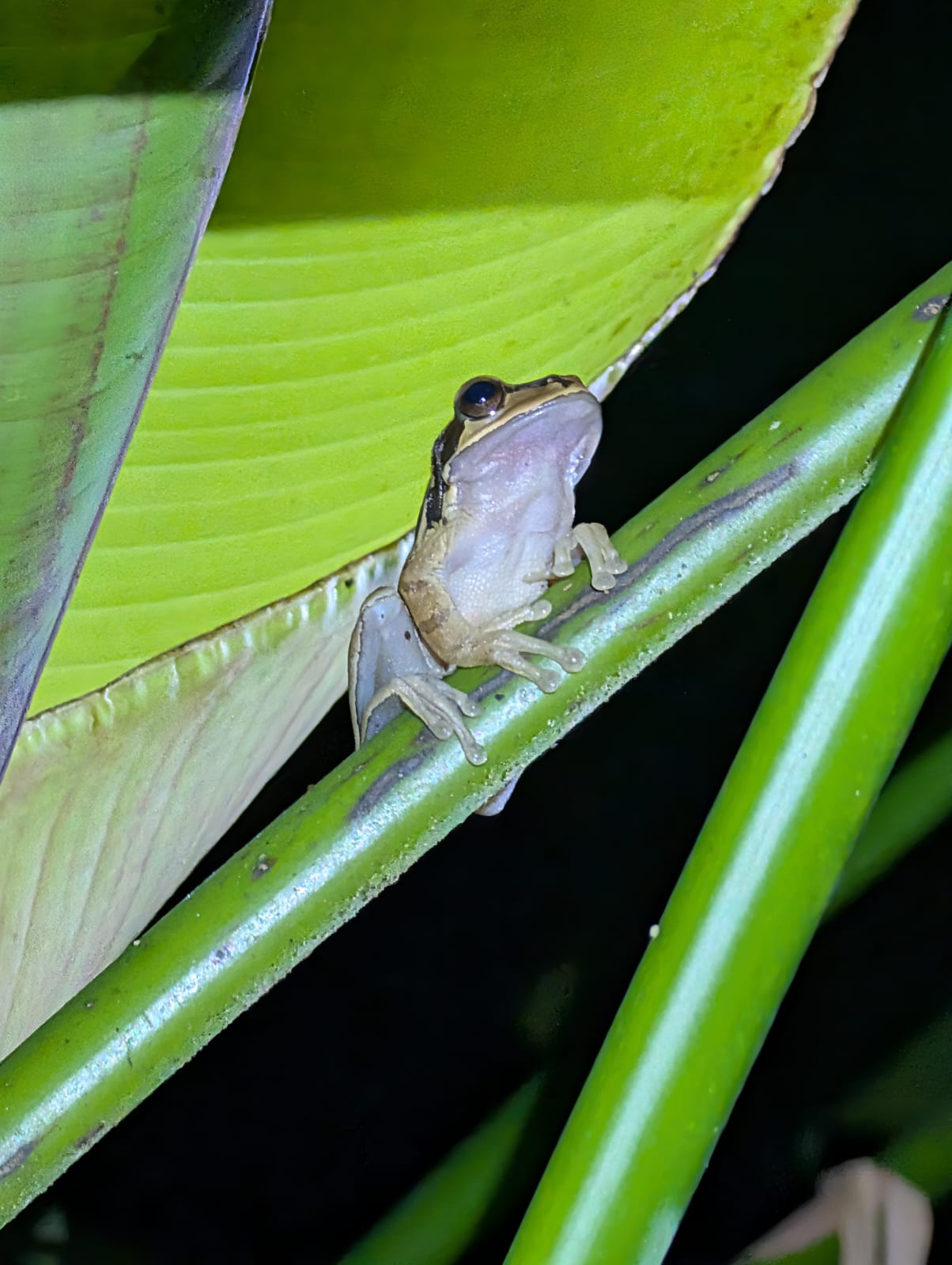
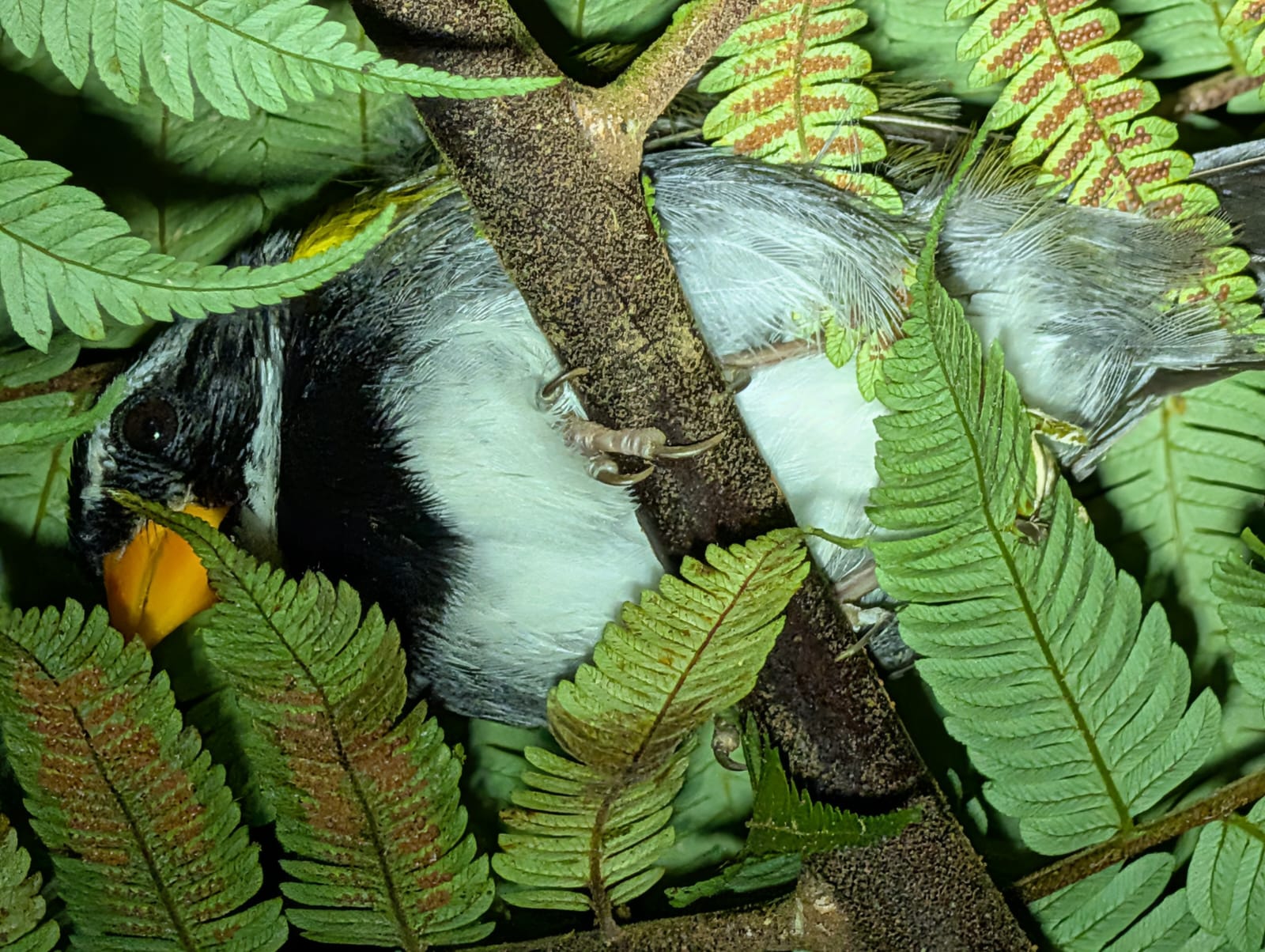
Beyond the spectacular red-eyed tree frog, we encountered several other frog species in more subdued shades of brown and green — likely also poison dart frogs. Under the guide’s UV light, a scorpion glowed on the path. Later, we carefully passed a snake resting calmly across the trail. Bioluminescent mushrooms lit up in the dark when we switched off our torches.
Practical
Night tours last 2–3 hours, usually start at 19:00, and cost $35–50 per person including rubber boots and a torch. Groups are small (maximum 6–8 people), which is better for wildlife spotting. Bring a camera, spare batteries, mosquito repellent, and wear long trousers. Walk quietly and be patient — the quieter you are, the more you see. After rain, frogs are especially active.
You can book a night tour in advance — recommended, as spots fill up fast in high season.
Corcovado National Park: The Context
Drake Bay Costa Rica is the main gateway to Corcovado National Park. The park covers 40% of the Osa Peninsula and contains 2.5% of the world’s biodiversity within just 424 km². It is home to the largest remaining stretch of primary rainforest on the Pacific coast of Central America, with 500 tree species, 140 mammals, and more than 400 bird species.
From Drake Bay, you visit the park via San Pedrillo Ranger Station (by boat or along the coastal trail) or Sirena Ranger Station (the heart of the park). Since 2014, a certified local guide is compulsory. Day tours cost $120–200 per person, plus a $15 entrance fee.
Budget alternative: The free Drake Bay Coastal Trail passes through protected land bordering Corcovado. You’ll encounter similar wildlife — macaws, monkeys, tapirs — without the high price tag.
Best Time to Visit Drake Bay
Dry season (December–April) offers sunny days, ideal snorkeling conditions, and good trail access. It is also more expensive and busier. January to March are the sweet spot — after the Christmas holidays and still with excellent weather.
Green season (May–November) means lower prices (up to 50% discount), fewer tourists, and lush rainforest. July–August are ideal for whale watching (larger population than in winter) and more frog activity. The downside: daily rain showers and muddy trails. October is the quietest month — Sirena Station in Corcovado is closed.
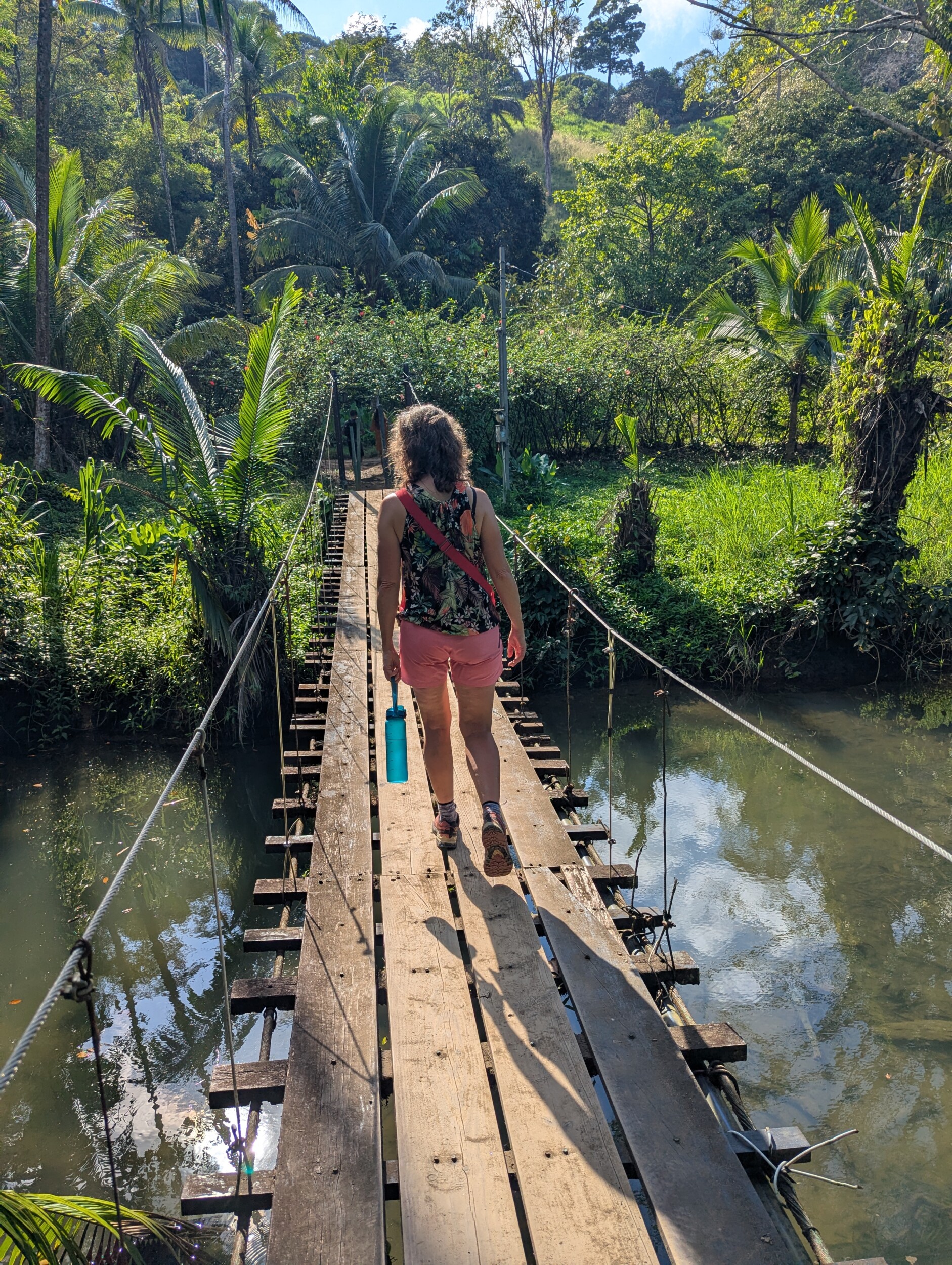
I always carry a reusable water bottle #ad when hiking. Let’s make sure single-use plastic bottles — and the waste that comes with them — become a thing of the past.
How to Get There
By plane is fastest: 40–50 minutes from San José on small Cessnas ($80–160 one way). You sit right behind the pilots with spectacular views over mountains and coastline. Watch the baggage weight limit (usually 14 kg).
By boat from Sierpe is the more adventurous option: bus or car to Sierpe (4 hours from San José), then a 1.5-hour boat ride through mangrove forests ($20–25). Departures are usually at 11:30 and 15:30. The boat trip itself is partly a wildlife safari — crocodiles, birds, and monkeys en route.
One small drawback: you’ll need to wade through knee-deep water to reach the shore on arrival and departure. You get help, and it adds to the adventure. We chose this option and parked our car safely in Sierpe with the boat operator.
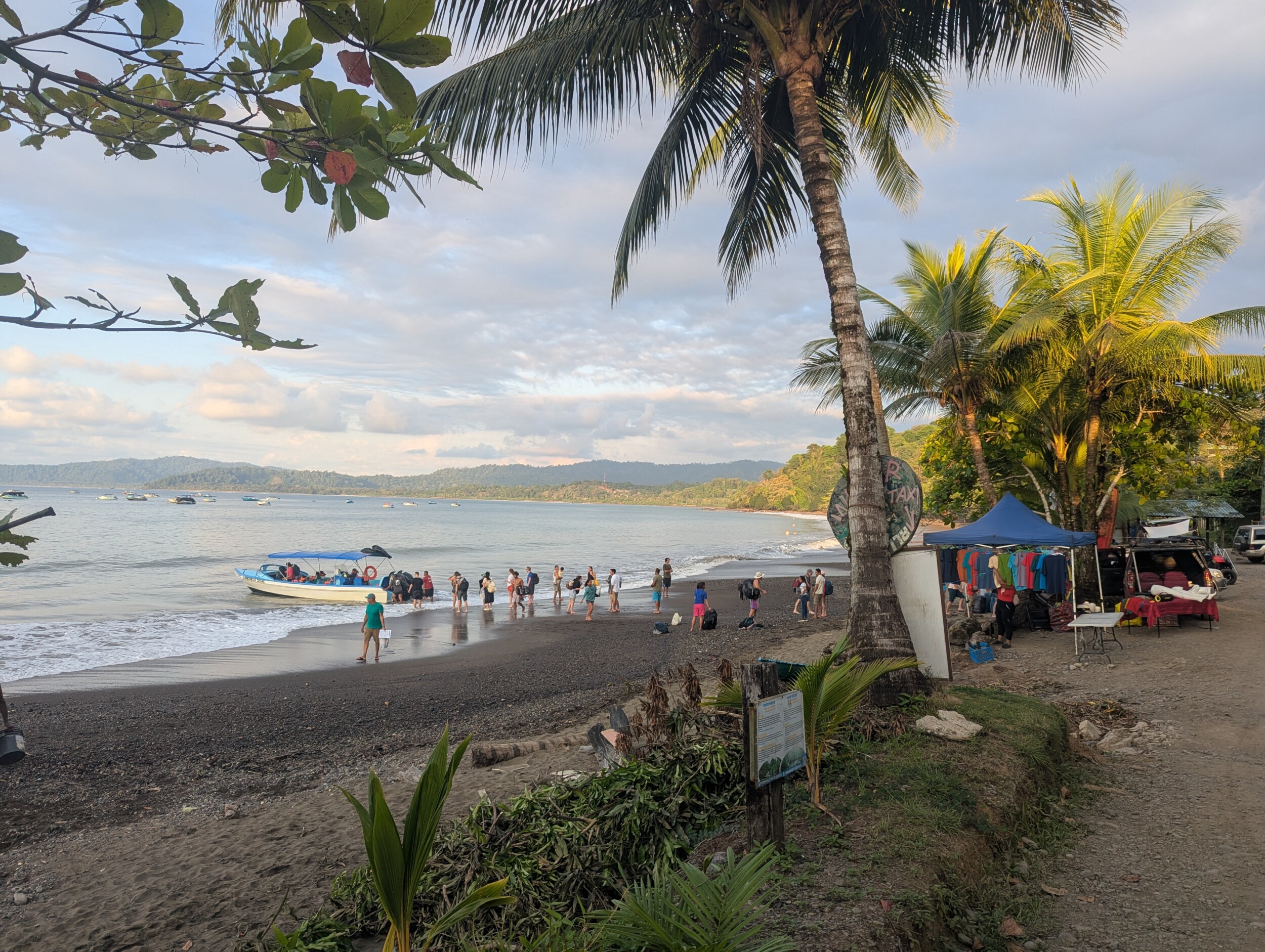
By 4×4 is possible but demanding. The route via Rincon and Los Planes to Drake Bay takes 6–7 hours from San José. The last section is a rough unpaved road. A solid 4×4 is essential, but the advantage is flexibility and the option to make stops along the way.
Practical Tips Drake Bay Costa Rica
- Money: No ATM in Drake Bay — bring enough cash before you arrive.
- Accommodation: Ranging from basic guesthouses ($40–80) to luxury eco-lodges ($150–350+). Book ahead, especially in dry season. Many places are only accessible by boat. We stayed just outside the village centre at Monkey House — a lovely spot with a pool and a beautiful garden.
- What to bring: Good walking shoes, swimwear, reef-safe sunscreen #ad, mosquito repellent with DEET #ad, a waterproof bag #ad for your phone, and a reusable water bottle #ad.
- How long to stay: A minimum of 3 days lets you combine snorkeling, the coastal trail, and a night tour. An extra day for Corcovado is worth it if your budget allows.
Drake Bay, Costa Rica is the kind of place I love: simple, quiet, and real. For nature lovers looking for authentic wildlife experiences away from the crowds, this is one of the most beautiful corners of Costa Rica.

Tip: Looking for somewhere good for breakfast or a coffee with a slice of cake? Head to Panaderia Mani.
Also read:
- Is Manuel Antonio Worth Visiting? Honest Review of Costa Rica’s Most Crowded Park
- Monteverde, Costa Rica: Ultimate Cloud Forest Travel Guide
This article contains affiliate links. If you book or buy something via one of these links, we may receive a small commission at no extra cost to you.