
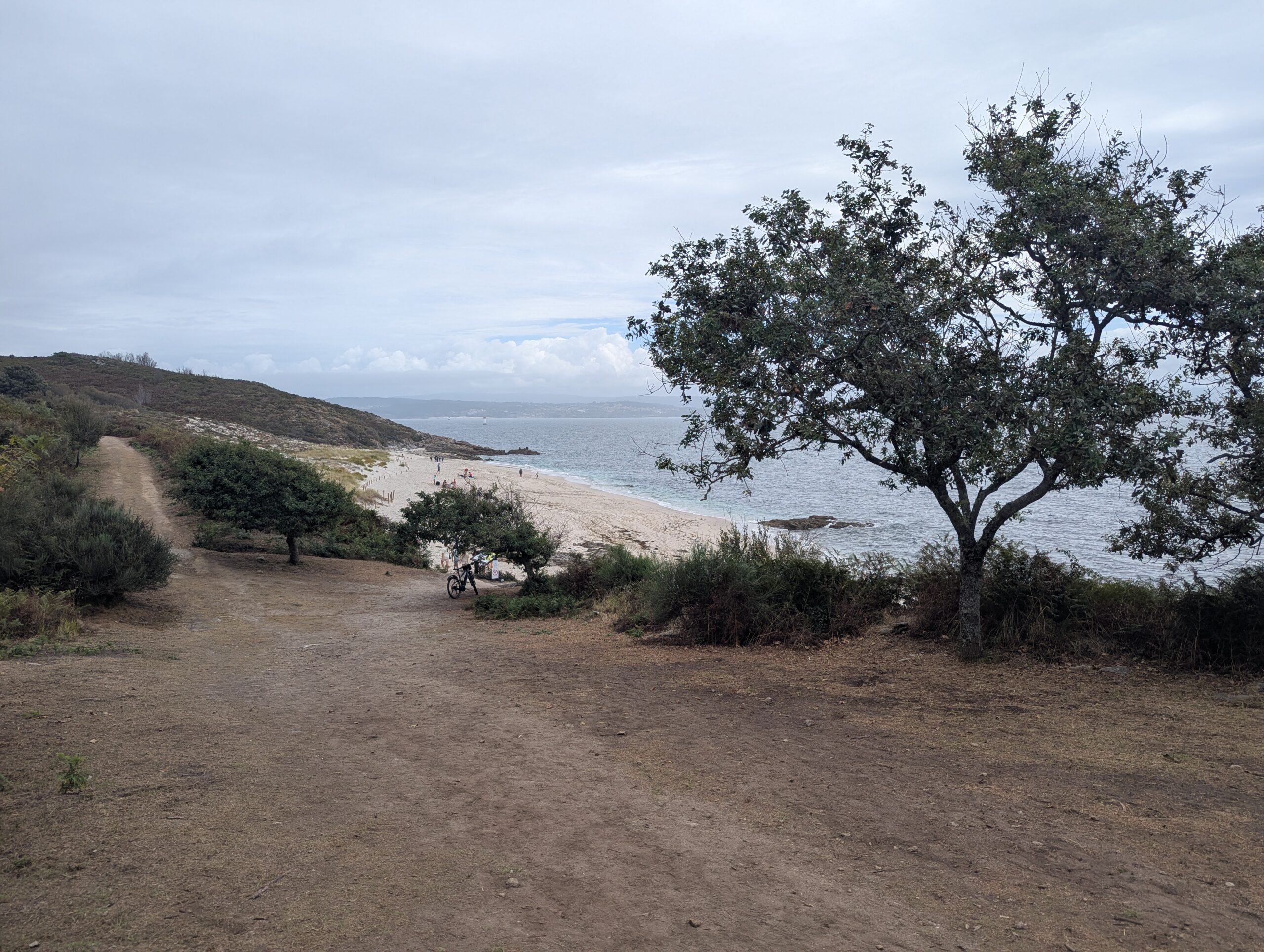
A remarkable discovery awaited me off the coast of Galicia in the Atlantic Ocean: Isla de Ons, a stunning island near Pontevedra. This beautiful island proved to be far less known than its famous neighbors, the Cíes Islands. During my visit to Isla de Ons, I hiked several trails, discovered gorgeous beaches, and enjoyed authentic local restaurants.
In this article, I’m sharing everything you need to know to discover this paradise for yourself.
What Makes Isla de Ons So Special?
Isla de Ons, together with the islands of Onza, Centolo, and several smaller islets, forms the Ons archipelago in the Ría de Pontevedra. The island is part of the prestigious Parque Nacional Marítimo-Terrestre de las Islas Atlánticas de Galicia (Atlantic Islands of Galicia National Park), a nature reserve protected since 2002 for its unique biodiversity.
A special inhabitant of the island of Ons is the ocellated lizard. With a length of up to 60 centimetres, this is the largest lizard species in Europe. They are shy and not always easy to spot, but with a little luck and patience, you may see one sunbathing among the rocks.
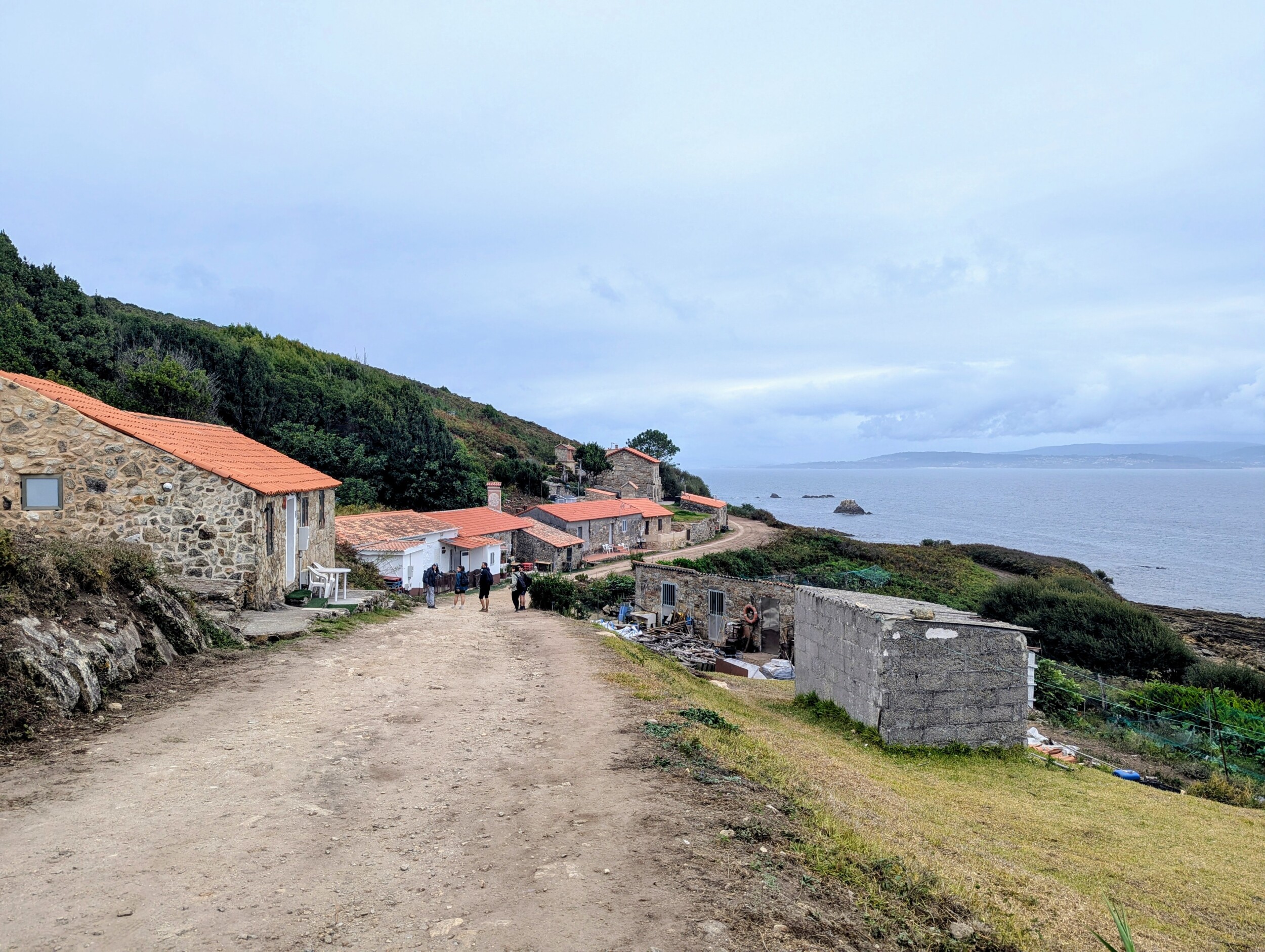
Unlike the heavily visited Cíes Islands, Isla de Ons remains relatively unknown to international tourists. This means you can enjoy a quieter and more authentic island experience. A major difference from other islands in the park: Isla de Ons is still inhabited. Approximately 60 to 90 permanent residents live here year-round, giving the island a special, living atmosphere.
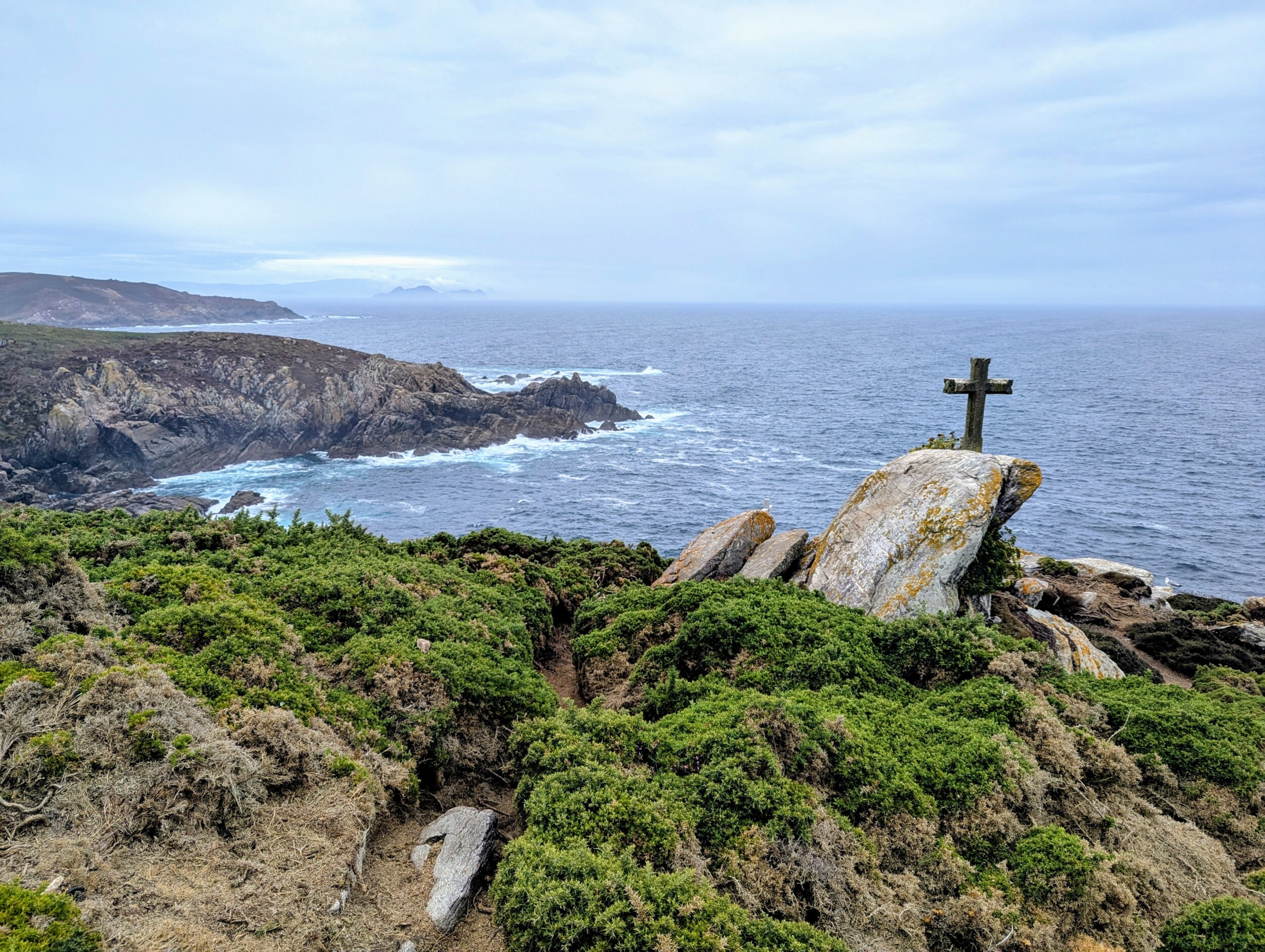
The island is about 5 kilometers (3 miles) long and just 1.1 kilometers (0.7 miles) wide, yet offers surprising landscape diversity. On the west side, you’ll find imposing cliffs and caves carved by the Atlantic Ocean. The east side is gentler, with sheltered coves, white sandy beaches, and crystal-clear water. These contrasts make Isla de Ons perfect for hikers, nature lovers, and beach enthusiasts.
How to Get to Isla de Ons
Visiting Isla de Ons requires some planning, but that’s exactly what makes it so special. The island is only accessible by boat, which immediately creates that vacation feeling the moment you step aboard.
Ferry to Isla de Ons
Several ports offer ferry services to Isla de Ons:
- Bueu: the shortest crossing (approximately 30-40 minutes)
- Portonovo: also about 40 minutes
- Sanxenxo: approximately 40 minutes
- Vigo: the longest route (approximately 1.5 hours)
- Pontevedra: the longest route (approximately 1.5 hours)
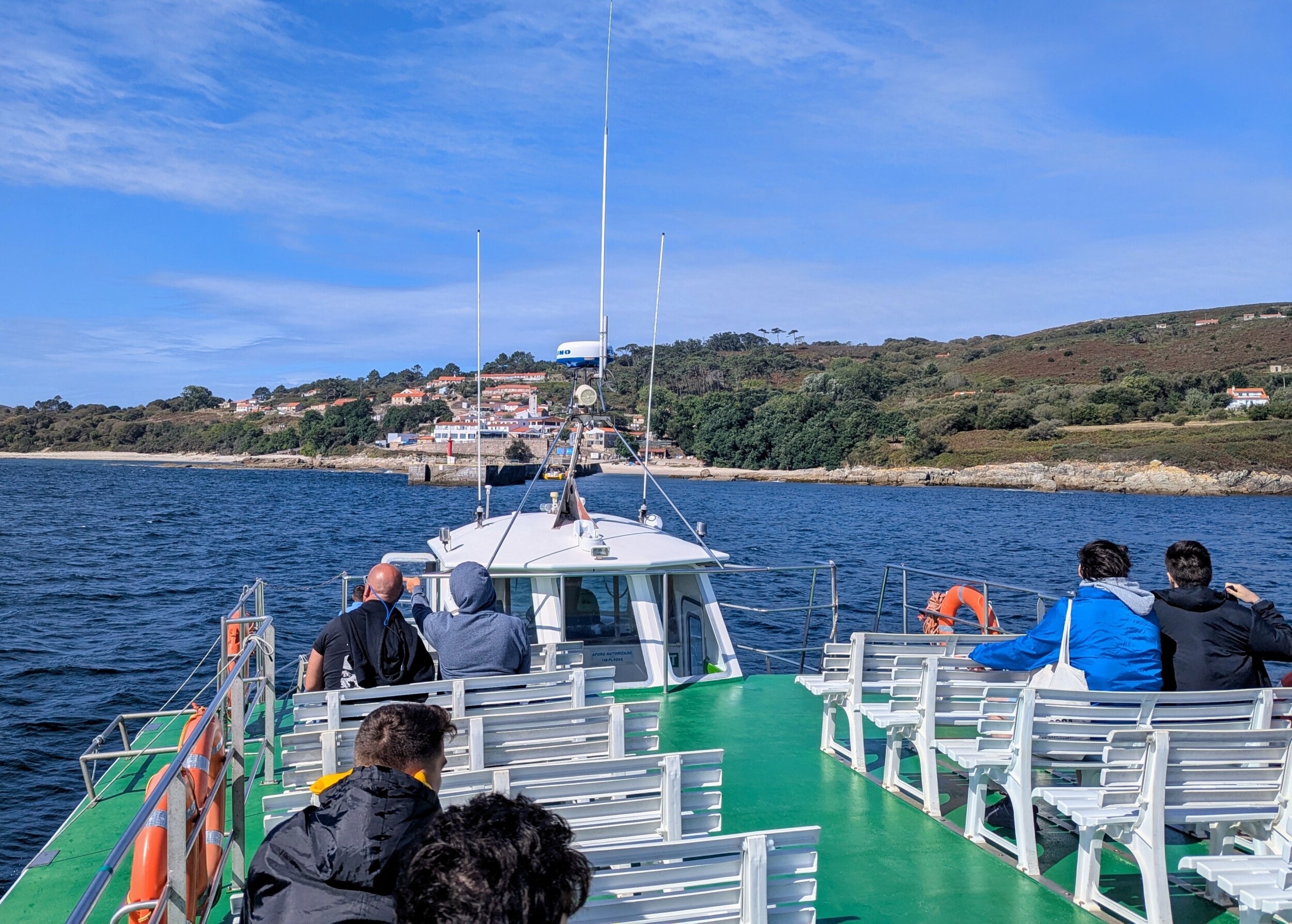
The two main ferry companies are Mar de Ons and Piratas de Nabia. Both offer services from various ports. During high season (Easter Week and May 15 to September 15), there are multiple daily departures. Outside high season, services are limited, mainly on weekends.
Requesting Your Permit: Important!
Here’s the crucial part: to visit Isla de Ons, you need a permit from the Xunta de Galicia (the regional government of Galicia). This is a conservation measure to preserve the fragile ecosystem. A maximum of 1,300 visitors per day are allowed on the island during high season.
You request the free permit through the Xunta de Galicia website. Do this after purchasing your ferry ticket. The ferry company will ask for your permit number when booking, so make sure to complete this procedure in time. In July and August especially, spots can sell out quickly.
Practical tip: Book at least two weeks in advance during high season. For the quieter months of May, June, and September, you’ll have more flexibility.
The Best Hiking Trails on Isla de Ons
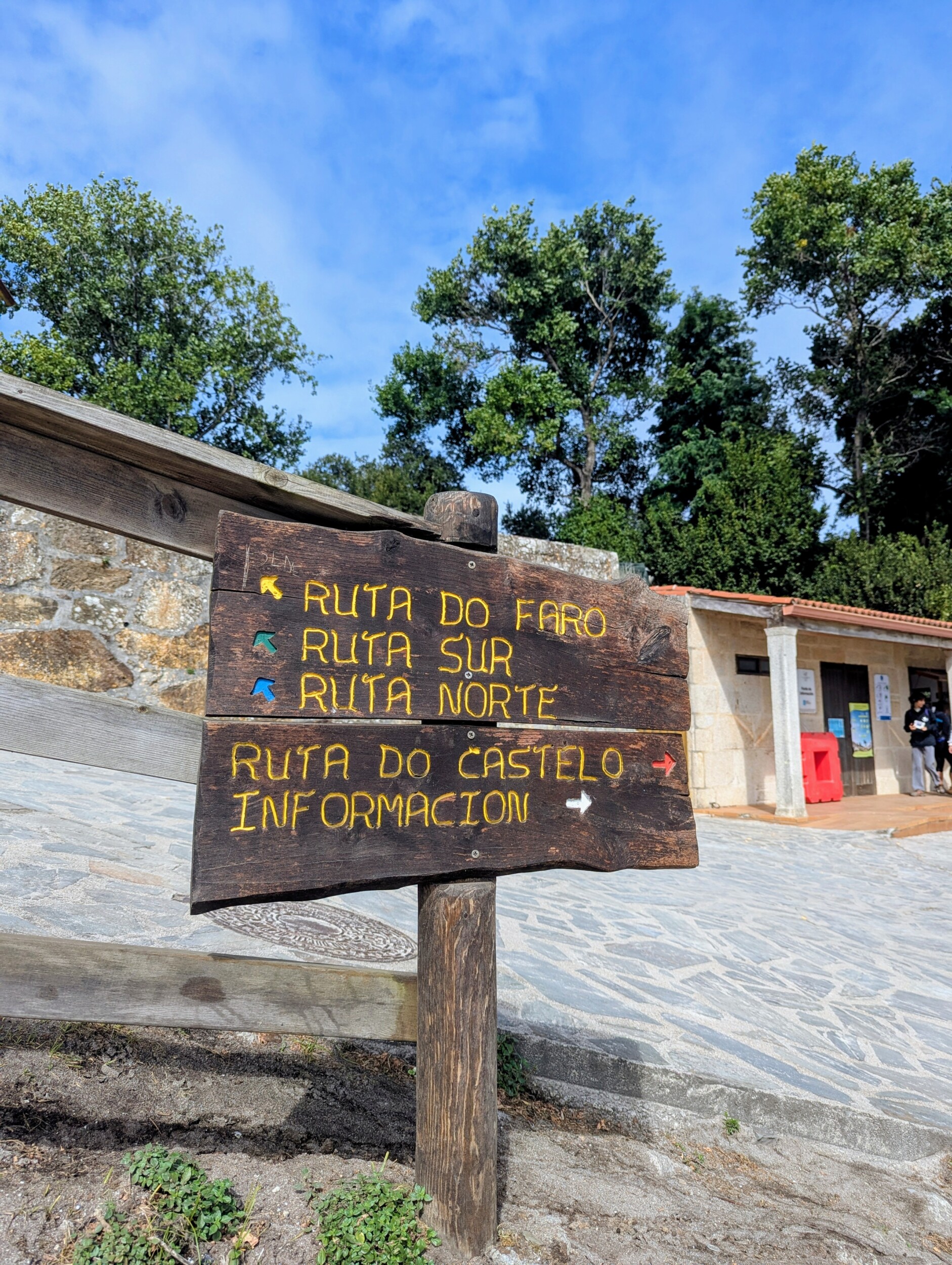
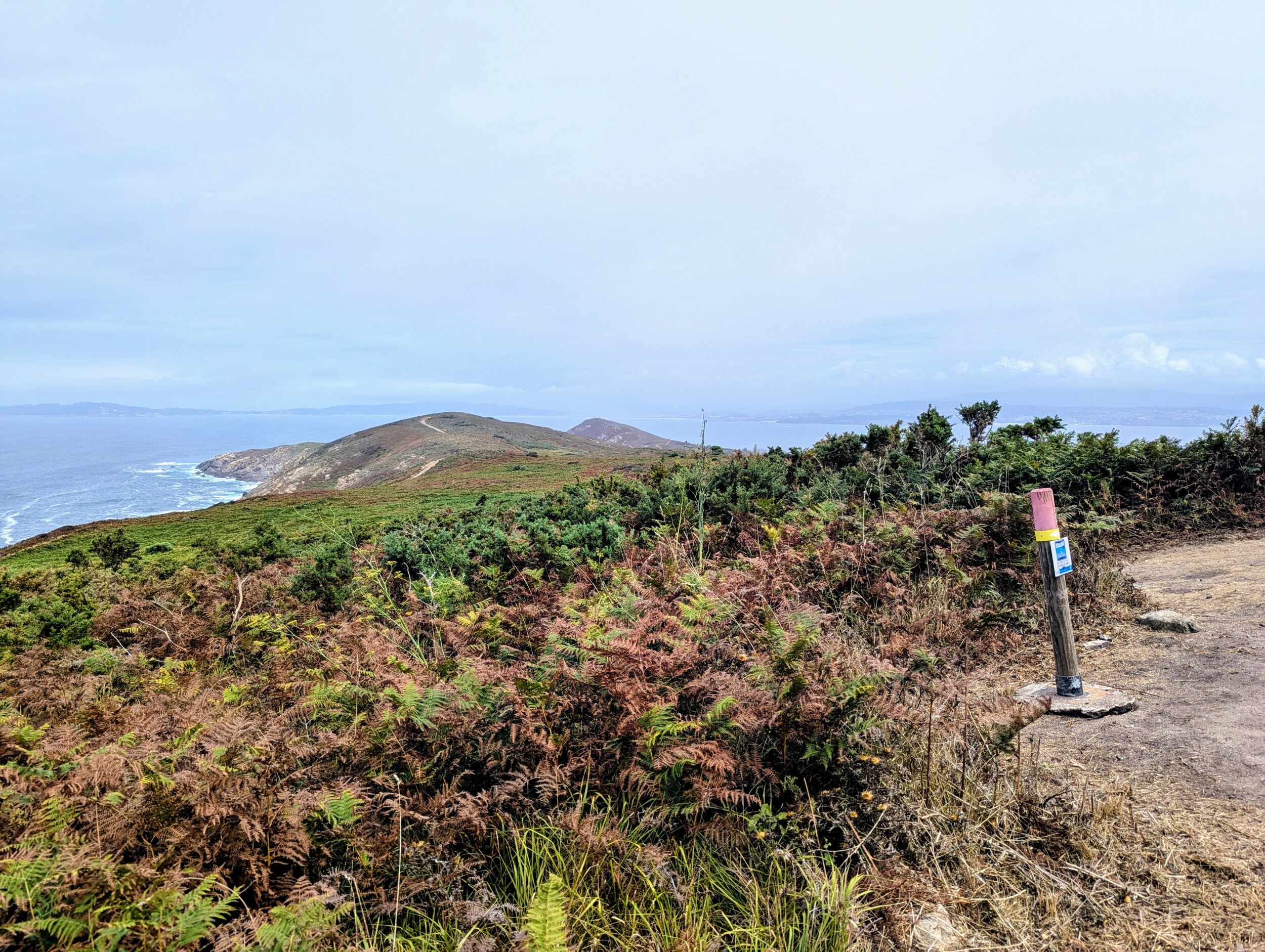
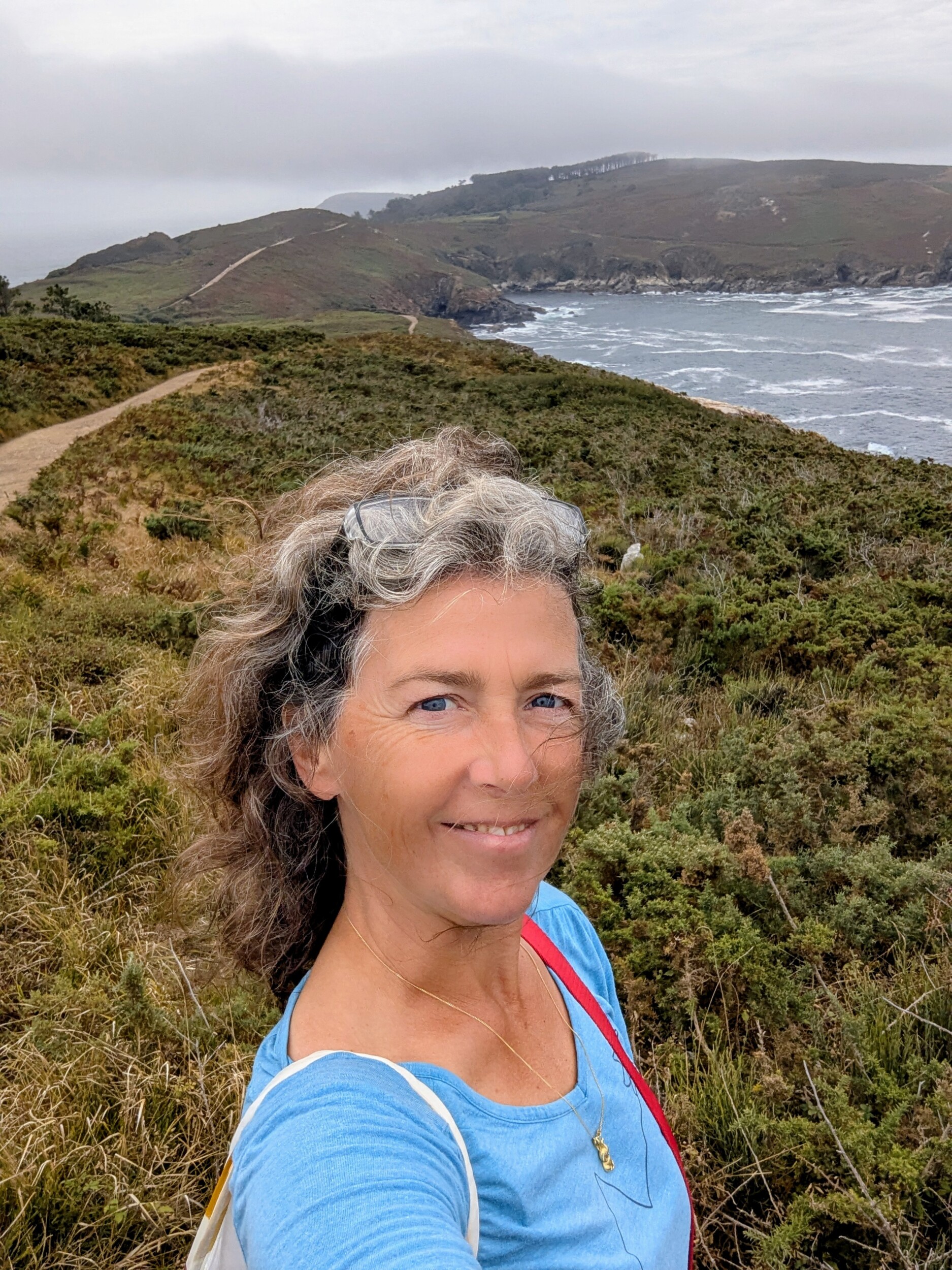
Isla de Ons is especially known for its fantastic hiking trails. There are four officially marked routes, each designated with its own color. During my visit to Isla de Ons, I hiked two of them, and both were breathtaking.
I first walked the blue route and when I got back to the village, I had lunch, then I walked the green route. I arrived on the island around noon and my boat left for Pontevedra again at 7 p.m.
Ruta Norte – Northern Route (Blue Trail)
The lighthouse route is the island’s longest at approximately 8.1 kilometers (5 miles) and 3 hours of hiking. This northern route takes you past Isla de Ons’s most beautiful spots.
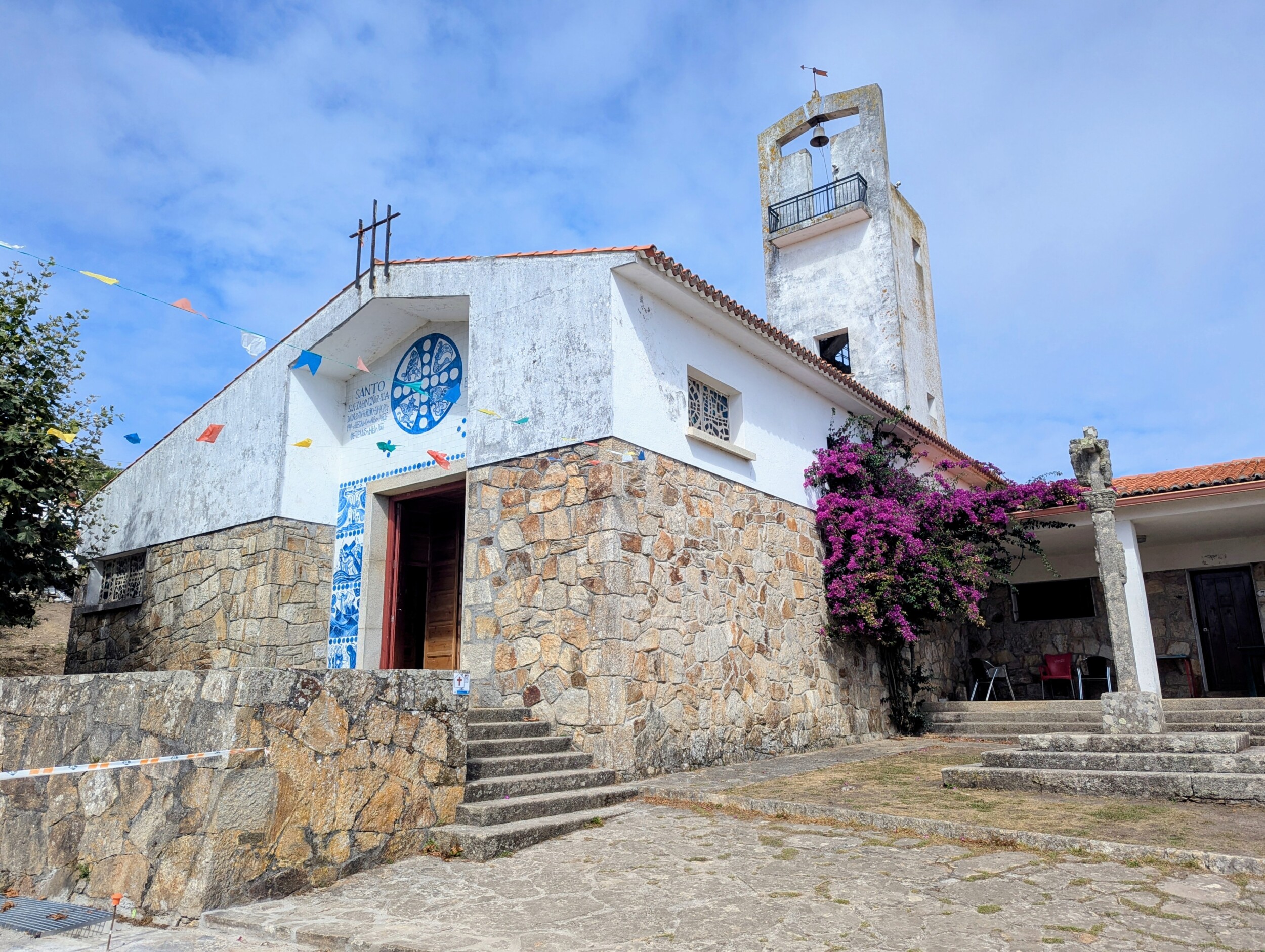
You begin at the port and walk north along the east coast. Along the way, you’ll pass through the charming village of O Curro with its church San Xoaquín, where beautiful stained-glass windows can be admired. Further on, you’ll reach Playa de Melide, the island’s most beautiful beach (more on that later).
The route then climbs to the island’s highest point where the lighthouse stands. This is one of the few still-inhabited lighthouses in Spain. Although you cannot visit the lighthouse interior, the panoramic views over the Ría de Pontevedra and the Atlantic Ocean are spectacular.
The path then takes you back via the island’s interior, where you walk through pine forests and past small agricultural plots. A varied route that showcases all aspects of Isla de Ons.
Difficulty level: Moderate. There are some steep climbs, but nothing extreme. Bring plenty of water, as there’s little shade on large parts of the route.
Ruta Sur – Southern Route (Green Trail)
This southern route of approximately 6.2 kilometers (3.9 miles, 2-2.5 hours) takes you to Isla de Ons’s most dramatic landscapes. This was personally the most impressive hike for me.
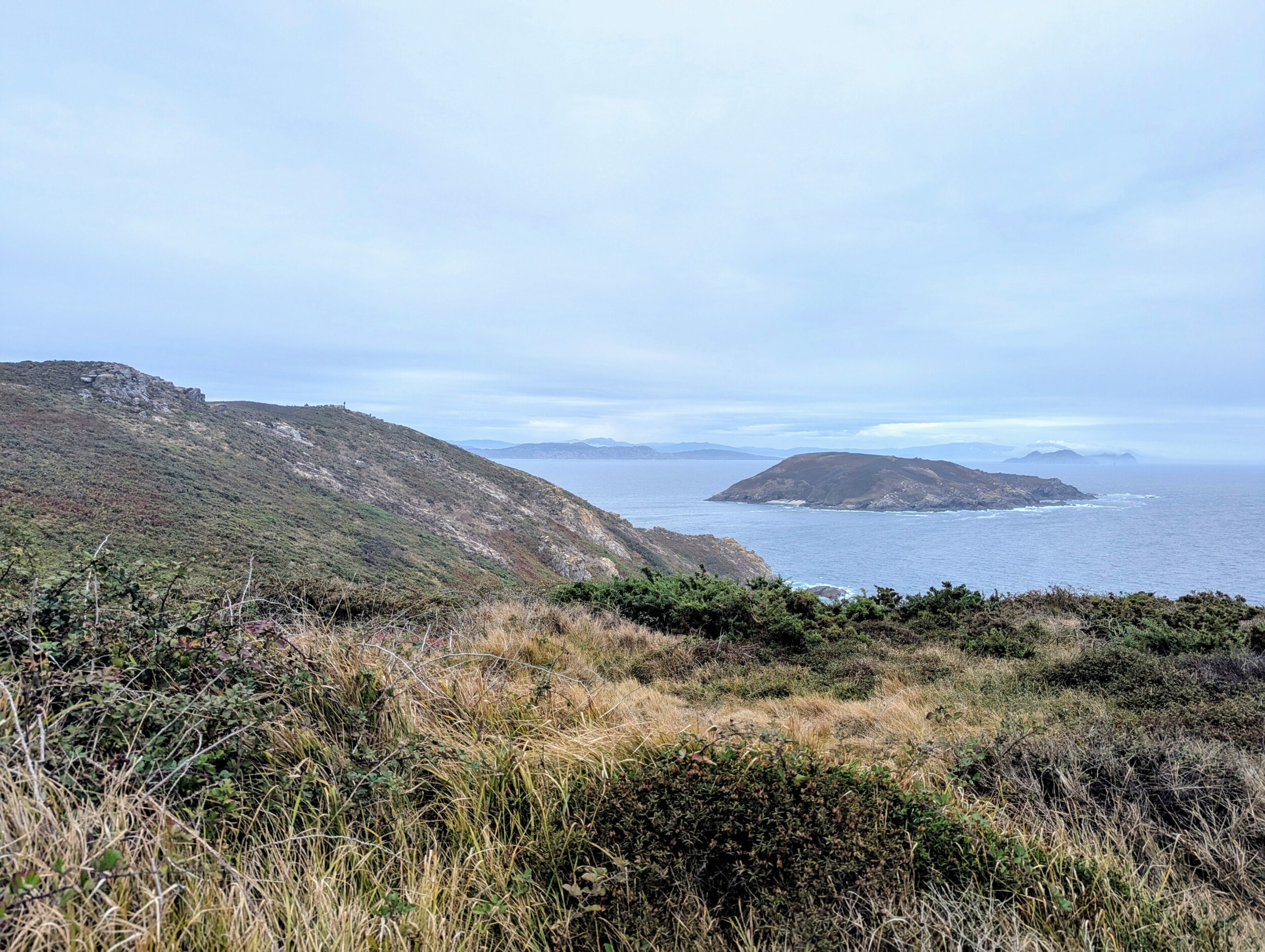
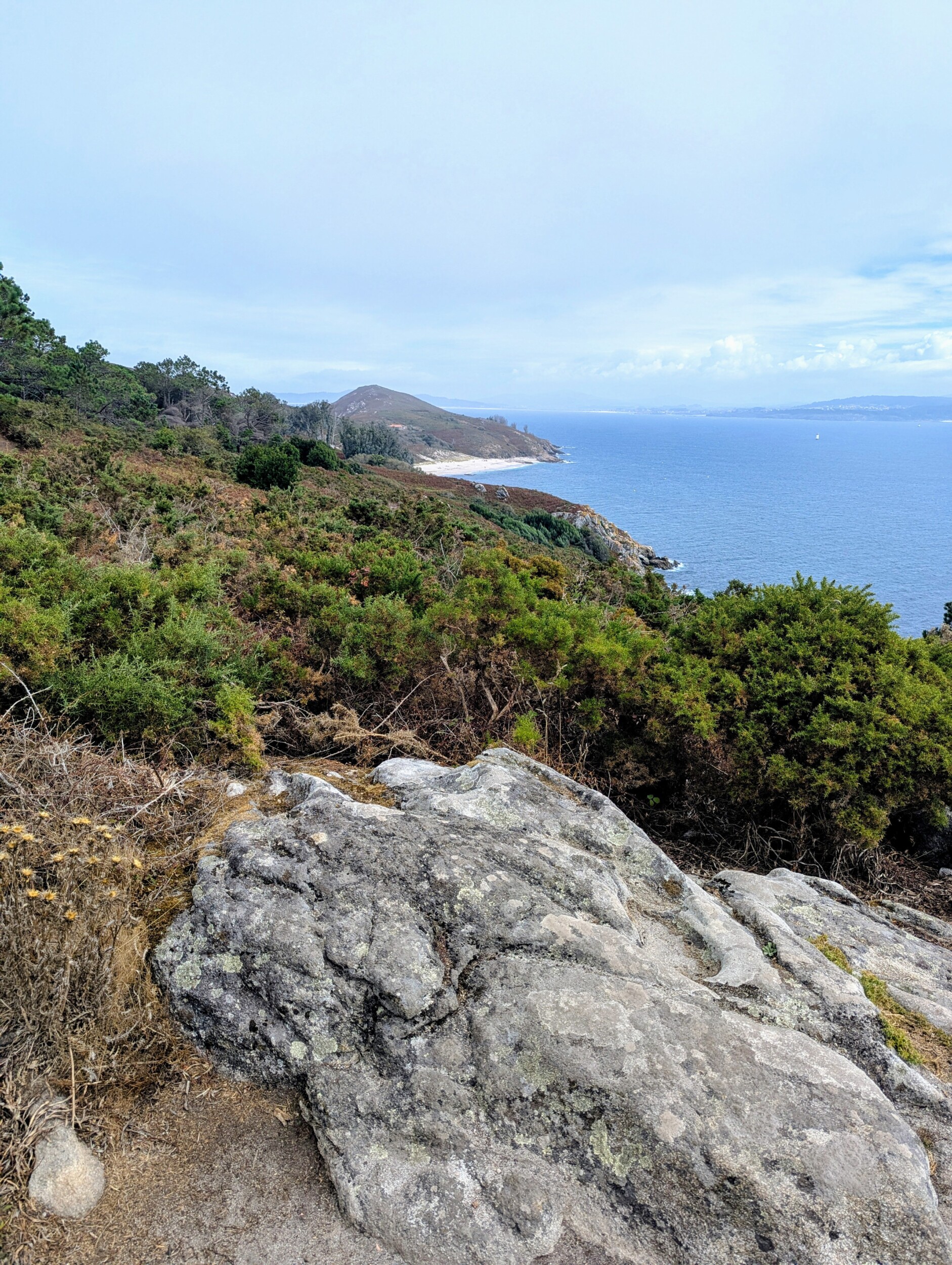
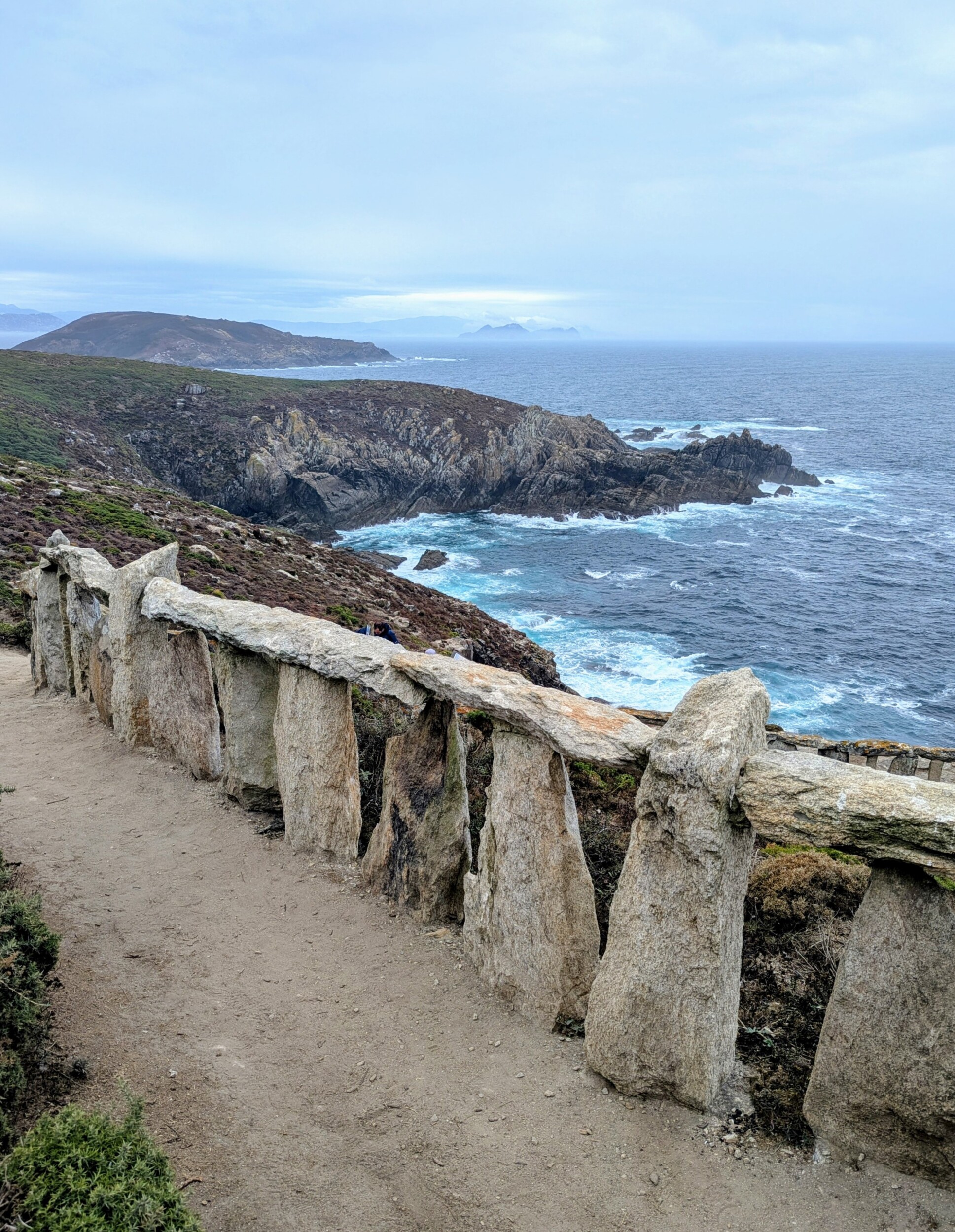
The route leads you south, where the rugged west coast shows all its elements. The absolute highlight is the Mirador de Fedorentos, a viewpoint at Punta Coliño with breathtaking views. You look out over the Ría de Pontevedra, the Cíes Islands in the distance, and closer by, the smaller island of Onza lying right in front of you.
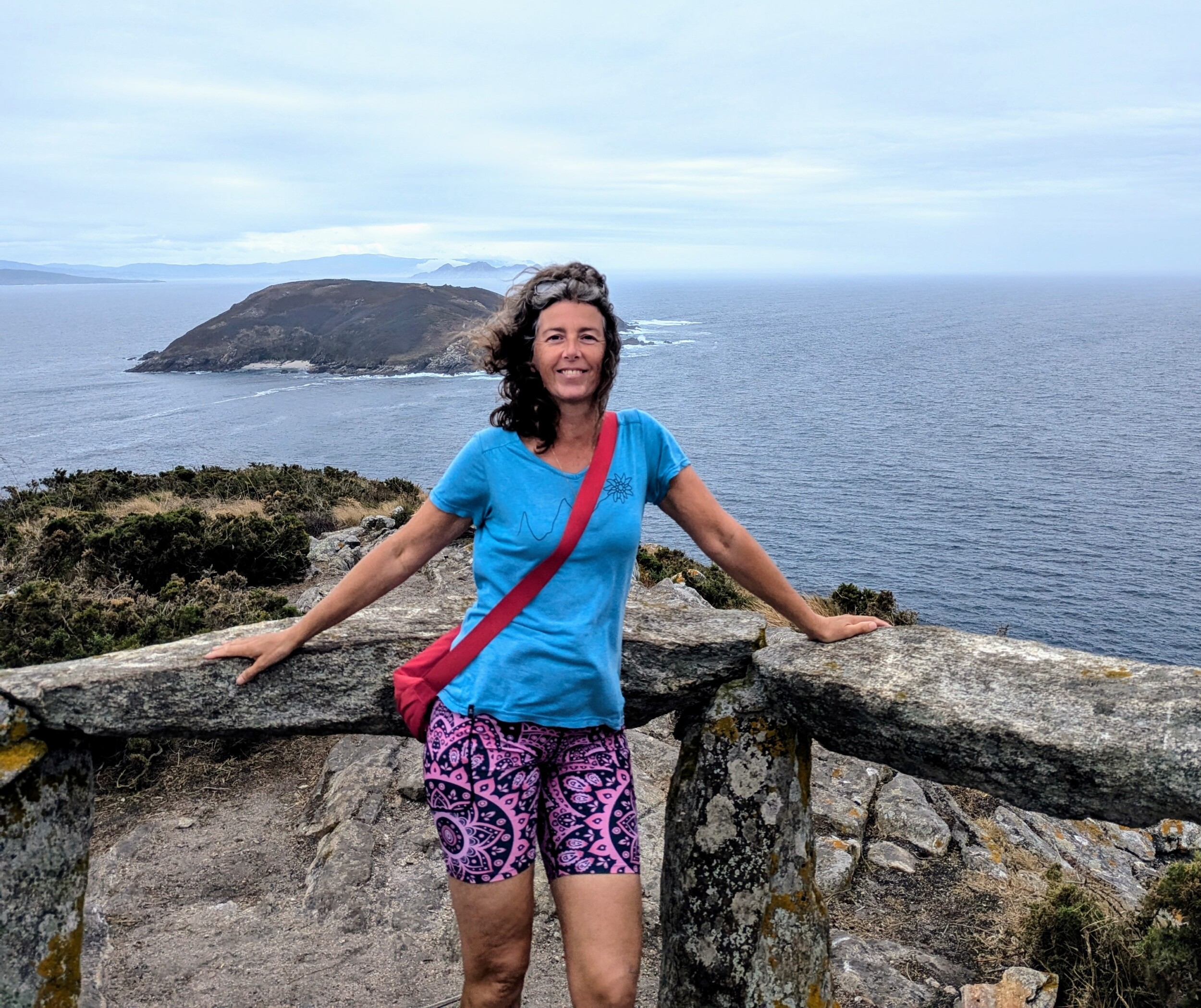
The name ‘Fedorentos’ literally means ‘stinking,’ due to the smell of washed-up algae and organic material that accumulates on this part of the coast during certain seasons. Fortunately, I didn’t notice anything during our visit, I must say.
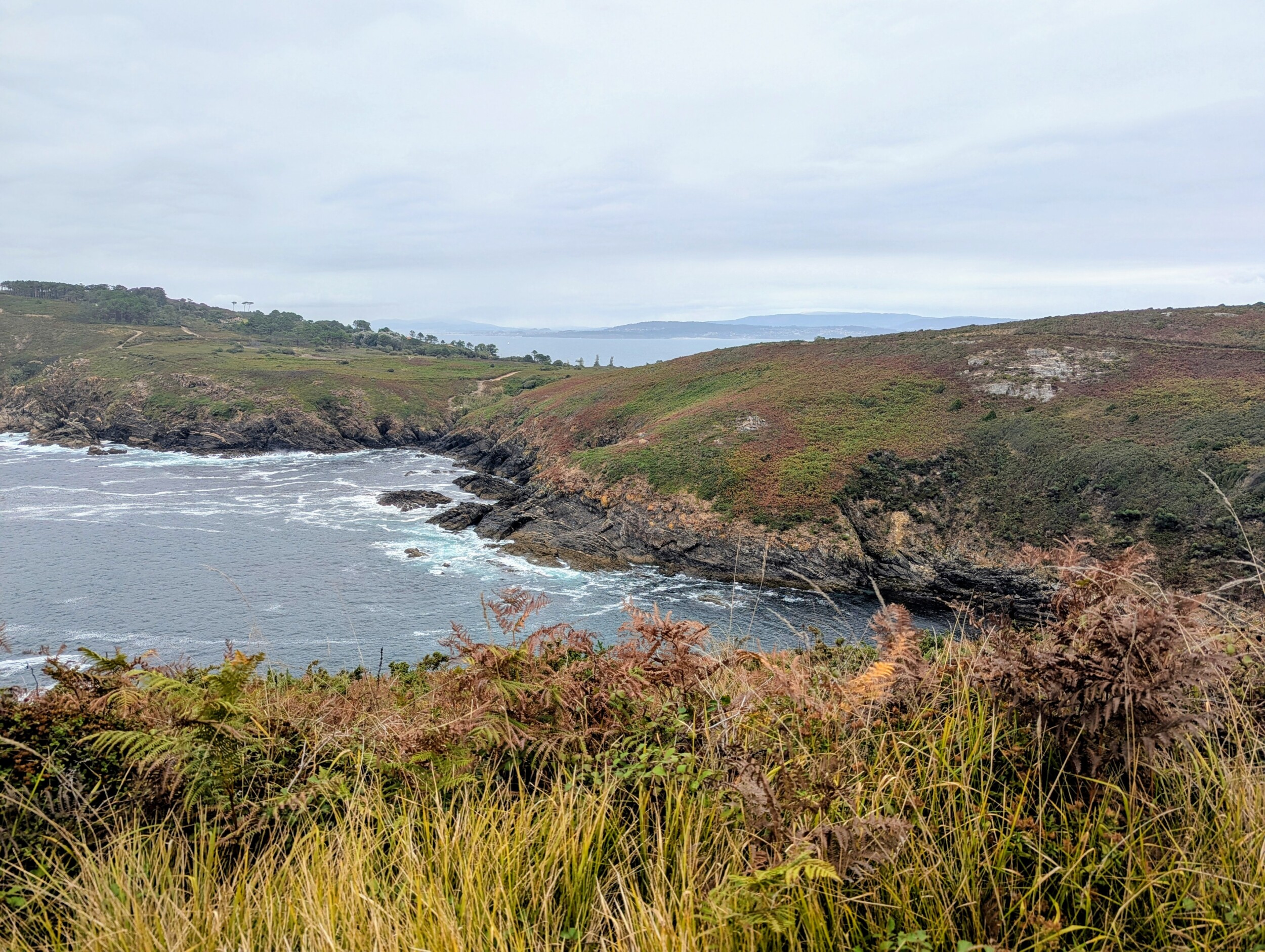
From the viewpoint, you continue to Buraco do Inferno, the ‘Devil’s Hole.’ This is an enormous geological fault in the cliffs, more than 50 meters (164 feet) deep. The sound of water thundering far below you through the rock fissure is impressive. According to legend, you can hear the wails of damned souls rising from the depths.
The return route follows the calmer east coast, where you have beautiful views towards the mainland coast.
Difficulty level: Moderate. The path is well-maintained, but there are steep sections and you walk close to the cliff edge. Not suitable in strong winds.
Ruta do Castelo – Castle Route (Red Trail)
This shortest route (1.1 km / 0.7 miles) of approximately 40 minutes takes you to Punta do Castelo, where the ruins of a 20th-century defensive fort can be found. The route is ideal if you have little time or want an easy walk. The view over the ría is beautiful, although little more than a pile of stones remains of the castle ruins themselves.
Ruta do Faro – Lighthouse Route (Yellow Trail)
This approximately 4-kilometer (2.5-mile) route takes you to the lighthouse. This route is naturally ideal with children due to its length and partially paved paths. However, it takes you to the island’s highest point, giving you the best views.
The Best Beaches on Isla de Ons
For those who think Galicia is too cold for swimming: the beaches of Isla de Ons prove otherwise. Okay, the water is fresh (even in August), but the beauty of these beaches makes up for everything.
Playa de Melide
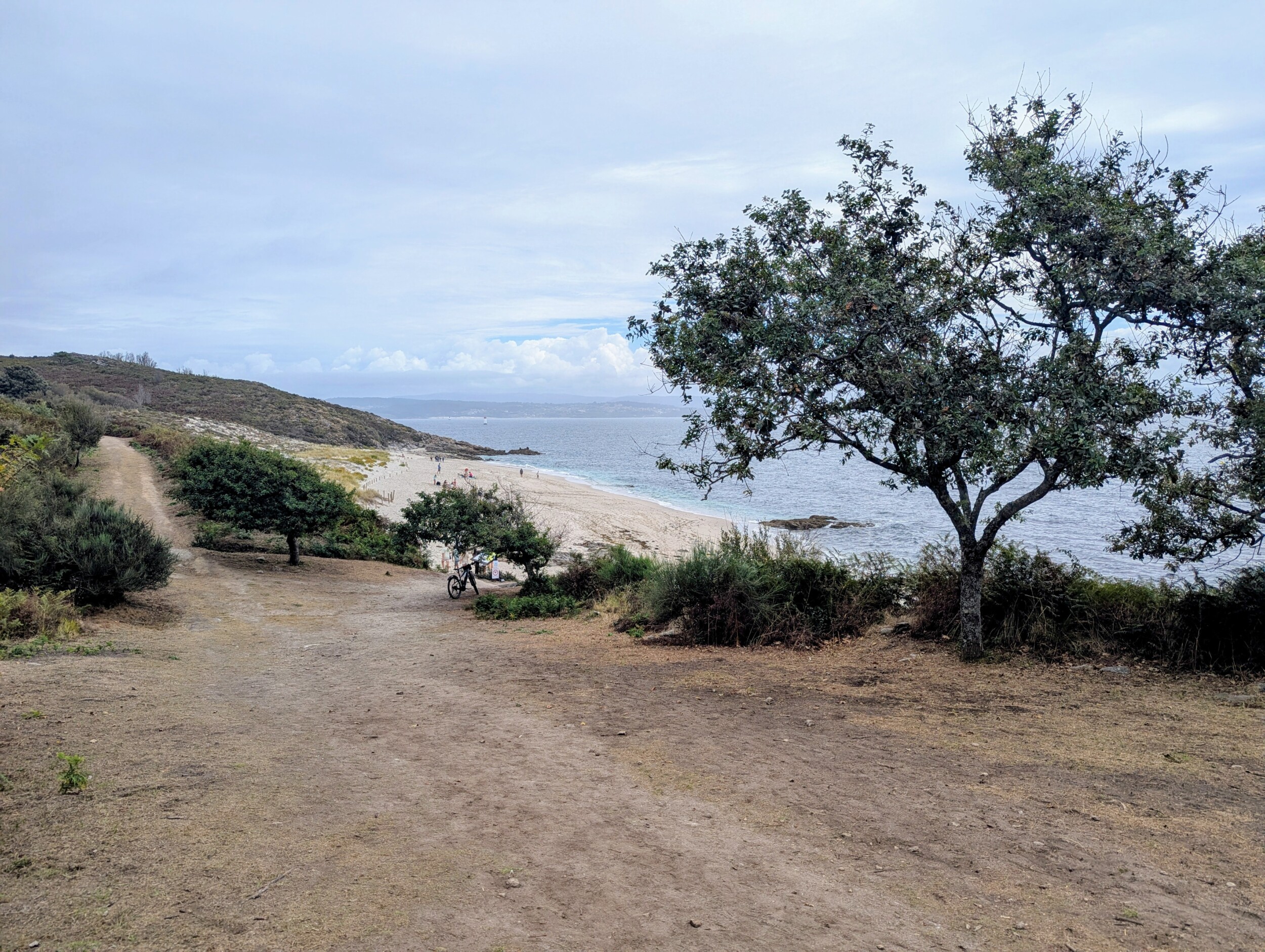
This is without doubt the most photogenic beach on Isla de Ons. Playa de Melide is located on the island’s north side, about 3 kilometers (1.9 miles) walk from the port. The beach is surrounded by dunes and pine forests, with crystal-clear turquoise water and fine white sand.
What makes Playa de Melide special is the tranquility. Because it’s further from the pier, there are fewer visitors. This is also an official nudist beach, although both ways of sunbathing are accepted.
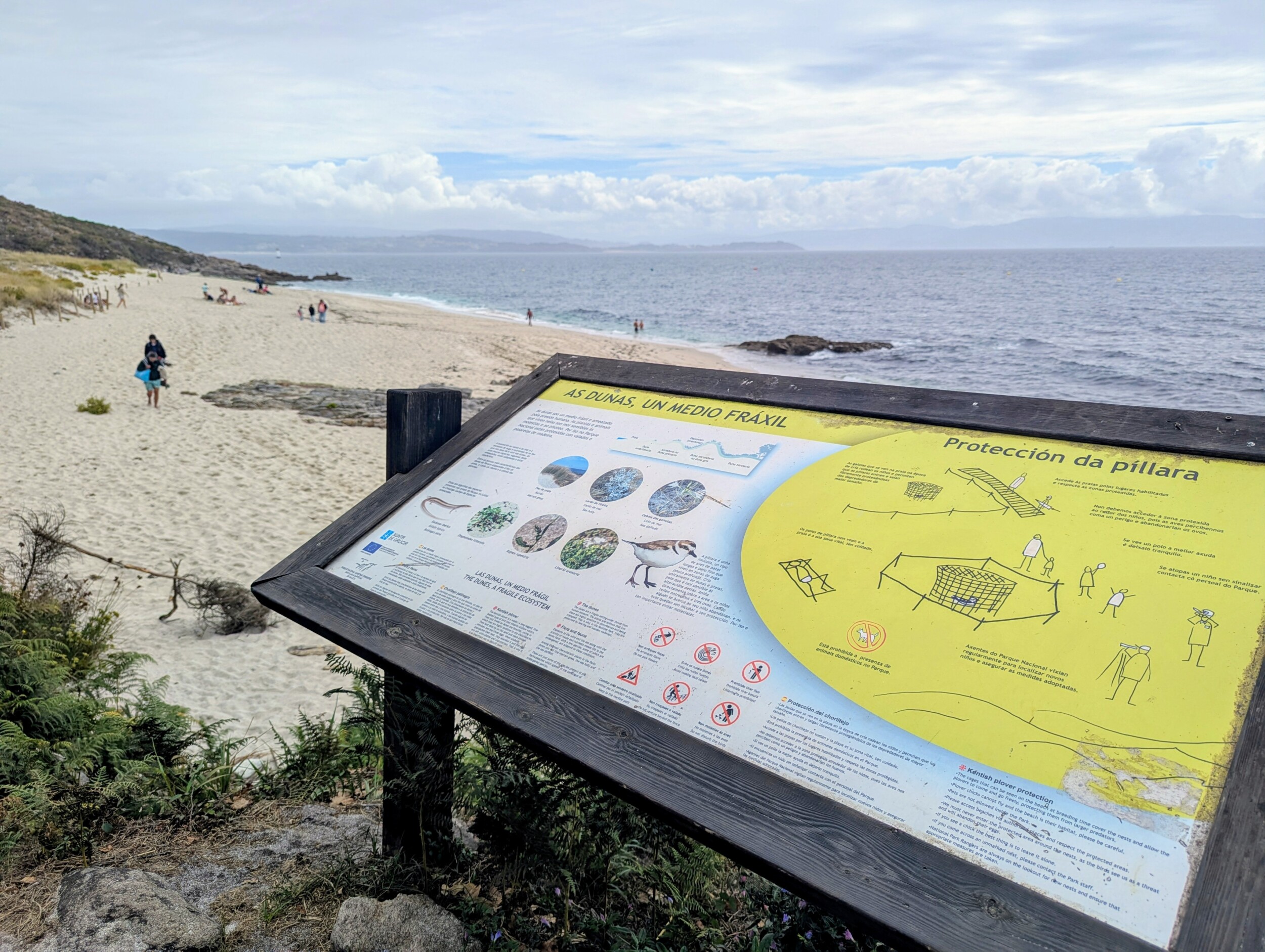
The beach offers shelter from the wind and has beautiful views over the Ría de Pontevedra. The water is calmer than on the west coast, making it ideal for a refreshing dip after your hike.
Go snorkeling too! You’ll quickly see the colorful underwater world in the waters around Ons Island.
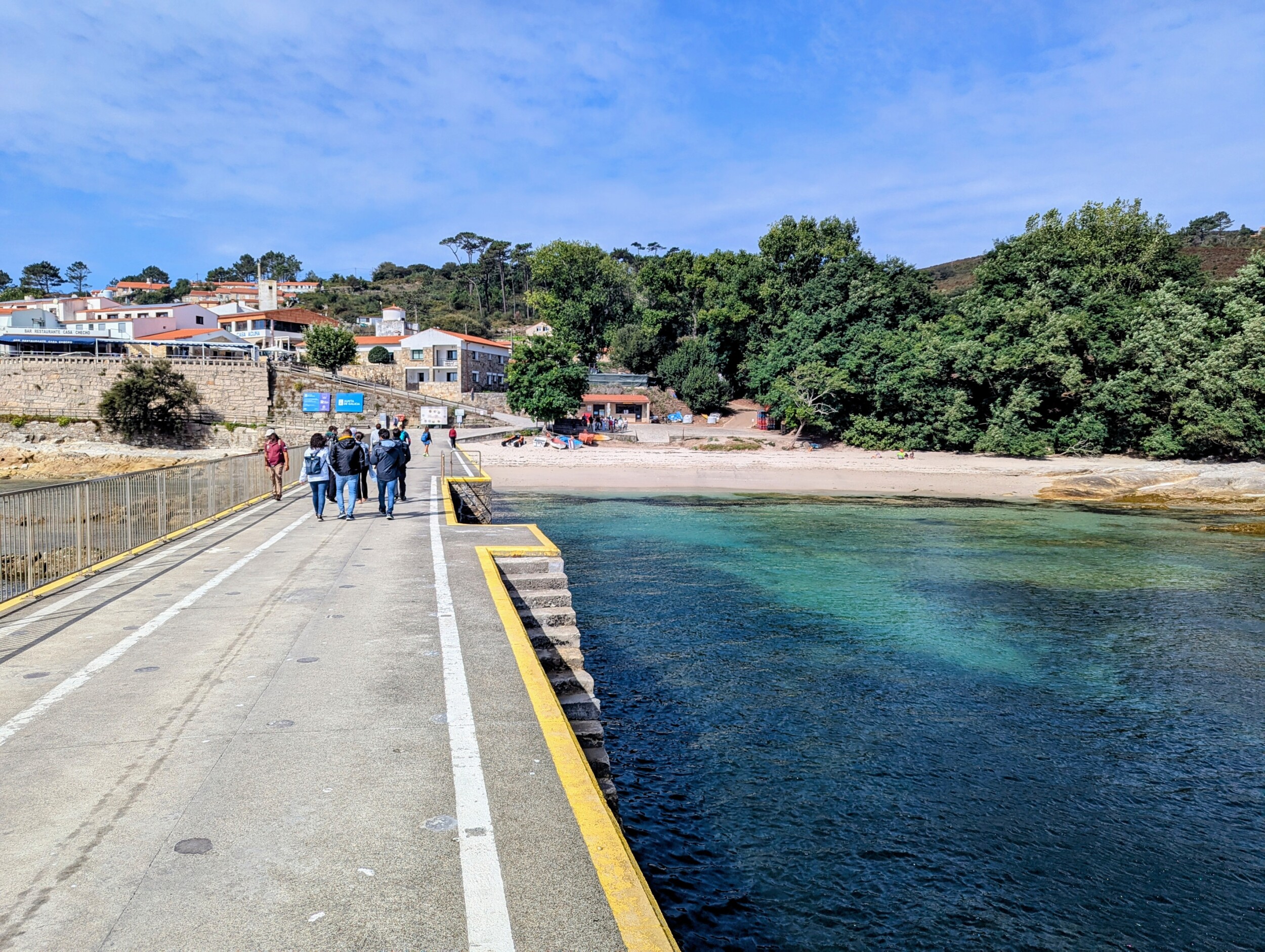
My first impression of the island couldn’t have been better! Right next to the pier at Playa das Dornas, I saw this beautiful scene: a (crested) cormorant hunting for fish in the shallow water. What a perfect start to my visit to the island!
Area dos Cans
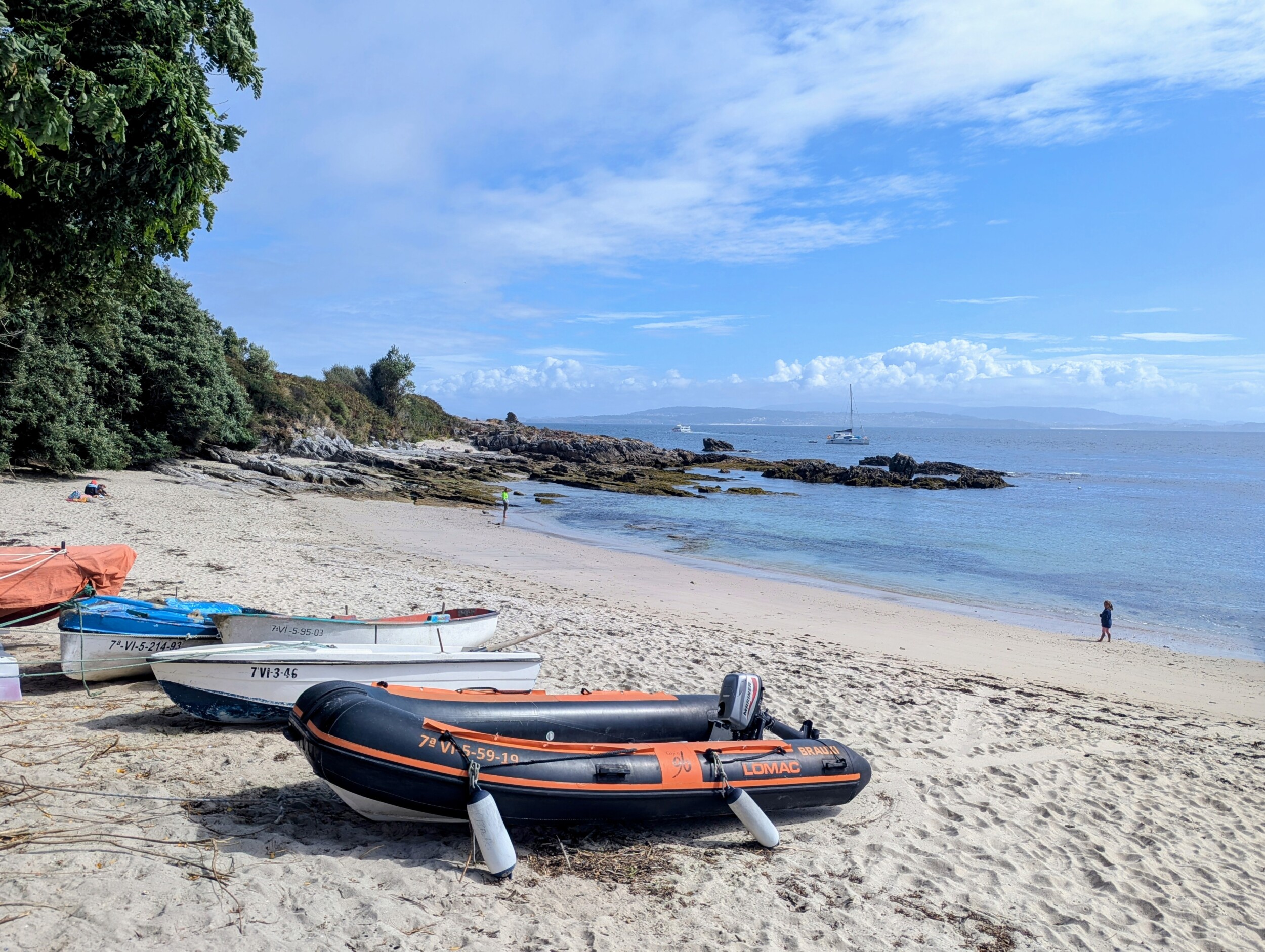
This is the most visited beach on Isla de Ons, simply because it’s located directly behind the port village of O Curro. You can walk there in a few minutes from the boat.
It’s a beautiful, wide beach with fine white sand and clear water. Because it’s so easily accessible, this is the perfect beach for families with small children or people who don’t want to walk far. At low tide, you can walk all the way to Laxe dos Cregos, a rock formation in the shape of a human silhouette surrounded by local legends.
Other Beaches
Isla de Ons has several more hidden beaches:
- Playa de Canexol: Small and intimate beach near the cemetery, sheltered by cliffs
- Playa de Pereiro: Quiet beach 15-20 minutes walk from the port
- Playa das Dornas: Small beach directly at the pier (where I saw the cormorant)
The Museum of Isla de Ons: Free and Worth Visiting
What many visitors don’t know: Isla de Ons has a small but surprisingly interesting museum. And the best part? Admission is completely free! The museum is located in the island’s center, near the port. In this information center, you’ll discover the island’s rich history and unique ecosystem.
Tip: Visit the museum at the start of your day, before you go for a walk. This will give you a better understanding of what you will encounter along the way and help you appreciate the special place you are visiting.
Eating on Isla de Ons: Galician Pulpo
A visit to Isla de Ons isn’t complete without tasting the local specialty: pulpo a la onse (octopus Ons-style). The waters around the island are known for the exceptional quality of their octopus, and the island’s restaurants know all about it.
The Restaurants
There are three main restaurants on Isla de Ons:
- Casa Acuña is often praised as the restaurant with ‘the best octopus in Galicia.’ A bold claim, but regular customers (local fishermen) seem to agree. The restaurant is located close to the port and has a cozy terrace.
- Casa Checho has a beautiful location with sea views and serves traditional Galician dishes. Besides octopus, the menu features fresh fish from the ría, empanadas (Galician pies), and homemade cheesecake.
- Bar O Pirata is more informal and known for its churrasco (grilled meat) and reasonably priced daily menus.
Practical tips:
- Vegetarian options are limited, but salads and tortilla are available
- Card payment is possible
Practical Tips for Your Visit to Isla de Ons
After my own experience, I have some practical tips to make your visit to Isla de Ons even more enjoyable:
Best Time to Visit
The best period to visit Isla de Ons is from May to September. During these months:
- Ferries run regularly
- The weather is most stable
- All facilities are open
My personal recommendation: June or September. It’s less crowded than July-August, but the weather is still fine for swimming and hiking. May can still be a bit cool for beach visits, but is beautiful for walks with many flowering plants.
What to Bring
- Water: Bring at least 1 to 1.5 liters per person. There are taps at the port, but not on the hiking trails
- Sun protection: Sunscreen, hat, and sunglasses are essential. There’s little shade
- Food: Although there are restaurants, it’s wise to bring some snacks
- Swimwear and towel: Even if you didn’t plan to swim, the beaches are too beautiful to resist
- Good hiking shoes: The paths are well-maintained, but good shoes are always recommended for longer walks on unpaved paths
- A bag for waste: There are no trash bins on the island. Preferably take your own waste back to the mainland
Important Considerations and Regulations for Isla de Ons
- No trash bins: This is a protected nature reserve. Respect nature and take your waste with you
- Limited shade: Especially on the Ruta do Faro there’s little natural shade
- No ATMs: Bring cash, although most places accept cards
- Phone reception: Reasonable, but not equally stable everywhere
- Dogs: Only allowed on a leash if it’s a service dog
- Fishing: Fishing is prohibited. It’s also forbidden to take shells or plants/flowers
- Drones: Drones are prohibited on the island, as are kites
Camping on Isla de Ons
There is one official campsite on the island with basic facilities. Camping is only allowed at this campsite (wild camping is strictly prohibited). You must reserve in advance through the campsite’s website. Sleeping on the island is a magical experience—the silence, the starry sky, and the sound of the waves are unforgettable.
Isla de Ons vs Cíes Islands: Which Should You Choose?
Many travelers hesitate between visiting the famous Cíes Islands or the lesser-known Isla de Ons. Both are part of the same national park and both are beautiful. Here are the main differences:
Choose Isla de Ons if you:
- Want peace and less tourist crowds
- Are interested in a living community (the island is still inhabited)
- Seek more variety in landscapes (the island is more diverse)
- Enjoy authentic local experiences
- Want more flexibility with reservations (slightly less crowded)
Why You Shouldn’t Miss Isla de Ons
My visit to Isla de Ons was one of the highlights of my trip through Galicia. This island combines natural beauty, fantastic hiking opportunities, lovely beaches, and authentic Galician gastronomy. And all without the crowds of tourists you encounter at more famous destinations.
The combination of dramatic cliffs on the west coast and sheltered coves on the east side, the welcoming restaurants in the village, and the almost Mediterranean atmosphere on an Atlantic island make Isla de Ons a unique destination you won’t soon forget.
Plan your visit: Don’t forget to request your permit, book your ferry in time (especially in July-August), and let yourself be surprised by this hidden paradise off the coast of Pontevedra. See you on Isla de Ons!
Useful Website Information
- Xunta de Galicia (for your permit)
- National Park: Illas Atlanticas
- Ferry companies: Mar de Ons (I used this one) / Piratas de Nabia
Where to Stay in Pontevedra
During my visit to Isla de Ons, I stayed in Pontevedra. Really a nice city to visit.
Check out Pensión A Xanela Pontevedra which has a beautiful spot in the old town. Are you a pilgrim looking for a hostel? Book your night at Bulezen Urban Hostel. I stayed there for 3 nights and found it an ideal place. I also stayed at Slow City Hostel, also a nice place, just outside the historic center.
Read Also
- Vigo Attractions: Complete Travel Guide
- Santiago de Compostela After the Camino: Tips & Sights
- Gijón – The Versatile Port City of Asturias, Spain
This article contains affiliate links. If you book or purchase something through one of these links, we may receive a small commission at no extra cost to you.