
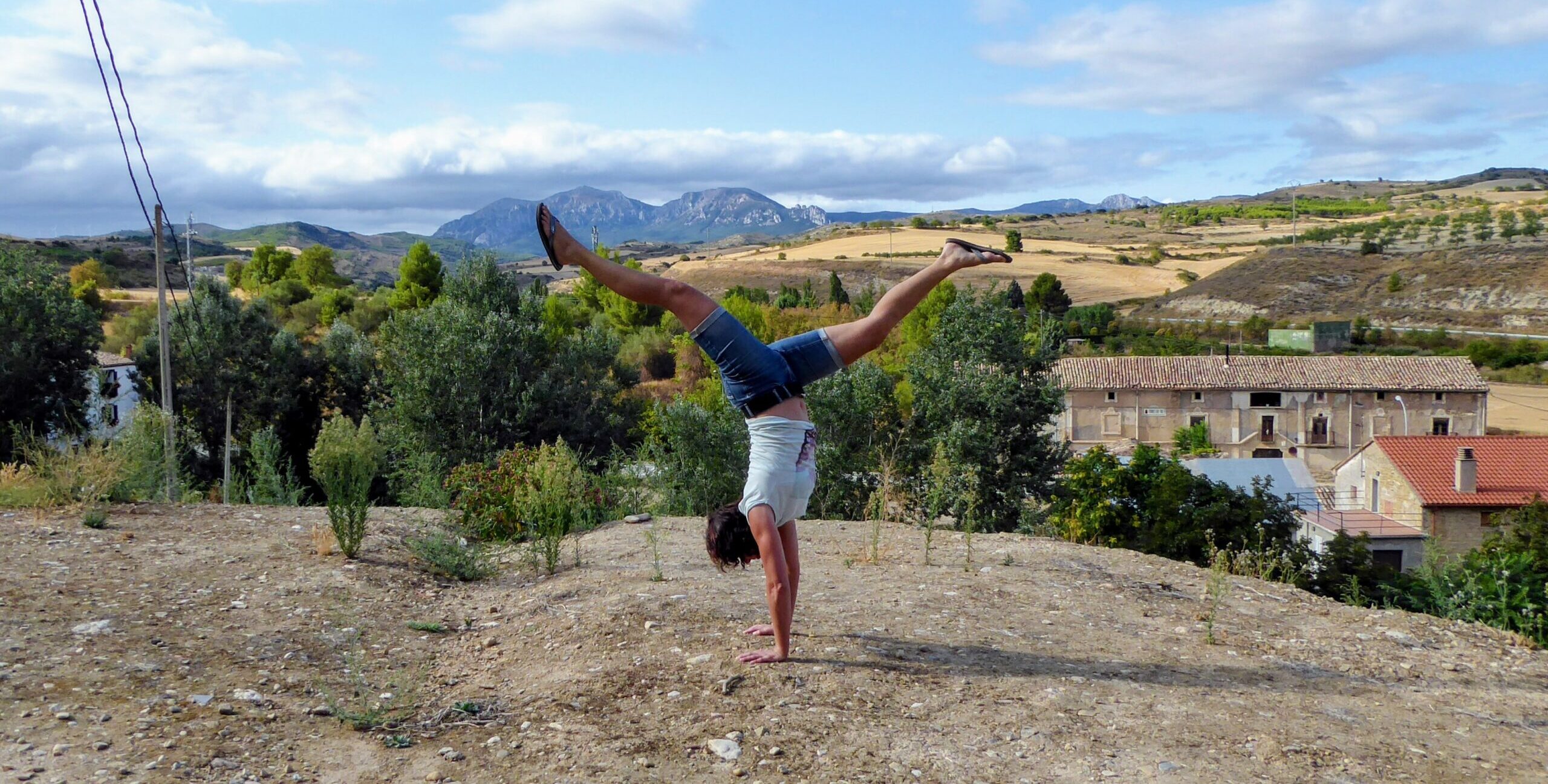
In 2008 I started yoga because of neck problems. Not out of passion for the mat, but out of necessity. What I didn’t expect was that yoga would change the way I move — and with it, my hiking. I only started hiking seriously years later.
When I walked the Camino Francés in 2016 — eight hundred kilometres in thirty-five days — I barely experienced the complaints I saw around me. Muscle soreness in places that put others out of action, stiff hips halfway through the day, a back that sagged increasingly under the weight of a backpack. I recognised it all, but didn’t feel it myself. Not because I have an exceptional body, but because yoga had been preparing my body for exactly this kind of load for years.
Yoga for hikers: why the combination really works
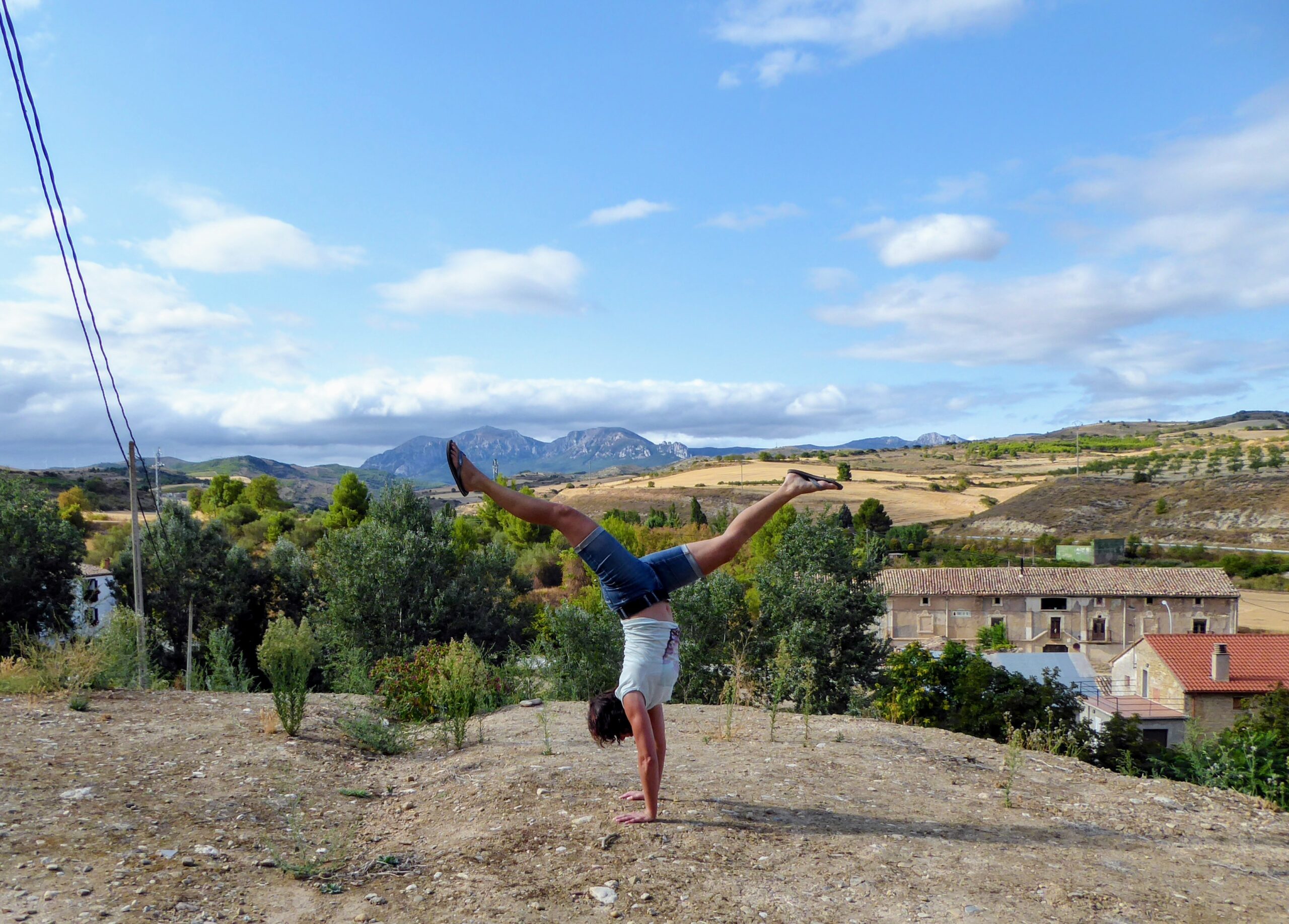
Now I live nomadically, without a fixed mat or routine. And I feel the difference. My hips protest on long walks in a way I didn’t know before. That contrast — between then and now — makes clearer than any research what yoga does for a hiker.
Now I need to get back to a more regular practice. This article is as much a reminder for myself as it is advice for you.
Your hips carry you further than you think
The hip is the pivot point of the hiker. Every step starts there, every climb too. Someone with supple hips takes larger, more efficient strides with less energy. Someone with stiff hips compensates without noticing: the knees take over, the lower back jumps in, the walking pattern becomes unnecessarily heavy.
Yoga for hikers trains exactly the muscles and structures involved: hip flexors, hamstrings, glutes, the inner thighs. Not just by stretching them, but also by strengthening them. That distinction matters. Flexibility without strength creates instability, and an unstable joint is more prone to injury — especially on uneven terrain.
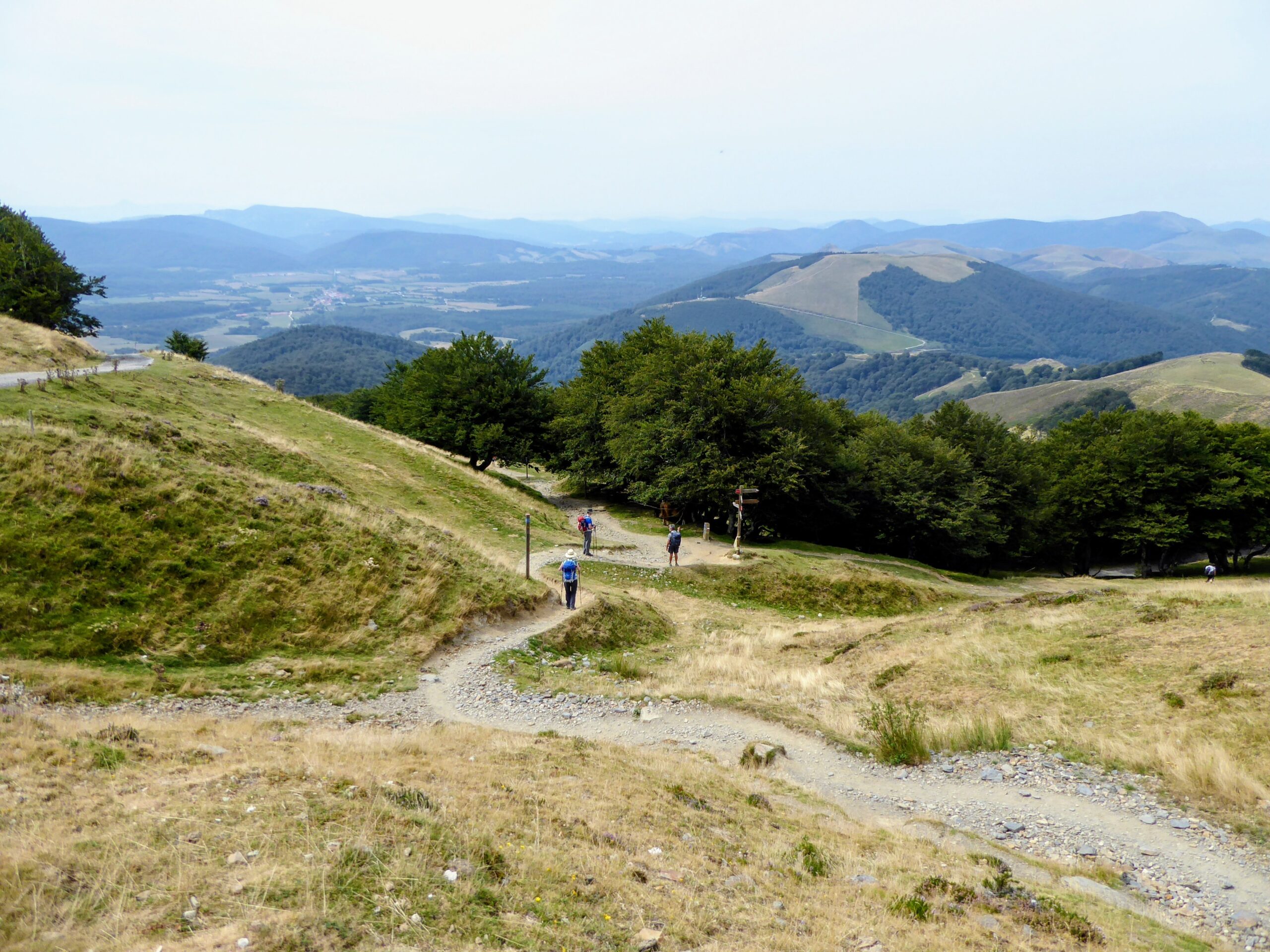
On rocky paths, at high steps, jumping over a stream: all those movements call for hips that are both mobile and stable. Yoga provides both.
A strong core carries your backpack for you
Hiking with a backpack makes a particular demand on the body. The weight on your back shifts your centre of gravity. Your body has to continuously correct for this, and the muscles that do this work are the core: abdomen, back, pelvic floor, the deeper stabilising muscles around the spine.
A weak core means your back takes over. Halfway through the day you start to lean forward. Your shoulders pull up. Your neck tightens. It’s a pattern I regularly see in hikers — and one that can largely be prevented with targeted yoga.
Yoga trains the core in a way that is functional for hikers. Not superficially, but deeply. Poses like plank, boat, side plank and downward dog activate the transverse abdominis (the deep abdominal muscle), the back extensors and the glutes simultaneously. They also teach you to engage those muscles consciously — something you’ll do automatically once you’ve swung that backpack onto your back.
A hiker who stands upright with an active core distributes weight better, walks more efficiently and ends the day with less lower back pain.
Foot strike: the small movement with big impact
Per kilometre you take around 1,300 steps. On a long hiking day that’s tens of thousands. With every step your foot makes a rolling movement: heel hits the ground, foot lies flat, weight shifts to the ball of the foot, push-off through the big toe. That’s called foot strike, and while it sounds straightforward, it certainly isn’t always.
Stiff feet and ankles disrupt this movement. The roll becomes shorter, less fluid. The push-off loses power. To keep moving forward, other muscles compensate: calves, knees, sometimes even hips and lower back.
Yoga improves the suppleness of feet and ankles in a way that few other forms of movement do. By moving barefoot, by consciously shifting weight, through balancing poses that activate the small foot muscles. Take mountain pose alone — standing upright, feet consciously on the ground, weight evenly distributed — it trains the body and foot awareness that is so valuable in hiking.
Supple feet walk lighter. They spring. And they are considerably less prone to complaints like plantar fasciitis or overloading of the metatarsals.
Breath as a resting point on the trail
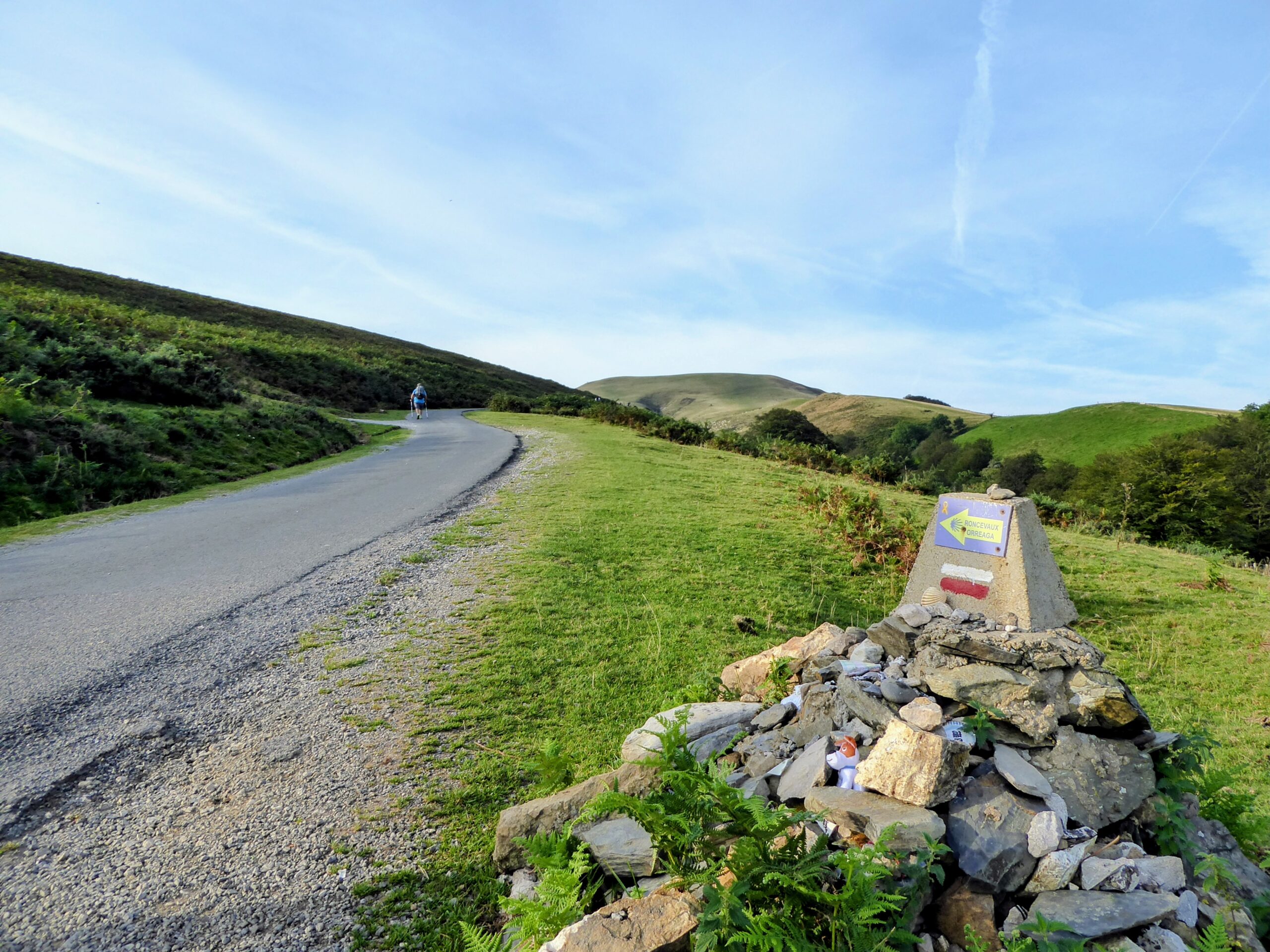
Yoga also encompasses breathing exercises — the so-called pranayamas. That breathing comes with you on the path.
When you get tired, you start to breathe more shallowly. Your shoulders come up, your chest closes a little. Your body gets less oxygen precisely when it needs more. A conscious breath — deep into the belly, steady and rhythmic — breaks that pattern.
On a long climb I use the breath as an anchor: inhale for a number of steps, exhale for a number of steps. Walk steadily, perhaps slower than you’d like. With a deep, rhythmic breath you go further than with a fast pace and a shallow breath that constantly forces you to stop.
Recovery after a long day
After a long day of hiking, your body really wants one thing: to stretch out. The hamstrings are stiff, the calves tight, the hips tired. Fifteen minutes of yin yoga or restorative yoga after hiking speeds up recovery noticeably. Not an intensive session, but gentle poses that release tension and stimulate circulation.
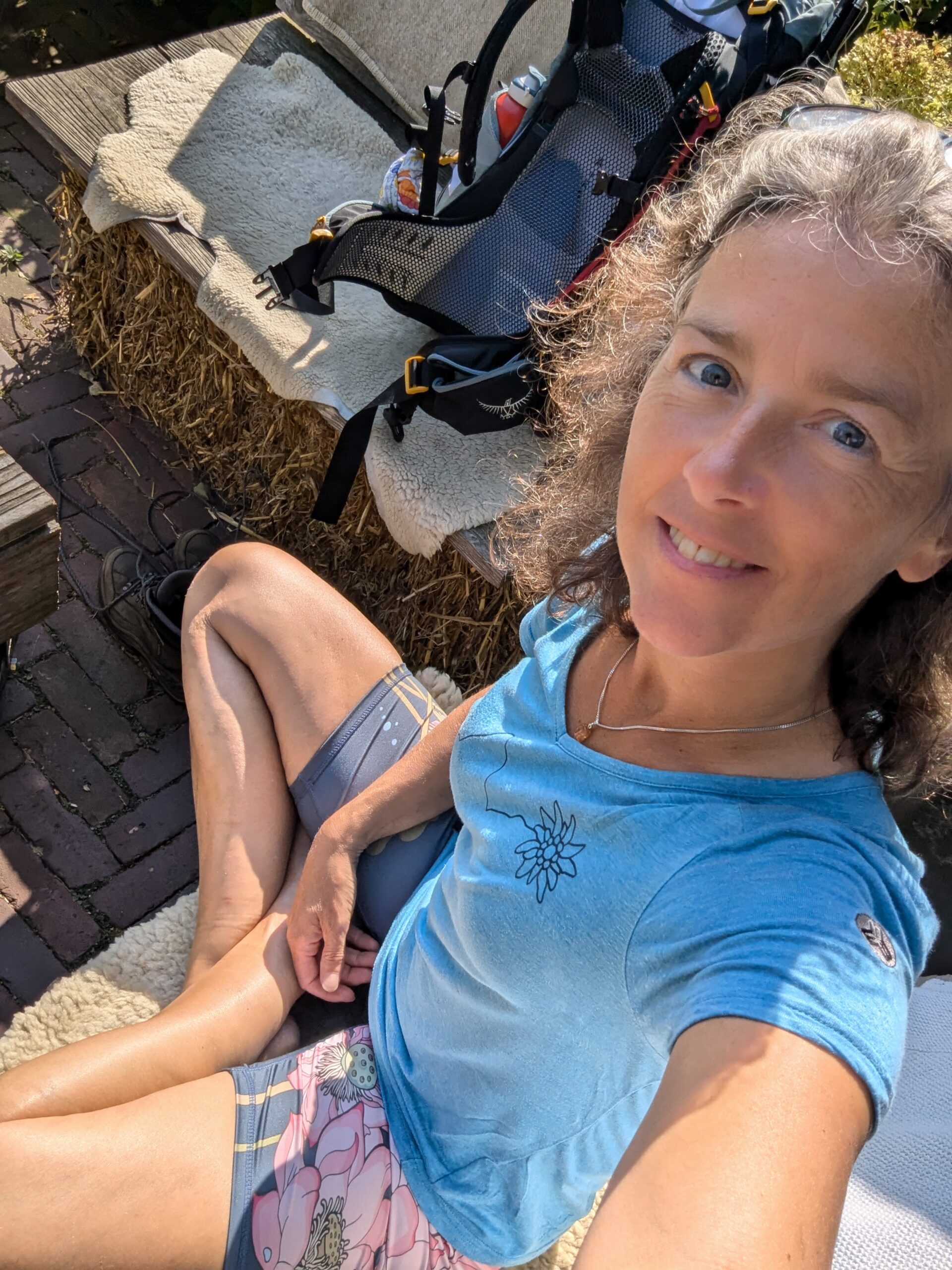
Five to ten minutes of stretching after arrival — before you sit down or lie down — makes the next morning feel noticeably different.
Two yin poses that work particularly well after a long day on the trail:
- For the hips — Supta Baddha Konasana (Reclined Butterfly): lie on your back, soles of the feet together, knees fall open. Gravity does the work.
- For the hamstrings and lower back — Caterpillar: sitting, legs stretched in front of you, slowly fold forward. No effort, just let go.
During the Camino de Santiago you can easily do these kinds of poses on your bed. There are few distractions, you can feel clearly where your stiffness is and where you can allow release in the muscle that’s under tension. Fifteen minutes of attention for your body after a long day can make an enormous difference for what comes next.
Yoga for hikers: when do you do it?
You can use yoga at three moments:
- Before the hike — a short active session as a warm-up. Think sun salutations, high lunges for the hips, plank for the core. Ten to twenty minutes is enough.
- During the hike — a few poses at a rest stop to break up stiffness. The standing forward fold (Uttanasana) is ideal for tight hamstrings on the trail: standing, hands towards the ground, head hanging loose.
- After the hike — restorative poses. On your back, knees to the chest, slowly rocking side to side. Or a reclined butterfly to open the hips. Slowly, without forcing.
You really don’t need to be flexible
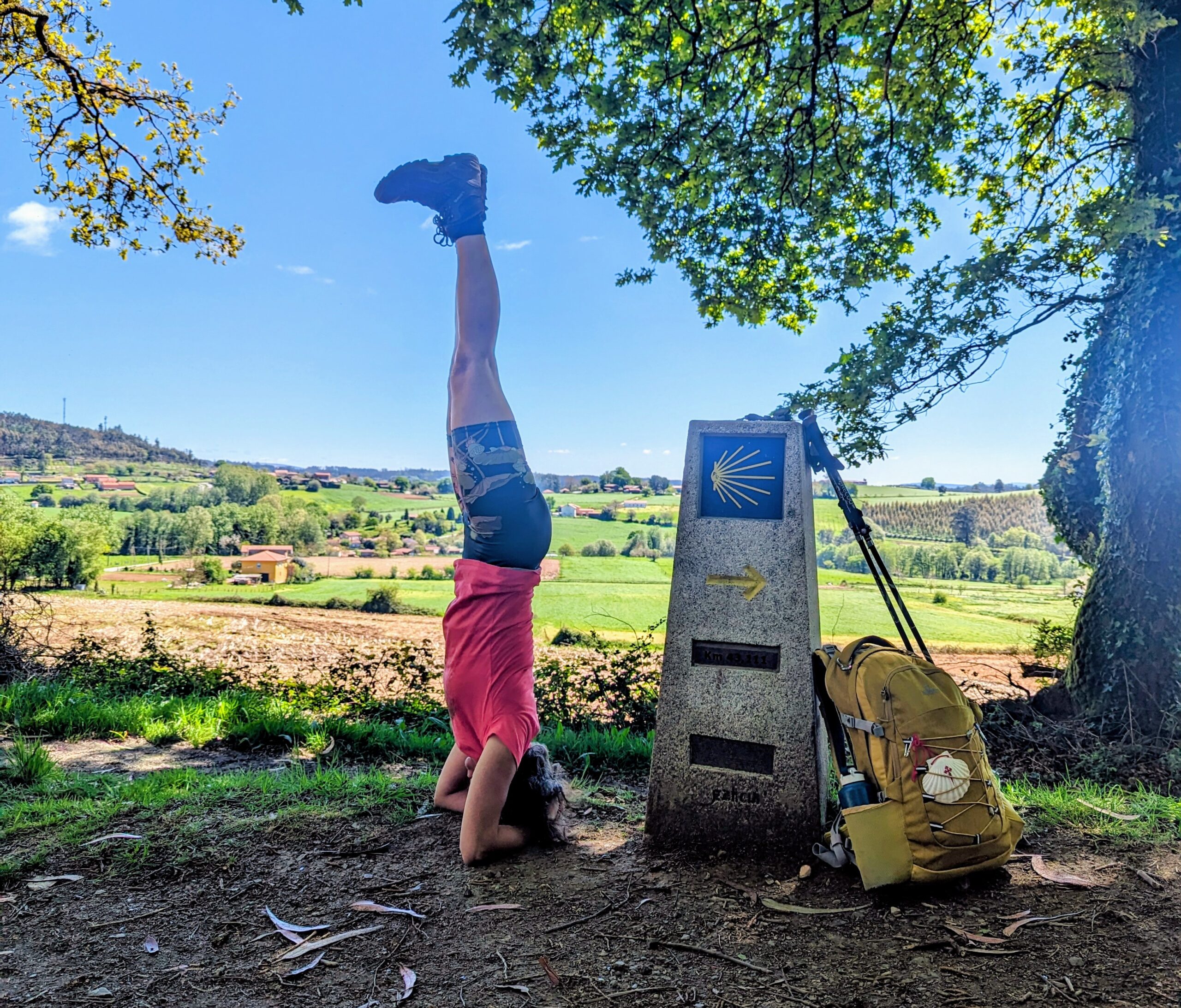
The most common thing I hear when I talk to hikers about yoga: “But I’m way too stiff for yoga.”
That’s exactly why yoga works so well. You start where you are. Yoga doesn’t ask for perfect poses or extreme flexibility. It asks for attention to your body, for moving slowly and listening to what is needed.
I’m rediscovering that myself right now. After a period of little yoga I notice my body reminding me of what it needs. That’s not a failure — that’s exactly how it works.
Start to practise on the yogamat #ad and see what your condition is.
Also read:
- Health Tips: Complete Your Pilgrimage Healthy and Happy
- How to Build the Perfect Travel First Aid Kit
- Camino Luggage Transport: When and How to Transfer Your Backpack
- Camino de Santiago: Complete Guide for Your First Pilgrimage
Want to experience how yoga and hiking come together? On the guided walking trips by Zinvol Reizen — including the Camino de Santiago and the Fishermen’s Trail in Portugal
This article contains affiliate links. If you book or purchase something via one of these links, we may receive a small commission, at no extra cost to you.