
Engbertsdijksvenen is one of the last living raised peat bogs in the Netherlands. It lies in the municipality of Twenterand, in the Twente region of Overijssel, and is protected as a State Nature Monument and Natura 2000 area. A place where you might find a viper right on the path, spot sundew growing from the soggy ground, and look up just in time to see a crane gliding overhead. Small life everywhere — and occasionally, very large life too.
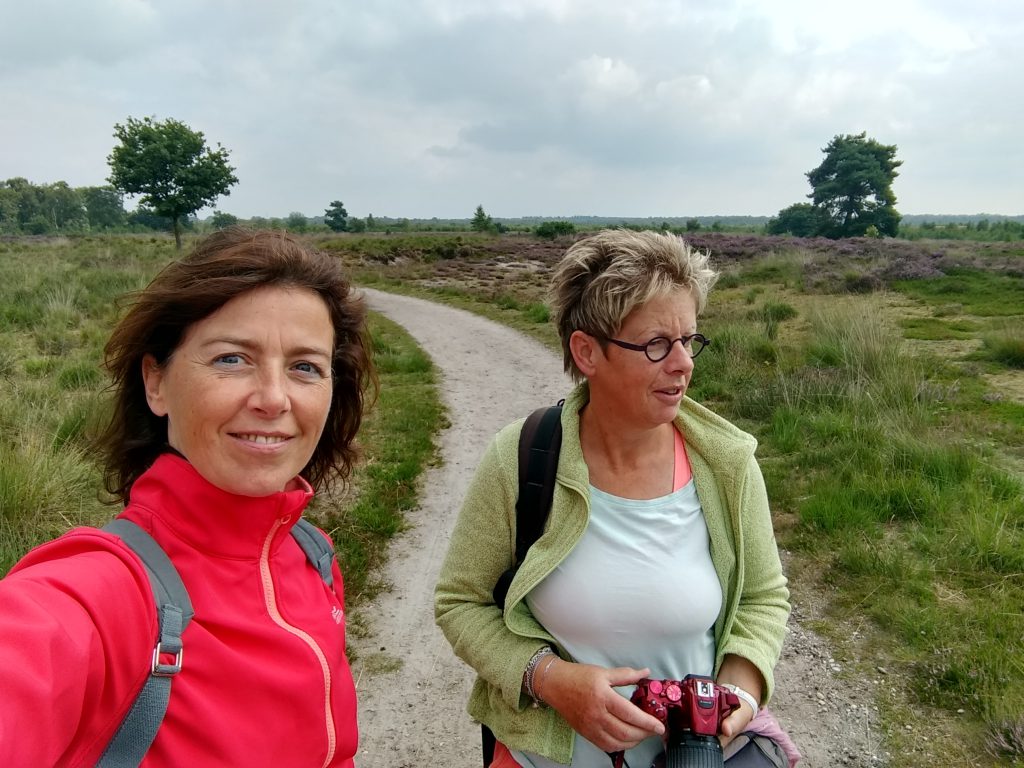
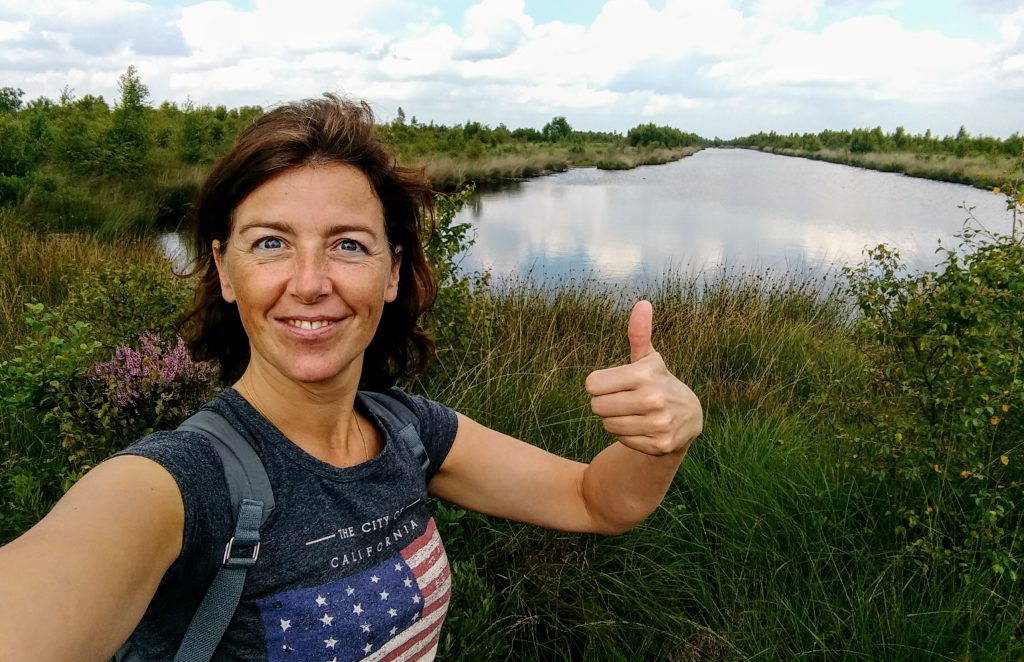
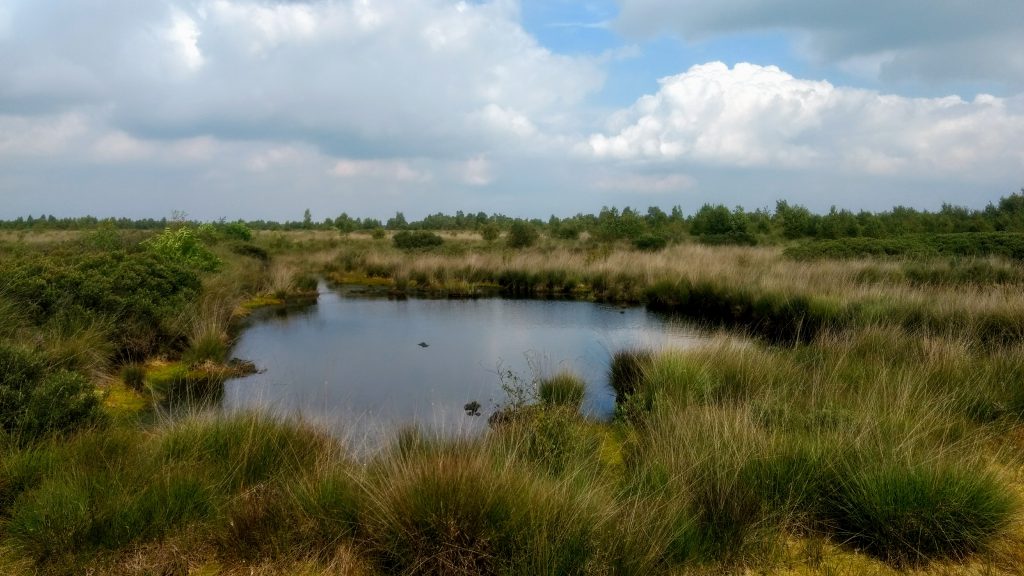
I came here because we were scouting locations for a filming project. A few days earlier I had already been standing in the same spot during a work shift, trying to photograph a sunset reflected in the water. When that didn’t quite work out, I ended up posing myself. Which tells you something about how beautiful it is.
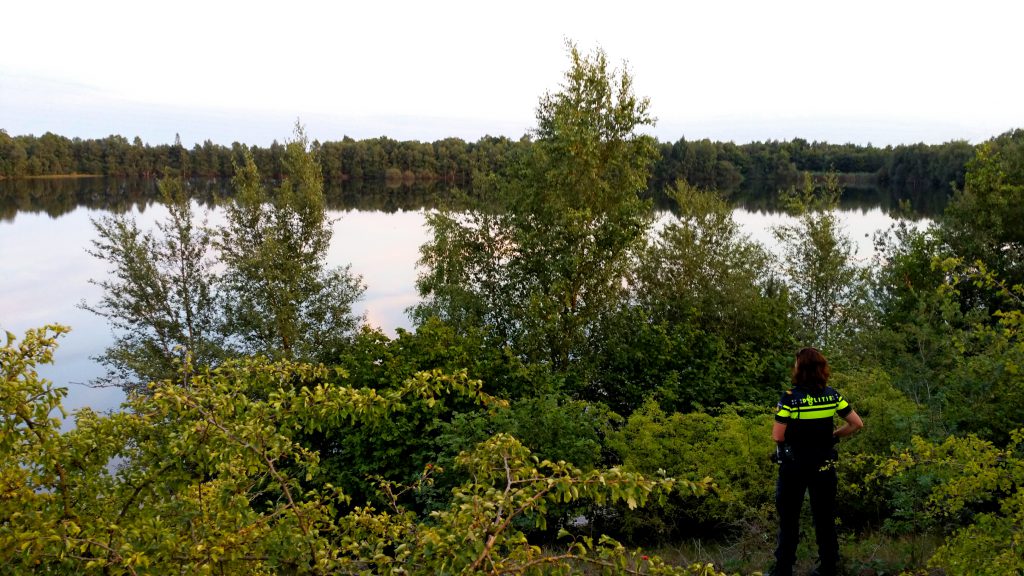
I know this area from the past — it was once part of my work territory. But visiting as a walker, you see it with completely different eyes.
That day we were looking for three things: a short walk, a good view, and a spot to sit for a while. So we drove around to three different starting points. All three worth it, each in its own way.
Walk 1: Bergweg, Kloosterhaar
The first starting point is the Bergweg, just outside Kloosterhaar. Here the reserve is more heathland than bog. When we visited, the heather was already turning a deep purple. That colour is so intense it stops you in your tracks. It also signals that summer has peaked and autumn is on its way — which in nature is actually when everything looks its finest.
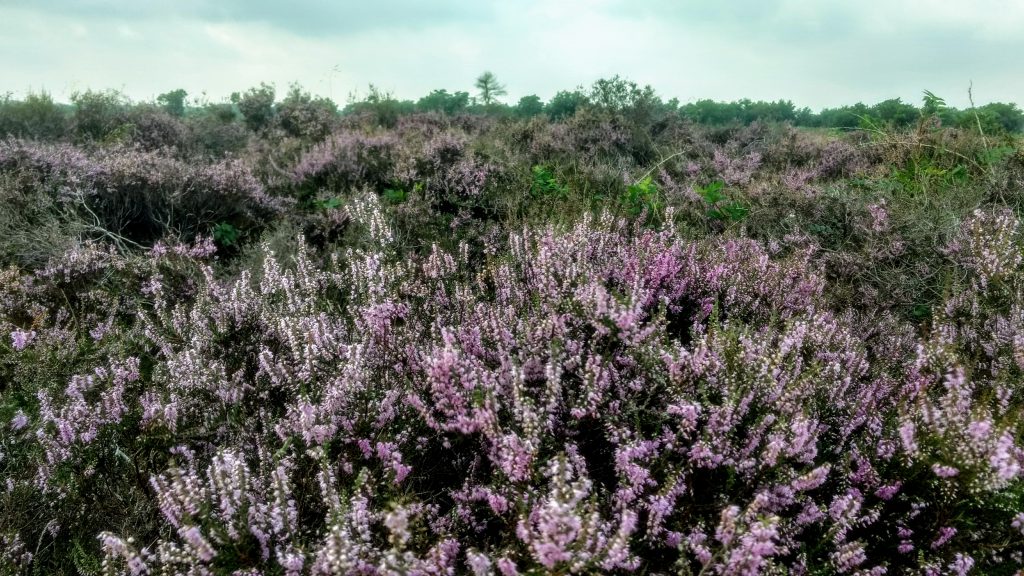
We walked through to the viewpoint and spent some time taking it all in.
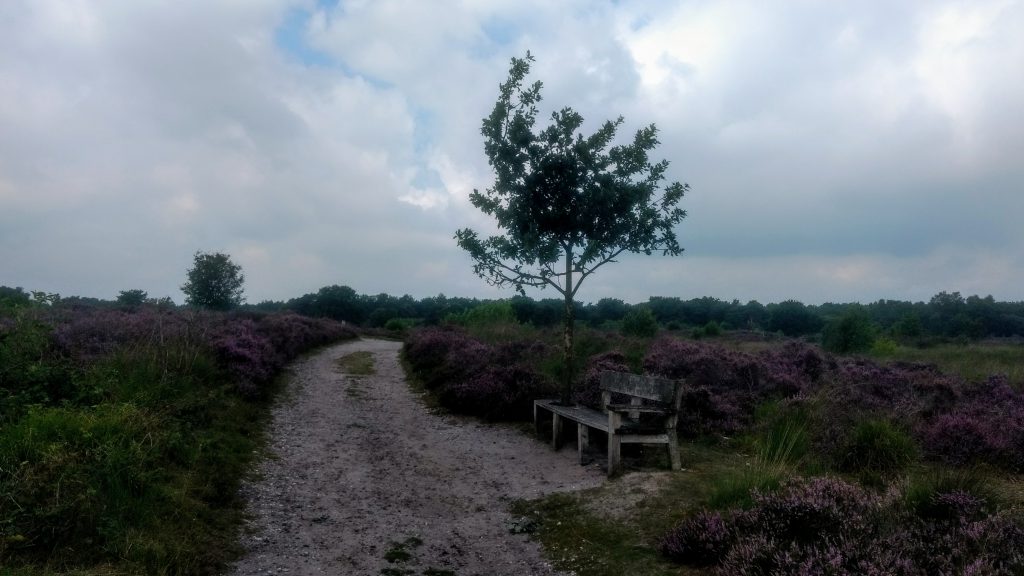
The downside: the viewpoint is quite a long walk from the car park. If you’re looking for a genuinely short outing, this starting point is less convenient. We drove on to the second one.
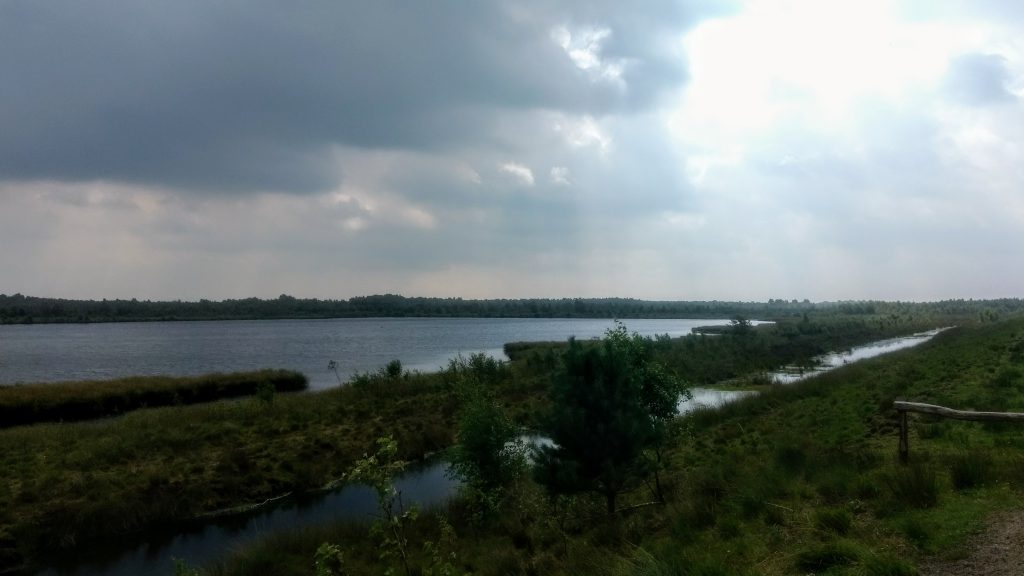
Practical: Park along the Bergweg near Kloosterhaar. Official Twente Walking Network routes (red arrows) also start from Kloosterhaar into the reserve.
Walk 2: Paterswal, Bruinehaar
This was the best stretch of the day. The Paterswal is a small lane that leads into the reserve. Just before a small bridge, you can pull over and park. And then you’re essentially already there.
We had barely started walking when we came across a viper.
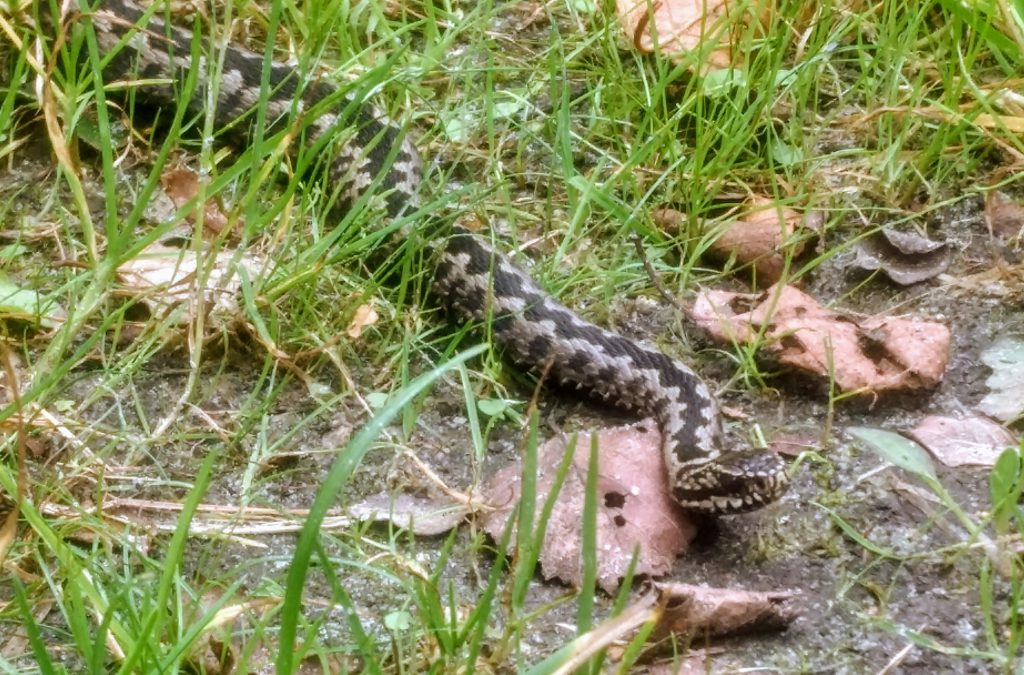
Right on the path. We nearly stepped on it. My walking companion Truus spotted something behind us and we stopped. I looked ahead and saw something lying on the ground — my brain processed it as a thick shoelace. That’s how the mind works when it encounters something outside its frame of reference. Then it clicked. A viper. How extraordinary.
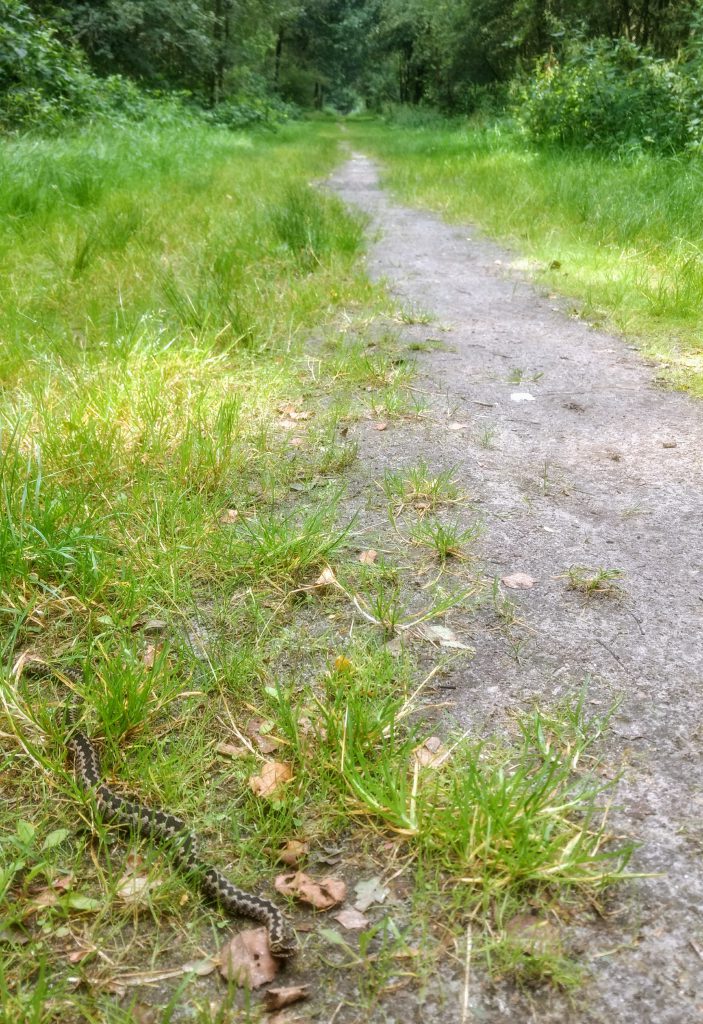
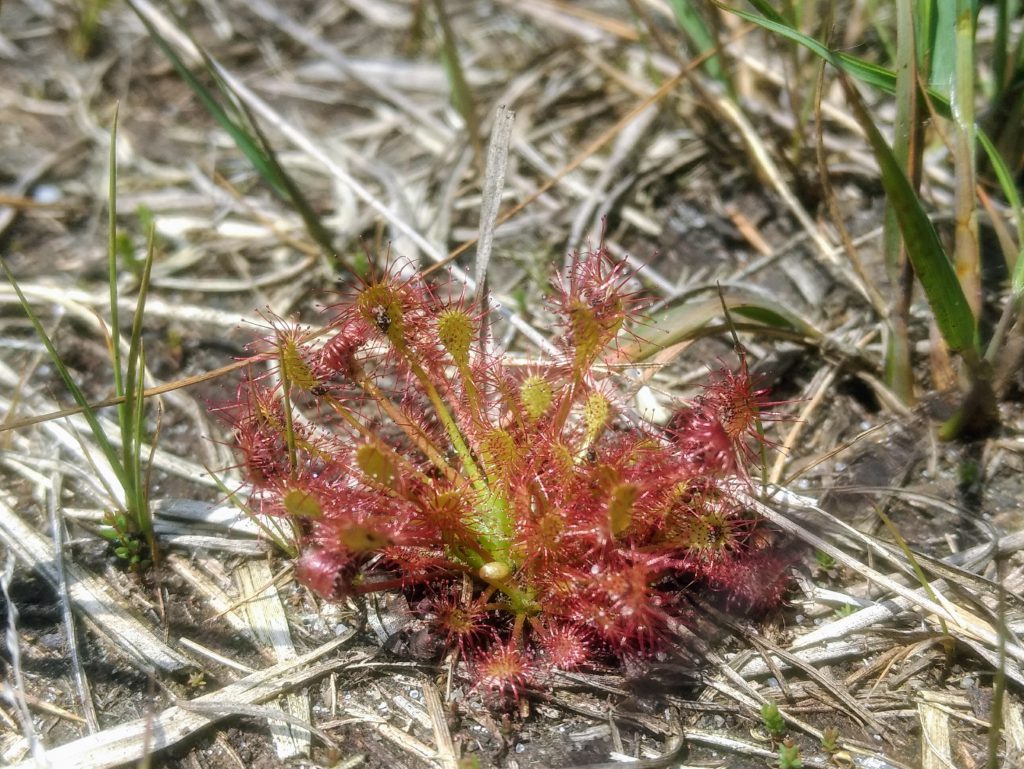
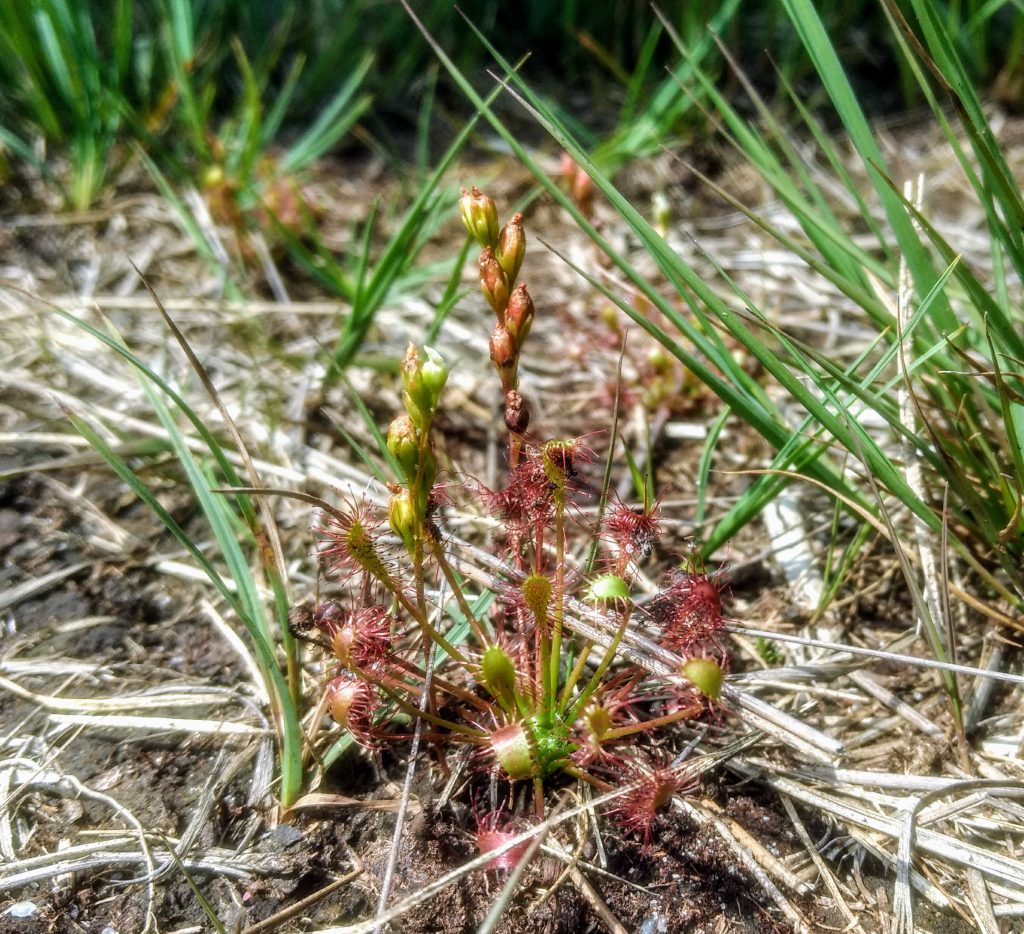
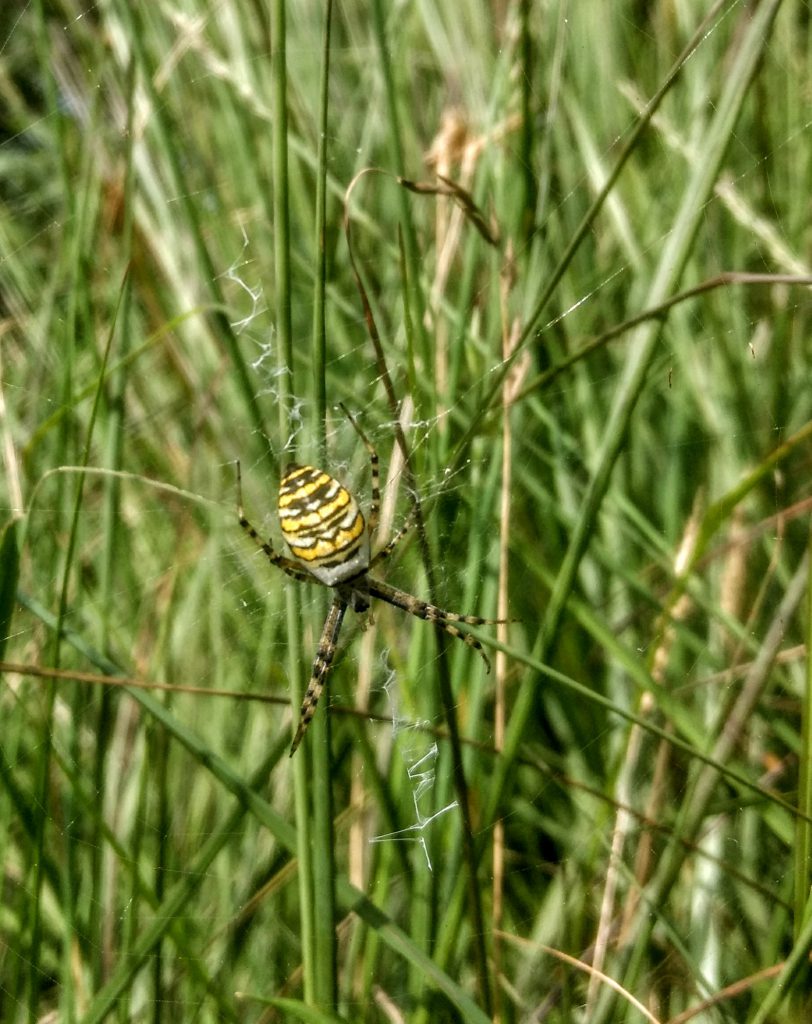
The first section of this path runs through a peat forest. Then the landscape opens up and you walk between meadows and dark peat pools. We met a man who told us he had spotted a large viper coiled up in the grass further along the path. We searched in the direction he pointed, but didn’t find it. Still, this path gave us the most wildlife of all three walks: the viper, a wasp spider with a web the size of a fist, caterpillars working their way towards something better, and the carnivorous sundew growing low beside the path.
This is the walk I’ll come back to for a longer route.
Practical: Park on the Paterswal in Bruinehaar, just before the bridge. Free roadside parking.
Walk 3: Oude Hoevenweg, De Pollen
The third starting point is on the Oude Hoevenweg, heading towards De Pollen. On the left side of a long bend in the road, you’ll find a car park. From here you step straight into the reserve.
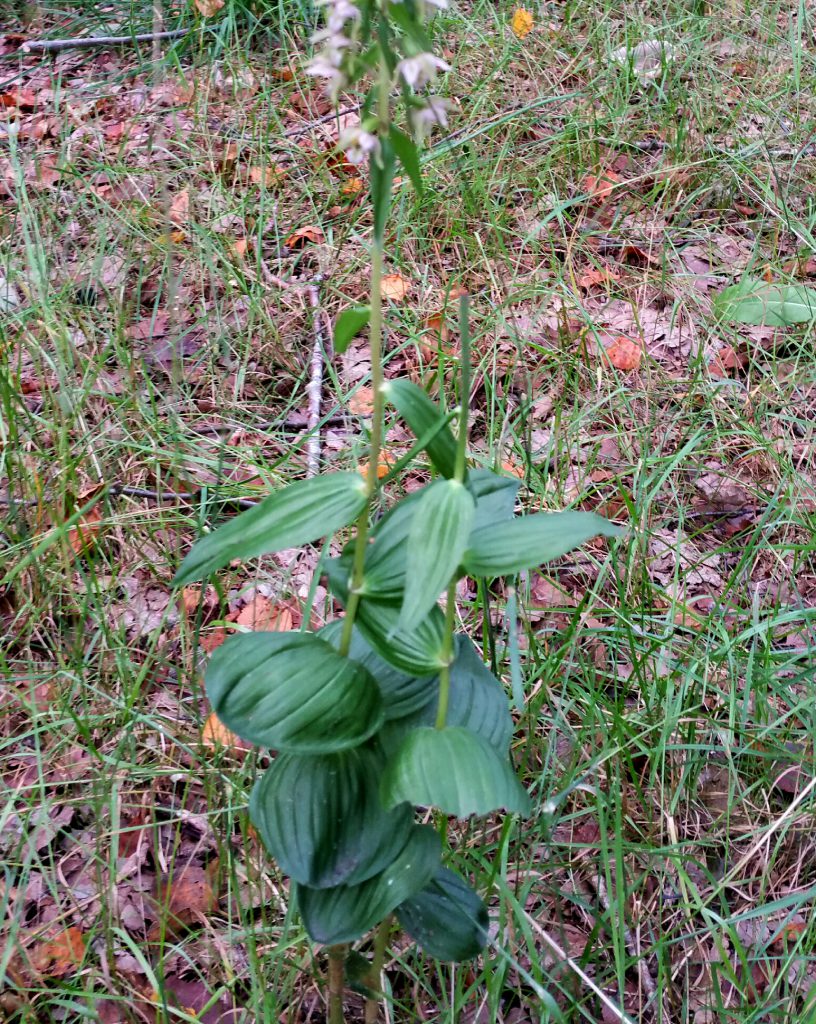
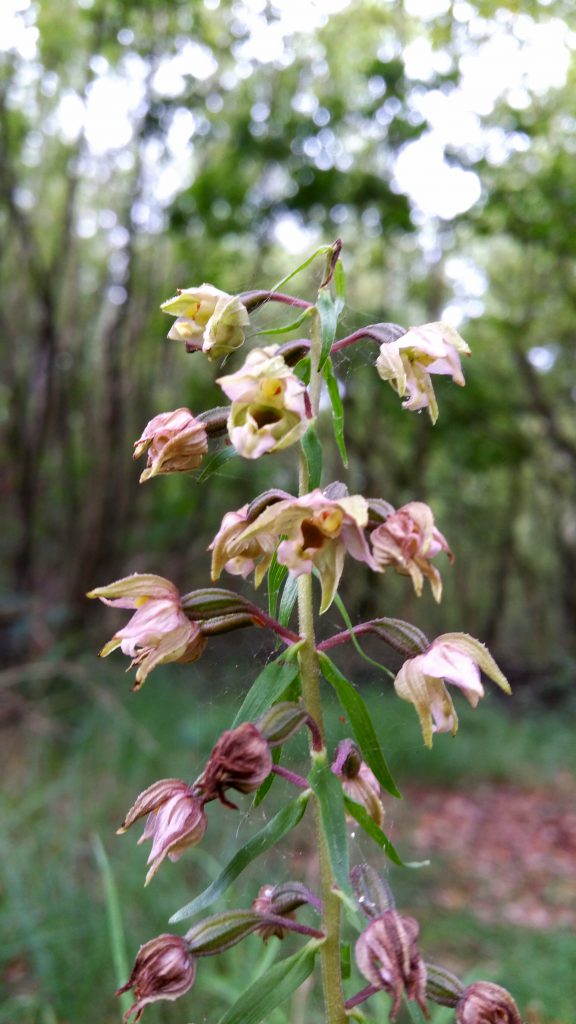
The first section goes through woodland. At a T-junction we turned right and soon spotted orchids growing in the verge. Truus pointed them out — I had walked straight past them. But once I saw them, I immediately recognised the leaves. From now on I’ll know what to look for.
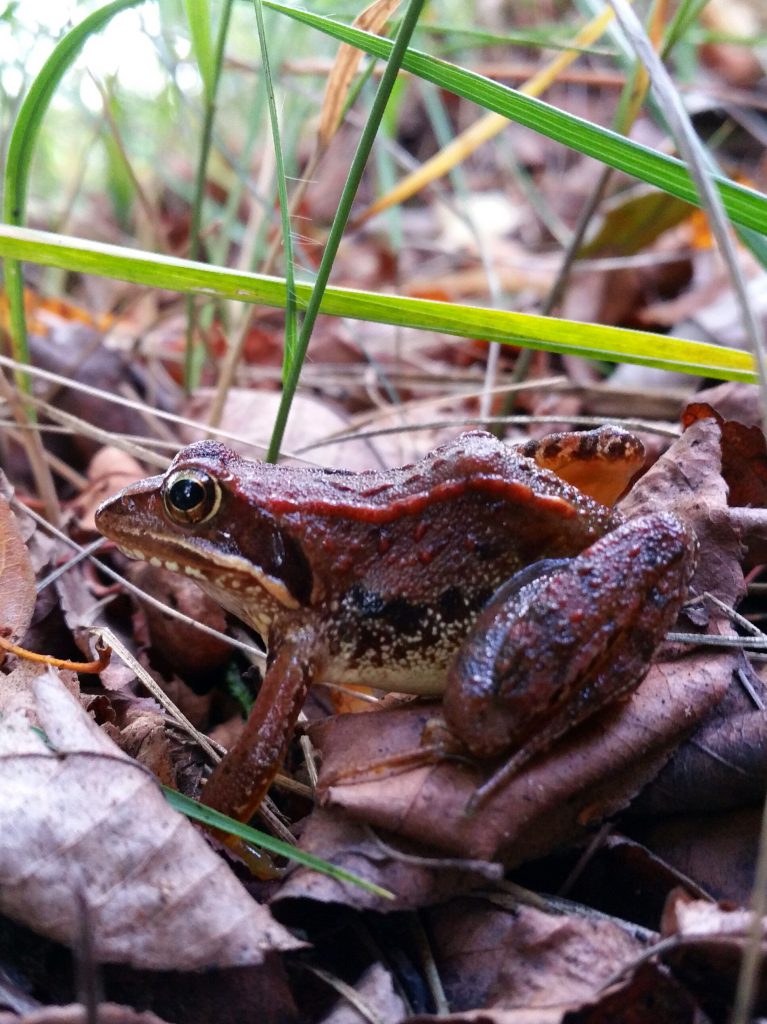
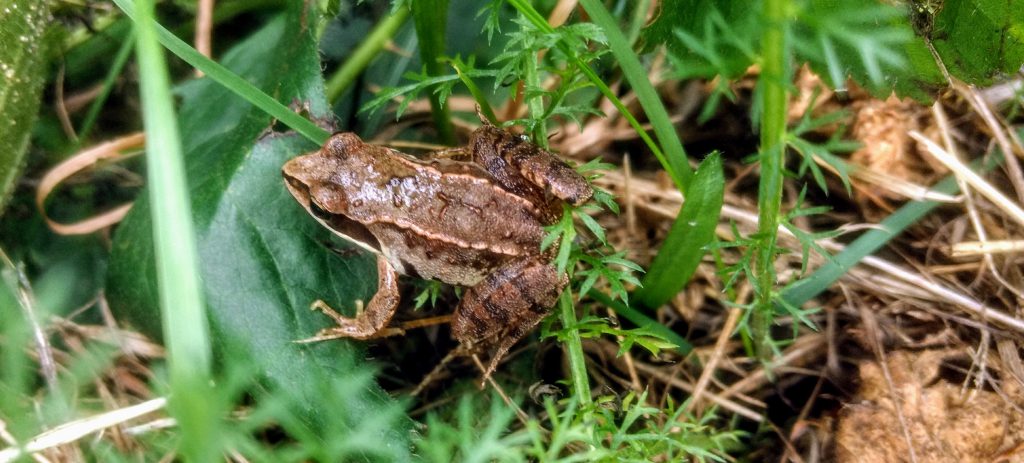
After the woodland, you walk into the typical peat landscape: lots of water, reflections, wide-open views. I spotted a small frog just before it jumped away.
At the end of this path you join the same trail as Walk 2. You can connect the two loops for a combined route of around 10 kilometres. We chose a slightly different way back and came across a small herd of white-faced cattle grazing quietly behind a fence.
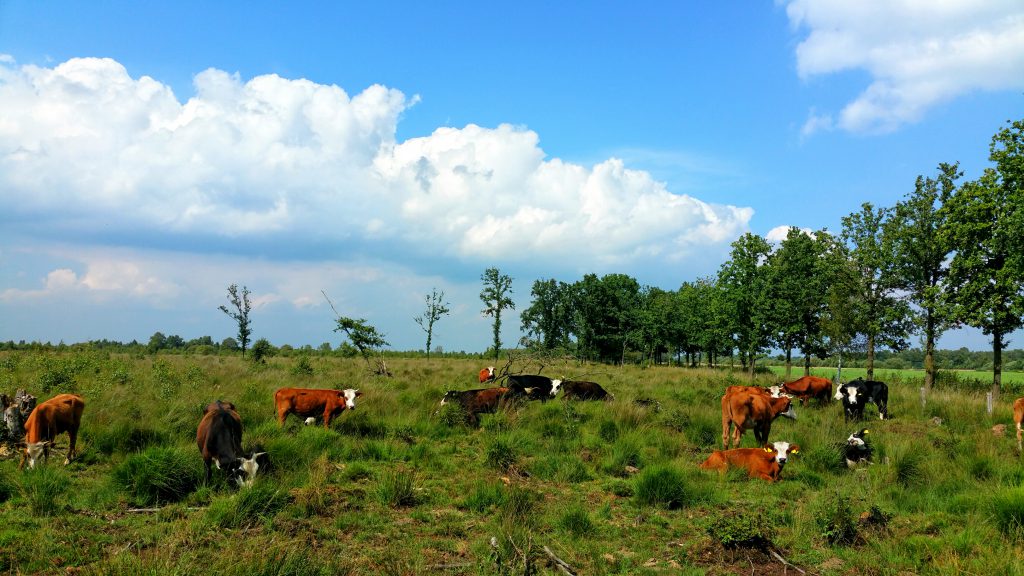
Then I looked back and noticed one of them was standing on the wrong side. Outside the fence. No sign of any gap anywhere, no idea how it had got out. I tried calling Staatsbosbeheer (the Dutch Forestry Commission). That took a while. Eventually, via the police control room, we made contact and they got in touch with the farmer. He would sort it out. A good end to that particular problem. Every day outside holds at least one thing you didn’t see coming.
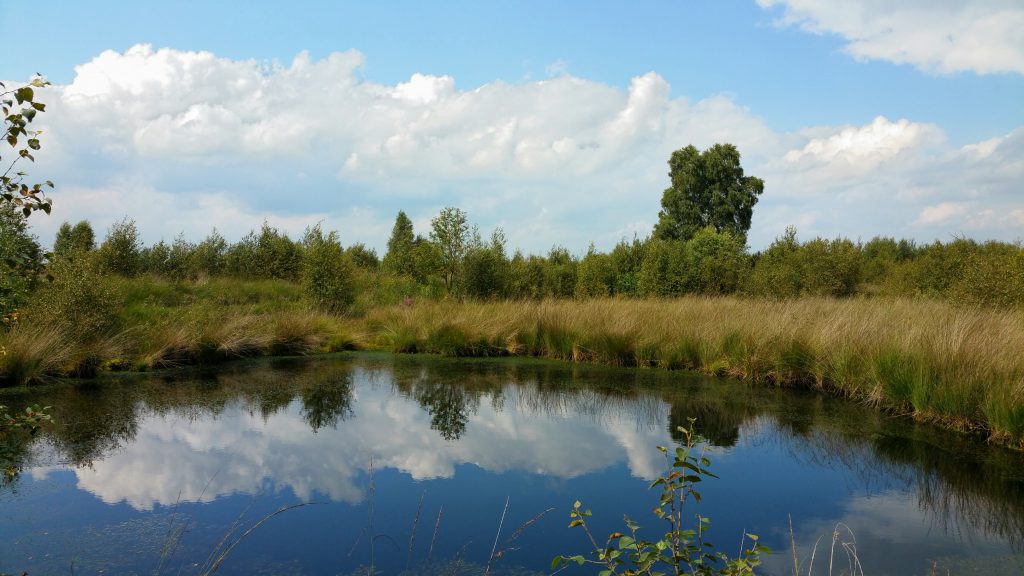
Practical: Park at Oude Hoevenweg 138, De Pollen, near Geesteren. Free car park with information boards showing the official routes. The yellow Leidijkroute (5.9 km) starts here, passing peat pits, waterways and birdwatching hide ‘t Krik-eantie.
What You Might See in Engbertsdijksvenen
The reserve is home to species you won’t find just anywhere. Vipers, moor frogs, tree frogs, slow worms, and dragonflies are all permanent residents. In spring, male moor frogs turn a vivid blue during the mating season. Vipers are most easily spotted on warm days in spring and summer when they bask in the sun. Look up and you might see cranes during migration, or in winter the great grey shrike, hen harrier, or short-eared owl.
The plant life is equally special: sundew, lavender heather, sphagnum moss, several orchid species, and the rare bog arum, which grows mainly in the southern part of the reserve.
The core of the reserve is vulnerable and not accessible. Dogs are welcome but must be kept on a lead.
I always bring my own reusable water bottle #ad. My mission is to eliminate single-use plastic — refilling instead of throwing away is one of the easiest ways to contribute as a traveler. A foldable bag #ad for small purchases helps avoid unnecessary plastic waste while traveling.
The 4 Official Staatsbosbeheer Walking Routes
The Dutch Forestry Commission has marked four waymarked routes through the reserve with coloured poles:
- Heath Route / Heideroute (4.6 km, green poles): a proper heathland walk past peat pools and viewpoint De Pluus. Starts from Kloosterhaar.
- Freek van ‘n Ekkelpad (1.3 km, yellow poles): the shortest route, ideal if you have limited time or are walking with young children.
- Streujenroute (3.1 km, red poles): through peat forest, across heath and past peat pits.
- Leidijkroute (5.9 km, yellow poles): through bird-rich terrain, past peat pits and waterways, with birdwatching hide ‘t Krik-eantie. Starts from De Pollen.
Getting There
Engbertsdijksvenen is located in Twente, close to the town of Vriezenveen and the German border. From Almelo it’s about a 20-minute drive. The three starting points are spread around the reserve and easy to find via Google Maps:
Bergweg, Kloosterhaar (northern section). Paterswal, Bruinehaar (central section). Oude Hoevenweg 138, De Pollen, near Geesteren (southern section).
Public transport in this area is limited. A car or (electric) bicycle is the most practical option.
When to Go
The reserve is worth visiting year-round, but each season offers something different.
- Spring (February to April), male moor frogs turn blue and vipers are most active on sunny days.
- Summer, dragonflies are everywhere, orchids are in bloom, and the sundew is easy to spot.
- Autumn, the heather turns a deep purple — one of the most spectacular moments of the year.
- Winter, the area becomes a roosting site for tens of thousands of tundra bean geese, and you have a good chance of spotting the great grey shrike or short-eared owl.
Tip: The paths are unpaved and can be muddy after rain. Sturdy walking shoes or boots are strongly recommended.
Where to Stay
For visitors coming from further away, there are a few good options nearby. Landal De Vlegge is a holiday park within walking distance of the reserve, offering bungalows of various sizes, including options with wellness facilities — a welcome combination after a full day outdoors in autumn or winter. For smaller, more personal accommodation, search for B&Bs (B&B Vlegge / De Johanneshoeve) around Vriezenveen, Vriezenveensewijk or Westerhaar. Staying locally means you can walk early in the morning, when the reserve is at its quietest.
Also read
- The First 200K of my Camino Frances
- Three Ideas for Walking in Deventer- The Netherlands
- Fishermen’s Trail Portugal: Hiking Along the Atlantic Coast
- Karpathos Hiking Trails – Greece
- Hiking trip around Winterberg, Germany
This article contains affiliate links. If you book or purchase something through one of these links, we may receive a small commission at no extra cost to you.