
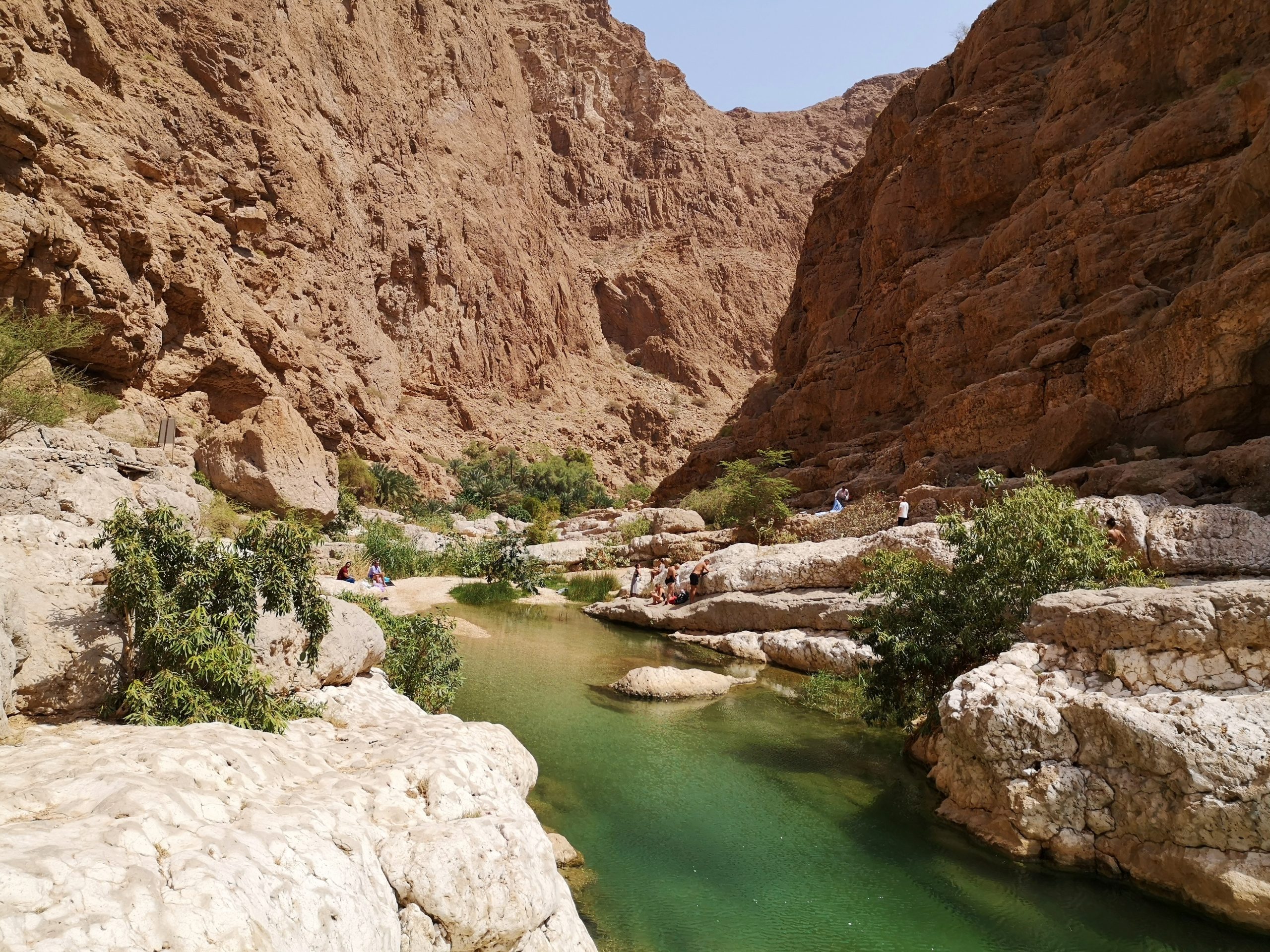
If you’re researching Oman, you’ll quickly come across its famous wadis — and Wadi Shab is at the top of every list. Rightly so. Between towering orange canyon walls you’ll find crystal-clear turquoise pools, lush palm trees, and — if you hike and swim all the way to the end — a hidden cave with a waterfall that feels genuinely magical.
I first visited Wadi Shab in 2019 and have been back multiple times since. In this guide I’ll share my personal experience, practical tips, and an honest update on how much this place has changed.
Come and join me at an avdenturous travel in Oman.
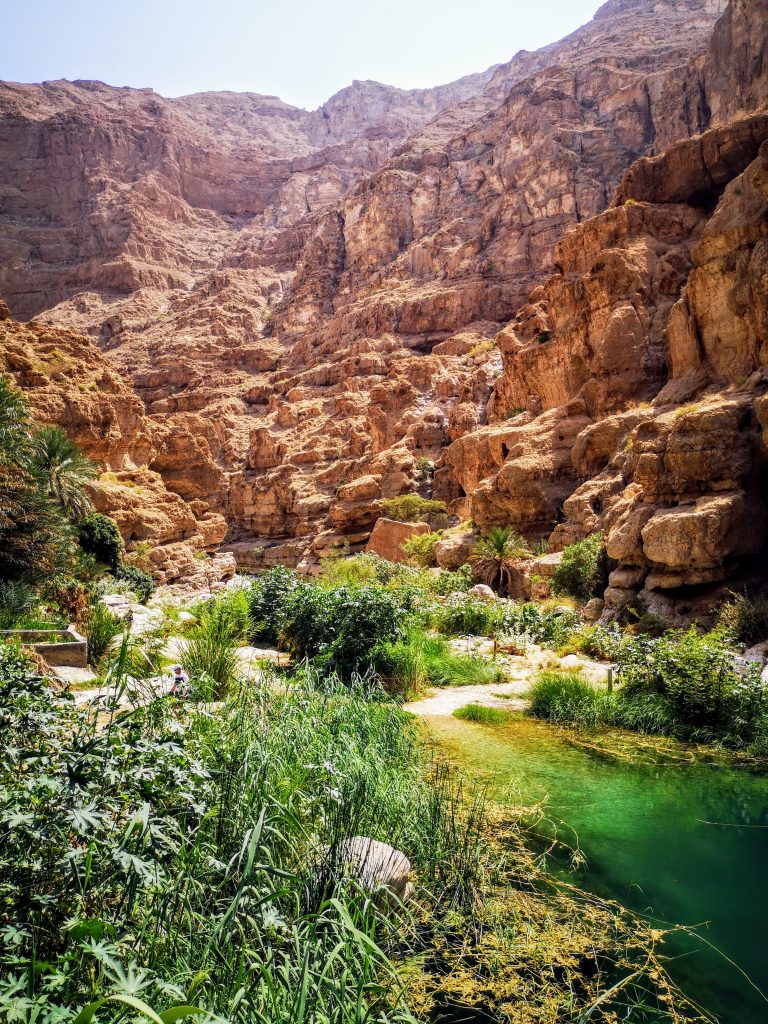
What is a wadi?
A wadi is a dry river valley that carries water only seasonally. During rainy periods, flash floods can move through wadis with little warning — which is why it’s always wise to visit with someone who knows the local conditions. In dry periods, the deepest pools remain filled with clear water year-round, creating a green oasis in an otherwise arid landscape. The contrast — rocky desert one moment, turquoise pools and palms the next — is exactly what makes Wadi Shab so striking.
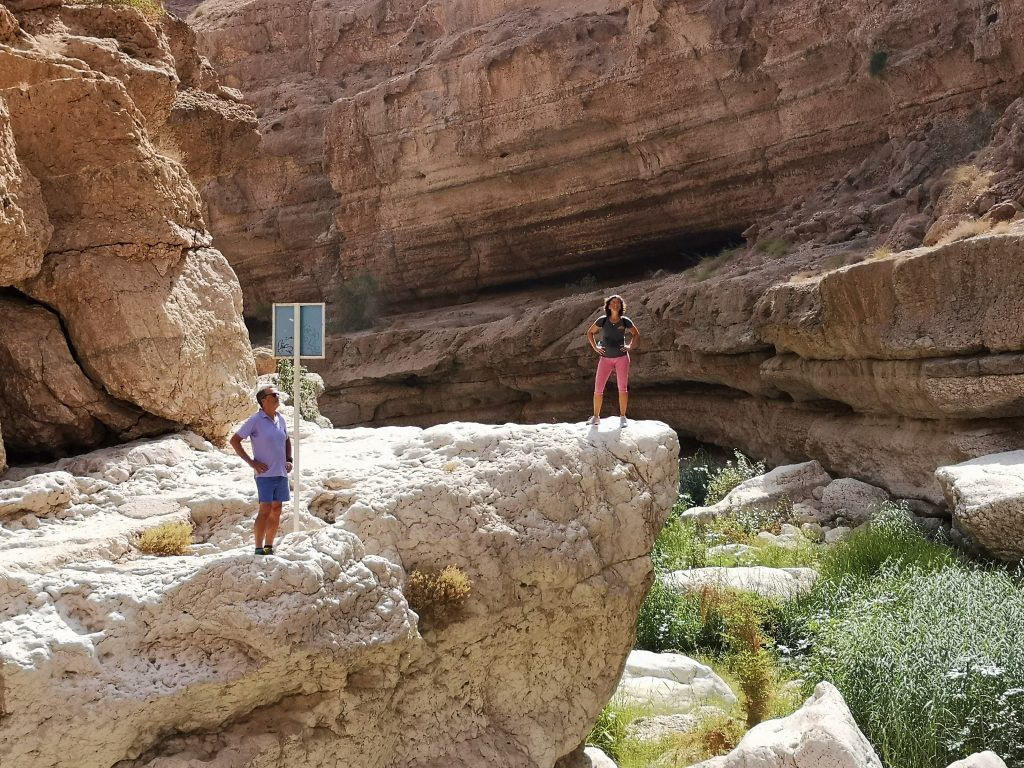
My first visit to Wadi Shab (2019)
That morning, our guide Abdullah from Blue Skies of Oman told us we were going for a hike. We were delighted — we’d spent most of the previous day in the car and were ready to move. Just before we arrived, Abdullah asked whether we had our swimwear on. We didn’t. Had we needed it?
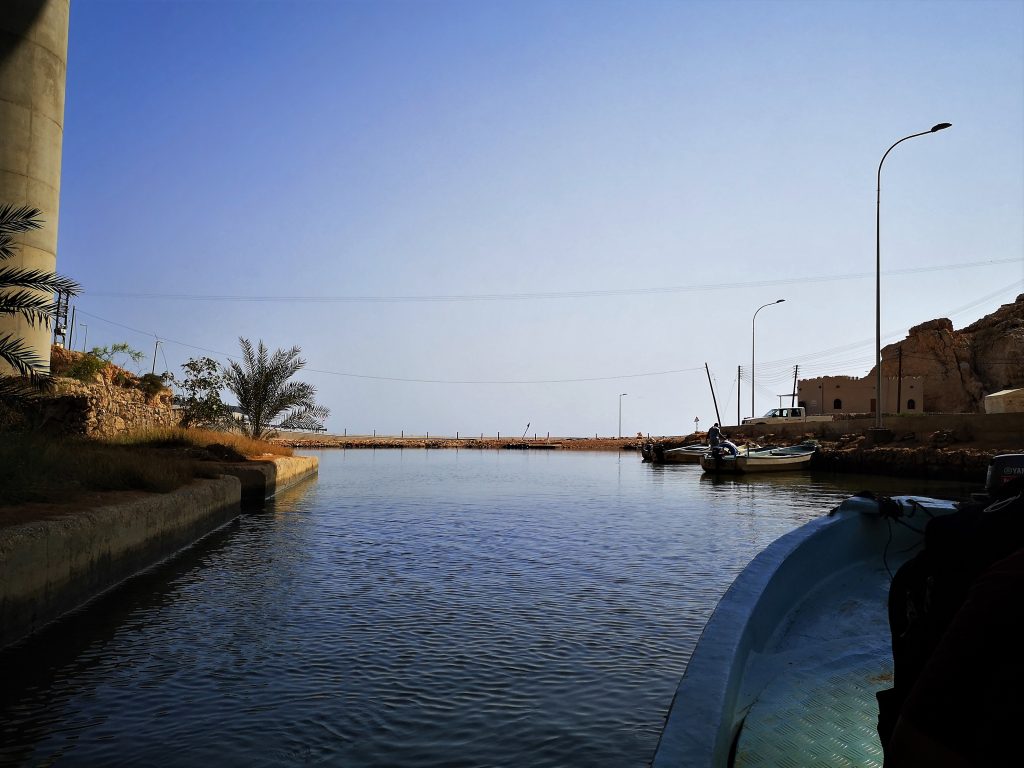
He hadn’t mentioned it, and I quickly realised I was underprepared. We were going to swim the final section of the wadi. Luckily we had all our luggage with us and could change at a small public toilet building near the entrance — the same spot where you board the little boat to cross the water. That boat ride is non-negotiable: there’s no other way into the wadi.
- It costs 1 Omani rial per person (around €2.30 / $2.60), and boats typically run from around 7–8am to 5pm.
The Wadi Shab hike: what to expect
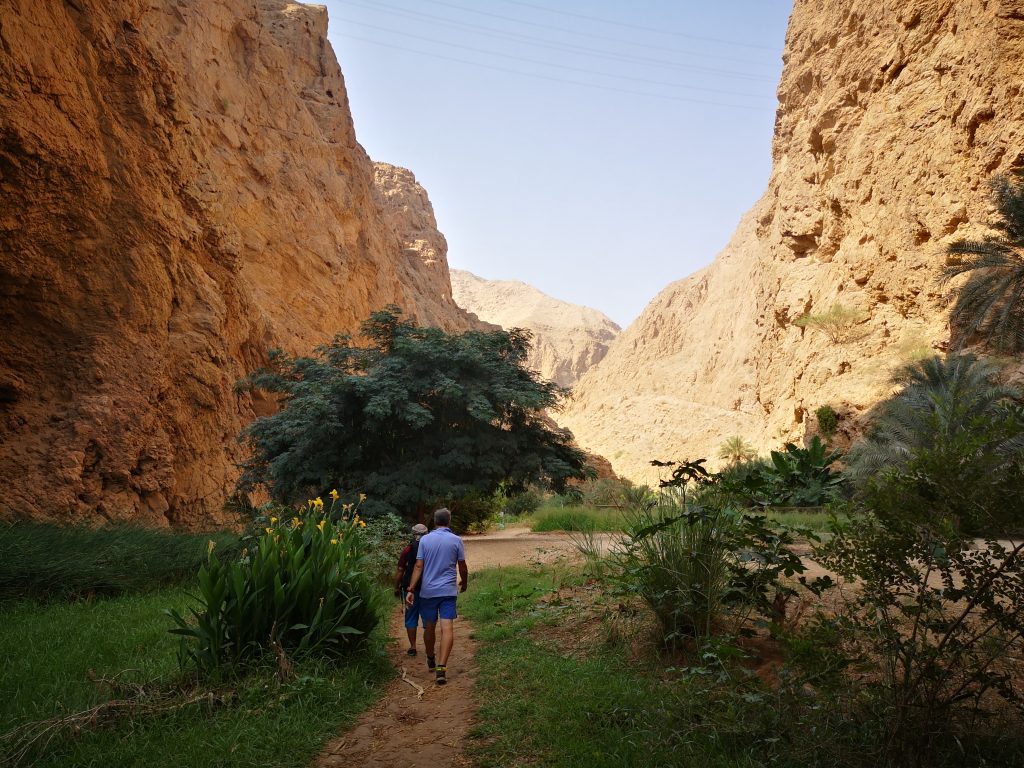
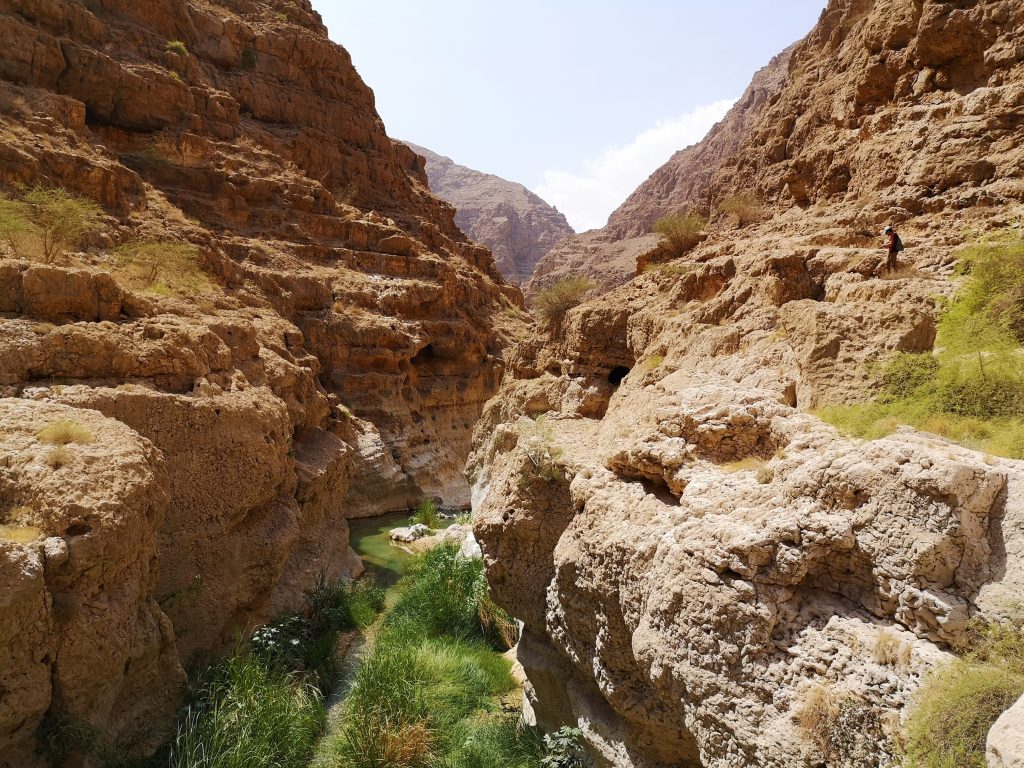
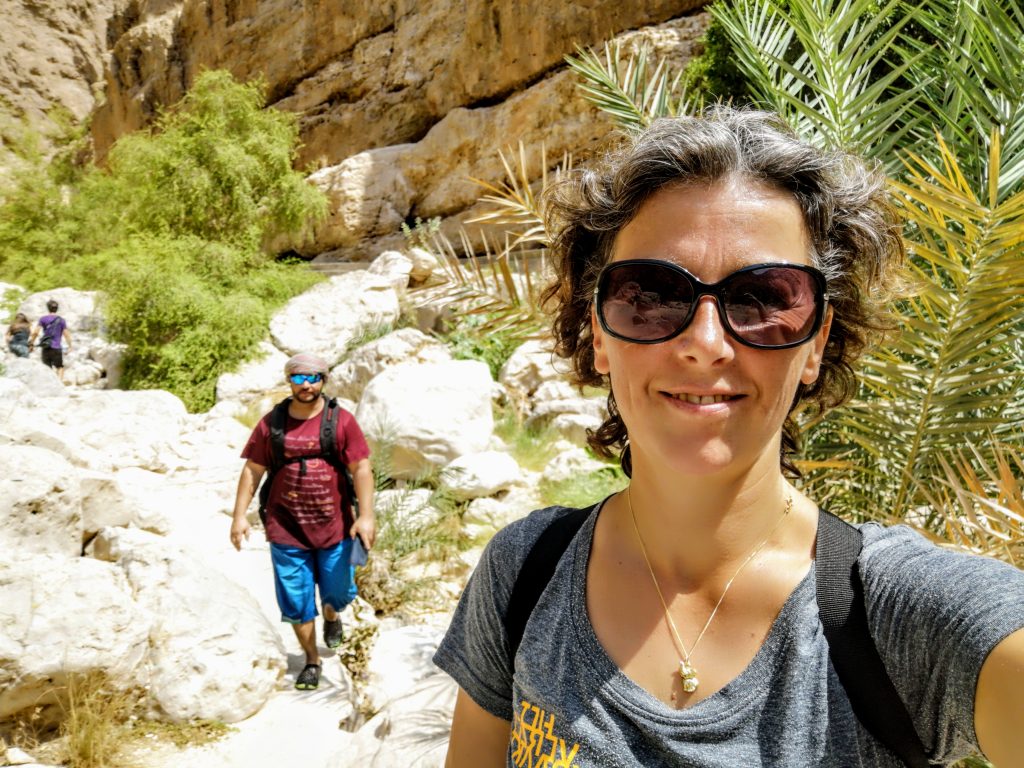
Once across the water, the trail begins. The first stretch passes through a working orchard with vegetables and traditional irrigation channels — a reminder that this is not just a tourist attraction but a living landscape. Soon, the greenery gives way to high canyon walls in warm shades of beige and brown, with nothing but blue sky above.
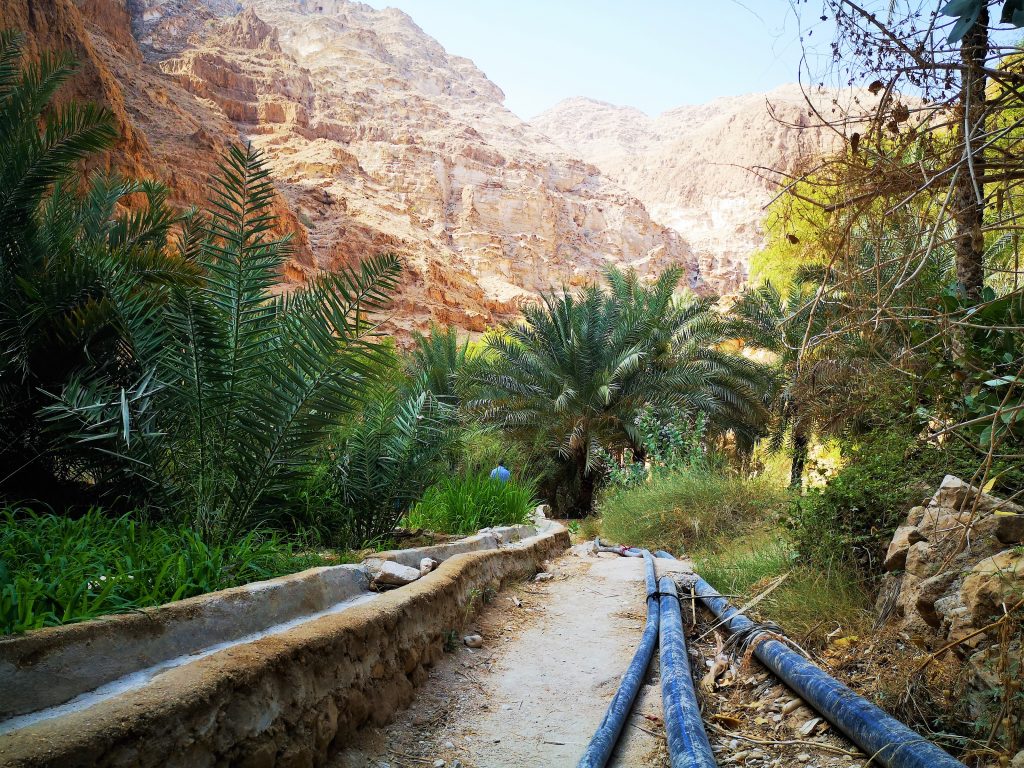
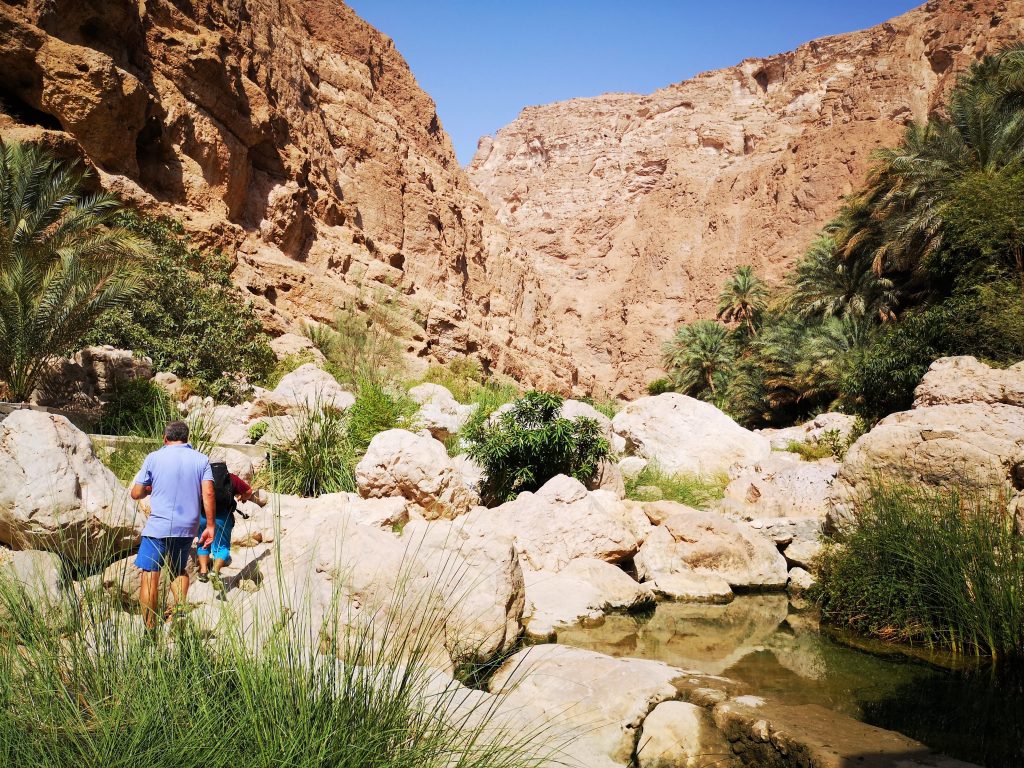
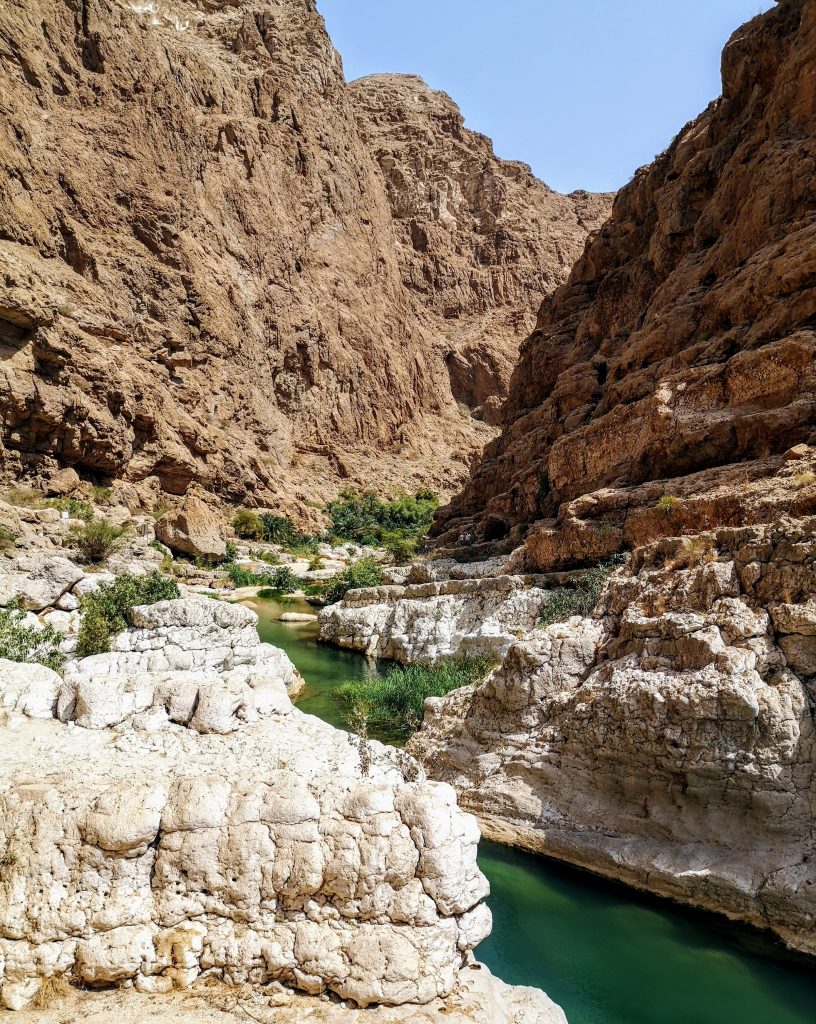
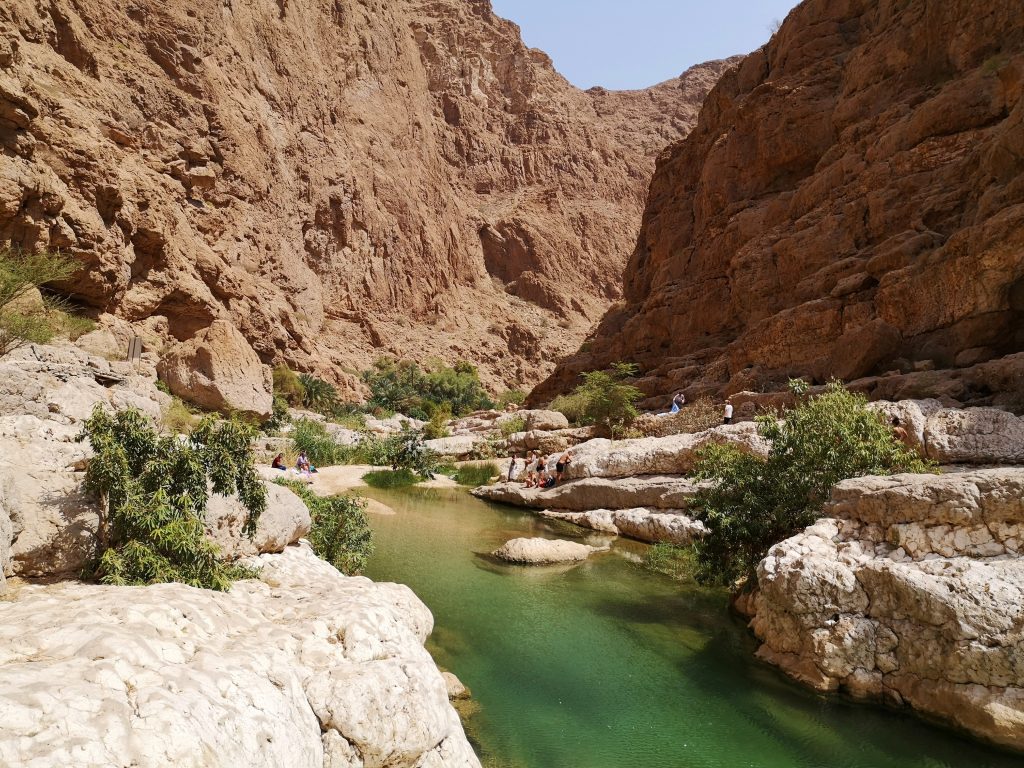
After about 25–30 minutes of walking, the first turquoise pools come into view. The colour is extraordinary — that particular shade of blue-green that seems almost unreal. We continued until we reached the swimming section. Note that not all pools are open for swimming: the first part of the water is used as drinking water for the local community, so please respect the signs.
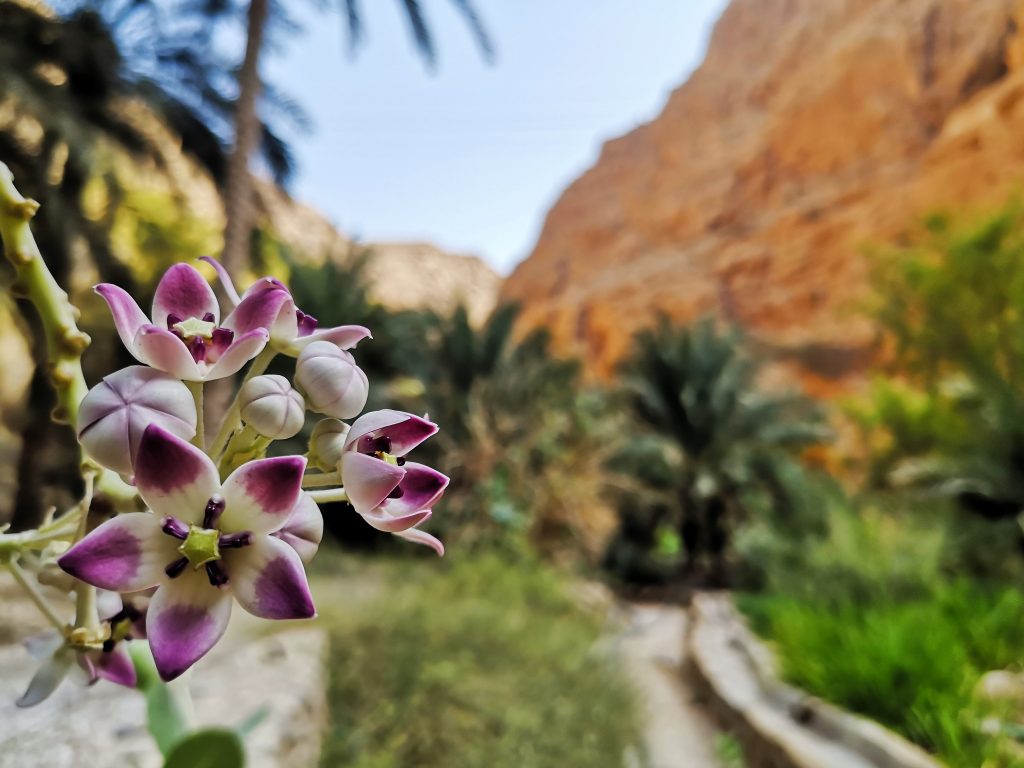
The canyon offers shade in some sections but can get very warm, especially around midday. We’d started early and arrived at the water before noon, and the cool water was a welcome relief.
It had become warm by then, even though we had started early. In the wadi, enclosed by rock walls, there is little wind on the way there. The cold water was therefore wonderful. I swam on my back and looked up at the enormous rock walls. Green grass along the water’s edge, turquoise water, blue sky. What a picture.
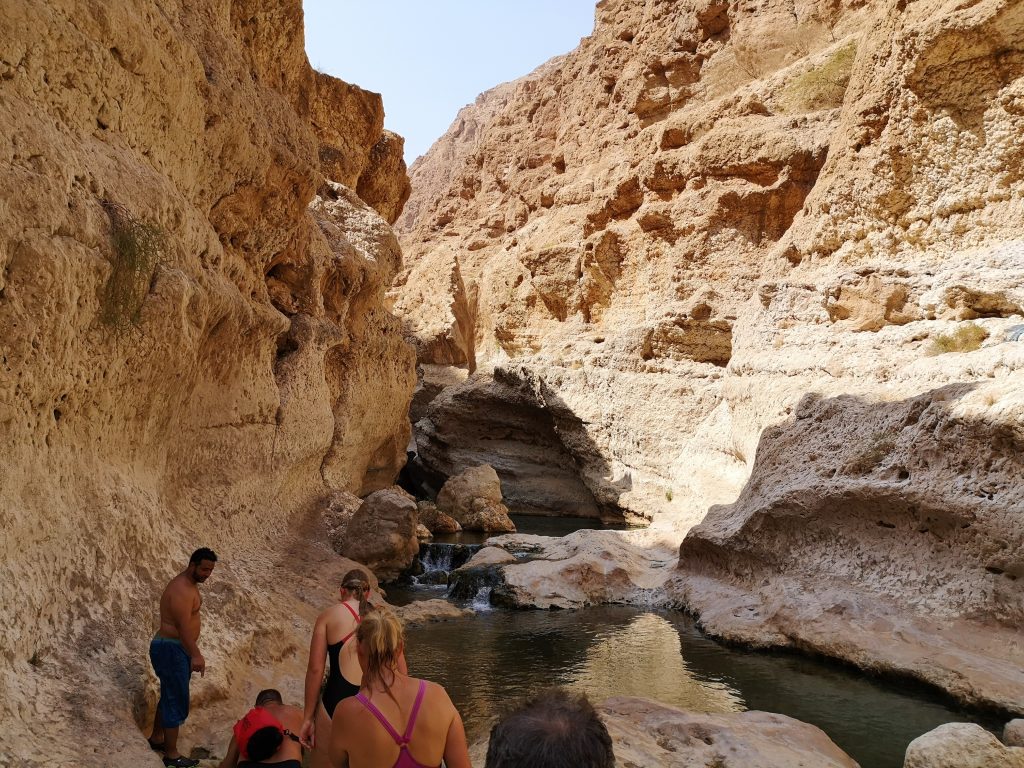
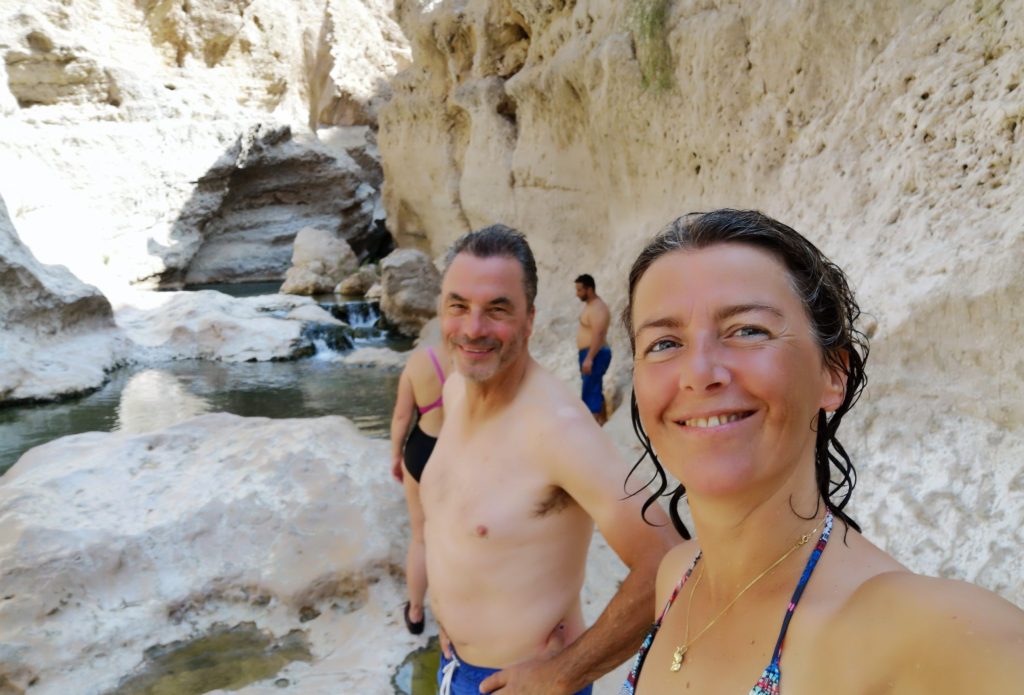
The best part of the Wadi Shab requires swimming. After three pools, each about thirty metres long depending on the amount of water, you come to a very narrow passage in the rock face. Really narrow: you can just about squeeze your head through. Abdullah warned us in advance. On the other side, there is a small cave with a powerful waterfall, where light falls in from above. Truly magical. You can climb up the walls using a rope and jump off, although after a few times it takes quite a bit of energy.
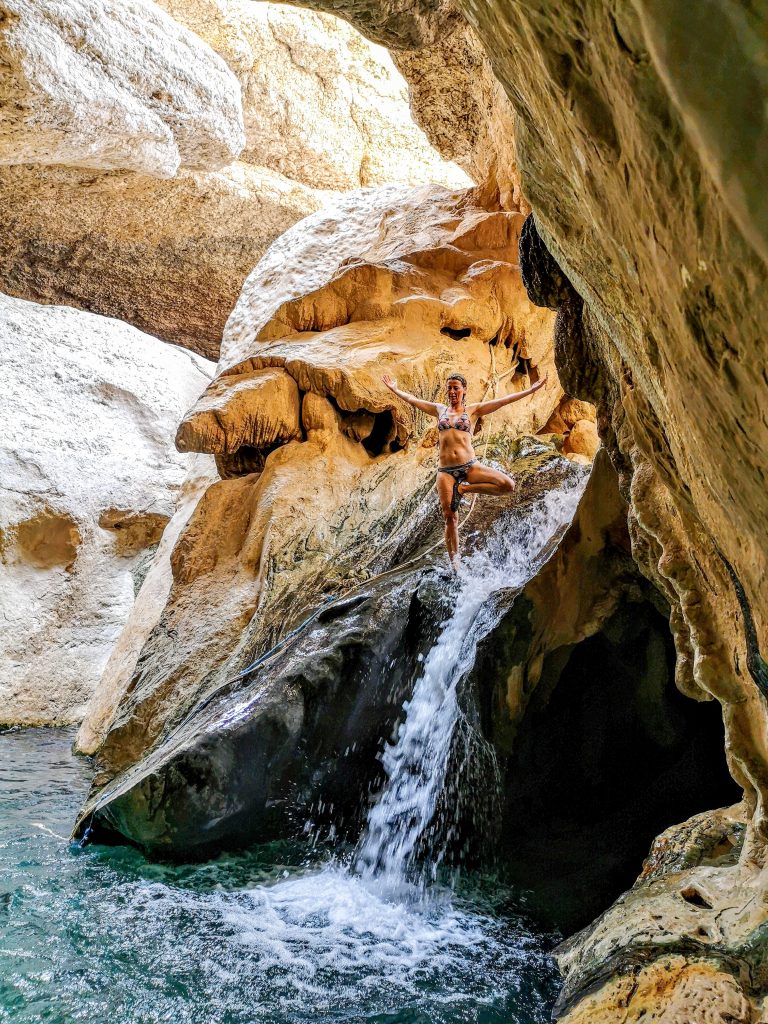
Along the sides of the cave you can climb up and jump from the waterfall — though after a few times the effort of climbing starts to catch up with you.
One important note: there is nowhere to stand inside the cave and the walls are smooth and difficult to hold onto. Only enter if you’re a confident swimmer, and make sure you have enough energy to swim back out.
Wadi Shab in 2025: how crowded has it become?
Here’s the part most travel blogs won’t tell you — and I think it’s important. The last time, early 2026, I drove past Wadi Shab, I was genuinely shocked. The car park at the entrance was completely full, with vehicles parked along the road as far as I could see. What was a relatively quiet, adventurous place when I first visited in 2019 has become one of Oman’s busiest tourist attractions. The wadi itself is just as beautiful as it ever was — but the experience has changed considerably.
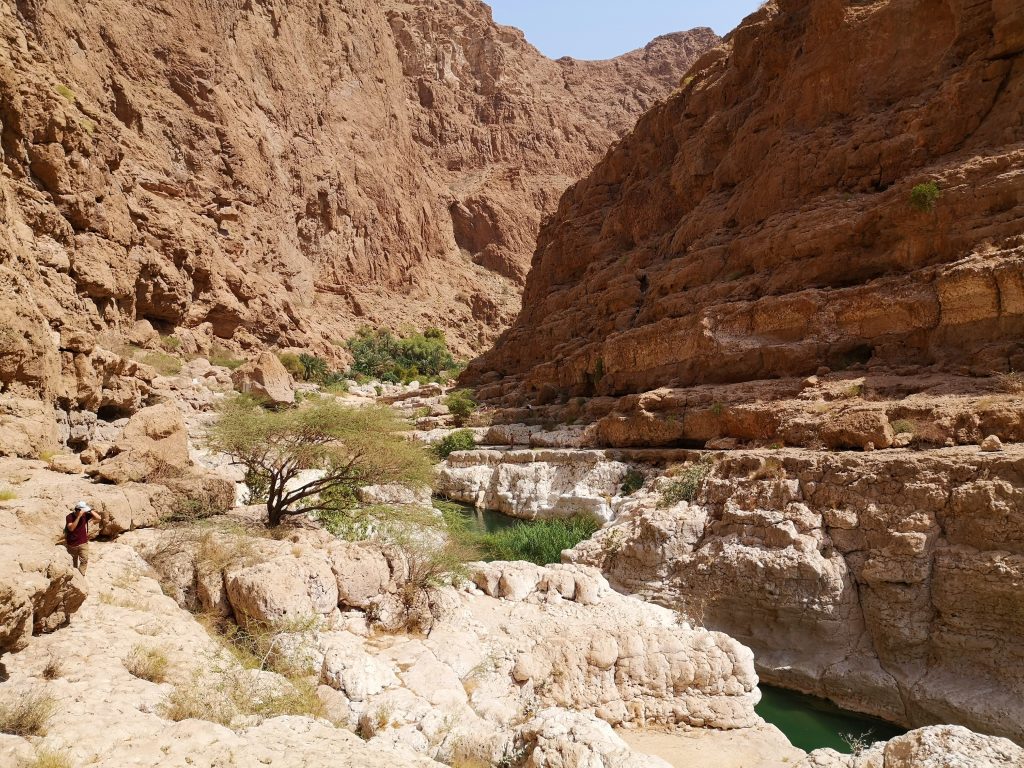
This doesn’t mean you shouldn’t go. It means you need to plan carefully. Arrive early — ideally before or around 7–8am when the boats start. Avoid weekends (in Oman, the weekend falls on Friday and Saturday). If you’re visiting during peak season — November through March, and especially around Christmas and New Year — expect significant crowds unless you get there first thing in the morning.
If you’re looking for something similar with far fewer people, consider Wadi Tiwi, just a short drive away. It offers equally stunning scenery — emerald water, canyon walls, ancient villages — but doesn’t attract nearly the same volume of visitors. I’d also argue that Wadi Tiwi rewards the more adventurous traveller in a way that Wadi Shab, now somewhat polished by tourism, no longer quite does.
Practical tips for visiting Wadi Shab
- Start early. This is the single most important piece of advice. On the way in, there’s no breeze in the canyon. On the way back, you’ll have a lovely cool wind in your face — this is simply how the airflow works in the wadi, and something to look forward to.
- Bring enough water and food. There is nothing for sale once you’re inside. The full experience — hiking, swimming, cave, return — takes at least 3 to 4 hours. Bring more than you think you need.
- Wear the right footwear. The path is uneven and the rocks can be very slippery. Water shoes are ideal: they work for both the hiking and swimming sections and mean you won’t be walking back in wet trainers.
- Put your swimwear on before you go. There are no changing facilities inside the wadi. There is a public toilet building near the entrance where you can change if needed.
- Bring a waterproof dry bag. You’ll want your phone and valuables with you in the water. A small dry bag lets you carry them safely while swimming.
- Protect yourself from the sun. Apply sunscreen, wear a hat, and cover your shoulders. There is little shade in the canyon and the sun is intense. As a general note, Oman is a conservative country — keeping your shoulders and knees covered outside of the swimming areas is both respectful and practical.
- Plan for at least 3–4 hours in total. Around 40 minutes hiking in, 40 minutes back, plus the swimming section and time to rest and dry off in the sun.
Combine Wadi Shab with nearby highlights
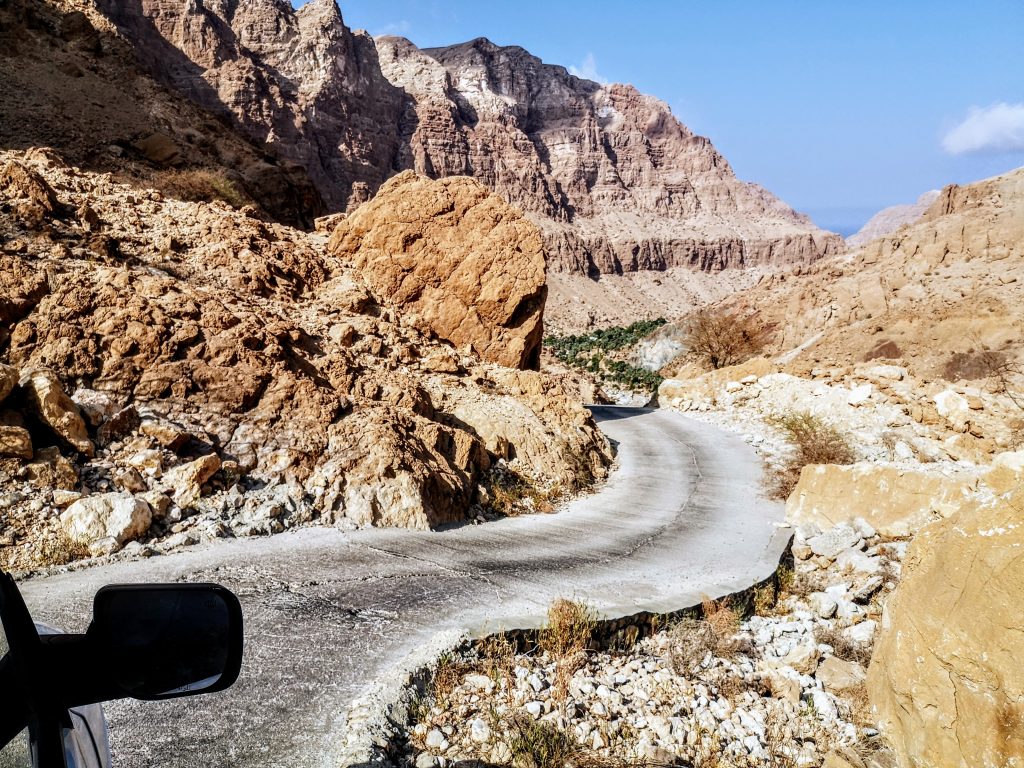
Wadi Shab sits roughly halfway between Muscat (about 1.5–2 hours by car) and Sur (around 40 minutes). It makes a natural stop on an Oman road trip. On the way from Muscat, consider stopping at the Bimmah Sinkhole — a limestone crater filled with clear blue water, about 30 minutes before Wadi Shab. It’s easy to visit and well worth the short detour. Just after Wadi Shab, Wadi Tiwi offers more hiking through emerald pools, old villages and date palm plantations — with the added bonus of being much quieter.
Visiting Wadi Shab as part of a guided tour of Oman
I’ve organised my Oman group tour six times now, and Wadi Shab is always part of the itinerary. Not despite the crowds, but because — visited at the right time, with the right preparation — it remains one of the most spectacular places in the Middle East. If you’d like to explore Oman in a small group with a focus on authentic experiences and responsible travel, take a look at my 10-day Oman adventure tour.
Also read: