
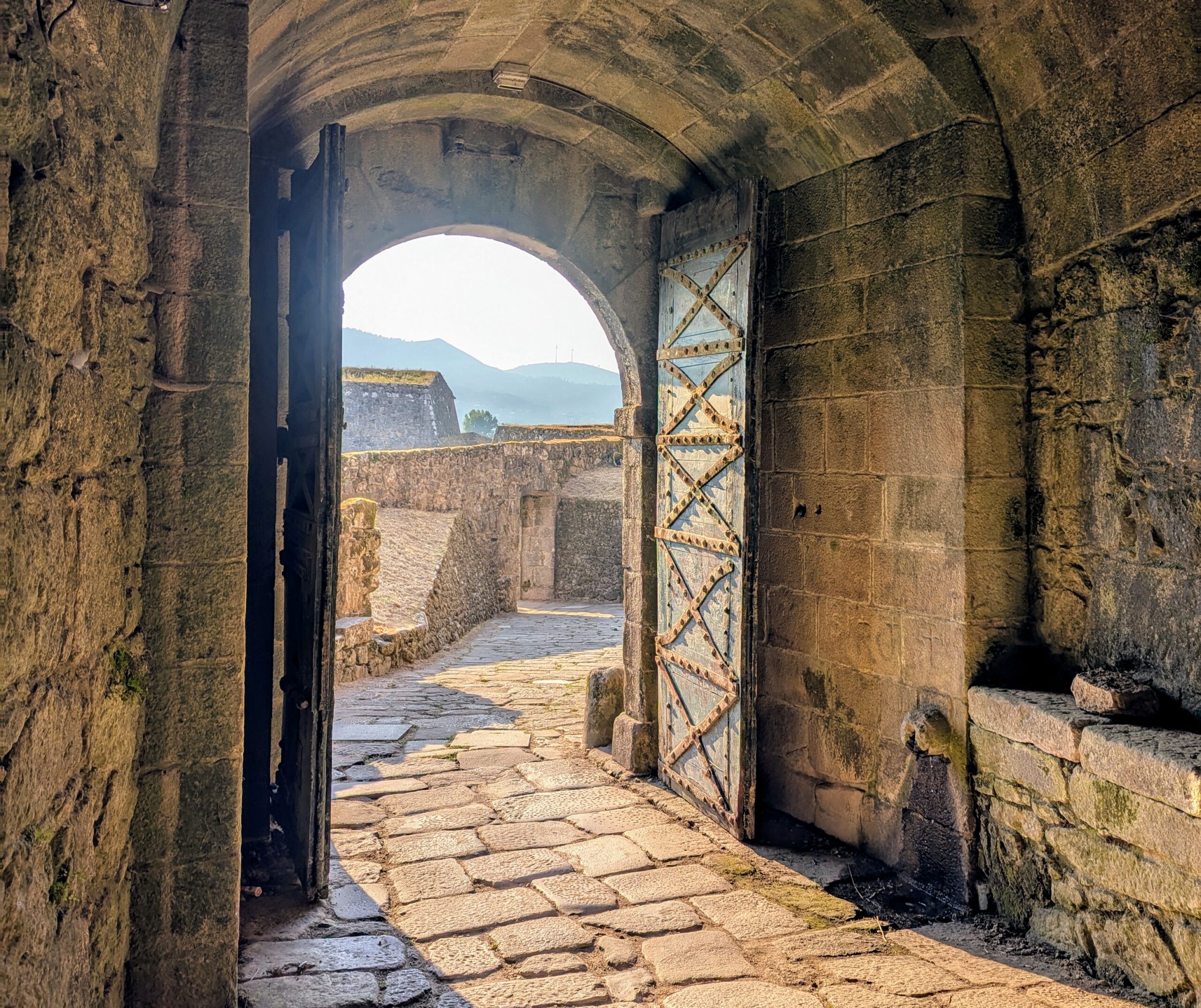
On either side of the Rio Minho lie two historic cities that have been staring at each other for centuries: Valença in Portugal and Tui in Spain. When I crossed this historic bridge myself with my backpack, I felt exactly why this place holds such a special attraction for travelers. I realized I wasn’t just crossing a border, but discovering two completely different worlds.
If you’re already walking the Portuguese Camino from Porto, you’ve been on the road for a while when you approach the moment of leaving Portugal. It’s wonderful to spend the night in Valença, explore this beautiful fortress town, and the next day walk across that impressive bridge over the Rio Minho into Spain.
Two Gems at the Spanish-Portuguese Border on the Camino Portugués
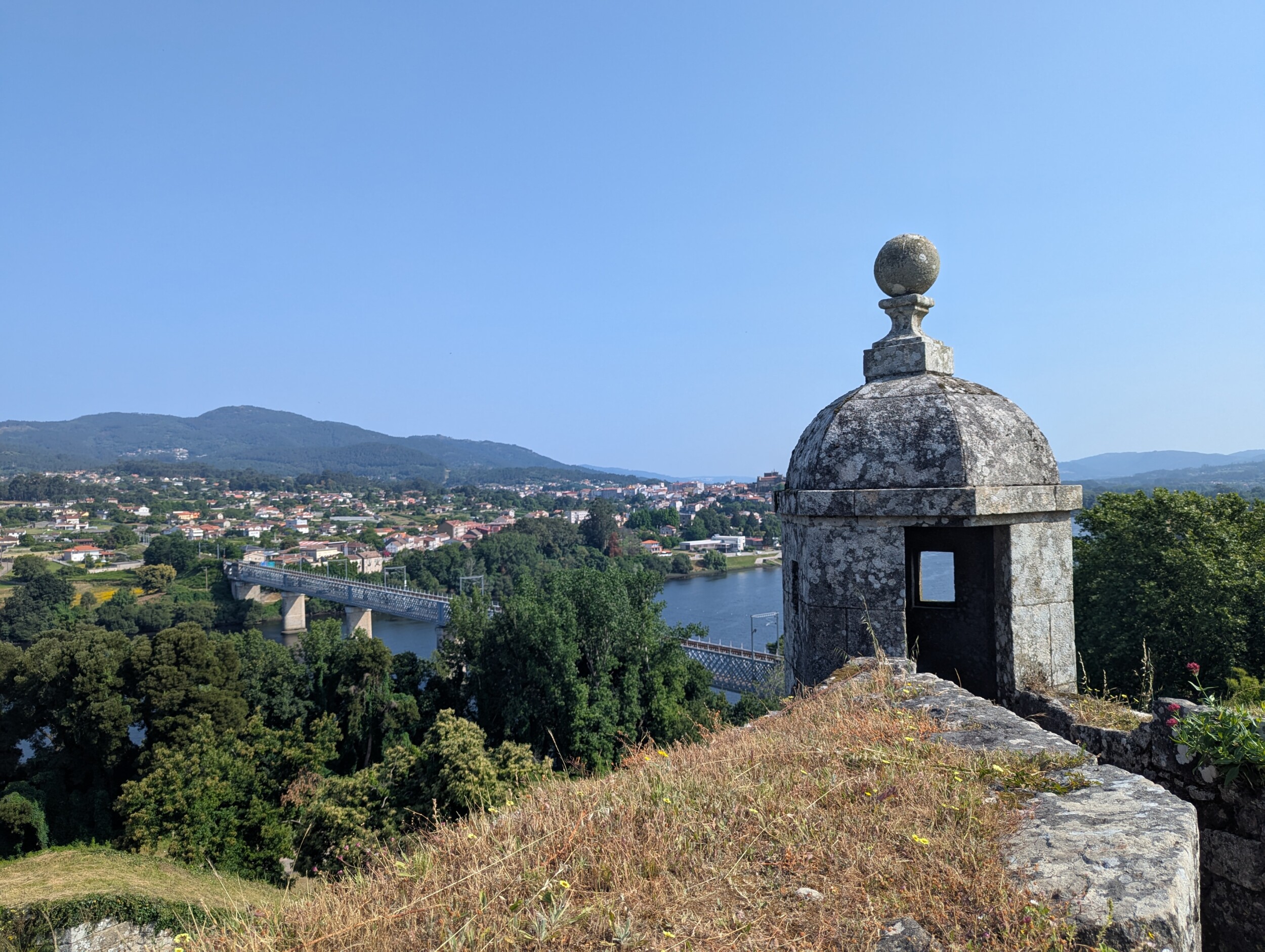
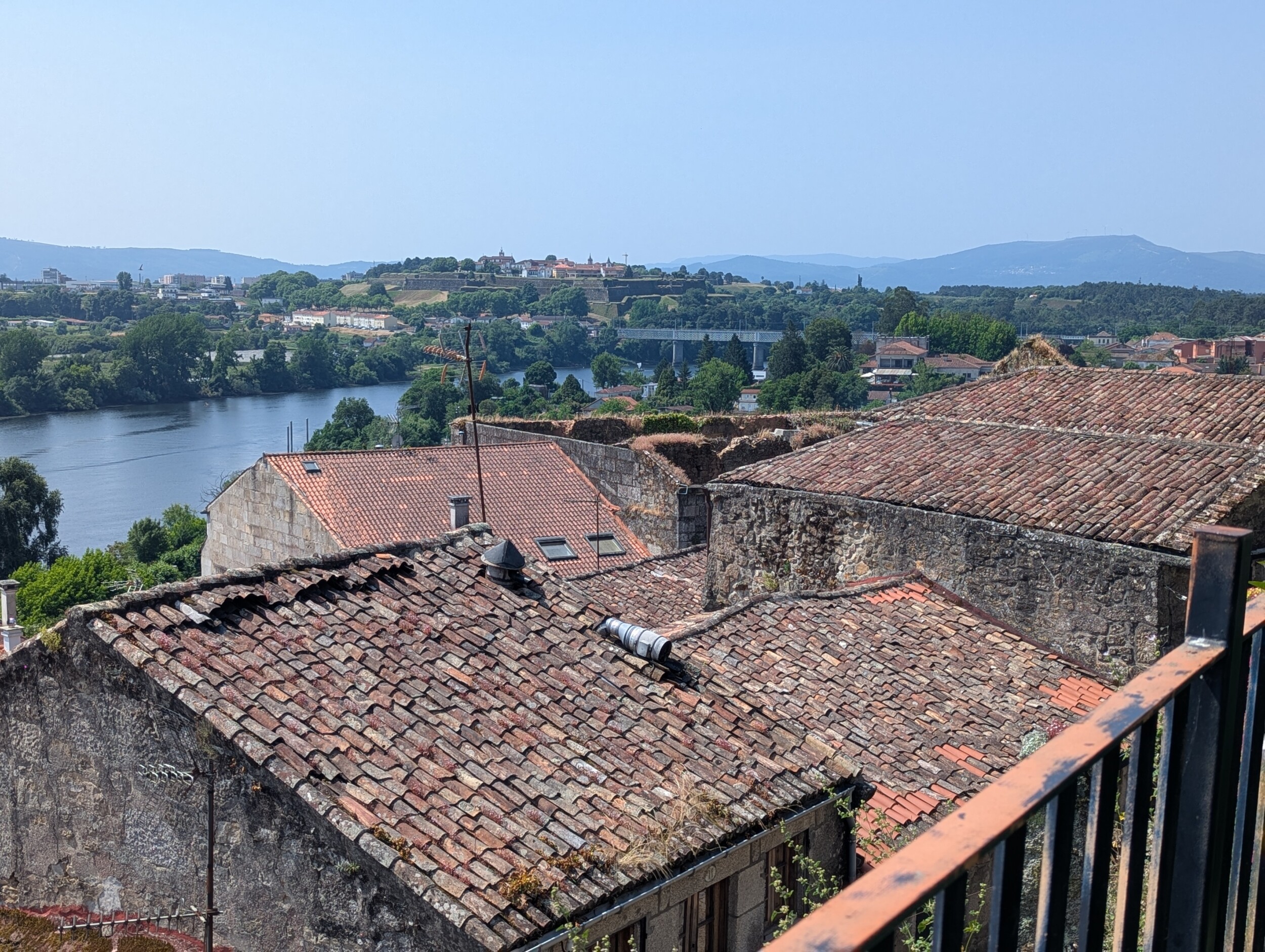
Valença’s imposing fortress, with its spectacular views over the river to Spanish Tui on the opposite bank, is truly breathtaking. The next morning, you wander through Tui’s winding medieval streets, surrounded by the tempting aroma of fresh Galician empanadas and an atmosphere that breathes centuries of history.
Here, where the Minho River flows peacefully between green hills, you understand why these two historic cities are more than just a practical stopping place; they offer a unique cultural experience that perfectly captures the essence of the Camino Portugués.
Valença – Portugal’s Best Preserved Fortress Town
Valença do Minho is one of Europe’s most impressive fortress towns, yet it remains relatively undiscovered by the general public. This fully walled city, which is on Portugal’s UNESCO candidate list, offers a unique experience: staying overnight within authentic 17th-century fortress walls.
The Fortaleza de Valença – 5 Kilometers of History
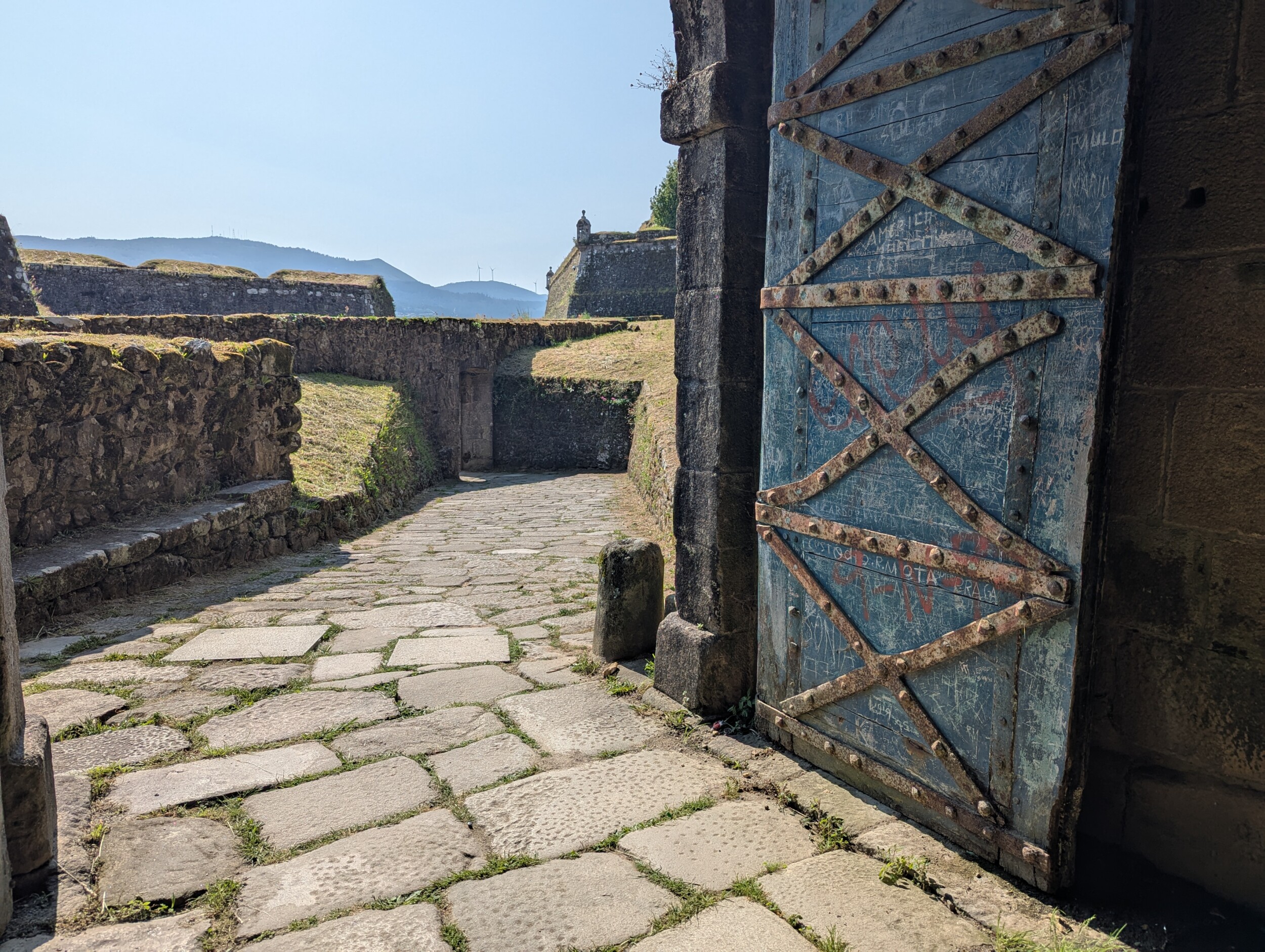
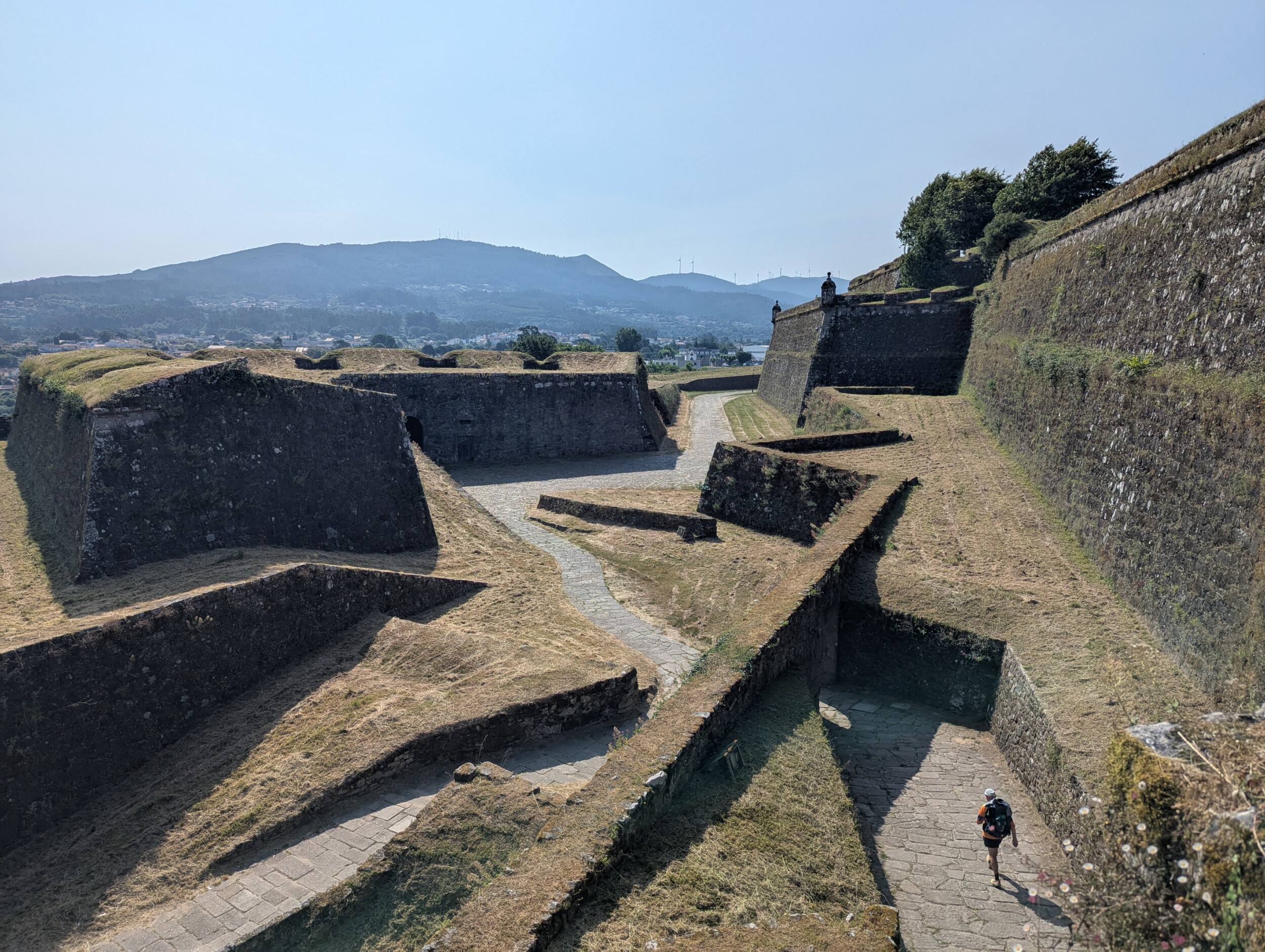
The Fortaleza de Valença is technically two fortresses connected by a bridge, surrounded by no less than 5 kilometers of walls. This star-shaped fortress, inspired by French military architect Vauban, was never conquered – even Napoleon only managed to occupy the city briefly.
What to see in the fortress:
- Walk along the walls: Spectacular views over the Rio Minho and Spain
- Four entrance gates: Including the main entrance Porta do Sol
- 12 mighty bastions: Each watchtower with its own character and history
Also read my post about starshaped fortresses in The Netherlands
Valença’s Historical Treasures
Igreja de Santo Estevão (14th century) This neoclassical church houses an art historical rarity: the only painting in Portugal of the Virgin Mary breastfeeding that escaped the Inquisition. Directly in front stands a Roman milestone from the 1st century that marked the distance to Braga.
Praça da República The main square within the fortress, surrounded by beautiful buildings with traditional Portuguese tiles and the town hall. Perfect for a coffee while observing the bustle of this living fortress.
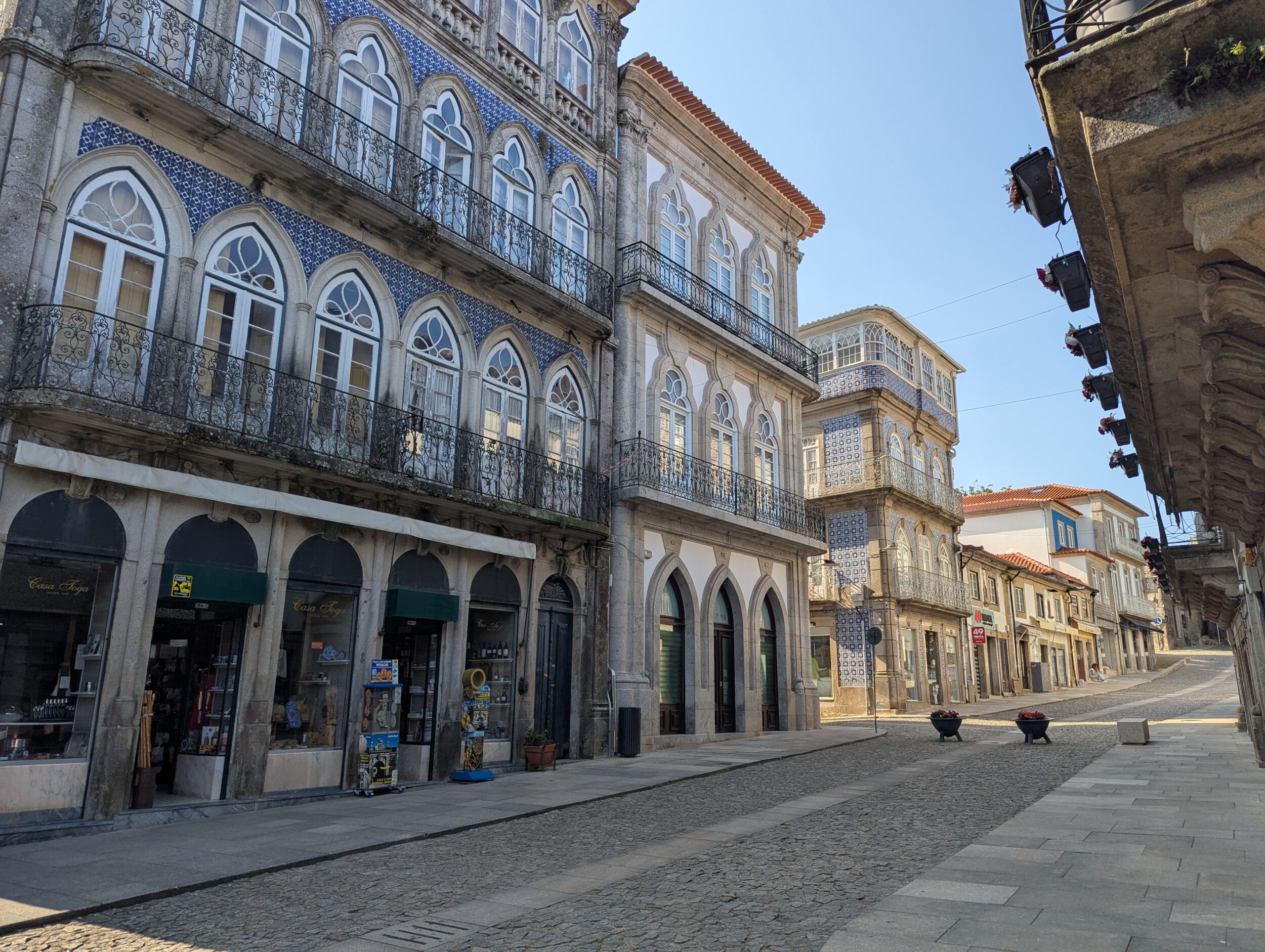
Authentic Shopping The main shopping street is famous for its Portuguese linen and textiles. Spanish tourists come especially for this, but the historic “Button Shop,” one of Valença’s oldest stores, is also worth a visit.
Valença Culinary Highlights
Casa do Bacalhau The specialist in bacalhau (salted cod), Portugal’s national dish. With at least 6 different preparations, this is the perfect place to try this Portuguese classic.
Fortaleza Restaurant Eat traditional Portuguese cuisine with views of the fortress walls. Their fresh seafood and vinho verde (Portuguese young wine) complete the experience.
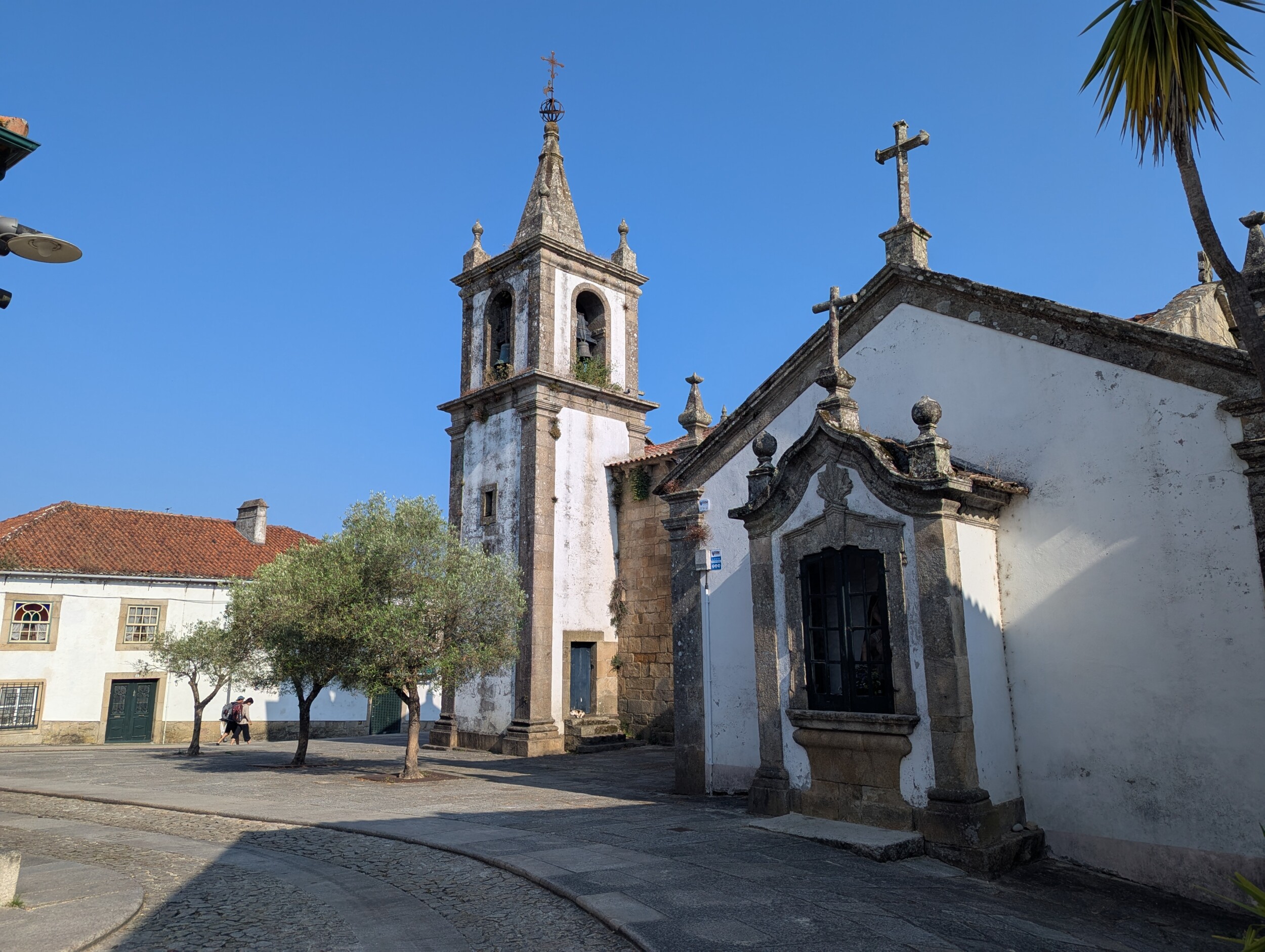
Tui – Galicia’s Medieval Pearl
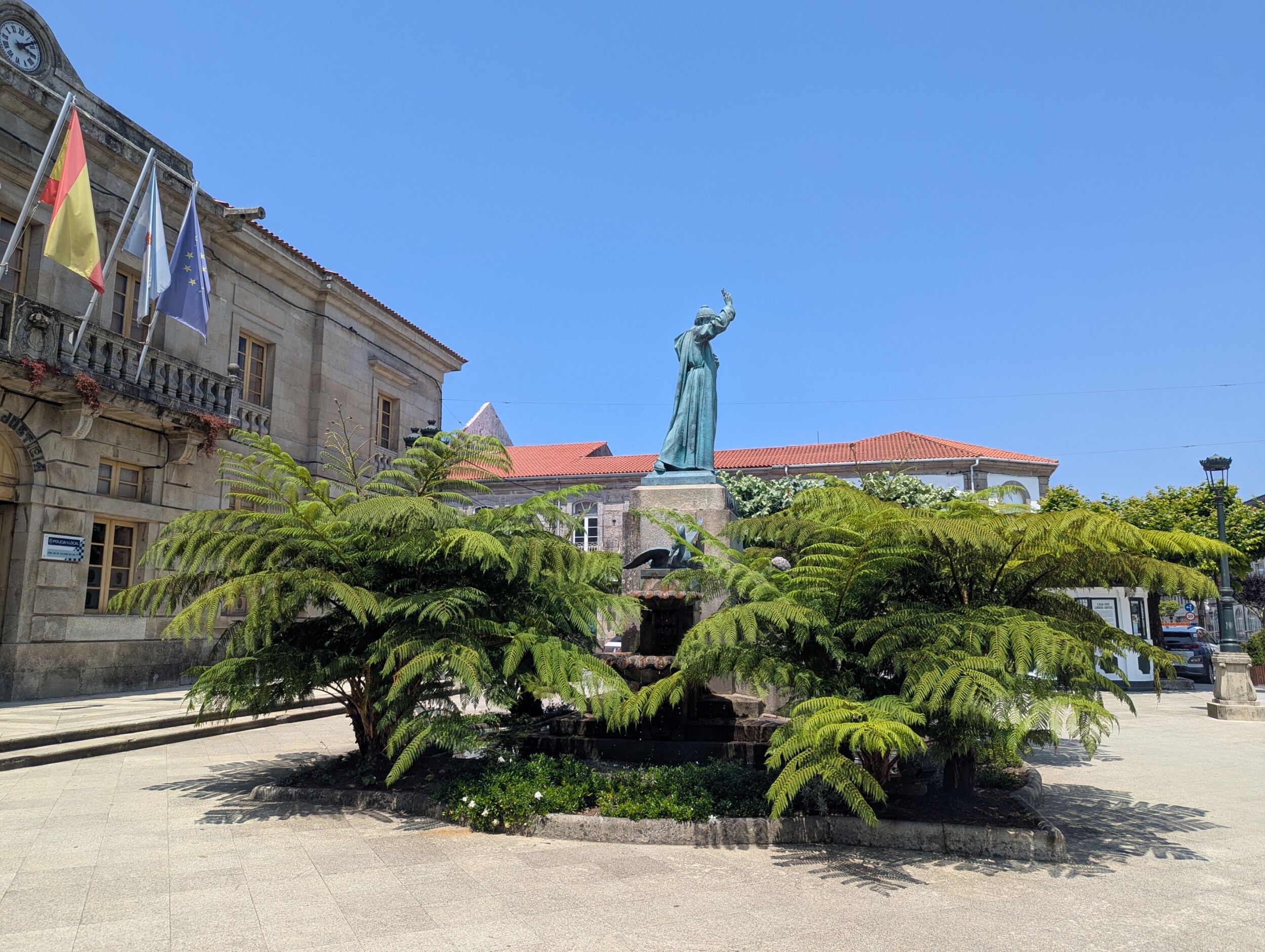
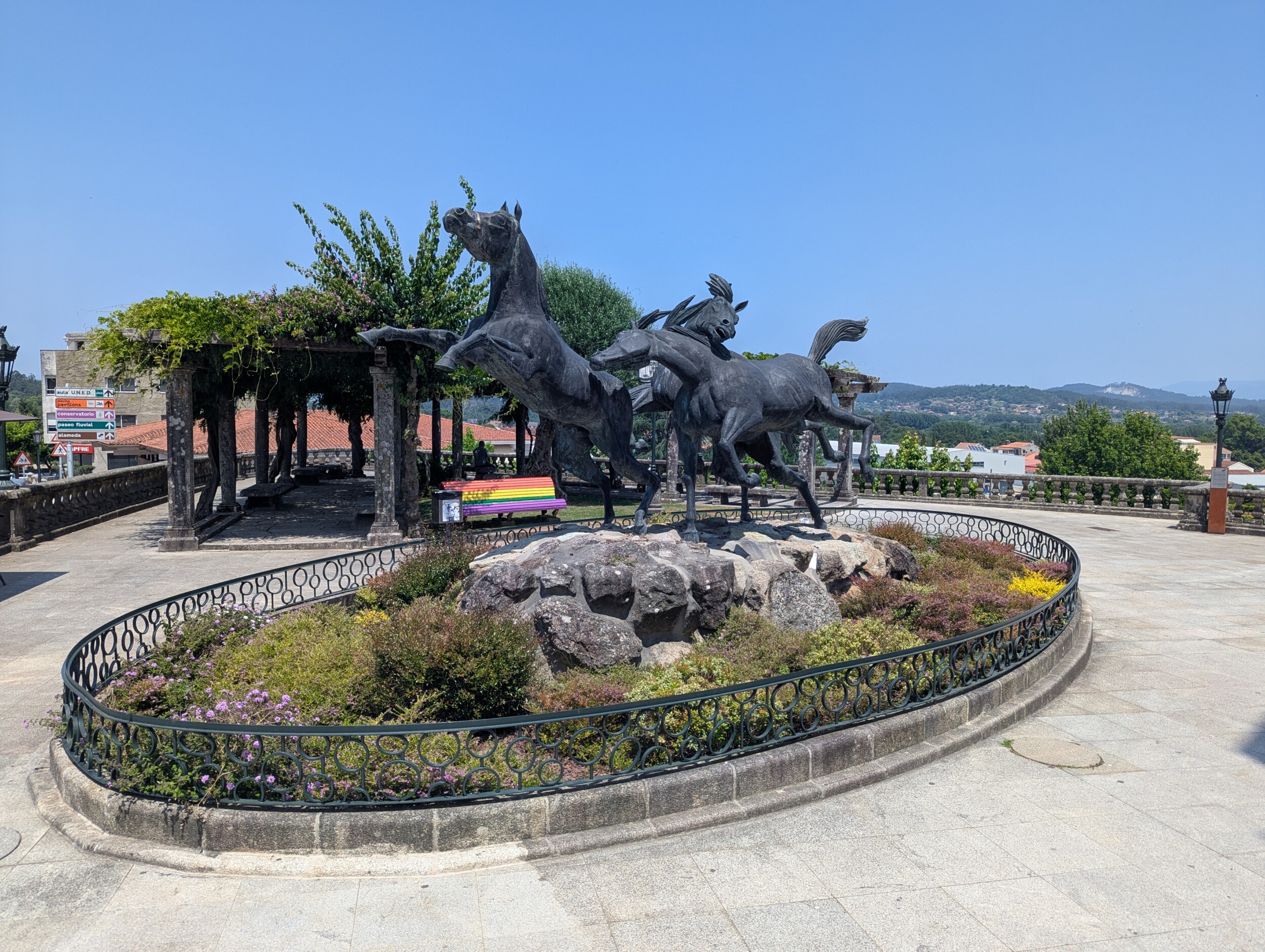
On the Spanish side awaits Tui, a charming Galician city with one of the most impressive cathedrals in Northern Spain. This medieval city, once one of the seven capital cities of the Kingdom of Galicia, perfectly preserves its historic character.
Tui’s Must-See Attractions
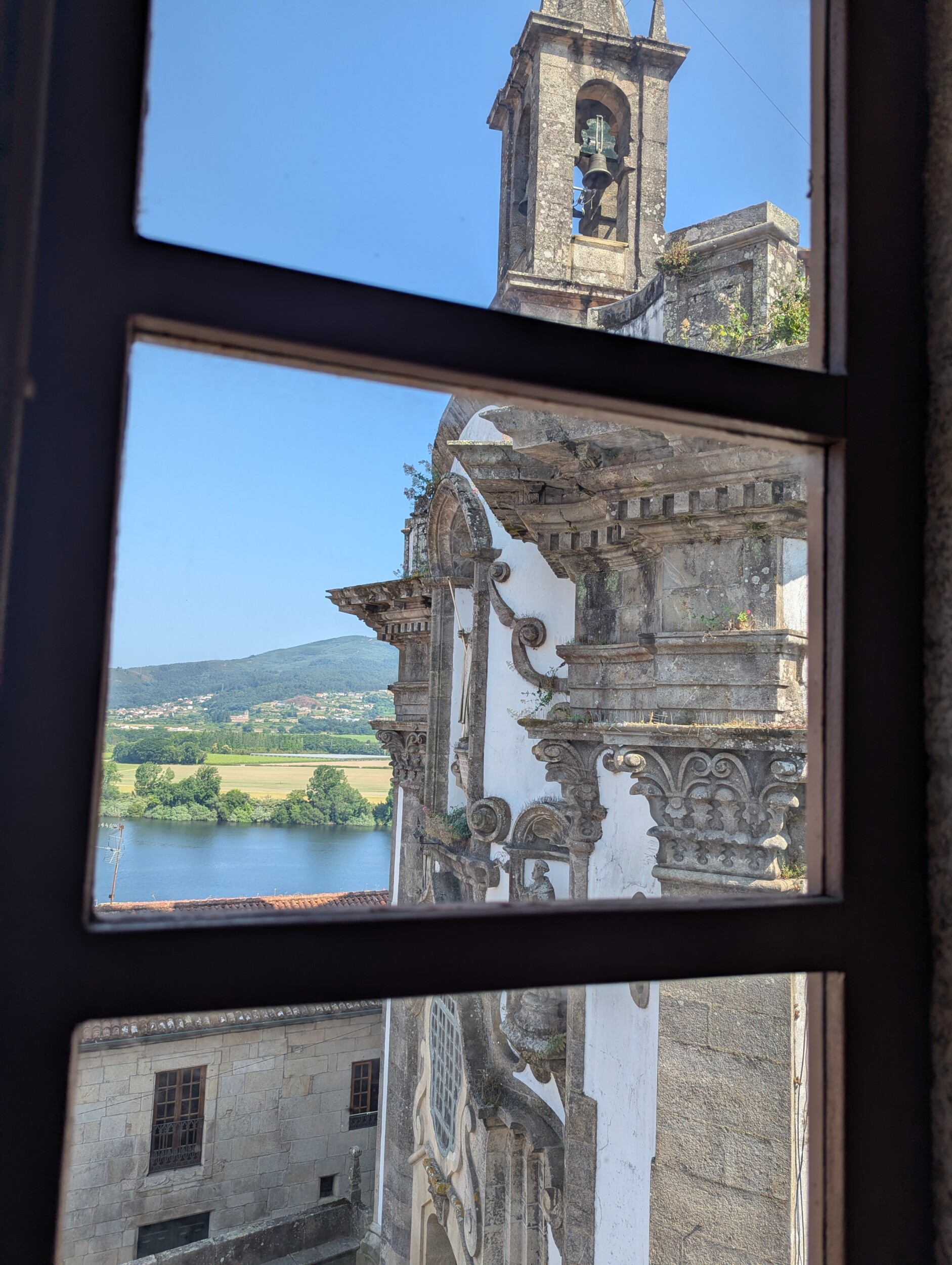
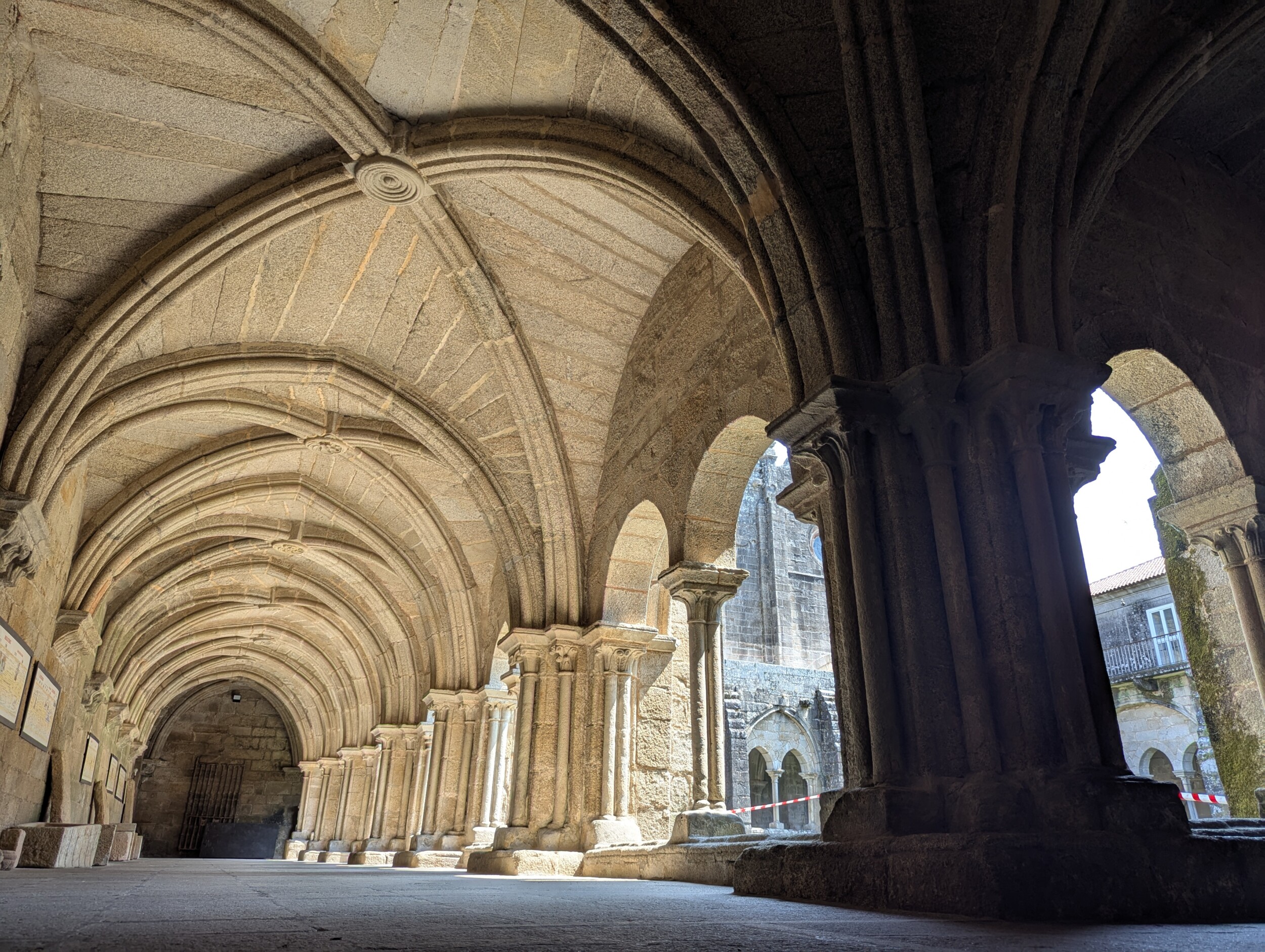
Catedral de Santa María – Fortress Cathedral This 12th-century Gothic cathedral is unique because it’s actually a fortress with walls and battlements. It’s the first example of Gothic architecture on the Iberian Peninsula and offers spectacular views over the Rio Minho from its roof.
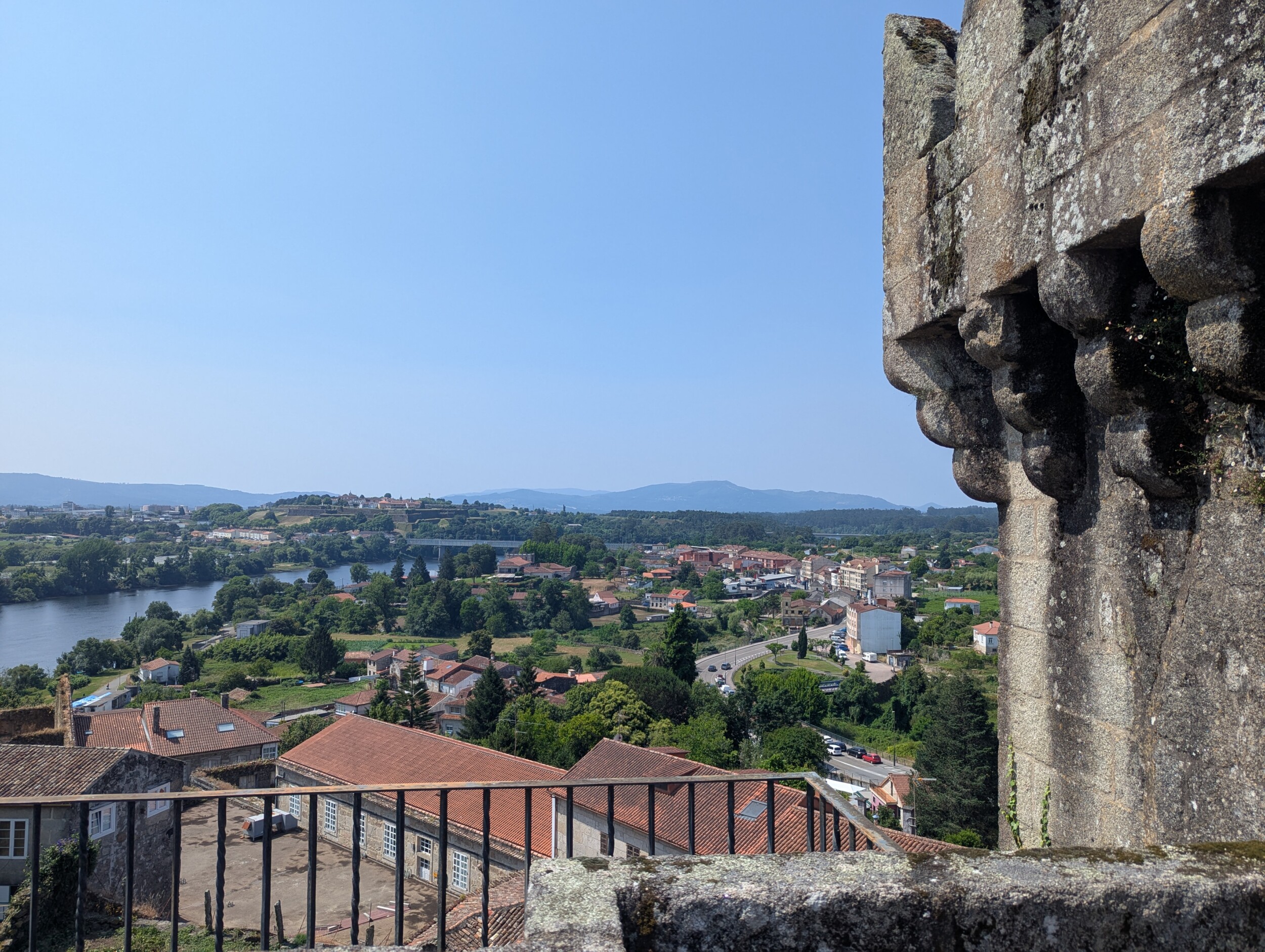
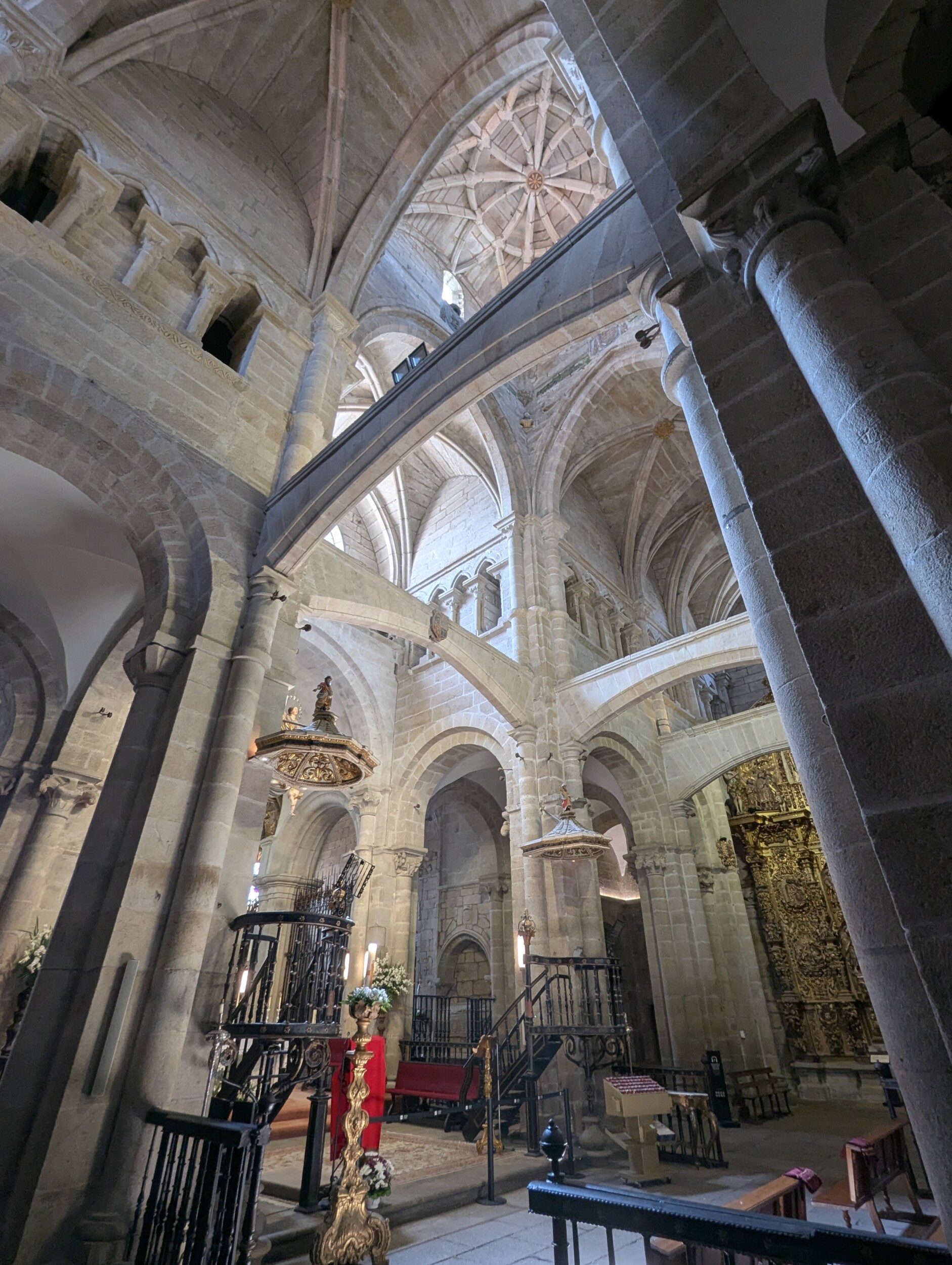
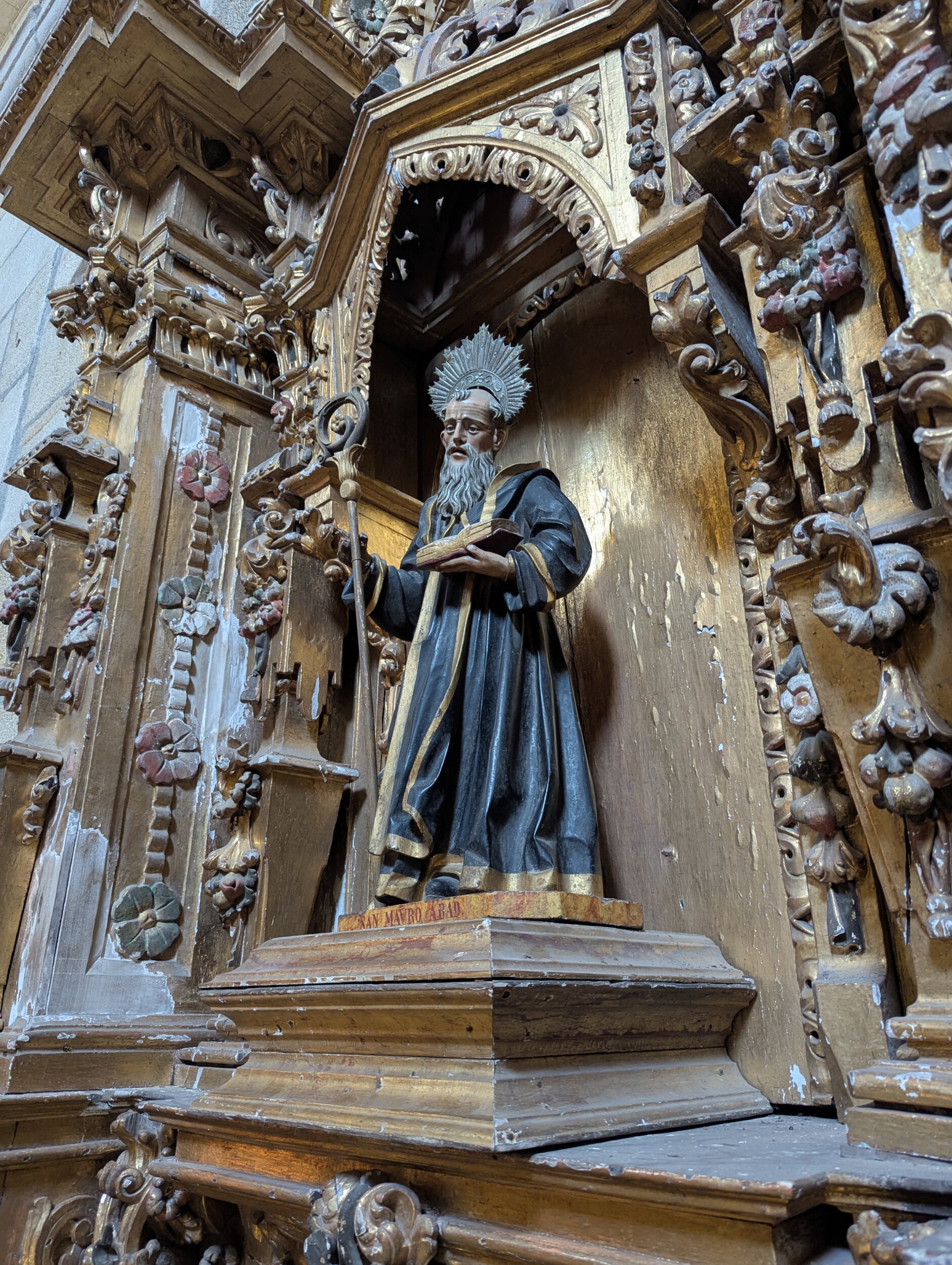
If you can show your pilgrim passport when purchasing your admission ticket to the cathedral, you will receive a discount.
Convento das Clarisas – Las Encerradas A special experience: this convent where nuns have lived in seclusion for over 500 years. They sell their famous almond cookies (pececitos de almendra) through a traditional rotating mechanism, a unique tradition you won’t find anywhere else.
Other Historical Highlights:
- Iglesia de San Telmo: Baroque church in Portuguese style
- Iglesia de Santo Domingo: Gothic church with beautiful cloisters
- Episcopal Museum: Housed in old pilgrim hospital
- Jewish Quarter: 15th-century history still visible
Tui’s Galician Cuisine
Emma Tapas & Brunch Creative Galician tapas with a modern twist. Their innovative dishes with local ingredients make this a culinary hotspot.
O Novo Cabalo Furado Traditional Galician restaurant near the cathedral. Be sure to try their empanadas and pulpo (octopus), classic Galician specialties.
Local Specialties:
- Mariscos: Fresh seafood from the nearby Rías Baixas
- Galician empanadas: Savory filled pies
- Tetilla cheese: Local cheese specialty
The International Bridge – Connection Between Two Worlds
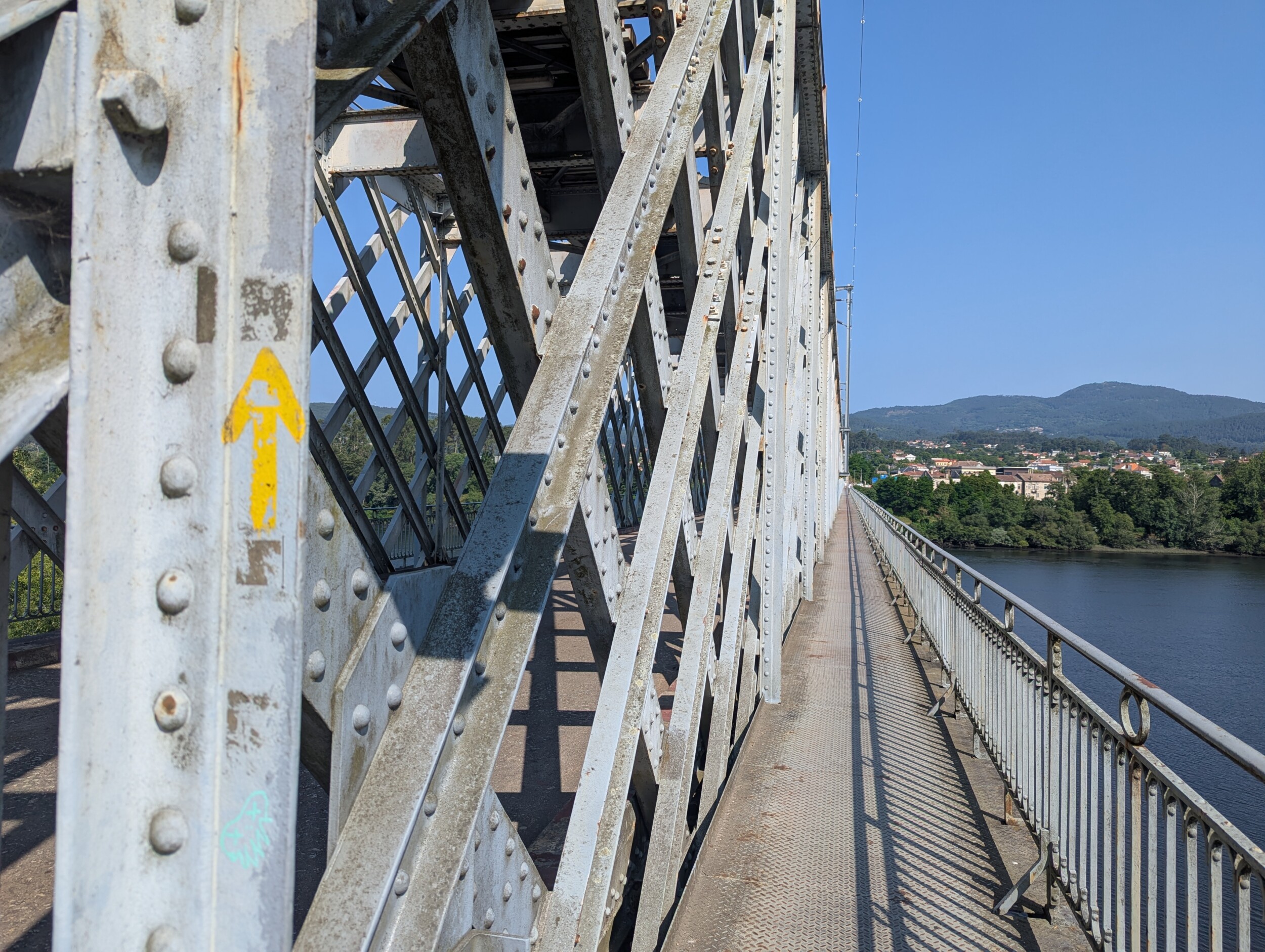
The Ponte Internacional, built in 1879 and inspired by Eiffel’s work, is more than a practical connection. This double-deck bridge (bottom for cars, top for trains) symbolizes the peaceful relationship between two countries that were enemies for centuries.
Historical Context of the Bridge
Valença was literally built in the 12th century as “Contrasta” (opposite) to combat Spanish Tui. For centuries, these fortresses faced each other as hostile strongholds during Spanish-Portuguese wars. Valença’s thick walls were never definitively conquered, not even by Napoleon, and symbolized Portuguese independence against Spanish expansionism. In 1879, that changed when the Eiffel-inspired peace bridge connected both cities and transformed age-old enemies into modern friends who now welcome tourists together.
Walking Across the Bridge
Don’t forget to look around while walking across the bridge. You’ll get breathtaking views of both fortress cities.
Practical Travel Information – Tui and Valença
Best Time to Visit
- April-June: Ideal weather, fewer crowds
- September-October: Perfect temperatures
- July-August: Busy but lively, higher prices
- Winter: Quieter, more rain but a more authentic atmosphere
Accommodation Recommendations Tui and Valença
I walked here as a pilgrim and chose simple hostel accommodation. So I slept in Tui’s church hostel, right behind the imposing cathedral. If you want more luxury during your visit, check out these recommendations.
Valença:
- Pousada de Valença: Luxury within fortress walls (€80-120)
- Alojamento da Vila: Cozy guesthouse in the center (€40-60)
- Hotel Lara: Modern comfort with great views (€50-80)
Tui:
- El Atico de Villalmar: Beautiful place with pool (€150-200)
- Ideas Peregrinas: Modern facilities, central location (€70-90) – Pilgrim hostel with private rooms
- Cabalo Furado Tui: Complete, modern apartment, central location (€120-150)
Which Camino Route Passes Through Tui and Valença?
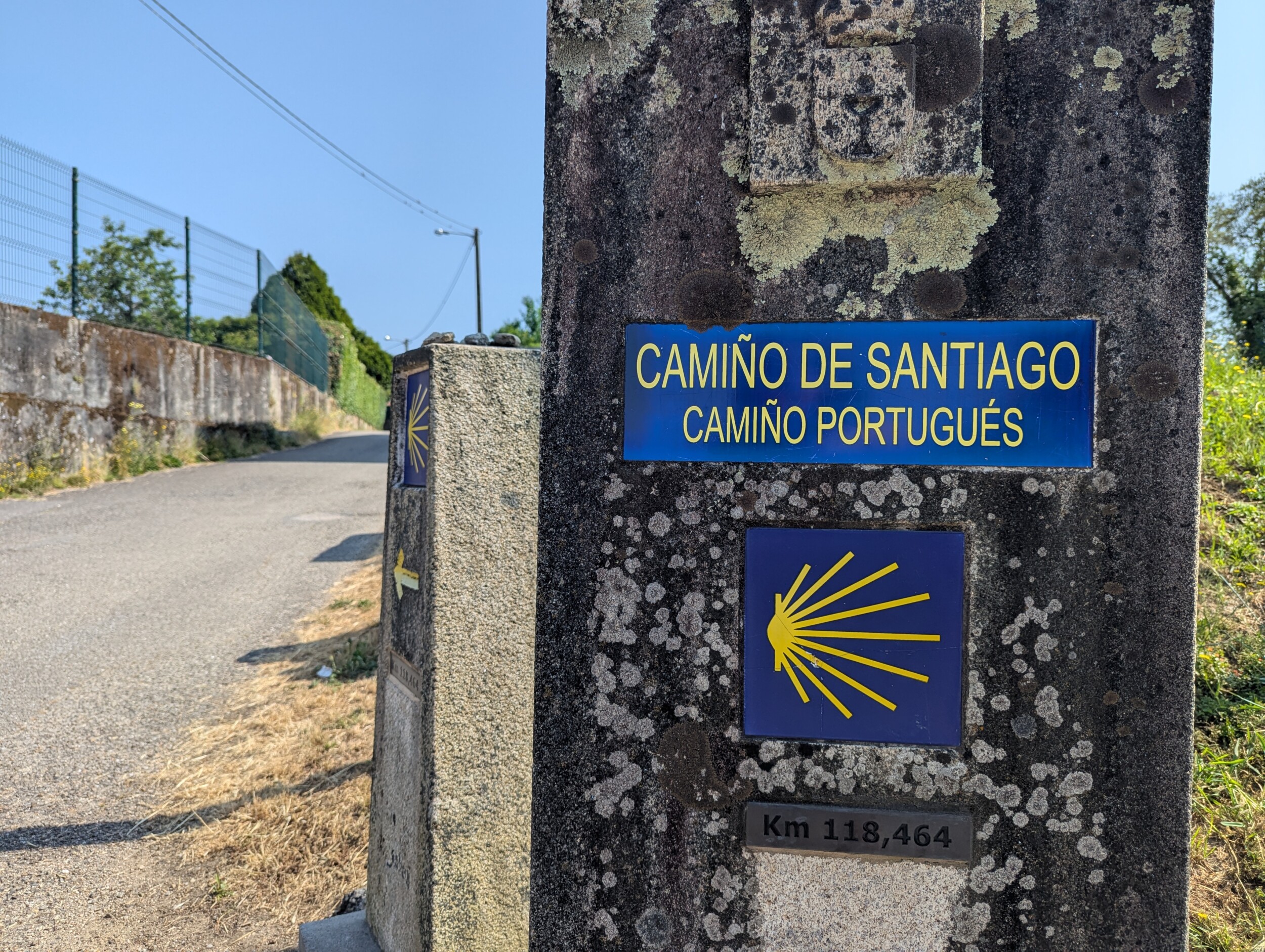
If you walk the Central Portuguese Camino, you’ll reach stage 5 from Rubiães to Tui. You’ll arrive in Valença after about 16 km, and then it’s another 3 km to Tui. The next day, stage 6 takes you 18.7 km to O Porriño.
You can also, as I did, choose to walk inland along the river from Caminha on the coastal route. I learned from a local Portuguese hostel owner that this is the original authentic coastal route. The coastal route above the river only became popular after Covid.
Why Visit Tui and Valença?
This special region forms a playground for every traveler: walk from Spain to Portugal within minutes, dive from medieval history into vibrant culture, and from bustling towns into serene nature.
There’s something for everyone in the Valença and Tui area:
History Lovers
- Living Middle Ages: Both cities breathe centuries-old history
- Military Architecture: From Roman milestones to Vauban fortresses
- Religious Heritage: Unique churches and monasteries with stories
Culture Enthusiasts
- Two cultures, one day: Portuguese and Spanish traditions side by side
- Authentic cuisine: From bacalhau to pulpo, local specialties
- Living traditions: Still functioning monasteries and crafts
Nature Lovers
- Beautiful location on Rio Minho between green hills
- Walking opportunities: From city walks to mountain hikes or Camino stages
- Peace and space: Away from the crowds of major tourist destinations
Conclusion: Two Pearls, One Unforgettable Experience
Tui and Valença prove that the best travel experiences are often found in places just off the beaten path. These two historic cities, connected by a bridge but separated by centuries of history, together offer a unique view of the rich culture of the Spanish-Portuguese border region.
Whether you come for Valença’s imposing fortress architecture, Tui’s medieval charm, the gastronomic discoveries, or simply for the peace and authenticity – these two gems on the Rio Minho will surprise and enchant you.
The combination of Portuguese elegance and Spanish passion, of history and contemporary hospitality, of natural beauty and cultural richness, makes a visit to Tui and Valença much more than an ordinary city trip. It’s a journey through time, across borders, to the essence of what makes this Spanish-Portuguese border region so special.
Read More
- Walk the Portuguese Camino and discover Viana do Castelo’s most beautiful spots
- Read about what you shouldn’t miss during your visit to Porto – Portugal
- Santiago de Compostela after the Camino: Tips & attractions
- Walking the Camino de Santiago as a Woman
- Gijón – The versatile port city of Asturias, Spain