
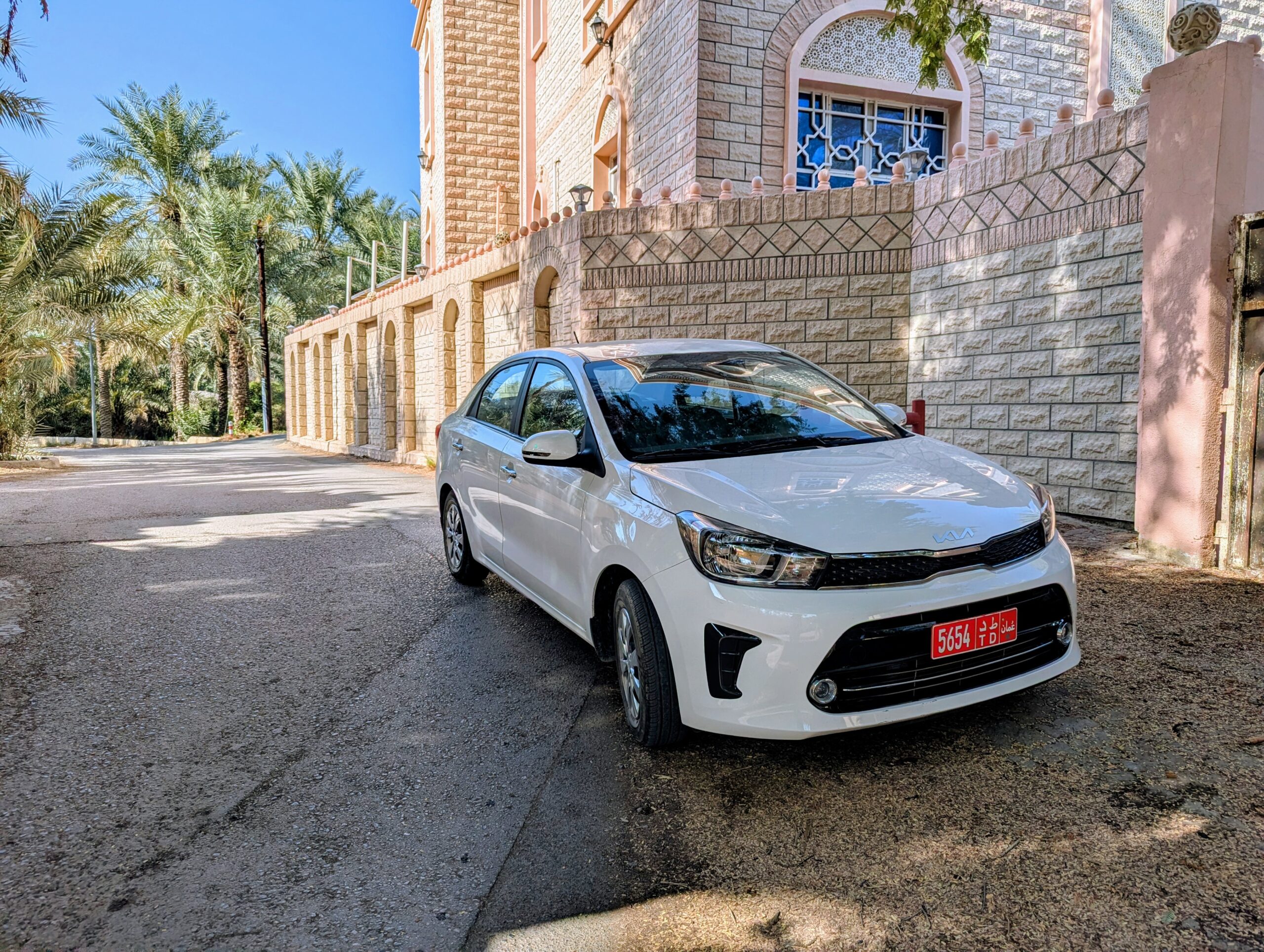
Renting a car in Oman is without a doubt the best way to experience this beautiful country. The freedom to stop wherever you want, visit remote wadis, and drive through impressive mountain landscapes—that’s what makes a road trip with a rental car in Oman so special. But how safe is it? Which car do you need? And what should you watch out for when you rent a car in Oman? In this article, I share everything you need to know.
Why Car Rental in Oman is the Best Choice
Public transportation in Oman is limited. While there are buses between major cities, they only take you from A to B without stops along the way. And it’s exactly those stops that make a trip through Oman so special. Think of hidden wadis, authentic mountain villages, and vast desert landscapes.
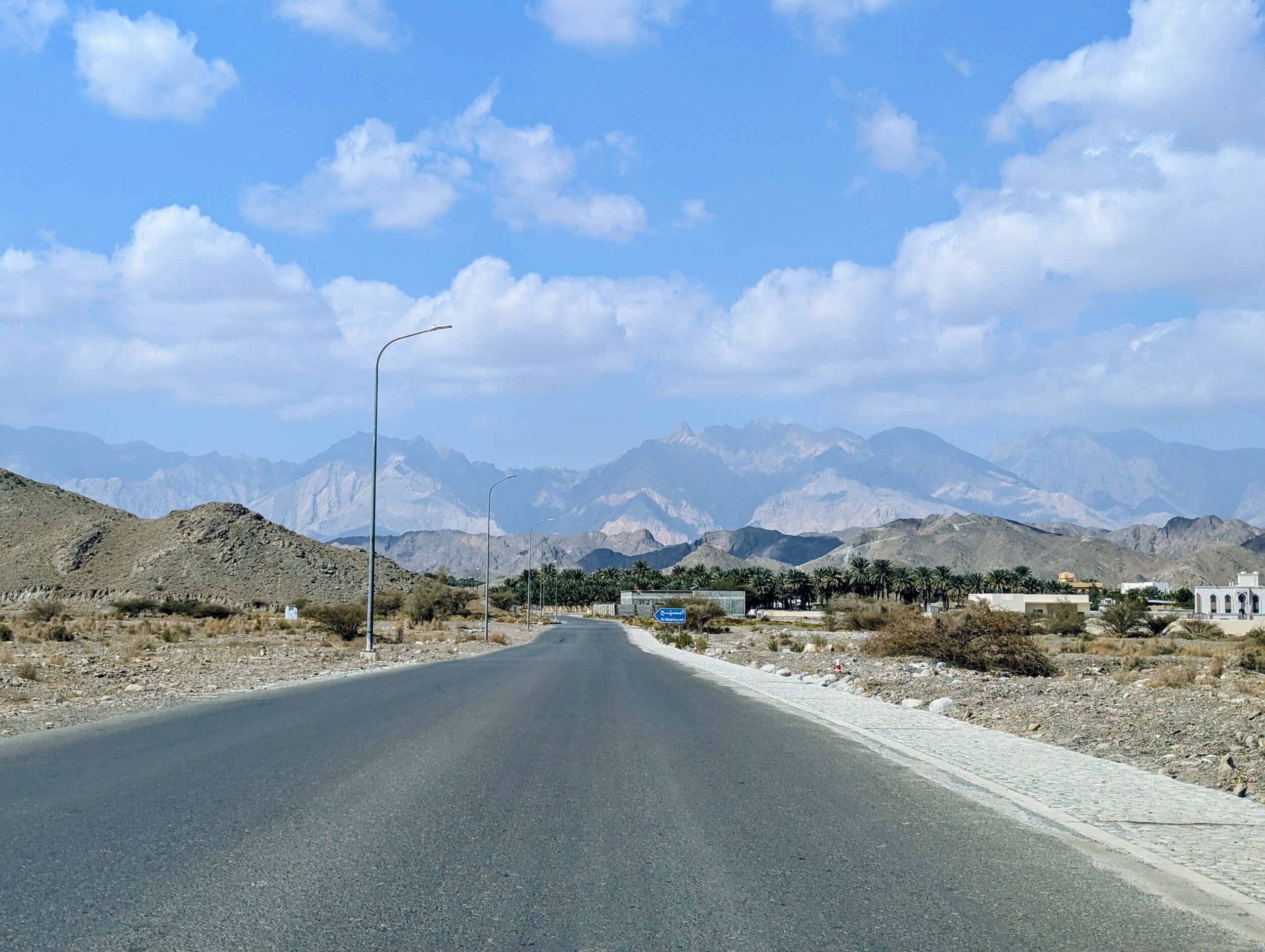
When you rent a car in Oman, you set your own pace. See a beautiful viewpoint along the way? Just stop. Want to stay an extra night in a nice spot? No problem. This flexibility is priceless and makes your trip much richer.
Plus, fuel in Oman is incredibly cheap—about €0.50 per liter. That saves a lot on your travel budget. And the roads? They’re excellent, well-maintained, broad, and modern. Driving through Oman is truly a pleasure.
Safety: My Experience with Driving in Oman
A frequently asked question is: is it safe to drive in Oman? From personal experience, I can say: yes, absolutely. Oman feels like a safe country to drive through. Traffic rules are similar to those in the Netherlands, and most Omanis drive calmly and properly.
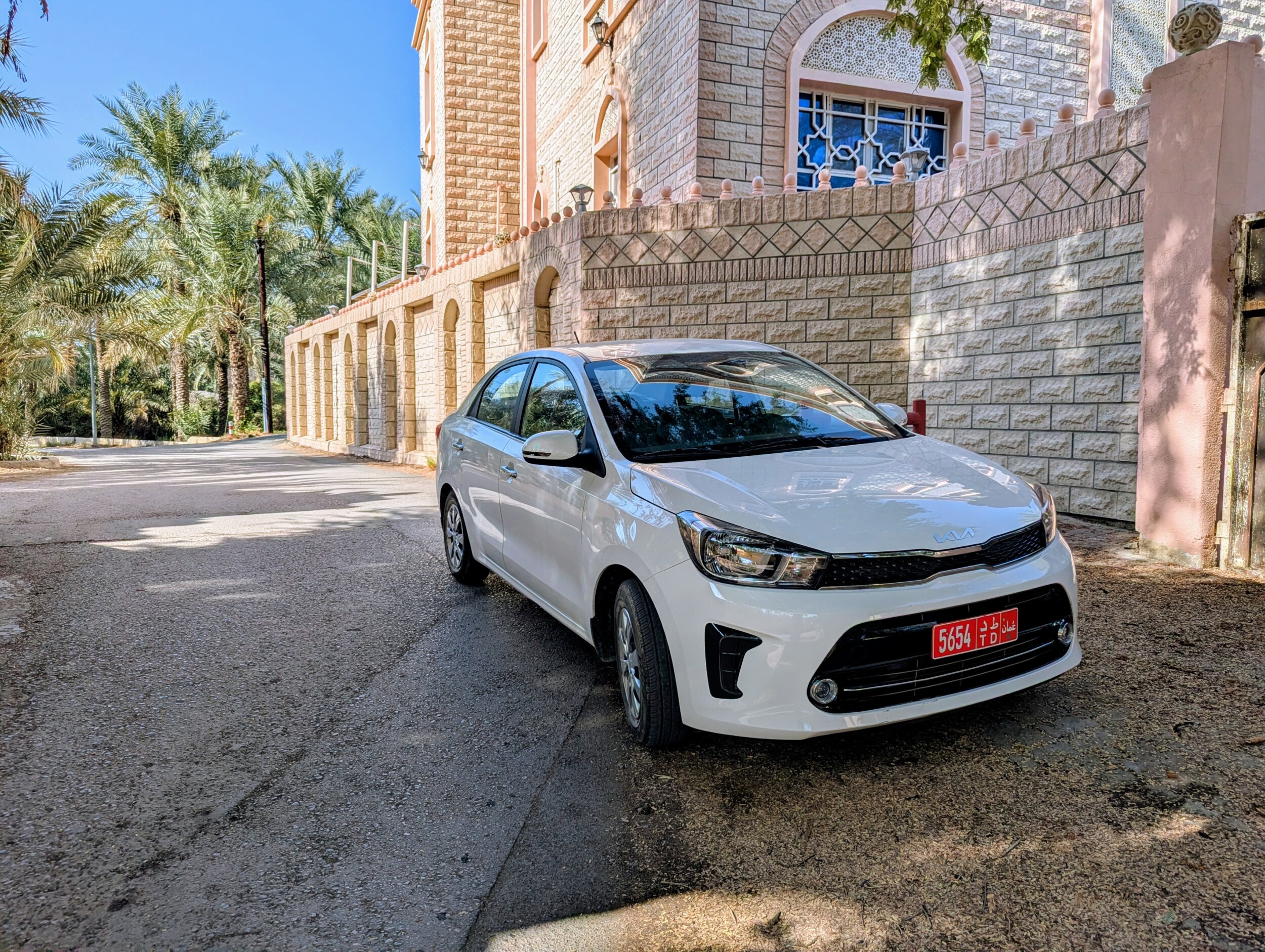
A major difference from the Netherlands is the number of speed cameras. Literally every few kilometers there’s one on the highway, and at every traffic light you’ll find one too. This means people mostly follow the rules properly. Speeding or running red lights? I really didn’t see that much. Of course, there are always some people who drive too fast or are impatient, but I found driving in Oman really relaxed.
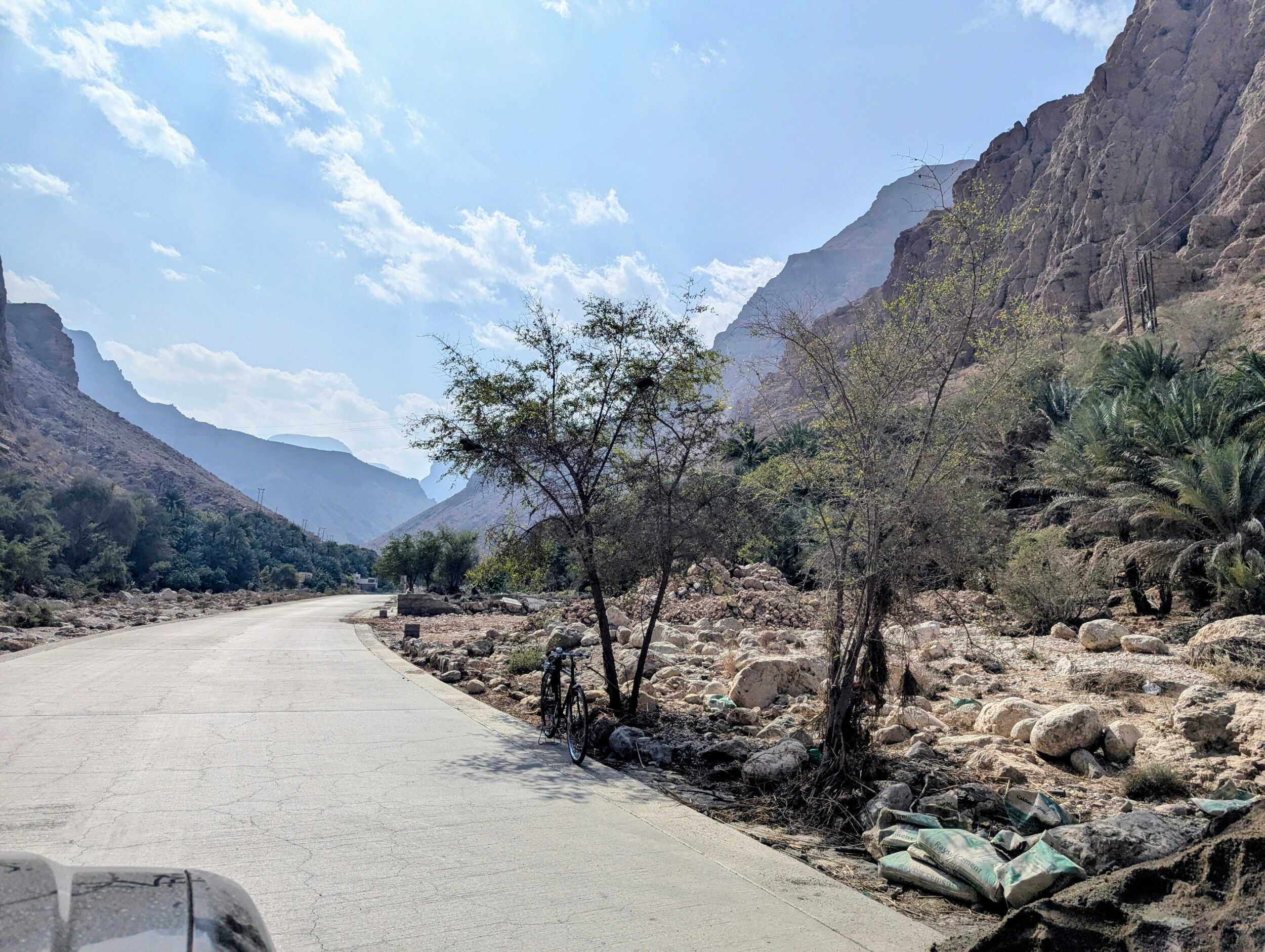
The roads are generally in excellent condition. Even in more remote areas, the main roads are well maintained. All traffic signs are in both Arabic and English, so getting lost is virtually impossible.
It’s good to know that traffic statistics in Oman are higher than in the Netherlands. This is mainly due to driving behavior like speeding, crossing animals, and nighttime driving on unlit roads. However, if you follow the rules and stay alert, the chance of problems is small. The trend is positive: between 2012 and 2019, traffic fatalities decreased by 55%, despite a significant increase in the number of cars.
Practical Preparation: What You Need
Documents and Age
Your driving license is sufficient for driving in Oman, as long as your stay is shorter than three months. An international driving permit is not mandatory, but some rental companies ask for it. It can be especially useful as extra security. I sometimes hear that people prefer not to hand over their actual driver’s license at a police check and therefore prefer to give the international driving permit.
I have never had any problems with it and actually find it a nice way to start a conversation by showing them what to look for on my driving licence, category/date. Theirs looks different and as a police officer, you always have to search for that information on a foreign driving licence.
Most car rental companies have a minimum age of 21 years and require that you’ve held your license for at least one year. Are you younger than 25? Then you often pay a surcharge. For a 4×4, the minimum age can be 23 or even 25 years.
Credit Card is a Must
A credit card in the name of the main driver is mandatory for the deposit. This can range from a few hundred to more than a thousand euros, depending on the type of car and insurance. Make sure your credit card has sufficient limit.
Insurance
Preferably choose an all-in package with full coverage (collision damage waiver). This gives peace of mind because if there’s damage, you’re not personally responsible for the excess. However, note: many insurances don’t cover damage during off-road driving, even with a 4×4. So always read the fine print. When I rented a car in Italy, I didn’t choose insurance, but in Oman I did. This is a personal choice and you should do what feels right for you.
Costs
A rental car in Oman isn’t the cheapest. Expect about €30 to €50 per day for a standard car, and €50 to €100+ per day for a 4×4. The price depends on the season, how early you book, and the type of car.
Nevertheless, I rented a non-4×4 car for €310 for 14 days in February, and this included insurance. I thought it was a great deal.
2WD or 4×4: Which Car Do You Need?
This is probably the most frequently asked question about driving in Oman. The answer depends on your travel plans.
A Regular Car (2WD) is Sufficient if You:
- Mainly stay on main roads
- Visit cities, forts, and beaches
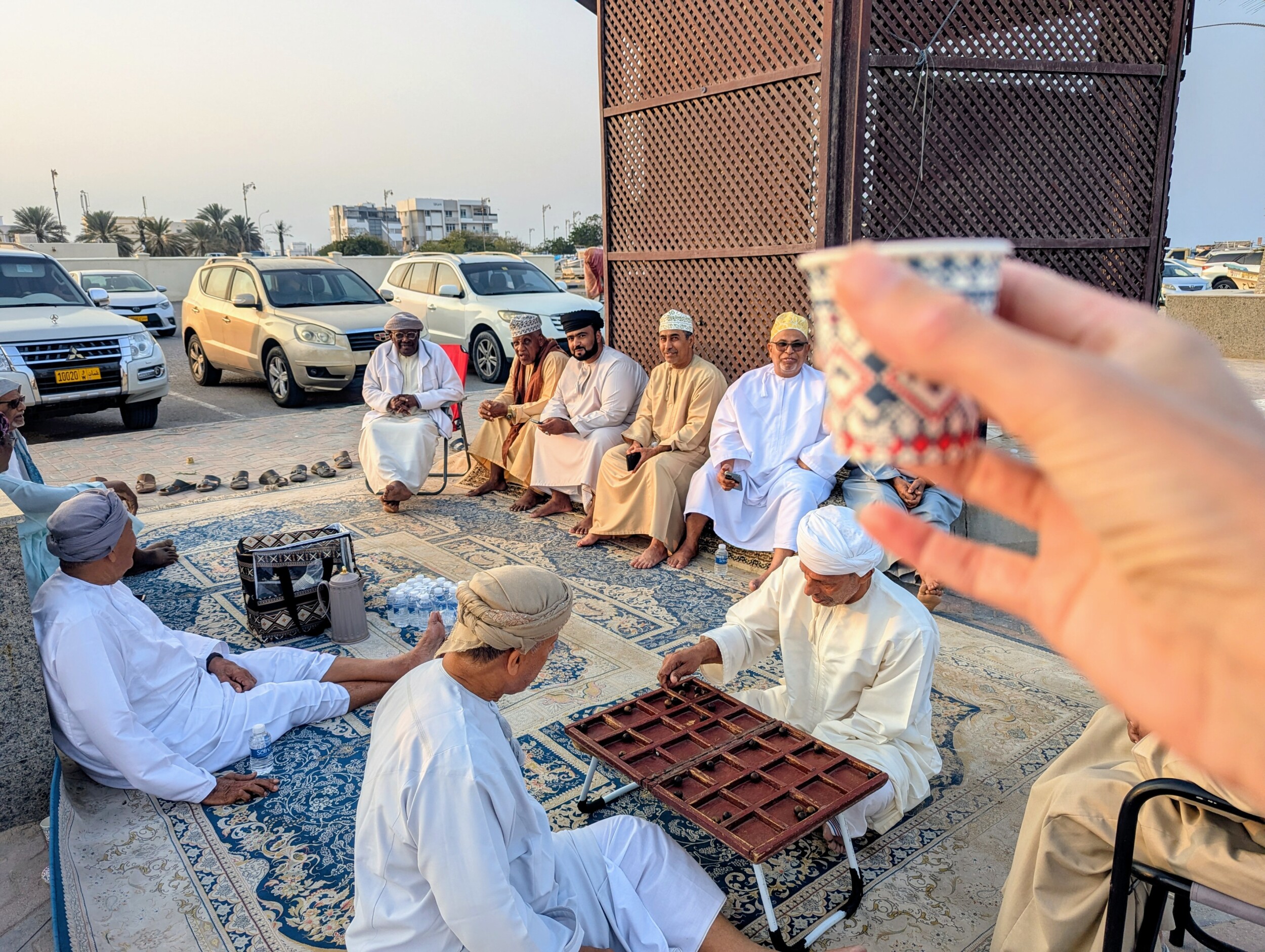
- Want to see popular wadis like Wadi Shab
- Drive the coastal route
With a regular rental car, you can explore much of Oman. Most attractions are accessible via paved roads or sand/gravel roads.
You Need a 4×4 for:
- Wahiba Sands: driving into the desert (otherwise you need to arrange a transfer)
- Jebel Akhdar and Jebel Shams: police may check if you have a 4×4
- Off-road routes: like Wadi Bani Awf or the Snake Canyon route
- Remote areas with unpaved roads
A 4×4 gives you more freedom and adventure. You can reach places others can’t. But it’s certainly not necessary to still have an amazing trip.
Alternative Without 4×4
Don’t want to rent a 4×4 but still want to go into the desert or mountains? Many accommodations offer transfers. You park your car at the edge of the desert and get picked up by your hotel or camp. This works perfectly and often isn’t even expensive.
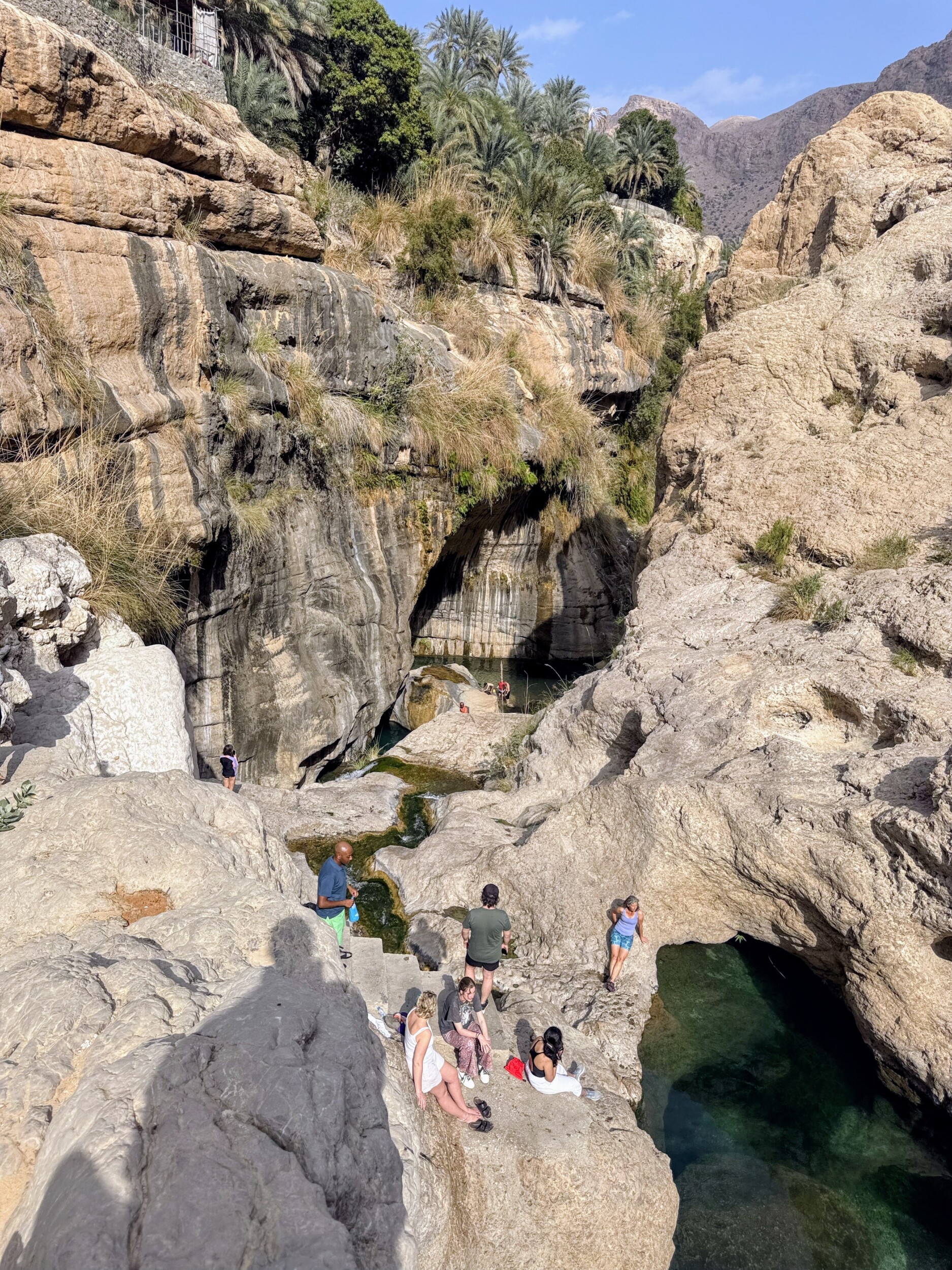
I eventually still went to Wadi Mibam but booked it as a group trip, which I also found quite enjoyable! Book this in advance or at your hotel/hostel in Muscat.
What to Watch Out for While Driving
Speed Limits
Speed limits in Oman are clearly marked and strictly enforced:
- Highways: 100/120 km/h
- Country roads: 80/90 km/h
- Urban areas: 40-80 km/h (depending on size)
Especially on long, straight stretches, use cruise control. This prevents accidentally driving too fast and getting a fine. Fines aren’t very high, but nobody wants problems, of course.
Speed Bumps – A Serious Warning
This is perhaps the most important tip: watch out for speed bumps! They’re everywhere, often colored yellow/black but sometimes really hard to see. You really must go over them at a snail’s pace, even on roads where you’re allowed 100 km/h. Go too fast over a bump, and you’ll feel it immediately in your car and your back. You often find them at exits or on roads going through villages.
Animals on the Road
Camels and goats regularly walk along or even on the road, especially at dusk and at night. See animals standing close to the road? Slow down already. A collision with a camel is comparable to hitting a concrete wall—the damage is enormous.
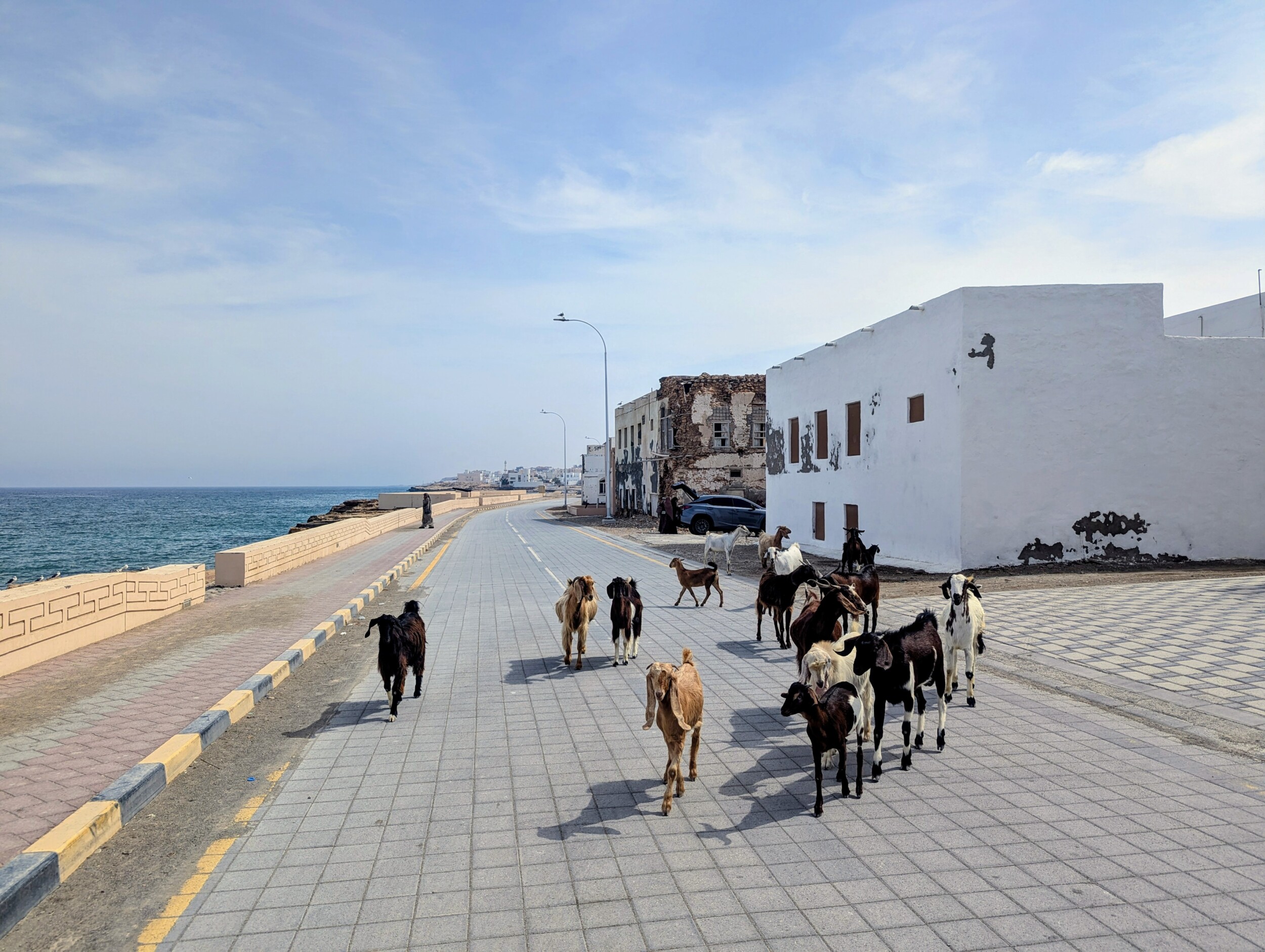
You also see an enormous number of goats here and there, also close to the highway. There are always warning signs in places where that chance is a bit higher.
Roundabout Rules
Oman has many roundabouts, but the rules are different from the Netherlands. The inside lane always has right of way. If someone on the inside lane flashes their lights, it means they want to exit and you must wait. Don’t worry: nobody gets angry or irritated if you make a mistake. Omanis are generally very calm and friendly on the road. Angry gestures, honking, or intimidation are almost never seen. This calm driving culture contributes greatly to the safe feeling on the road.
Driving in Muscat
The capital Muscat can be busy and somewhat chaotic during rush hours. Especially around shopping centers like Oman Avenues Mall and places with many restaurants, it can get quite busy. Outside the city, it’s calm and clear everywhere.
Watch out in old city districts like in Nizwa: the streets can be extremely narrow. Sometimes a large 4×4 barely fits through, with folded mirrors. Check the map beforehand and if in doubt, park at the edge of the old city.
Parking
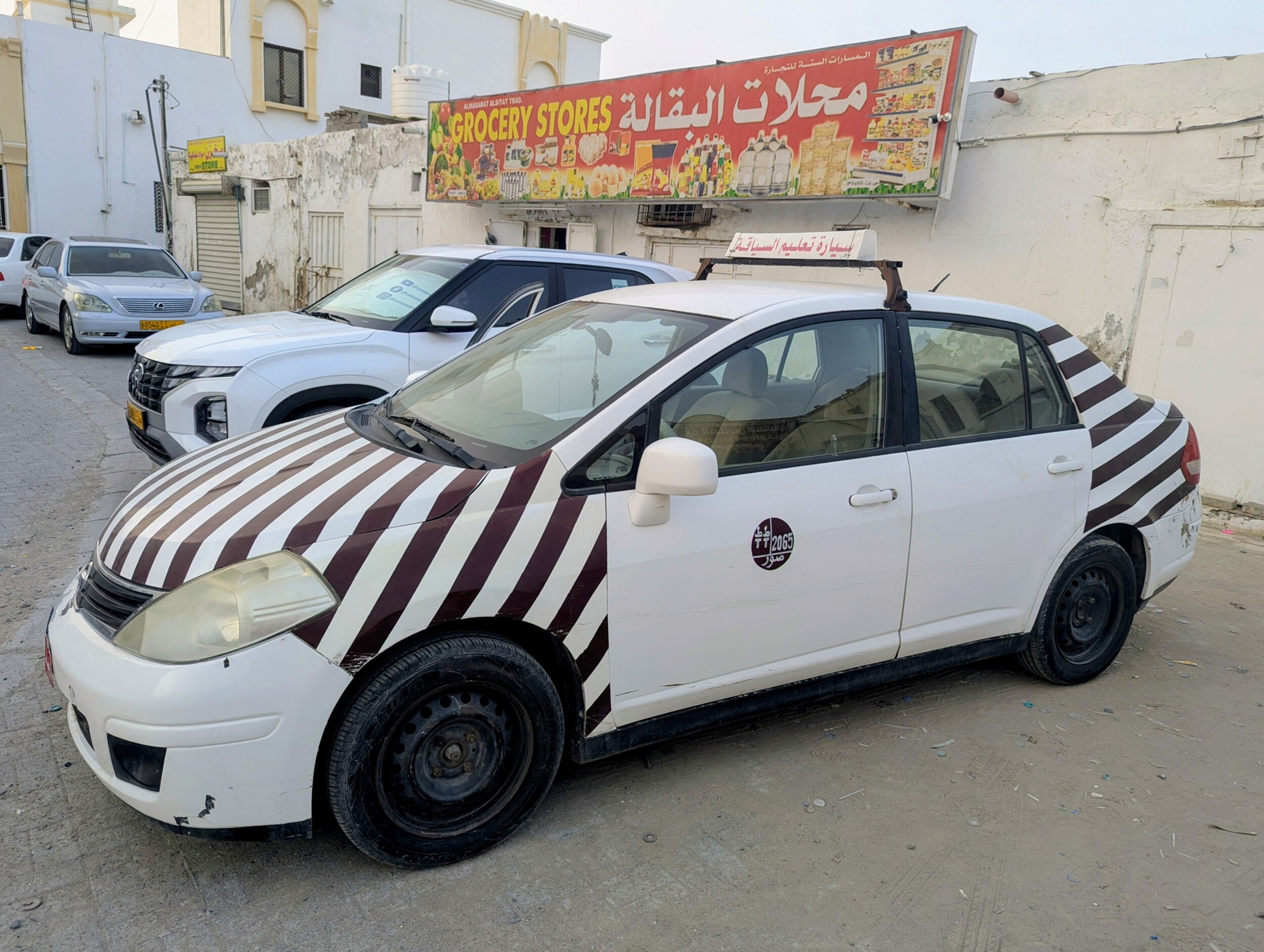
Parking in Oman is generally easy and usually free. There’s plenty of space and most attractions have good parking lots. In Muscat, there are some paid zones, but they’re clearly marked.
Navigation: How to Find Your Way
Google Maps works excellently in Oman. Do download the offline map in advance, as coverage can be limited in remote areas. As an alternative, you can use Maps.me, especially handy for hiking.
Consider buying a local e-SIM for mobile internet. They’re cheap and easy to set up before your visit. When you arrive in Oman, you’re immediately online. This way you can always navigate, look up restaurants, and stay in touch.
I opted for the 5GB package at €12.50, which lasted me 14 days. After loading the route, I turned off data usage and turned it back on when necessary to reload. I also made extensive use of Wi-Fi. For business logins and banking, I used the Airalo connection for security reasons.
I hear that most rental cars in Oman don’t have a navigation system, and that was true for my rental car.
Off-Road with a 4×4: Extra Tips
If you choose to go into the desert or mountains with a 4×4, there are a few important things to know:
- Deflating Tires for the Desert To drive over sand, you need to deflate your tires a bit. This gives better grip and prevents getting stuck. At a gas station, you can have this done for about €1. Don’t forget to pump them back up afterward!
- Drive in Convoy Never go into the desert alone. Always drive with at least two cars together. If one car gets stuck, the other can help.
- Bring Extra Supplies Ensure sufficient water, food, extra fuel, and a charged phone. Distances can be large and gas stations are scarce in remote areas.
- Fill Up on Time Especially if you’re going into the mountains or desert: fill up in time. Driving with the AC on and a full car in the mountains makes your consumption faster than normal.
- Watch Out for Insurance! Important to know: many rental companies prohibit off-road driving in their terms, even if you rent a 4×4. In case of damage, you’re then not insured. Therefore, always carefully read the fine print of your rental contract.
Refueling with Your Rental Car in Oman
Refueling is simple and cheap. At virtually all gas stations, refueling is done for you. You don’t even have to get out. Indicate which fuel you want (stated on the rental contract or at the fuel cap) and how full the tank should be.
Payment can be done contactlessly with credit card, debit card, or phone, so you don’t need to carry large amounts of cash. For about €0.50 per liter, refueling in Oman is much cheaper than at home. A full tank costs you only a fraction of what you’re used to.
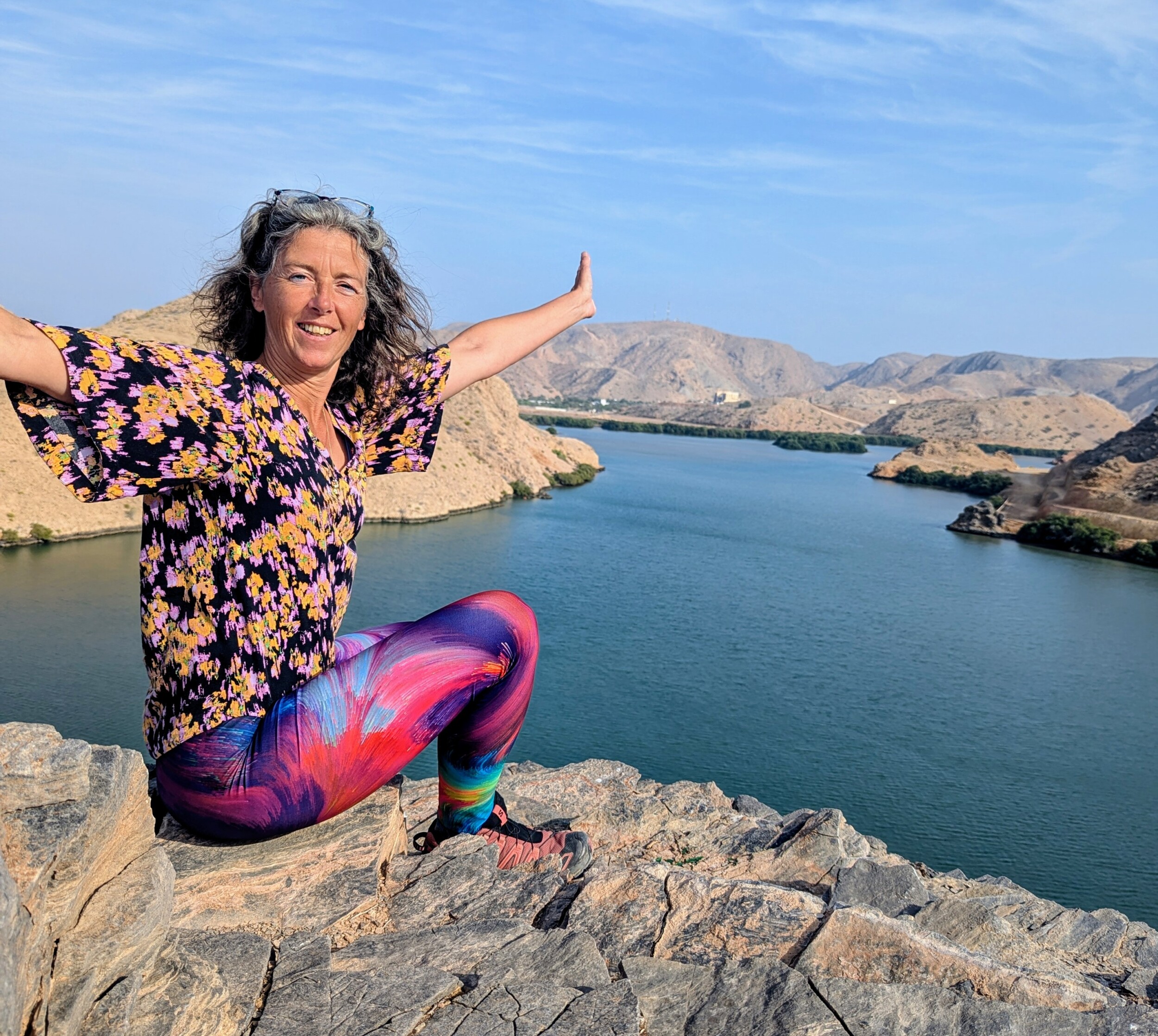
Extra Tips for a Carefree Drive
Check the Car When Picking Up
Take time to properly inspect the rental car before driving off. Walk around it and take photos or a video of any existing damage. Do the same with the interior. Also check if you have a full tank. This prevents discussions when returning.
When I returned the car, fortunately there was no problem, even though I had noticed some damage halfway through the week and wasn’t sure whether it had been there when I picked up the car. Unfortunately, I couldn’t see it clearly in the photos I had taken. Fortunately, there was a mark on the form I had been given indicating that there was damage on that side.
Important Traffic Rules
- Seat belt requirement: everyone in the car must wear a seat belt
- Alcohol: absolutely prohibited (zero tolerance)—even one drink can lead to fines and even imprisonment
- Calling: only allowed with hands-free
- Children under 4 years: car seat mandatory since 2018
- In case of accident: stay on site and call the police (9999)
Stay Calm and Enjoy Your Holiday
Omanis are generally calm, friendly people. Even in traffic, everyone stays calm. See someone make a mistake? No honking or angry gestures. This relaxed driving culture makes driving in Oman extra pleasant.
Help ban one-use plastic! Go travel with your own waterbottle #ad and refill it!
Car Rental Oman? The Way to Explore Oman
After all the practical tips comes the most important thing: renting a car in Oman and driving through this country yourself is a fantastic experience. The roads are good, the people are friendly, and the landscapes you see along the way are breathtaking. From vast deserts to dramatic mountain passes, from turquoise wadis to authentic villages.
Yes, you must stay alert for speed bumps and crossing camels, goats, or donkeys. Traffic rules mostly match those in the Netherlands. And with a bit of common sense and preparation, driving in Oman is safe and especially very fun to explore with a rental car.
So rent that car, download your offline maps (maps.me) or buy your e-SIM card and go on an adventure. Oman is waiting for you. Renting a car in Oman is the perfect way to discover this special country.
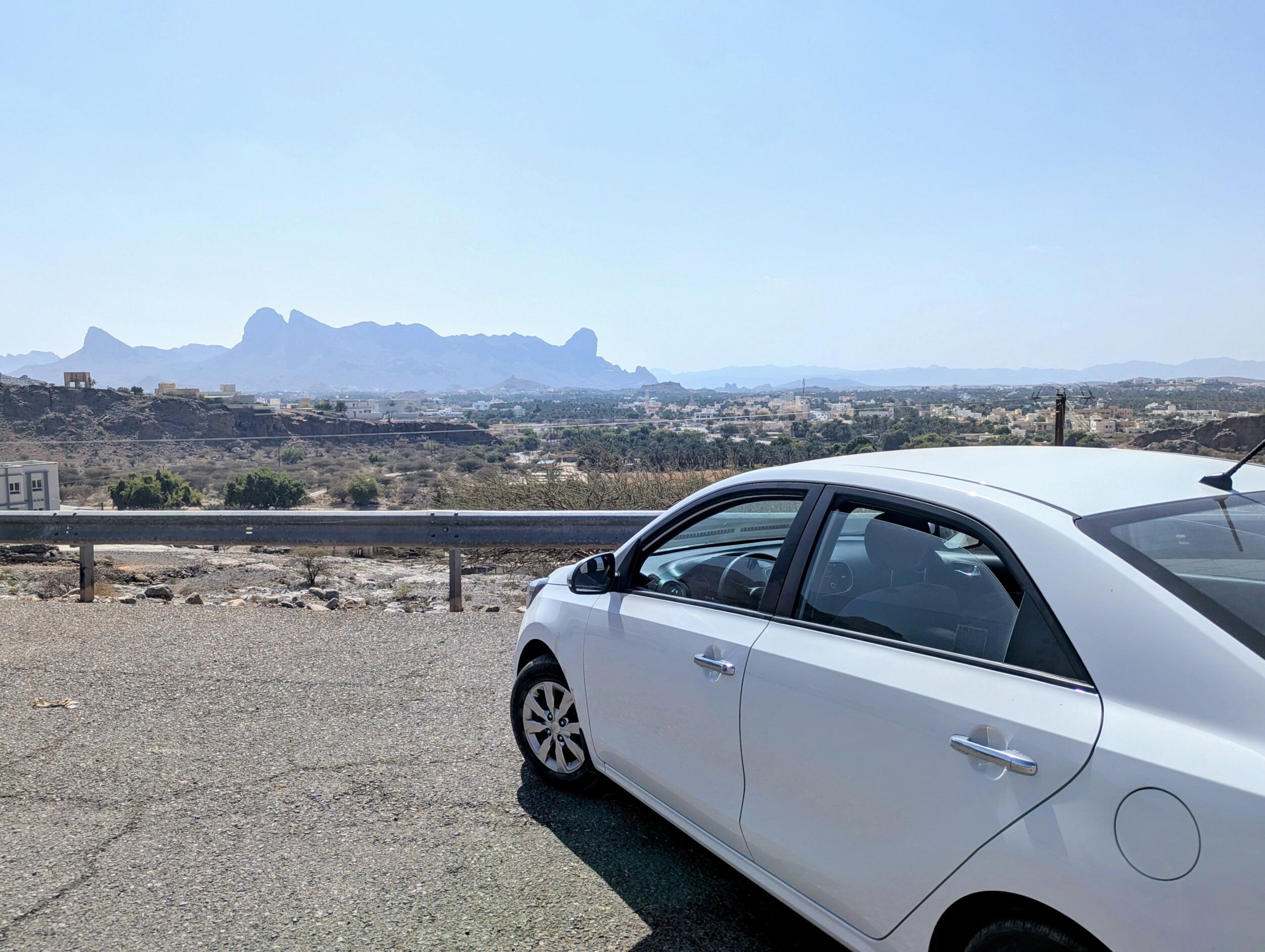
Want to know more about safe driving abroad? Also read my article with 5 tips for safe driving on trips.
Would you rather not rent a car in Oman but does traveling in a small group seem like a fantastic way to explore Oman? Then check out my Oman tour.
Read Also:
- Everything for Your Visit to Muscat – Oman
- Visit Bar al Hikman, the Maldives of Oman
- Looking for the Ultimate Adventure? Go Canyoning in Snake Canyon
This article contains affiliate links. If you book or buy something through one of these links, we may receive a small commission at no extra cost to you.