
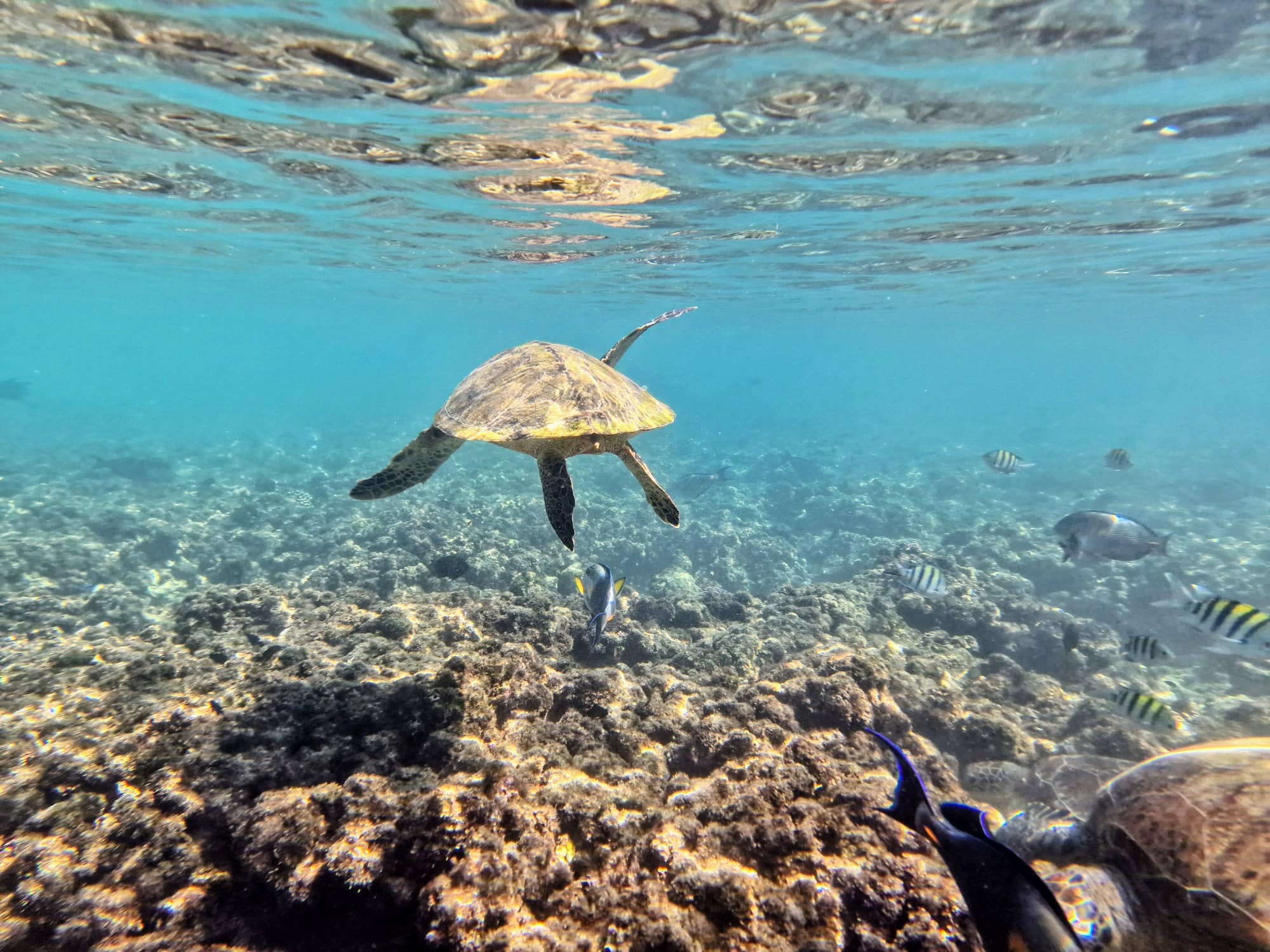
Oman appears on almost every list as the place in the world for turtle watching. Ras al Jinz gets mentioned, photos get shared, travelers line up in the evening. I understand the appeal. And yet I no longer recommend it. Oman has something to gain by organizing this differently. That is my judgment, and I stand by it.
Because Oman has more to offer than one overcrowded beach. If you step aside, you’ll find places where turtles simply go about their business. No waiting list, no guide, no group of 25 people around you.
What’s Going On at Ras al Jinz
The Ras al Jinz Turtle Reserve is not a bad place. The reserve has existed since 1996; there is research, there are rangers, there are rules. The protection is serious, and that counts. But whether mass tourism and animal protection can truly go hand in hand is a question I find myself asking more and more often.
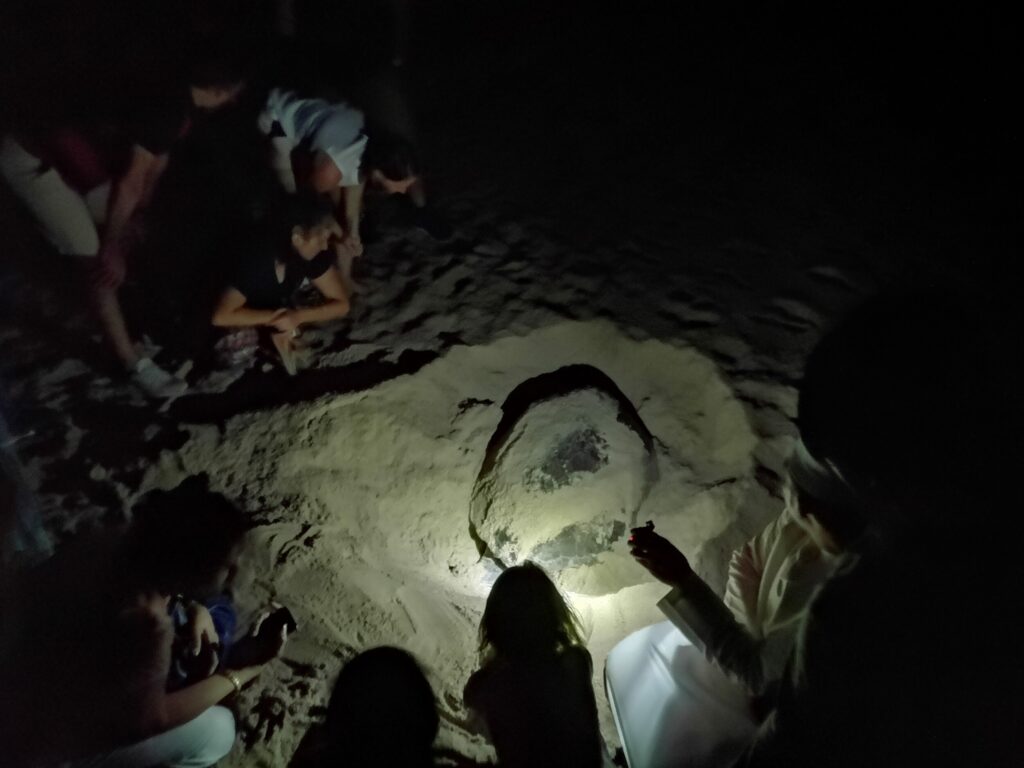
In the evening, more than a hundred people crowd into the lobby. They are divided into groups of 25, wait for a signal from the scouts, and are driven to the beach by minibus. Once a turtle has been spotted, a rotation follows: ten minutes per group to circle the animal. Phones at the ready, flashes going off, chatter on the beach. And the turtle lays her eggs, because that cycle doesn’t stop. But it doesn’t feel right.
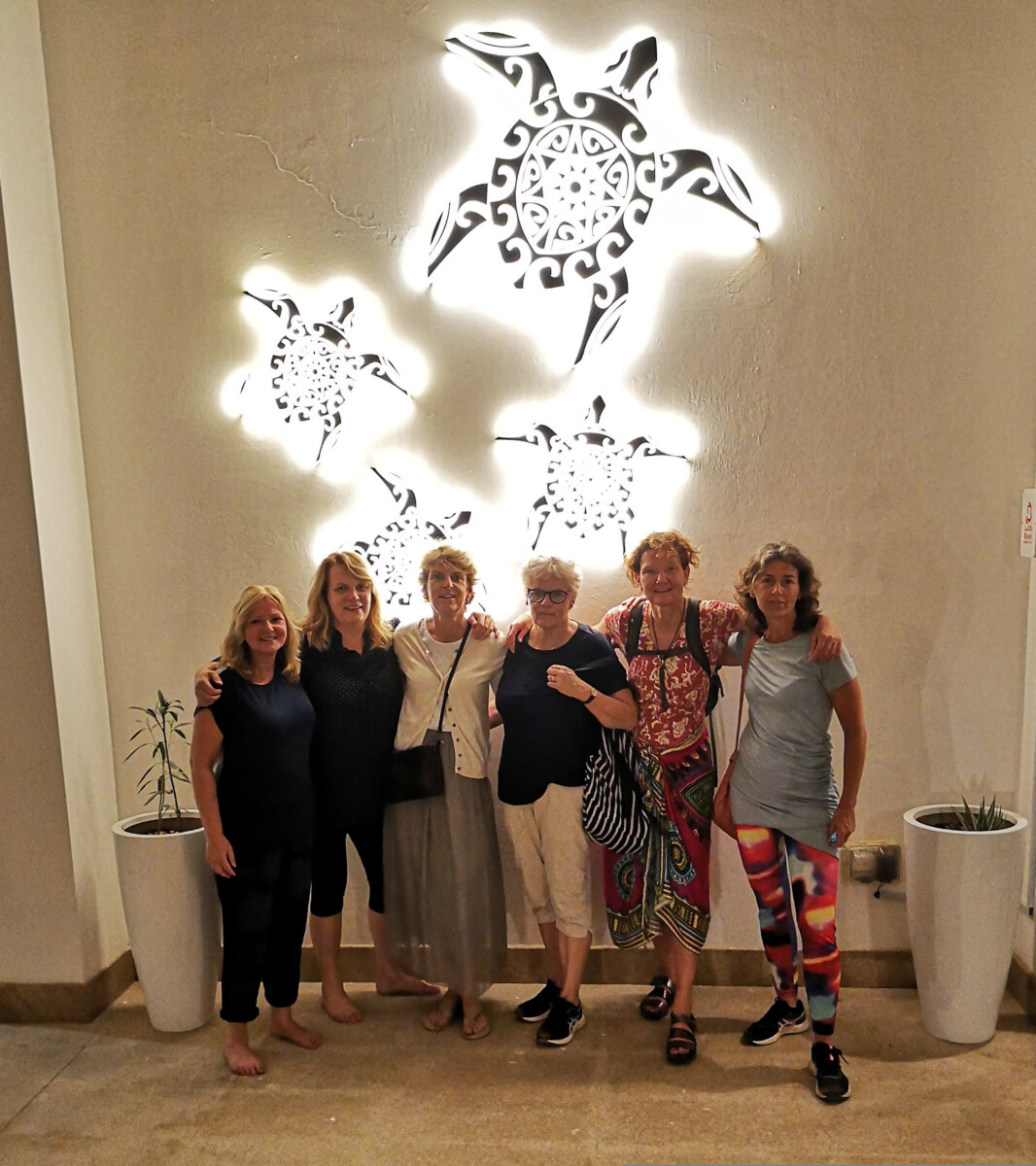
The morning tour is much quieter. Far fewer people, more space, the first light of day. If you still want to go to Ras al Jinz, choose the morning tour only. By then the turtles have finished laying and are on their way back to the sea. You haven’t disturbed them, only seen them.
But there is more.
Turtle Watching in Oman a Different Way
Oman has more than 3,000 kilometers of coastline. Five of the seven sea turtle species live in Omani waters. The concentration at Ras al Jinz is high, but it is far from the only place. Below are the alternatives I know personally or that are well documented.
Masirah Island: Turtles Without the Spotlight
Masirah is Oman’s largest island, about a five-hour drive from Muscat, followed by a one-hour ferry ride from Shannah. That combination means most travelers skip it. And that is exactly what makes the island so special.
Each year, around 30,000 loggerhead turtles nest on Masirah’s beaches. That’s more nests than at Ras al Jinz. Four of the seven sea turtle species live in the waters around the island. But there are no scouts, no minibuses, no organized viewing groups. The beaches stretch for more than ninety kilometers. If you want to find a turtle, you simply walk.
That also means there’s no guarantee. You might come across a turtle, or you might only see tracks in the sand. Both are honest. Both are nature.
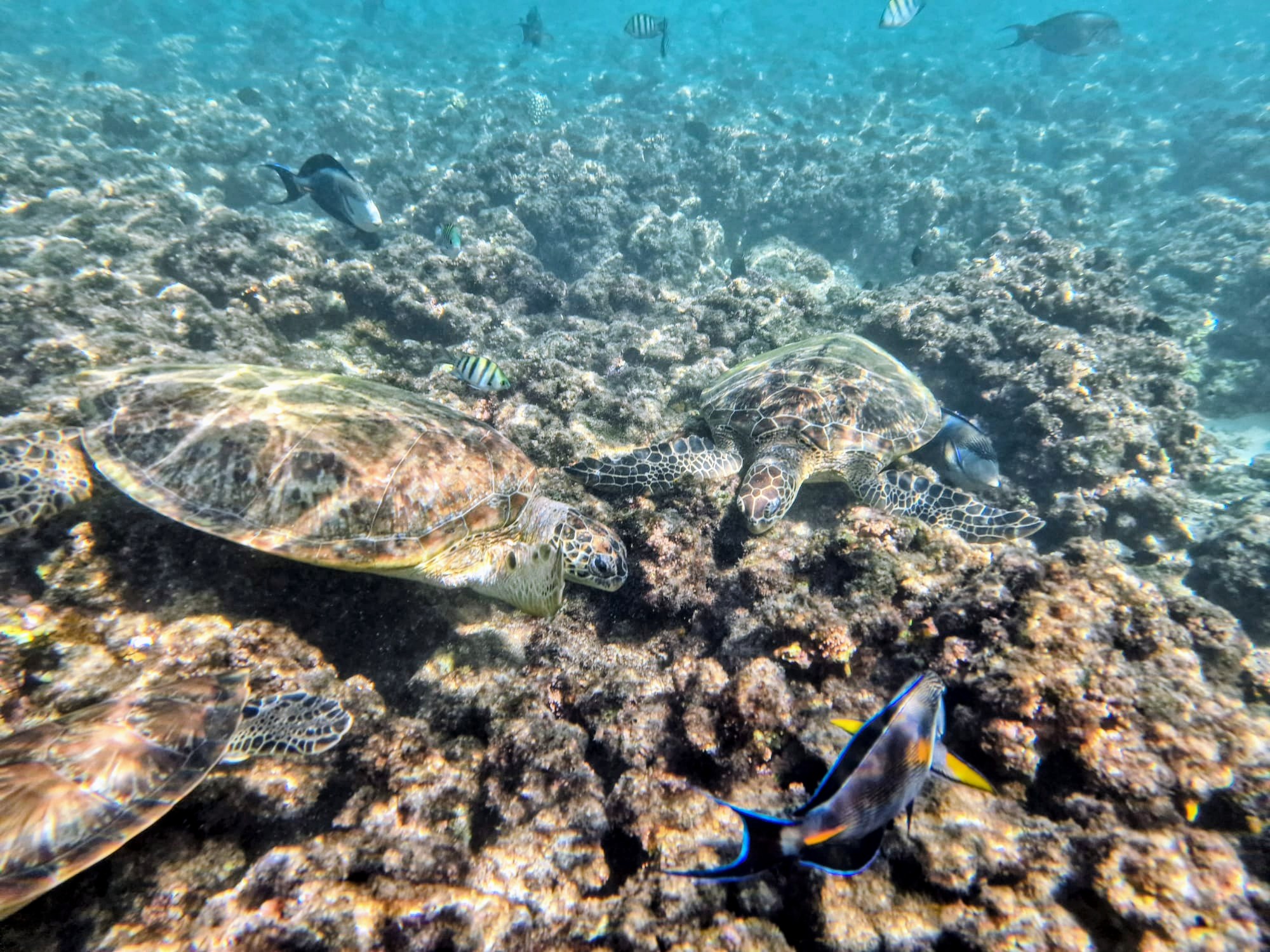
Around the island you can snorkel at coral reefs that are relatively unknown, even by Omani standards. You can stay at the Masirah Island Resort or in small-scale guesthouses in the village of Hilf. The island feels more conservative than the mainland, so keep that in mind when it comes to clothing and behavior.
When: The nesting season runs from May to December, peaking in summer. You could combine it with a stop at the Wahiba Sands or Sur along the way.
Bar al Hikman: Turtles as Part of an Intact Ecosystem
Bar al Hikman is a peninsula and wetland on the Arabian Sea, about a four- to five-hour drive from Muscat. In October 2023 the area was designated a Ramsar wetland, an international recognition for ecologically valuable wetlands. It is the longest natural sandbar in the Middle East and one of the most important stopover sites for migratory birds on the route from West Asia to East Africa.
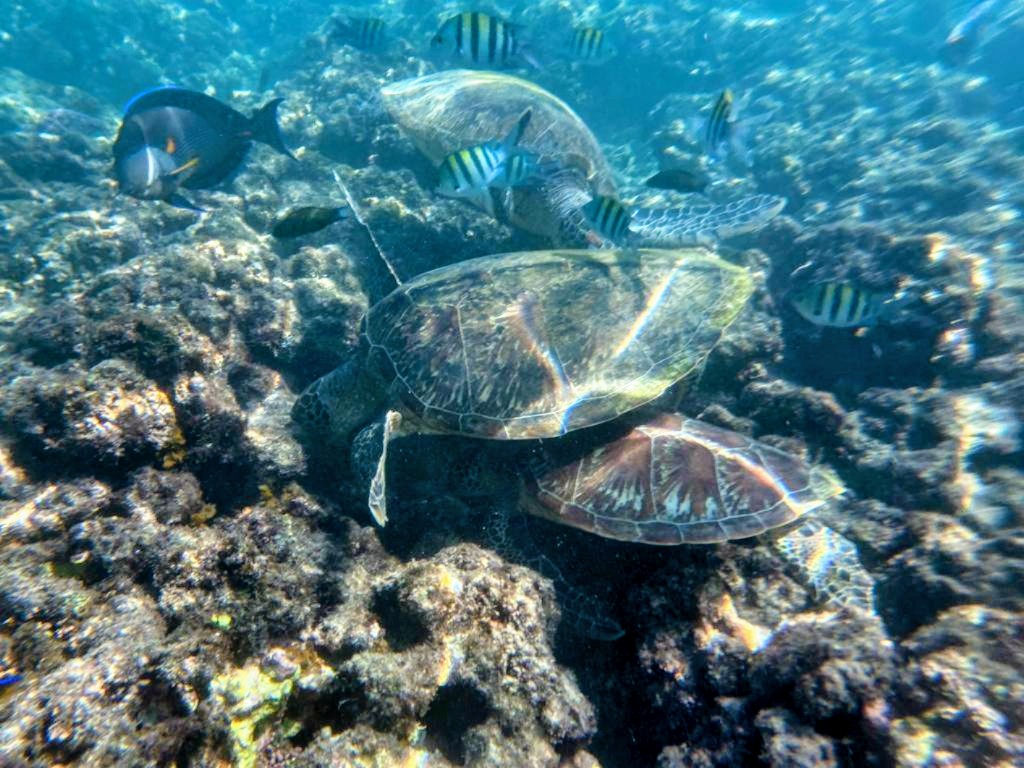
You won’t find turtles here as a spectacle. But out on the water, on a boat trip, you’ll simply see them swimming. I saw them myself during a trip at Whales Head Camp: sea turtles swimming away ahead of the bow, flying fish skimming across the surface. It isn’t an excursion. It’s simply what’s there.
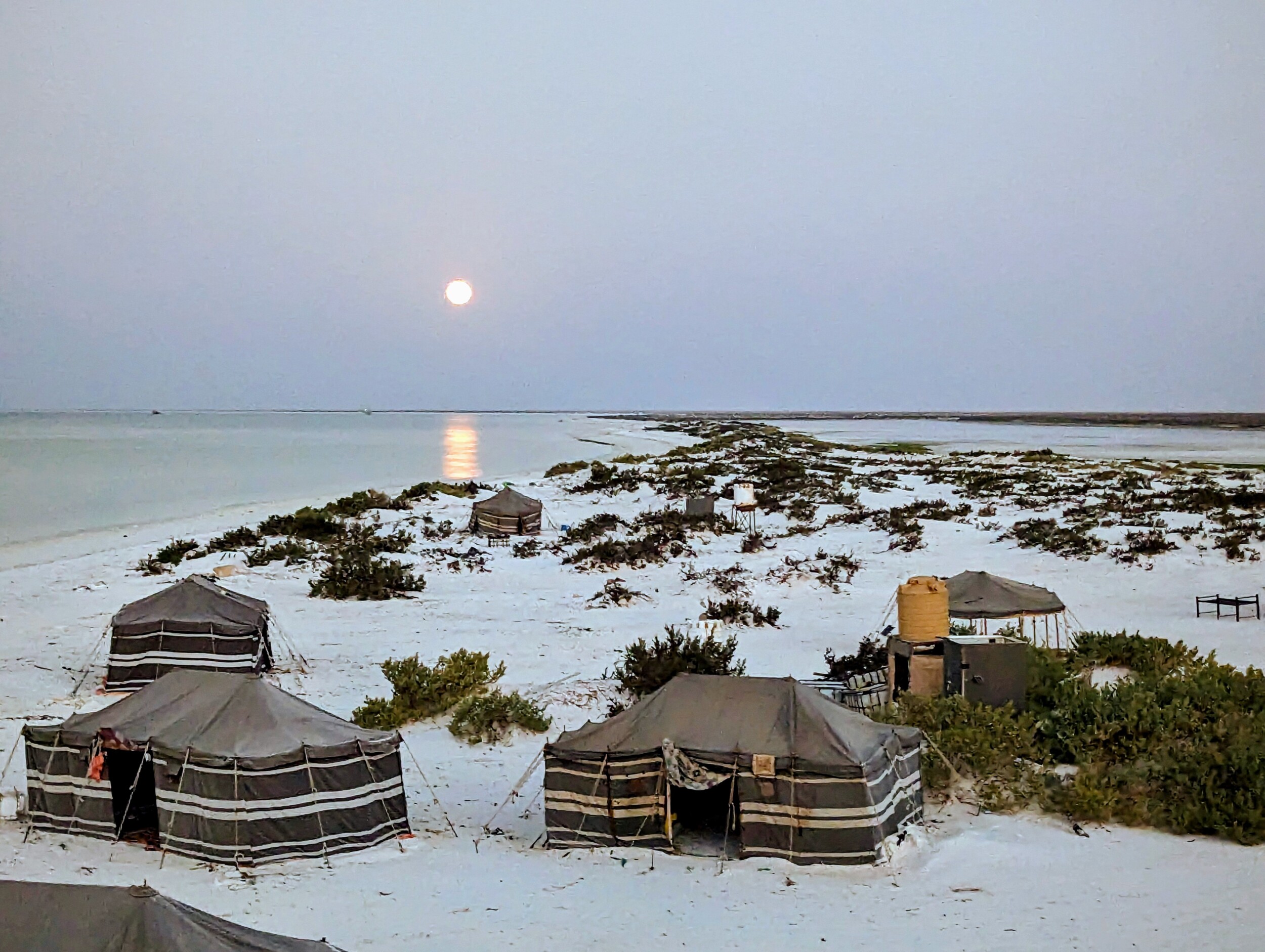
That is the difference with Ras al Jinz. Here, the sea turtles are not the product. They are part of a bigger whole: fish, birds, mangrove forests, lagoons, coral reefs ten kilometers off the coast. Stay at Whales Head Camp or Beach Moments, or wild camp if you have a 4WD. Note: the road is difficult to drive because of the wet, muddy ground. A 4WD and preferably a local guide are truly essential.
When: All year round, but the windy season (May–September) is also kitesurfing season. Birds are most abundant from autumn to spring.
Snorkeling with Sea Turtles: Alternatives to the Daymaniyat Islands
The Daymaniyat Islands off the coast of Muscat are Oman’s best-known snorkeling area, and rightly so. Nine uninhabited islands, protected as a UNESCO site, with coral reefs and a large turtle population. But here too, it’s getting busier in high season. Good operators such as Daymaniat Shells work with small groups and pay attention to codes of conduct, but several boats head out every day.
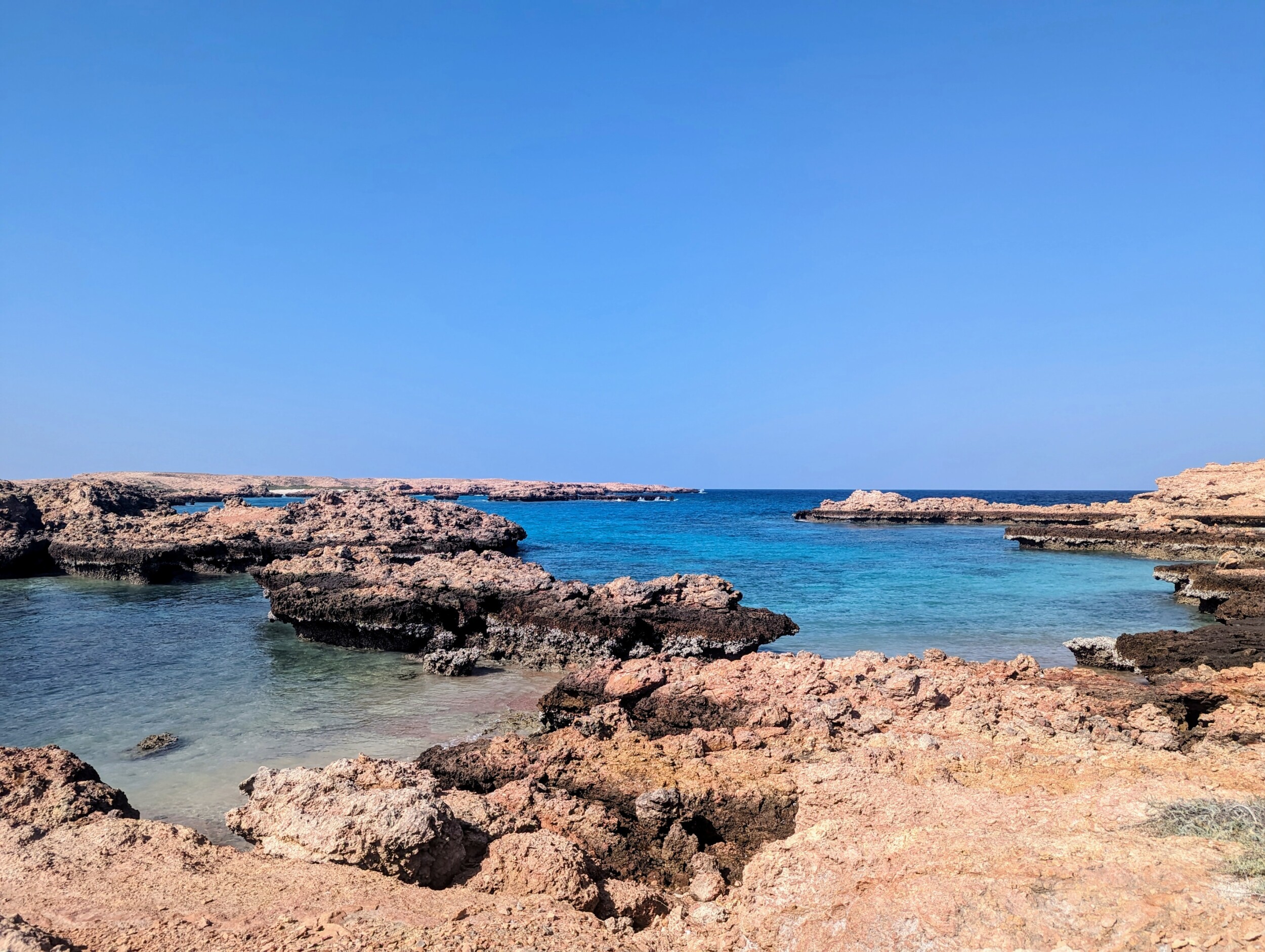
Two lesser-known alternatives near Muscat:
Al Fahal Island, also known as Shark Island, lies just four kilometers off the coast. You’ll see reef sharks, moray eels, coral reefs and various species of rays. On the way there’s a good chance of dolphins. Visibility is sometimes a little lower than at the Daymaniyat, but it’s almost always worth it. Far fewer visitors.
Bandar Khayran is an area of bays just outside Muscat with calm water, coral and marine life that’s easy to observe. Few organized tours, but reachable through small local boat rental companies. One of those places you won’t find in the standard round-trip guidebook.
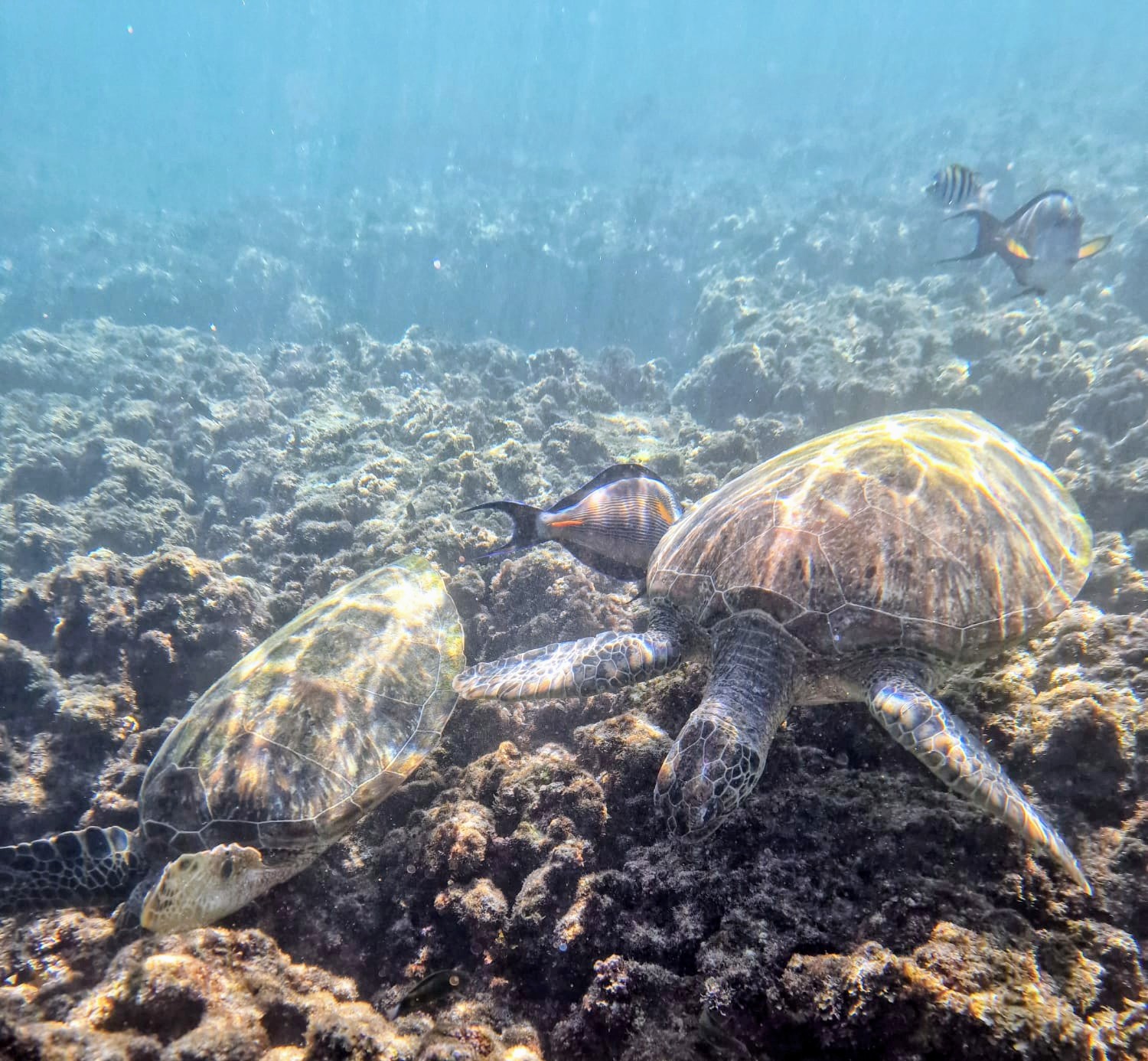
For all snorkeling options: choose an operator with clear codes of conduct. Don’t swim above the turtles, don’t touch them, keep your distance. That may sound obvious, but in practice it varies from company to company.
What’s on My Mind
There’s a question I keep asking about wildlife tourism: whose needs come first? Those of the traveler who wants to spot a sea turtle in Oman, or those of the turtle that wants to lay her eggs?
Ras al Jinz has a conservation program. But it also has a hotel, a ticket desk and guides who lead tourists to the beach in groups as soon as turtles are spotted. So the interests don’t always align. The combination doesn’t always work out well for the animals, even though the intentions are serious.
On Masirah there’s no guarantee. At Bar al Hikman the turtle isn’t the main act. At Bandar Khayran or Al Fahal you swim through their habitat without a guide staging the experience. That feels different. Calmer. More honest, perhaps.
Oman is a country that takes its nature seriously. That deserves support, not by avoiding mass tourism as an ideology, but by choosing more consciously where and how you go to look.
Make sure you carry a good water bottle with you throughout your trip. Stop taking part in single-use plastic. Help keep the waters around Oman clean too.
When to Go Turtle Watching in Oman
- For turtles on the beach: the nesting season runs from May to September, peaking in July and August. These are also the hottest months. Outside the season the chances are smaller, but not zero.
- For snorkeling and marine life: the best period is October to April. The water is calmer then, visibility is better and the temperature is more bearable.
Where to Stay
- Masirah: Masirah Island Resort (four stars, the only larger option), or the small-scale Masirah Beach Camp on the beach on the other side of the island. The island is simple and accommodation is still limited. Book in good time.
- Bar al Hikman: Whales Head Camp offers Bedouin tents on the beach with basic facilities. Beach Moments is an alternative on the same coast. Wild camping is permitted if you stay two nights or fewer and are not visible from a permanent residence.
- Muscat (for the islands): Stay in the Al Mouj area if you want to leave early in the morning for a Daymaniyat tour. The Mysk Al Mouj Hotel is right on the marina.
Read Also
- Packing List for Hiking in a Wadi
- Sa’al Steps Oman: The Iconic Staircase near Muscat
- Visit Bar Al Hikman, the Maldives of Oman
- Looking for the Ultimate Adventure in Oman? Canyoning in Snake Canyon
- Hiking Wadi Shab – Sur, Oman
This article contains affiliate links. If you book or purchase something through one of these links, we may receive a small commission at no extra cost to you.