
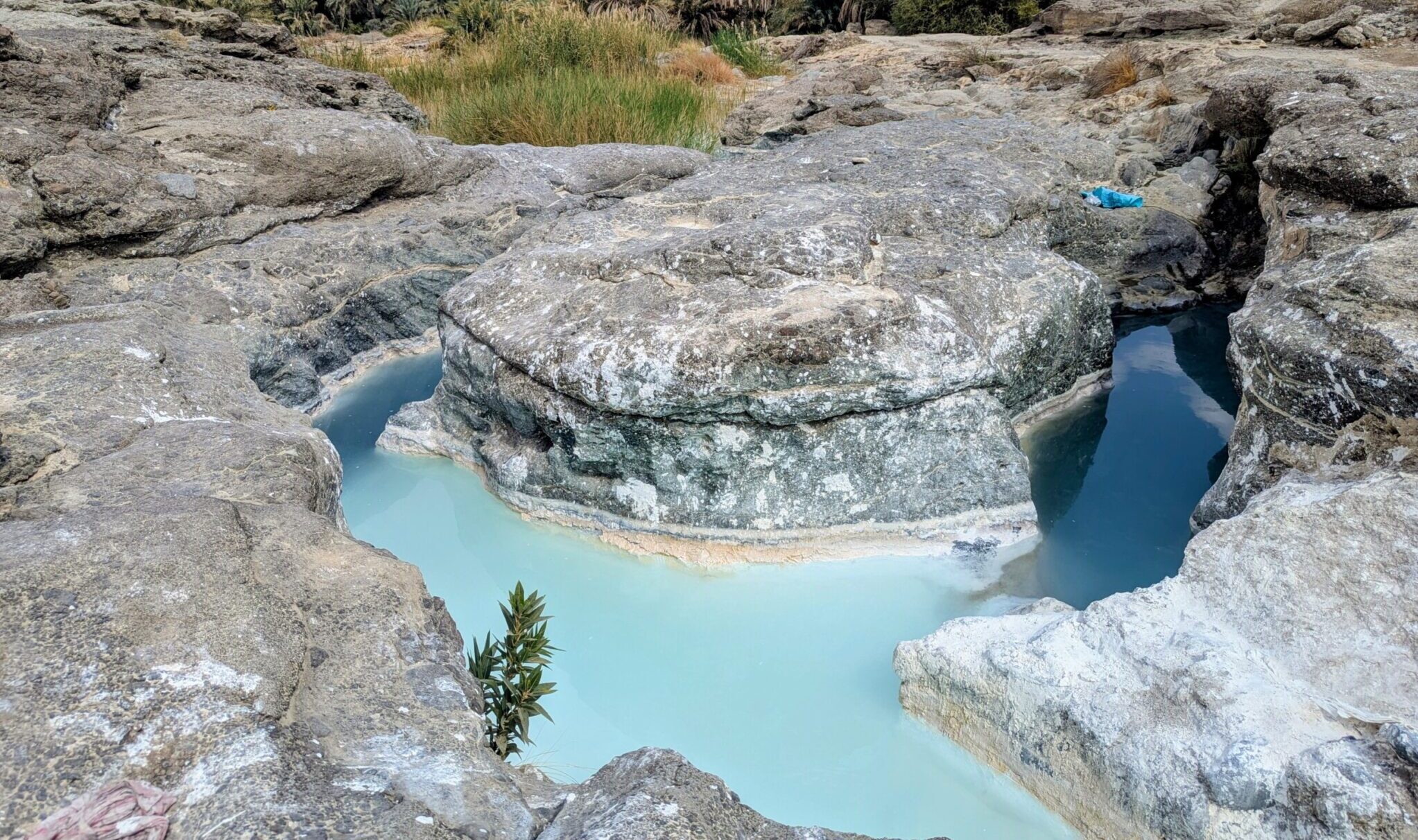
Oman is home to some of the most remarkable natural sulphur springs in the Middle East. Tucked between rock formations and small villages, about an hour’s drive from Muscat, lie two little-known sulphur springs in Oman: Al Hinn Sulfur Spring and Ain Seyaa. These quiet, local places offer a unique experience, if you come at the right moment.
During my stay in Muscat, I decided to spend a day visiting both sulphur springs.
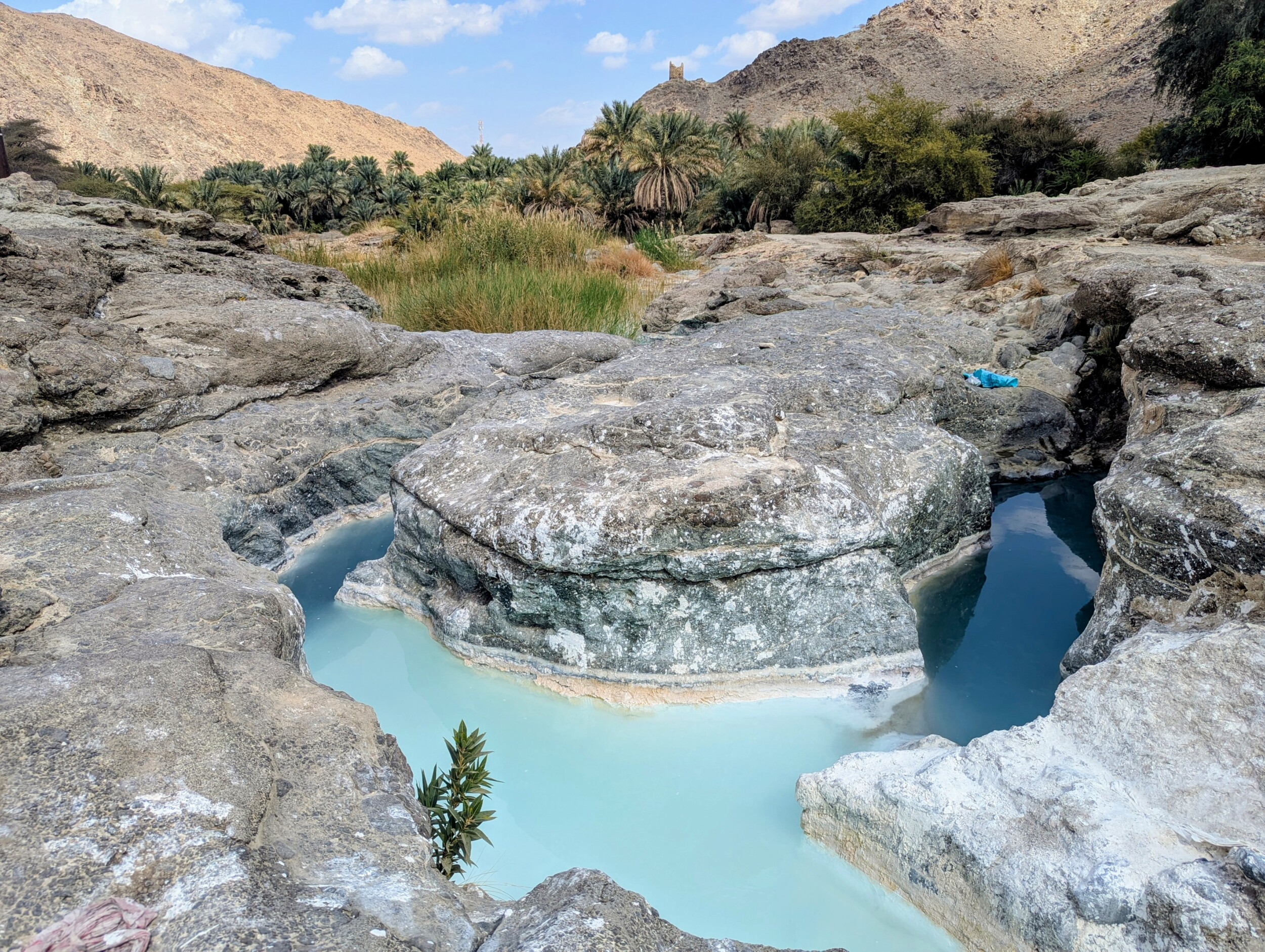
What I found was a mix of beautiful nature and raw reality. In this article I share my honest experience, tell you when to go (spoiler: after rain!) and give you all the practical information you need.
What Makes These Sulphur Springs in Oman Special?
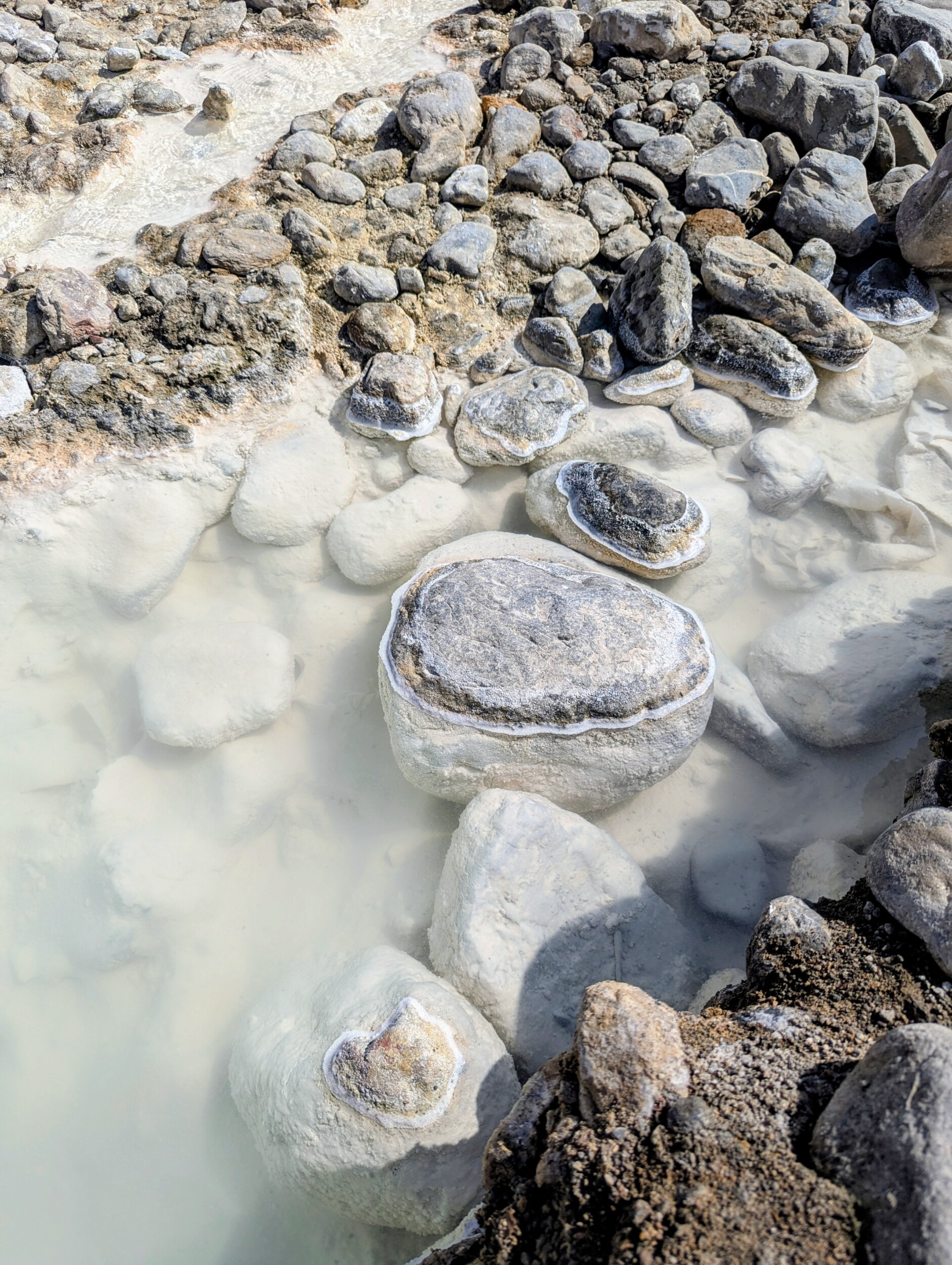
Sulphur springs form when groundwater flows through sulphur-rich rock. The high sulphur content gives the water its characteristic azure to turquoise colour and creates white mineral deposits on the rocks. In many cultures, sulphur springs are seen as healing for skin conditions, rheumatic complaints and muscle fatigue.
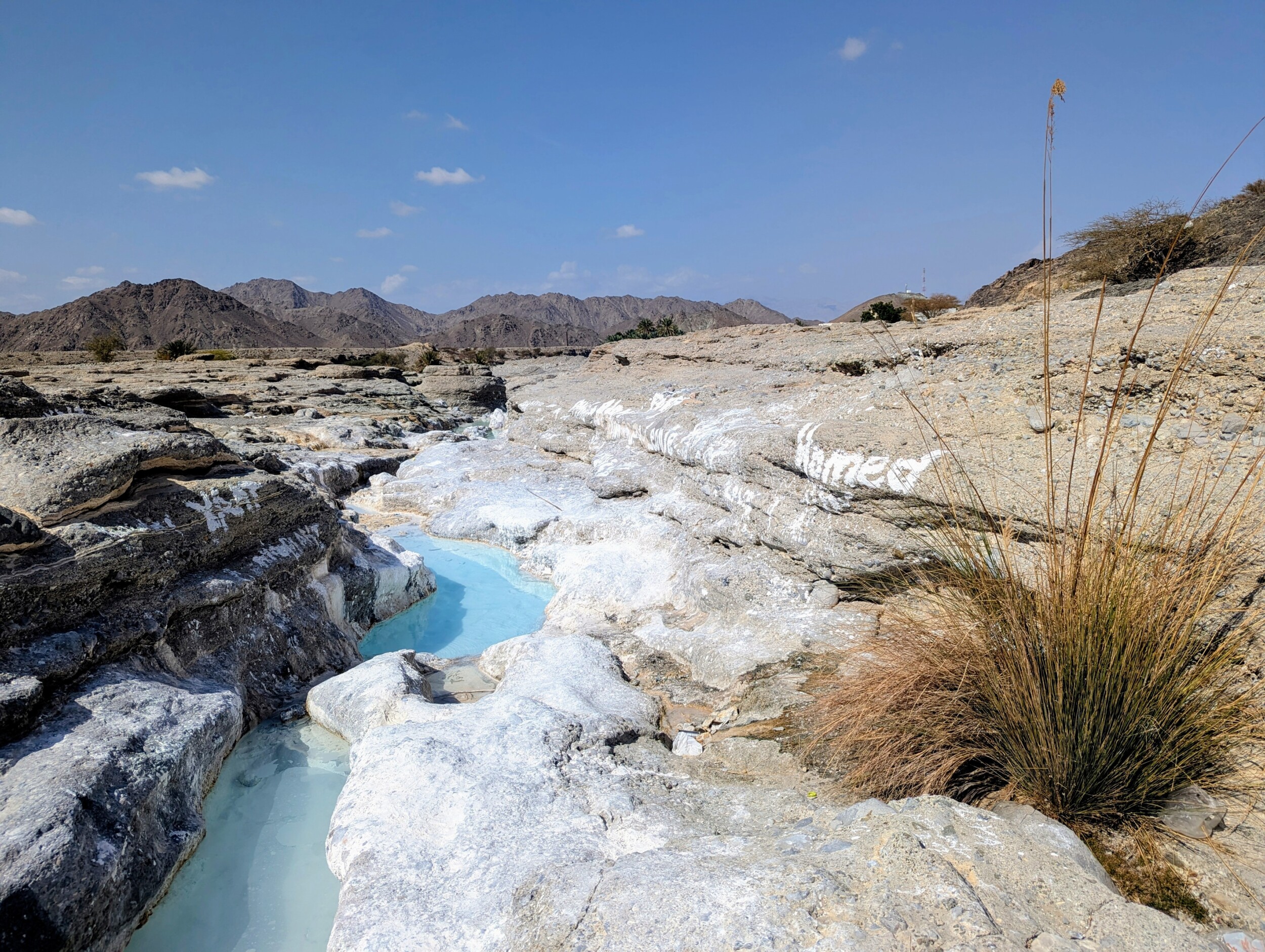
Al Hinn and Ain Seyaa are special because they are barely developed: no entrance gates, no souvenir shops, no crowds of tourists. They are genuinely local places where Omanis themselves come to cool off and relax. These springs are a rare example of raw, unpolished nature in an Oman that is becoming more and more touristy.
My Experience at Al Hinn Sulphur Spring
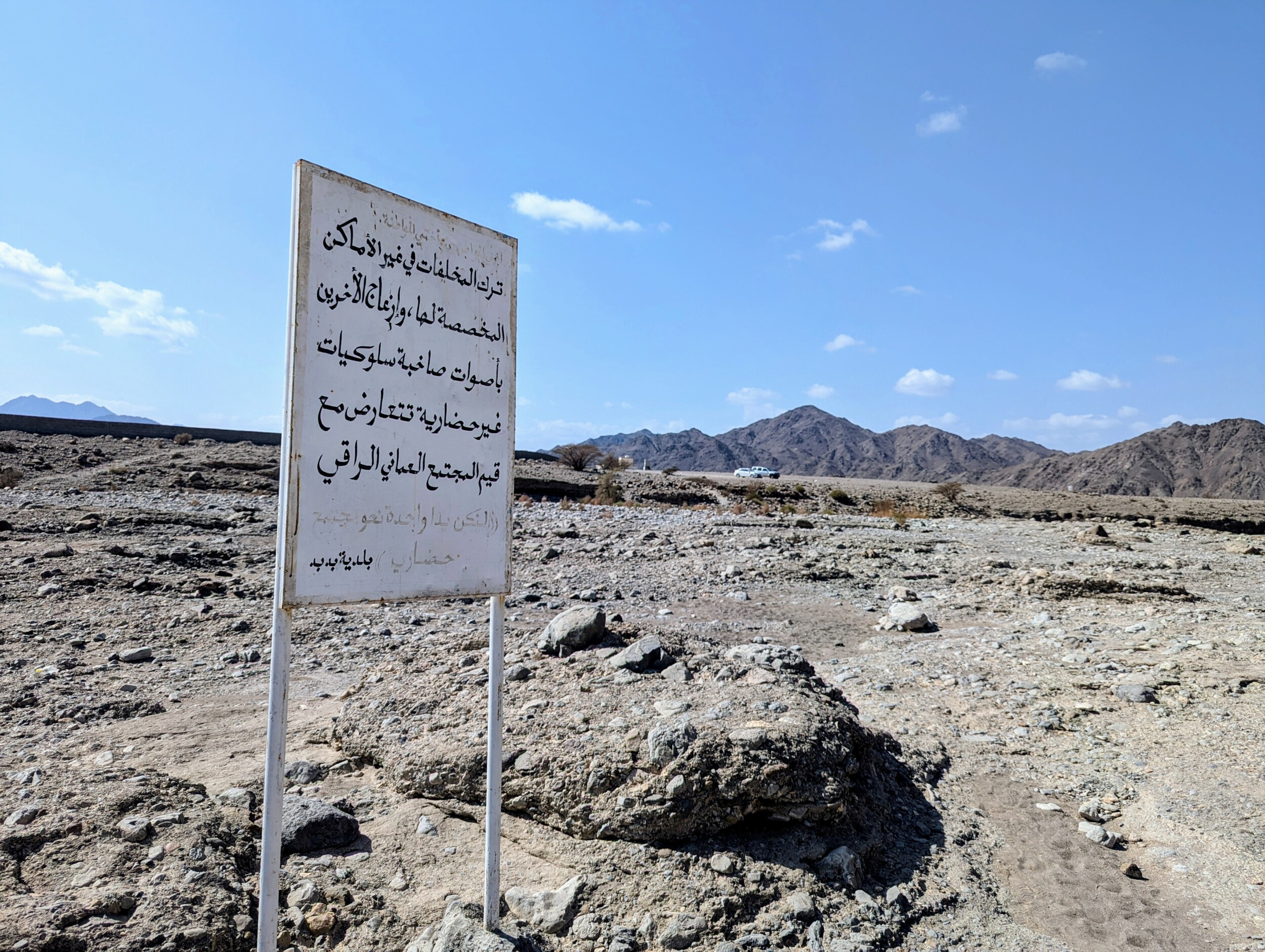
My first stop of the day was Al Hinn Sulfur Spring, near Jardamanah in the Wilayat of Bidbid. Finding this spring turned out to be a challenge straight away. Even though I had the Google Maps location, the spring was practically invisible from the road. The flat rock plateau stretched out endlessly, with only a small sign visible in the distance, easy to miss if you don’t know exactly where to look.
I Went Looking
I simply kept driving and looked around carefully, and when I saw movement in a small palm oasis, I decided to ask a local man for directions. In true Omani hospitality, he got straight into my car and showed me the exact location. “There,” he said, pointing at a spot in the distance that, to me, looked exactly like the rest of the landscape.
Along the way, I had also met two British travellers who were just as lost as I was. When they saw me driving with my local guide in the car, they decided to follow us. Together, we found the place.
The Spring Itself
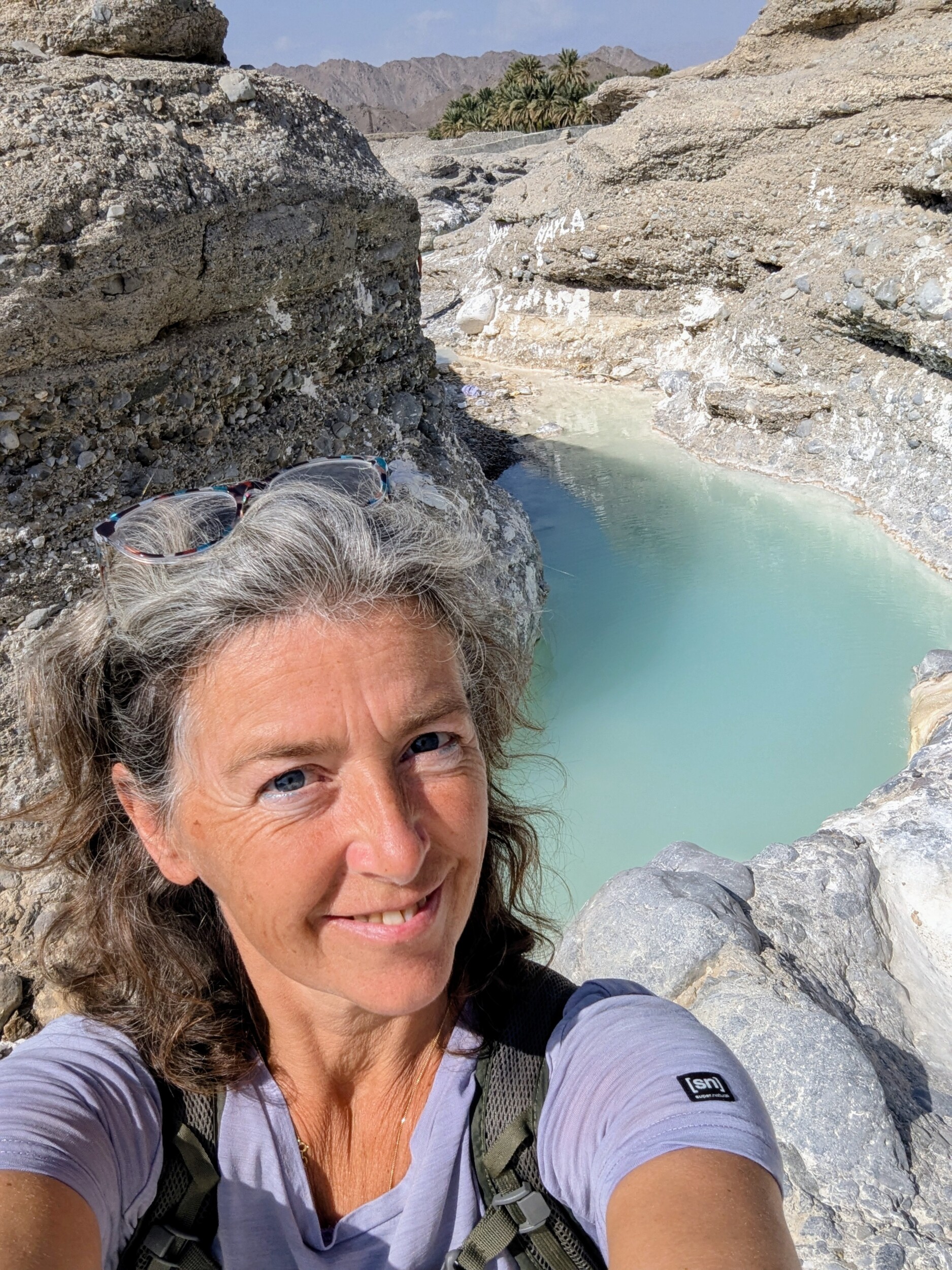
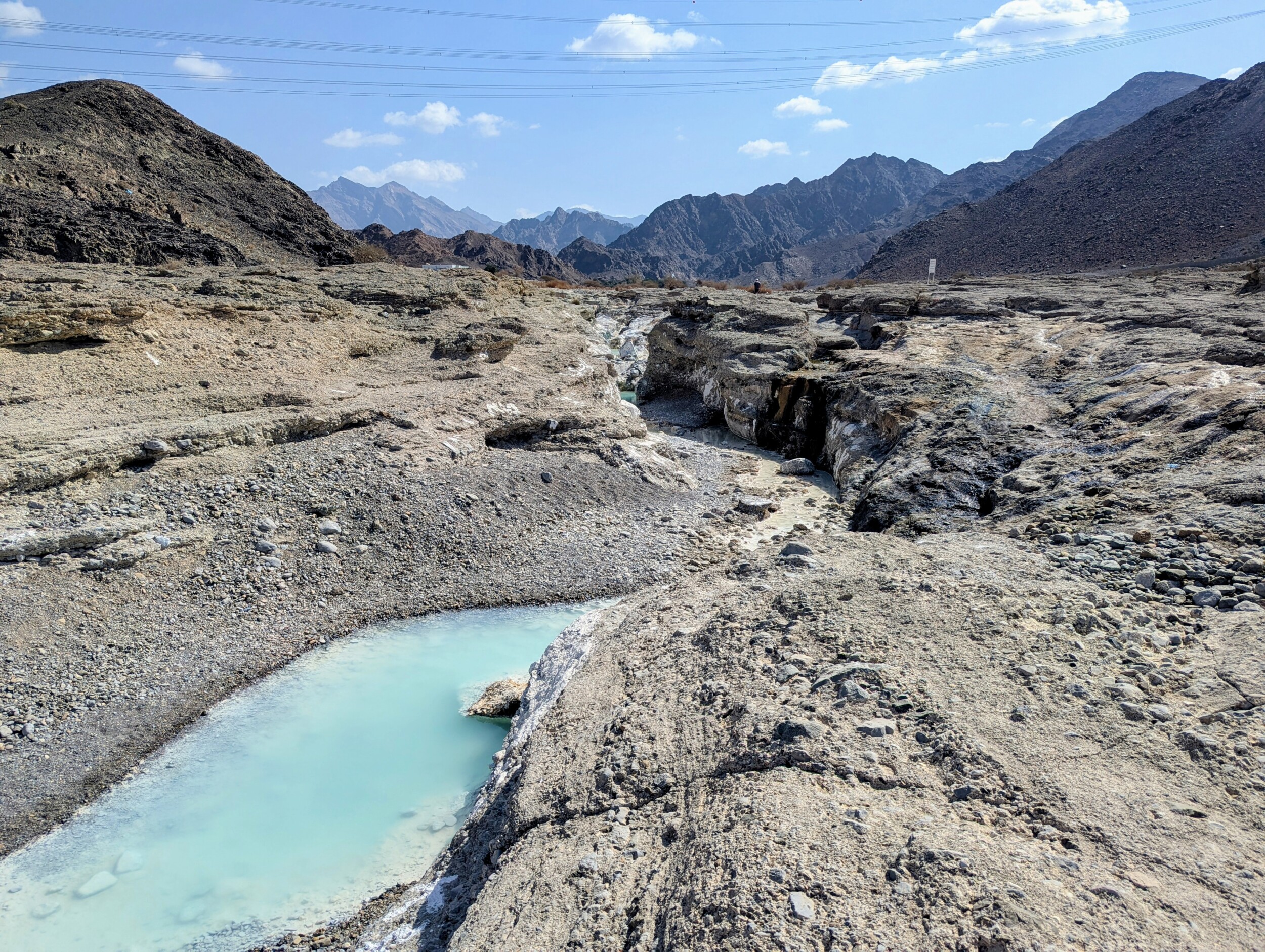
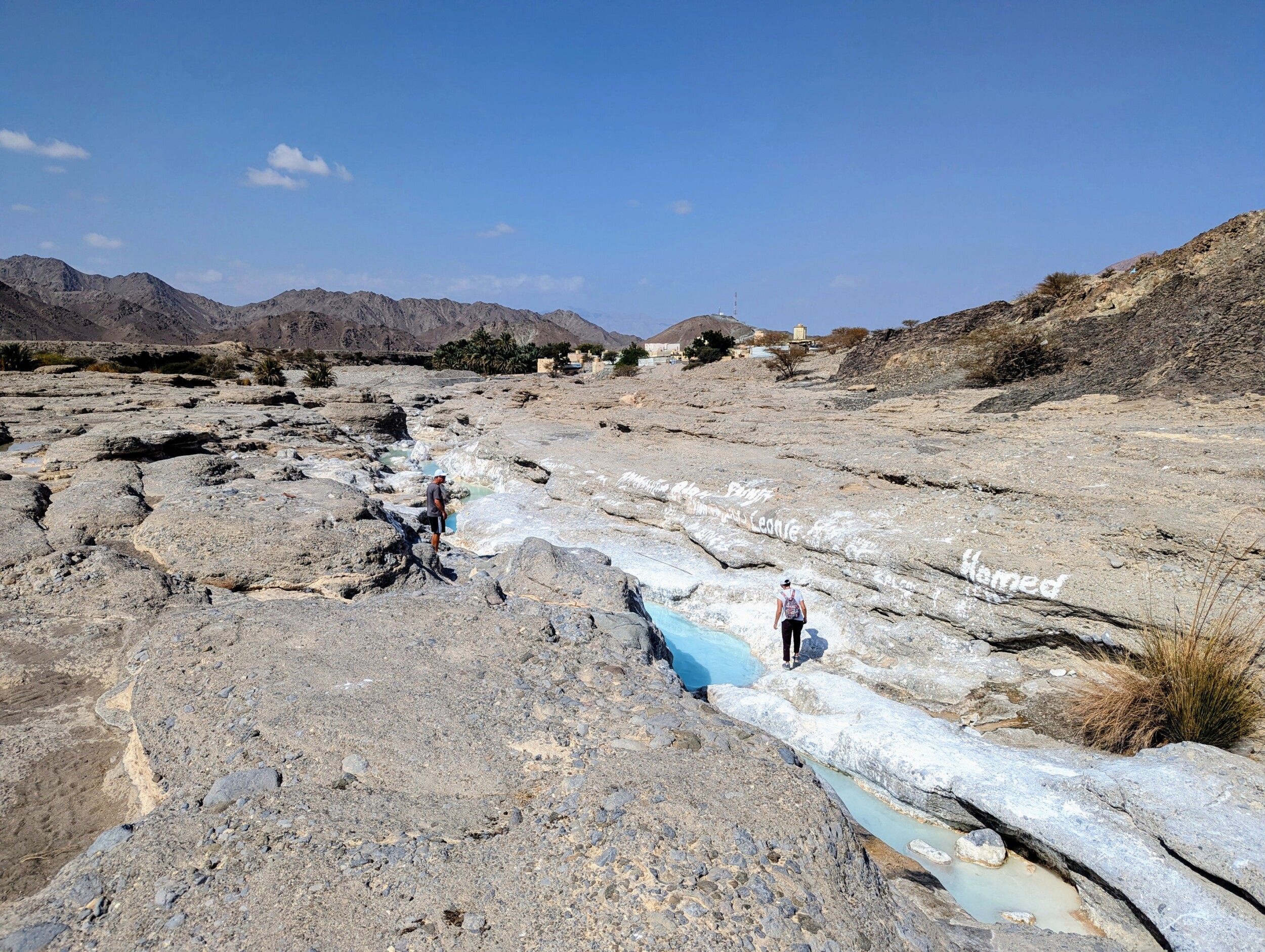
We walked up onto the rock plateau. By late morning the heat was already intense, full sun, without even a scrap of shade. Gradually, white mineral deposits appeared on the rocks, a sign that we were getting close.
And then we finally saw it: a little water, still flowing ever so slightly. The colour was truly beautiful, a clear azure blue that looked almost unnatural against the brown rocks. But that’s where the fairytale ended. The water level was disappointingly low. The water really didn’t look inviting for a dip.
The spring itself is actually more of a crack in the rocky landscape where water collects in the deeper sections. The white sulphur deposits create a lovely contrast with the blue water, but the low water level made it anything but the spa experience I had hoped for.
The Secret: Timing Is Everything
And here comes the crucial advice that can make or break any visit: only go to these sulphur springs shortly after rainfall. When I walked further upstream, I saw a tiny stream still bringing in a little water, but that was all. After rain, the whole wadi must flood and the gorge fills right up with water.
The Difference After Rain
The British travellers I met at Al Hinn showed me a video a friend of theirs had made the week before, right after rain. The difference was enormous. The water was flowing and the level was high, all the litter had been washed away, the conditions for swimming were perfect, and the whole place had turned into a completely different, fairytale-like experience.
Their friend literally jumped into the clear water and had the time of her life. That is how these springs are meant to be experienced. The week before, it had rained.
Why Rain Matters So Much
After a rain shower, the springs fill with fresh, flowing water and the water level rises considerably. The natural filtering works at its best and the blue colour is at its most beautiful.
Practical tip: check the weather forecast for the Muscat and Al Dakhiliyah region. If rain is forecast or has just fallen, that’s your chance! Ideally, go within 3 to 4 days after rainfall.
All the litter is washed away by then, so it looks a lot prettier too. I really hope Omanis will start paying more attention to this. Not just carelessly throwing everything away, but keeping public spaces and nature just as neat and clean as they keep things indoors.
Ain Seyaa: Prettier Setting, Same Story
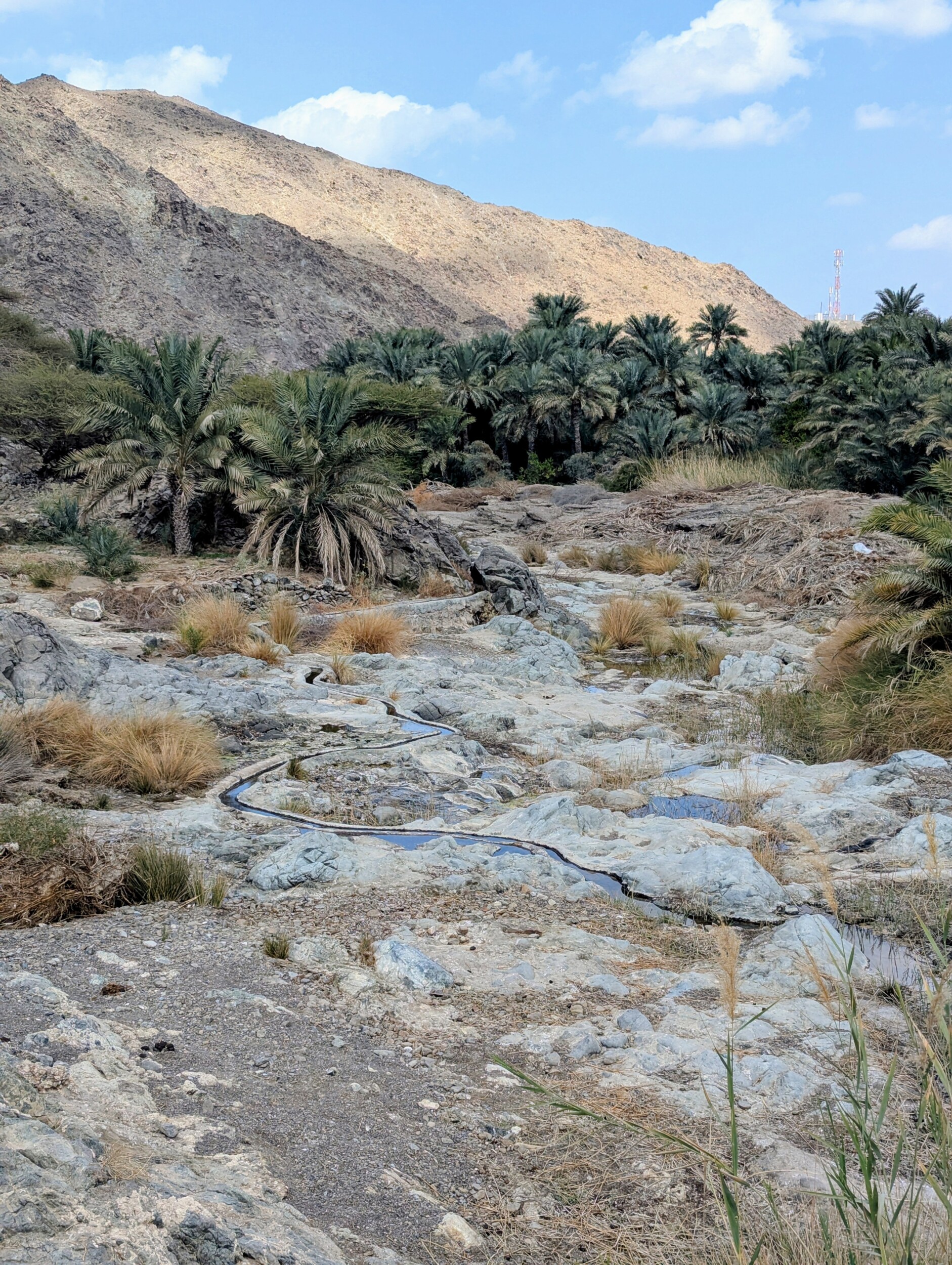
After Al Hinn, I drove on to Ain Seyaa, near Samail. This sulphur spring lies in a much more picturesque setting: tucked into a small village with a mosque on the horizon, surrounded by palm trees and more greenery. I genuinely found the surroundings prettier here.
Arriving in the Village
As soon as I drove into the village, a few boys of around ten came running up. They eagerly showed me the way to the spring and then sat down on a low wall by the mosque to watch this curious foreign visitor. A charming welcome that underlined the authentic, local atmosphere.
The Spring at Ain Seyaa
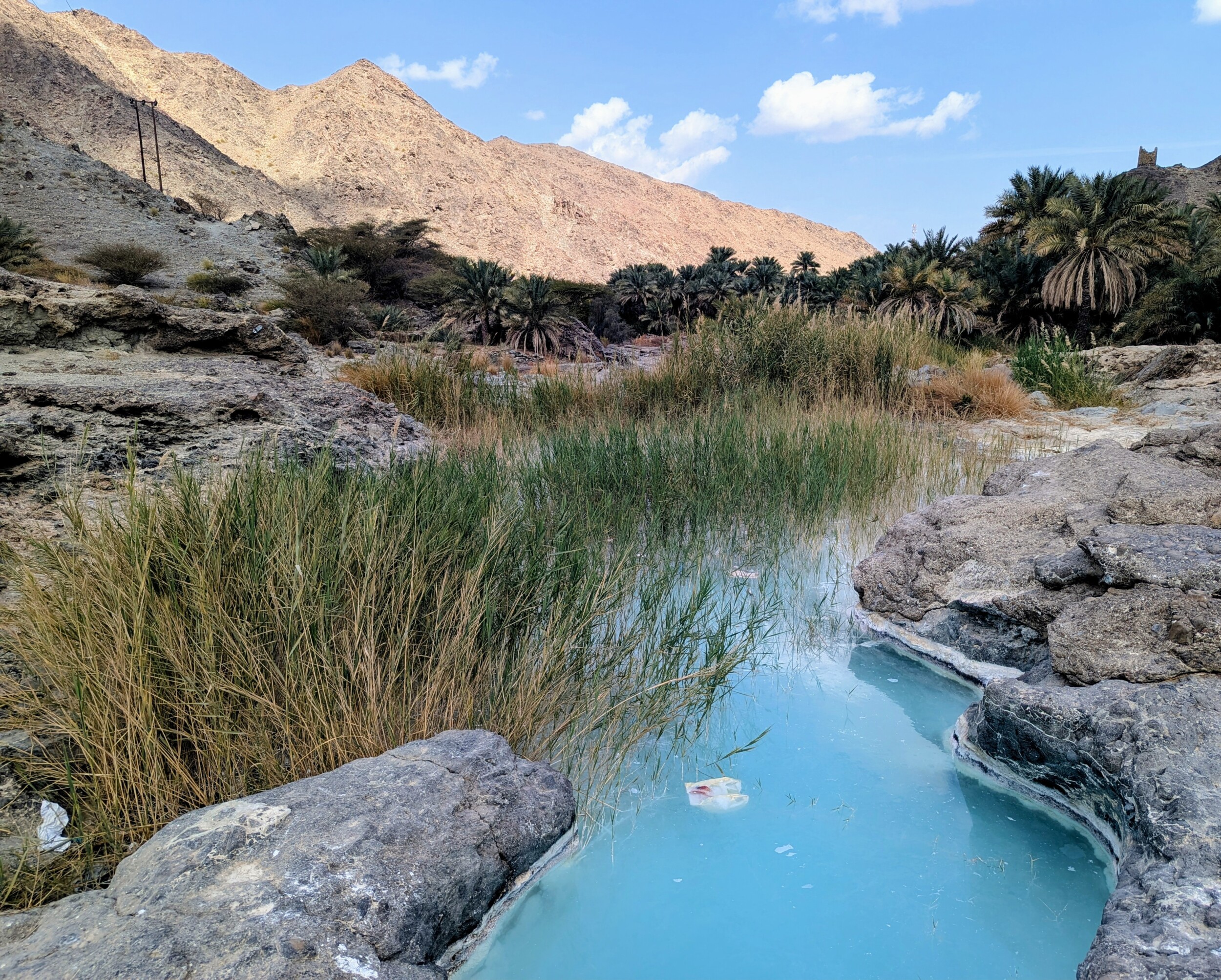
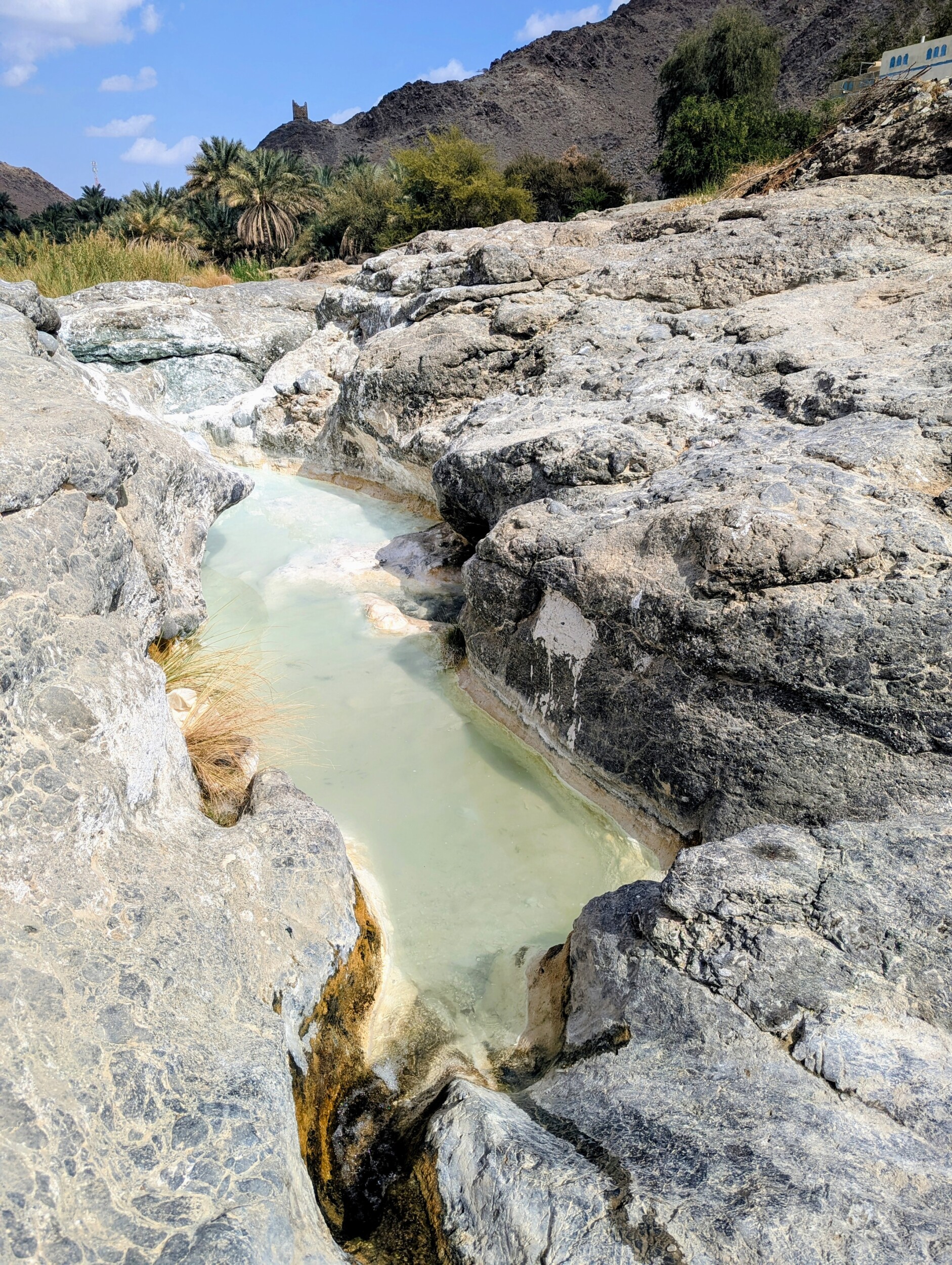
The spring was beautifully situated, with more palms and greenery around it. There was also slightly more water in the spring than at Al Hinn. Still, this water was even dirtier than at the first spring. It was full of rubbish lying everywhere. When I arrived, I saw that the water did have that beautiful blue colour, but it was absolutely not inviting to swim in.
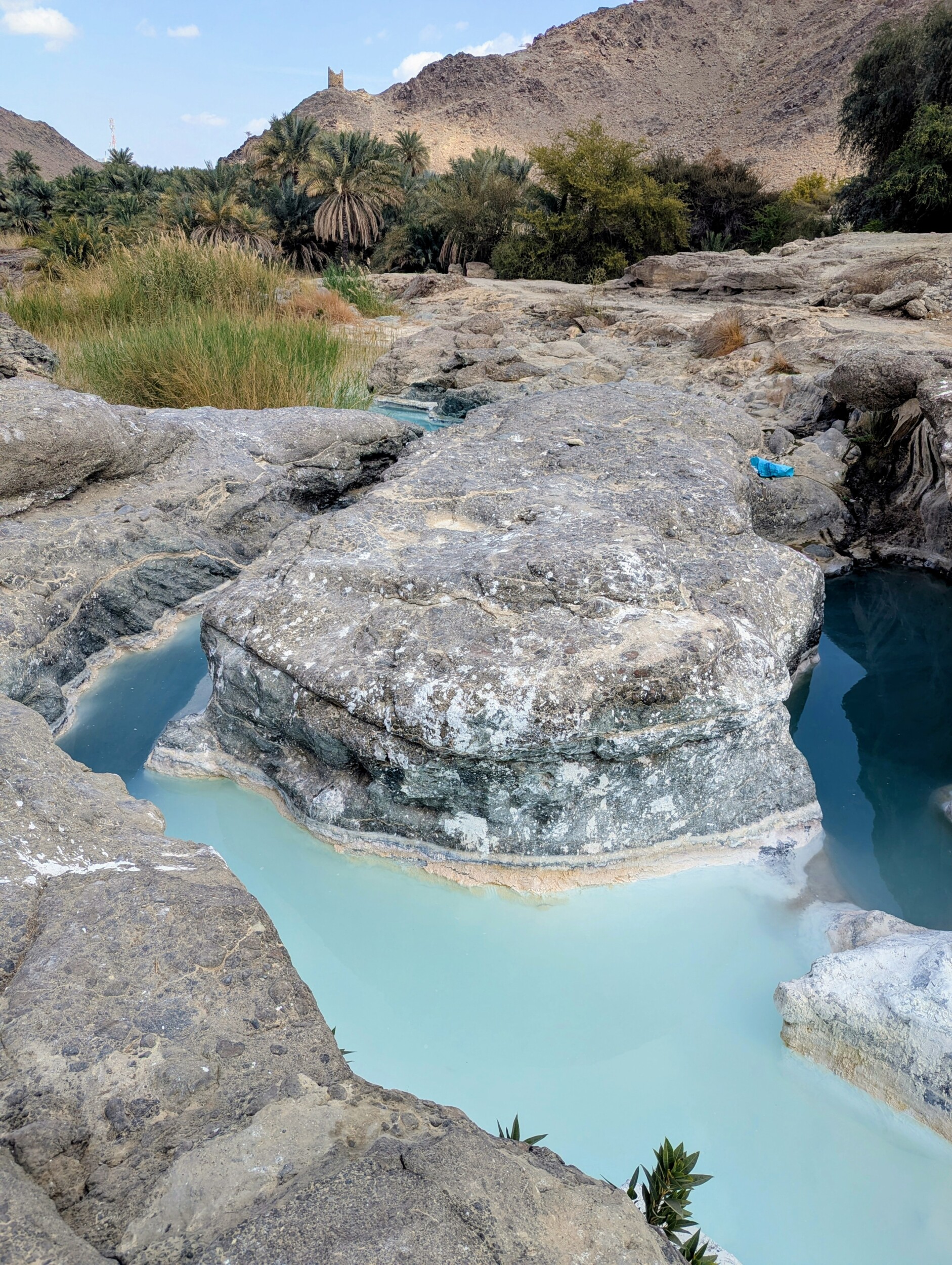
The setting, though, was much prettier: with the palm trees, the green landscape and the mosque in the background, it felt more like an oasis. But here too, it was clear that without regular maintenance, and after a dry spell, this natural place quickly loses its shine.
Practical Tips for Visiting the Sulphur Springs in Oman
How to Get There
Both sulphur springs are about an hour’s drive from Muscat, which makes them perfect for a day trip.
Al Hinn Sulfur Spring (Jardamanah)
From Muscat, drive towards Nizwa on Route 15 and take the exit towards Jardamanah. Follow the signs to Lizq (Lizagh), then Jardamanah and Gharabah. Eventually you’ll reach the spot on your left. There’s a sign on the rock plateau, and that’s your landmark. Don’t hesitate to ask locals for directions; they are incredibly helpful!
On Google Maps, search for “Al Hinn Sulfur Spring” or use this link. The drive takes about an hour from central Muscat. The roads are mostly paved, and the last stretch is unpaved but easy to drive with a regular car. The exact spot can be tricky to find, so feel free to ask the way!
Ain Seyaa (Samail)
From Muscat, drive towards Nizwa on Route 15 and take the exit for Samail. Follow the signs to the village where the spring is located. The village is small, so ask locals if needed; they’ll happily point you in the right direction. On Google Maps, search for “Ain Seyaa” or use this link. The drive takes about an hour from central Muscat, on paved roads all the way to the village.
Driving Tips
You don’t need a 4×4; I had a regular rental car. Download offline Google Maps for Oman, or get an eSIM so you stay online. Don’t be afraid to ask locals for directions, because this really is the best way to find the springs. Omanis are incredibly helpful. Start early in the morning to avoid the worst of the heat, and bring plenty of water: both springs lie on rock plateaus and in open terrain, with hardly any shade.
When to Go
The best season is October to April, outside the extremely hot summer months. Timing matters even more than the season, though: go within 3 to 5 days after rainfall in the region. This really makes all the difference.
Morning, between 7:00 and 10:00, is the best time of day: it’s cooler and the light is lovely for photos. Midday is very hot with little shade, and on the open plain at Al Hinn it gets seriously hot. Fridays are busier, because that’s when locals have their day off.
Entrance Fee
Free. Both springs are completely free to visit. There are no entrance gates and no parking fees.
What to Bring
The essentials are plenty of water (at least one litre per person), sun protection (sunscreen, a hat and sunglasses), closed shoes with good grip because the rocks can be sharp, and a towel if you want to swim (but check the state of the water first!).
I’d also recommend swimwear that covers you, such as a shirt and shorts, out of respect for local culture. Bring a camera or smartphone, because the blue colour is truly beautiful. Pack a rubbish bag and help keep the place clean, as litter is sadly a big problem here. Add some snacks and lunch, and a first aid kit.
Unfortunately, you’ll still find a lot of single-use plastic in Oman. I always bring my own reusable water bottle. My mission is to eliminate single-use plastic — refilling instead of throwing away is one of the easiest ways to contribute as a traveler. A cotton tote bag for small purchases helps avoid unnecessary plastic waste while traveling.
Facilities
None. There are no facilities at all. These are what you’d call off-the-beaten-path places: completely undeveloped, still natural spots. Not prettied up, not for the Omanis themselves, and so not for tourists either. Keep that in mind during your visit.
I hope that, in time, Omanis will come to value these places more and maintain them better.
Combine Your Visit
If you’re in the area anyway, consider combining the springs with these sights.
Nizwa (30 minutes from the springs)
Nizwa shouldn’t be missing from any trip to and through Oman. On my round trip we always go there and stay a few days in the city and its surroundings. Visit Nizwa Fort, the Friday goat market (get up early!) and the traditional souq.
Bahla Fort (45 minutes)
Bahla Fort is a UNESCO World Heritage Site and an impressive mud-brick fort.
Jebel Akhdar (1.5 hours)
Jebel Akhdar offers green mountains with terraced orchards and a cooler climate. You do need a 4×4 to get there!
Are the Sulphur Springs in Oman Worth It?
If you go after rain: absolutely! This is a unique, authentic Omani experience that few tourists get to have. The azure colour, the flowing water and the peaceful setting make it worth the trip.
Outside the rainy season, maybe not as a main destination, but it’s a nice stop on the way to Nizwa or other sights in the area. Adjust your expectations and go for the experience and the colour of the water, not to swim.
My advice: check the weather and find out whether it has rained. If it has, definitely go! If not, combine the springs with other stops and see them as a bonus. Keep your expectations realistic, because the springs can look abandoned and dirty. And take your own rubbish (and maybe a little extra) back with you.
Beautiful Local Places Few Travellers Find
The upside of these sulphur springs? You won’t find any tourists there. These are truly local places where Omanis themselves come. The downside? Exactly the same: without tourism there’s no maintenance, and it can look dirty.
Frequently Asked Questions
- When is the best time to visit the sulphur springs?
Right after rainfall (within 3 to 7 days). Check the weather forecast and go as soon as there’s been rain in the region. This truly makes the difference between a wonderful and a disappointing experience! - Can you swim in the sulphur springs?
After rain, yes, but outside the rainy season the water level is often too low and the water too dirty to swim safely. My advice: check the state of the water before you go in. - Do you need a 4×4?
No, a regular car is fine. The roads are mostly in good condition; only the last stretches are unpaved. - Is it safe for children?
The locations themselves are safe, but keep a close eye on young children near the pools. There is no supervision and there are no safety facilities. And it can get very hot on the plains. - Does it smell of sulphur?
Surprisingly, hardly or not at all. Many visitors expect a strong sulphur smell, but the springs smell almost neutral. - What’s the difference between Al Hinn and Ain Seyaa?
Al Hinn lies on a bare rock plain and is harder to find. Ain Seyaa lies in a small village with prettier, greener surroundings and palm trees. Both have beautiful blue water, but in my opinion Ain Seyaa has the more picturesque setting.
Staying in Muscat?
This trip is easy to do from Muscat. Looking for a pleasant place to stay in Muscat? Take a look at the following options.
Mid-Range Hotels (€70-200 per night)
- The Royal Tulip – Modern hotel with sauna, hot tub and hammam
- Mövenpick Hotel & Apartments Ghala Muscat (Ghala) – Modern hotel in a quiet neighbourhood, family-friendly with apartments
- Crowne Plaza Muscat (Al Qurum) – Centrally located, a perfect base for all the sights
Budget Hotels (€40-70 per night)
- Wyndham Garden Muscat Al Khuwair (Al Khuwair) – Central business district, close to the Sultan Qaboos Grand Mosque and within walking distance of the beach
- Fort Guesthouse (Mutrah) – Authentic guesthouse near Mutrah Souq, personal atmosphere
Staying Online in Oman
If you’d like to stay online during your trip, you can with an eSIM. Buy it in advance and install it at home before you leave. I understood that once you’re in Oman, it no longer works.
Final Thoughts: Oman’s Hidden Side
Al Hinn and Ain Seyaa represent the duality of Oman’s hidden places: breathtakingly beautiful and challenging at the same time. They show that not every special experience has to be perfectly polished.
These sulphur springs are a reminder that travelling also means being flexible, adjusting your expectations and finding beauty in imperfection. If you come at the right moment, after rain, you’ll be rewarded with something truly special. If you come at another time, you’ll see the less glamorous but authentic side of local Oman.
For me, the whole experience, from asking for directions and the local man who simply got into my car, to meeting the British travellers, the curious boys at the mosque who showed me the way, to standing by those beautiful blue pools, made it an unforgettable day. Not perfect, but real.
And maybe that’s what travel is ultimately about, isn’t it? Discovering, adapting and enjoying the unexpected twists and turns.
Have you visited these sulphur springs? Or are you going after reading this article? Share your experience in the comments!
Also read
- Things to do in Muscat – Oman
- Hiking in Wadi Shab – Sur, Oman
- Everything You Need to Know About Oman
- Bar Al Hikman: The Maldives of Oman
Travelling to Oman with me? Book your trip with Zinvol Reizen
This article contains affiliate links. If you book or purchase something through one of these links, we may receive a small commission at no extra cost to you.