
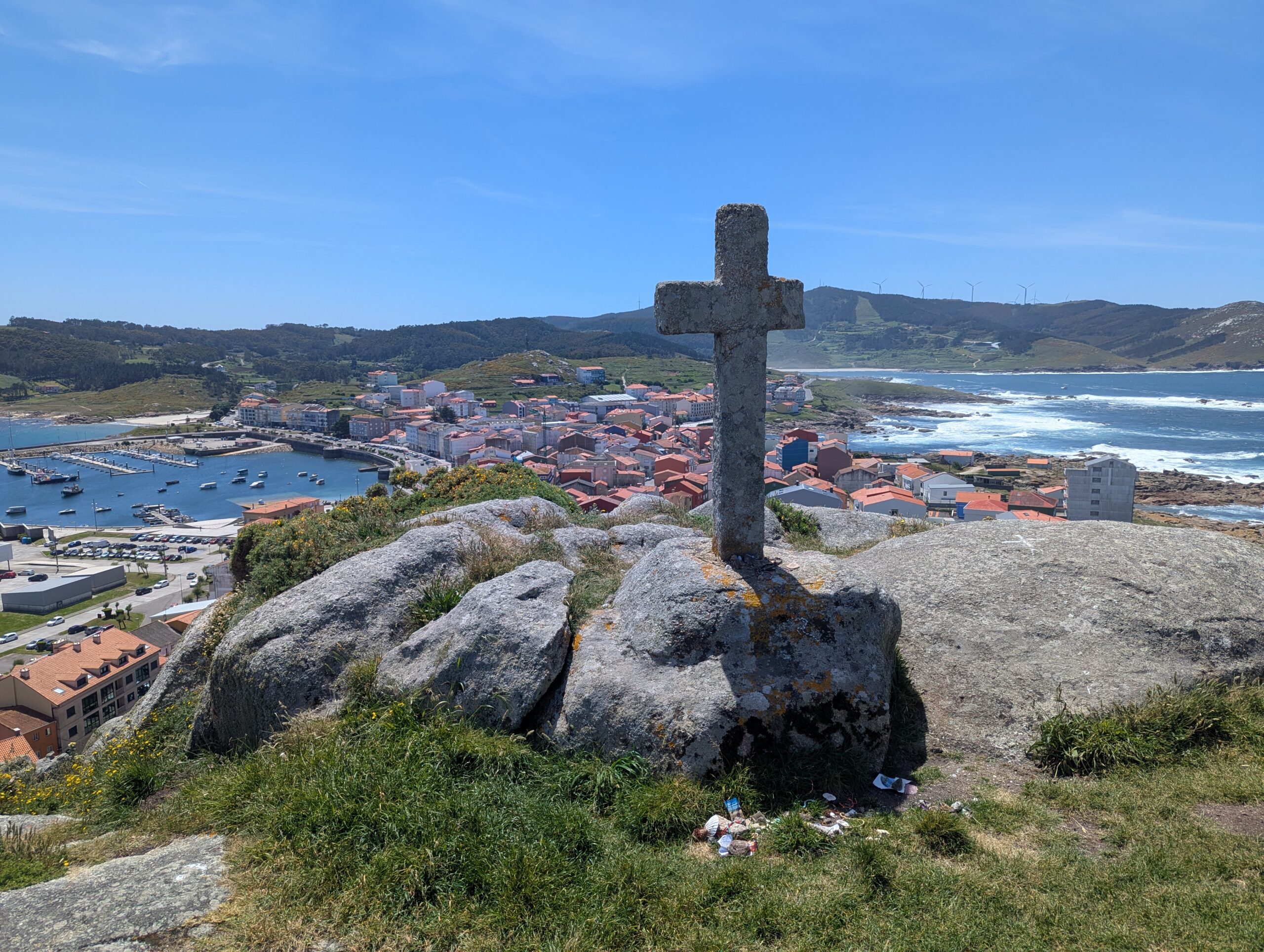
Muxía sits at the edge of the world. Not figuratively — almost literally. It is a small fishing village on the Costa da Morte, the Coast of Death, where the Atlantic Ocean pounds the rocks without mercy. There are no major attractions, no busy promenades, no souvenir shops competing for your attention. What you find instead is something else: a sanctuary built on a cliff, ancient stones with rituals still performed around them, fresh percebes at the harbour, and the kind of quiet that belongs to a place where the world simply ends.
For pilgrims walking the Camino de Finisterre, Muxía is often the second endpoint after Finisterre. But it deserves more than a quick stop on the way home. Here is everything worth doing in Muxía, whether you arrive as a pilgrim or as a traveller.
Things to Do in Muxia: The Highlights
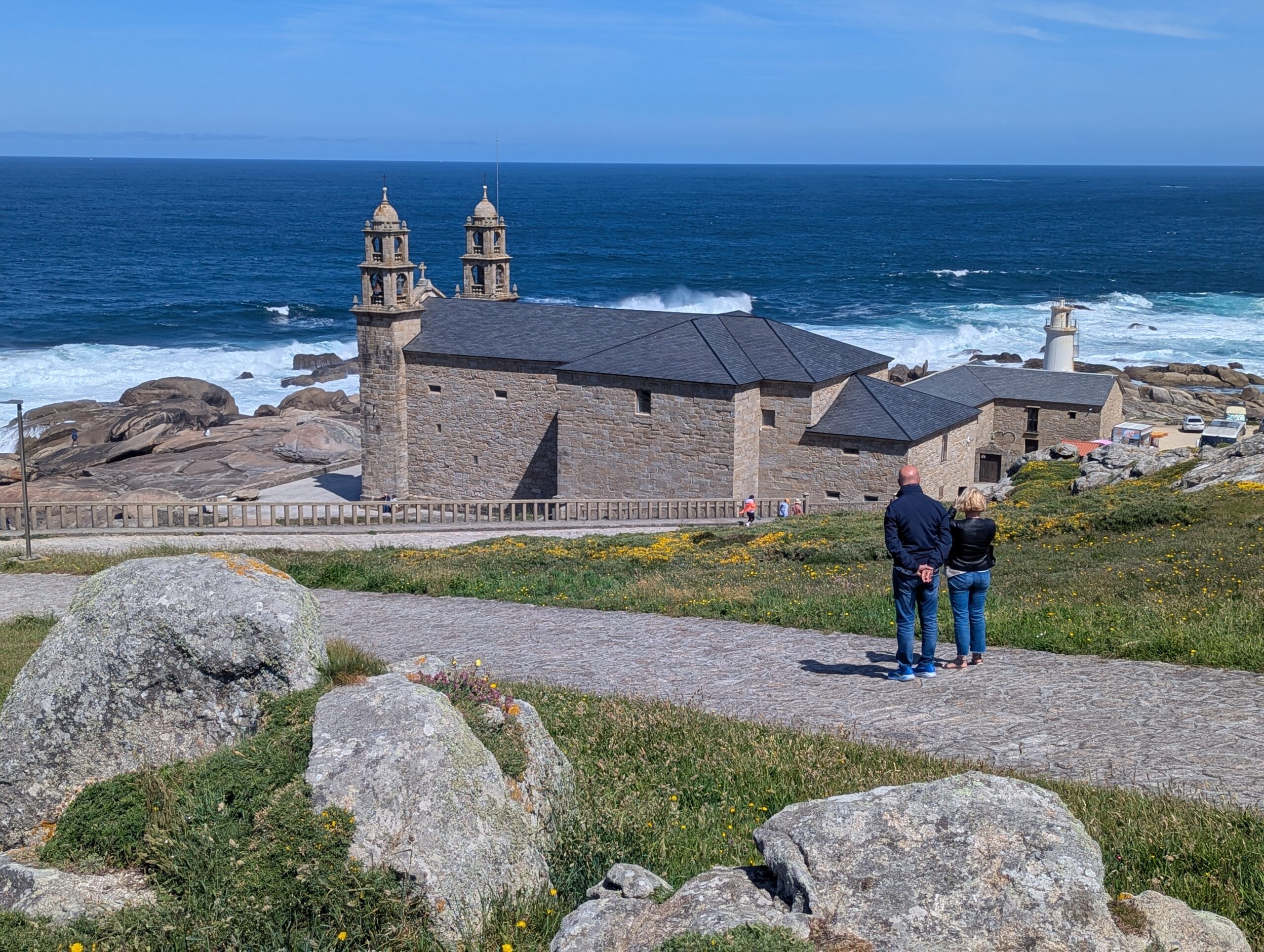
Santuario da Virxe da Barca
Everything in Muxía revolves around this sanctuary. It stands on a narrow headland, built directly on the rocks, with the ocean on three sides. In rough weather the waves crash so high it seems the building could be swept away at any moment. That it has stood here for centuries says something about both the strength of faith and the quality of Galician stone.
The legend: the Virgin Mary appeared to the apostle James in a stone boat, guided by angels, to give him courage. His preaching in the northwest of the Iberian Peninsula was not taking hold, and he was close to giving up. She appeared, the boat remained, and on that spot the sanctuary was built.
Three large boulders remain from the stone boat. Each has its own ritual, and those rituals are still carried out today, by pilgrims and locals alike.
The Pedra de Abalar, the rocking stone, is the most famous. Those who are pure of heart can make it move. Pilgrims ask the stone a question in silence: if it moves, the answer is yes. According to tradition, whether the stone moves depends on the Virgin herself, not on human force.
The Pedra dos Cadrís is shaped like a kidney, which explains its name. Crawling under it nine times is said to cure back pain, rheumatism, lumbago or arthritis. There is also a hollow in the rock where you can rest your head, believed to relieve headaches. Even outside the pilgrimage season, you will see people come here with genuine hope.
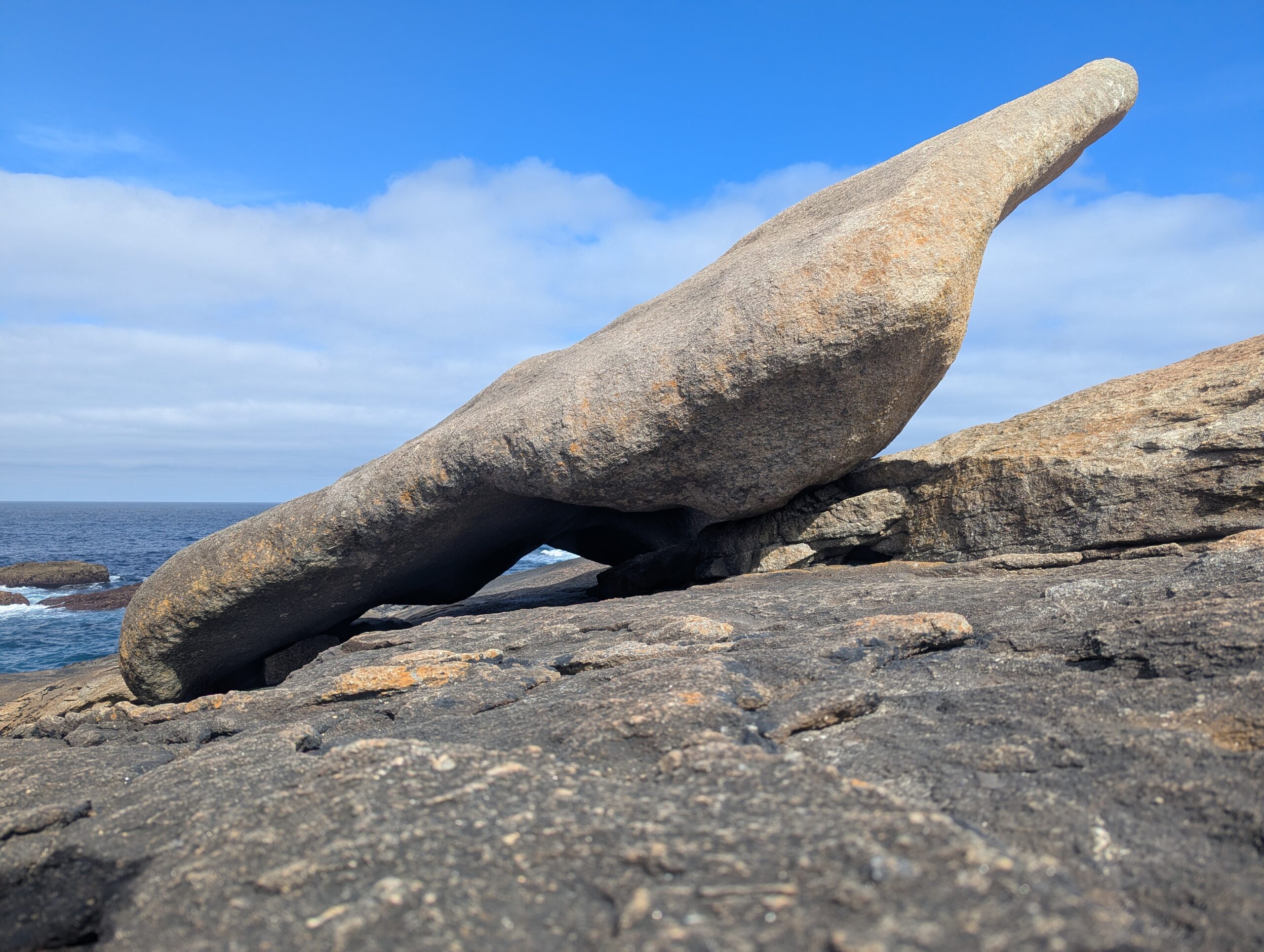
The Pedra do Timón is the rudder of the boat. No healing powers are attributed to this one, but nearby stands the Pedra dos Namorados, where couples swear eternal devotion to each other.
The sanctuary itself is baroque in style, with classicist influences. The first written record dates from 1544, but the complex has been rebuilt several times over the centuries. In 2013 a lightning strike caused a fire. The replica of the statue of Mary was lost in the flames. That the sanctuary was rebuilt afterwards says everything about what this place means to Galicia.
Just behind the sanctuary begins the Camiño da Pel, the Path of the Skin. This is where a spring once stood, used by pilgrims and the sick to wash before entering the sanctuary, to prevent the spread of leprosy.
Monte Corpiño and the Viewpoint
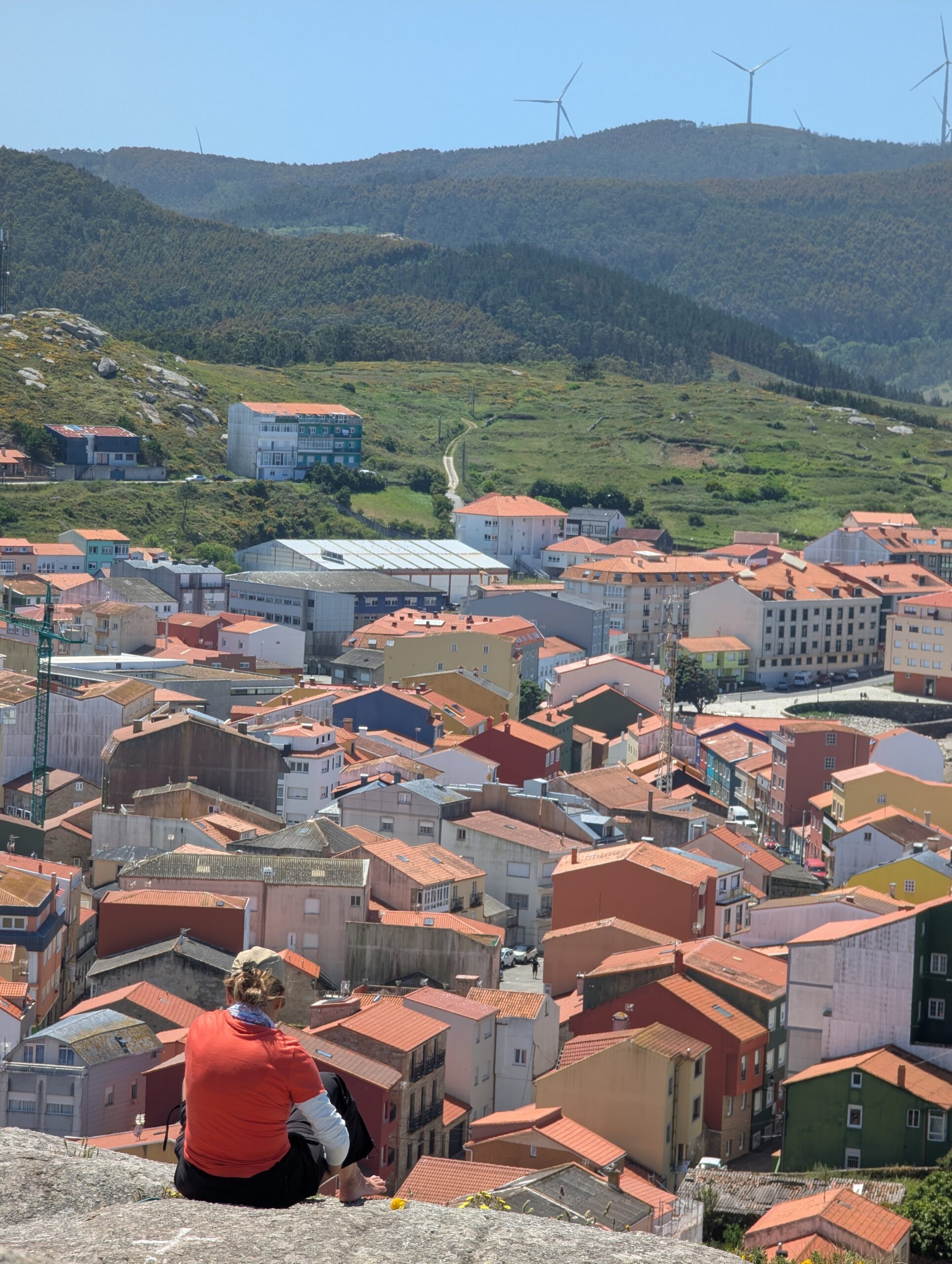
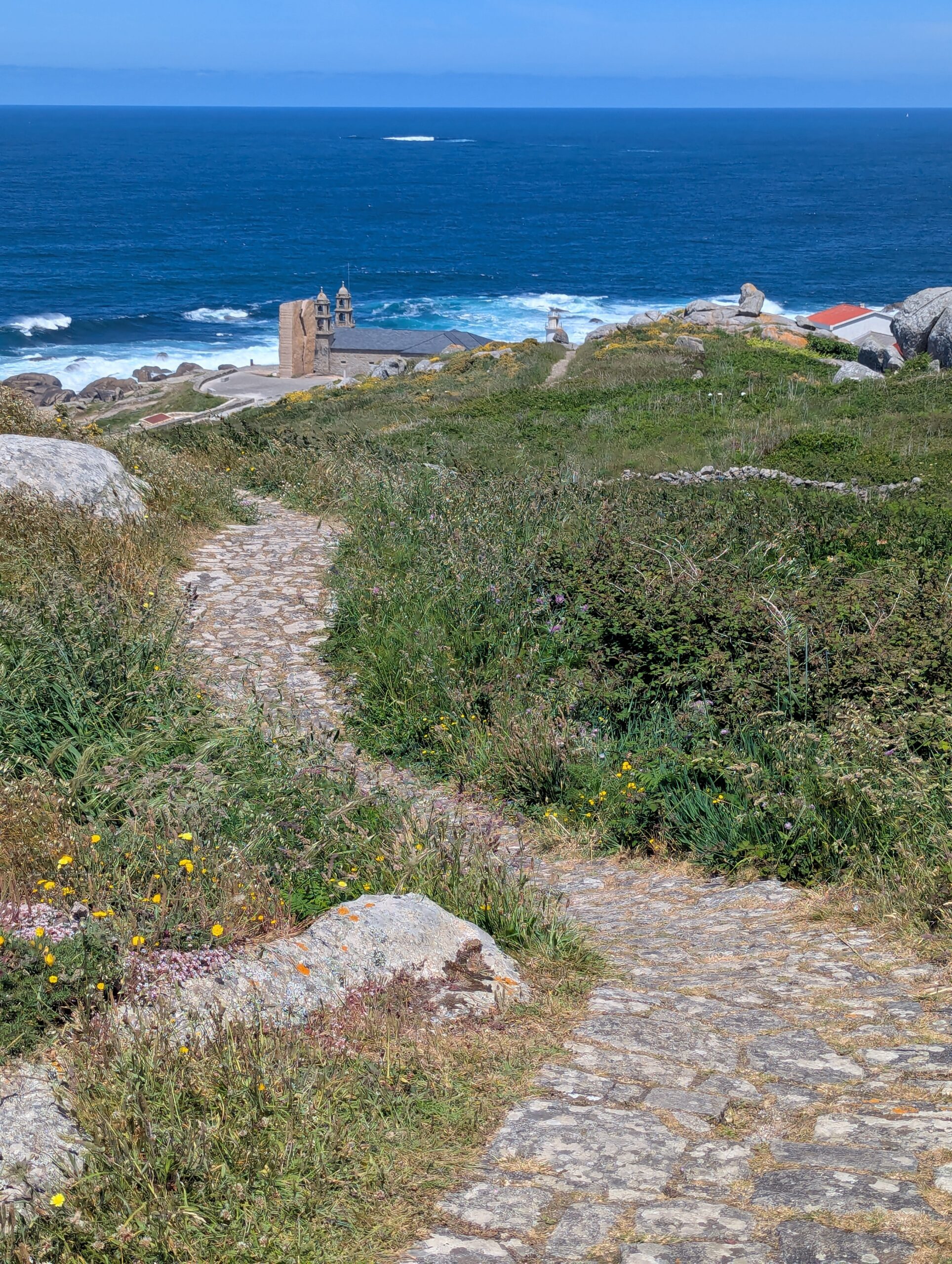
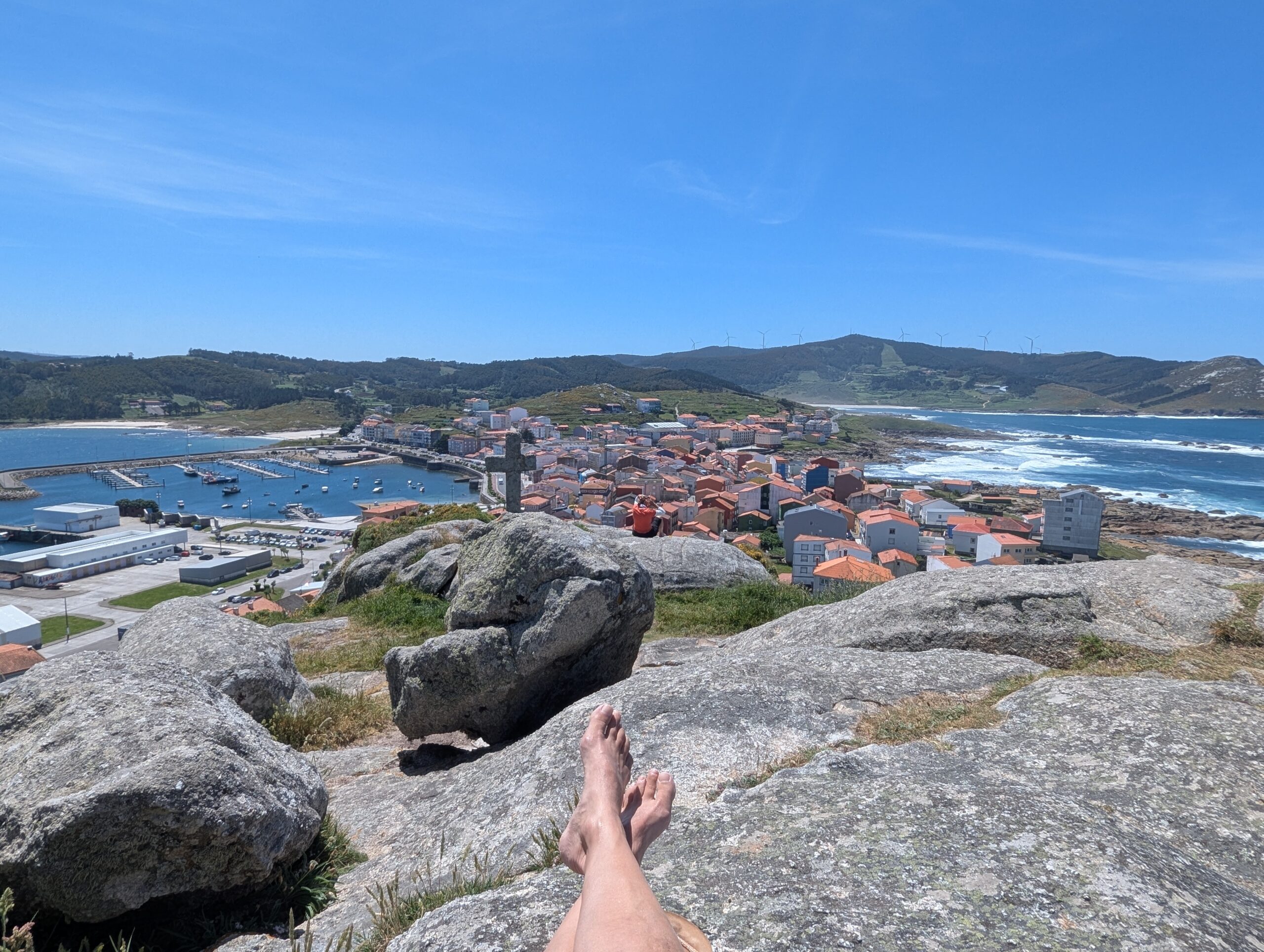
From the sanctuary, a cobblestone path climbs to the top of Monte Corpiño, 68 metres above sea level. It is a short walk of around fifteen minutes, but the view makes it worthwhile. You look out over Muxía, the Ría de Camariñas, Cabo Vilán, and the beaches of Leis and O Lago. At sunset the ocean turns orange and pink, and the sanctuary lies in the hollow below you. Take your time here.
Monument A Ferida
On 13 November 2002, the oil tanker Prestige sank off the Costa da Morte. It was one of the worst environmental disasters Spain had ever seen. Muxía was one of the hardest hit places. Volunteers came from across Spain and beyond to clean the rocks and beaches.
In memory of that disaster stands an 11-metre monolith: A Ferida, the wound. The crack running through it is not a flaw in the stone. The crack is the point.
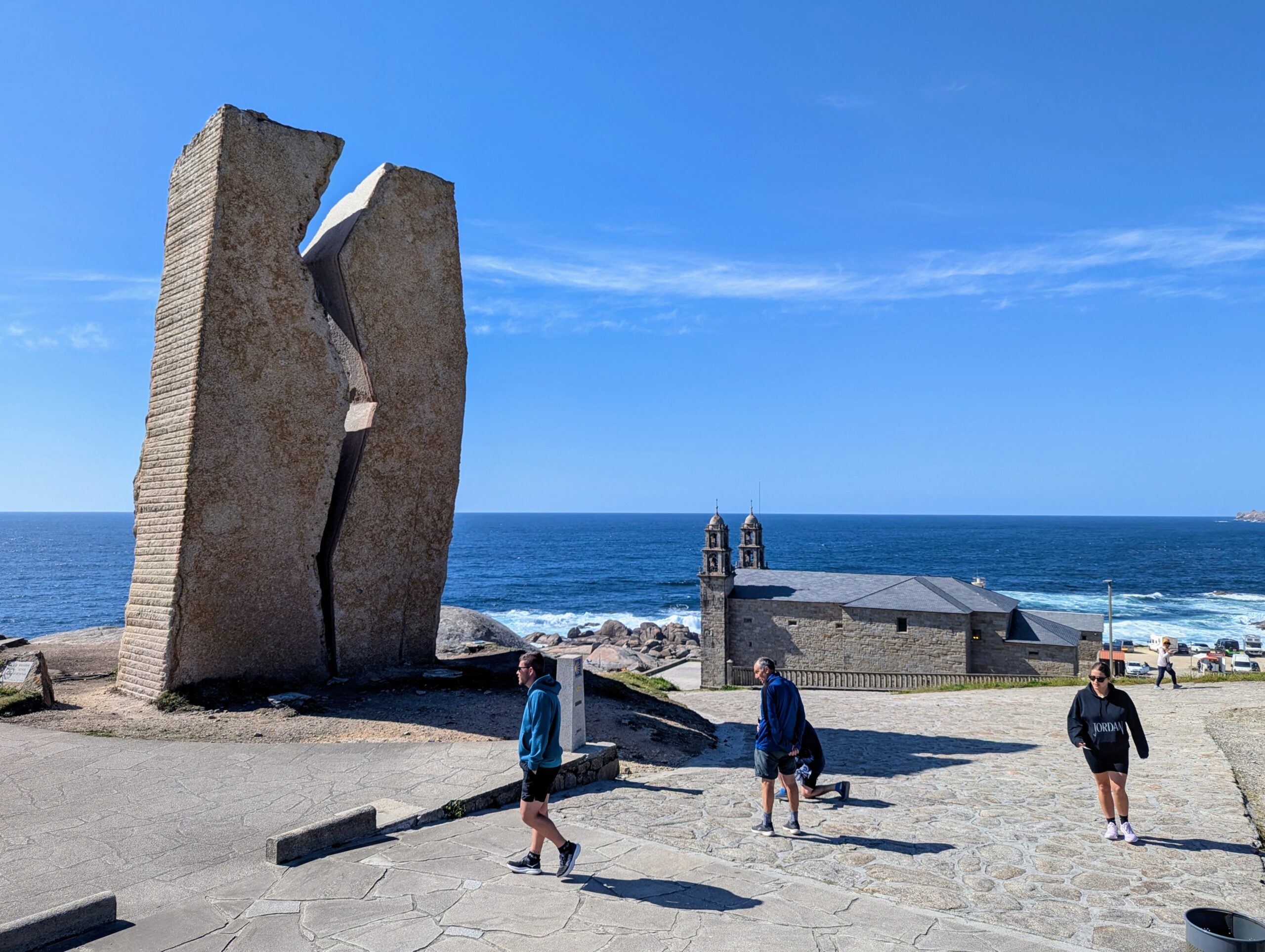
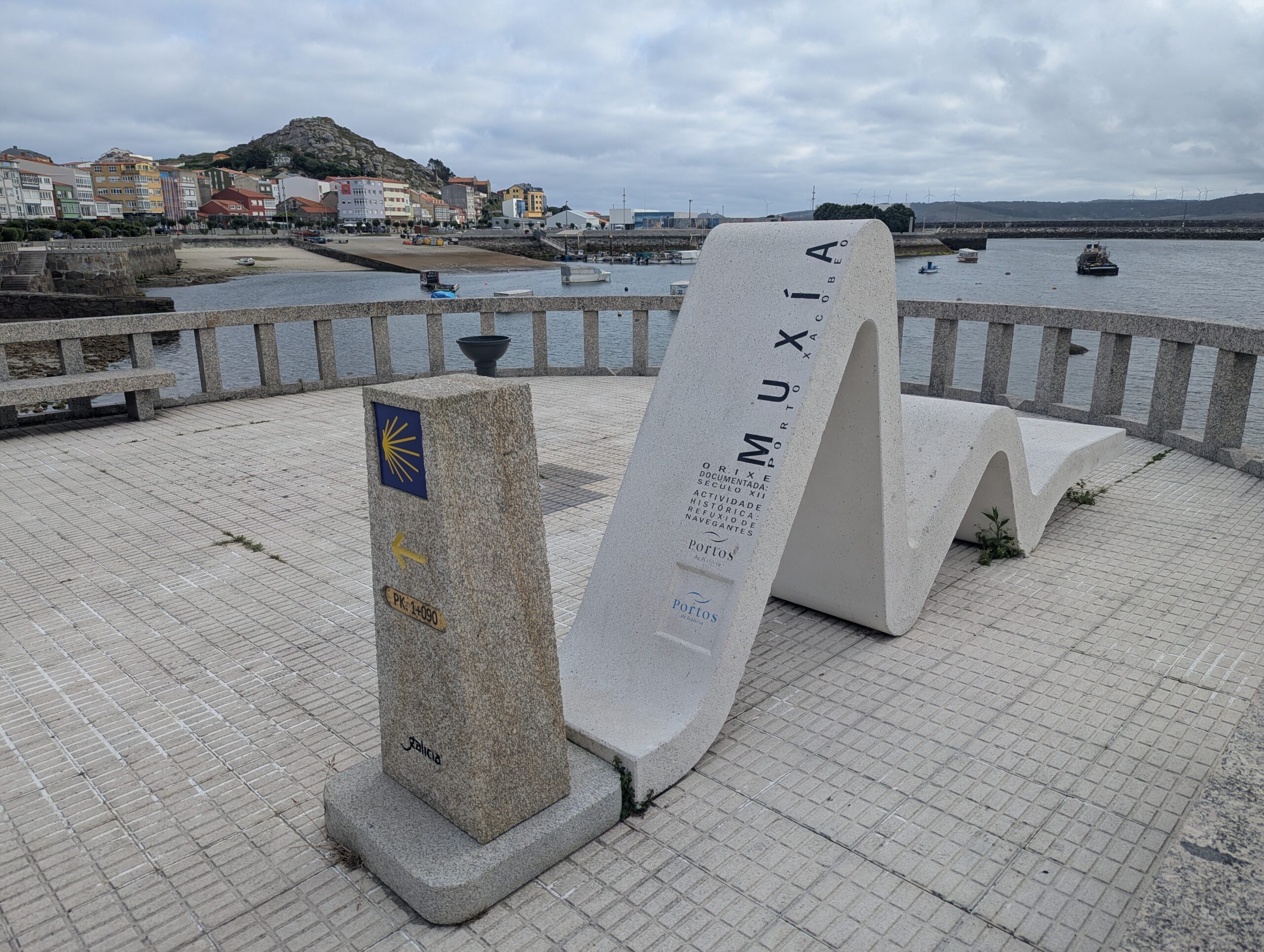
Next to the monument stands the 0 km marker for the Camino to Muxía. There are in fact two zero-point markers — one here, one in Finisterre. For me, Finisterre is the true endpoint of the Camino. But you are allowed to choose.
Percebes: Eating From the Rocks
Muxía is one of the best-known percebes harvesting villages on the Costa da Morte. Percebes — goose barnacles — grow on rocks in exactly the spots where the waves hit hardest. That makes harvesting them dangerous work. The percebeiros go into the water in wetsuits, secured to a rope in case the waves pull them under. Their knowledge, and their respect for the ocean, has been passed down through generations.
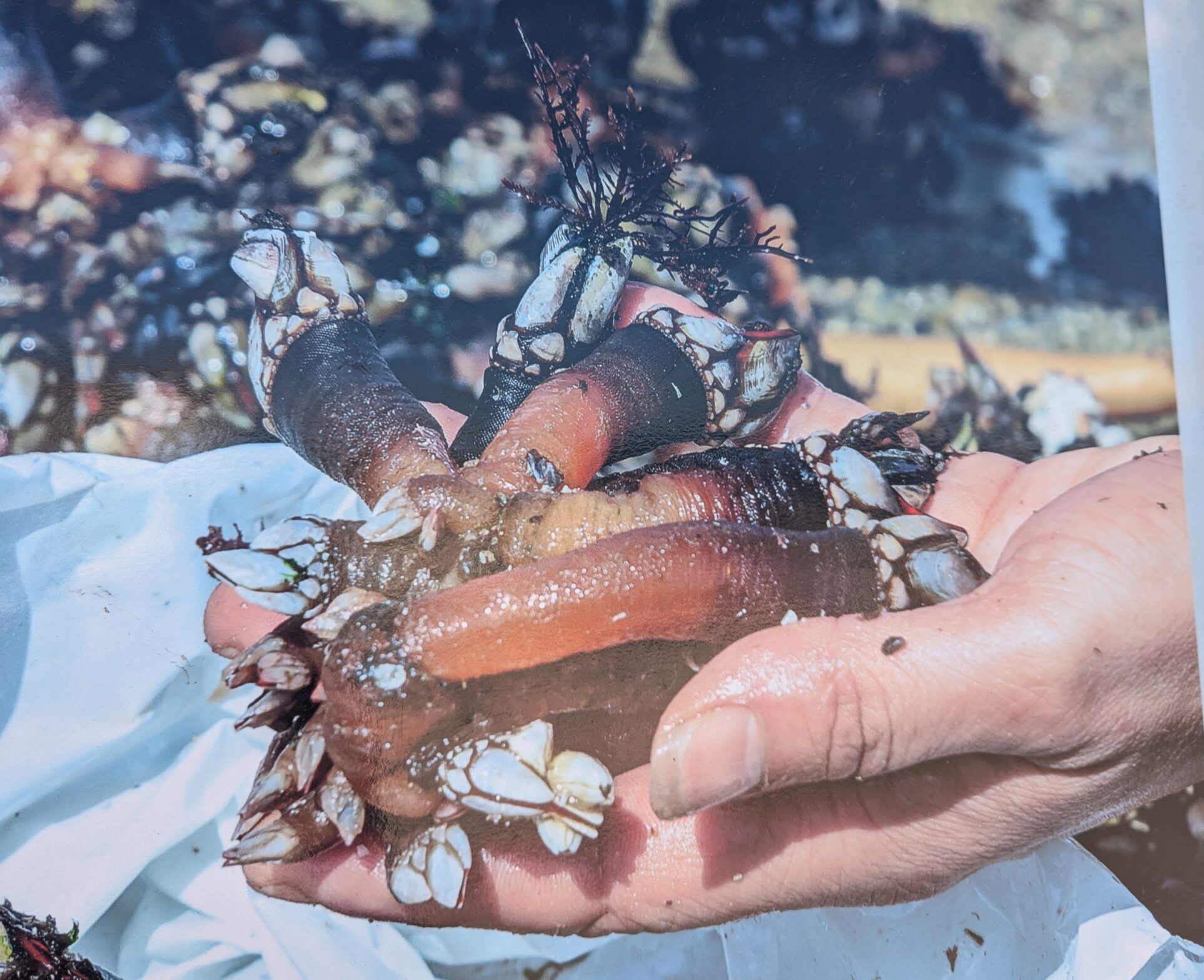
The Galician saying goes: auga a ferver, percebes botar — when the water boils, add the percebes. They are briefly cooked in salted water, served in a bowl, and eaten by pulling the fleshy end from the stalk and slurping out the inside. Pure. Salty. Entirely of the sea.I will be honest: I have never tried them myself. They do not look particularly inviting. But if you are braver than I am with unfamiliar food, Muxía is the place to do it.
As well as barnacles, conger eel and caldeirada are typical local dishes. Caldeirada is the fishermen’s fish stew: the catch of the day, potatoes, onions and peppers. Everything served is fresh from the sea that very morning.
You can book a tour with a local guide who will take you to meet the percebeiros and show you around the harbour.
Romería da Virxe da Barca
On the second Sunday of September, one of the largest and oldest romerías in all of Galicia takes place here. Thousands of people make a pilgrimage to the sanctuary. Some walk on bare knees along the Camiño da Pel from the village to the church. Candles are lit, prayers are said, and the Pedra de Abalar is approached by those looking for an answer.
If you are in Galicia in September, this is worth witnessing.
Iglesia de Santa María de Muxía
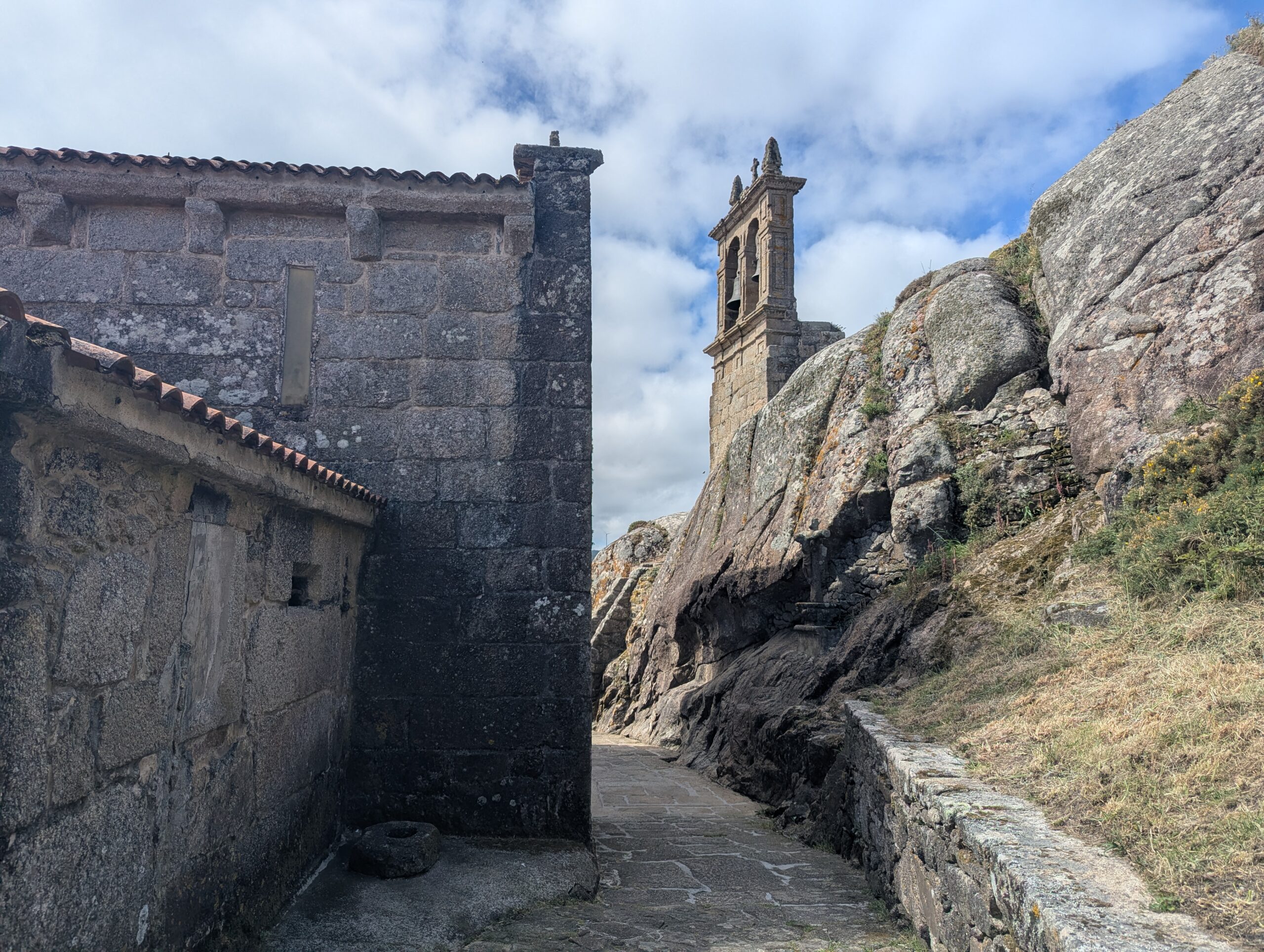
On the route from the village to the sanctuary, you pass the Iglesia de Santa María. The path runs literally between the two parts of the church complex: the church on one side, the freestanding bell tower on the other. It is an unusual arrangement that only makes sense once you are there. The church itself is almost always closed, but the spot is worth a moment’s pause. It is where you feel the village fall away behind you and something older begin.
Camino dos Faros
The Camino dos Faros is a coastal walking route along the lighthouses of the Costa da Morte, roughly 200 kilometres long, from Finisterre to Malpica. It runs along cliffs, beaches and fishing harbours. It is not a pilgrimage route but a coastal trail — and it is on my list for a future trip.
Cabo Touriñán
Seventeen kilometres from Muxía lies Cabo Touriñán. The most north-westerly point of the Iberian Peninsula, and one of the quietest, most remote spots on the entire Costa da Morte. You will meet almost no one here. Watch the sun go down from the rocks, with the lighthouse behind you and the ocean at the horizon, knowing you are watching the last sunset in Europe.
Eating and Drinking in Muxía
For breakfast, Cafetería Antoxiños is the right choice. Good coffee, and the açaí bowl comes served in a little glass jar — a small detail that sets the tone for the morning. Small café, modern menu, entirely authentic Spanish atmosphere. It made me genuinely happy.
In the evening, head to the harbour. The restaurants along the waterfront serve fish and seafood caught that same morning. Ask about percebes — they are not always available, as the harvest depends on the weather and the sea. If they have them: do you dare try them?
Take your own reusable water bottle #ad on every trip. My mission is to cut single-use plastic, and refilling instead of discarding is one of the easiest ways to do that as a traveller. A foldable bag for small purchases also helps reduce unnecessary plastic waste along the way.
Practical Information
Getting There
Muxía has no train station, and bus connections from Santiago de Compostela are limited, especially outside the season. By rental car you can get there in about an hour and a half from Santiago. The route along the AC-552 coastal road is a beautiful drive.
Pilgrims walking the Camino de Finisterre arrive either via Finisterre or directly from Santiago via the route through Zas and Dumbría.
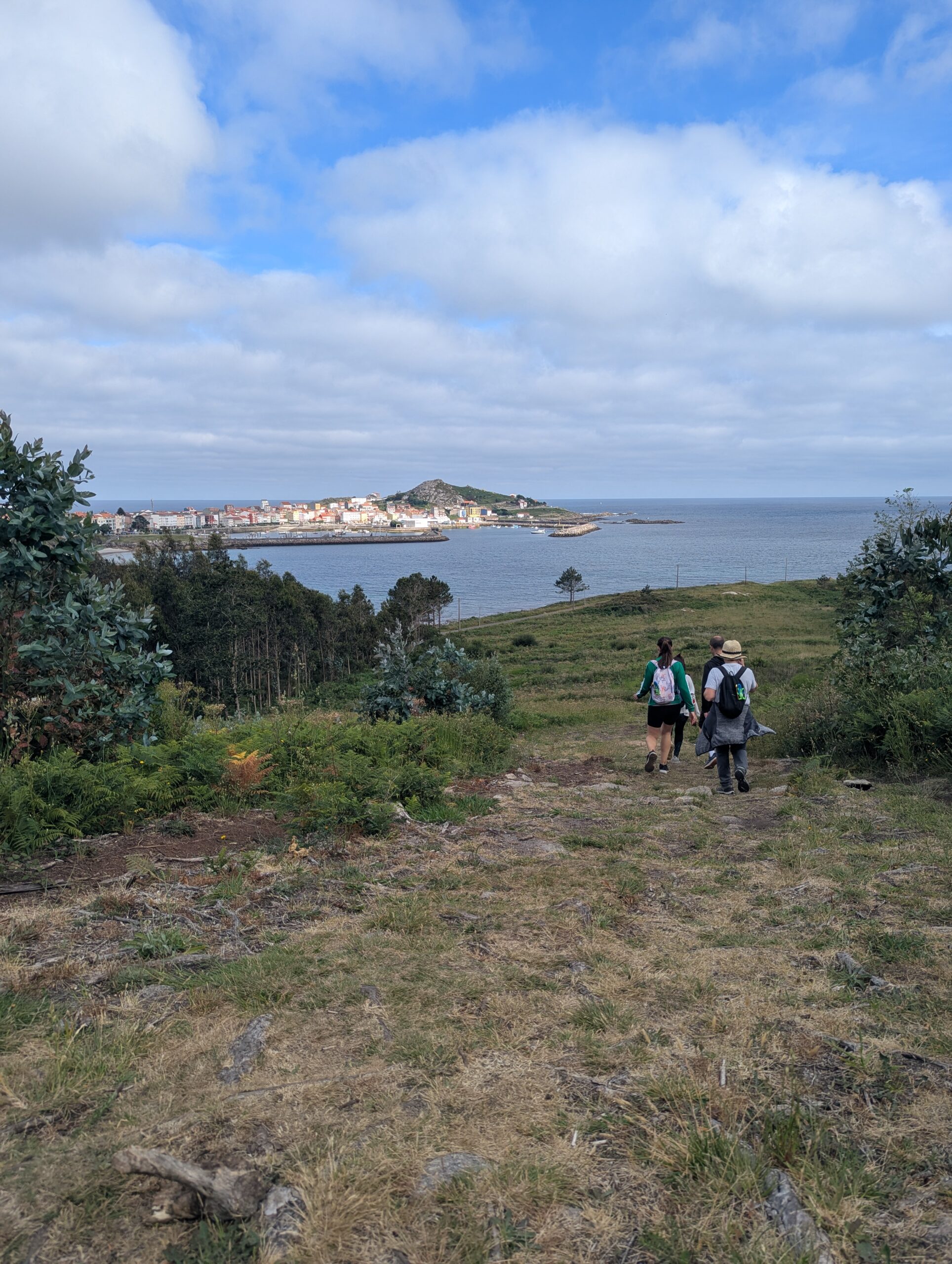
A tip for pilgrims: if you have the choice, walk directly from Santiago to Muxía rather than via Finisterre. The arrival on foot is genuinely beautiful. You descend a hillside with the entire village spread out below you, then walk through a eucalyptus forest and along the harbour into the centre. That is an arrival that feels like one. Those arriving from Finisterre walk nearly 2.5 kilometres along a main road before reaching the village. Perfectly functional — but not what you want after a week on the trail.
Nevertheless, I’ve decided to head to Finisterre first on my Camino Finisterre journey. Why? Because that way, we’ll have a day by the coast in Cee, with the chance to enjoy a lovely swim after a day’s walking. And afterwards, we’ll be able to walk along the coast for longer, with an extra day to get to Muxia.
When to Go
May to September offers mild weather, a green coastline and no extreme heat. September adds the Romería on the second Sunday of the month. Outside the season, Muxía is almost entirely quiet. The Costa da Morte in winter is impressive, but expect rain, wind and closed restaurants.
How Long to Stay
A day trip from Santiago or Finisterre is possible. But Muxía rewards slowness. One night gives you the evening at the harbour, the morning at the sanctuary before the day visitors arrive, and the space to take in what this place actually does to you.
Where to Stay
Solpor do Coldo is a hotel in Muxía with stylish rooms, a lovely patio garden and a central location. For complete luxury and privacy, the Parador Costa da Morte sits on a hill with glass walls and views across the bay from the pool. Modern, and deliberately built as a counterpoint to the raw landscape around it.
Many pilgrims choose one of the albergues in the village. More atmosphere, lower cost, and you will meet people who have just walked the same roads you have. I stay at Bela Muxía, right in the centre, and it has never disappointed.
Want to walk the Camino yourself? I guide small groups on the first 200 km from Saint-Jean-Pied-de-Port and on the final section of the Camino Francés and the Camino de Finisterre. Have a look at the trips and join us.
Also read
- Isla de Ons: Complete Guide to Galicia’s Hidden Paradise Island
- Valença and Tui: Two Historic Border Towns on the Portuguese Camino
- Camino de Santiago Health Tips
- Things to Do in Vigo: Complete Guide + Perfect Camino Stop
This article contains affiliate links. If you book or purchase something through one of these links, we may receive a small commission at no extra cost to you.