
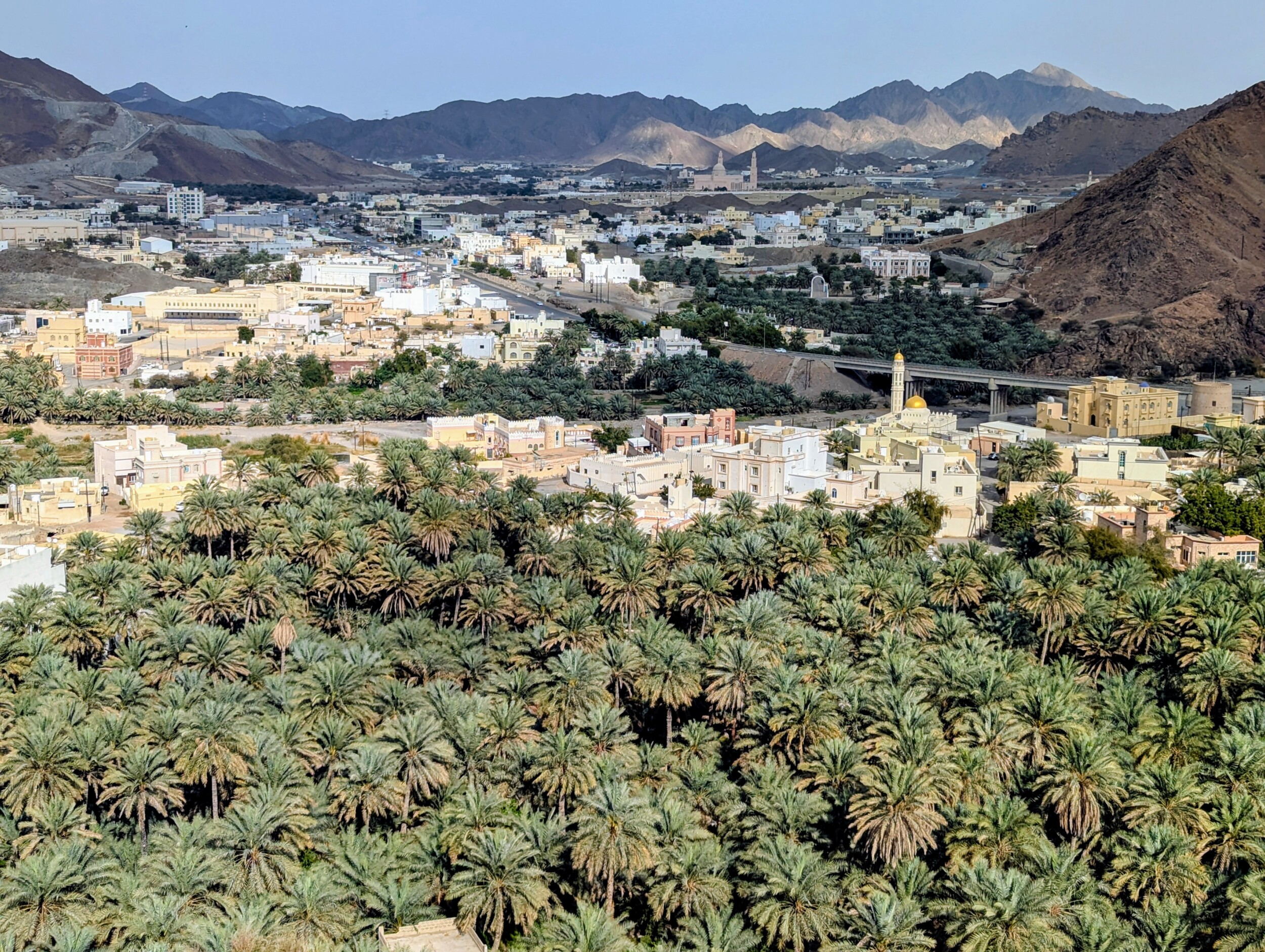
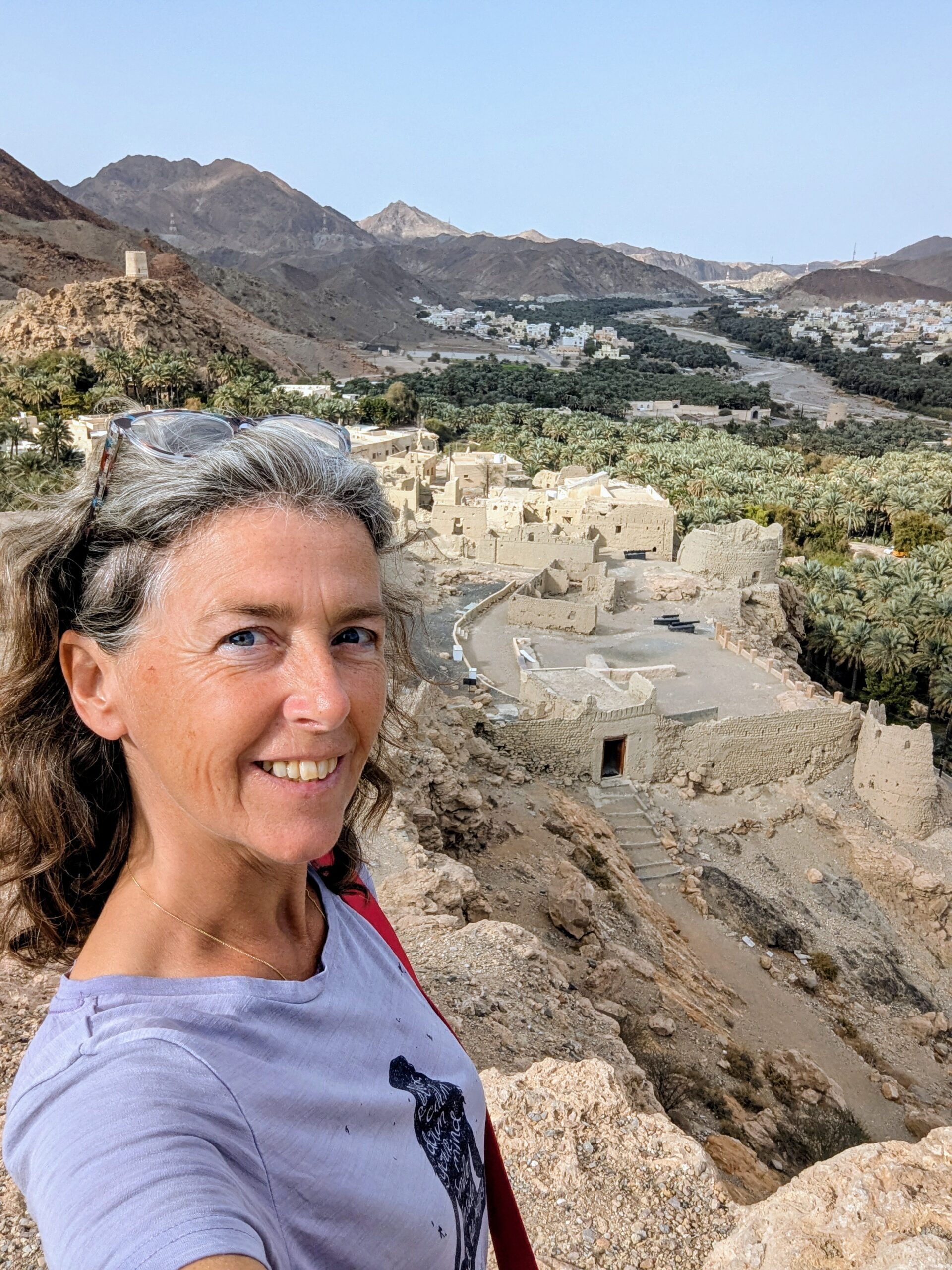
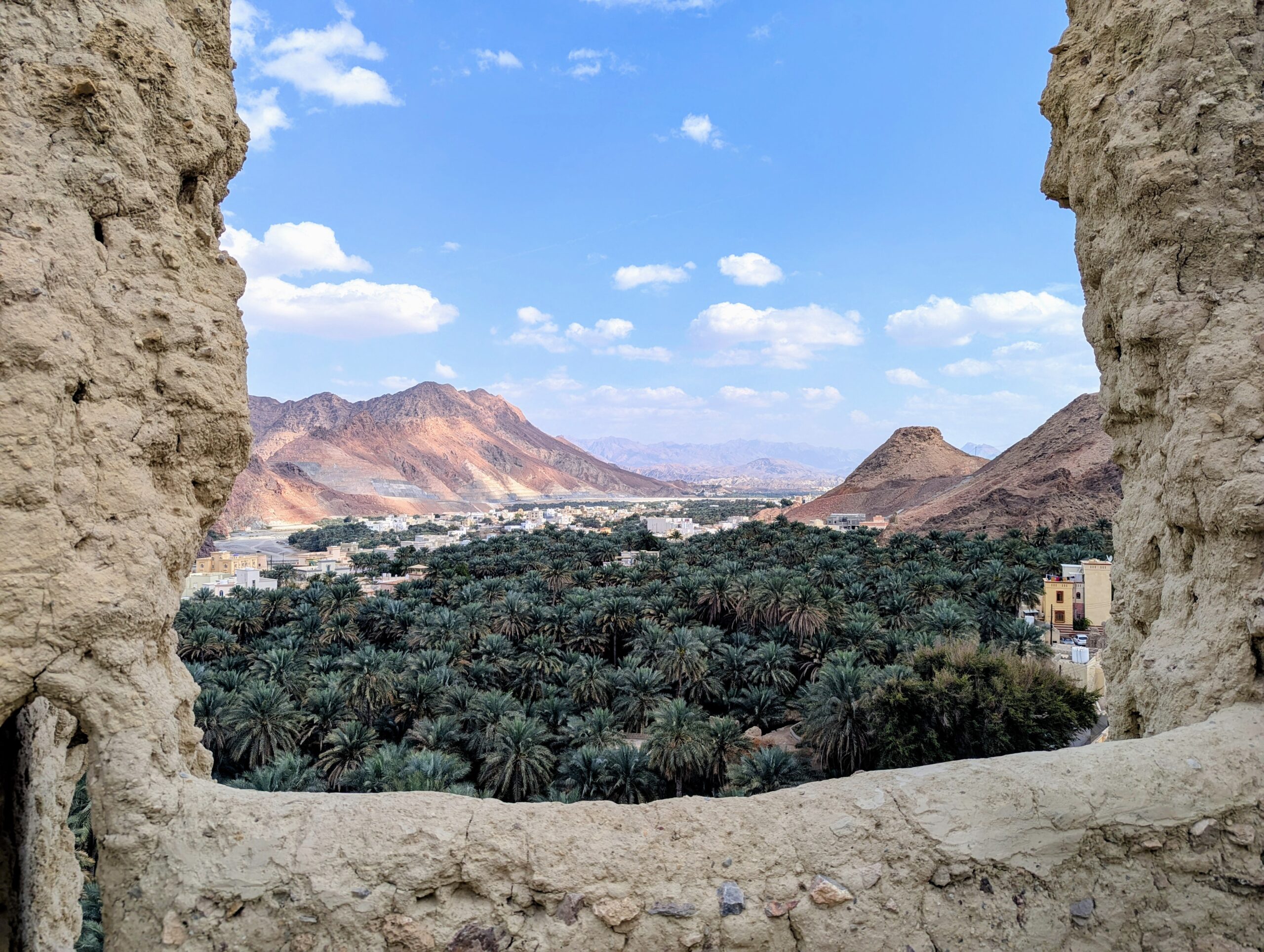
Standing atop the old fort in Fanja, I looked out over a landscape that revealed two different worlds. On one side, the dry wadi bed and the modern town. On the other, a lush palm oasis stretching between brown mountains. At that exact moment, a European roller flew past me, its distinctive blue wings beautifully visible against the clear sky. This view alone makes the climb worthwhile.
Yet few travelers know about Fanja. This authentic Omani village lies just 25 kilometers from the capital Muscat, but feels like a completely different world. No shiny hotels, no tour buses, no manicured attractions. Just a working village with a rich past, beautiful nature, and people who spontaneously show you the way when they see you’re looking for something.
During my exploration, I walked through old ruins, climbed to a fort with breathtaking views, discovered a mysterious owl tower, and saw a traditional souq where time seems to stand still. But I also discovered what I had missed, and why some places, however beautiful, don’t belong in my travel programs. In this article, I’ll take you through Fanja and share everything you need to know about this special village.
Why Visit Fanja
Fanja sits strategically between Muscat and the mountainous interior of Oman. For many travelers, it’s nothing more than a signpost along the road to Nizwa, but that doesn’t do the village justice. Precisely because Fanja is still relatively unknown to tourists, you get an authentic picture of daily life in Oman.
The village combines various elements that make Oman so special: the history of old forts and watchtowers, the vibrant culture of a traditional souq, and of course the nature of wadis and palm oases. Where you quickly find yourself among groups of tourists in Nizwa, in Fanja you have the space to look around at your leisure and strike up conversations with locals.
This combination of accessibility, just a half-hour drive from Muscat, and authenticity makes Fanja valuable for travellers who want to look beyond the most famous places.
If you’re heading to the interior, Fanja is also a perfect stopover. You can spend a few hours there or make it a half-day trip, depending on how much time you have and what you want to see.
Attractions in Fanja
The Old Fort and Village
The climb to the old fort of Fanja begins inconspicuously. You park your car a bit before the ruins of the old village, among the palm trees, and follow a path upward. It’s not steep, but the sun in Oman can be merciless, so I recommend bringing protection if you don’t handle it well.
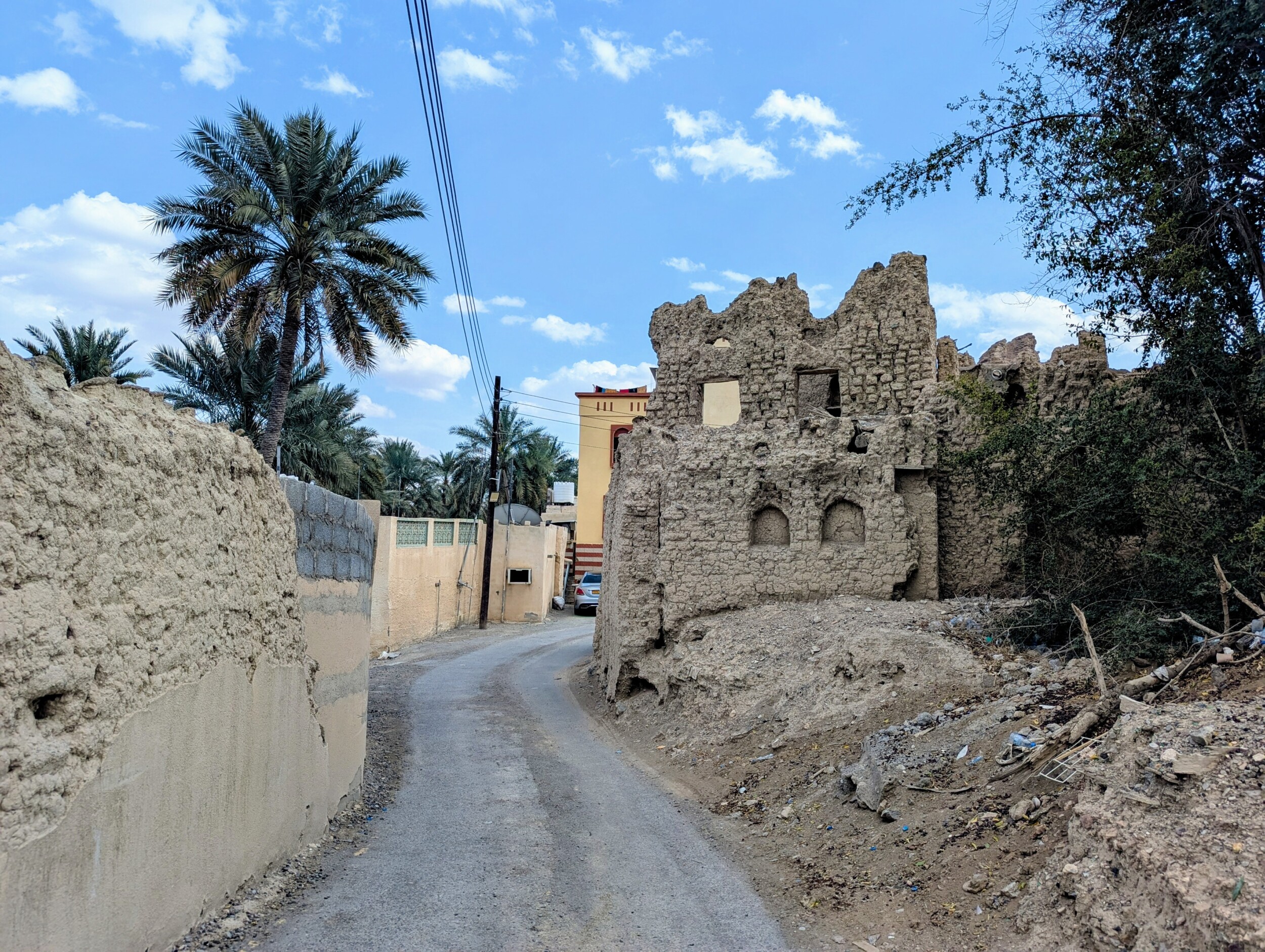
As you climb higher, a landscape unfolds that’s typical of this region of Oman. Dry mountains, a palm oasis in the valley, and the ancient architecture of mud houses slowly becoming one with the earth.
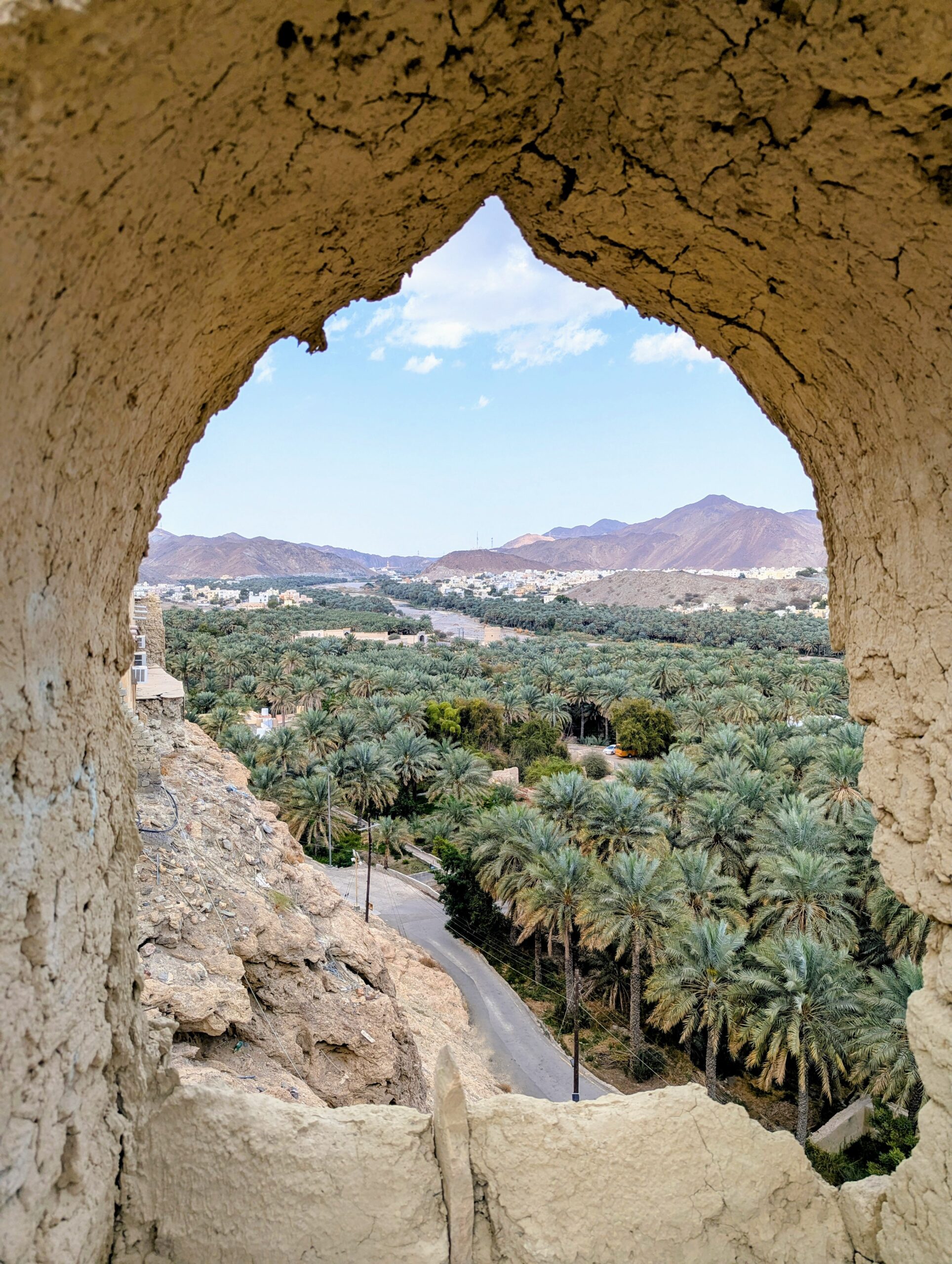
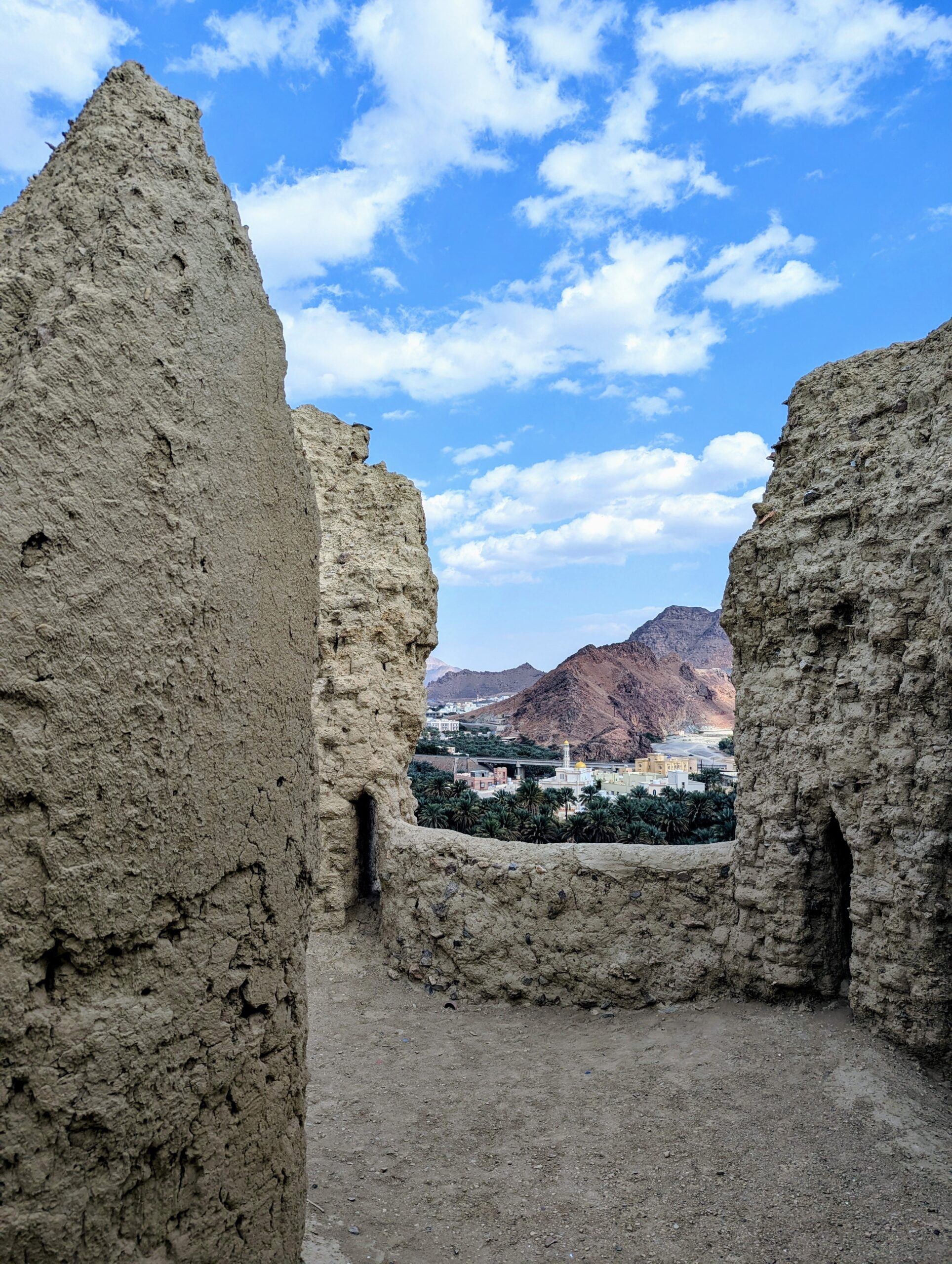
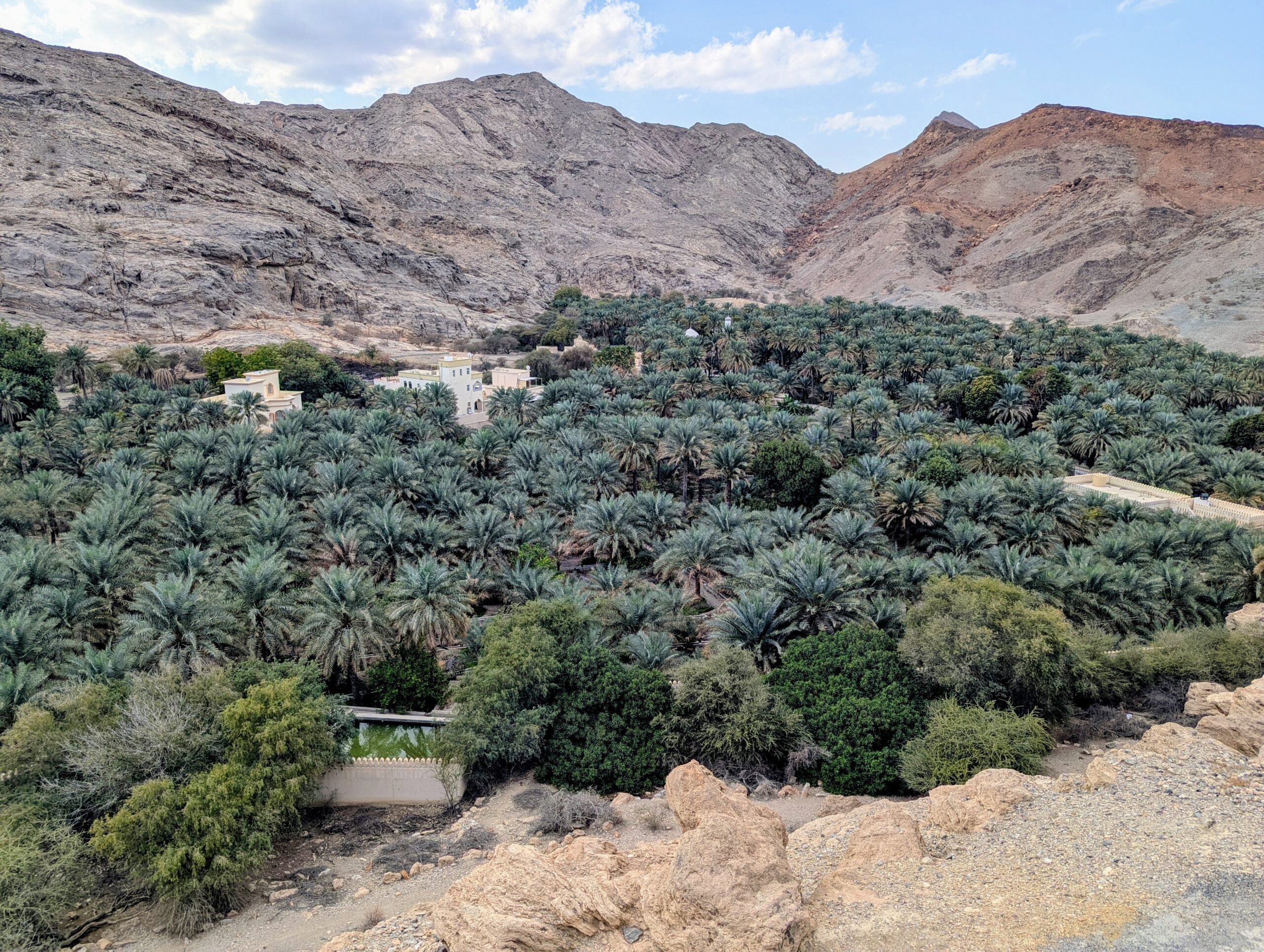
Once at the top, you’re rewarded with a panoramic view that goes in two directions. On one side you see the modern town of Fanja and the dry wadi bed, which transforms into a rushing river during the rainy season. On the other side, the palm oasis stretches out, a green lung amidst the brown mountains. This is where I saw a European roller fly just below me.
Do you know the European roller with its characteristic blue wings? They were beautifully visible against the green of the palm oasis. One of those moments that truly makes me happy!
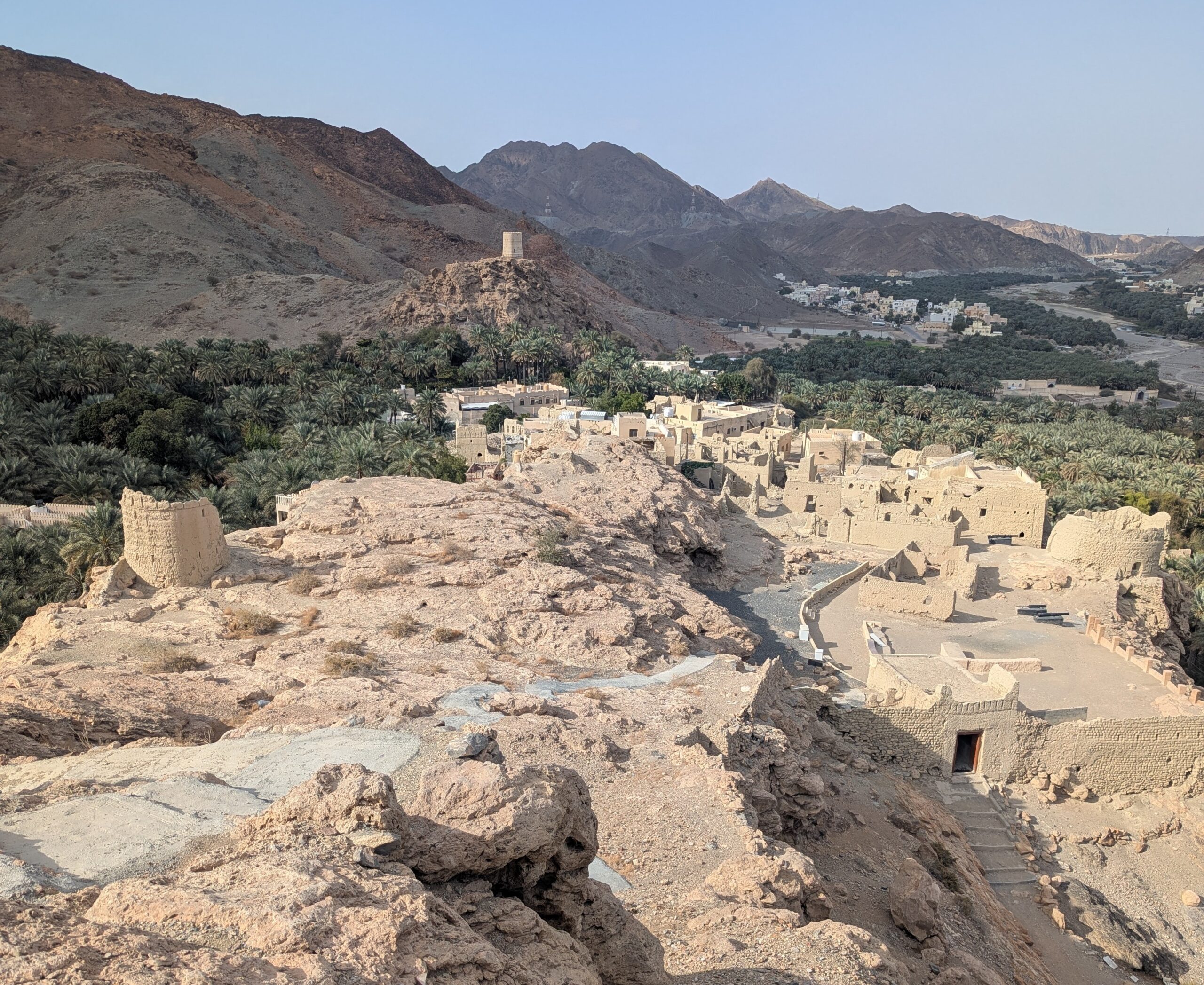
Using my bird app, I later identified other species in the area: the purple sunbird, grey francolin, sparrows, rose-ringed parakeets, and laughing doves. If you’re into birds, definitely bring binoculars or a good camera. The fort offers the perfect vantage point.
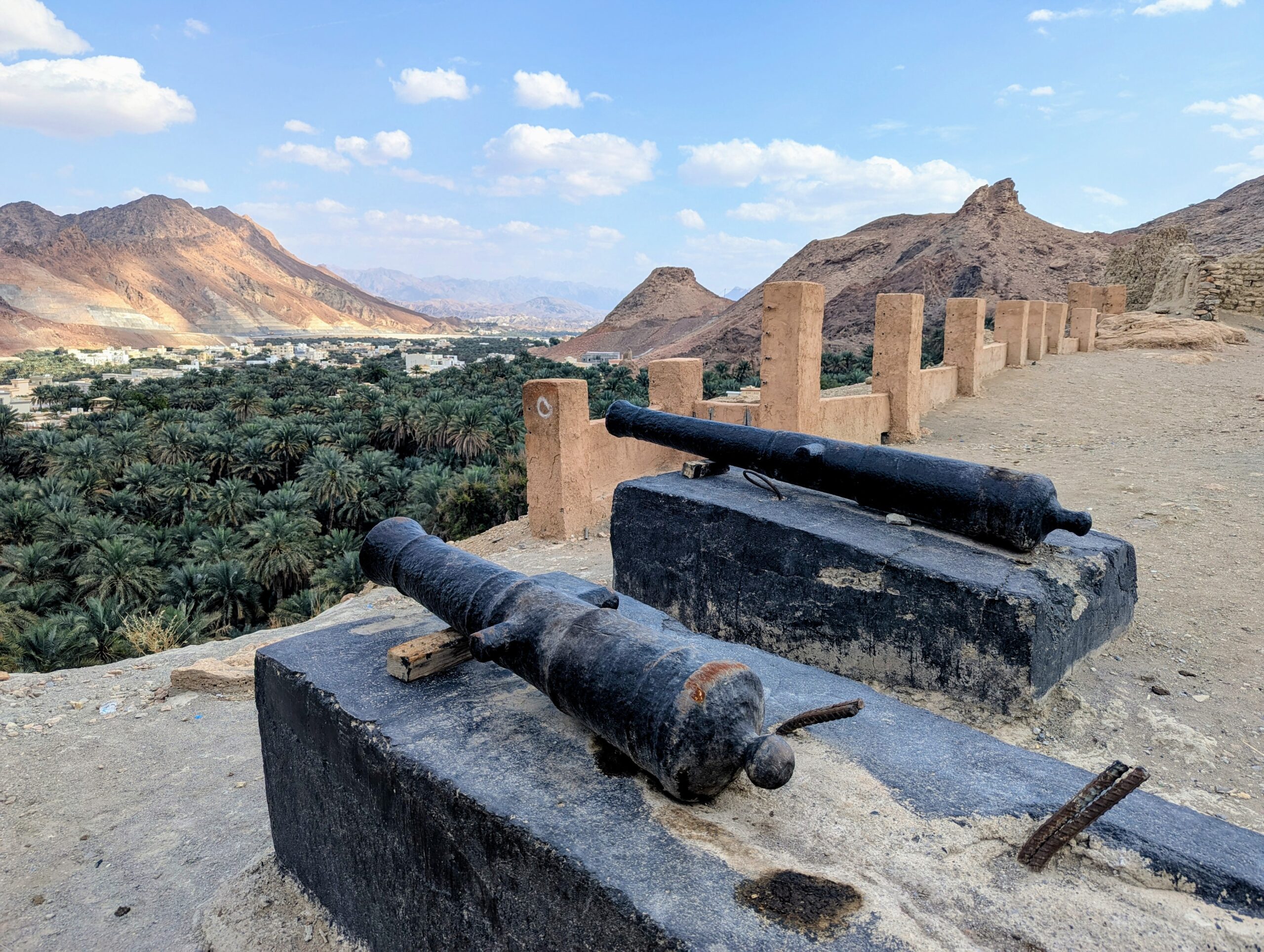
On the fort itself stand strategically placed defensive towers, and cannons still lie there, silent witnesses to the time when Fanja held an important defensive position. It’s not hard to imagine how guards from this height kept watch for enemies approaching via the wadi. The position is strategically perfectly chosen, of course.
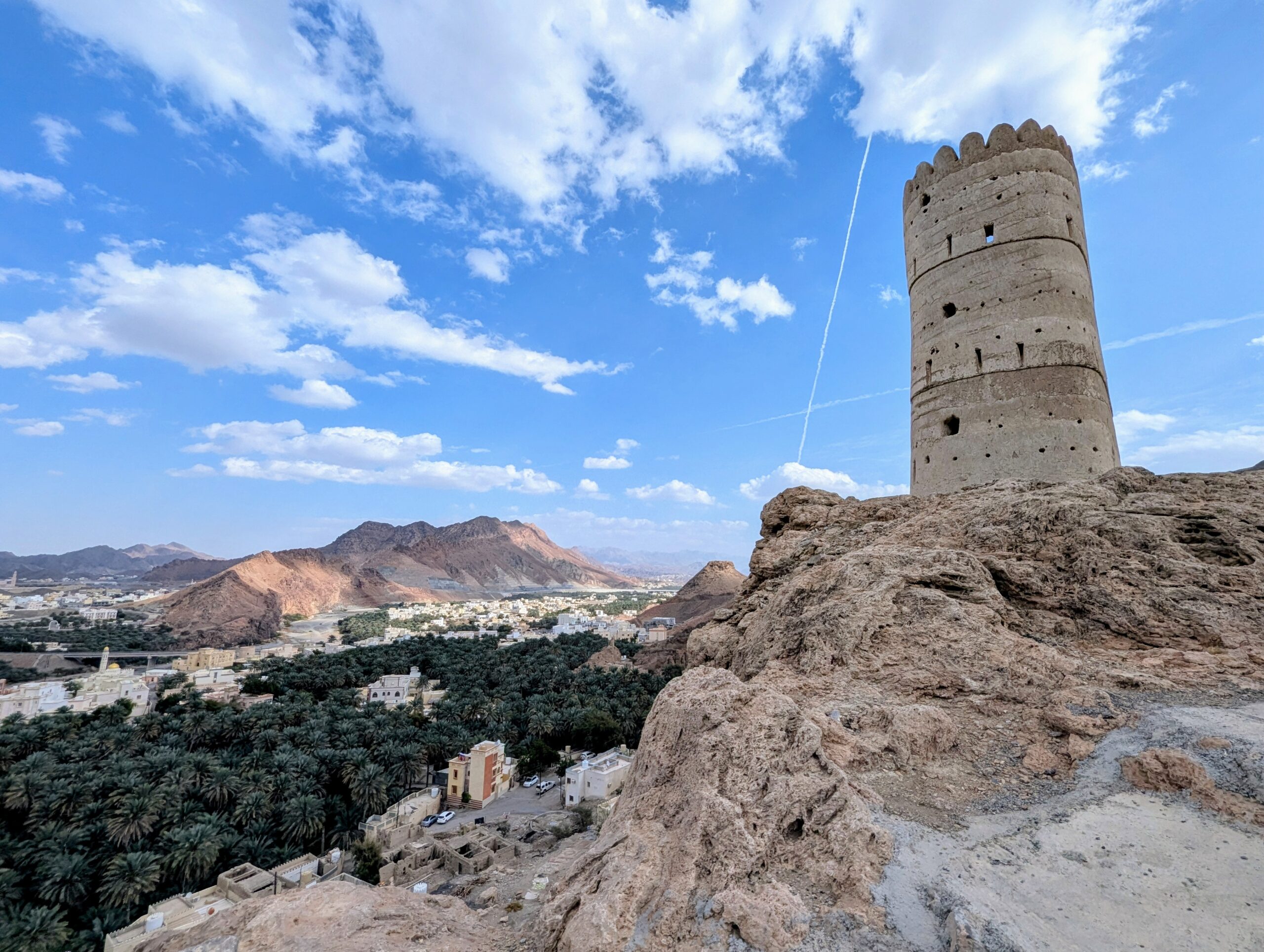
What many people don’t know is that this fort comes to life twice a year during a spectacular event called Al Azwah.
During both Eid celebrations (Eid al-Fitr and Eid al-Adha), more than a thousand people gather on and around the fort to watch authentic, centuries-old cannons being fired. The air fills with smoke, the sound echoes between the mountains, and the crowd cheers. It’s a celebration of Omani culture, tradition, and history in its purest form. If you happen to be there during Eid, this is naturally a unique experience.
The Owl Tower – Fanja
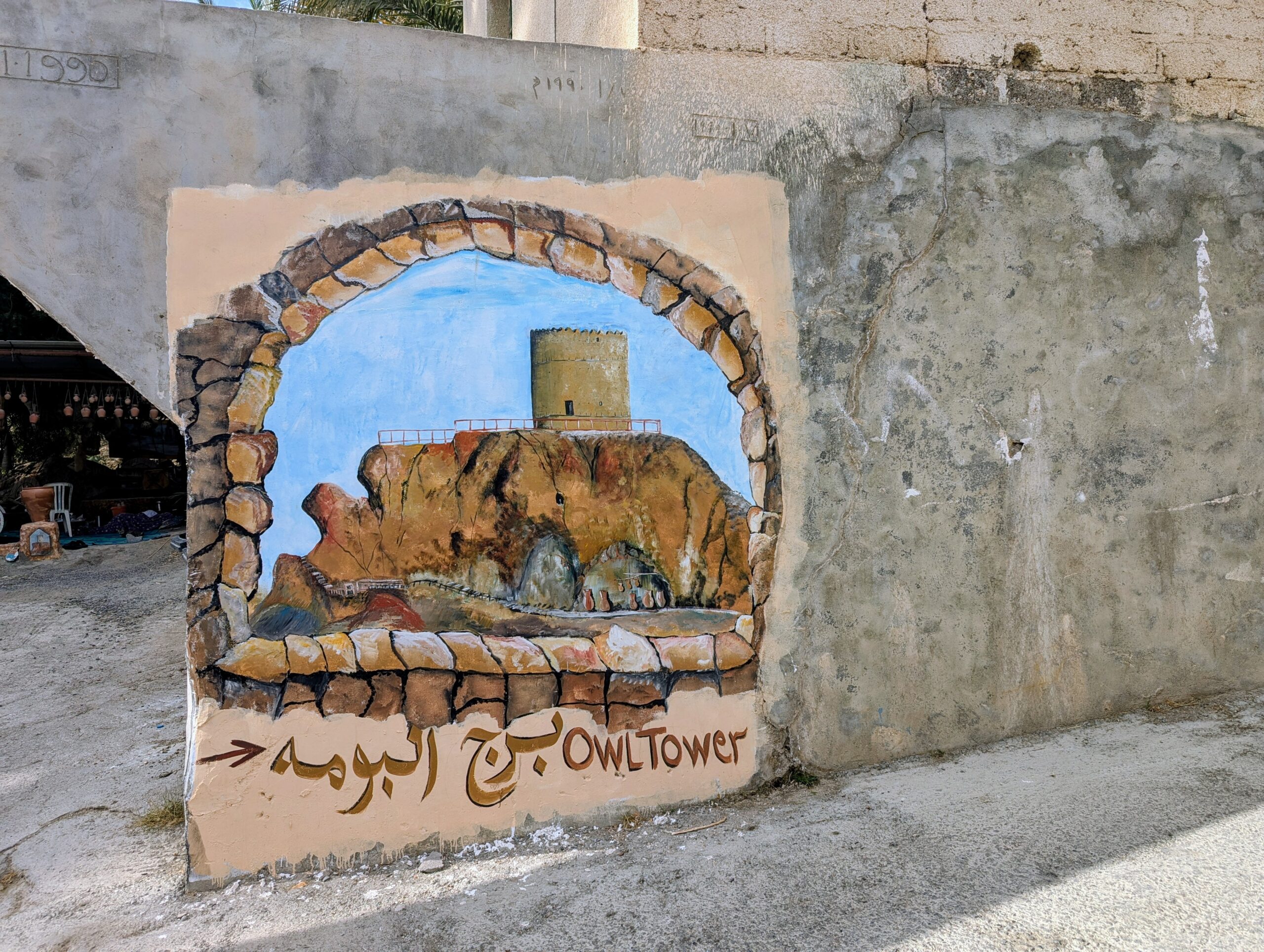
From the fort, I saw another tower in the distance, situated slightly lower. I later discovered this is the Owl Tower, or Burj Al Baum as locals call it. To get there, you have to walk through someone’s private garden—something that would be unthinkable in the Netherlands, but is completely normal in Oman. A local man saw me searching and spontaneously showed me the way through the garden to the top. Omanis are genuinely hospitable and happy to help you. A quick question about where I was from, then saying goodbye—so nice!
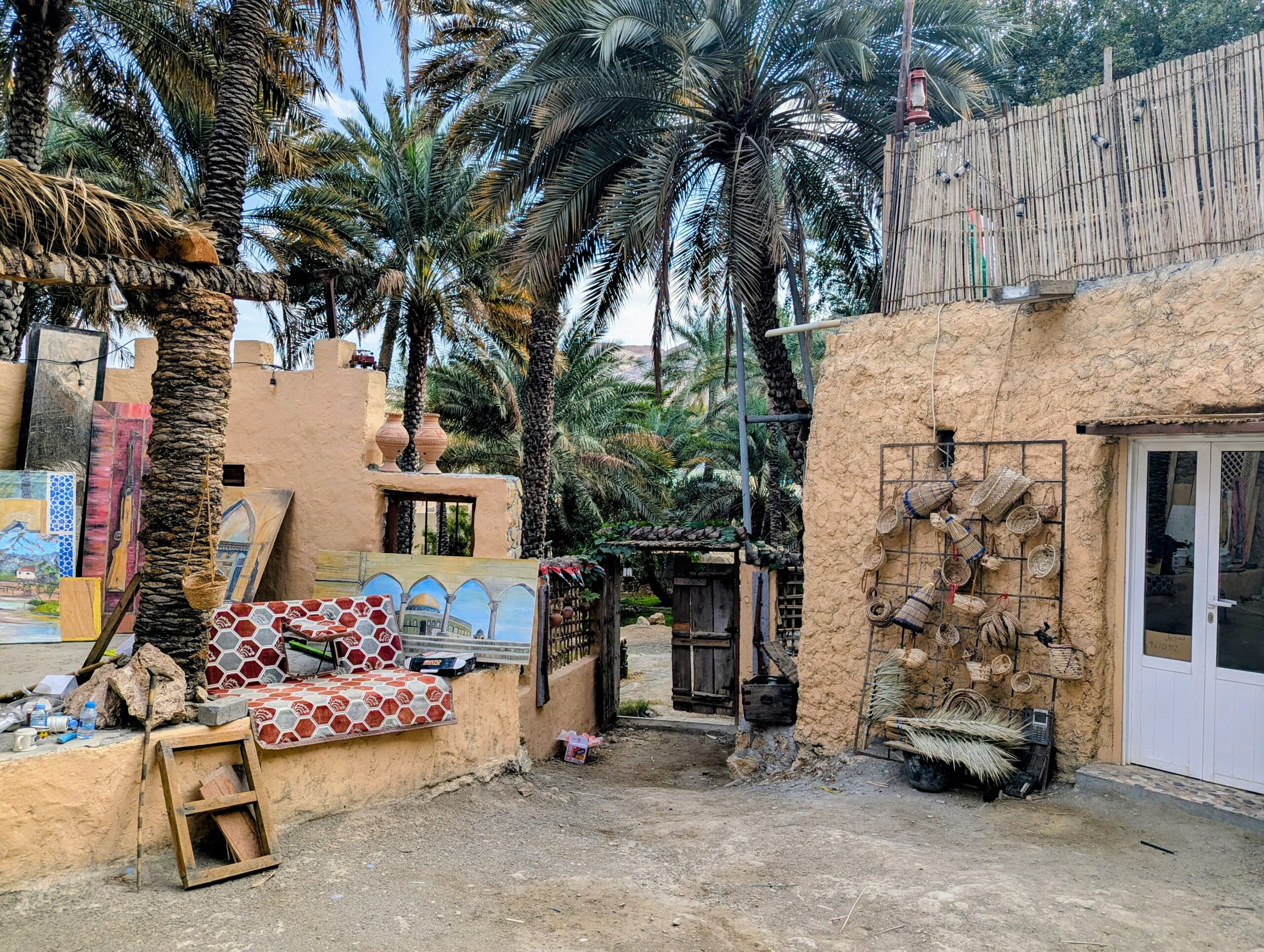
The stairs going up are somewhat improvised, it’s still a work in progress, so to speak. I found it quite fun to walk though. Halfway up, I stepped over a toolbox, and the last part of this walking path upward wouldn’t be allowed in Europe, let’s say…
Once at the top, I saw that the tower itself has a high entrance that was partially blocked. There’s supposed to be an owl inside, hence the name, but unfortunately I couldn’t see it. What I could see from this spot was the fort where I had stood earlier.
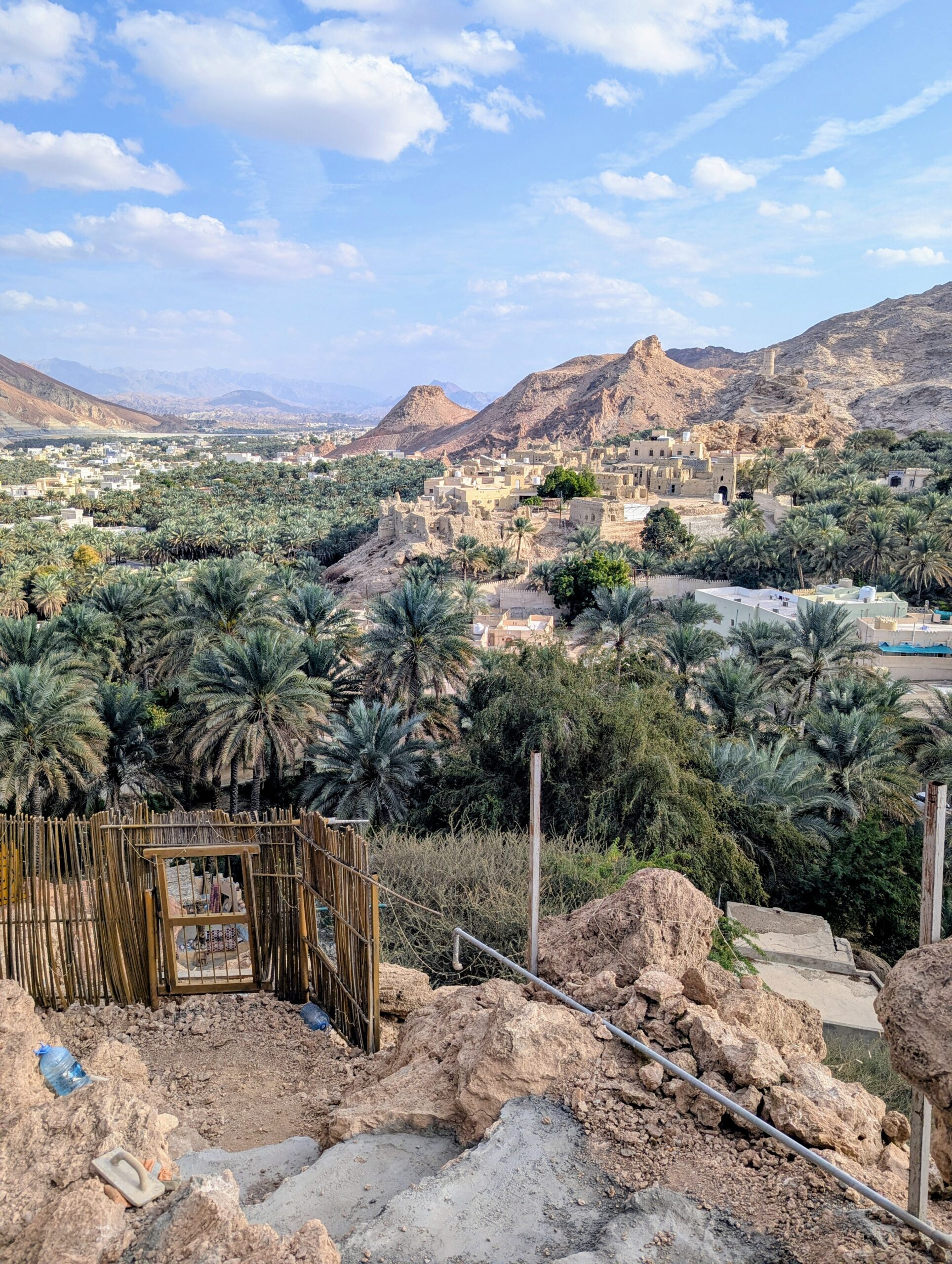
It gave me a new perspective on the strategic layout of this old defense system. Multiple towers watching each other, able to warn each other, and oversee the entire valley. The walk to the Owl Tower was short but definitely worthwhile. At the top, you can even sit at a beautiful viewpoint. This spot has the potential to become a real attraction.
The Traditional Souq
The Fanja souq is located near the large bridge spanning the dry riverbed. It’s not a large, touristy market like you find in Muscat or Nizwa, but that’s precisely what makes it interesting. Locals come here to shop, not to sell souvenirs to tourists.
What struck me as I drove past were the enormous stacks of traditional Omani pottery: water jugs, pots, and round woven mats you can hang on the wall. The souq is liveliest in the early morning and late afternoon. On Fridays, many shops close around 11 AM for the midday prayer, so keep that in mind.
The Hot Springs (What I Missed)
One of the things I only discovered later is that Fanja also has natural hot springs. They’re hidden in the palm oasis, where warm water bubbles up from the ground and flows through a system of channels before collecting in pools where you can sit.
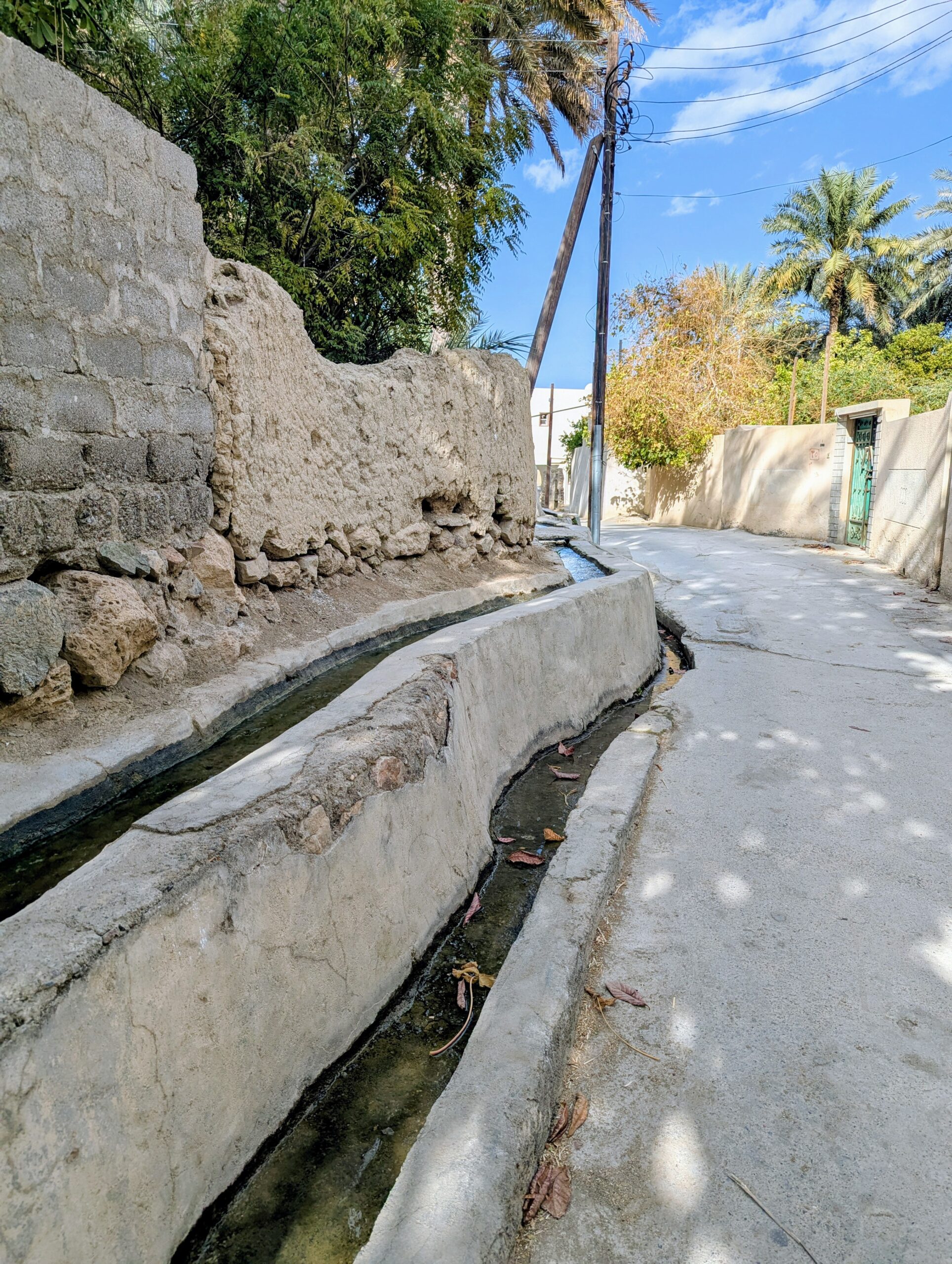
The water is heated deep underground—Fanja sits on a geological fault where geothermal heat rises. Other well-known hot springs in Oman, such as those in Nakhal or Rustaq, have the same origin. What makes Fanja’s springs special is that they’re located in the middle of a residential area, surrounded by date palms with mountains in the background.
Walking Through the Wadi
Another tip I often come across is a walk through the Fanja Wadi. The path begins at the palm oasis and follows the course of the river, which can be dry or flowing depending on the season. On both sides stand tall date palms providing shade, something you appreciate in the Omani climate.
The walk takes about an hour round trip, depending on how far you go and how often you stop to take photos or simply enjoy the peace. The best time for this walk is early morning or late afternoon, when the sun is less intense. In the summer months, even under the palms, the heat can be intense.
It is not a technically difficult walk, but you must be prepared to get your feet wet. Walking boots that can get wet, sturdy sandals or good water shoes are ideal.
The Bridge Over the Dry River
Near the souq stands a large modern bridge spanning the wadi. When I was there, the riverbed was dry—just sand and stones. But you can imagine how different this scene is after heavy rainfall, when water rushes under the bridge and the entire valley transforms from brown to green.
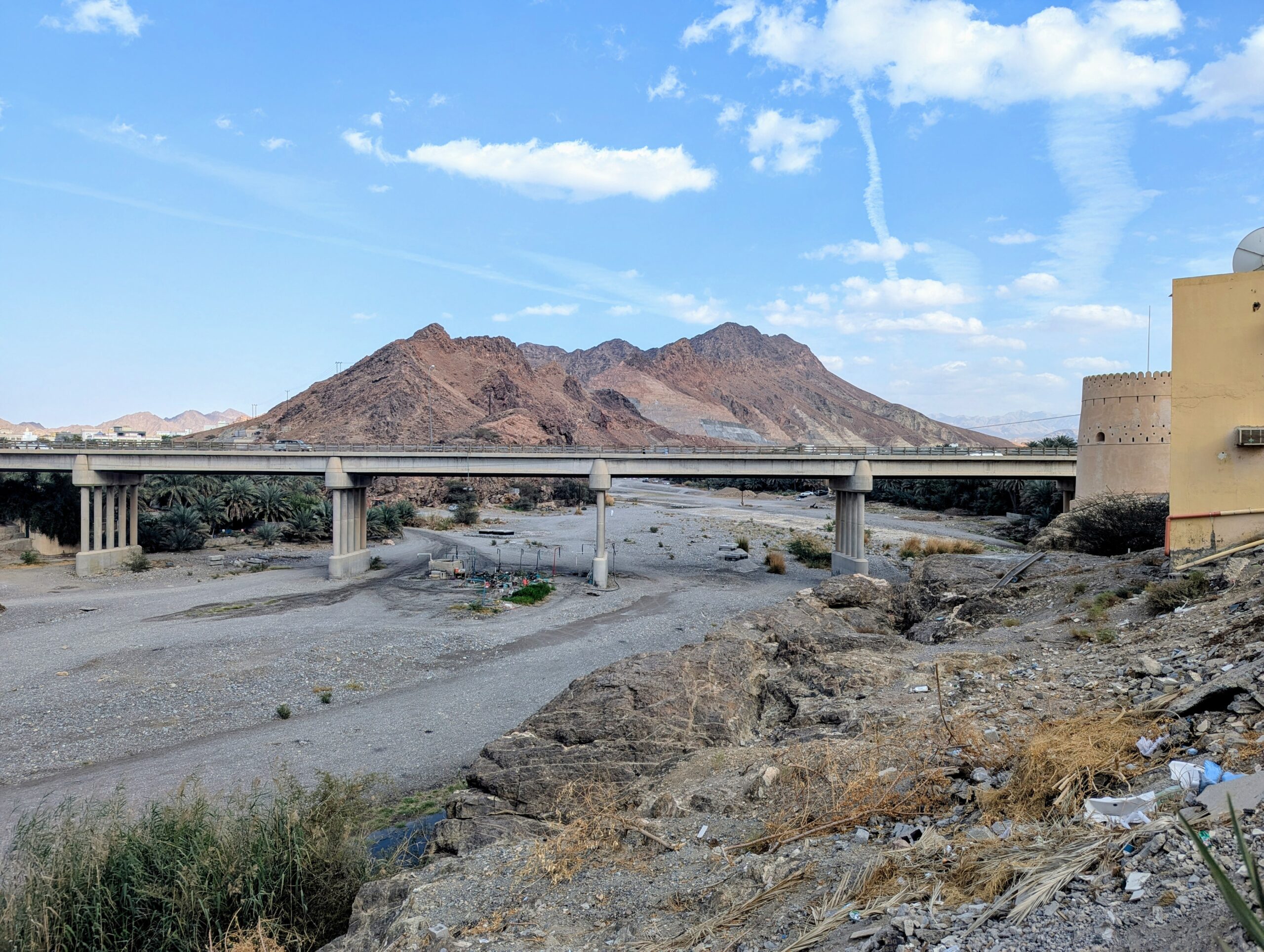
The bridge offers a good overview of the area. You see the souq on one side, the palm oasis on the other, and the mountains all around. It’s one of those places where you can pause for a moment, take in the view, and appreciate the scale of the landscape.
For photographers, this or Fanja Fort is also an interesting point, especially at sunrise or sunset when the light gives the mountains a golden glow.
Fanja Heritage House: My Considerations
Fanja Heritage House is undeniably a beautiful location. The old family home of the Al Rawahy family has been lovingly restored and transformed into a heritage resort. With seven rooms spread over 5,000 square meters, the building breathes history and charm. The stone architecture is reminiscent of traditional Omani houses from a century ago.
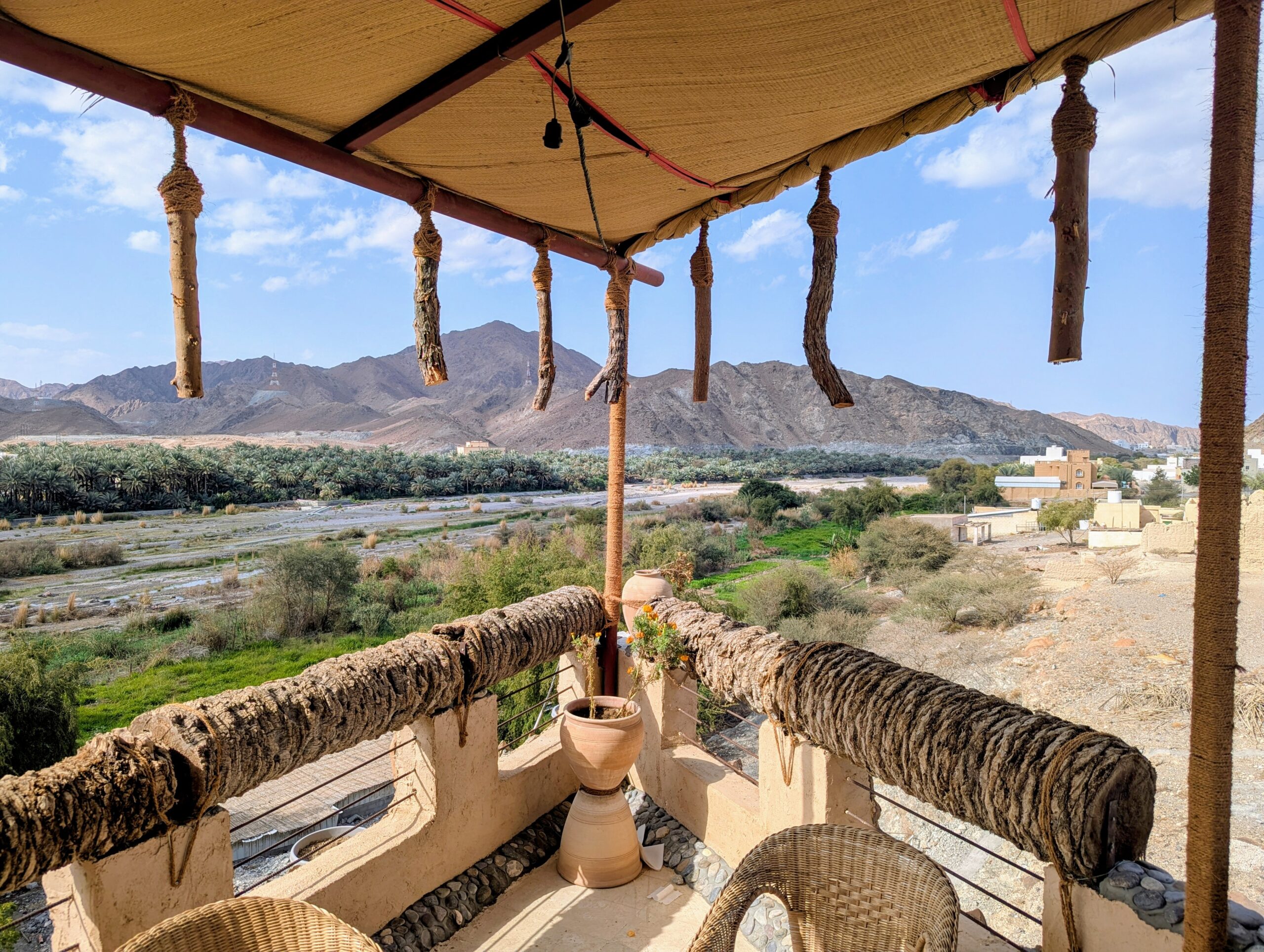
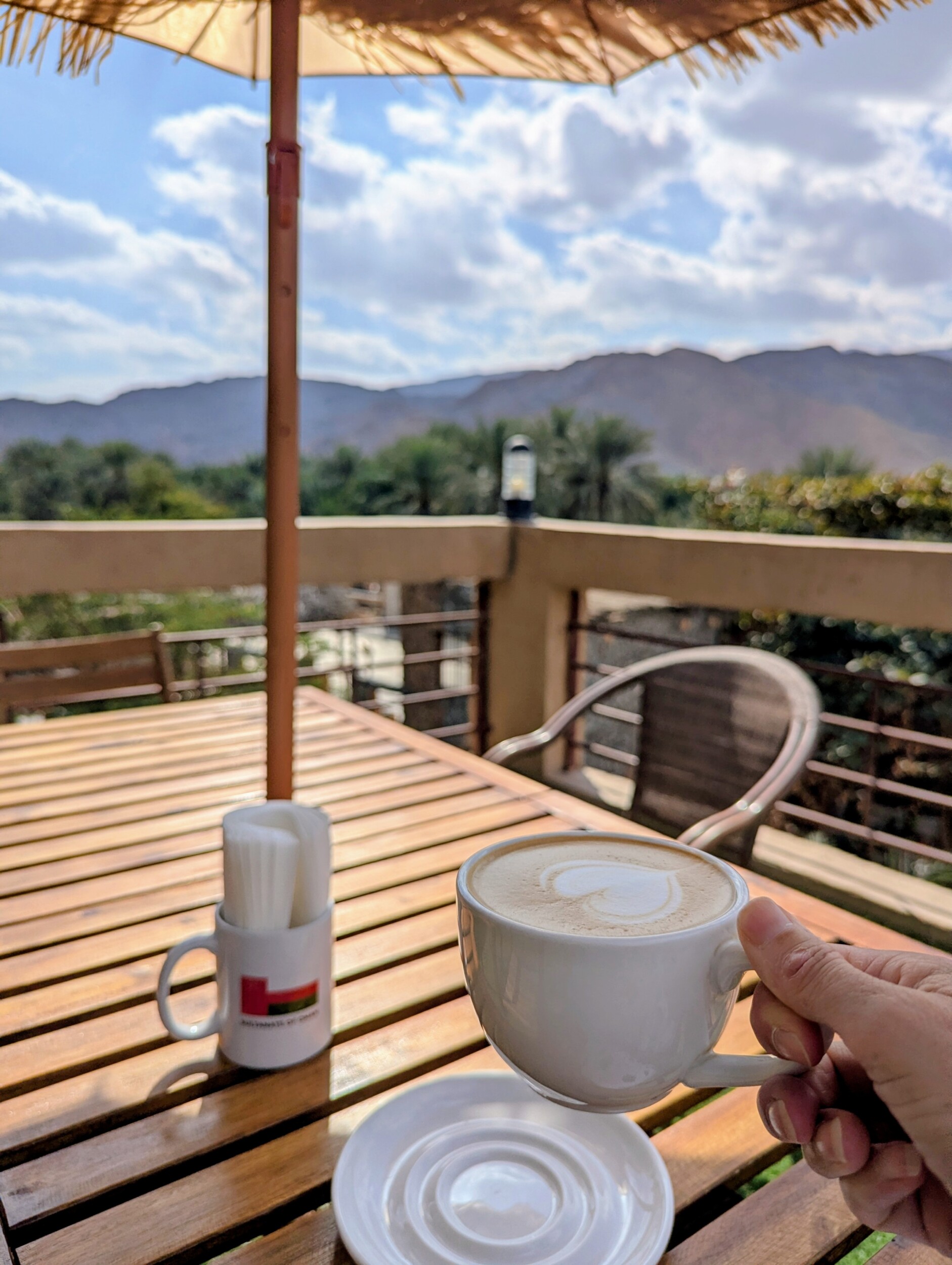
The café on the terrace is truly picturesque. You can get an authentic Omani breakfast there—chickpeas, beans, sweet dates, dal, cheese, and tea—for 2.5 Omani rials. The view from the terrace over the date plantations and nearby wadi is fantastic. There’s also a private museum with antique objects collected through generations of the Al Rawahy family. This museum provides good insight into Oman’s rich history.
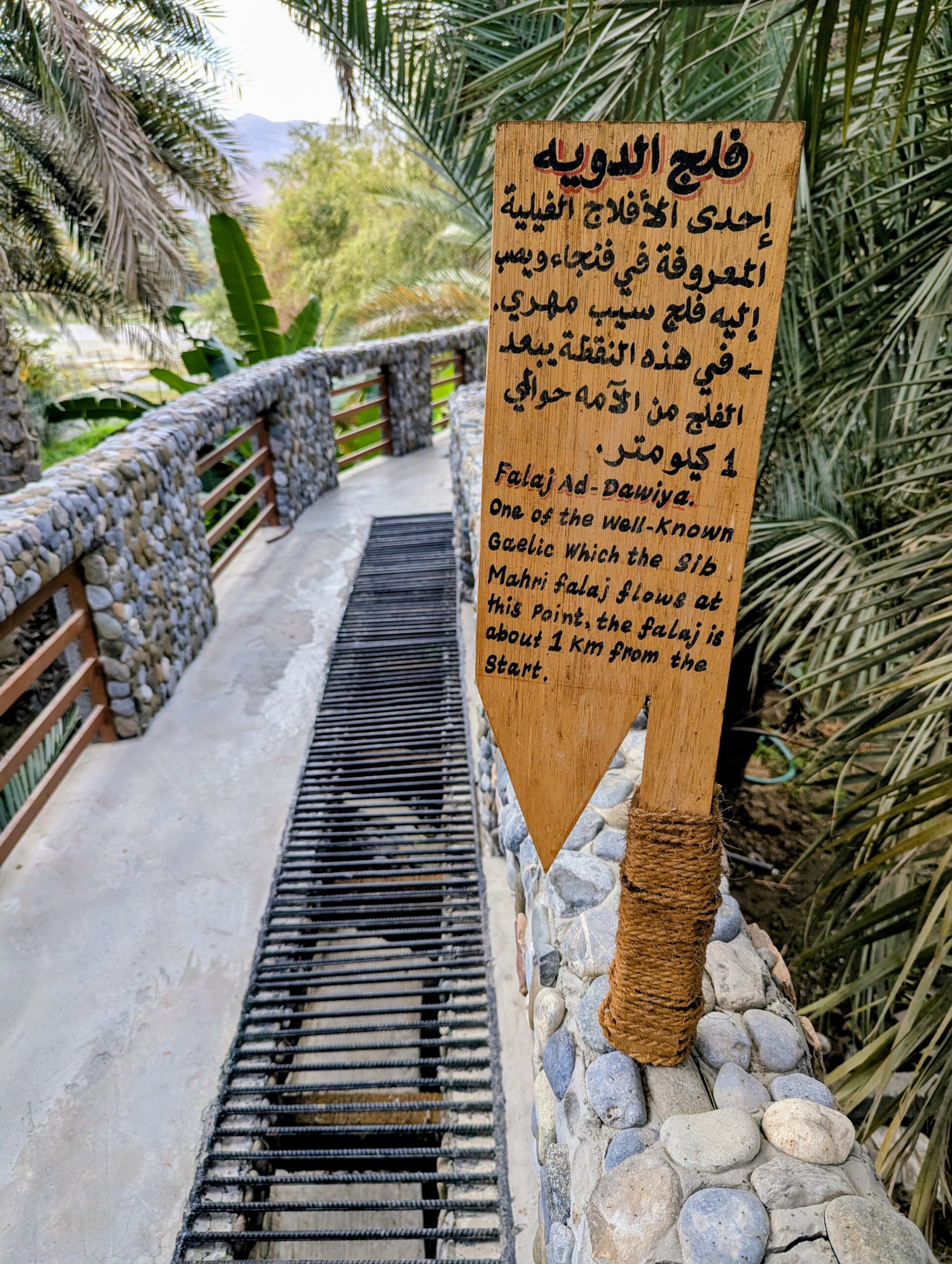
But then I come to the point that saddened me and the reason why I don’t include Fanja Heritage House in my travel programs: the mini-zoo. During my visit, I saw various animals: 2 oryx, an emu, many pigeons, several squirrels confined in small enclosures. These animals, some of which belong to Oman’s wildlife that should be in the wild, were kept in spaces far too small for their natural behavior.
As a travel organiser who prioritises meaningful travel, I cannot support this. For me, animal welfare is a fundamental part of ethical travel. No matter how beautiful a location is, how good the food tastes, or how interesting the history is, if animals suffer for the entertainment of visitors, it does not fit with my values. And certainly not with what I want to show my travel groups.
This doesn’t mean Fanja Heritage House should necessarily be avoided. You can choose to only visit the café and skip the animal enclosures. Perhaps also, as I did, tell the staff or owners that you don’t think the zoo is right.
The terrace offers a beautiful view and it’s lovely to sit there for a while. But as an overnight location, where the entire concept is embraced including the mini-zoo, it doesn’t fit with my vision of meaningful travel.
As a tour organizer, you have to make choices, and this is one of them. Not every beautiful place belongs in a travel program. Meaningful travel also means making conscious choices about which places you support and which you don’t.
Practical Information
How to Get to Fanja
Fanja is located about 25 kilometers southwest of Muscat, along the main road to Nizwa. The drive takes about 30 minutes, depending on where in Muscat you depart from. You take the route toward Nizwa (Route 15) and take the exit to Fanja, which is clearly marked.
A rental car is essential to visit Fanja, as there is no public transport. A regular car is sufficient—you don’t need four-wheel drive for Fanja itself, unless you plan to venture further into the interior to places like Jebel Akhdar.
Parking at the old fort and at the souq is informal but not difficult. You can see where other cars are parked and park nearby. Just make sure you don’t block access roads or park on private property.
Best Time to Visit
The best months to visit Fanja are October through April. During this period, temperatures are pleasant, between 25 and 30 degrees Celsius during the day. Nights can be cool, especially in December and January, but during the day it’s perfect weather for walking and exploring.
A special time to visit Fanja is during one of the Eid celebrations, when the Al Azwah cannon ceremony takes place. Eid al-Fitr (at the end of Ramadan) and Eid al-Adha fall on different dates each year according to the Islamic calendar, so check this in advance if you want to experience this event.
Stay Online During Your Trip
If you want to stay online during your trip, you can do so with an eSIM. Buy it in advance and install it before you leave. I understand that once in Oman, it no longer works.
While traveling, I always carry my own water bottle. Let’s set a good example and help ensure that single-use water bottles (and the accompanying waste) become a thing of the past.
Are You Going to Fanja Too?
This village of Fanja, a half-hour drive from Muscat, offers a wealth of experiences. The old fort with its strategic location and breathtaking views, the traditional souq, the natural hot springs in the palm oasis, and the peaceful walk through the wadi. Together they form a diverse destination that shows you a different side of Oman.
What makes Fanja so valuable is precisely that it hasn’t (yet) been adapted for tourists. It remains authentic, true to its character, a village with a rich past and a living culture. For travelers who want to look beyond the standard routes, who are interested in the real stories behind the places they visit, and who value meaningful encounters over checked-off attractions, Fanja is an excellent choice.
Would you also like to visit Oman but don’t want to travel around on your own? Take a look at my (small group) 10 day tour of Oman and sign up.
Also read:
- Muscat Attractions: Experience the Magic of the Arabian Sultanate
- Sa’al Steps Oman: Complete Guide to Muscat’s Most Challenging Hike
- Wadi Shab Oman: Hiking, Swimming & an Honest Update
- Canyoning in Snake Canyon – Oman
- Everything You Need to Know About the Sultanate of Oman
This article contains affiliate links. If you book or purchase something through one of these links, we may receive a small commission at no extra cost to you.