
Red, blotchy legs after a long day of walking. You’re not alone. Hiker’s rash is a common condition among walkers and hikers, especially on warm days or during multi-day trips. The good news: it’s almost always harmless, and there’s plenty you can do about it.
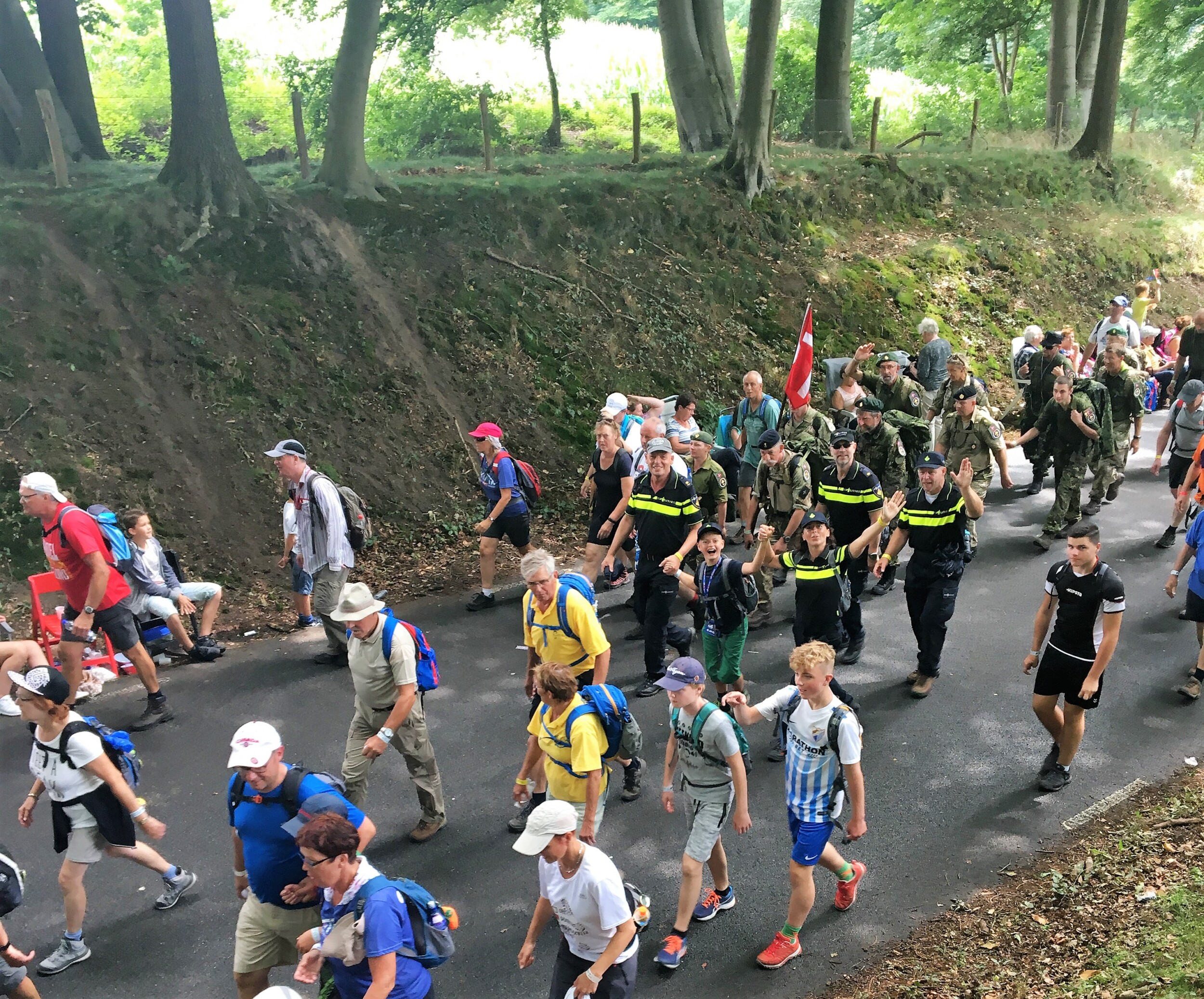
I’ve had it myself, during the Four Days Marches of Nijmegen in the Netherlands. I was walking in uniform for the police and wore a short yoga leggings underneath my uniform trousers to prevent chafing. That turned out to be way too warm. After a full day of walking, my thighs were covered in red blotches. Not dangerous, but not pleasant either. That was my first encounter with hiker’s rash.
What Is Hiker’s Rash?
Hiker’s rash is also known as exercise-induced vasculitis, golfer’s vasculitis, or — in the Netherlands — vierdaagsebenen (literally: “Four Days legs”). It refers to red, sometimes purple or brownish-red patches that develop on the lower legs during or after a long walk or hike. The skin below the sock line typically remains clear, which makes the rash easy to identify.
The patches aren’t necessarily painful, but they can be quite itchy and often look more alarming than they actually are.
What Causes Hiker’s Rash?
There are several causes, and they often occur in combination.
Heat from the road surface
On hot days, asphalt absorbs an enormous amount of heat. That radiant heat rises upward and warms the skin on your lower legs. Over time, the skin can literally burn from the heat — not from UV rays as with sunburn. Sunscreen won’t help here.
Blocked pores
When you walk, you sweat heavily. Salt crystals, dirt, and metabolic waste can block your pores. When the skin can’t release heat properly, it leads to red, itchy patches.
Pressure on small blood vessels
Prolonged exercise increases pressure in the small blood vessels of the legs. Blood is pushed outward through the vessel walls, causing red or purplish spots. This is more common in older walkers, as the skin’s elasticity decreases with age.
Clothing and materials
Clothing that’s too warm, too tight, or not breathable enough traps heat and increases the risk of a rash. That’s exactly what went wrong for me at the Four Days Marches: two layers of trousers, not enough ventilation, too much heat trapped against the skin.
Allergic reactions to clothing materials, socks, or sunscreen can also play a role.
How Do You Recognize Hiker’s Rash?
The symptoms are easy to identify:
- Red, purple, or brownish-red patches on the lower legs, sometimes the thighs
- Skin below the sock line usually remains clear
- Itching, sometimes a burning sensation
- In more severe cases: slight swelling or small blisters
- The patches can look alarming but are almost always harmless
The rash typically resolves on its own within a few days to a week, provided you give your legs enough rest.
What Can You Do About It?
Prevention is ideal, but often you only notice the rash once it’s already there. Stopping your walk isn’t an option for most people, so here’s what helps.
During the walk
Cool your legs whenever you get the chance. A break in the shade, propping your legs up — I personally love sitting cross-legged or resting my legs on a chair so they’re not hanging down. This helps reduce the pooling of blood and gives welcome relief. Splashing cool water on your lower legs can also help.
Staying well hydrated is always important, and it also helps reduce the effects of hiker’s rash. Always carry a water bottle #ad with you.
After the walk
Clean the skin gently with lukewarm water and mild soap. Pat dry — don’t rub. Apply a soothing lotion afterwards, or hydrocortisone cream if the itching is severe. A cold compress can also help reduce the inflammatory response.
Give your legs real rest. The next day, try to reduce your mileage if the skin is still reacting, and where possible avoid asphalt to limit radiant heat exposure.
Compression socks
Many hikers swear by compression socks #ad, preferably in light colours. They support the blood vessels in the legs and can significantly reduce the risk of hiker’s rash.
How Do You Prevent Hiker’s Rash?
Prevention matters, especially when you’re walking multiple days in a row.
Choose the right clothing. Wear breathable, moisture-wicking fabrics that ventilate well. Loose, lightweight trousers protect the skin better from radiant heat than bare legs. Avoid layering garments that trap warmth — that’s exactly what went wrong for me with two pairs of trousers on the Four Days Marches. I thought I was being clever with the extra layer. I wasn’t.
Let your skin breathe. Tight clothing or garment combinations that retain heat are asking for trouble, especially on asphalt routes in warm weather.
Walk at cooler times of day. Aim for early morning or late afternoon, and avoid the hottest hours.
Use anti-chafe products. On areas prone to friction, like the inner thighs, apply an anti-chafe cream or stick.
Rinse off after every stage. Shower after walking to remove sweat, salt crystals, and dirt from the skin.
Pack compression socks. #ad Especially on multi-day hikes or in warm weather, they’re worth trying. Go for light-coloured ones — dark colours absorb more heat from the sun.
I always bring my own reusable water bottle #ad My mission is to eliminate single-use plastic — refilling instead of throwing away is one of the easiest ways to contribute as a traveler. A tote bag #ad for small purchases helps avoid unnecessary plastic waste while traveling.
When Should You See a Doctor?
Hiker’s rash almost always resolves on its own. But do consult a doctor if the symptoms don’t improve after a week, the rash spreads, you develop a fever, or the skin breaks open and shows signs of infection.
Also read
- Blisters? How to prevent them
- Trekking poles – do you use them? Read more about the benefits
- Hiking and navigating alone – how do I do it?
- All you need to know for Pieterpad
- Travel for Burnout Recovery: Why a Journey Is More Than Just Relaxation
This article contains affiliate links. If you book or purchase something through one of these links, we may receive a small commission at no extra cost to you.