
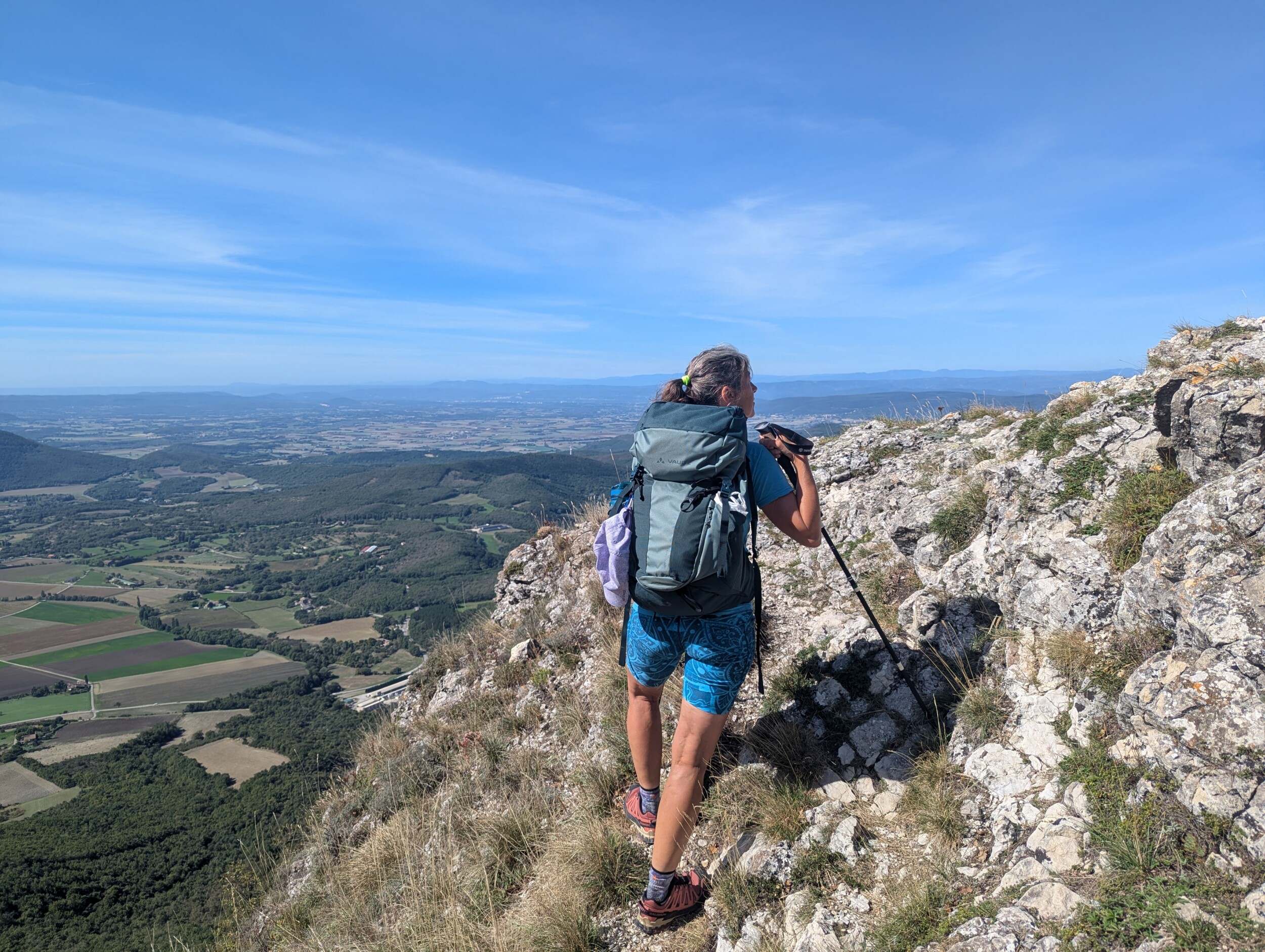
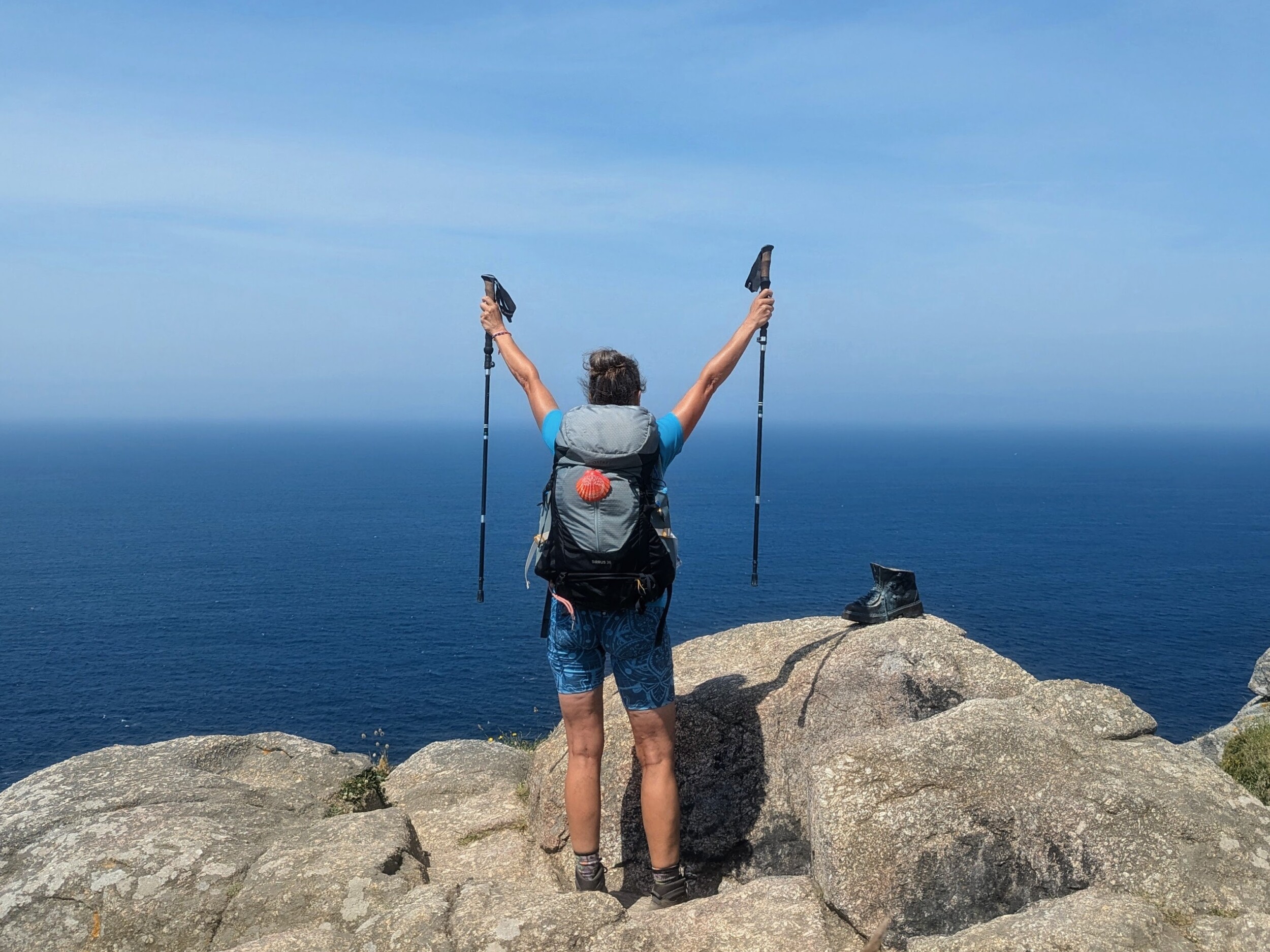
Trekking poles are for older hikers. That’s what a lot of people think. And then you see me coming, two poles, backpack on, steady pace, 25 kilometers still ahead of me. I’ve used them for years. On every long-distance walk, every Camino, the Fishermen’s Trail in Portugal, on the Rheinsteig in Germany. And every time I explain why, I see people come around to the idea, and start using trekking poles on hikes like these too.
Trekking poles give you two things people don’t expect: a serious full-body workout, and more safety when you’re hiking alone. I’ll explain both below.
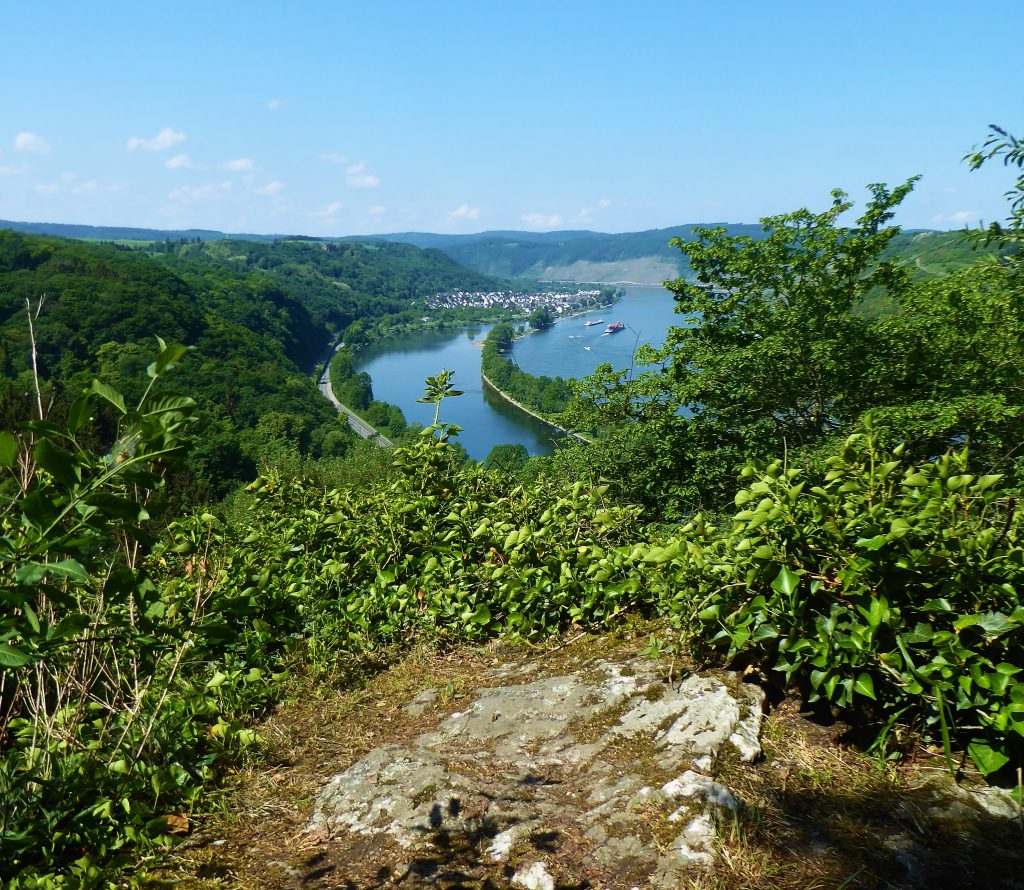
This is something I notice myself every time I walk without poles for a stretch and pick them back up afterward. Everything flows more smoothly right away. I correct less from my foot, and I move lighter as a result. This is something you have to feel to understand. The difference is subtle, but once you feel it, you understand why using trekking poles takes the strain off your body.
Why trekking poles are more than just support
Most people understand the static benefit: poles give you support. But the real benefit lies in active use. When you engage the poles properly, you shift work from your legs to your upper body. And that pays off more than you’d think.
Your knees and back will thank you later
Research shows trekking poles can reduce the load on your knees, hips, and ankles by up to 30 percent. That’s significant, especially if you’re walking 20 to 30 kilometers a day with a backpack on. The effect is strongest going downhill, exactly when knees take the most strain.
On the Camino Francés, there’s a moment like that on day one: the descent from the Pyrenees from Saint Jean Pied de Port to Roncesvalles. With poles, that’s a completely different experience than without.
Better balance and fewer falls
With poles, you have four contact points with the ground instead of two. On uneven terrain, muddy paths, or river crossings, that makes a real difference. You feel steadier, hesitate less, and tire less quickly because you’re not constantly making small balance corrections.
I notice this myself every time I walk without poles for a stretch and then pick them back up. Everything flows more smoothly right away. I correct less from my foot, and I move lighter as a result. This is something you have to feel to understand. The difference is subtle, but once you feel it, you understand why using trekking poles takes the strain off your body.
Trekking poles as a full-body workout
This is the part that surprises most hikers.
When you really let the poles do their job, you’re not just training your legs. Set your poles correctly and use your arms to push yourself forward. Doing this activates:
Your arms and shoulders. With every step, you push yourself off. Do it deliberately with a bit more force, and you’re training your triceps, shoulders, and upper back.
Your chest and rib muscles. The rotating motion of your upper body, one arm forward while the other swings back, engages the muscles along your ribs. After a full day of walking, you feel exactly which muscles those are. I first noticed it myself years ago on the Rheinsteig. Apparently I hadn’t used those muscles in a while.
Your core. The opposing motion of arm and leg is the same mechanism used in Nordic walking. With every step, you engage your core. Anyone who walks with poles daily ends up training their abs without even trying.
The result is a full-body workout while you take in the scenery. No gym, no equipment. Just a good pace and two poles.
Correct technique makes the difference
Use your poles actively, not just as a support:
- Set the poles to a height where your elbows form a 90-degree angle when you’re standing upright. Going uphill, shorten them by 5 to 10 centimeters. Going downhill, lengthen them by the same amount.
- Plant your right pole at the same time as your left leg, and vice versa. This crossed pattern maximizes the rotation of your upper body. Stay upright as you walk, so your lungs can expand freely.
Four legs instead of two
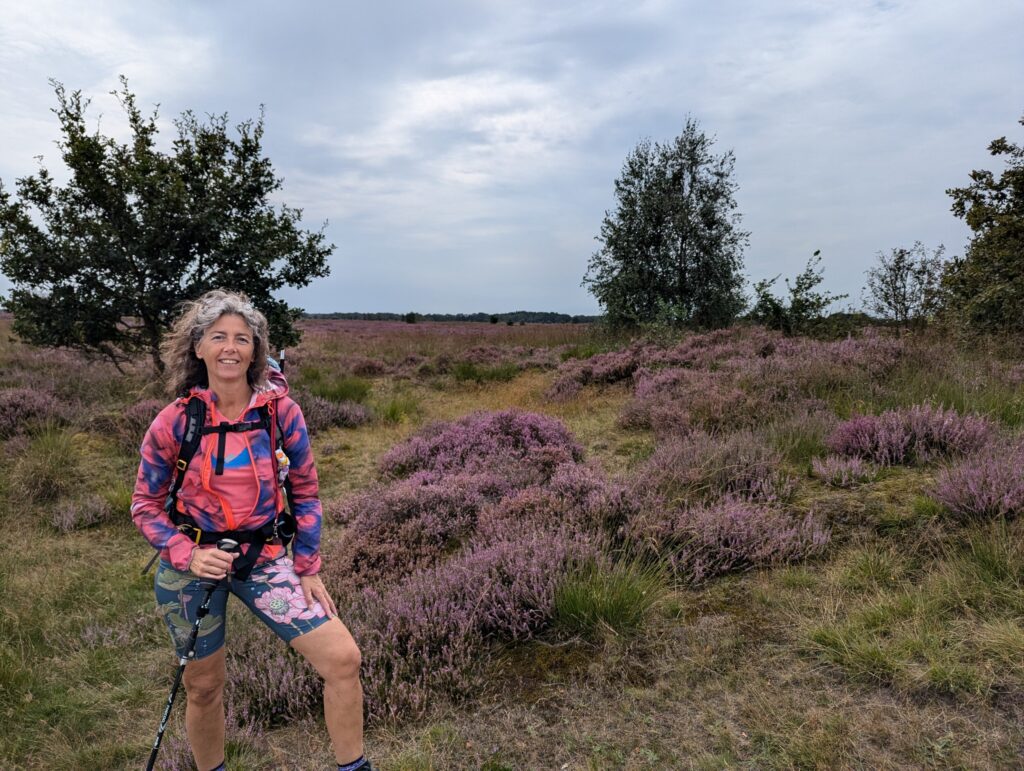
The most direct safety benefit is simple: fewer slips and falls. With poles, you have extra points of contact on slick, steep, or muddy terrain. On mountain trails, river crossings, and unpaved roads, you’re more stable. A fall on a remote stretch of trail is something you want to avoid at all costs.
Trekking poles and safety when you’re hiking alone
I take this topic seriously, because it’s the reason I never leave my poles behind when I hike solo.
I often walk alone. Many of my routes pass through sparsely populated areas, far from villages and other hikers. The odds of something happening are small, but “small” isn’t “zero.”
Also read my safety tips for women on solo hiking
Defending yourself if it comes to that
If you’re walking alone in nature and someone with bad intentions approaches, two long poles are a real advantage.
You can use them to keep someone at a distance. Poles are at least a meter long, and you can make defensive jabbing motions. That alone raises the bar.
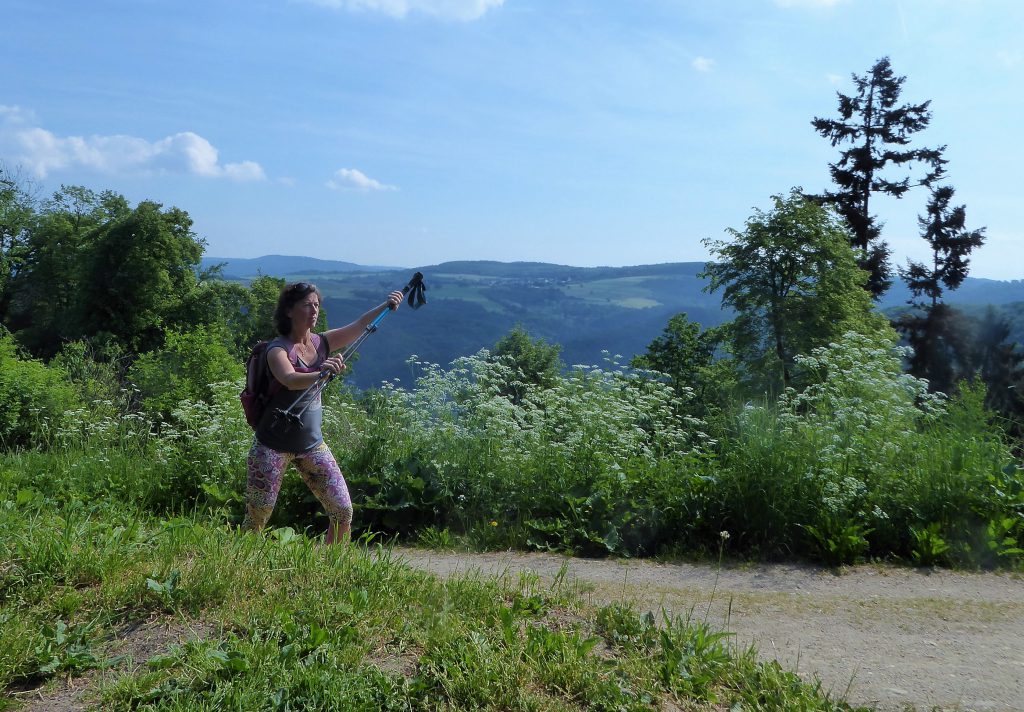
If things escalate, you can also use them defensively: hold both poles in one hand near the top, grip the bottom with your other hand, and hold them diagonally in front of your body. That lets you block an attack.
I have a background in policing. I know what it means to hold your ground in an unsafe situation. Trekking poles are obviously no guarantee, but they give you a chance. And you always have them within reach.
Dogs
A practical point that hikers on rural or remote routes know well: loose dogs. With two poles in front of you, you keep your distance, look bigger, and have something to gesture or tap with if a dog comes at you.
How to choose the right trekking poles
There are three main materials: aluminum, carbon, and titanium. Aluminum is sturdy and affordable. Carbon is lighter but more vulnerable to impact. Titanium is durable and light but also more expensive.
Choose telescopic poles if you expect a lot of variation in terrain. They’re adjustable, collapse down small, and attach easily to your backpack with a carabiner or your pack’s own storage loops.
Get advice from a specialty outdoor shop the first time you buy. The right setting and grip size matter more than you’d think.
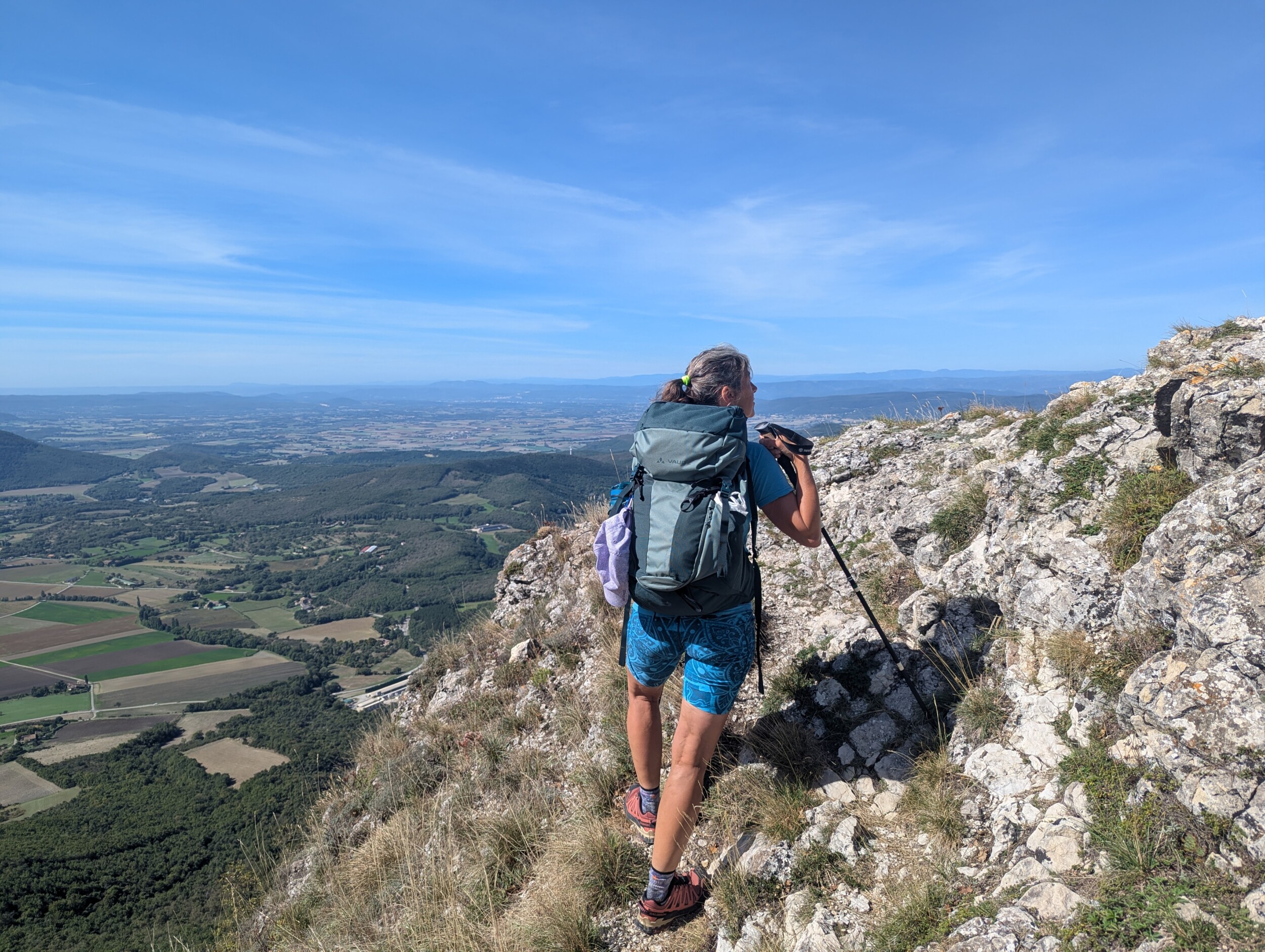
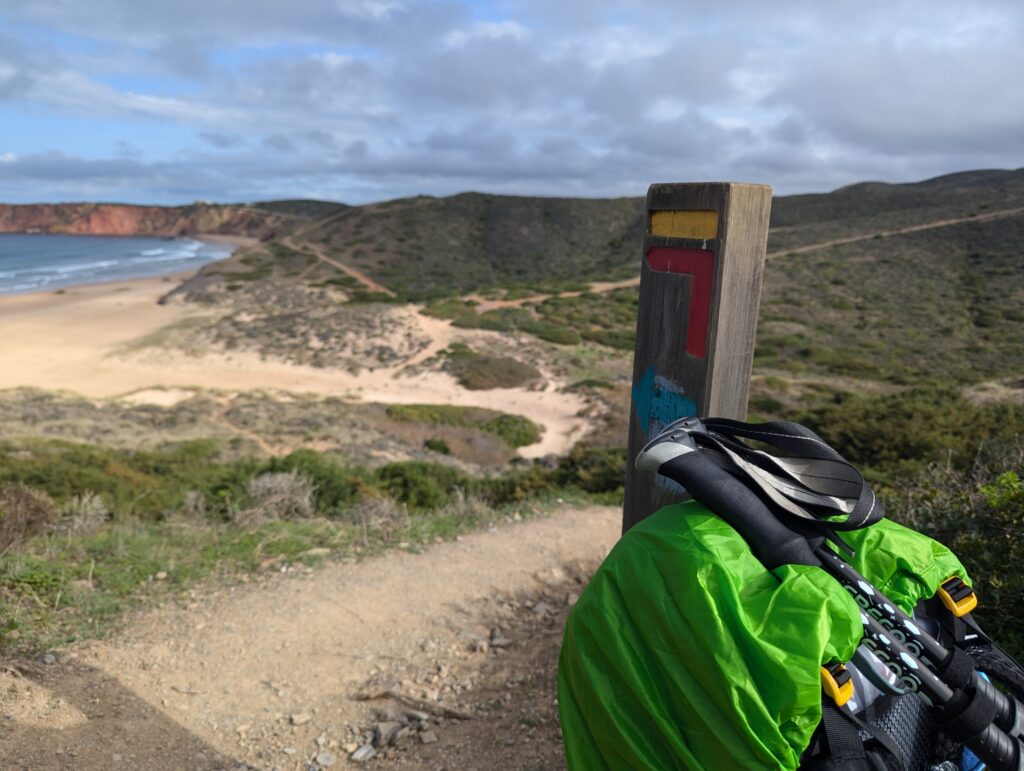
And one tip I always give: clip a small carabiner to your backpack. When you’re walking through a town or don’t need the poles for a stretch, collapse them and clip them to the outside of your pack. Many backpacks have loops for this, but a carabiner always does the trick.
On every trip, I carry my own refillable water bottle #ad. My mission is to eliminate single-use plastic, and refilling instead of throwing away is one of the easiest ways travelers can help with that. A foldable bag #ad for small purchases also helps cut down on unnecessary plastic waste on the road.
Also read
- How to Prevent Blisters When Hiking
- Camino de Santiago: Complete Guide for Your First Pilgrimage
- Pilgrim Path St Olavsleden – Norway
- Poon Hill Trek – Nepal – 8 days
- First 200K of my Camino Frances – Spain
This article contains affiliate links. If you book or purchase something through one of these links, we may receive a small commission at no extra cost to you.