
Going on safari means one thing above all else: you want to see as many animals as possible. Ideally in their own habitat, behaving exactly as they would if you weren’t there. But experiencing wildlife up close comes with responsibility. Knowing the rules before you go isn’t just smart — it could save your life.
I’ve been on safari in Africa multiple times: in Kenya, Namibia, and South Africa’s Kruger National Park, where I was lucky enough to spot the Big Five. I also worked as a ranger in Tsavo National Park in Kenya. This article is built on that experience.
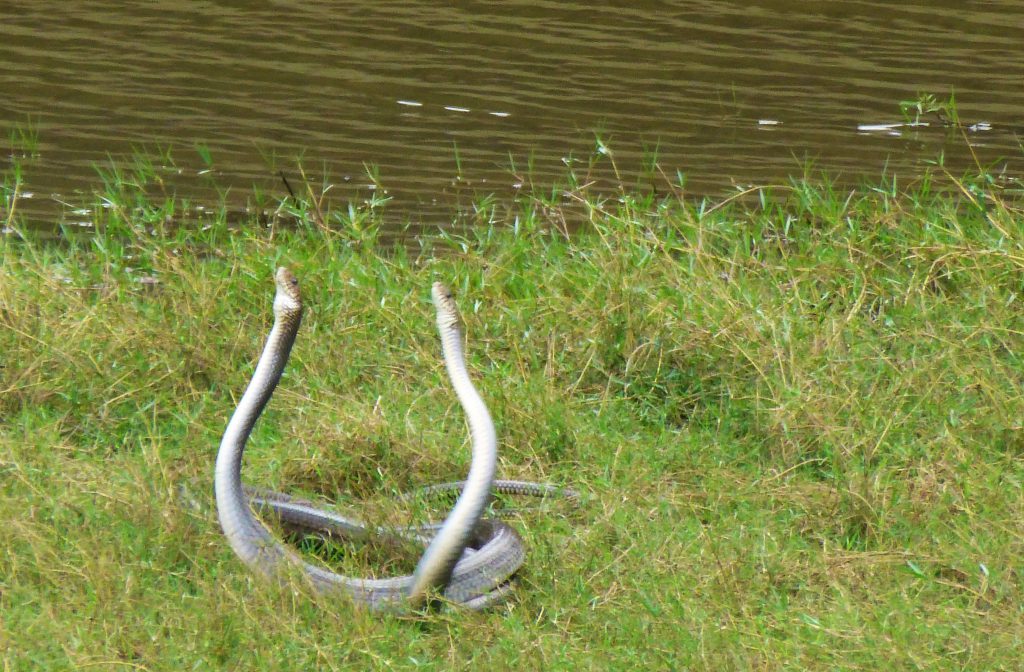
But it’s never really about ticking off a list. When I think back to those two dancing cobras I stumbled across in India, I still light up — even though I went there looking for tigers. (I did eventually spot them, in Ranthambore NP and Kaziranga NP.)
I’ve been on safari in Africa multiple times. Kenya, where I worked in a national park and spent my days — well, not officially on safari, I was working as a ranger — surrounded by wildlife. And Namibia, where a long road trip through Etosha NP left me speechless. What an incredible time.
Safari Safety Rules: What You Need to Know
But what if you want to go on a safari, what are the Safari Safety Rules?
How do you make sure you move through the park safely — without disturbing the animals with your presence, but also without drawing them towards you?
Ideally, you want to see them in their own environment, doing exactly what they would do if you weren’t there.
Sometimes that means going on foot, as I did in Kruger and in India. But more often you’ll be sitting in a jeep, driving through the park along the tracks that are meant for it.
Either way, there are rules. Here’s what matters.
Leave Only Footprints
This is the most important rule of all. Take nothing from the park. Leave nothing behind. You want to experience the landscape exactly as it is — and the traveller after you deserves the same.
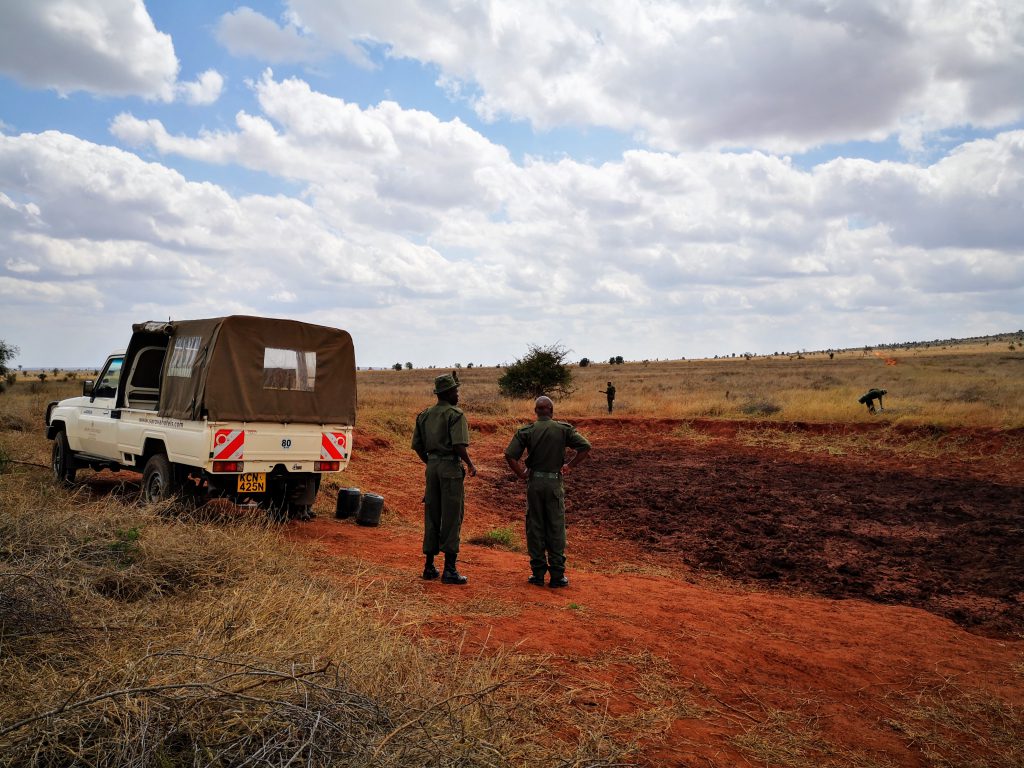
When I was working in Tsavo, we regularly stopped to pick up empty bottles or other litter left by visitors. If you bring something into the park, you take it out again. Everything.
And obviously: you take nothing from the park that you didn’t bring in yourself.
Because reducing single-use plastic waste is something I feel strongly about, I always recommend bringing a reusable water bottle #ad. Use it throughout the day and refill it in the evening.
Minimise Your Scent
You don’t want animals to smell you before you see them. And you can be sure: many animals are far better at that game than we are.
Always think about wind direction. Even without perfume or deodorant, your clothing carries scent — from laundry detergent alone. You’ll give away your position from kilometres away for many species.
Avoiding a sudden reveal also matters. A startled animal can react unpredictably. That said: in most cases, the wildlife has already spotted you long before you noticed them.
Wear Neutral Colours
Dull, earthy tones blend into the landscape. A bright pink shirt stands out in the bush just as your scent does — and wildlife will see you coming from a long way off. Muted greens, browns, khaki, and beige are standard for a reason.
Walk in Single File
When on a walking safari, keep the group in a straight line and step in each other’s footsteps where possible. This minimises your impact on the vegetation and, from an animal’s point of view, a line of people is far less threatening than a cluster. Seen head-on, you appear much smaller.
Never Lean Out of the Jeep
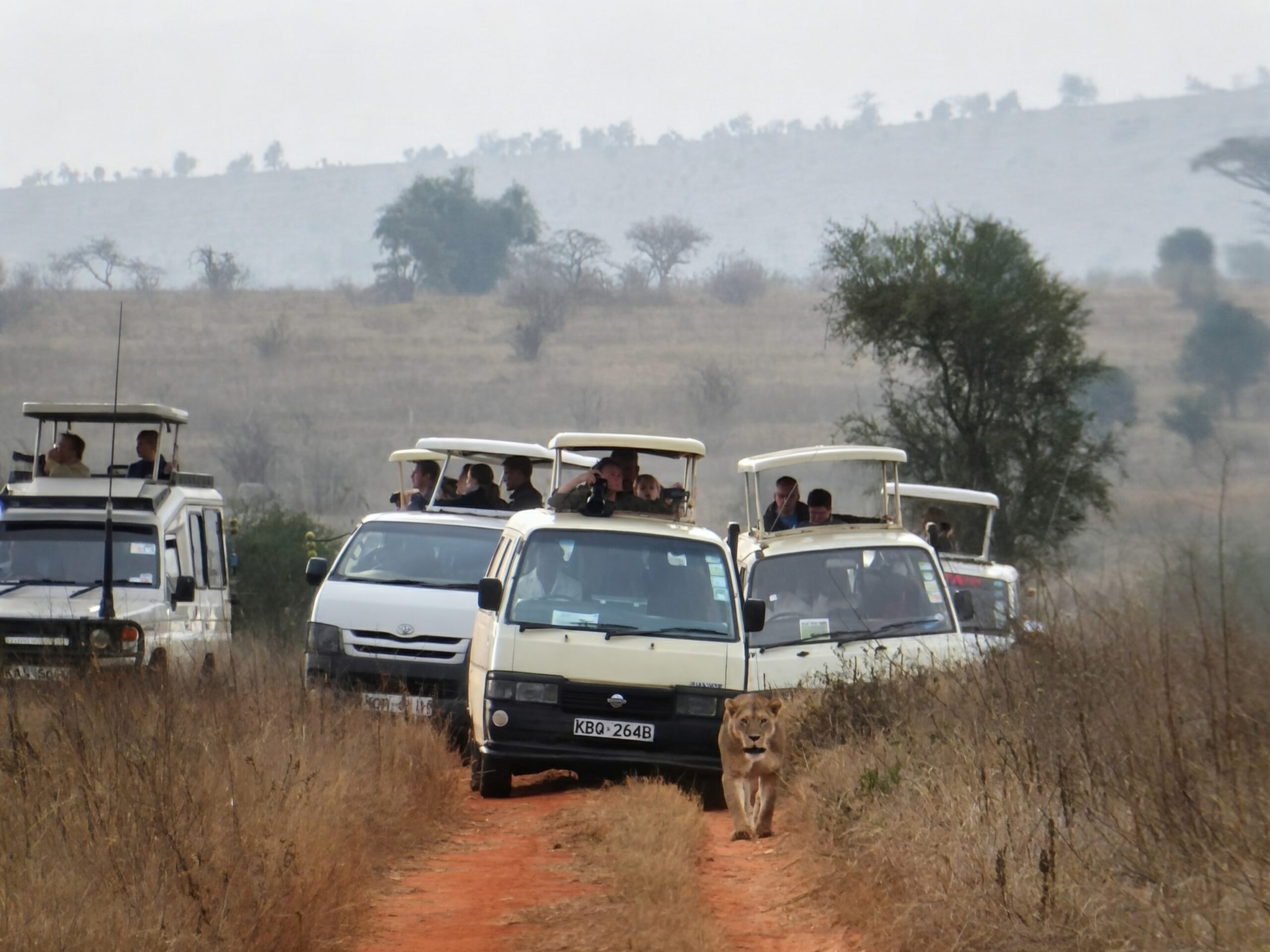
Wild animals have become accustomed to safari vehicles over decades. To them, a jeep is a large, harmless shape rolling past. The moment an arm, head, or camera rig extends beyond that shape, the equation changes. The animal may become unsettled — or curious in ways you don’t want.
There are plenty of videos showing exactly what happens when travellers push their luck in this way. Don’t be that person.
There are quite a few videos of encounters like this… Would you be able to stay as calm as this man? Check out this video from Tanzania!
Don’t Shout or Try to Get the Animal’s Attention
You’re desperate to get the perfect shot, but the animal is looking the wrong way. Resist the urge to call out, whistle, or wave. You have no idea how it will respond to suddenly having your attention. Stay calm, stay quiet, and wait. The situation may change on its own. If not — a sighting without a great photo is still a sighting worth having.
Just let them be and enjoy your sighting!
Stay at Least 10 Metres From Riverbeds
Hippos look slow. They aren’t. If they feel threatened, they can cover ground faster than most people expect. And crocodiles lying motionless on a bank aren’t resting — they’re waiting. Keep your distance from water edges at all times on a walking safari.
And what about the crocodiles lying silently in wait for their prey to pass by?
Never Run
If you encounter a lion, buffalo, or elephant on foot: do not run. Running triggers a predator’s instinct to chase. Stand your ground, stay calm, and follow your guide’s instructions immediately.
An important detail: most animal attacks are defensive. They’re protecting their young or fearing for their own lives and only attack out of self-defence. Can you blame them… if I were an animal, I wouldn’t trust humans either. Always keep that in mind!
What should you do… or not do? Did you know that sometimes the best thing is to make yourself small? Or sometimes you should play dead — this will throw a polar bear off completely. And with an elephant: don’t keep looking at it, just walk away.
And did you know that a rhino charges in a straight line? So make sure you move sideways — and if you find a tree… climb it! 🙂
Of course we hope we never end up in a situation like that!
Practical Tips to Make Your Safari Unforgettable
Beyond the safety rules, a few practical things make a real difference:
- Bring binoculars #ad You’ll spot far more, and details you’d miss with the naked eye come alive.
- Put your camera down sometimes. It’s easy to spend an entire sighting looking through a lens. Some moments are better absorbed directly.
- Wear a hat or cap against the sun. Bring a layer for the early morning and evening — on an open jeep on the savannah, it gets cold when the vehicle is moving.
- Make sure you have enough storage on your SD card or phone. You’ll take more photos than you expect.
- Pack DEET #ad Mosquitoes are most active at dawn and dusk — exactly when the best game viewing happens.