
Do you hike alone as a woman? Or do you prefer not to, for safety reasons? Go for it anyway. Below, you’ll find my tips for hiking alone safely as a woman.
People often wonder: is it safe to hike alone as a woman? Completely alone, in a remote nature area? Even when I was young, more than 30 years ago, I used to cycle home alone through the woods. I got asked, or honestly, warned, that I’d be better off taking the long way around. It would be safer to add an extra kilometer than to cycle through the woods. I’d be better off taking the road past the houses, where someone would probably come to help if I shouted for it.
Not much has changed since then. We still get those warnings today. That’s why I’m sharing 11 tips for women who want to hike or trek alone. I say it loud and clear: hiking alone as a woman can absolutely be safe.
Why women often hesitate to hike alone
I get where the warnings come from. They’re well-intentioned. But in all these years, nothing has ever happened to me. Back when I kept cycling through those woods anyway, because I was stubborn and definitely wasn’t going to take the long way around, I had prepared myself for how I’d react if something did happen.
Forewarned is forearmed, right? At the time I still smoked (I quit almost 20 years ago now) and made sure I had a lit cigarette between my fingers, in case I got attacked. I’d decided that I’d burn that person’s face with it, so they could at least be recognized the next day, or in the days after.
So I kept cycling through the woods, but I’d taken precautions.
I still hold that same opinion today. I don’t let well-meant warnings stop me. But I do take them on board and look at what I can do with them to make things safer for myself, without limiting myself in the process. Back then, I never had to press that cigarette into anyone’s face, even though I rode that same forest path year after year, in the dark.
How much should you let someone else’s fear guide you, and how much of that fear is actually based on real numbers? Are you skipping fun activities because they’re genuinely dangerous, or because people think there’s a chance something could happen, since they once heard that…?
Either way, go out well prepared.
Tip 1: Minimize risk by visualizing
The first thing you can do, and what I’d definitely recommend, is to visualize. That’s what I did back when I used to cycle through those woods. What if… Think through what could happen, and what you could do in response.
Research has shown that you react faster in a situation that’s unfamiliar to you, and that you’re more likely to freeze if you’ve never thought it through. Your brain looks for a previous experience to draw from. If you’ve never been in a situation like that and have no drawer of experiences to pull from, you might shut down. But if there’s already a drawer full of possible responses, you can draw from that instead.
So visualize what could happen, and think through, in detail, what you’d do in that situation. Do it in a way that lets you actually feel yourself going through the motions. Let your body feel what you want to do. Make it as likely as possible that your body will act the moment you’re under stress.
Tip 2: Be confident
Walking upright, holding your head up, and looking people in the eye makes you come across as confident. Don’t look away, don’t look at the ground, walk toward your situation with your head held high. See what’s there, see what you’re walking into, and assess your surroundings. By looking away, you miss the nuances that help you correctly judge the situation you’re in.
Fake it until you make it really applies here. Notice how people respond to you when you act as if you’re completely confident. You get treated differently, as if people show more respect for the space you take up in the world.
If people notice you need help, that help tends to be offered, and that’s something bad actors can take advantage of. If people notice you don’t need help, that opening simply isn’t there. People then have to find another way to get access to you. You’re confident, you don’t need help, and you hold your own, as they say.
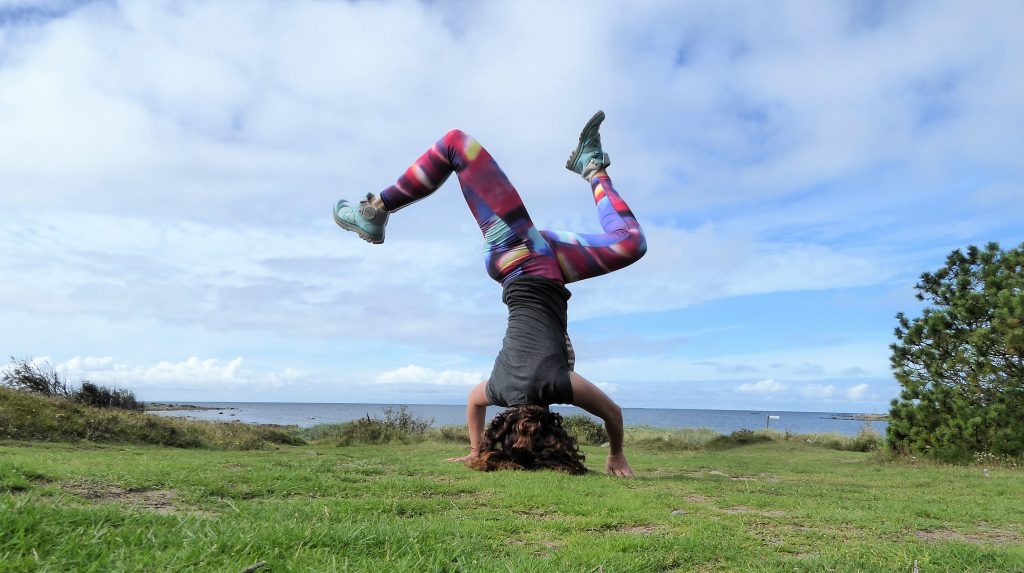
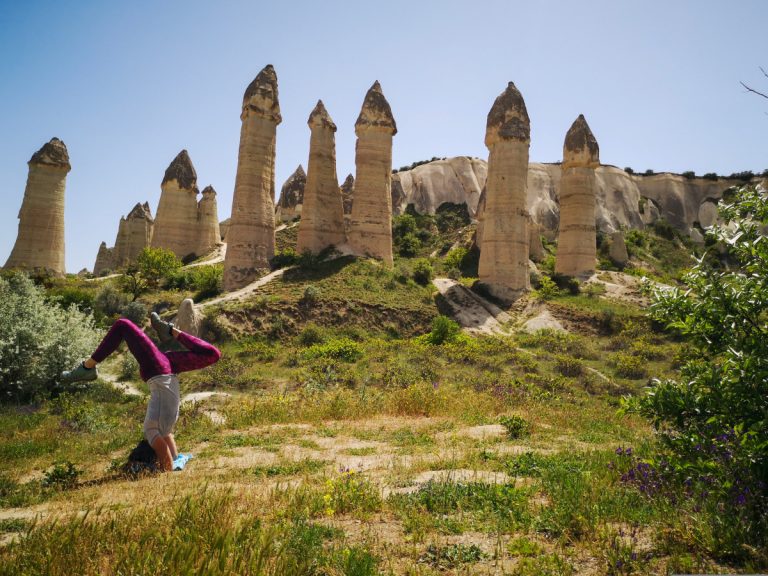
Just do your own thing, even if that means standing on your head.
Find navigating tricky when hiking alone? Read Hiking Alone and Navigating.
What if you don’t come across as confident?
If you react shyly or insecurely, taking on a submissive role, the other person is more likely to see you as a potential victim. They’ll be more likely to assume you’re easy to dominate. If he tells you to be quiet or he’ll hurt you, he’s inclined to believe you’ll comply. An attacker also assesses his chances of success. Make sure you defy that assessment, that he thinks you won’t listen, that you’re not an easy victim, so he lets you pass by.
It’s not that you’re completely unapproachable, but you’re not approachable to people who only want contact with you from a dominating or abusive position. So, to attackers or abusers.
Tip 3: Take the lead in contact along the way
Look at people who approach you or come up behind you. Stay alert and notice when people are walking behind you. Let them know you’ve seen or heard them. Say hello. Take them in: what kind of person is this? Do the same thing a potential attacker would do: size them up.
Take the lead here. Be the first to say something, because you’re also more likely to be the one who ends the conversation if it goes somewhere you don’t want it to. Be clear about that. A short chat about small talk is fine, but then you keep walking. This way, you stay in control and you hold the lead.
Be confident in this too.
I once read that perpetrators don’t pick someone they find likeable. So if you’re a friendly person, acknowledging their presence instead of ignoring it, you generate some sympathy from a potential perpetrator. That makes it more likely you’ll be passed over as a victim. Yes, even perpetrators have feelings, and they’re not immune to them.

Tip 4: Trust your gut feeling
Doesn’t feel right? Then just don’t go. I’d rather have one experience less than one too many. I can’t say it enough: trust your gut feeling. If a path or a place has a bad vibe, you’re allowed to skip it. You don’t have to go anywhere, and anything goes. You’re allowed to turn around and choose a different route.
In my own work, too, I often told people who were hesitant about whether to call the police that they should. Really, trust me, we’d rather come out one time too many than one time too few. We’ll come, and we’re there for you. Call us if it doesn’t feel safe.
If you come across someone along the way and you get the feeling something’s off, or that it’s heading in the wrong direction, respond to that. Create distance, lie that you’ve arranged to meet someone who’ll be arriving nearby any minute. Or whatever works: lying is always allowed in situations like this.
Get yourself out of the situation, however you can. Be creative about it, anything goes as far as I’m concerned. Within the limits of the law, of course: you obviously can’t murder the other person like a maniac, bury them, and walk on as if nothing happened. I just had to mention it.
Talk to strangers, take illogical routes, change your plan, and shift your goal. Anything is allowed to get yourself into a safe situation.
And know this: you suffer most from the suffering you fear.
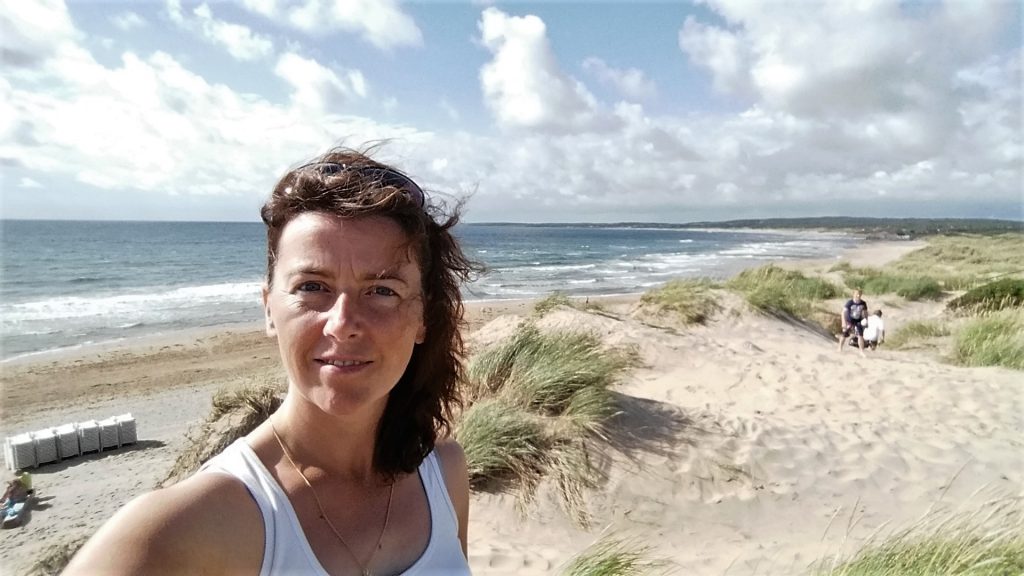
Tip 5: Hiking alone builds your confidence
You have to fend for yourself, and you’ll find out that you actually manage just fine. If something doesn’t work out the right way, you’ll find a way around it. So just go on that hike alone, and discover that you actually enjoy your own company. You’ll have plenty of thoughts to mull over, plenty of nice things to plan, and meanwhile you get to enjoy your surroundings. Or try mindful walking during your hike.
Unfortunately, society too often teaches us to be afraid, by warning us about everything that could happen to us. Maybe you know of one situation in your own circle where things went wrong for someone. Is that a lot, really? How likely is it that it happens to you?
I always think back to my former work as a police officer. When I pulled someone over for a check, they’d often say: well, this is the first time I’ve ever been pulled over by the police and had to show my license. Somewhere, the risk feels very real, but in practice it turns out to be extremely small.
Tip 6: Face your fears head on
Here’s the other side of it: people who’ve gone through certain situations notice for themselves that they could handle it, that they came out of situations where they thought things could have gone wrong. They get to know themselves so much better. They become stronger, and dare more.
I’m not saying you should take risks. I’m saying you should simply do what you want to do. If you run into situations along the way, face them head on. Confident, and convinced of yourself. Bet you can do it?
Always use your common sense. If it doesn’t feel safe, don’t do it. In these tips on hiking alone safely as a woman, I will never encourage you to do anything that could harm you. But if you see other people hiking alone and all you feel is fear? Maybe you should consider it anyway.
Bet you’ll feel so much better on the other side of that road?
In all the years I’ve now spent traveling the world, I’ve been robbed once.
But I’d apparently thought it through well, visualized it as in Tip 1, what I’d do if this happened to me. I didn’t scream, didn’t raise the alarm when I saw it happening. I would have done that if they were still in the act of robbing me. In that case, you want everyone’s attention on the street. But by then they already had my bag and were walking away. To avoid scaring them off, I quietly ran up behind them, with the idea of giving them a kick or something like that. Luckily, that startled them quite a bit, a furious woman in flip-flops running after you, and they threw my bag on the ground and ran off.
Read the full story of my robbery in Otjiwarongo.
Beyond that, we also face other challenges along the way. Don’t avoid situations that other people don’t find scary or difficult, like walking through a field with big cows or Highland cattle. Just walk through it. If you really don’t dare, wait for another hiker and quietly fall in alongside them. You’ll notice the animals just stay lying there, and might not even spare you a glance.
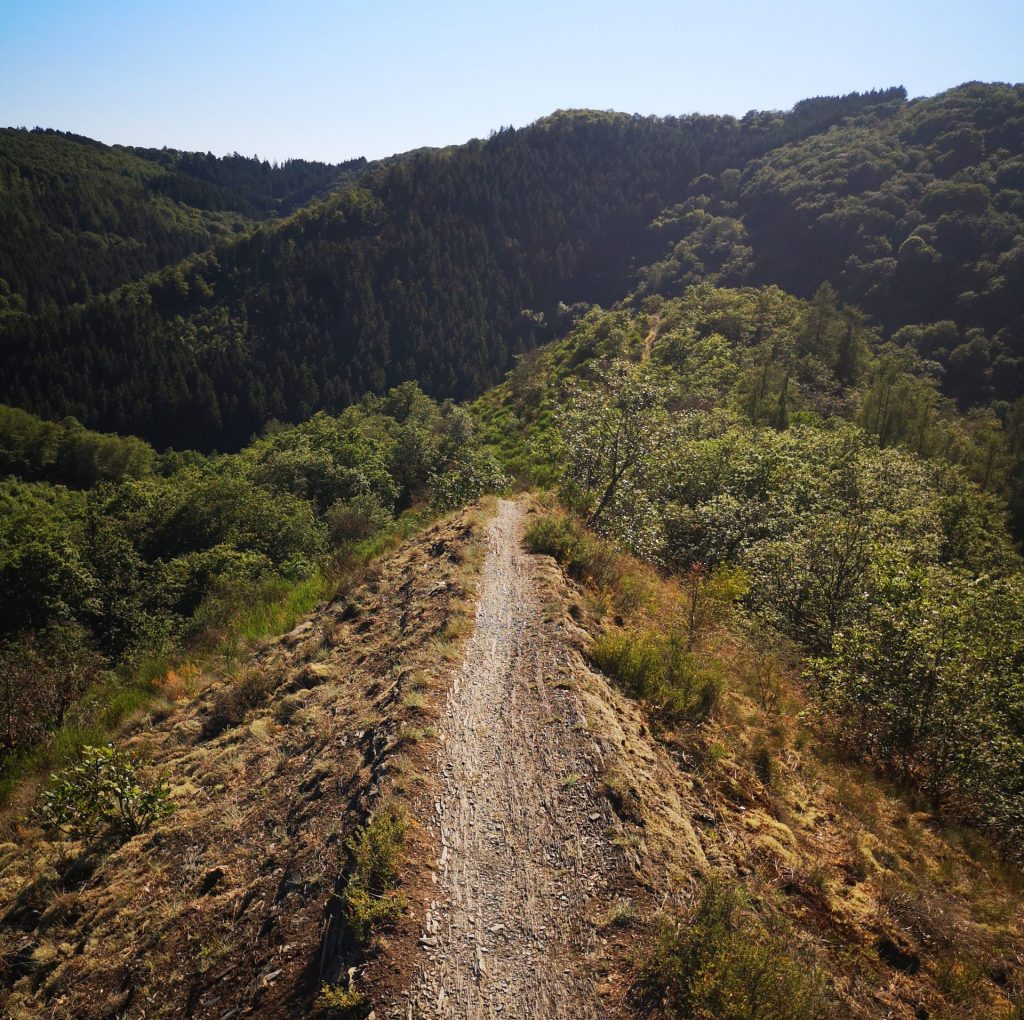
Or walk that high path along a cliff edge, or whatever fear you have. Do it anyway. Do it thoughtfully and carefully, but do it. Grow, and feel that you can handle more than you thought you could.
There are so many benefits to hiking alone safely as a woman. I’ve listed them in the next tip for you.
Tip 7: The benefits of hiking alone
You become more resourceful and inventive, and therefore more independent. You notice that you’re actually capable of a lot, and that you’re not always dependent on someone else. This might just be the best lesson you can learn in life. There are so many situations you can imagine, and if you’re on your own, so many solutions come to you. If you have to do it yourself, you manage. If you have no other way out, you simply can.
By hiking alone, you get to know yourself better. You enter a kind of meditative state and process all sorts of thoughts and situations. You can clear your head and let your thoughts flow away. This is now often called mindful walking, or meditative walking. It often happens without you even realizing it.
Do you notice that in yourself too? Try to keep up that meditative walking consciously as well. Let thoughts come and go, without attaching emotion to them. Just acknowledge that the thought is there, that it’s allowed to be there, and allowed to leave again.
This is Vipassana meditation, which lets you process deeply rooted emotions by no longer attaching emotion to them. No pain, no regret, no jealousy, just the awareness that you still remember the situation, nothing more. Slowly, that emotion takes root less deeply in you this way.
By hiking alone as a woman, you become so much more confident in yourself. You start feeling more at ease in all kinds of situations that come your way. You notice that you can handle them, and you radiate that. That radiance affects your surroundings and the reactions you get from others. There’s a kind of Murphy’s Law thing that also works the other way, in a positive sense. This is one of them.
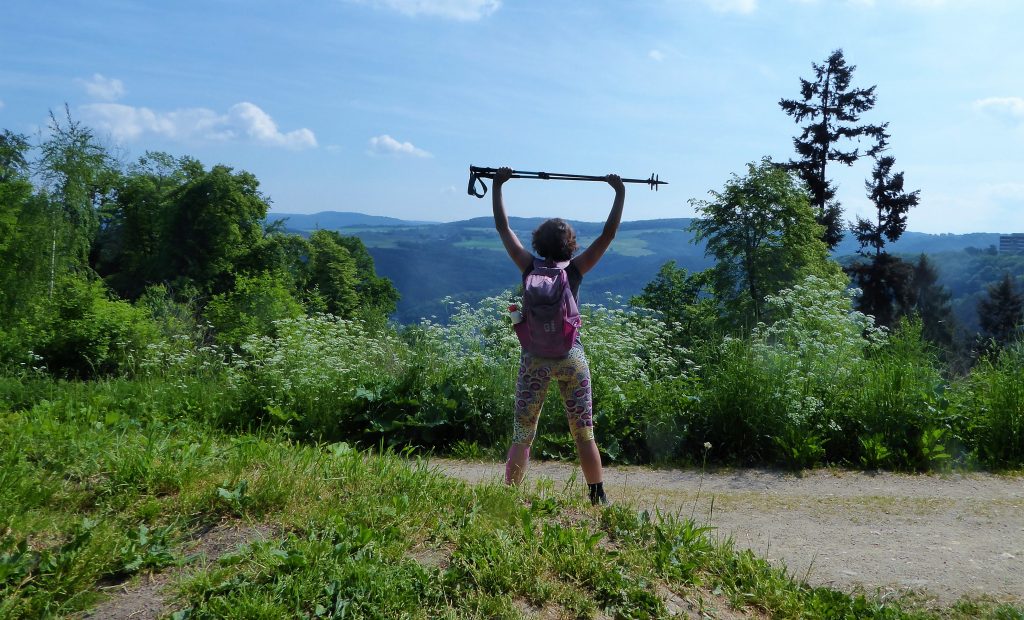
Tip 8: Prepare well
What’s useful to do before you go hiking? There are always a few things you can easily prepare that pay off afterward. I’ve shared before how you can use your trekking poles for your own safety too, but there are plenty more tips.
A whistle on your backpack. Many outdoor backpacks come with one as standard, attached to the strap that runs across your chest. If something happens and you want to alert people from a distance, you can blow this whistle to draw attention.
Know what you can and can’t handle. Don’t push past your limits. Don’t plan a 30 km hike if you’ve never done one before and don’t know if you can handle it. This sounds obvious, but it happens often. Also, don’t go hiking in extreme heat or cold if you don’t tolerate those conditions well. Know your limits, and stick to them to keep things safe for yourself.
Sometimes it’s good to push your boundaries, and I’m definitely in favor of that. How about two minutes in an ice bath? I did it in early 2023 and found it a hugely educational experience.
Let someone know where you are and when you’ll be back. Make sure someone close to you, or someone back home, knows you’re out in nature, that you’re on your way, and which hike you’re doing. Let them know roughly how long it’ll take and when they can expect you back.
A while back, there was a post in a Facebook group from someone who’d gotten lost in Laos and didn’t know which way to go. It was about to get dark, and he was growing anxious. In the group was a woman who knew a staff member at a nearby café, and she got in touch with her. Some time later, word came that he’d been found.
Make use of the tools we have available today. Social media can do so much good.
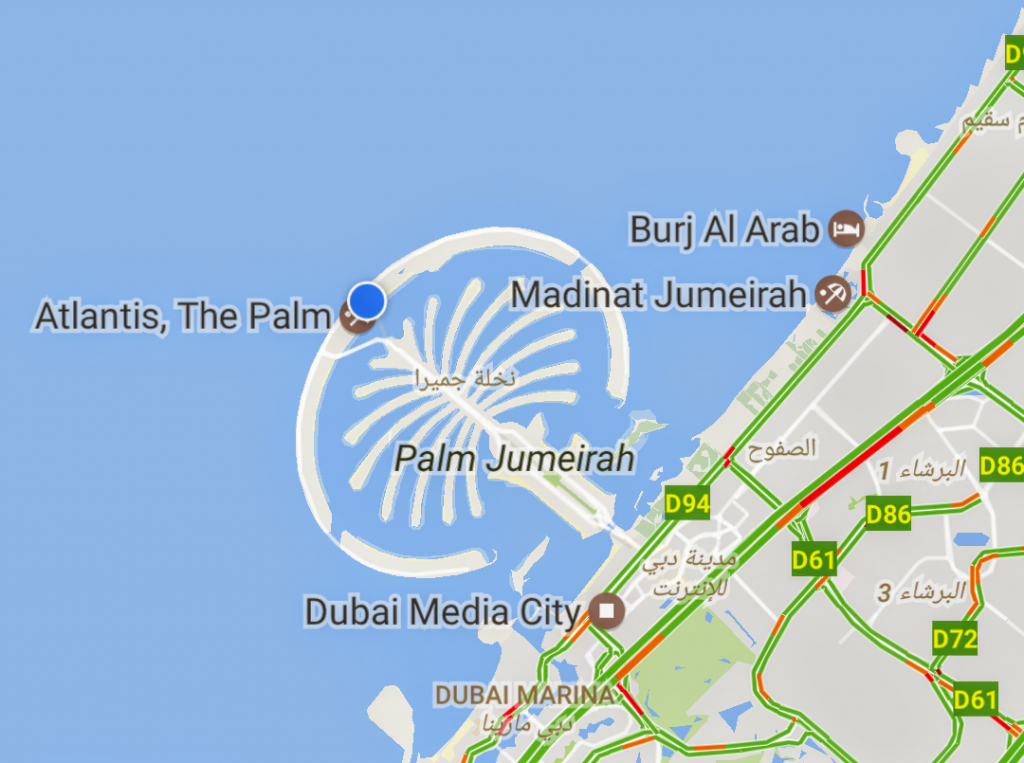
Tip 9: Share your location via Google Maps
Ever since a longer trip, two and a half months in September 2019, I’ve shared my location via Google with my brother. So I can always see where he is, and he can always see where I am. We usually don’t check, but if needed, my brother can see my last known location. If he taps on my profile, he can even see how much battery I have left.
There will probably be plenty of people with good reasons not to do this through Google Maps. Privacy concerns, for instance, but it doesn’t bother me that my brother can always see where I am. If Google builds a timeline of where I’ve been and bases something on it in terms of the information it shows me, then so be it. To me, the potential benefits outweigh the downsides. I rarely make a secret of being on holiday or out hiking.
The advantage of this way of sharing your location is that it barely uses any battery. The downside is that it relies on a network connection, so if you’re out in nature without wifi or signal, you stop sharing your location. Your last known location does remain available, though. If there’s a real emergency, your phone can still be located via GPS, but that has to go through official channels.
You can, of course, also use Find My Phone, Family Locator, or similar apps. There are many roads that lead to the same destination.
Tip 10: Keep your GPS on and your battery charged
Always leave your GPS turned on on your phone. That way, emergency services can track your phone more easily if needed in an emergency. It’s also useful to tag your location to your photos. I often look back at where I took a photo on a trip, since I don’t always remember exactly where it was.
Make sure your phone has a full battery before you head out. On a long or multi-day hike, bring a power bank. Mine is heavy, about half a kilo, but it’s worth it to me. Lately I use my phone mainly for photos, and they keep getting better. There’s even an evening photo from my phone, printed 1.5 by 2 meters, hanging at an ambulance station, and it still looks great.
To save battery, you can take your phone off the network and switch on battery-saving mode. That way the internet stays inactive and doesn’t drain your battery. I do this often while hiking. Only during a break do I turn the network back on, so I can post something to stories and check my WhatsApp.
Tip 11: Stay alert
This is one of the reasons I basically never wear headphones. That way I can hear what’s happening around me. Know what’s happening in front of and behind you, keep a wide view. Don’t be caught off guard by another hiker or anyone else on your path.
By staying alert, you can respond appropriately to situations that come up along the way. It’s also useful in traffic to be able to hear what’s going on around you. If you do want to listen to music or a podcast during your hike, keep the volume low enough that you can still pick up on ambient sounds. It can save lives.
Keep in mind that for every scary story you hear, there are hundreds you never hear, because they weren’t worth telling. Nothing happened, everything went fine, no one got hurt. Ask the person warning you whether it’s their own experience, or something they heard secondhand. And whether that warning came from someone who actually went through it, or whether they’d also just heard it from someone else.
You’ll eventually trace any story back to its source, but my main point is this: most people, thankfully, don’t know anyone something bad has happened to.
Hiking alone as a woman: trail with confidence
Hiking alone as a woman doesn’t have to be a risk you avoid. With the right preparation, it’s an experience that can only make you stronger.
On every trip, I bring my own refillable water bottle #ad. My mission is to eliminate single-use plastic, and refilling instead of throwing away is one of the easiest ways to contribute to that as a traveler. A foldable bag #ad for small purchases also saves unnecessary plastic waste along the way.
Also read
- Anti-theft tips day bag – Safe Travel
- 5 Tips to increase you Safety in the Dark Hours
- Almost Victim of a Changing Scam – Mumbia
- Pilgrim Path St Olavsleden – Norway
This article contains affiliate links. If you book or purchase something through one of these links, we may receive a small commission at no extra cost to you.