
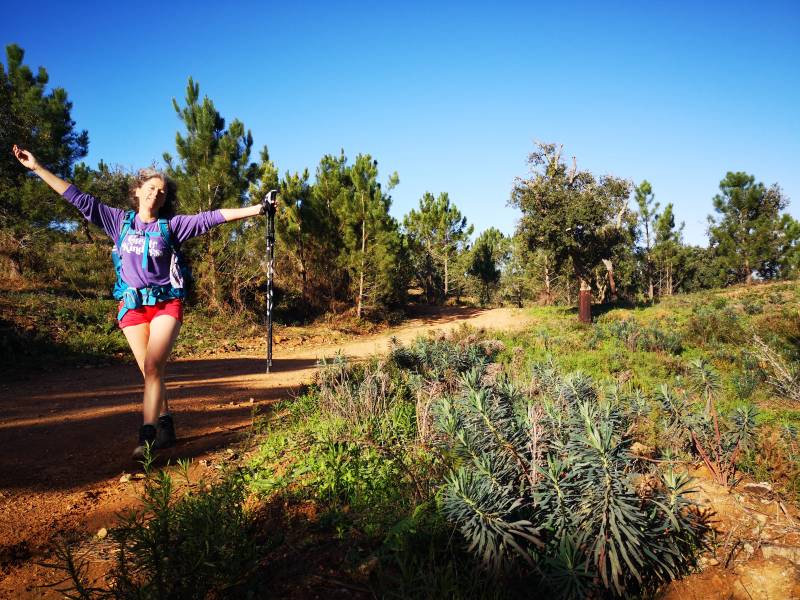
The Rota Vicentina Historical Way is one of Portugal’s finest long-distance hiking routes. The trail runs 263 kilometres through the Alentejo inland — from Santiago do Cacem all the way to Cabo de São Vicente. Not along the coast, but through cork oak forests, abandoned farming villages and open rolling countryside. Quiet, unhurried and almost entirely free of other hikers.
I walked the first three stages in November 2022, as a lead-up to the Fishermen’s Trail. Not northward, as on the Camino, but south — towards the southernmost tip of Portugal. In this article you’ll find out how I reached the starting point in Santiago do Cacem, what you encounter along the way, and where to sleep on stages 1, 2 and 3.
Hiking the Rota Vicentina
A few days outdoors, some sunshine, moving through a landscape that doesn’t ask anything of you. That’s what travel means to me — and the Rota Vicentina delivers exactly that. I originally planned to walk the Fishermen’s Trail. I bought the guidebook and started reading my way in.
Rota Vicentina Historical Way: What to Expect
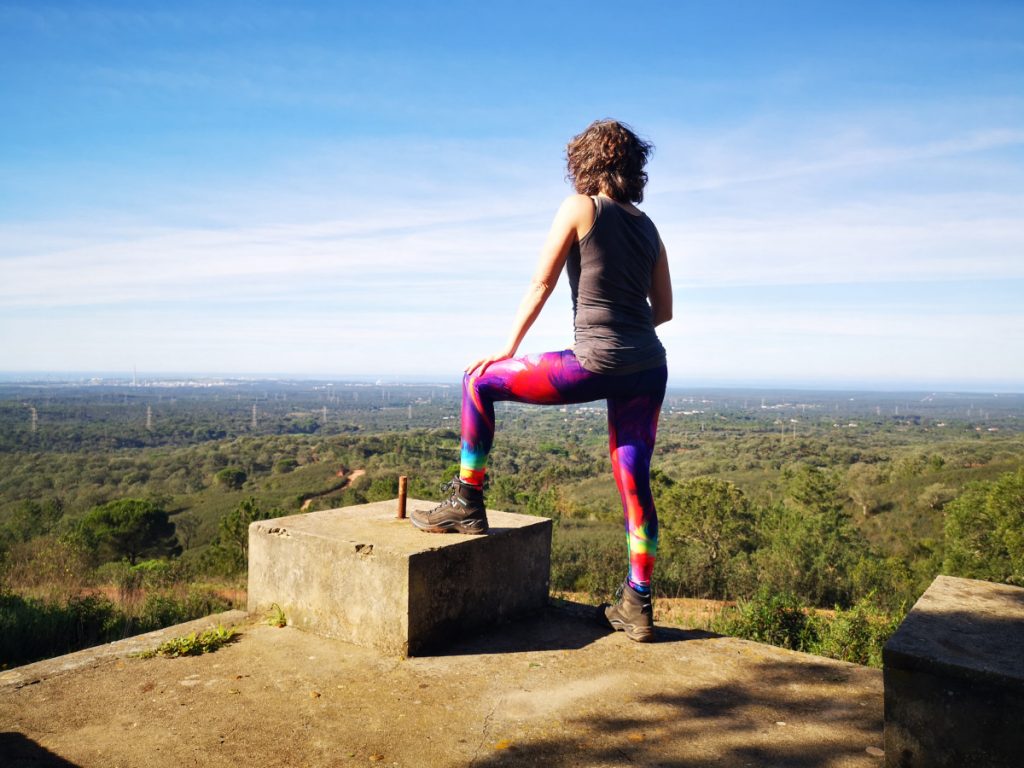
The Rota Vicentina is an extensive network of walking trails in the southwest of Portugal. It has two main long-distance routes: the Historical Way (263 km, inland) and the Fishermen’s Trail (227 km, coastal). Together they form one of Europe’s most rewarding hiking networks, running through the Alentejo and Algarve regions.
The guidebook showed me I’d be starting in Santiago do Cacem — a name that appealed to me immediately, for obvious reasons. This was the Historical Way. It brings you to the starting point of the Fishermen’s Trail in three stages. I had some extra leave saved up, so I had two full weeks to do both routes. Because the Fishermen’s Trail continues past the southernmost point all the way to Lagos. And yes, I wanted to go there too.
Getting to the Start of the Rota Vicentina Historical Way
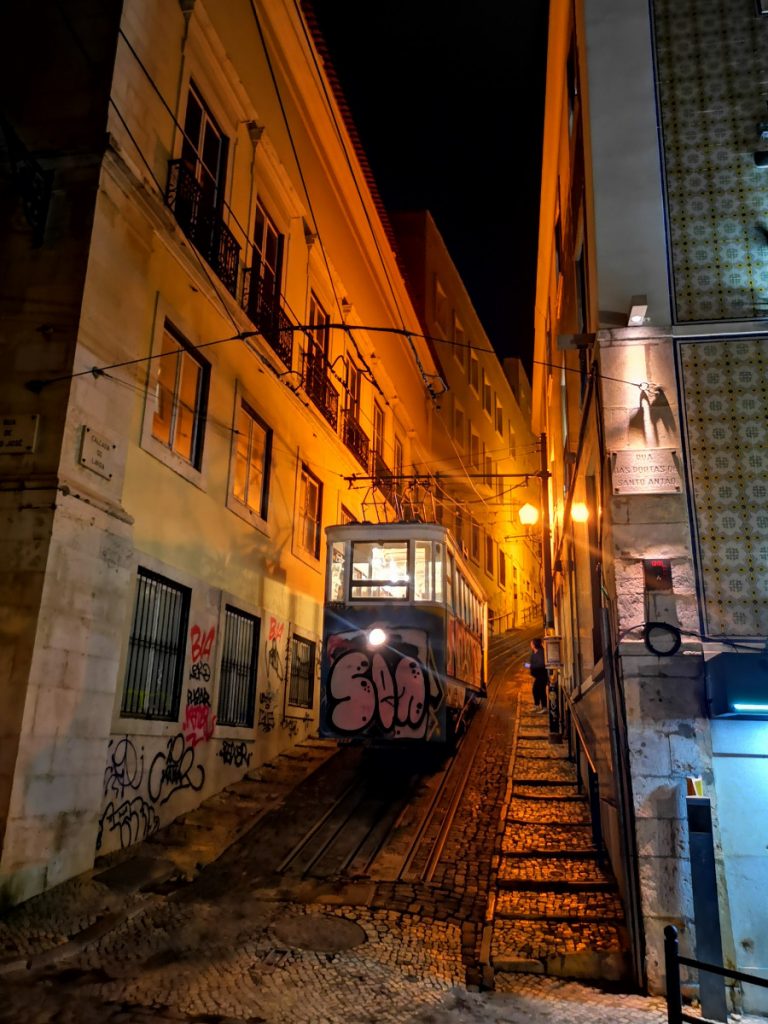
I flew to Lisbon and spent a night at Bluesock Hostels — a good hostel, close to Avenida metro station. From the airport, take the blue line all the way to the end, then switch to the red line for three more stops. You’re there within an hour.
By Bus to Santiago do Cacem
I knew the bus left at 07:30, which meant I could walk the first stage that same day. I left the hostel around 06:15 and walked to Sete Rios, where you can buy a ticket with Rede Expressos to Santiago do Cacem for around €14. The journey takes just over two hours. There’s also a bus at 10:30 and one later in the day.
Santiago do Cacem: Starting Point of the Historical Way
After a coffee near the bus station, I went looking for the start. My guidebook said it was near the station — but I found nothing there. I spotted a street name and a park mentioned in the book and went looking. Ten minutes later I found the Rota Vicentina signs.
I followed the red and yellow markings for a bit, but quickly got a bad feeling about it. I checked the book for the next landmark: the Igreja Matriz de Santiago de Cacém. There I found the red and white waymarks I’d been looking for — and that would guide me reliably for the rest of the day.
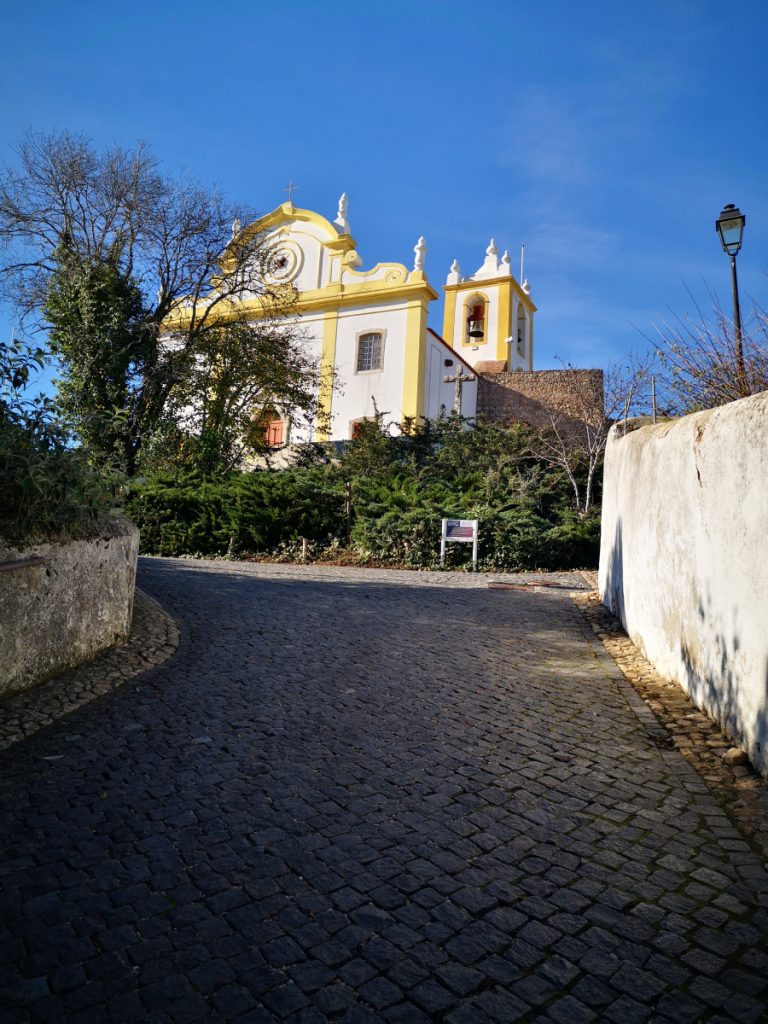
Tip: Just enter Igreja Matriz de Santiago de Cacém into Google Maps and you’re sorted in one go. The walk up to it is pleasant, the views are good, and from there you simply follow the waymarks out of town.
Stage 1: Santiago do Cacem to Moinhos do Paneiro (approx. 23 km)
The information board at the start lists stage 1 as running from Santiago do Cacem to Vale Seco (18 km), but my guidebook pointed to Moinhos do Paneiro as the endpoint. That put my first day at around 23 km.
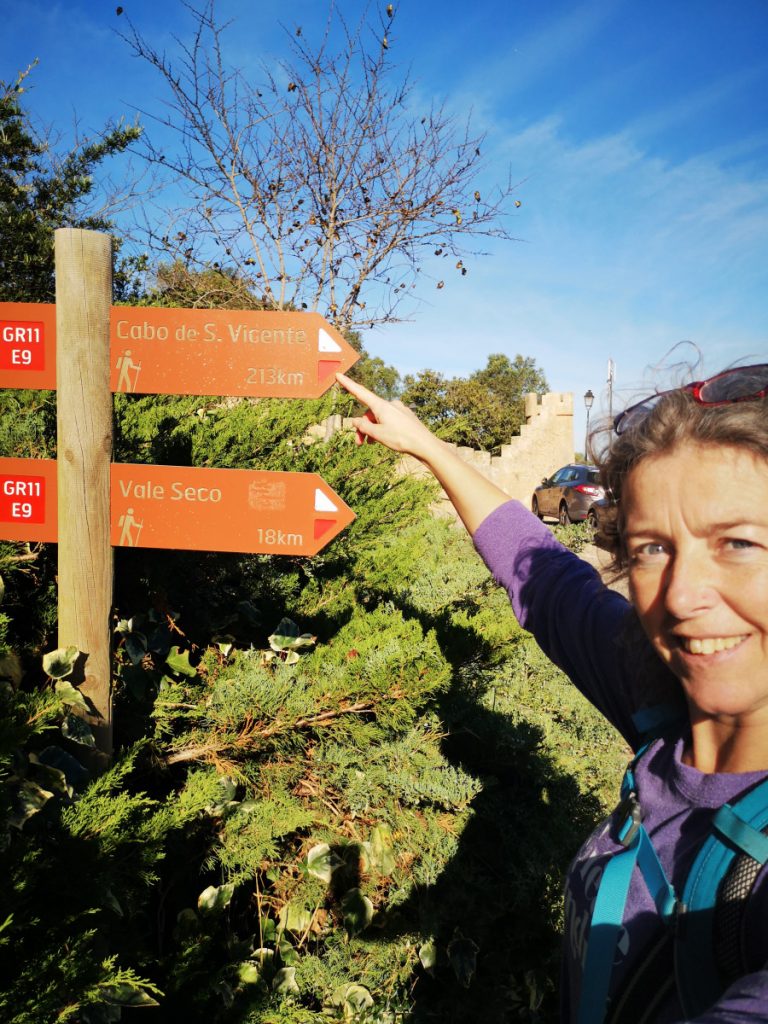
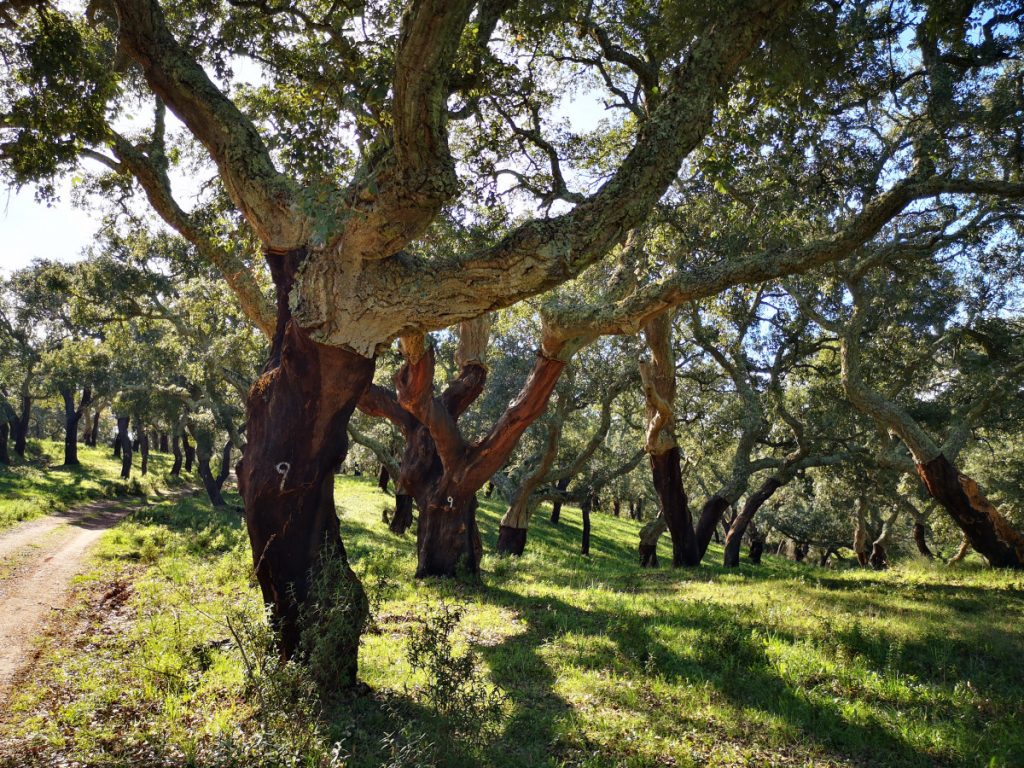
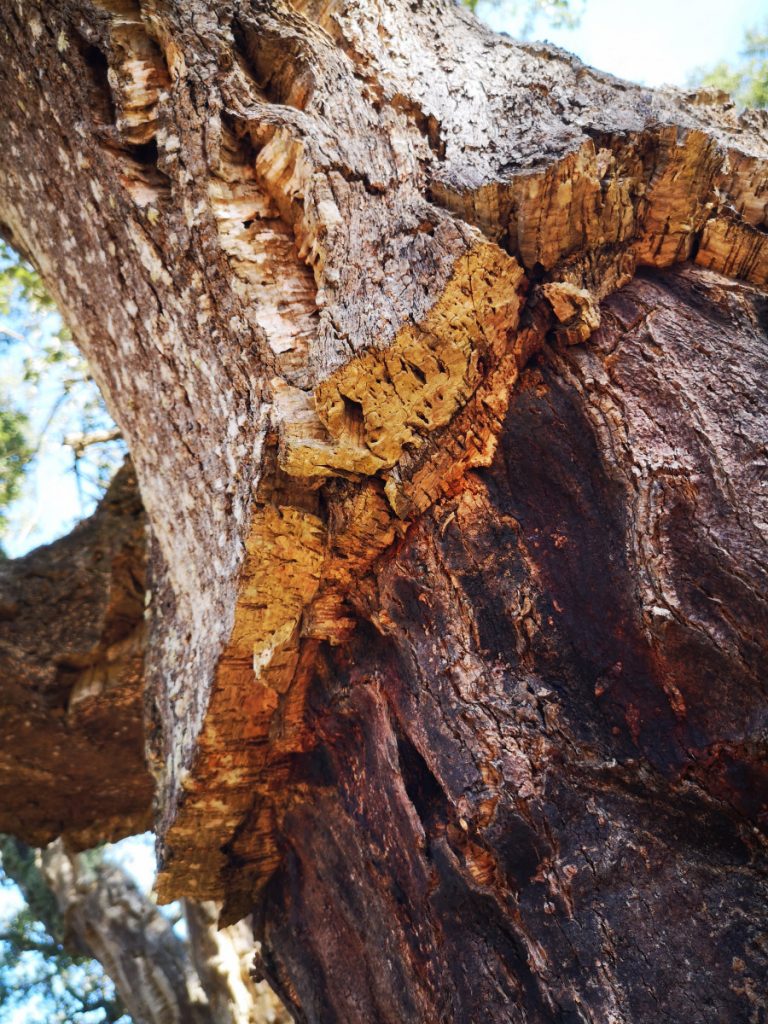
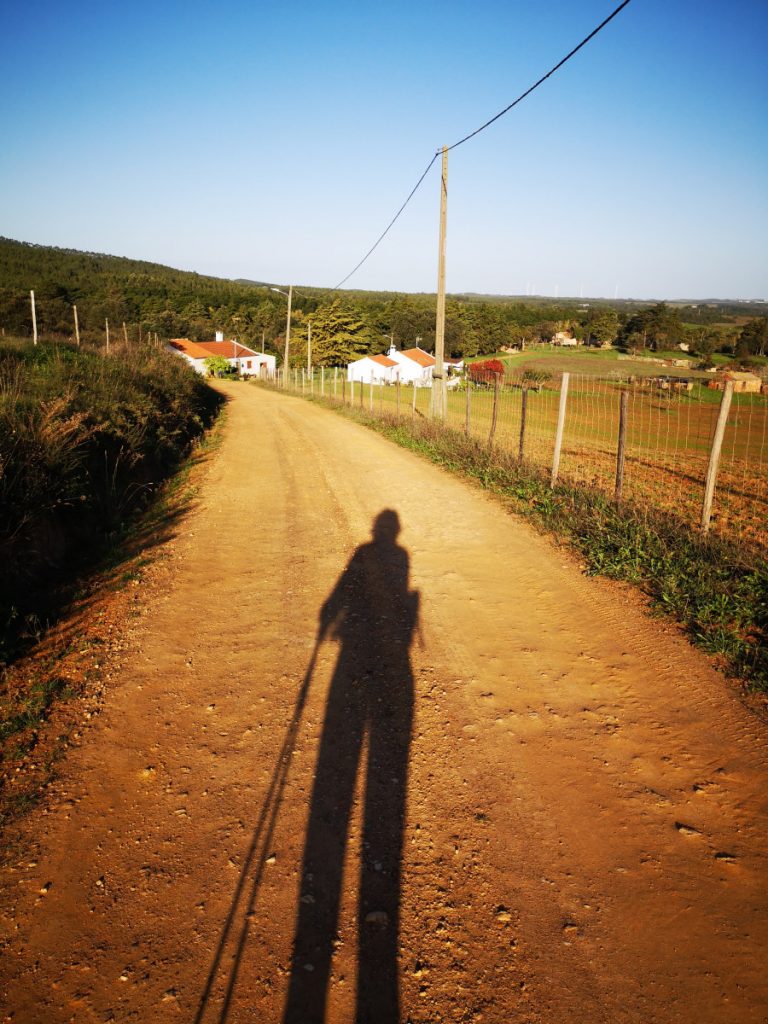
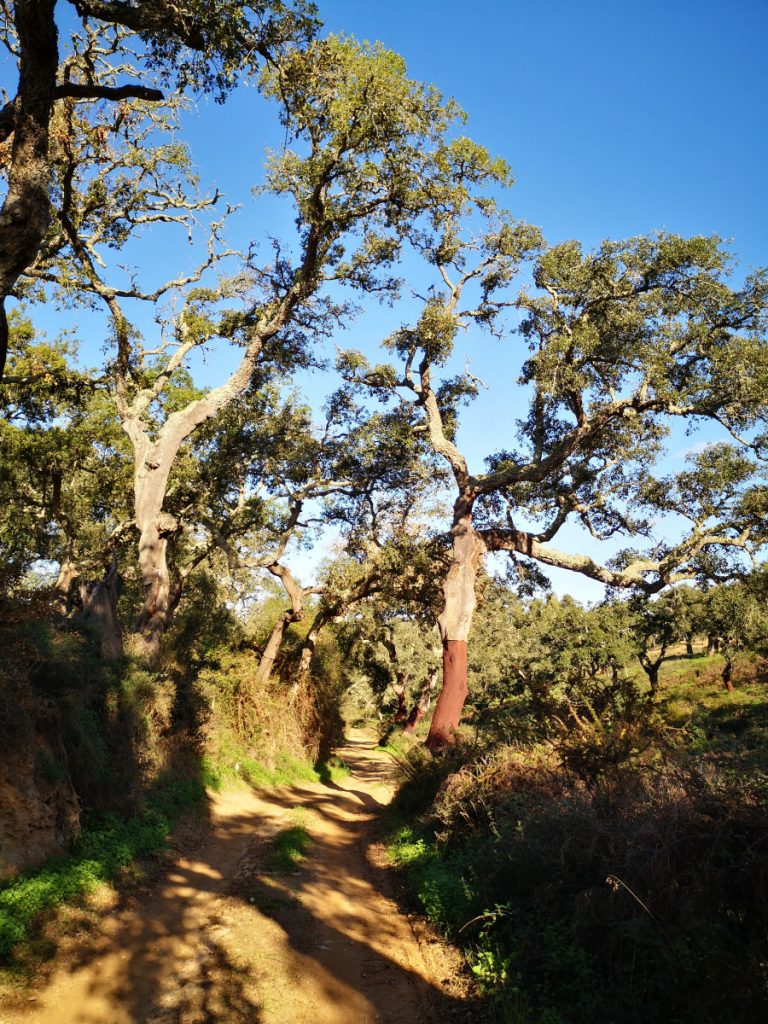
I was soon walking through greenery, up one hill and down the next. Early on, eucalyptus plantations and plane trees dominate — planted, orderly, nothing much to look at. Then the landscape shifts and I find myself among cork oaks. Striking. The lower trunks are dark, almost black, where the bark has been harvested. Above that: cork and leaves. The trails through here are excellent.
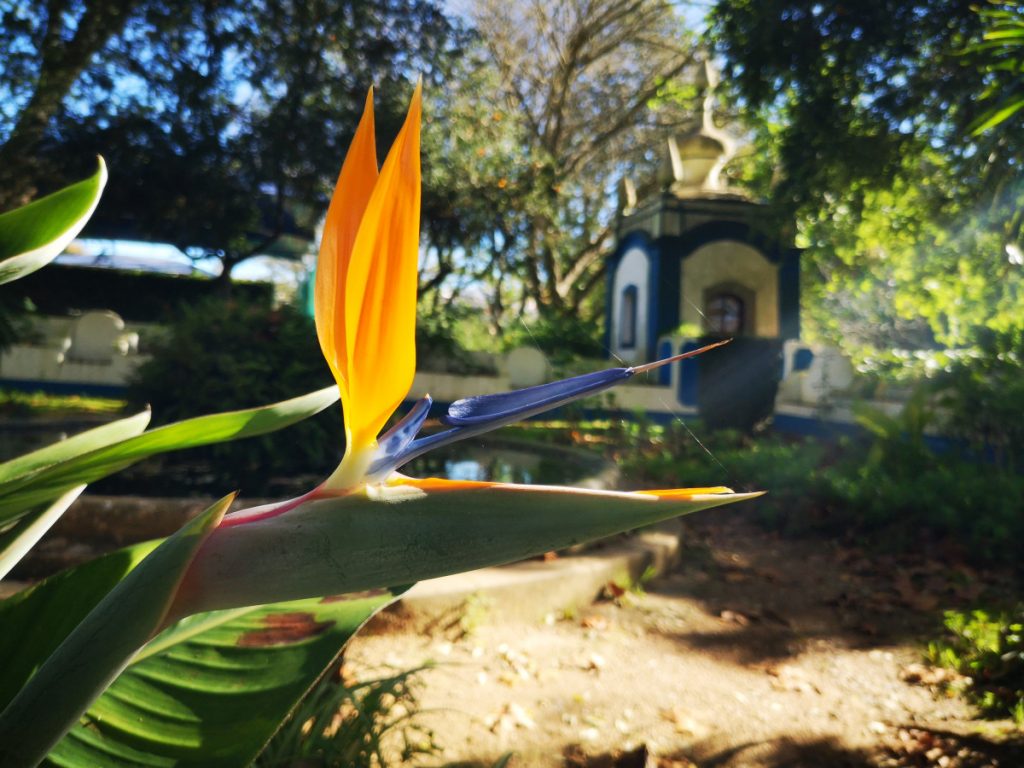
Early on I could glimpse the sea to my left, but soon I was fully in the Portuguese interior. At some point I heard bells and spotted goats — one of them standing high up in a tree, others gathered below. One had the most extraordinary long horns I’d ever seen.
Further along I spotted a woman working in a garden and then came upon the Ruínas do Convento de Nossa Senhora do Loreto, dating from the 15th century. Two guard dogs barked from their ropes. The older woman who lived nearby — maybe three teeth left — came over to point out a waymark hidden behind some greenery. Keep right there.
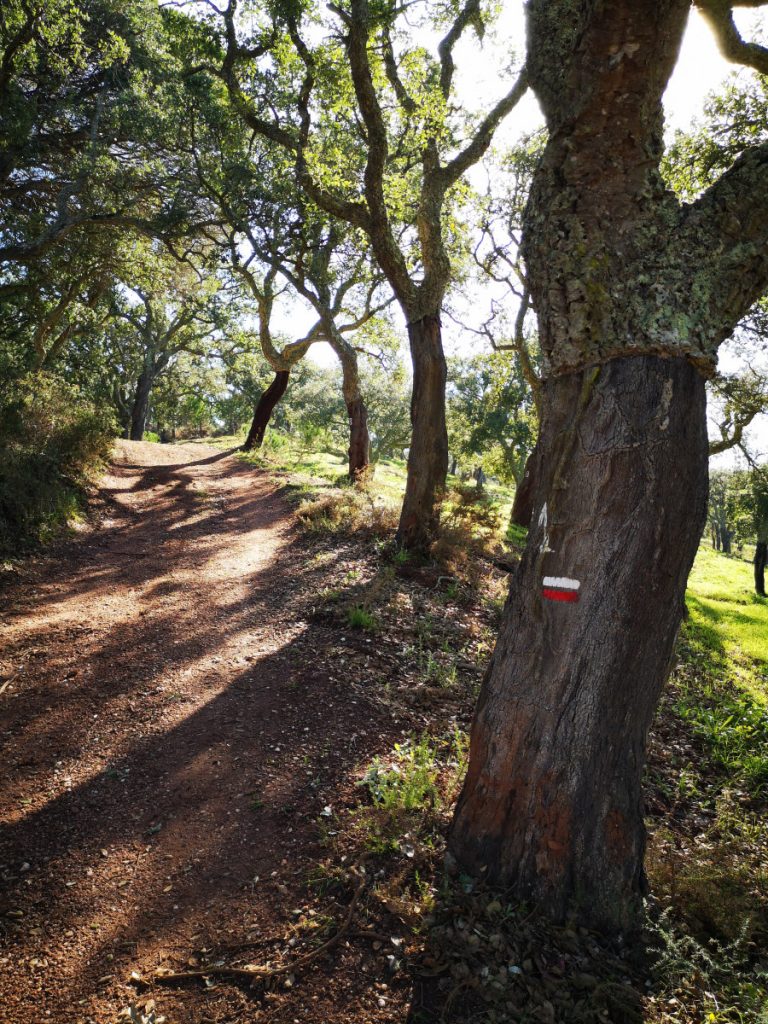
Cork Oak Forests: Portugal’s Most Distinctive Landscape
I walked for a long stretch through eucalyptus, then back into the cork oaks. I’d never seen them up close like this before. The bark really is cork. I broke a small piece off — soft, light, exactly as cork should feel. A fully natural product that only needs to be cleaned before use. Remarkable.
It takes about nine years for the bark to grow back enough for another harvest. As the people at dinner that evening put it: you can be a lazy farmer here.
When Your Body Decides to Protest
Somewhere along the way my knee started playing up — an old issue from the Nijmegen Four Days Marches. The day before I’d had some calf cramps, even though I’d been travelling gently. I know this pattern: my body pushes back, makes things feel worse than they are. I’ve seen it in my three Vipassana retreats too — the body demanding attention, resisting being here.
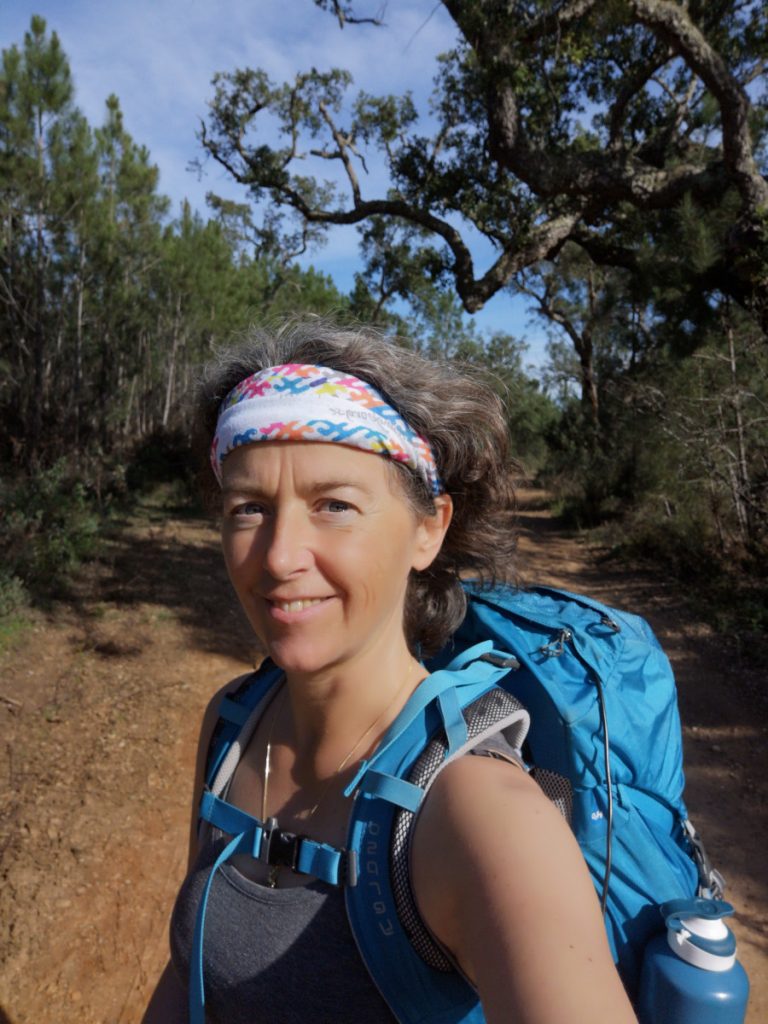
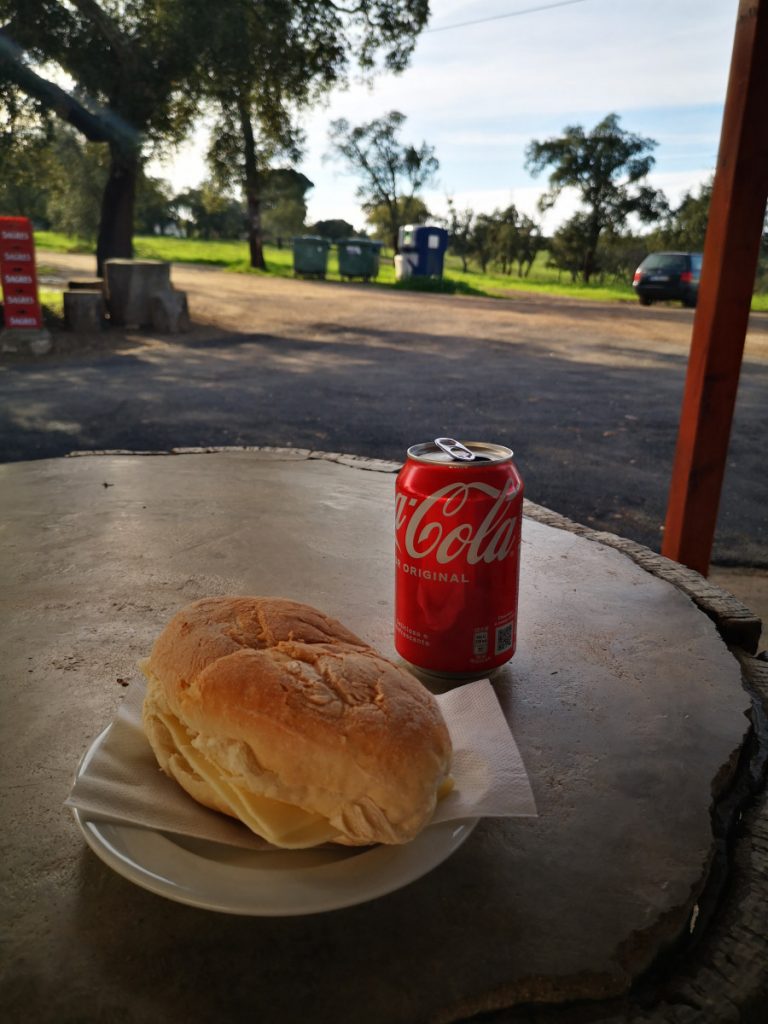
For stretches it hurt, for stretches it didn’t. Sometimes descents were fine; minutes later I was hobbling, reluctant to bend the knee. By Vale Seco I’d done 18 km and was very happy to sit down. Shoes off, feet dry, big toes taped, a Coke and a cheese roll. Bliss.
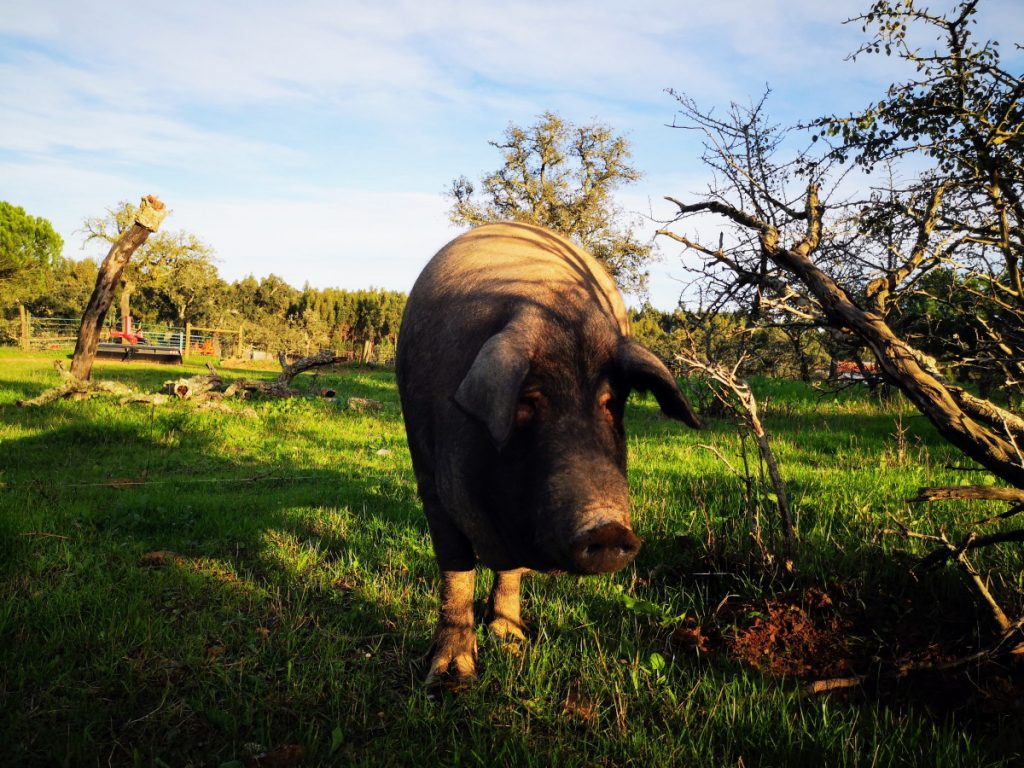
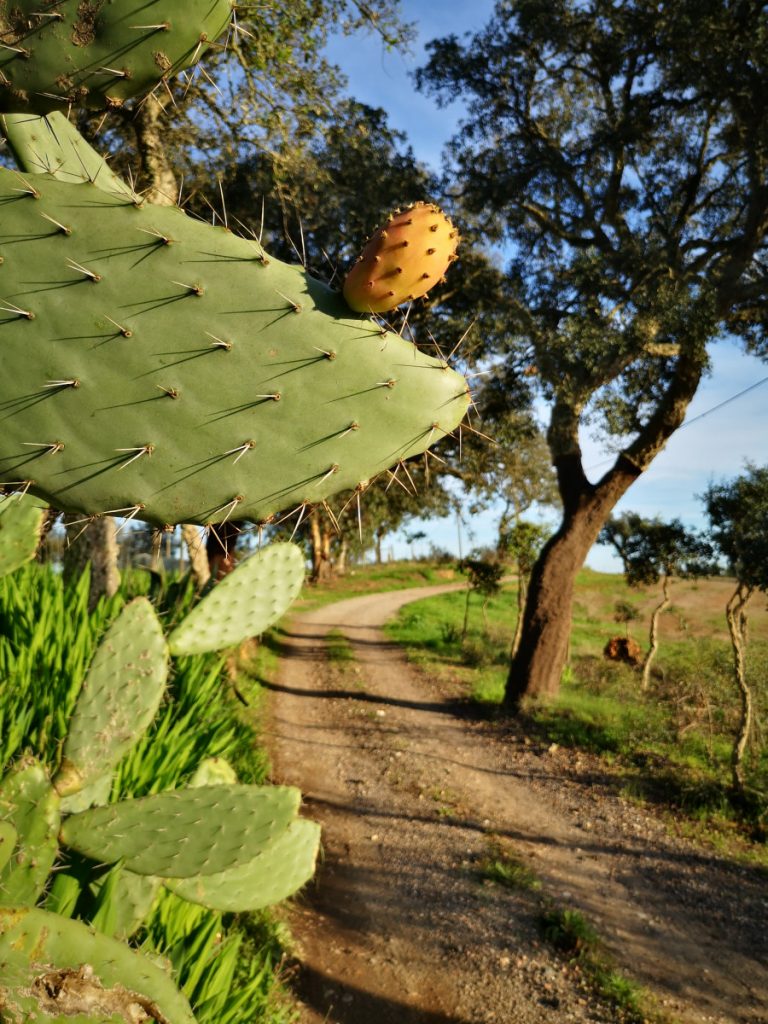
Then another 3 km to Moinhos do Paneiro. Along the way: small smallholdings and old cottages. No real farms. People grow a bit of veg, keep a few goats. And then suddenly: a massive pig, curious and enormous. I filmed it.
Where to Sleep: Moinhos do Paneiro
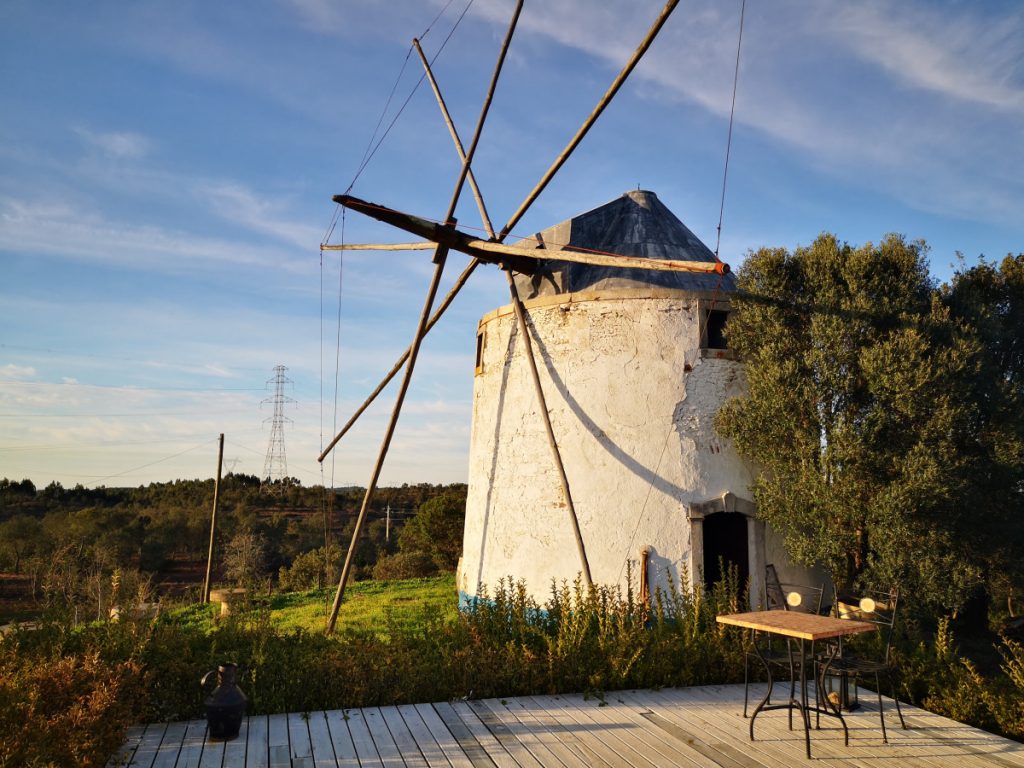
I stayed at the old windmills. Two of them are still standing, with a B&B attached — the only option for miles around, right in the middle of rolling Portuguese countryside. Fortunately they also serve dinner. That evening I ended up sharing a table with a Dutch family who split their time between the Netherlands and Portugal. Good company.
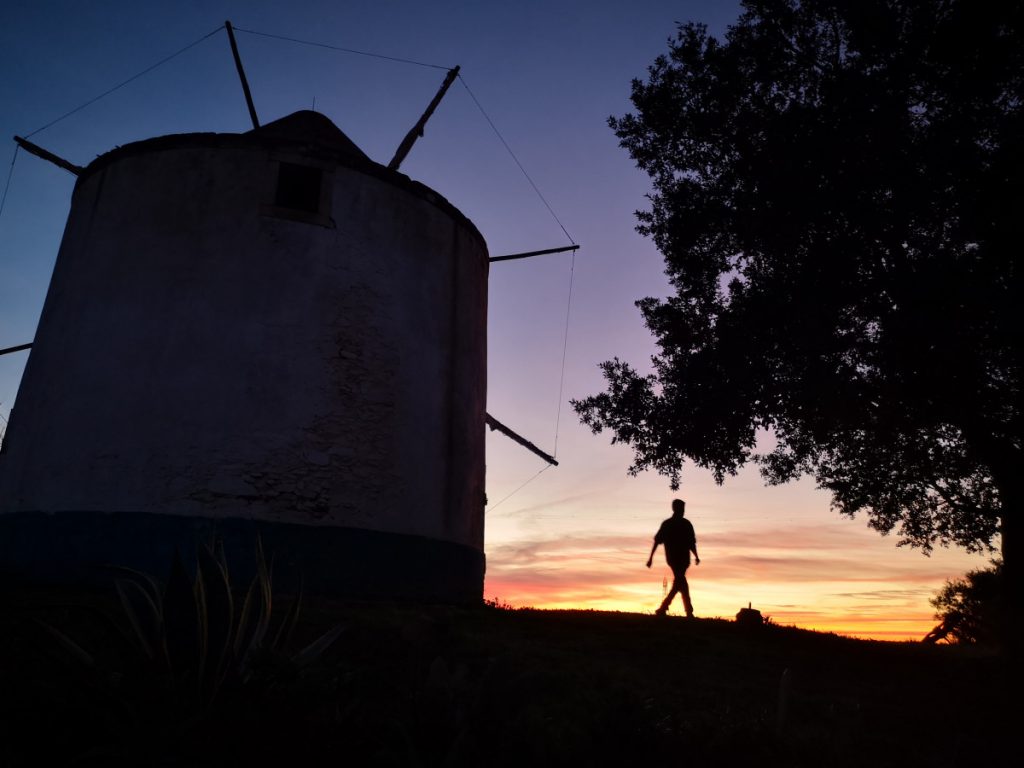
A successful first day. I hoped my knee would behave better the next morning — something similar happened in Austria once, and it was fine by morning. Let’s go with that.
Find your accommodation at or near Moinhos do Paneiro. Other options close to the route: Courela do Salgueiro, Vale Seco, Elements Alentejo and Herdade Morro Bento.
I walked this route with trekking poles to take some strain off my body. Worth it — get a good adjustable pair.
Stage 2: Moinhos do Paneiro to Cercal do Alentejo (approx. 20 km)
The next morning began with a good breakfast at Moinhos do Paneiro. My knee felt reasonable — not pain-free, but not hurting with every step either. I decided to take it slow. The sun was already shining and I set off in just a vest, a thin top and short yoga trousers. November in Portugal.
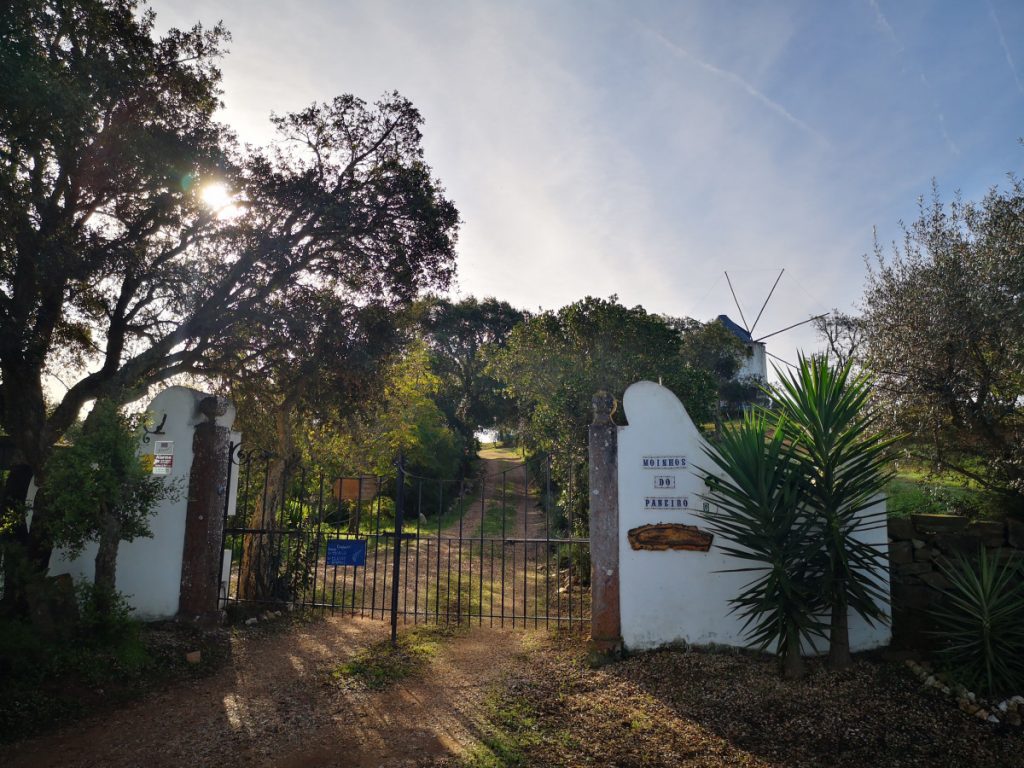
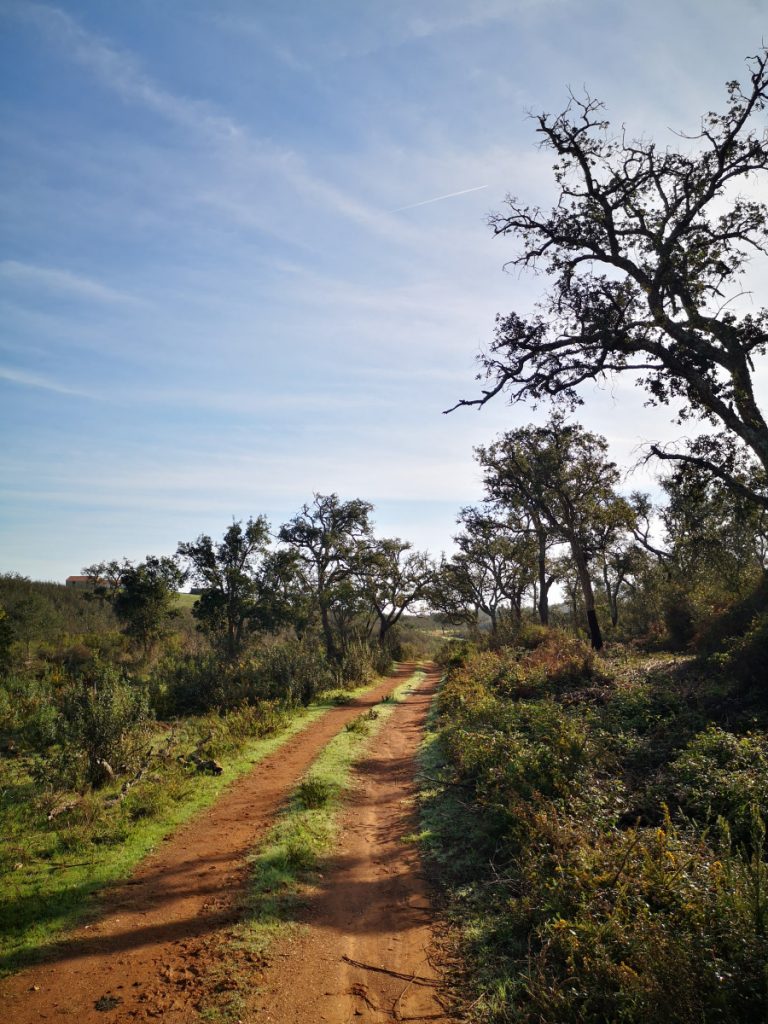
Right away I was back in what my fellow guests from the night before had called “fairytale landscape” — the cork oak plantation. I find it more unsettling than enchanting. Those dark trunks, and the shapes the trees take on. A very particular atmosphere. Combined with the deep red-brown sandy tracks, it’s unlike anywhere else.
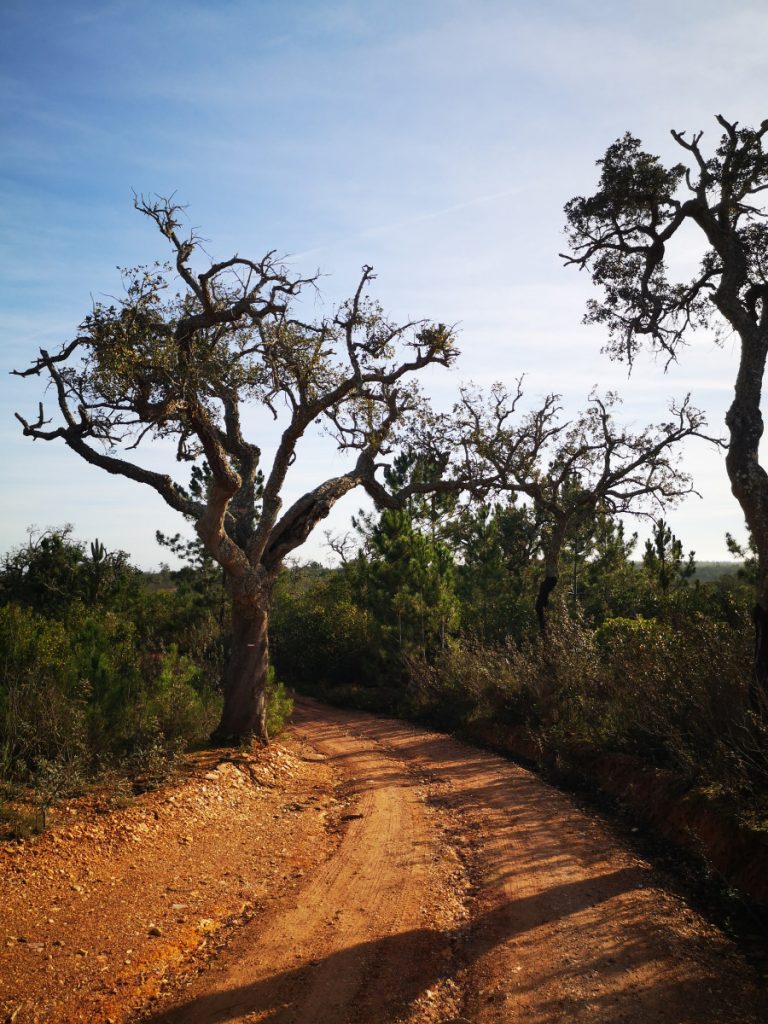
Because my knee was keeping me occupied, I put on some music. Strange thing: once there’s a distraction, the pain simply disappears. It’s no longer there, no longer nagging. To what extent is it real pain — or am I amplifying a small discomfort by focusing on it?
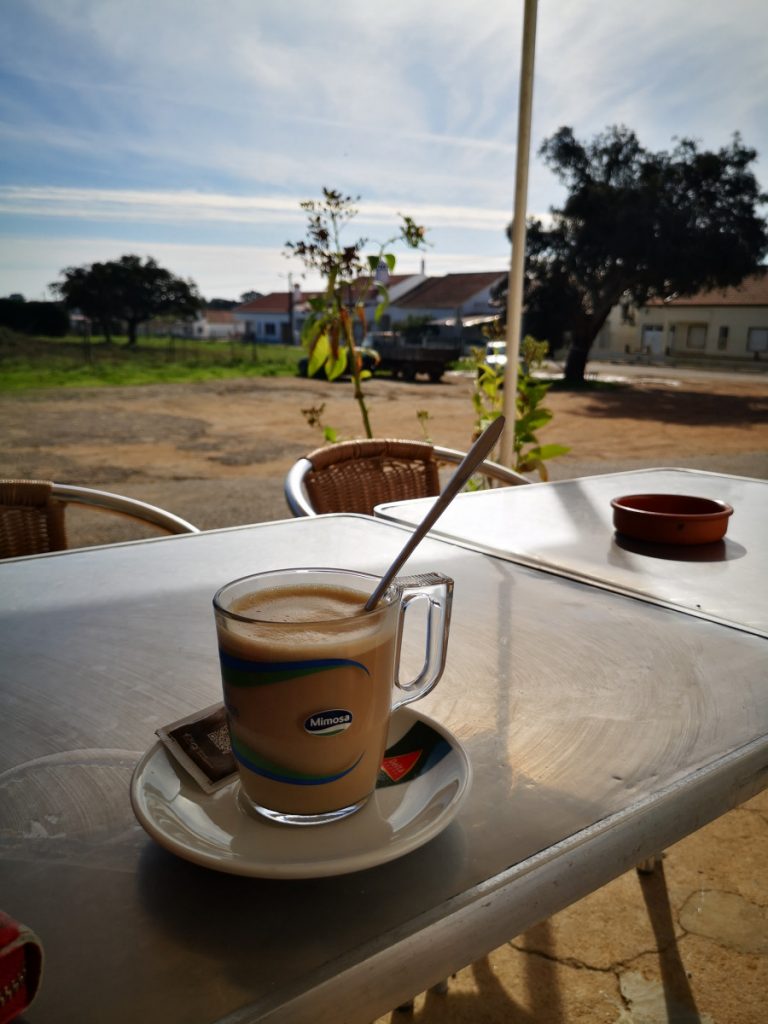
After about 5 km I reached the small village of Vale das Éguas and sat for a while on a sunny terrace with a coffee. Shoes off, socks off, legs up.
After that came a long stretch through open pastureland — mostly on sandy tracks, with a section on tarmac. That change of surface was actually good for my knee: a different load, flat rather than uneven.
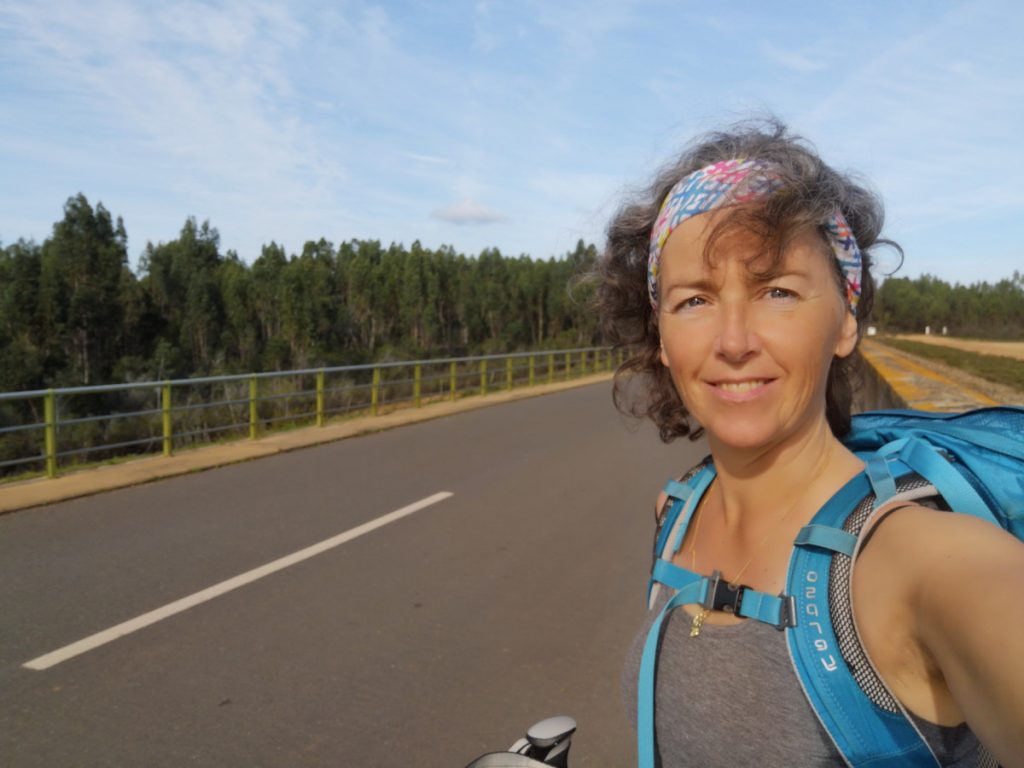
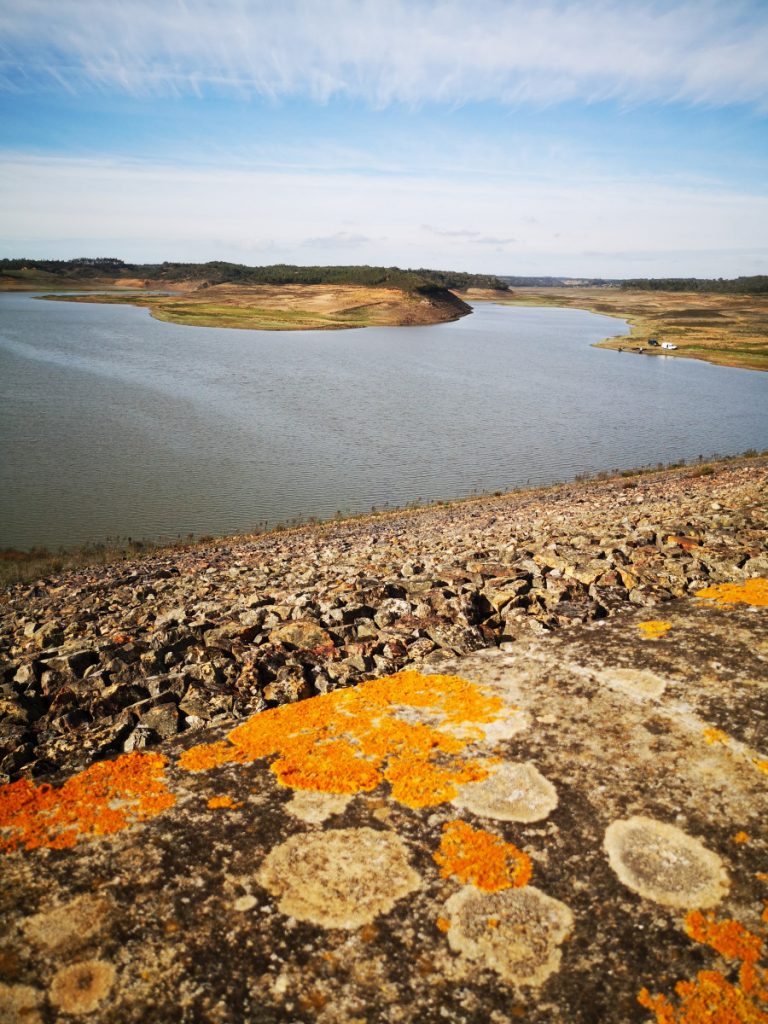
At one point I crossed a bridge over a wide expanse of water — not a river, it turned out, but the Barragem de Campilhas, a reservoir. Water on one side, dry land on the other. An odd and beautiful spot..
Mongooses and Strawberry Trees
I spotted the same small creature again today as yesterday — low to the ground, long tail, darting away quickly. I looked it up: a mongoose. They live here too. Yesterday one watched me from the track before fleeing into the undergrowth; today one sat in the grass. No photo, but two sightings. The only wildlife I saw on this stretch.
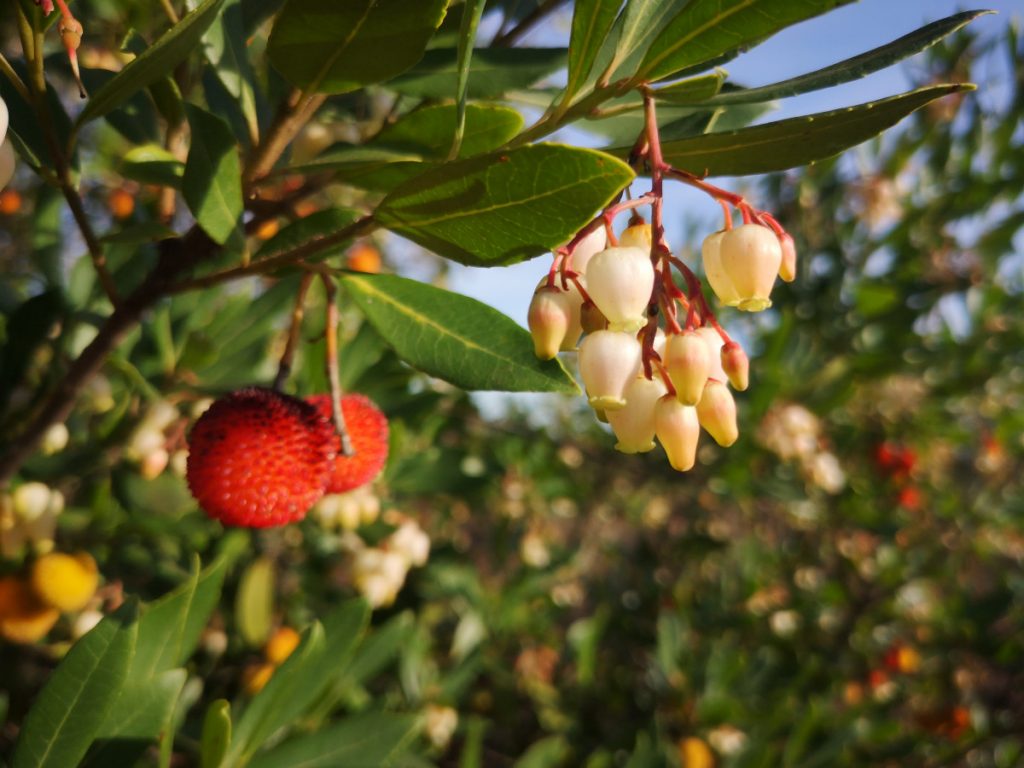
Also new to me: the strawberry tree. Have you ever heard of it? I passed hundreds of them over these two days.
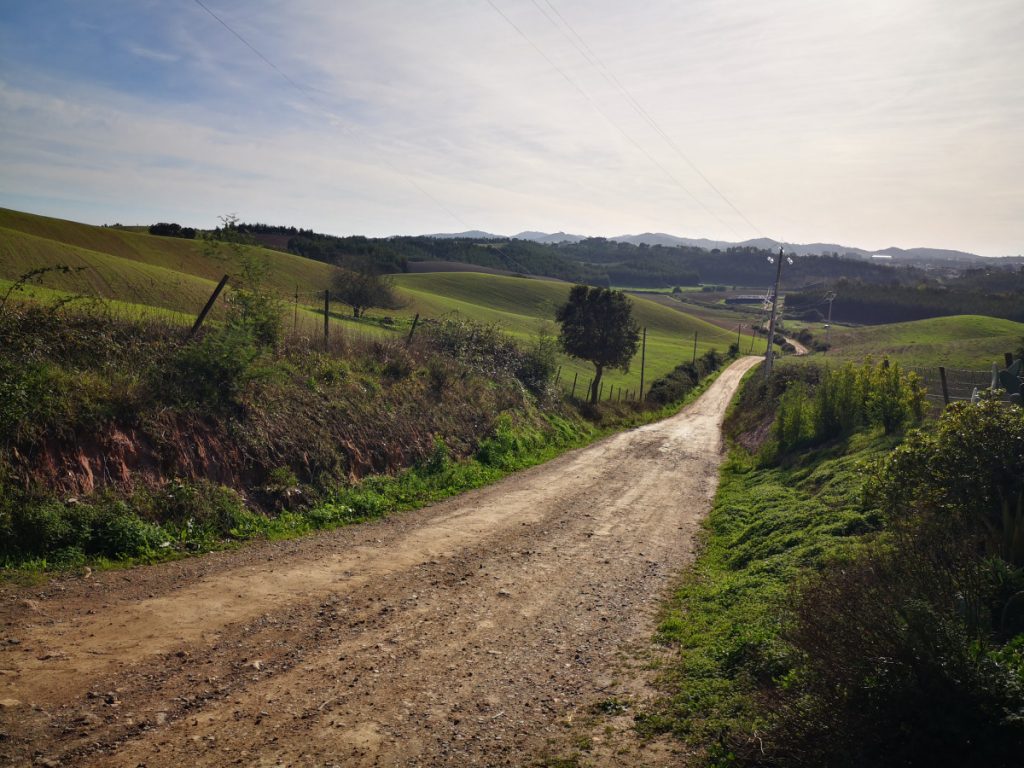
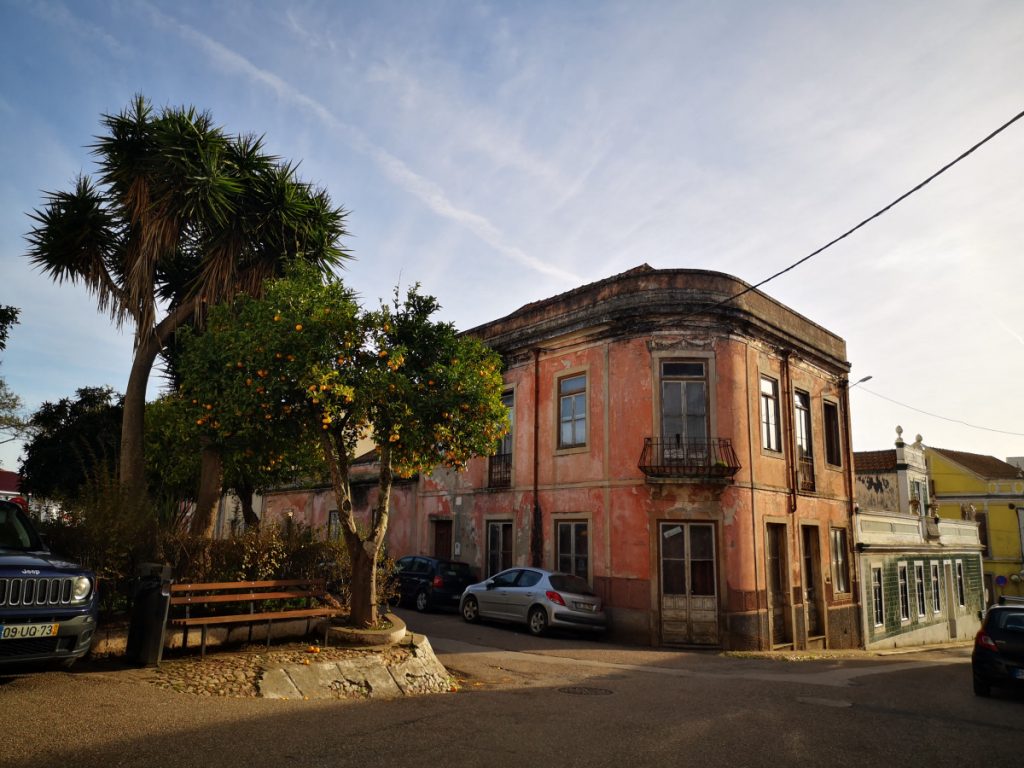
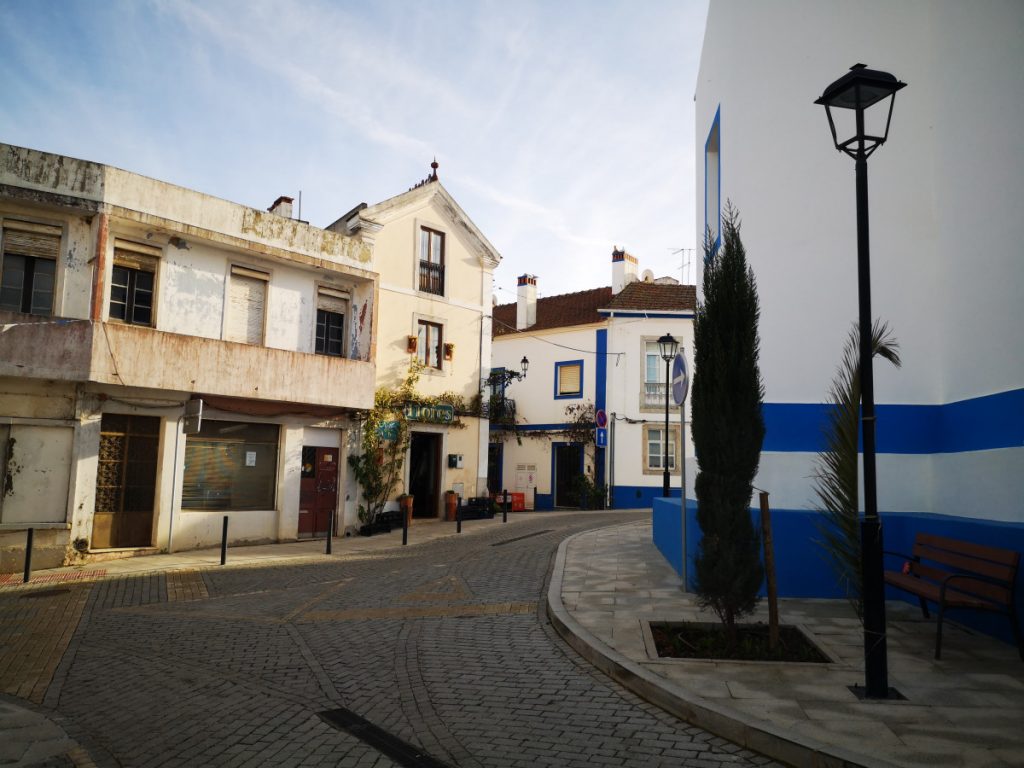
After about 20 km I arrived in Cercal do Alentejo. At the roundabout I spotted the Rota Vicentina sign and a row of restaurants. I ate, and went to bed early to let my knee rest.
Where to Sleep: Cercal do Alentejo
In Cercal I stayed at Solar do Alentejo — a solid option with a single room. Find your options in Cercal.
Stage 3: Cercal do Alentejo to Porto Covo (16.5 km)
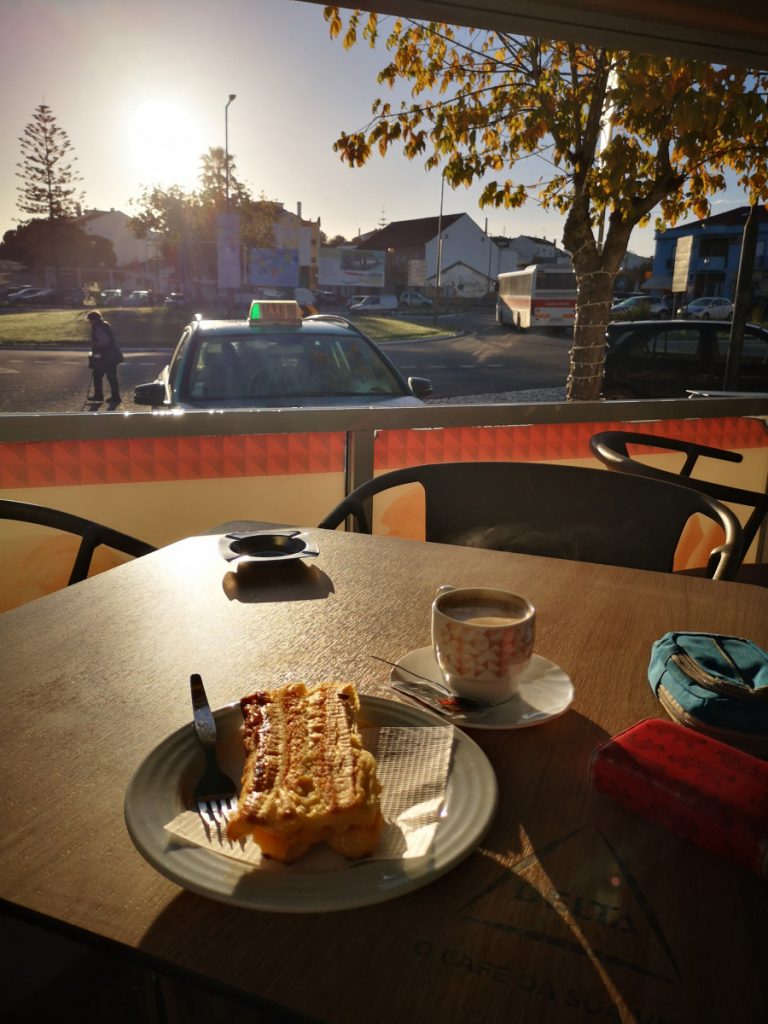
After a long night in a good bed, I left the hotel around half past eight. At the roundabout I had a coffee with milk and a sweet roll — enormous, and clearly meant to be shared. I asked for half. The woman behind the counter gave me a look, but obliged. Delicious.
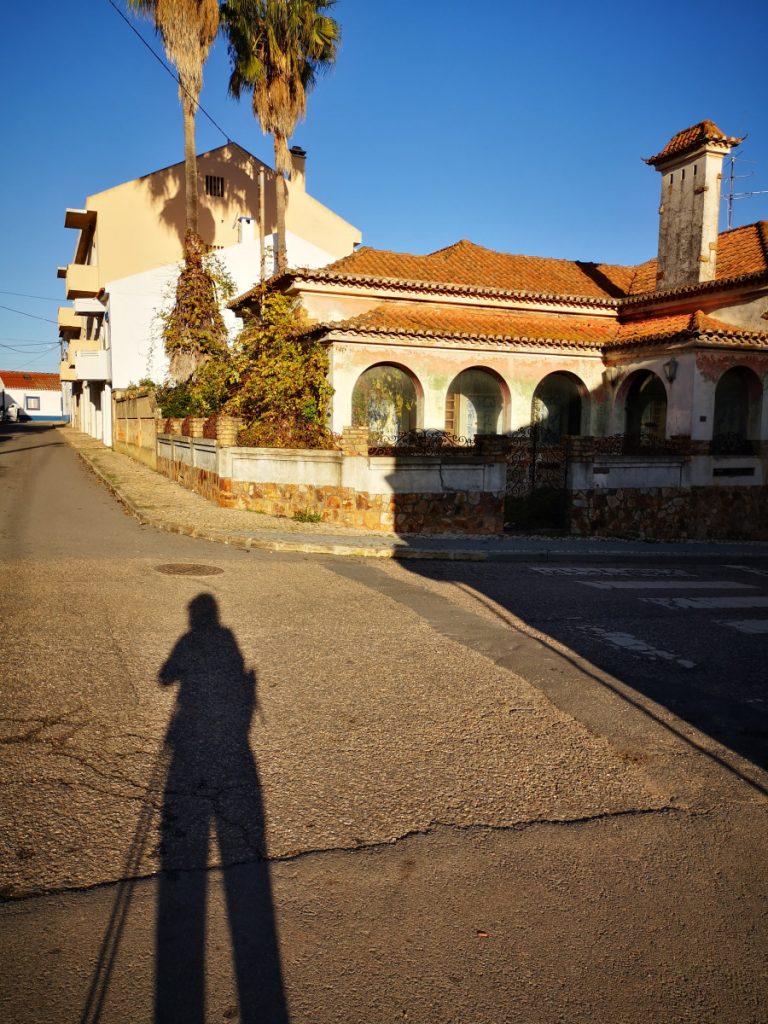
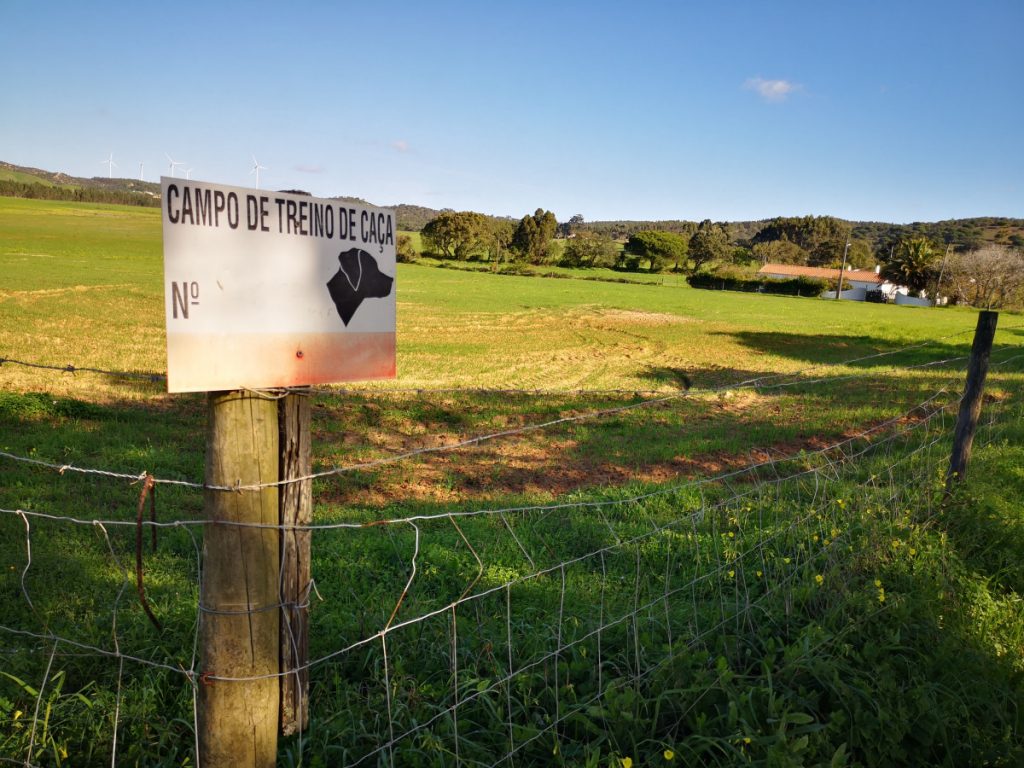
The route leads you past the church again and then out of the village, along pastures and abandoned rural cottages. Most of them are empty. Where someone still lives, a dog barks at you from a distance. They’re always tied up or fenced in — but some of them are seriously large.
Eucalyptus and Cork Oak: The Scents of Portugal
For a long stretch I walked through a eucalyptus plantation — that scent all around you. I spoke with a man who turned out to have good English. They were harvesting for the Netherlands, he explained: eucalyptus used there for flower arrangements and essential oil production. He was delighted when he found out I was Dutch.
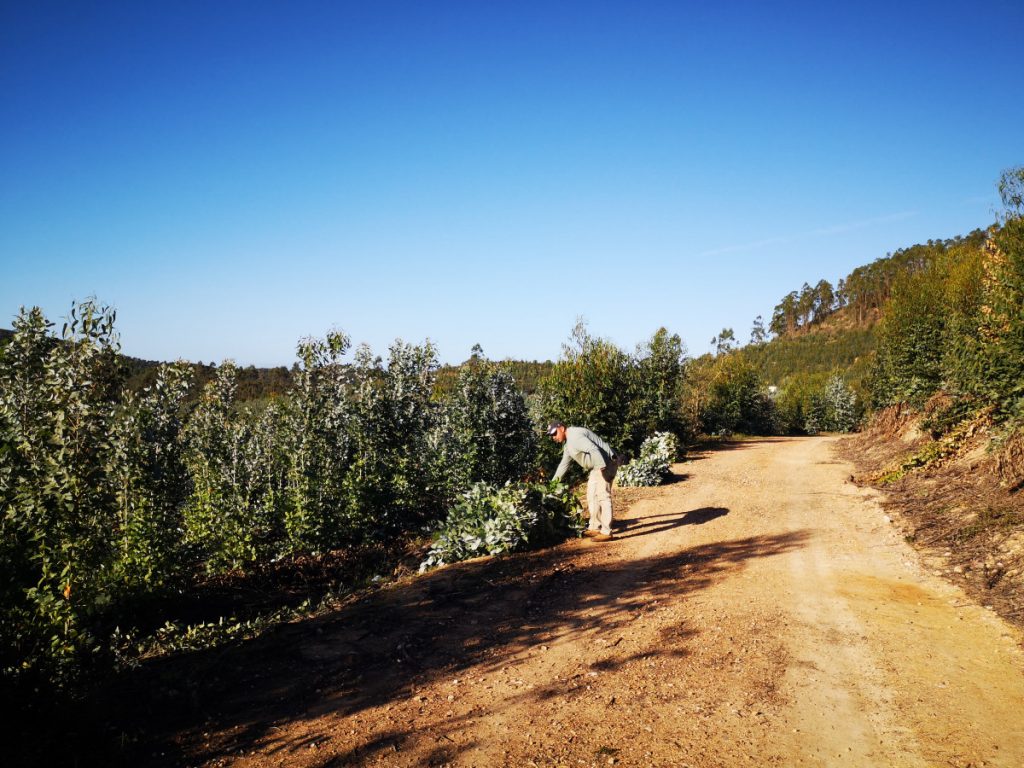
I climbed uphill past strawberry trees, cork oaks and eucalyptus, and at the top of the hill the sea came into view. That’s where I was headed — and where I’d be walking for the next two weeks.
At a small terrace along a main road I stopped for lunch: café com leite and a large slice of no-bake chocolate biscuit cake. Rest stops are scarce on the Rota Vicentina Historical Way — you take them when you find them.
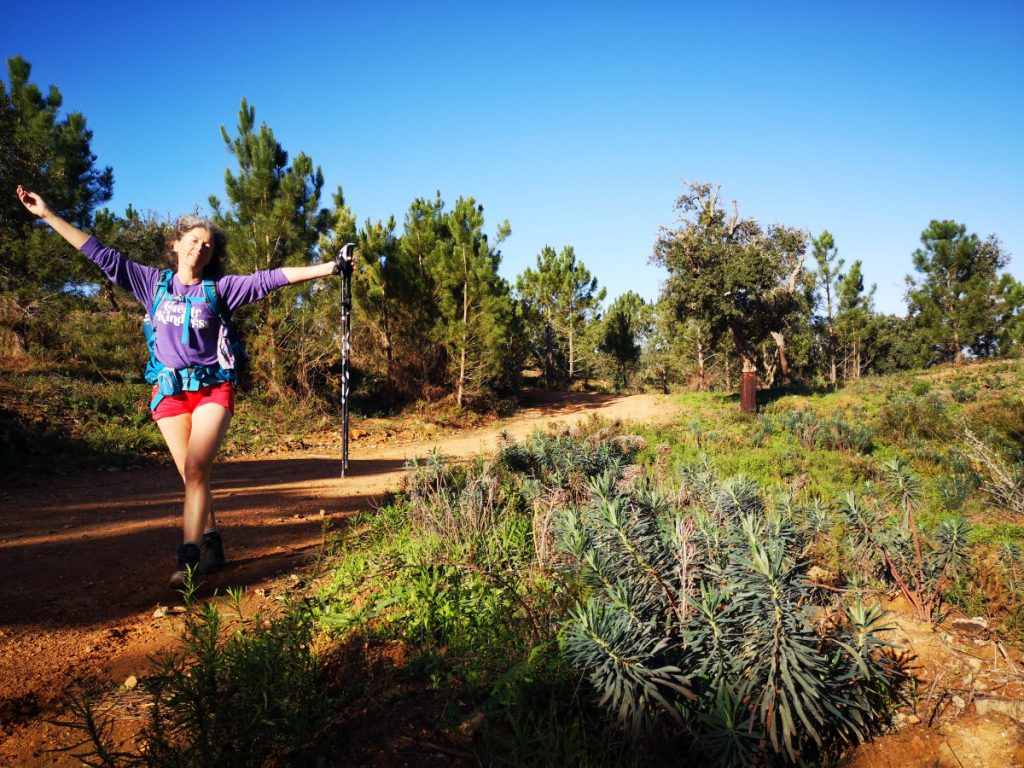
After that, about an hour more through the Portuguese countryside. I passed two cars with older men in them and two trail bikers. Nobody else. The man from the eucalyptus plantation had told me I was the second walker he’d seen that day.
Porto Covo is a pleasant little town — a bit busier than the other villages, even if most shops were closed. A few terraces, people in the sun. At hostel Mute I met a man from South India who was starting the Fishermen’s Trail the next day too. A nice coincidence.
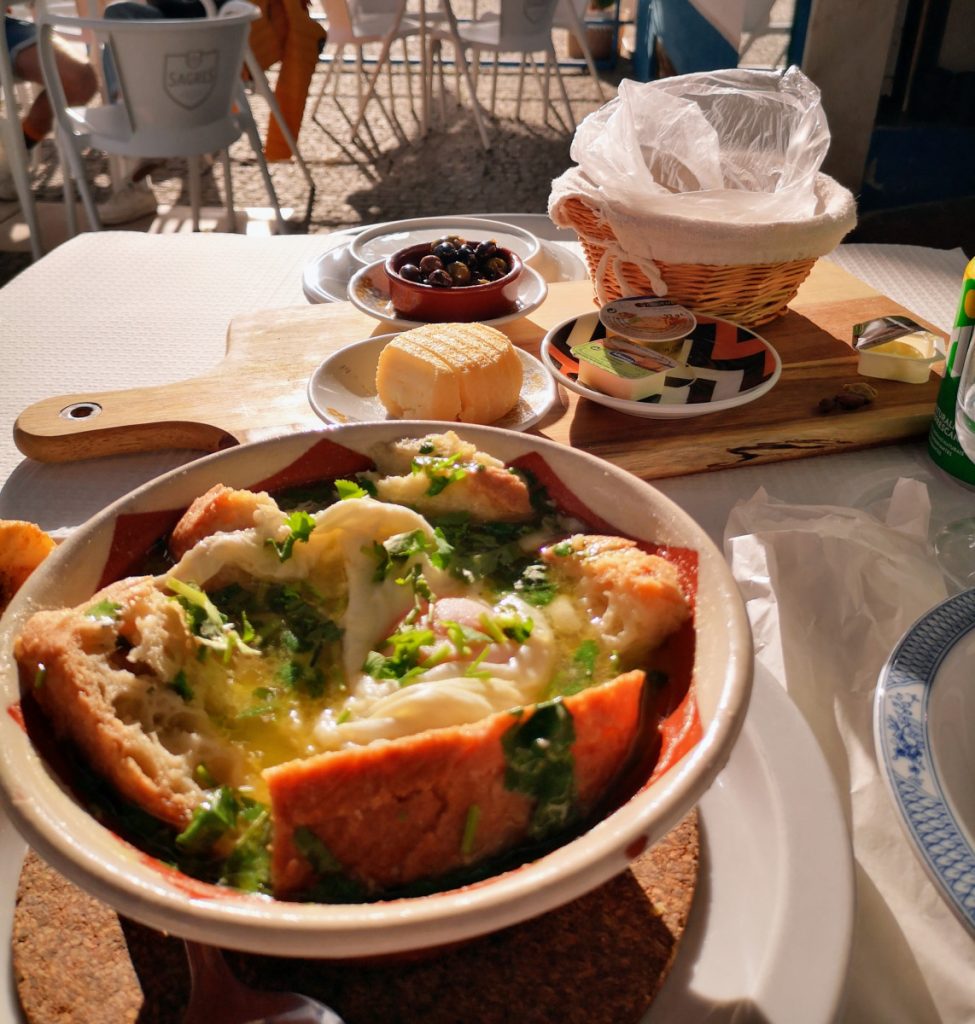
After freshening up I walked to the coast, then dinner on a sunny terrace. I ordered garlic soup with egg, bread and fish — really good. Two pieces of fried fish on the side. By 4pm I’d finished and wasn’t sure I’d manage another meal that evening.
My Knee: Day Three
That day went fairly well. The pain had shifted to the front, just below the kneecap, and the back of the knee was still a bit swollen. I noticed that a short massage would usually make it ease off. And that it would disappear for several kilometres at a time, then return briefly. Strange — but manageable.
Where to Sleep: Porto Covo
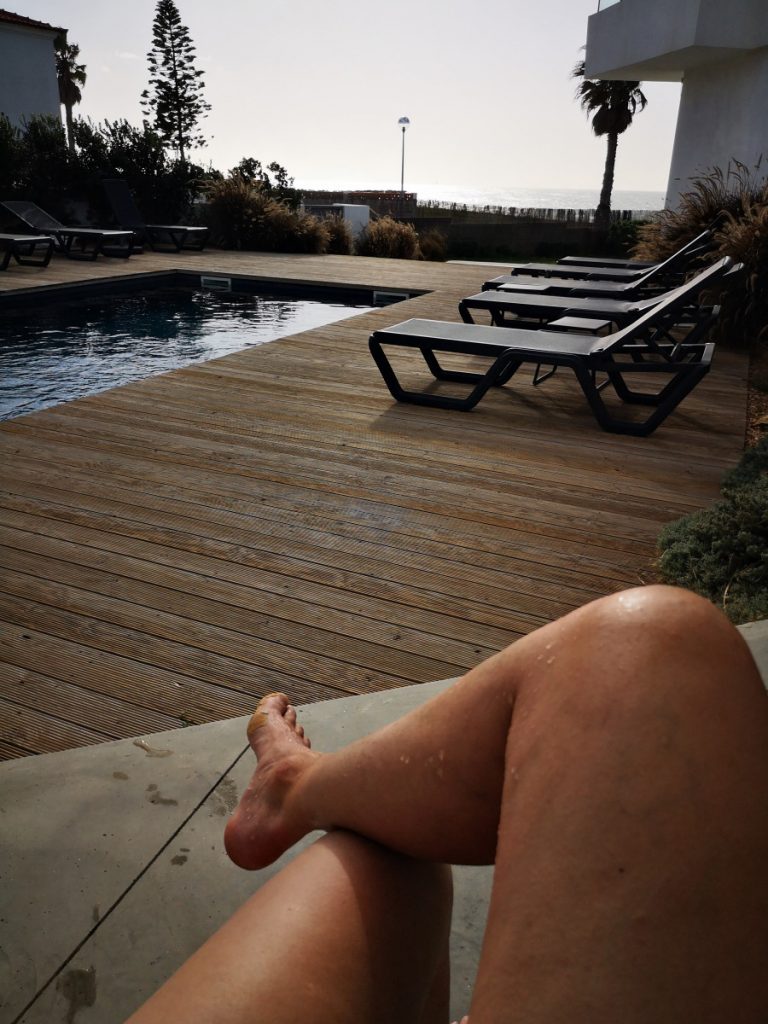
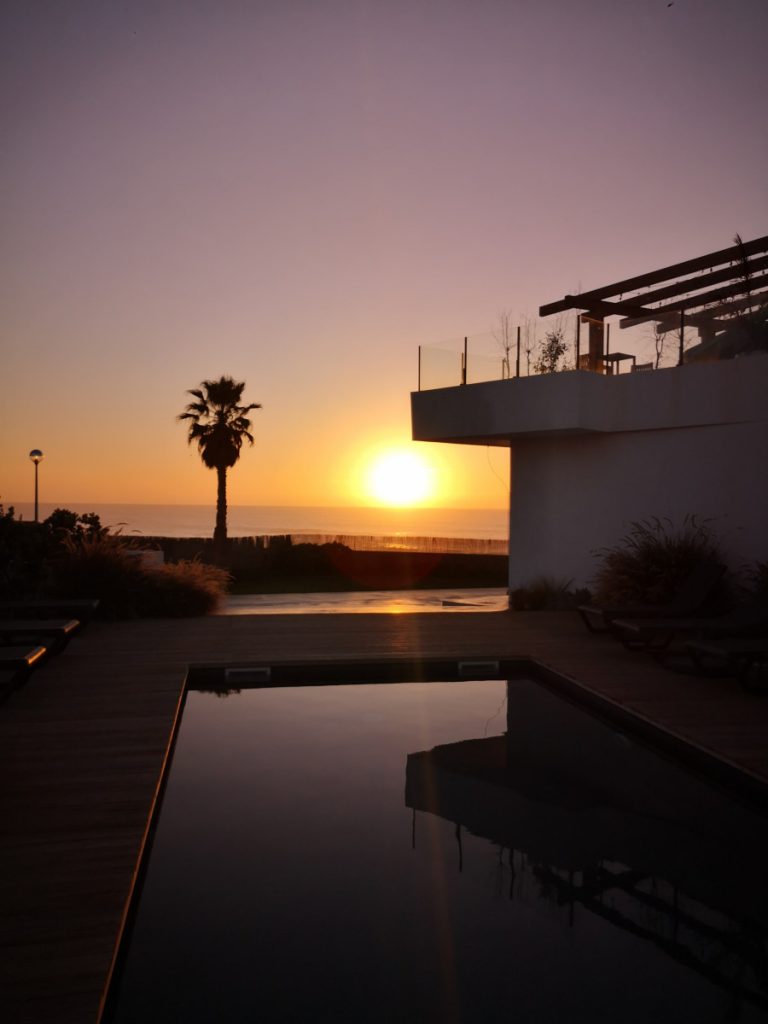
In Porto Covo I stayed at hostel Mute, right on the coast with a small pool. Four-bed dorms, clean and tidy. From my room I could step straight onto the terrace to hang my clothes to dry. Very practical.
More options in Porto Covo.
Join a Guided Trip on the Historical Way and Fishermen’s Trail
You can join Zinvol Reizen for a guided walk on the Historical Way and Fishermen’s Trail — four days of walking to the southernmost tip of Portugal, followed by a rest day in Lagos. Read all about it: Fishermen’s Trail walking trip.
All Stages of the Rota Vicentina Historical Way
The Historical Way has 13 stages in total and covers 263 km. Here’s an overview:
- Santiago do Cacém to Vale Seco: 18 km
- Vale Seco to Cercal do Alentejo: 23 km 3a. Cercal do Alentejo to Porto Covo: 16.5 km (connection to Fishermen’s Trail) 3b. Cercal do Alentejo to S. Luis: 20.5 km
- S. Luis to Odemira: 25 km
- Sabóia to Odemira: 33 km
- Odemira to S. Teotónio: 19 km
- S. Teotónio to Odeceixe: 15/17 km
- Odeceixe to Aljezur: 19.5 km
- Aljezur to Arrifana: 12 km
- Arrifana to Carrapateira: 24 km
- Carrapateira to Vila do Bispo: 21.5 km
- Vila do Bispo to Cabo de São Vicente: 14 km
Want to prepare properly? Get the Historical Way guidebook by Cicerone. It covers the full route combining the Historical Way and the Fishermen’s Trail. During the first stages it was invaluable. Further along, it occasionally diverged from the path I took — but it gave good context about the route and the towns along the way.
Continue reading for the coastal route: Fishermen’s Trail along the Atlantic.
Getting There
Fly to Lisbon. From the airport, take the metro (blue line to the end, then red line for three stops) into the centre. Spend a night in Lisbon and take the early morning bus from Sete Rios (Rede Expressos) to Santiago do Cacem. Around €14, journey time just over two hours. Buses run at 07:30, 10:30, and later in the day.
When to Go
November and December are ideal months for the Rota Vicentina Historical Way. Not too hot, occasionally rainy but far from always, and very few other hikers on the route. Spring (March to May) brings the countryside into full bloom.
Where to Stay
- Stage 1: Moinhos do Paneiro (B&B at the windmills, dinner available). Other options: Courela do Salgueiro, Vale Seco, Elements Alentejo, Herdade Morro Bento.
- Stage 2: Solar do Alentejo in Cercal do Alentejo or other options in the village.
- Stage 3: Hostel Mute in Porto Covo, right on the coast with a pool.
Want to read some other hiking inspiration too?
- Go hiking in Turkey – Love Valley in Cappadocia
- Take a Pilgrimage in Spain – Pros and Cons for Summer & Winter
- Hiking the Alpe Adria Trail – Stage 7 to 11 – Austria
- Hiking a Wadi in Oman or Jordan
This article contains affiliate links. If you book or buy something via one of these links, we may receive a small commission at no extra cost to you.