
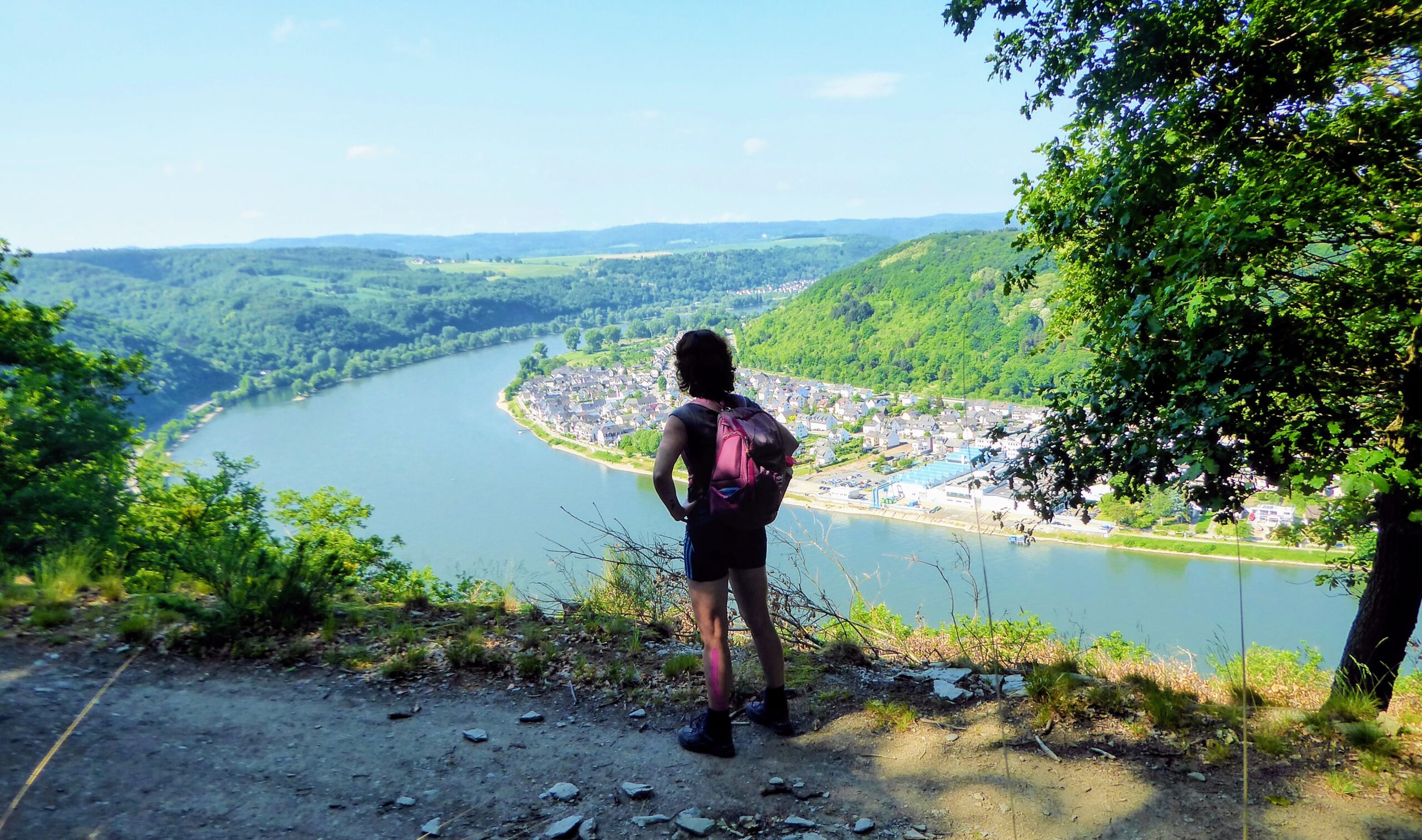
Just a few days of hiking in Germany. How good is that? When you have a couple of days free, heading for the hills and that perfect holiday feeling is all you need. I headed to the Rhine to walk a stretch of the Rheinsteig — and I’m coming back with an honest story: one stage I’d skip, and two stages I’d do again in a heartbeat.
What is the Rheinsteig?
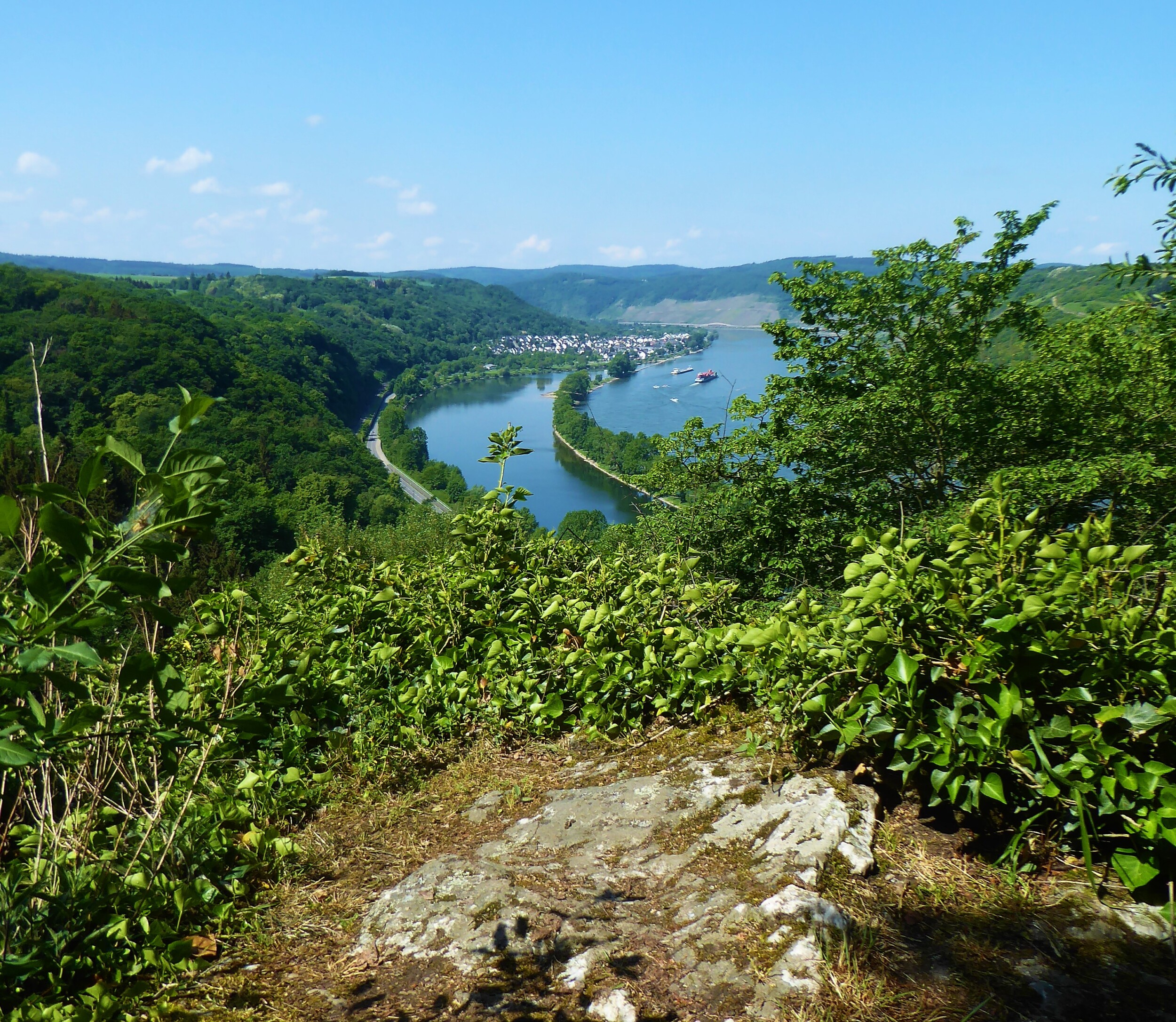
The Rheinsteig is one of Germany’s most beautiful long-distance hiking trails. The route runs 320 kilometres along the right bank of the Rhine, from Bonn via Koblenz to Wiesbaden, divided into 21 stages of 8 to 22 kilometres each. It holds the “Top Trail of Germany” certification, awarded to routes with outstanding waymarking and an exceptionally high quality of experience.
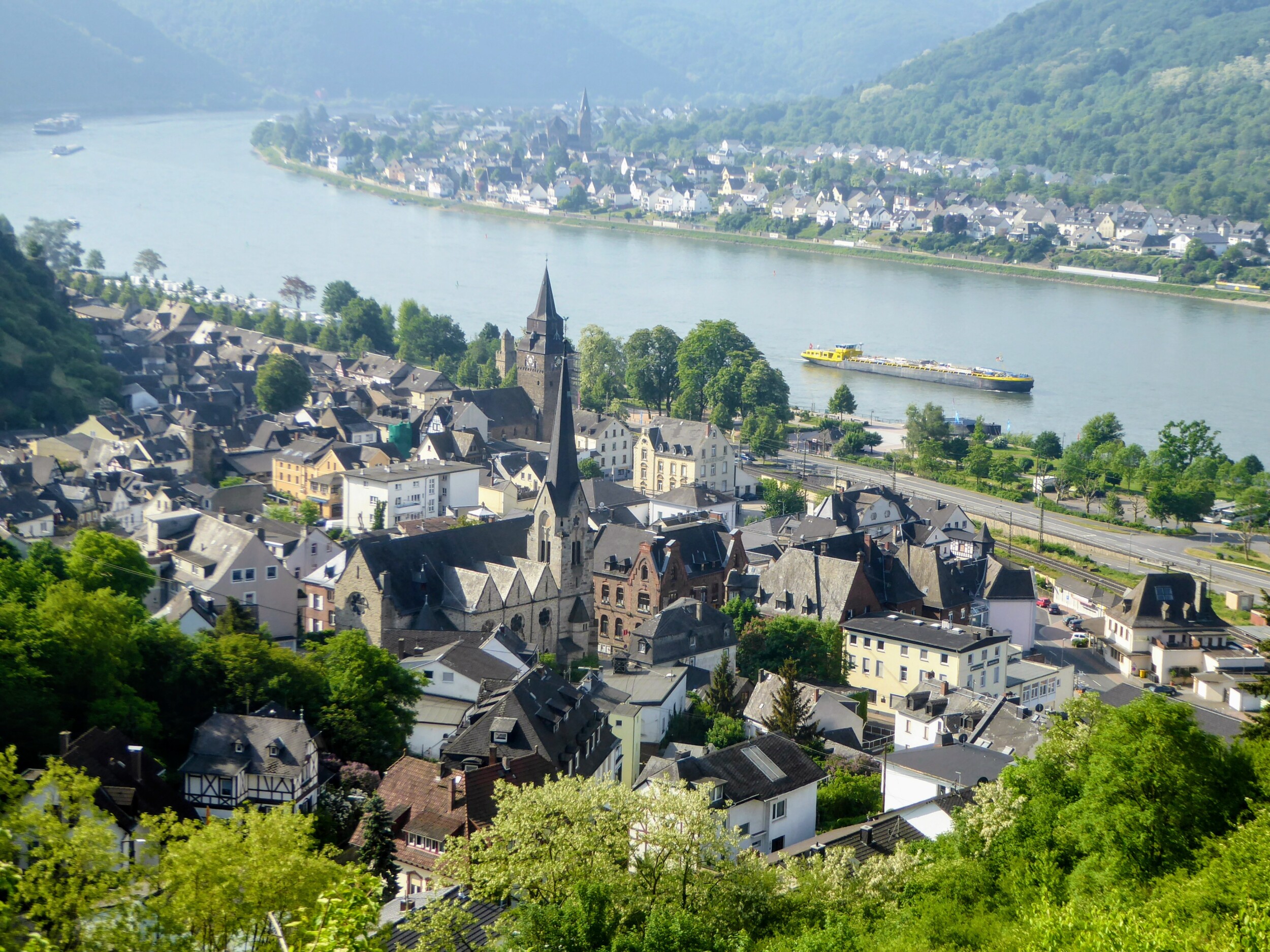
The best part of the Rheinsteig? You’ll find it between Koblenz and Wiesbaden. This section runs through the UNESCO World Heritage Site Oberes Mittelrheintal — a strikingly beautiful landscape of steep vineyards, medieval hilltop castles and picturesque villages along the river. Stages 10 through 17 are widely considered the highlights of the entire trail.
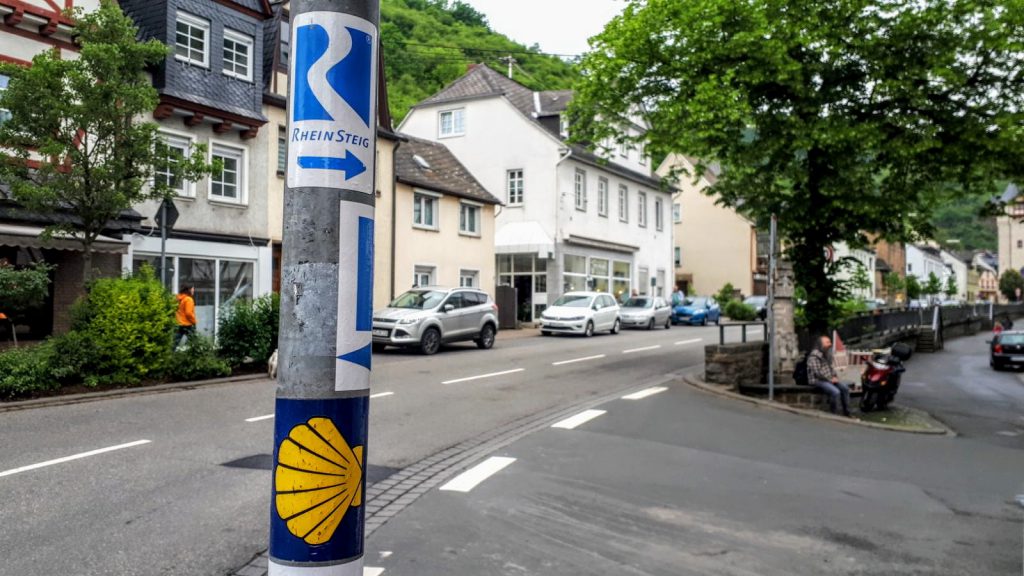
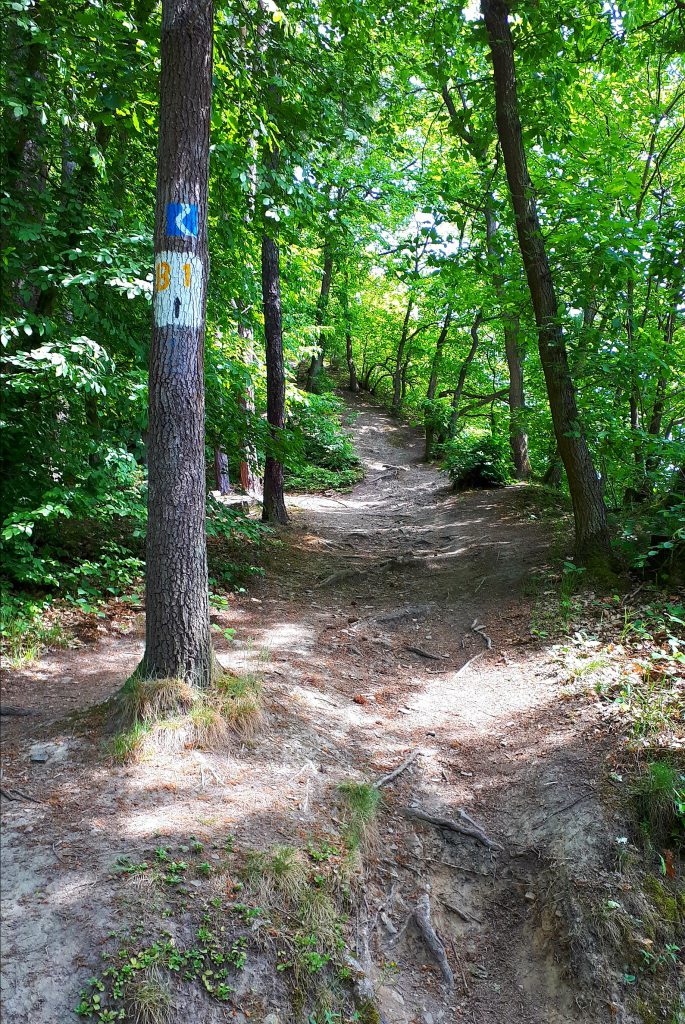
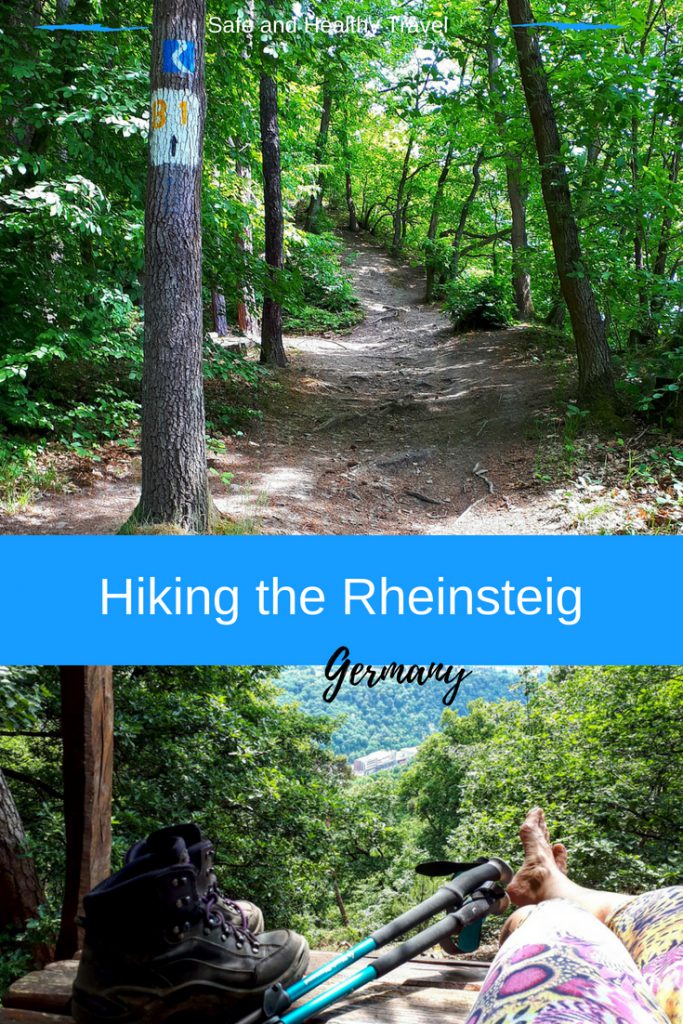
The Rheinsteig is well signposted in both directions, with blue markers for the main route and yellow for the approach paths from villages. Because a train line runs parallel to the Rhine along the entire route, you don’t need a car: hop on wherever you like, hop off wherever it suits you.
Stage 21: Königswinter to Bonn (22 km)
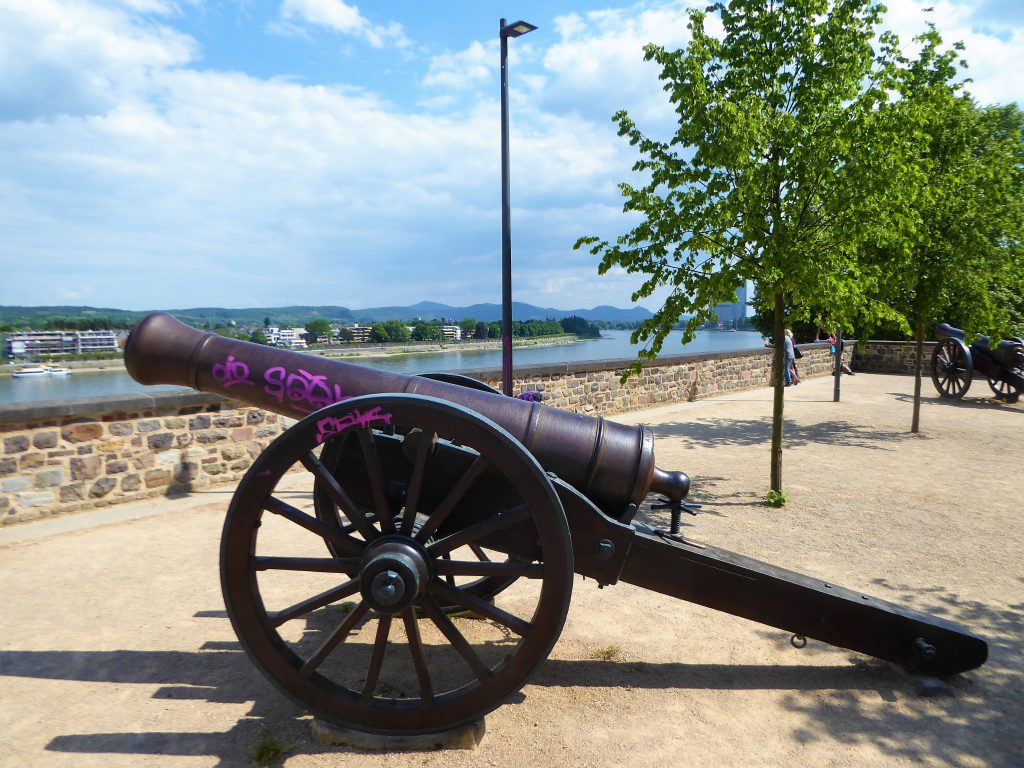
My first day, I walked the stage from Königswinter to Bonn. I say walked, because hiking is honestly too generous a word for it. The stage is around 22 km and follows the Rhine almost exclusively. You pass through villages, walk along shared cycle and walking paths, and Bonn itself was nice enough to visit briefly.
But I wasn’t happy with it. I hadn’t put all that planning in just to stroll along the water. If you’re looking for something easy or want a gentle walk with a group, this is a perfectly fine stage. For me personally: I wanted more hills, more nature.
After this first day I moved further south to find something that suited me better.
Braubach: my base on the Rhine
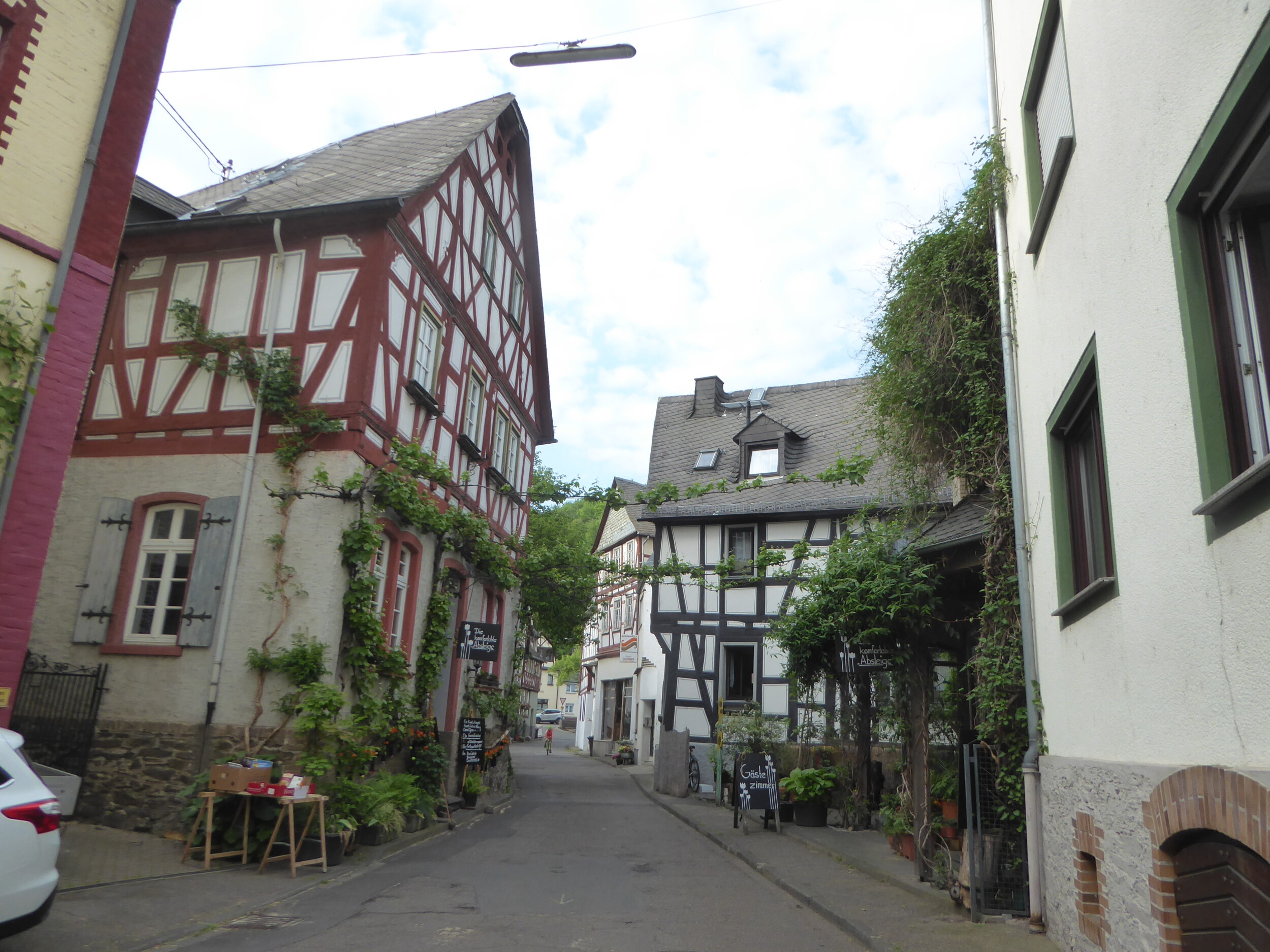
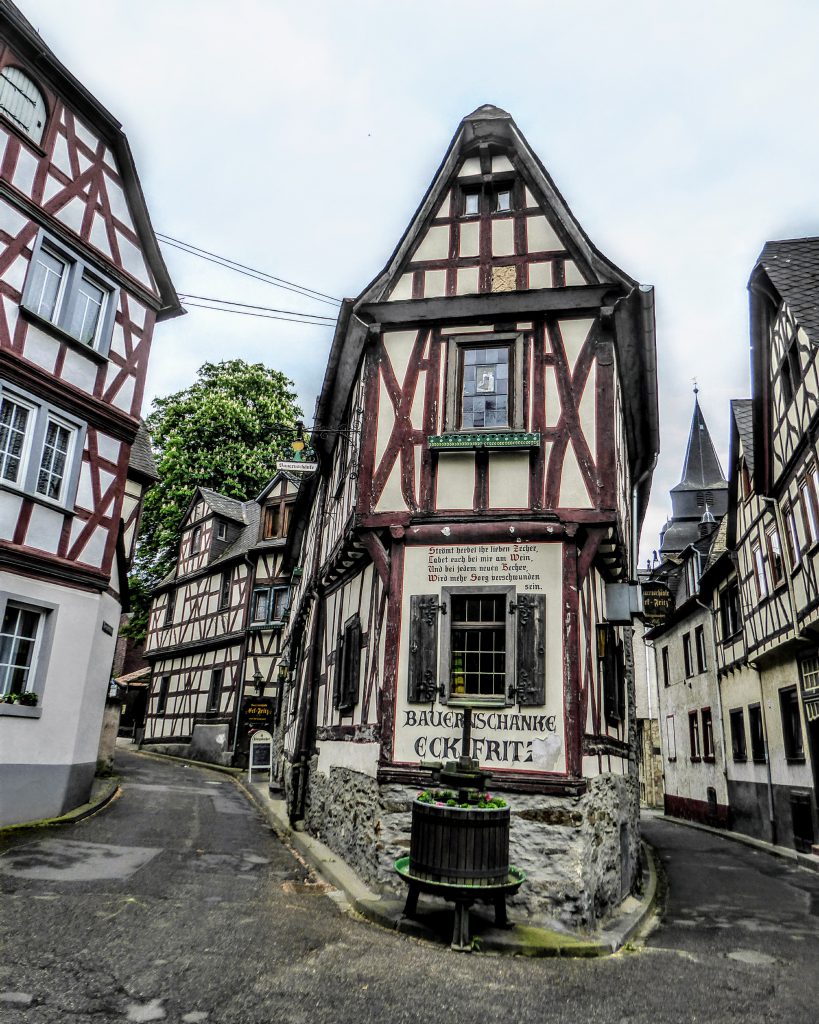
I drove to Braubach, a wonderful little town just past Koblenz. I parked my campervan by the Rhine, a ten-minute walk from the old town — and what a town it is. Narrow streets, half-timbered houses, an old market square where you can eat well. I stayed here two nights and set out from this base for two stages on the Rheinsteig that I can wholeheartedly recommend.
Not travelling by campervan? Book a stay in the old town of Braubach itself.
Above everything, the Marksburg towers up — the imposing castle you can already see from the village. That alone gives you the sense that you’ve arrived somewhere special.
Stage 12: Braubach to Osterspai (12 km)
My first day out from Braubach, I headed towards Osterspai. I picked up the Rheinsteig waymarkers in the centre of the village and followed them uphill. The signposting is excellent: blue markers for the main route, and the same markers in yellow/orange when you can detour into a village for coffee or lunch. I only went wrong once, and that was my own fault.
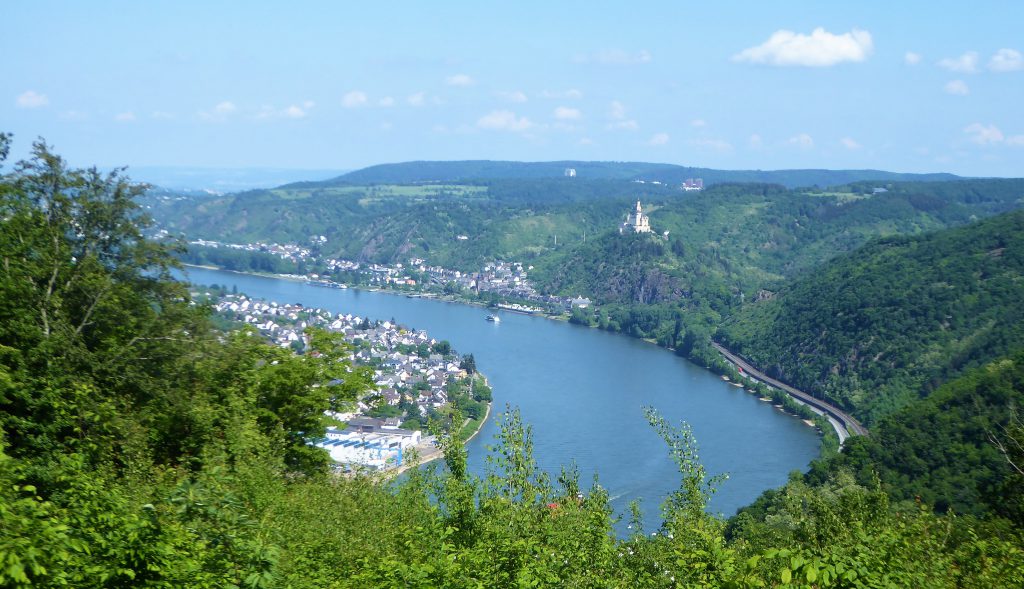
The route from Braubach to Osterspai is around 12 km and runs along the hillside above the Rhine. On one side you have the shelter of the slope, on the other the most beautiful views across the winding river. Every now and then you spot a castle on the hills on the opposite bank. That’s exactly what you come to this part of Germany for, isn’t it?
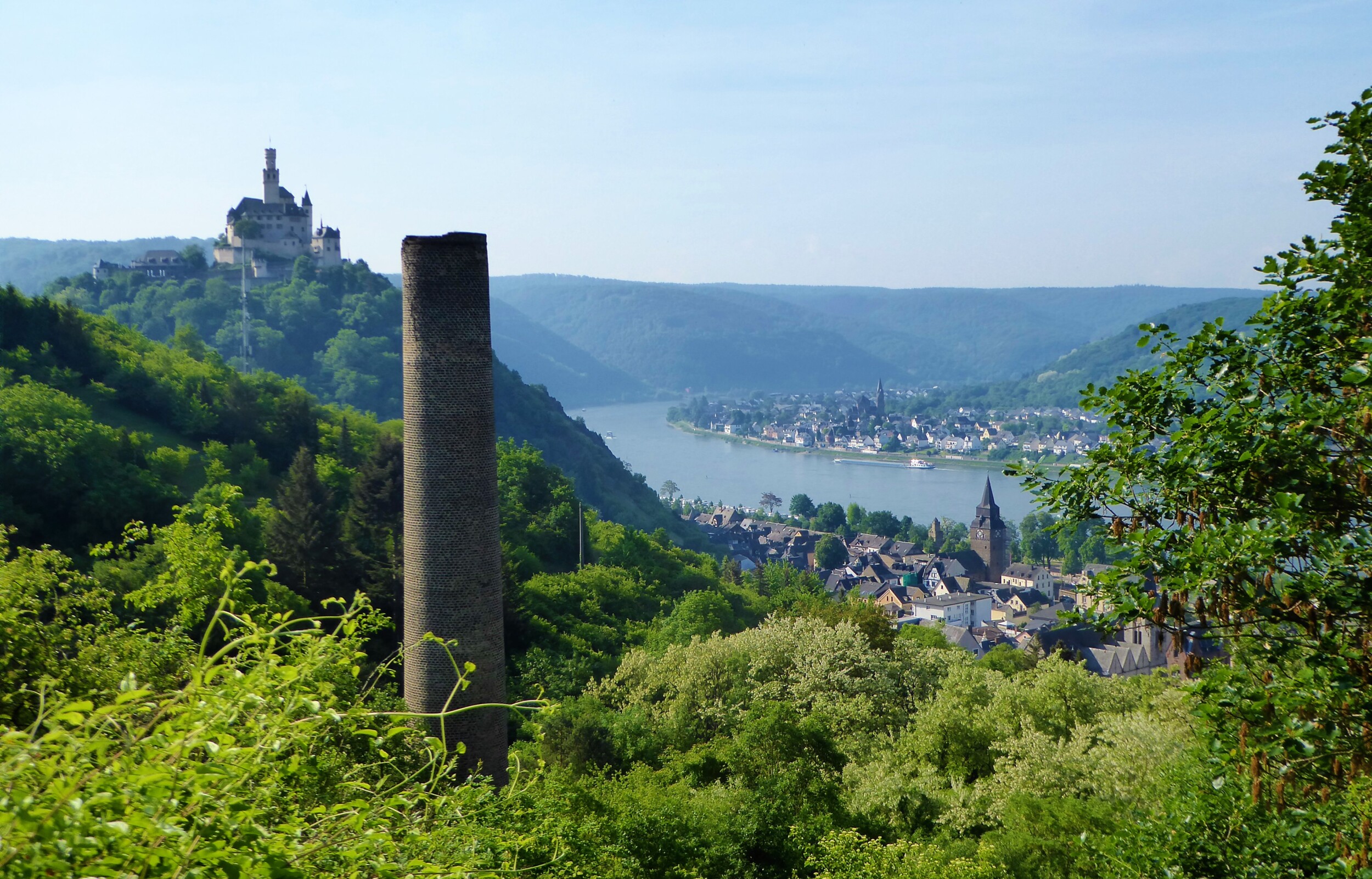
In the distance, you can see the Marksburg from a new angle with every turn. That was exactly what I had in mind when I decided to hike the Rheinsteig.
Stages 10 and 11: Braubach to Koblenz (21 km)
My last hiking day was by far the best. A smile on my face all day, 21 kilometres, and I enjoyed every single one.
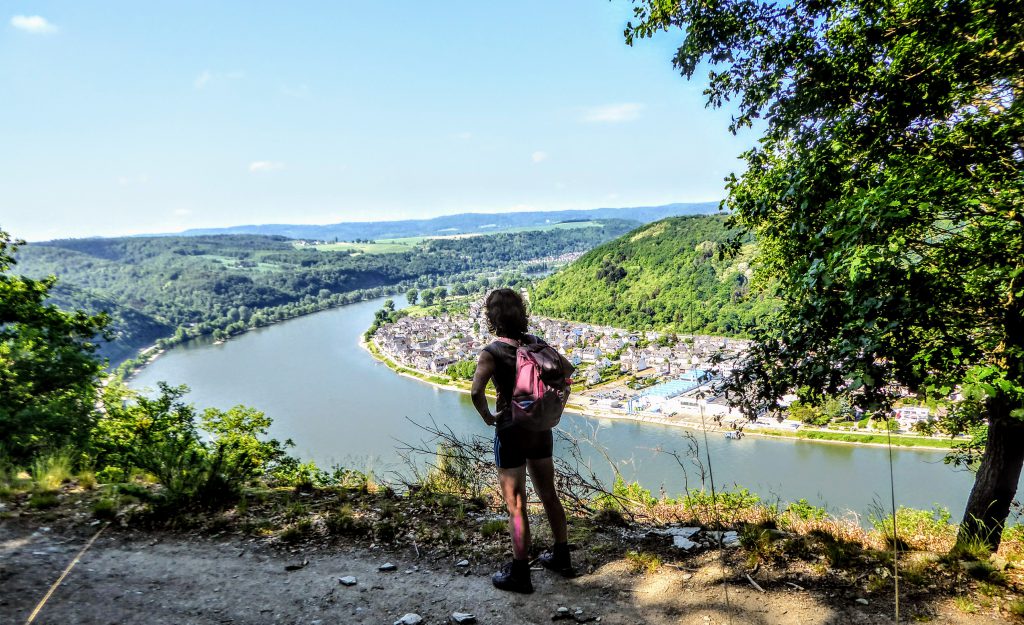
I combined two stages: stage 11 from Braubach to Niederlahnstein (8.3 km) and stage 10 from Niederlahnstein to Koblenz (12.9 km). Together that’s just over 21 km of adventurous hiking on the Rheinsteig.
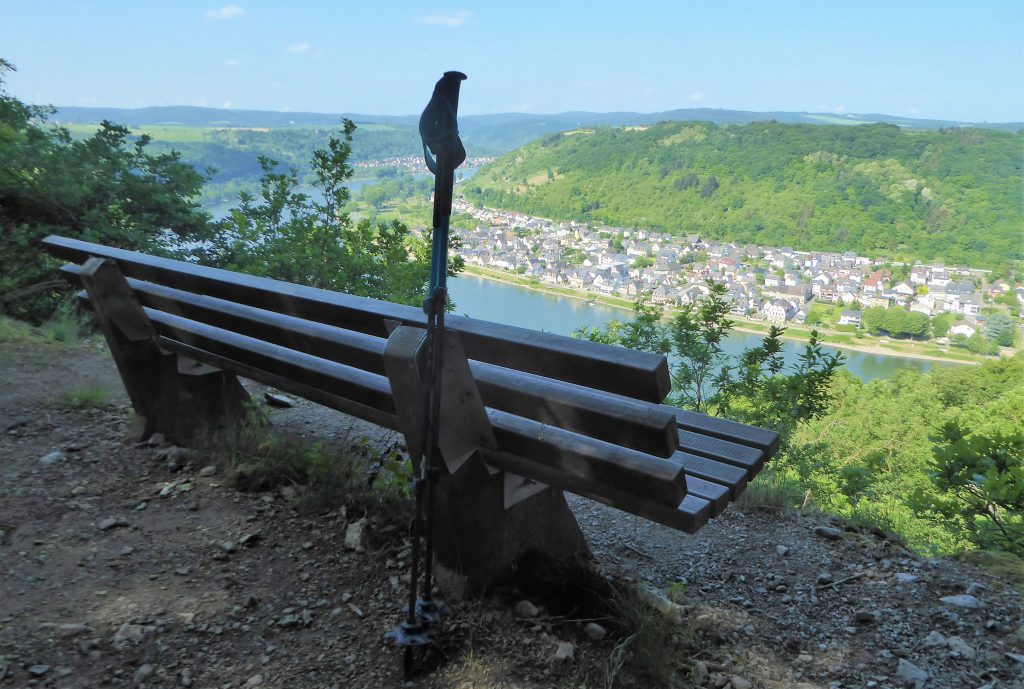
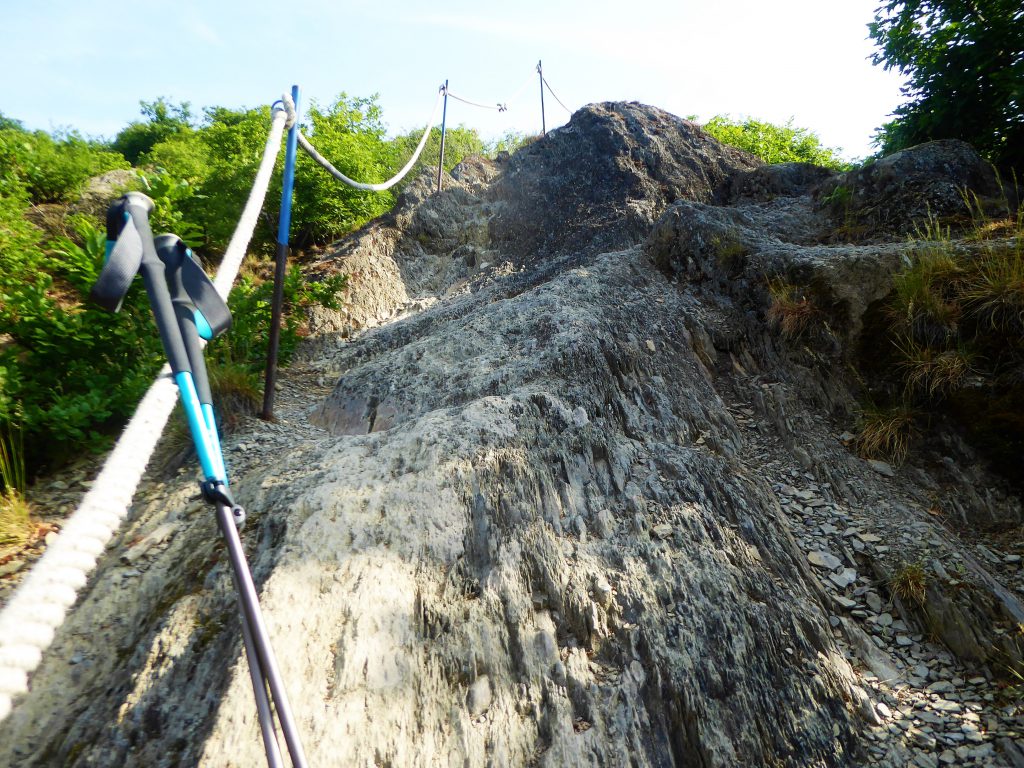
After the first climb, the views I’d come for were already there. The path kept taking me higher, and some sections were just brilliant — real scrambling challenges. That’s what I love. At one point I spotted a signpost: 16 kilometres still to go. I’d thought the total would be a little less, but it didn’t matter at all. I felt good, and my goal stayed Koblenz.
The Ruppertsklamm gorge: the absolute highlight
At some point I walked into a nature reserve. Wonderfully cool. A beautiful path led me to an even more beautiful path, and before I knew it I was walking through the Ruppertsklamm — a gorge running alongside a stream. I’d seen the name on a sign but my German isn’t great, so I didn’t quite know what I was in for.
It was absolutely fantastic. The path winds alongside the stream, and every now and then you cross it to continue on the other side. A steel cable runs along one side so you can hold on and make sure you don’t end up in the water. Adventurous, beautiful, and exactly the kind of trail I come for.
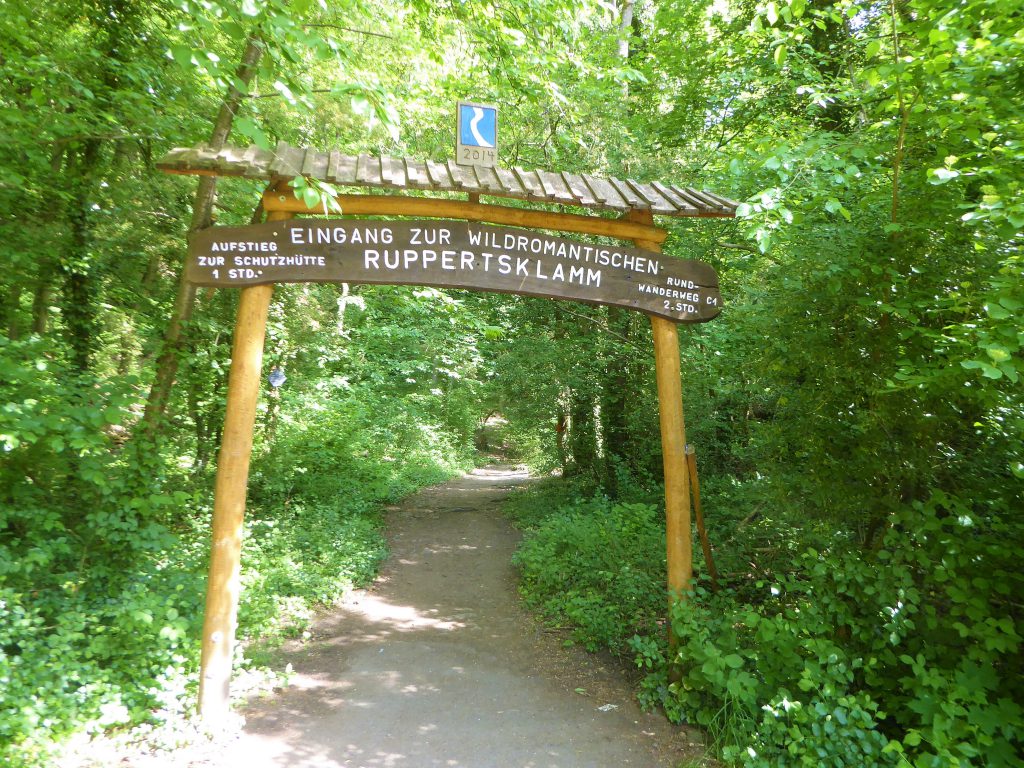
Want to hike the Ruppertsklamm yourself? Plan your trip using the GPS coordinates of the Ruppertsklamm.
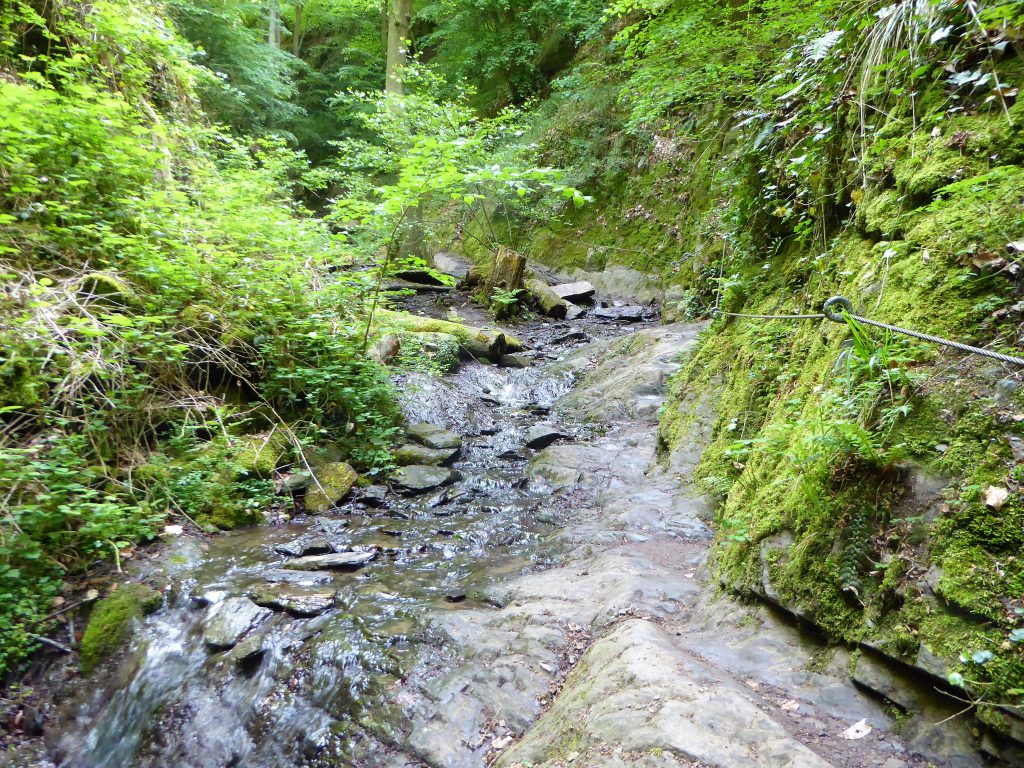
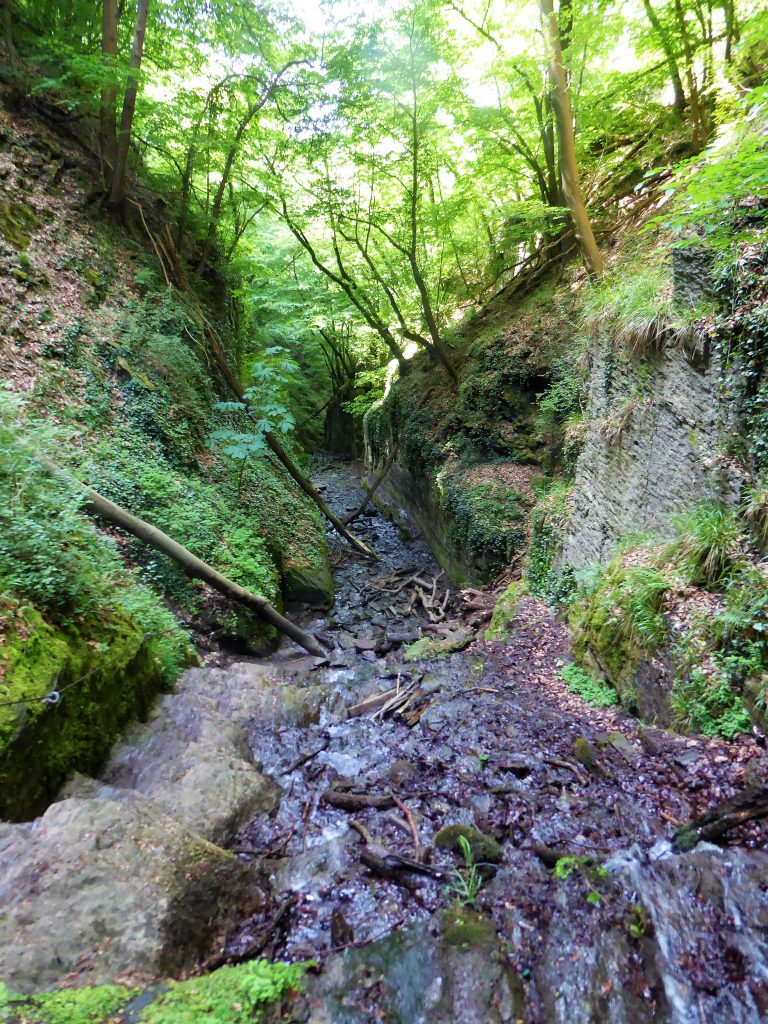
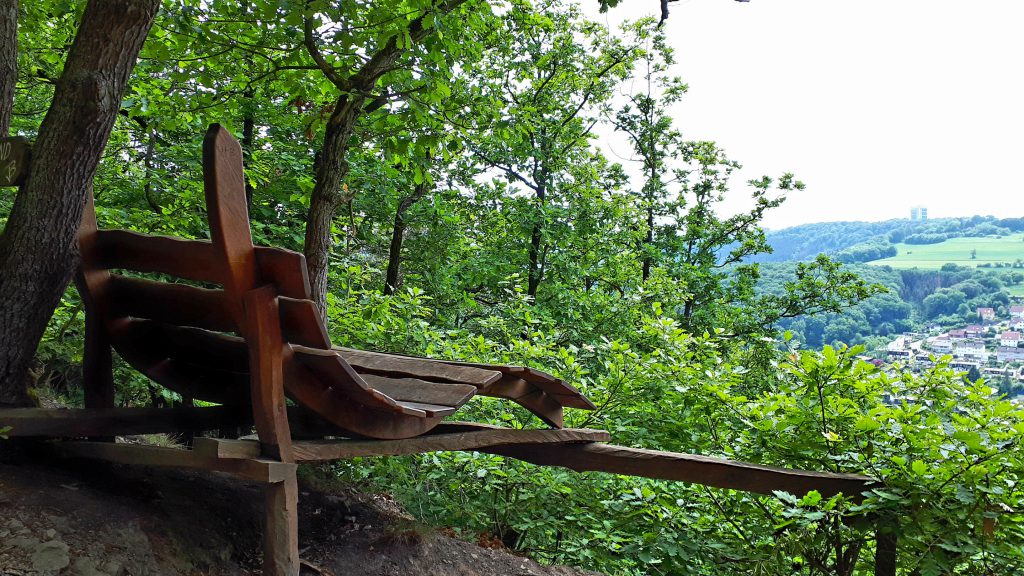
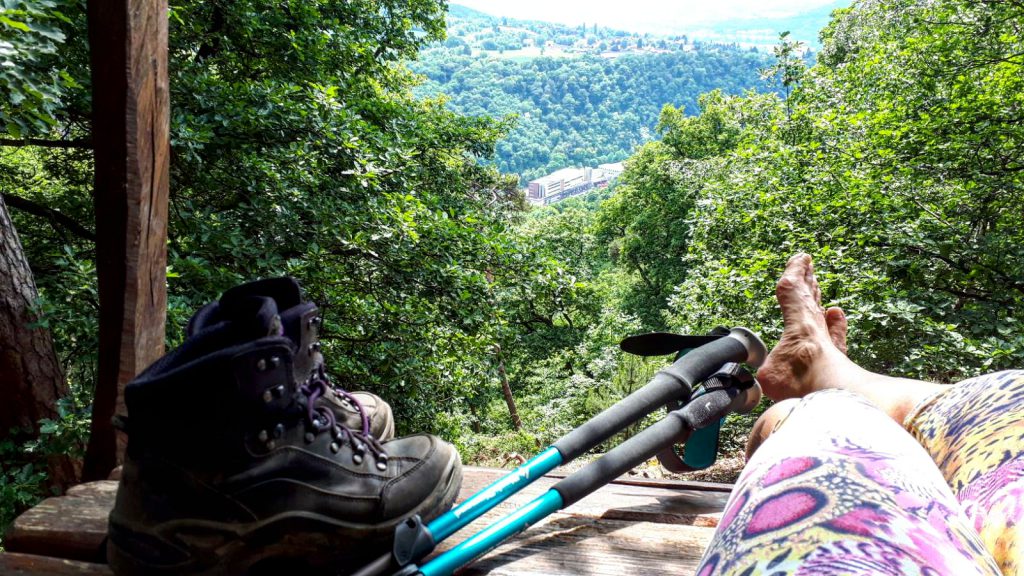
After the gorge, I walked for a long time through a beautiful, partly open forest. A few more stunning viewpoints with benches I made good use of. On one I had lunch, on another I simply gave my feet a rest.
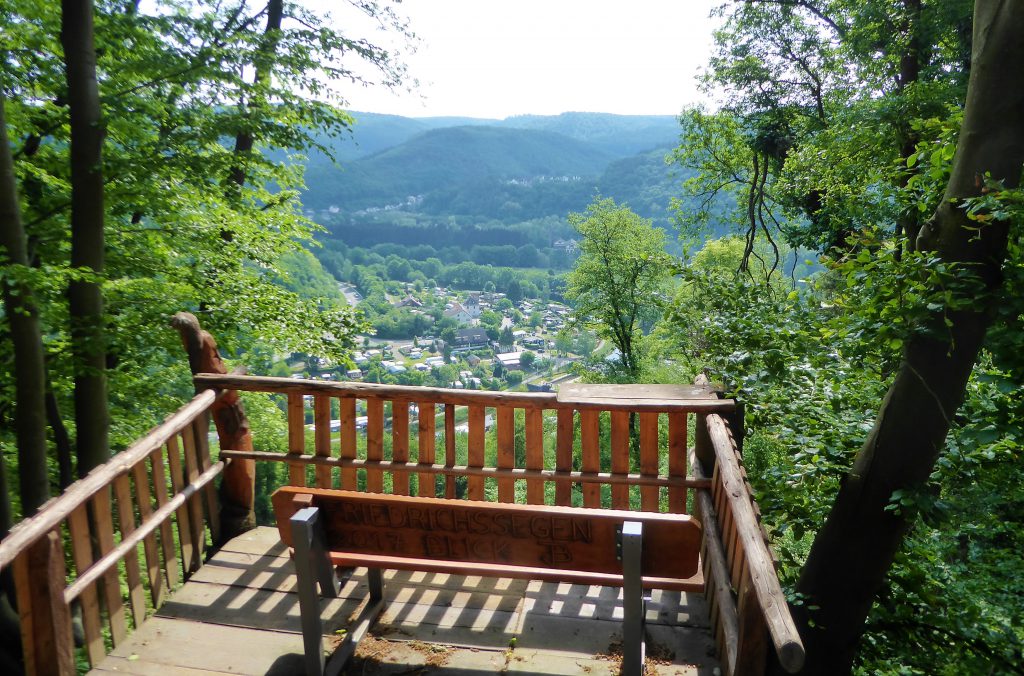
In Koblenz I took the train back to Braubach.
Koblenz as a finishing touch
Koblenz is a great city to wander around after your hike. It sits right at the point where the Moselle flows into the Rhine, at the famous Deutsches Eck. I could easily have stayed another day or two, but I had to be back at work the next morning and the drive home was still a good three hours. For a few days away, this is an ideal area: close enough, yet it feels like you’ve really travelled.
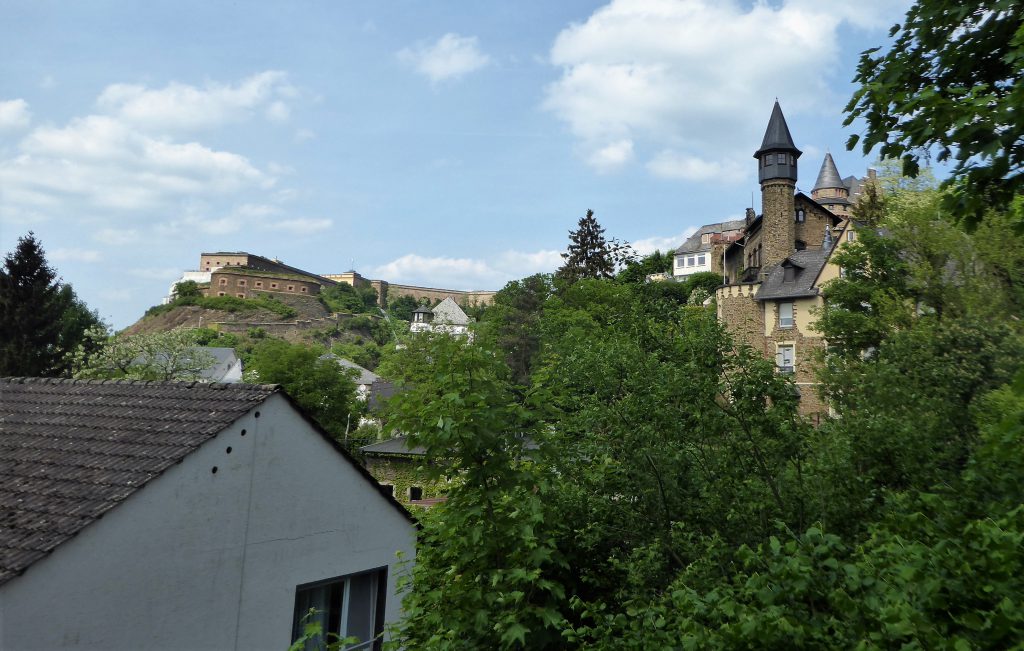
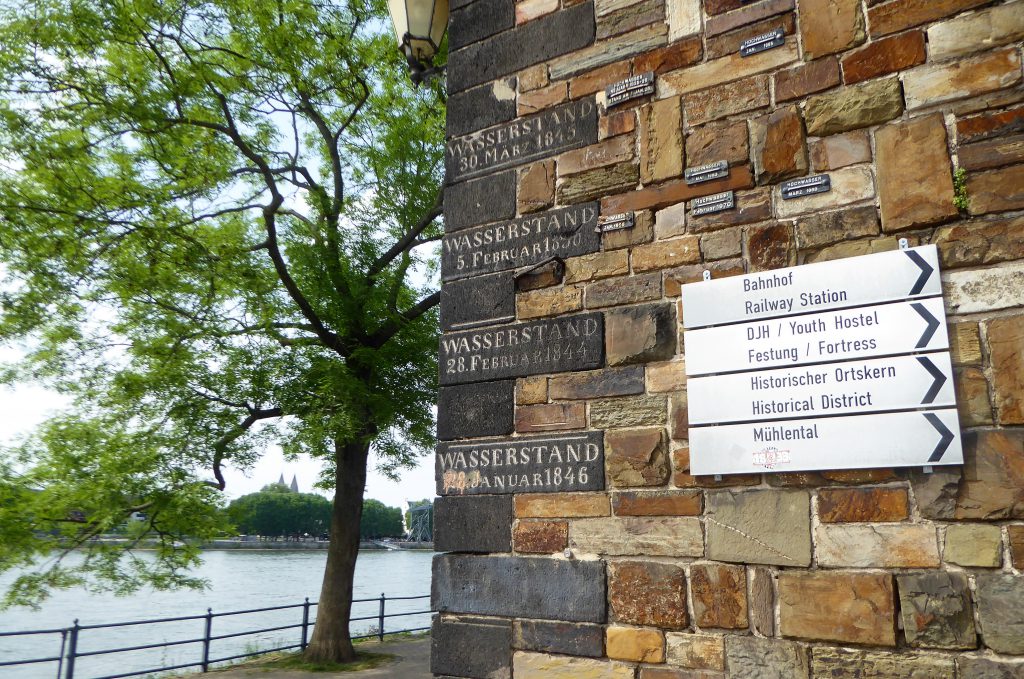
The trail Rheinsteig is well signposted in both directions
It doesn’t matter whether you walk upstream or downstream along the Rhine. That makes the hub-and-spoke approach work really well: if I’d had more days, I would have moved my base further south and done two more stages from a new spot.
Tips for hiking the Rheinsteig
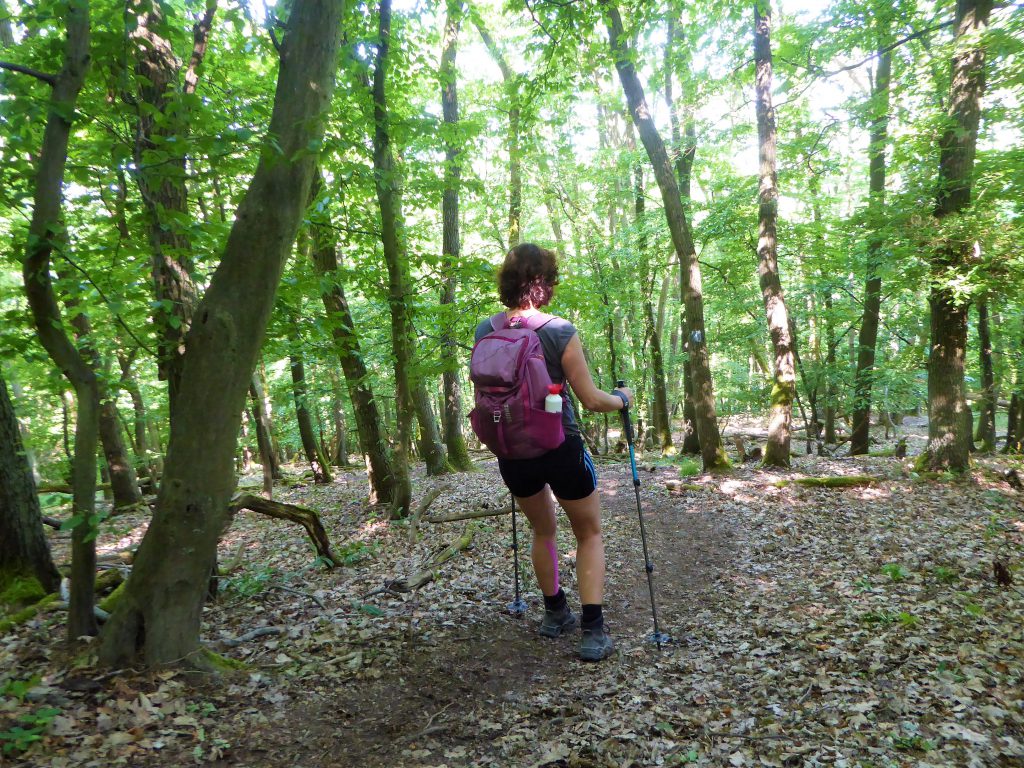
Hiking poles #ad On the stages around Braubach and Koblenz you’ll encounter rocky sections and steep climbs. I always hike with trekking poles, and on terrain like this the difference is real. Not only do you get a full-body workout, you also gain stability on the steeper and more technical passages. Not convinced yet? Read my article on trekking with poles.
Socks #ad Good socks matter just as much as good boots on a long hiking day. I’ve been wearing Smartwool socks for years: they wick moisture well and help prevent blisters. One thing I always do during a break: socks off, feet out to cool down and let the skin harden a little. Especially in warm weather, it makes a real difference.
Blisters Make sure your boots are properly broken in before you start a multi-day hike. New boots on the Rheinsteig is asking for trouble.
Also read my packing list for a hiking holiday to make sure you’re well prepared for your trip.
I always bring my own reusable water bottle #ad. My mission is to eliminate single-use plastic — refilling instead of throwing away is one of the easiest ways to contribute as a traveller. And take a cotton tote bag for small purchases, it also helps avoid unnecessary plastic waste while traveling.
Practical information: hiking the Rheinsteig
Getting there
The Rheinsteig is excellent for point-to-point hiking by public transport. A train line runs through the Rhine Valley and stops at almost every village along the route, making it easy to walk a stage and take the train back — or to base yourself in one place and tackle multiple stages without moving your car. That’s exactly what I did: two nights in Braubach, two stages, train back each time.
By car from the Netherlands, take the A3 or A61 towards Koblenz. Braubach is around 20 minutes south of Koblenz.
When to go
The Rheinsteig can be hiked year-round, but spring, summer and early autumn are the most enjoyable. Some sections can become muddy and slippery in winter. I had great weather and made the most of every day.
Where to stay
I stayed at Campingplatz Uferwiese in Braubach, a ten-minute walk from the old town. Affordable, practical, and with the Rhine right in front of you.
No campervan? Book a hotel or B&B in the old town of Braubach. Expect to pay around €60–70 per night. Koblenz has more options, including for those who want to add an extra night at the end of the hike.
Want to read more about the full 320 km Rheinsteig trail? Check out the website.
Read more
- Hiking trip around Winterberg, Germany
- Hiking the Fishermen’s Trail: stages 8 to 13 from Carrapateira to Lagos
- 3 Ideas for walking in Deventer – Hanseatic City in The Netherlands
- Karpathos Hiking Trails – Greece
- Stage 1 Ölüdeniz to Kabak – Lycian Coast, Turkey
This article contains affiliate links. If you book or purchase something through one of these links, we may receive a small commission at no extra cost to you.