
A safari in Kruger National Park is on almost every South Africa bucket list — and for good reason. This is Africa’s largest wildlife reserve, nearly twice the size of Wales, and the place where you can spot the Big Five in the wild: lion, leopard, elephant, rhino and buffalo.
In 2014 I traveled from Johannesburg to Kruger National Park for a 4-day organised safari. It was my very first real African safari. I had high expectations and a fair amount of nerves to match. In this article I’ll take you through each day, what it cost, and everything you need to know if you’re planning a safari in Kruger yourself.
Spotting the Big Five in Kruger National Park
Of course my main goal was to see the Big Five on safari in Kruger National Park — lion, leopard, elephant, rhino and buffalo. (The giraffe is big, but doesn’t make the list.)
In Johannesburg I stayed at Brown Sugar Lodge and was picked up early in the morning to start the four days. I had booked my trip with Detour Africa and our group consisted of nine people. A great size for solo travel — big enough to always find good company, small enough to actually get to know everyone.
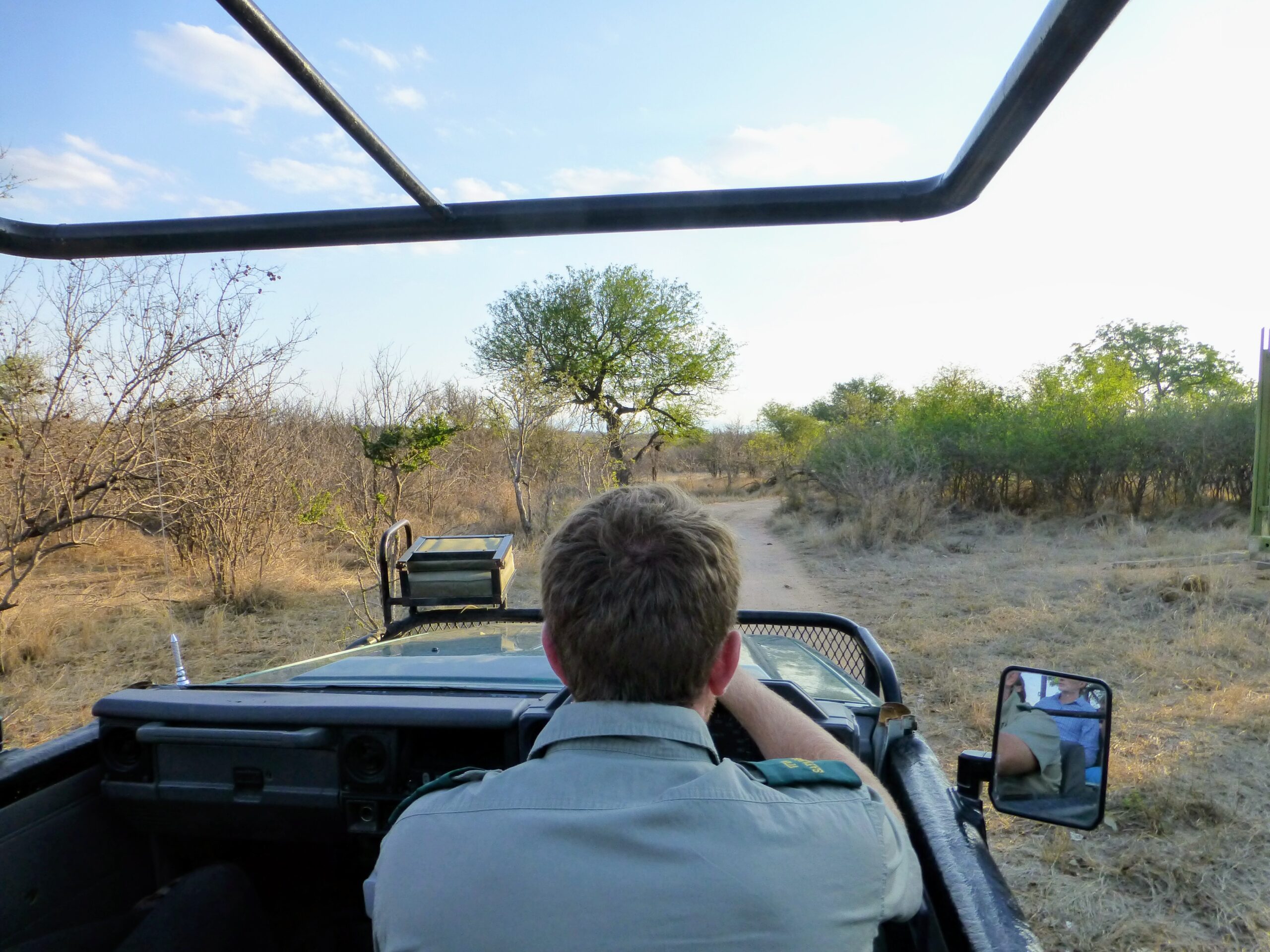
Day 1 Tremisana Logde – Sunset gamedrive
That first day we drove to Tremisana Lodge, which borders York Nature Reserve, Tshukudu Game Reserve and Ukhozi Nature Reserve. That same evening we went on a sunset game drive, had dinner out in the reserve and drove back to Tremisana in pitch darkness.
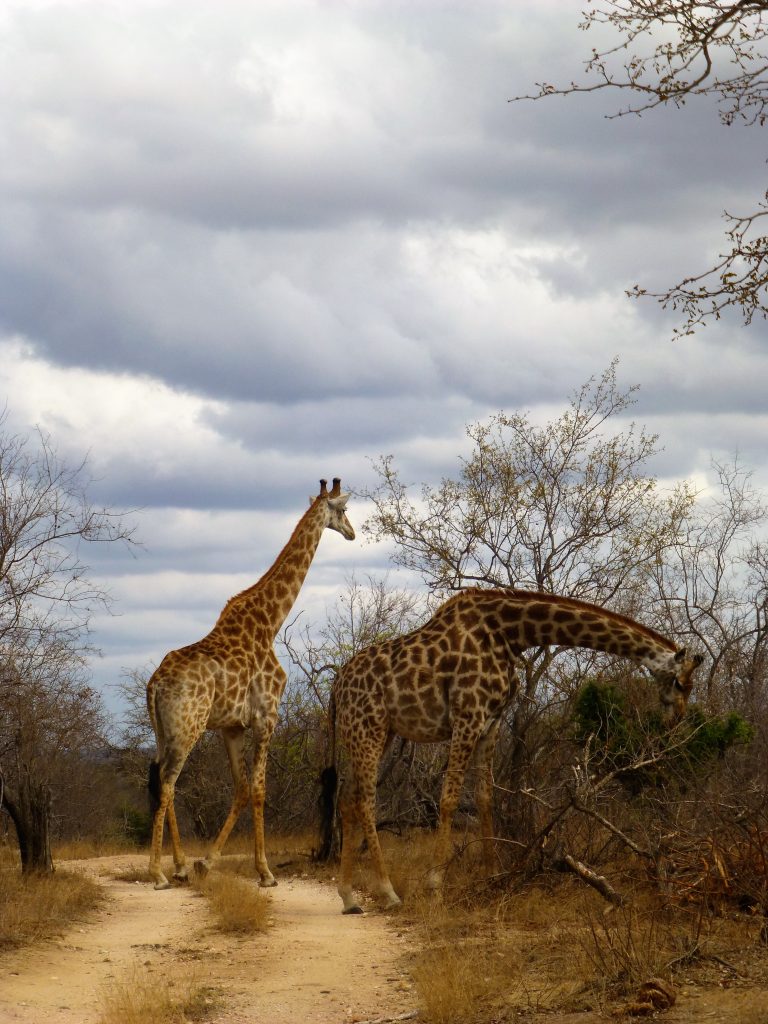
I loved every minute of it. And it was only day one — I still had three more days ahead of me. It was a significant chunk of my budget, but absolutely worth it. I paid just over €400 for this safari in Kruger National Park, which was one of the cheaper options available.
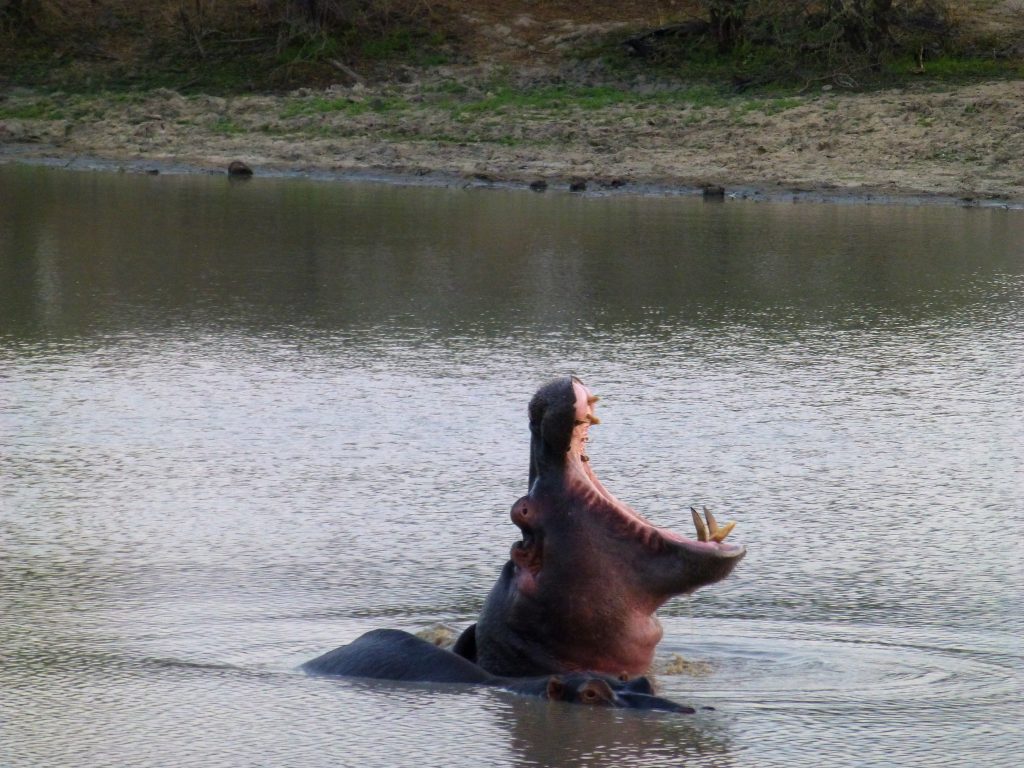
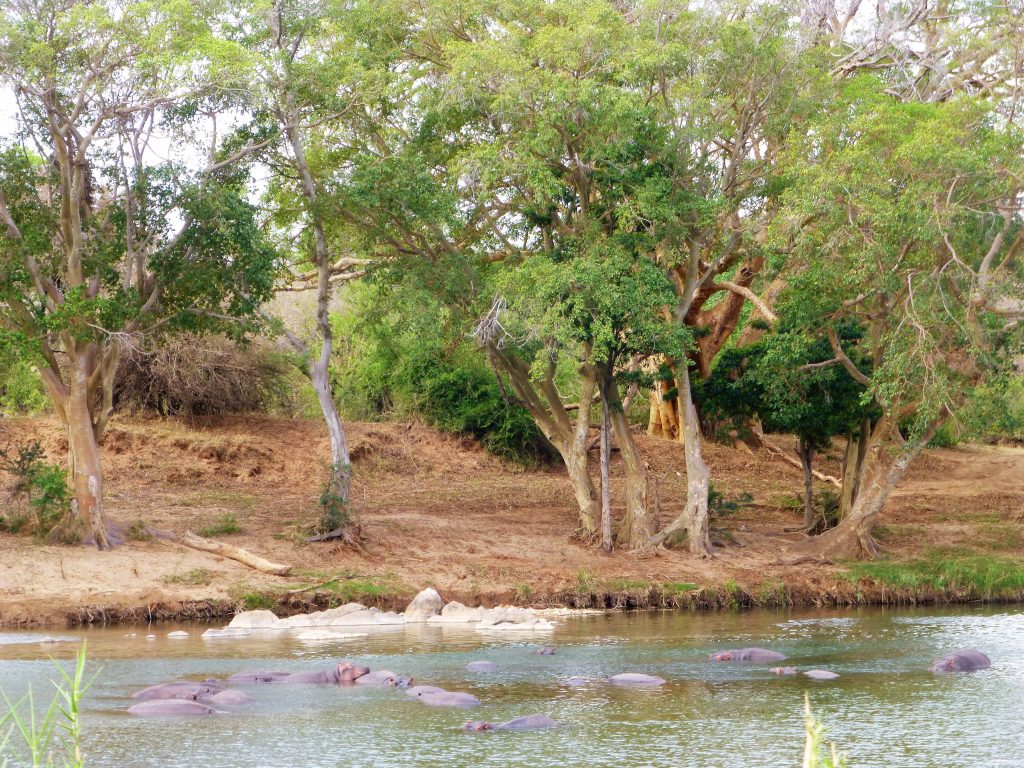
The iconic hippo sighting — of course
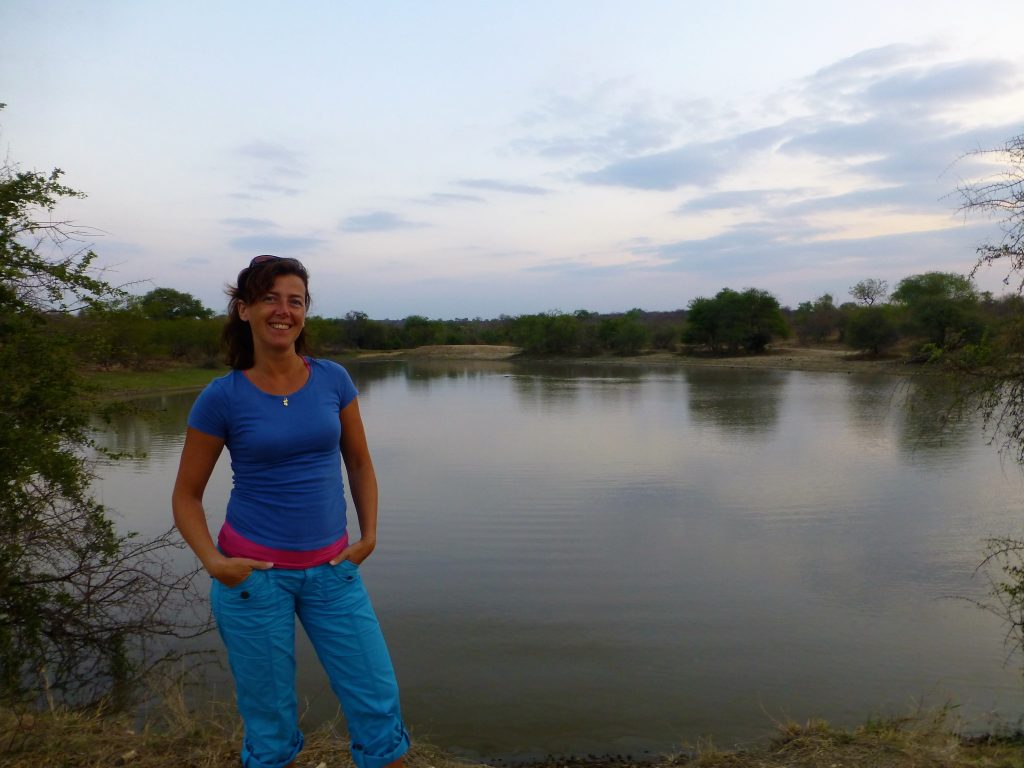
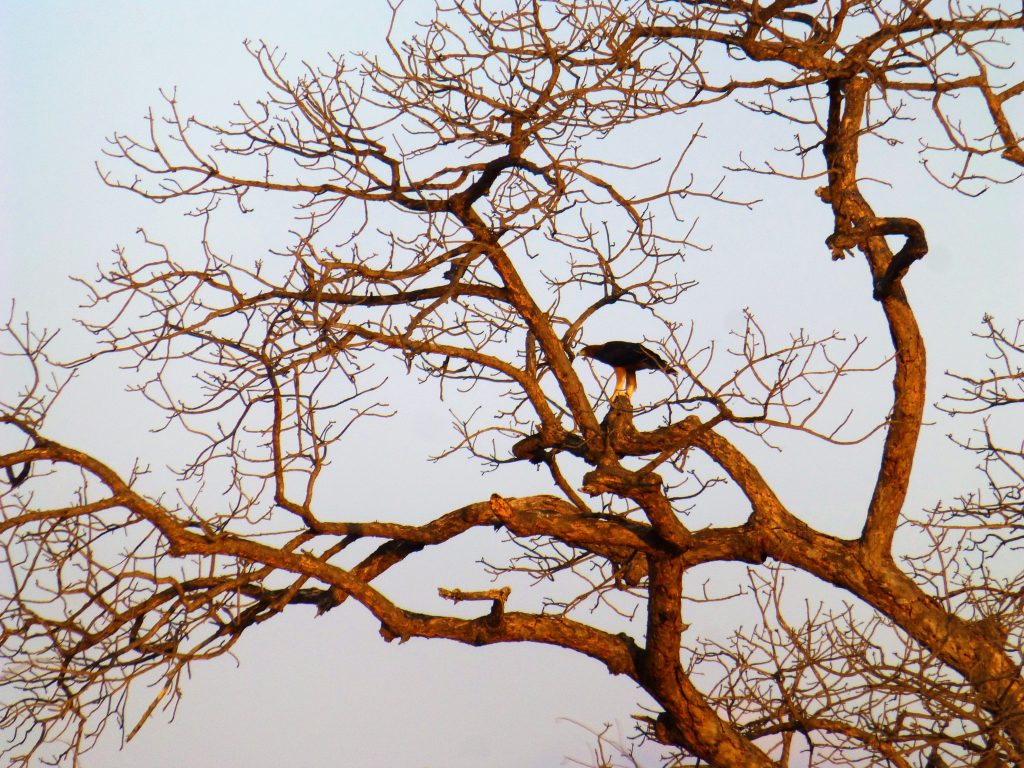
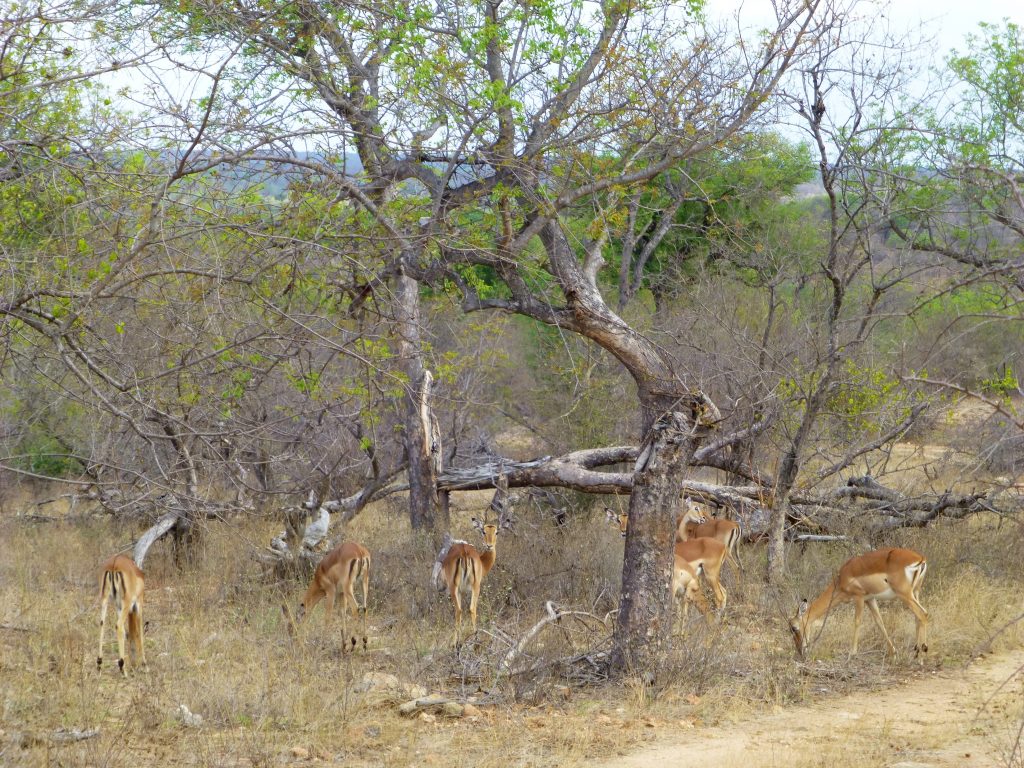
That first evening we already saw several different animals. These places always make me genuinely happy — watching animals live freely across an enormous area, going wherever they please.
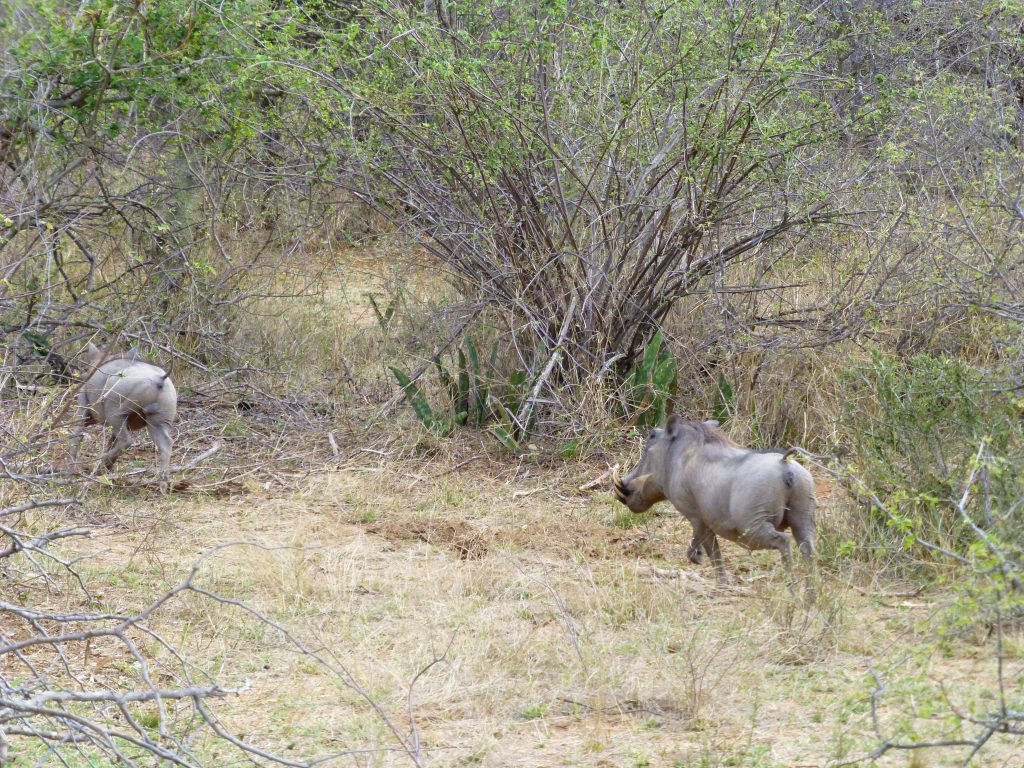
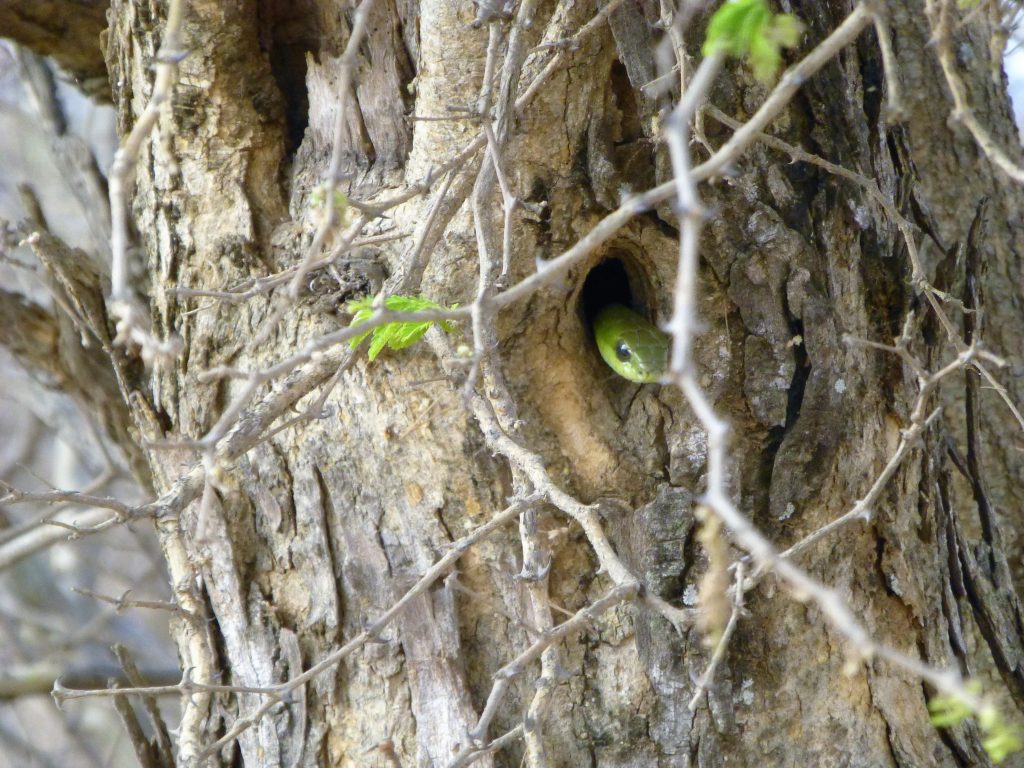
Can you spot the snake?
We had driven past this tree several times and our guide was convinced there was a snake in it. On the last pass, I got lucky. I spotted it and managed to take a photo just in time — the only one in the group who saw it.
My police eye comes in handy sometimes.
Day 2 Tremisana Lodge — Morning Bush Walk + Safari
The next day started early with a walking safari. When you walk in a wildlife reserve, you are accompanied by armed rangers. You are walking through the territory of the Big Five and all the other incredible animals that live there.
You hope to see as much wildlife as possible — but you don’t actually want to run into a lion on foot. It’s a fine balance between adventure and safety.
Read: What Rules Apply on Safari — how to safely enter the park on foot or by jeep.
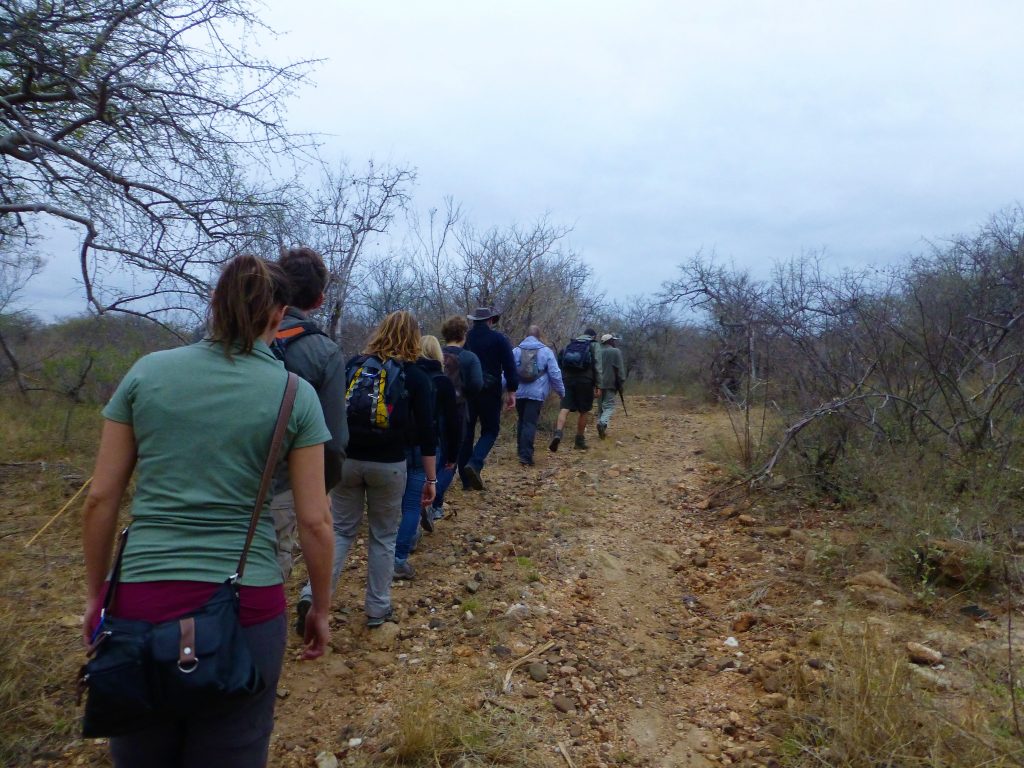
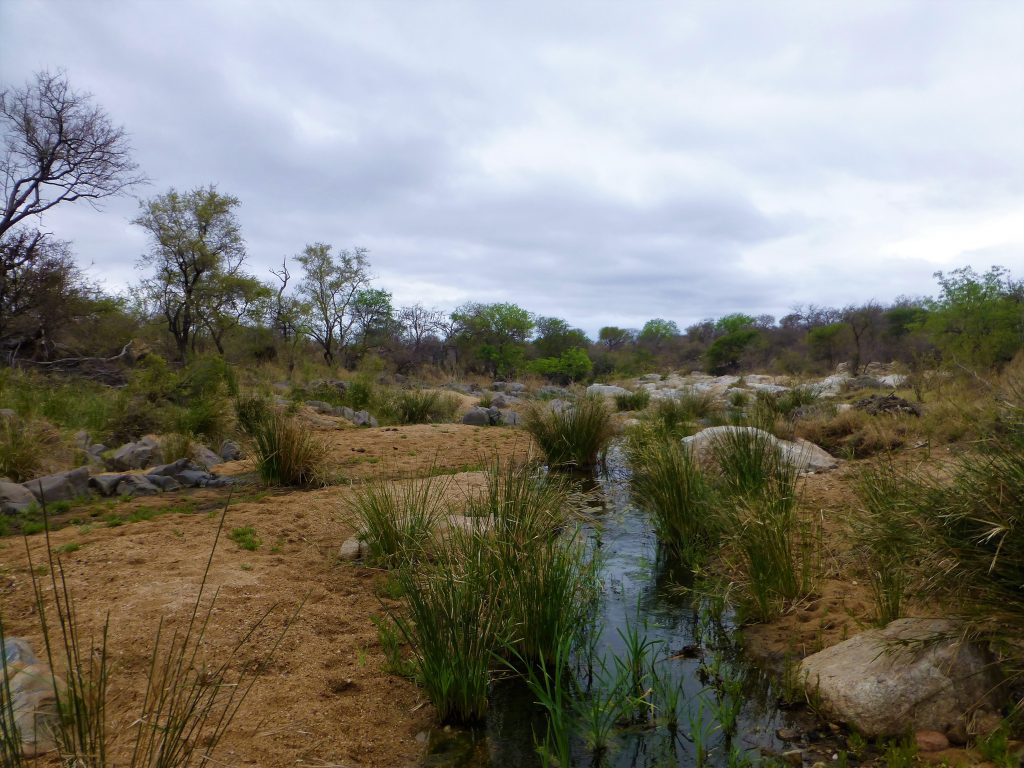
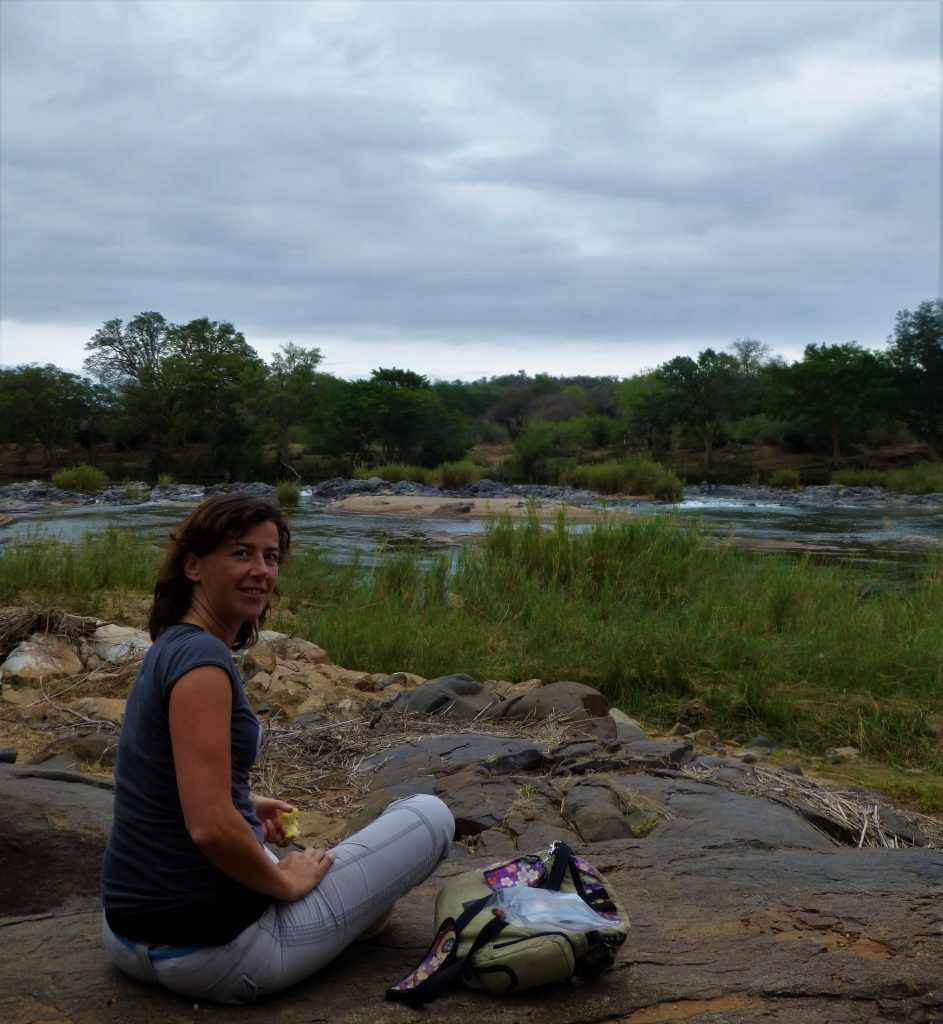
We didn’t see a huge amount that morning. Mostly animal tracks from the night before. But when we stopped for a sandwich near a river, we spotted hippos in the distance. I still thought it was a wonderful walk — the chance of encountering wildlife, combined with the simple fact of being out in the South African bush on a beautiful early morning, is just something else.
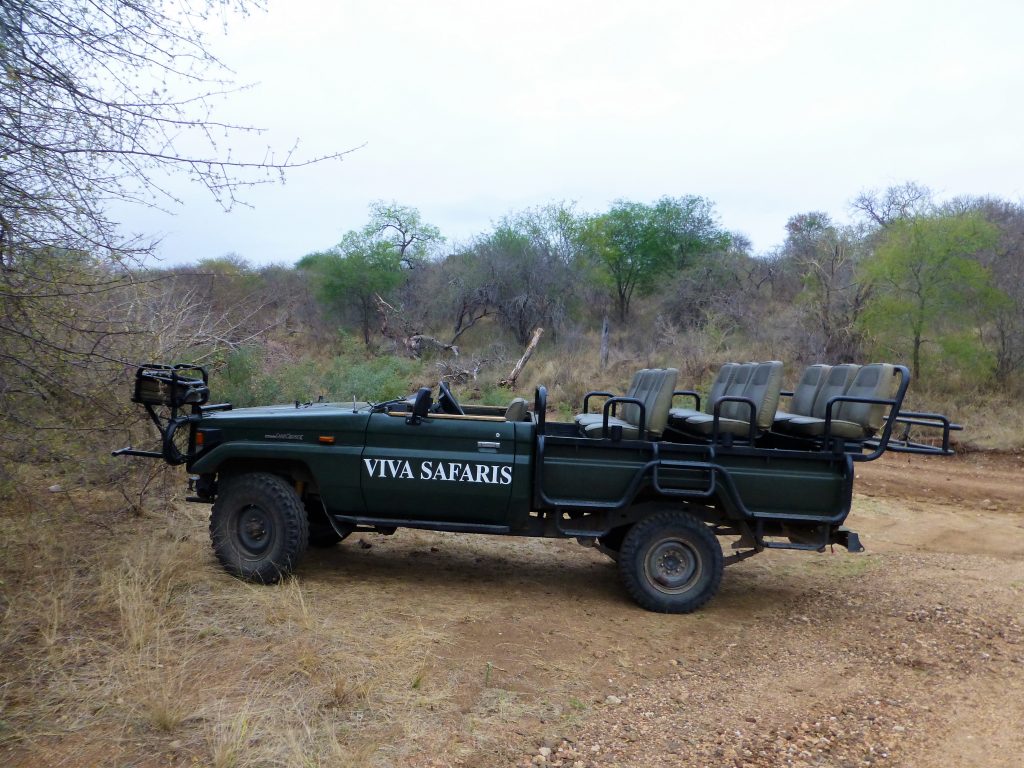
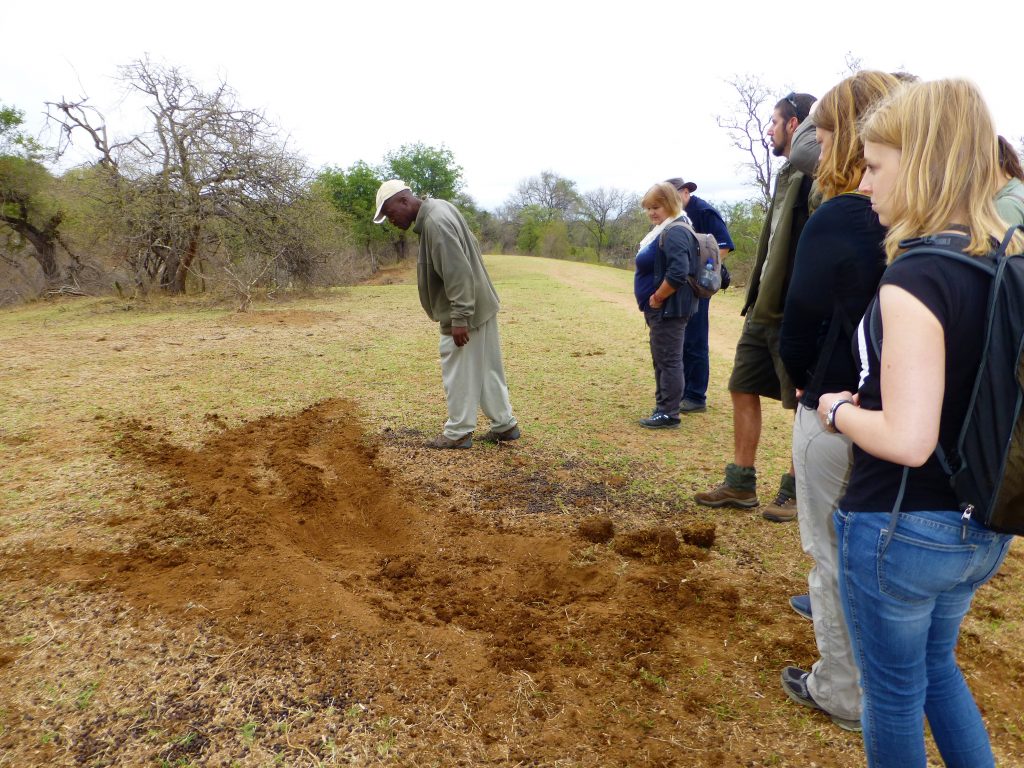
All the tracks we came across were carefully studied by our guide.
We had set off well before breakfast and brought packed lunches. We found a beautiful spot to sit, eat a sandwich, and take in where we actually were. Hippos in the water ahead, and quite possibly a predator watching us from somewhere nearby. There are always more animals watching you than you realise.
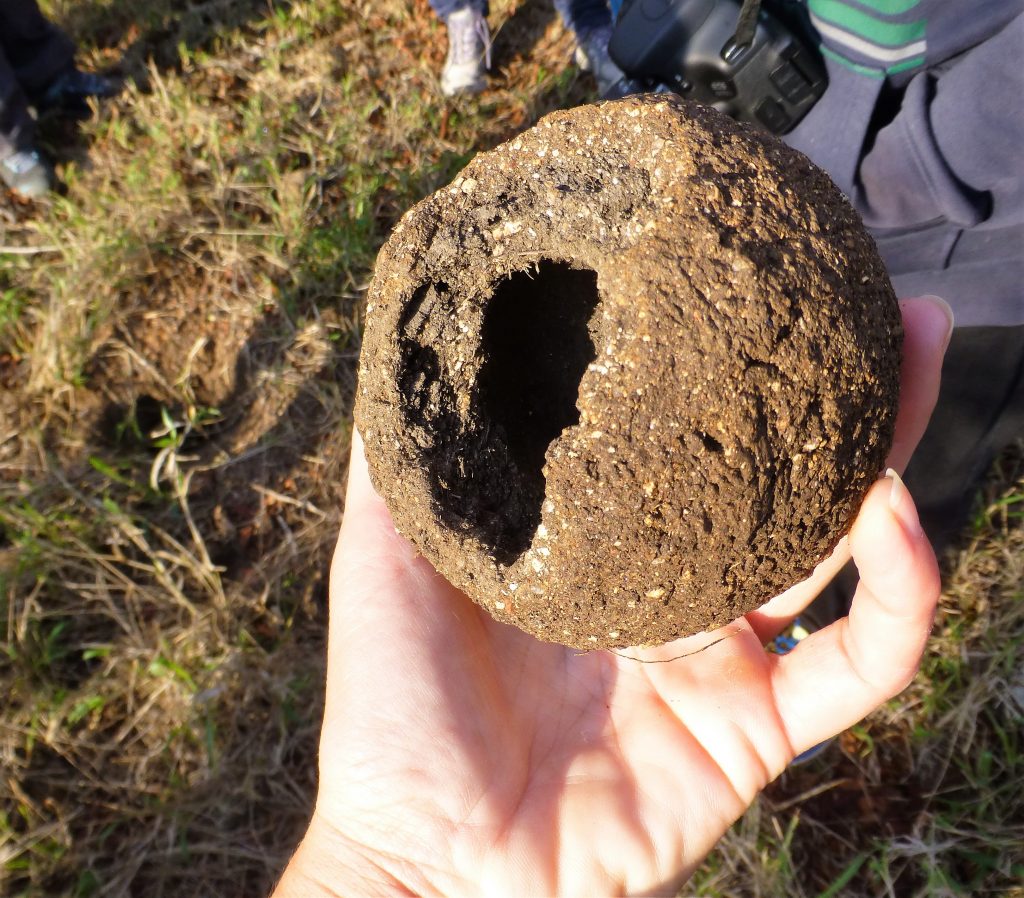
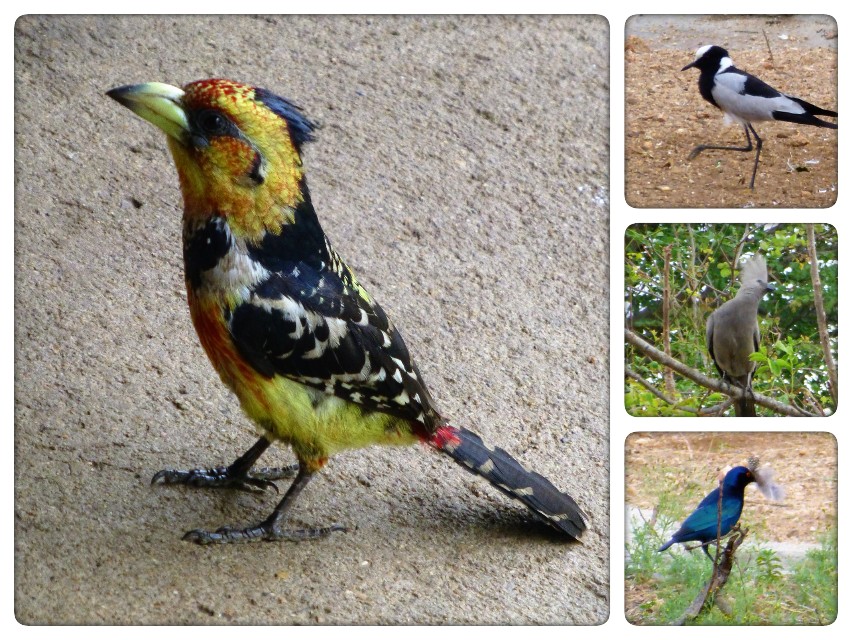
After returning to the lodge we had some time to relax. I wandered around looking for birds and monkeys. The variety and colours of the birds here genuinely surprised me.
The most colourful one was also the boldest — it tried to steal food right from my hands. After some research I identified it as the Crested Barbet. You can see it on the left in the photo below.
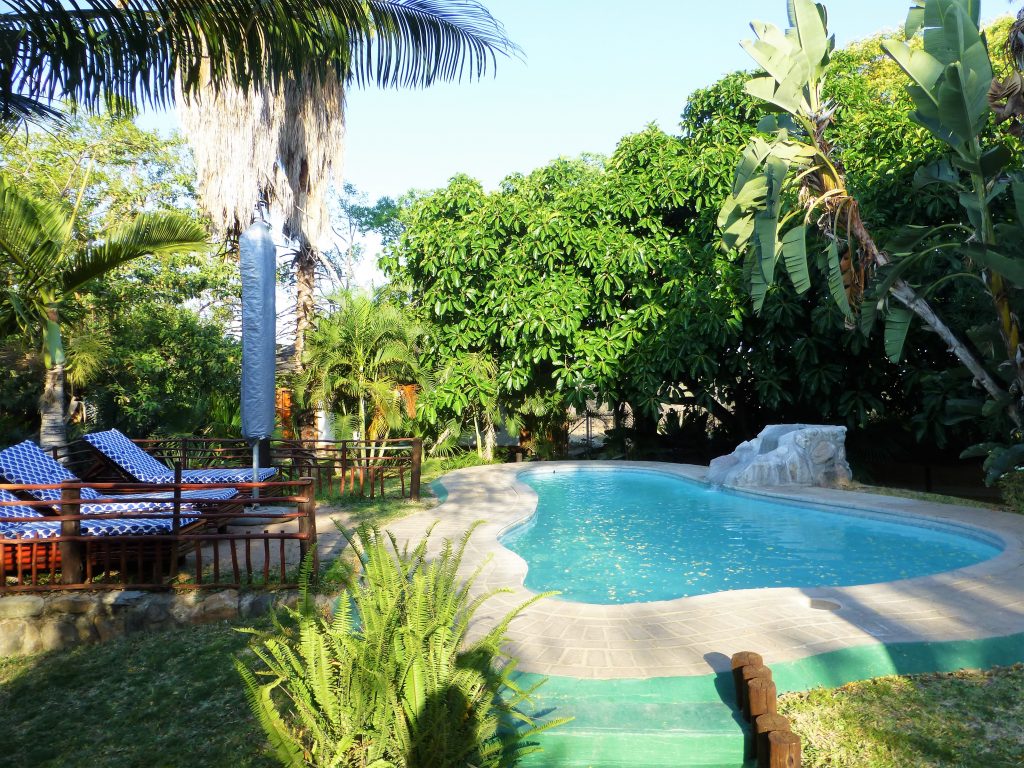
But of course you can also just take a dip in the pool.
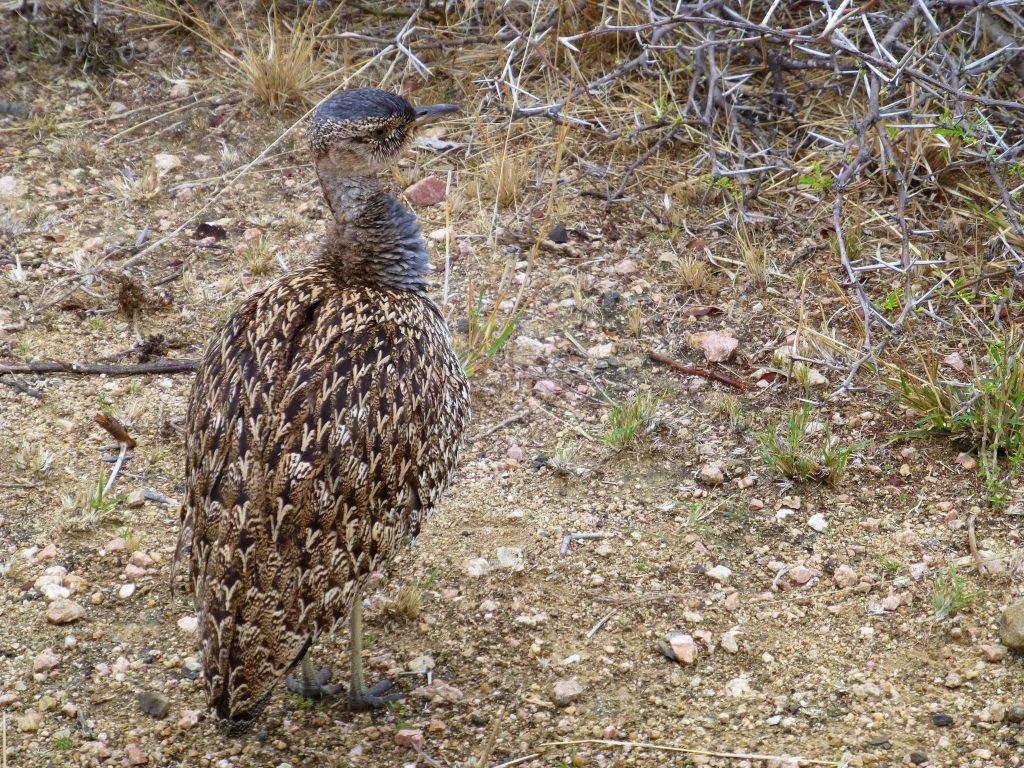
In the afternoon we did another jeep safari around Tremisana. More beautiful animals and birds. Just driving through that landscape is extraordinary — constantly scanning for wildlife, taking in the nature and terrain.
I always bring my own reusable water bottle #ad. My mission is to eliminate single-use plastic — refilling instead of throwing away is one of the easiest ways to contribute as a traveler. A foldable bag #ad for small purchases helps avoid unnecessary plastic waste while traveling.
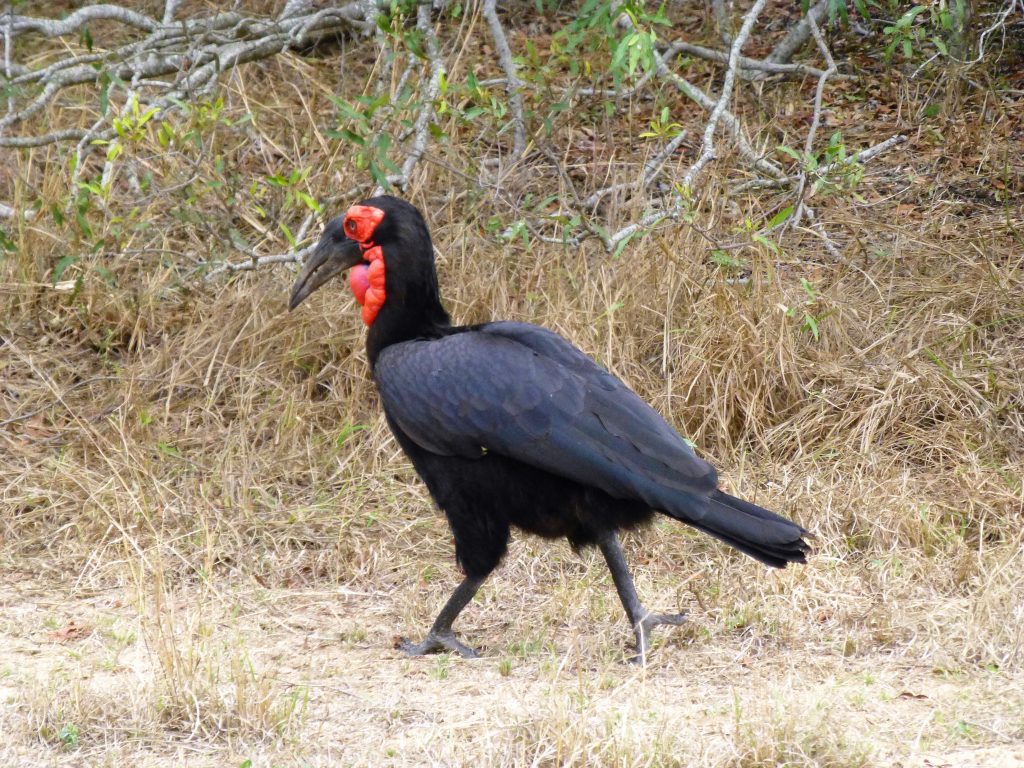
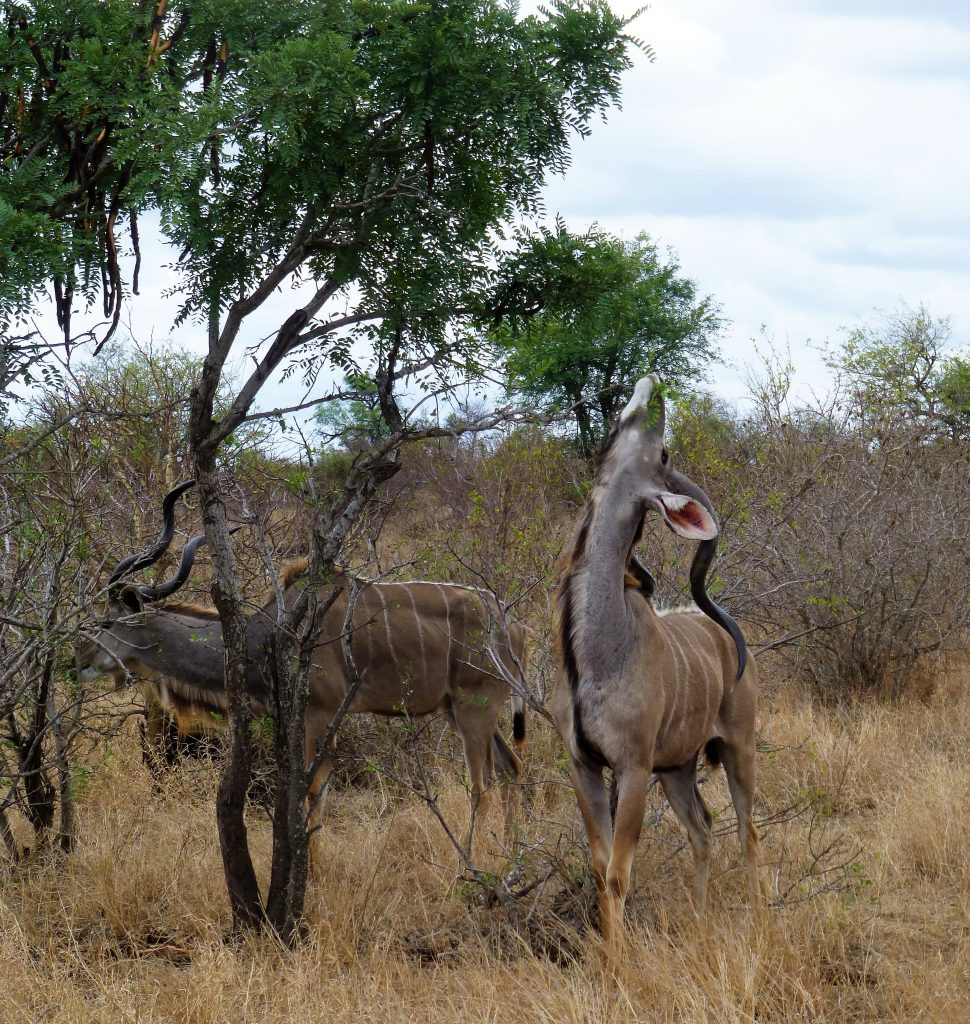
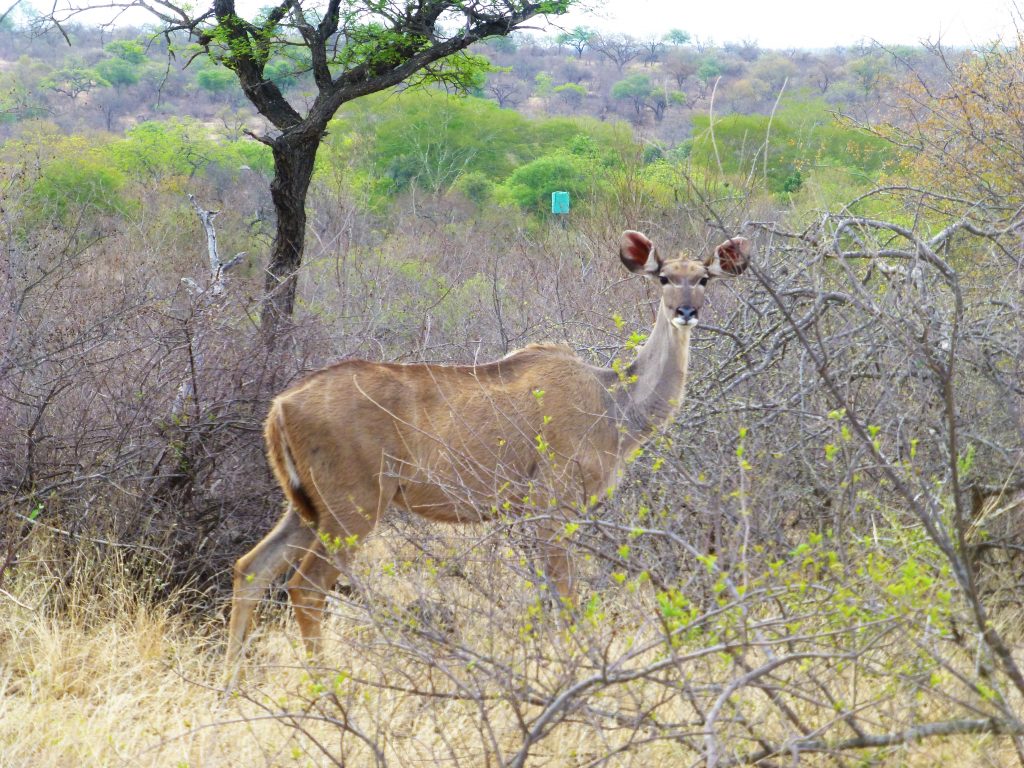
That evening we moved to our new accommodation: Marc’s Treehouse Lodge. As the name suggests, you can stay in a treehouse, but I opted for a proper safari tent — which turned out to be fully equipped. There was a shower and toilet block nearby, and a short walk brought you to a stunning view over a river.
We were right in the middle of a game reserve.
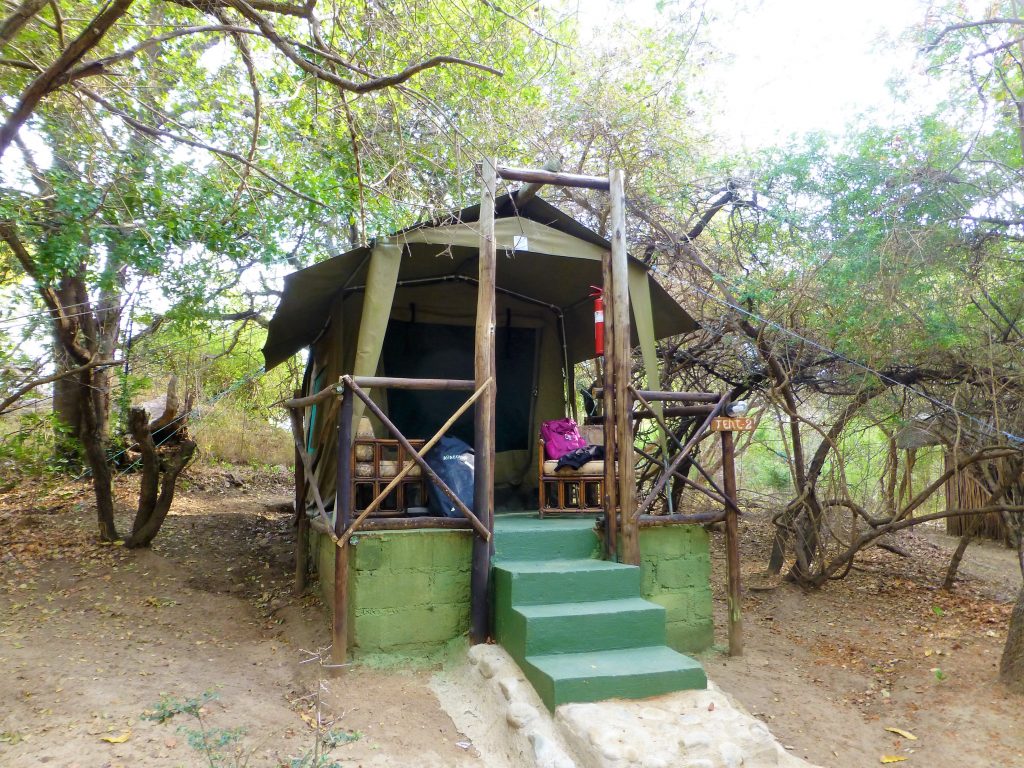
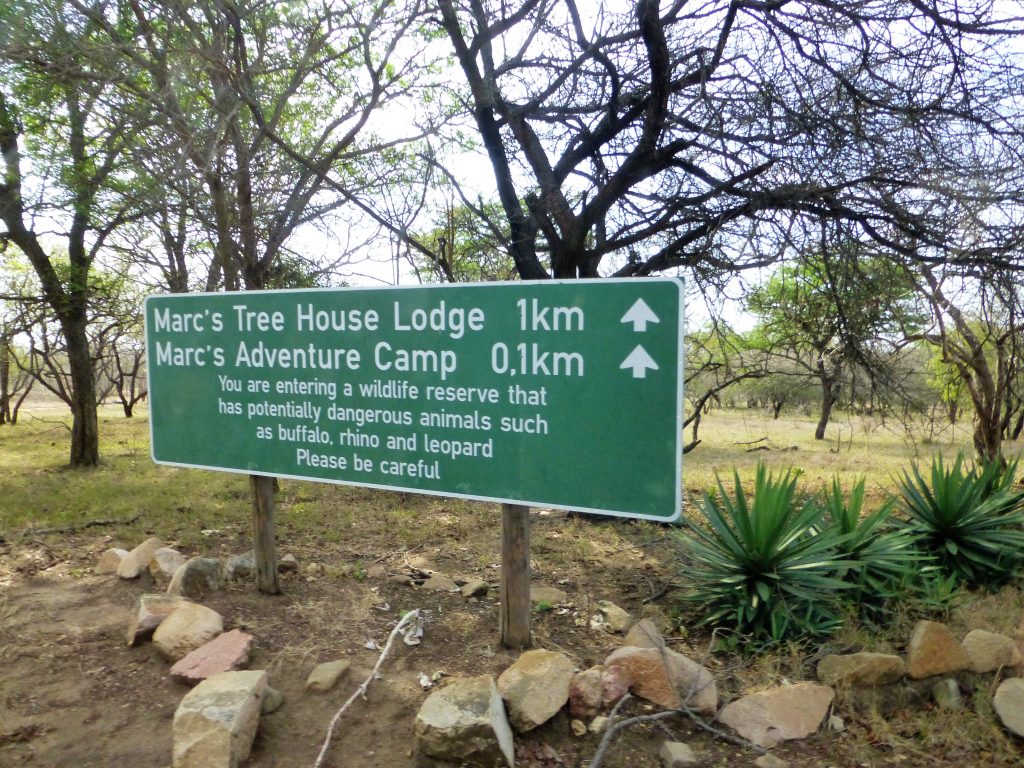
That became very clear the next morning when I woke up to rustling around my tent — a nyala walked casually past. Those are the moments I never forget. So cool!
Day 3 Marc’s Treehouse — Into Kruger National Park
This was the day we finally drove into Kruger National Park itself. We’d already seen plenty of animals, but the famous Big Five were still on the list.
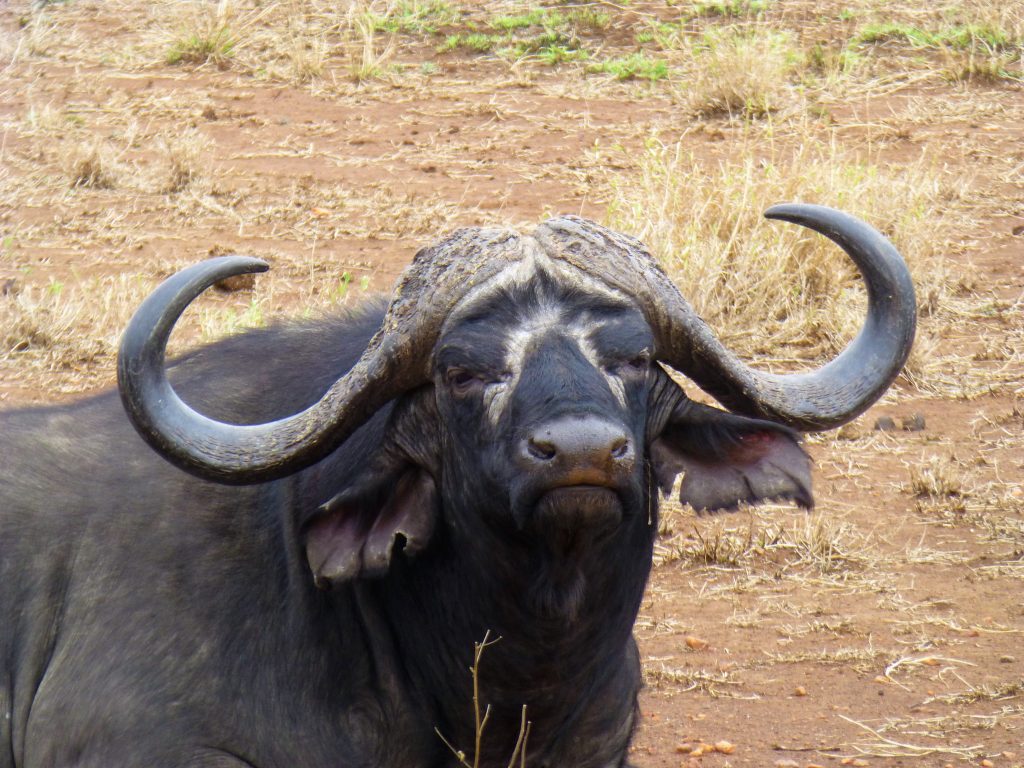
Almost immediately we came across a large herd of buffalo. First of the Big Five — spotted. Even at a distance, the sheer scale of them is impressive. You really would not want to be nearby if they started running.
We stayed safe in the jeep and moved on after getting our photos.
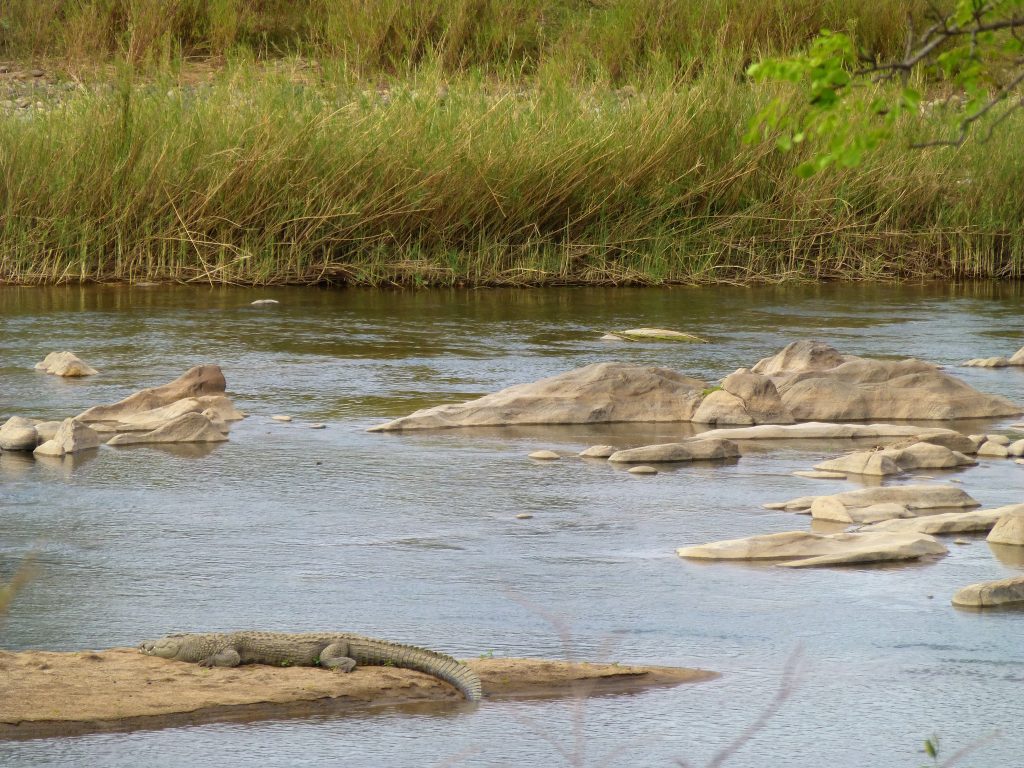
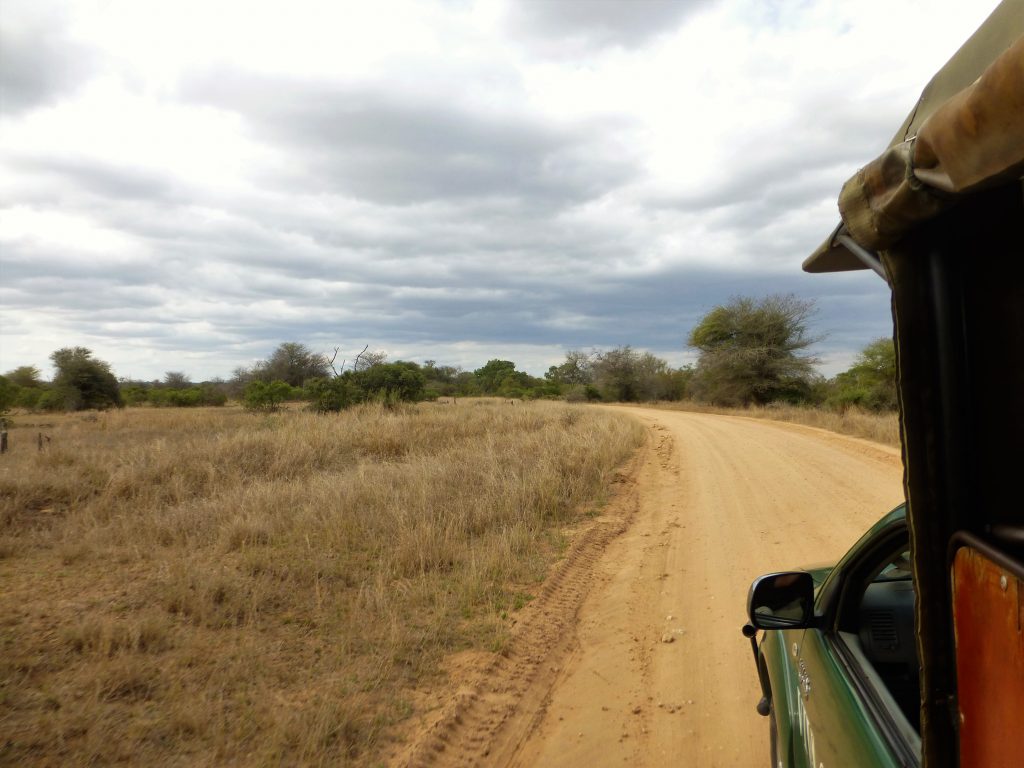
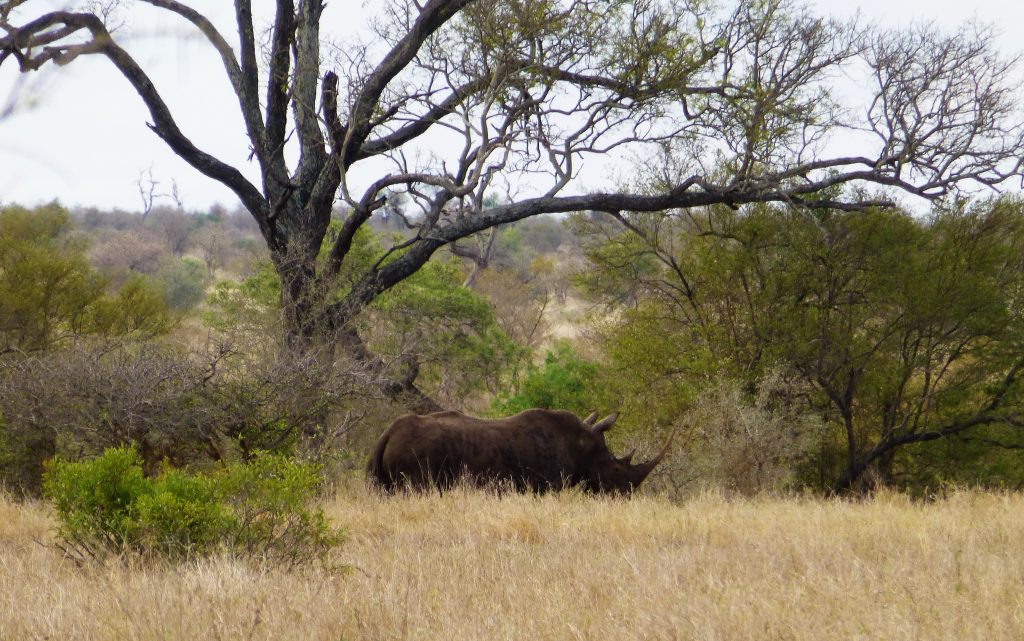
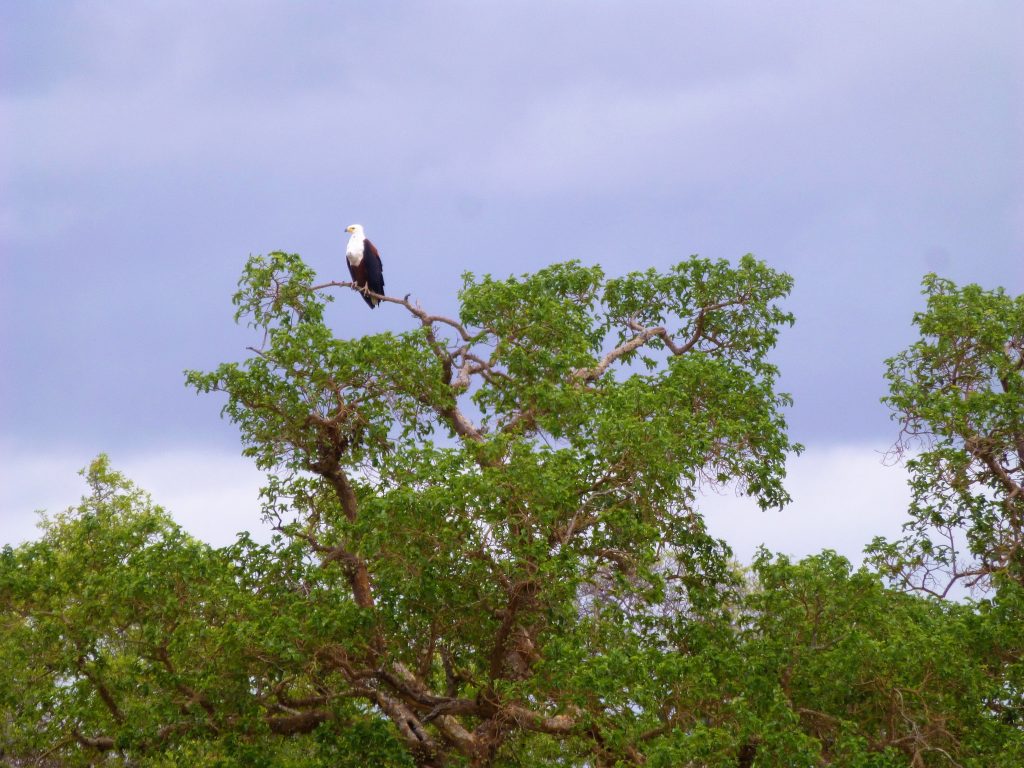
After driving for a while with everyone scanning out the windows, we spotted giraffes in the distance. Then a rhino — an endangered species and always a moving sighting. And birds everywhere, including the African Fish Eagle.
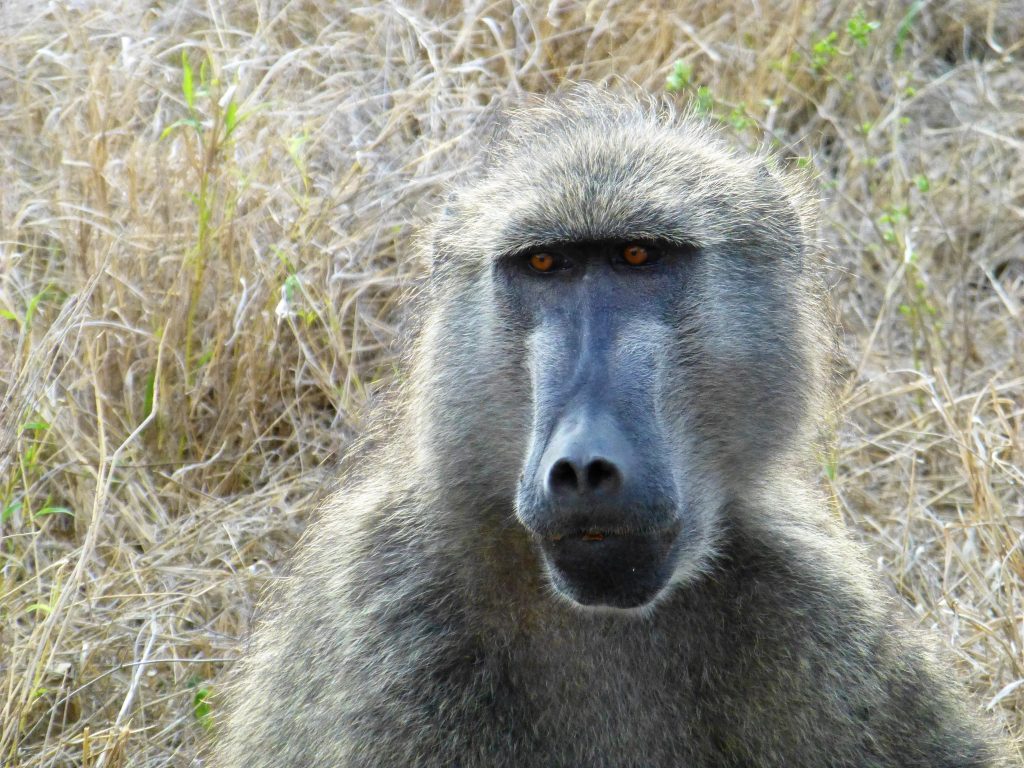
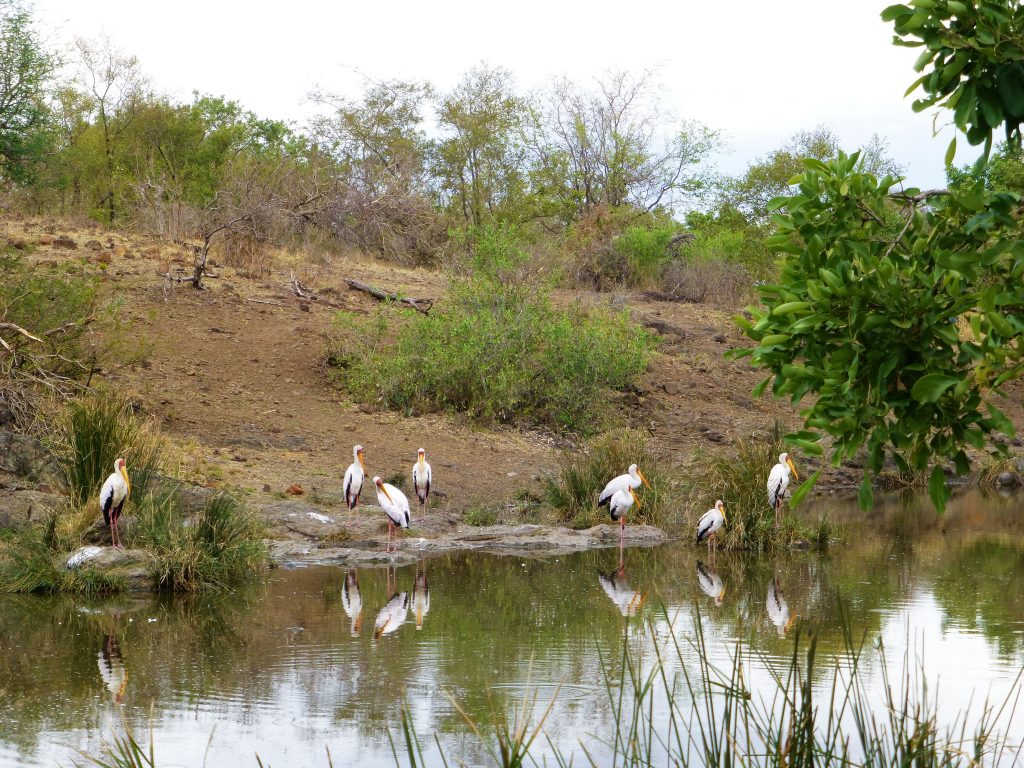
Eventually we reached a watering hole. Always a good place to stop and wait. Hippos resting, elephants drinking on the far bank. One of those scenes you only usually see in documentaries.
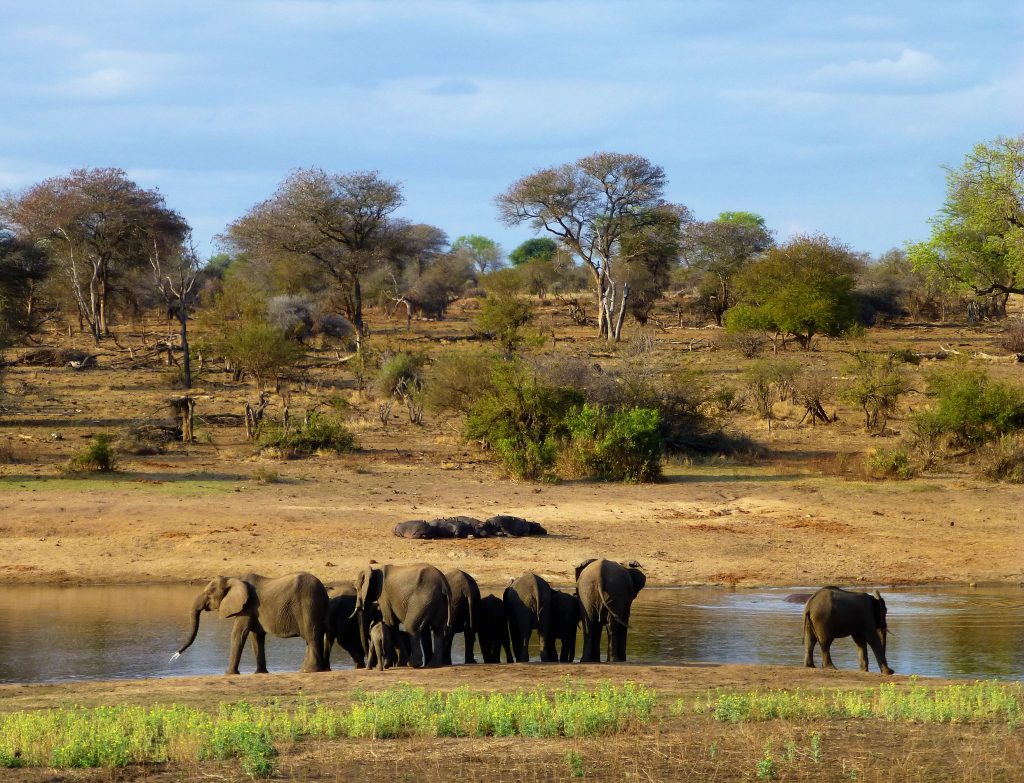
Then word came through: lions had been spotted nearby. They had prey and were feeding. Borrowing binoculars from a fellow traveller, I could just make them out — several lions, not far from the jeep. I couldn’t see what they were eating, but the reality of those huge, dangerous animals sitting a few hundred metres away from us, with nothing but an open vehicle between us, hit hard.
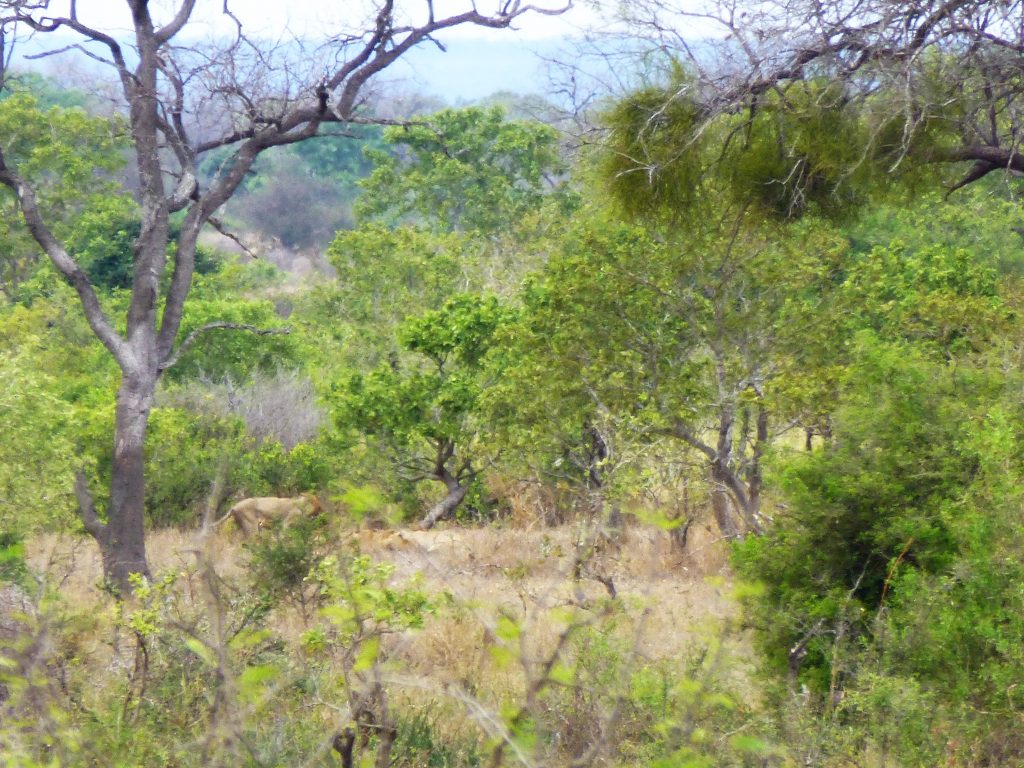
Strange feeling.
Spotting the Leopard in Kruger National Park
And then came the moment — the leopard. Our guide was in radio contact with other guides and suddenly changed direction. No explanation. You just don’t know how far you need to drive, whether it’ll still be there, or how close it is.
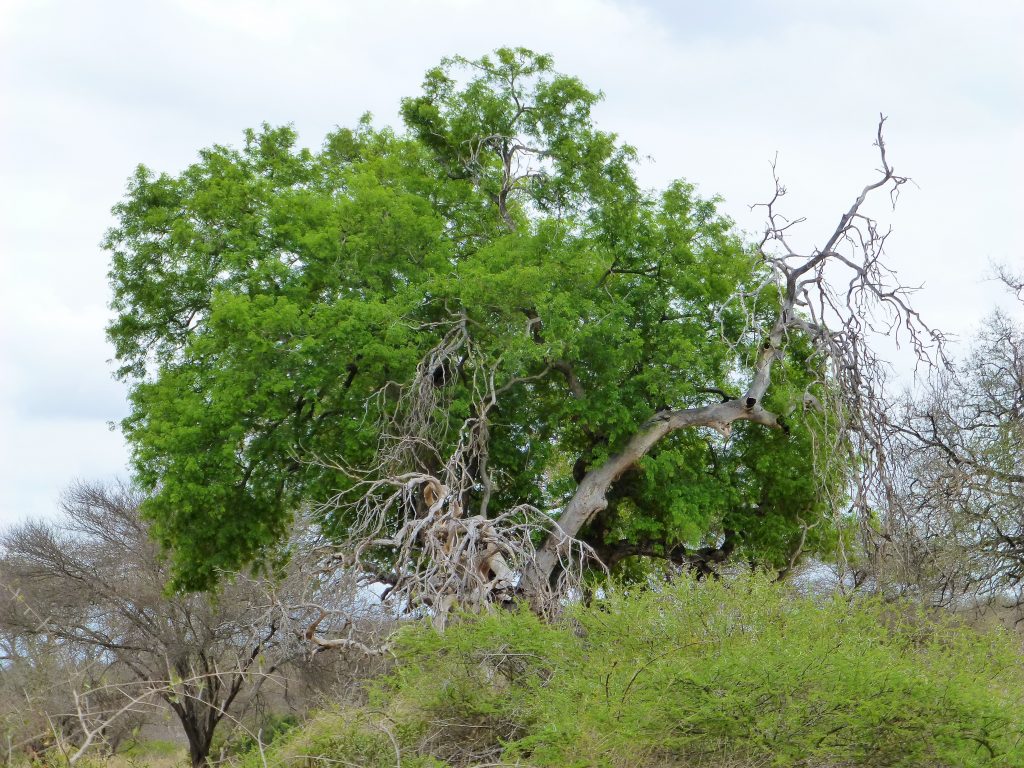
All those questions running through my head while still scanning the bush for other animals. Even with a clear destination, there’s always something else to see.
Honestly — if our guide hadn’t told me exactly where to look, I would never have spotted it.
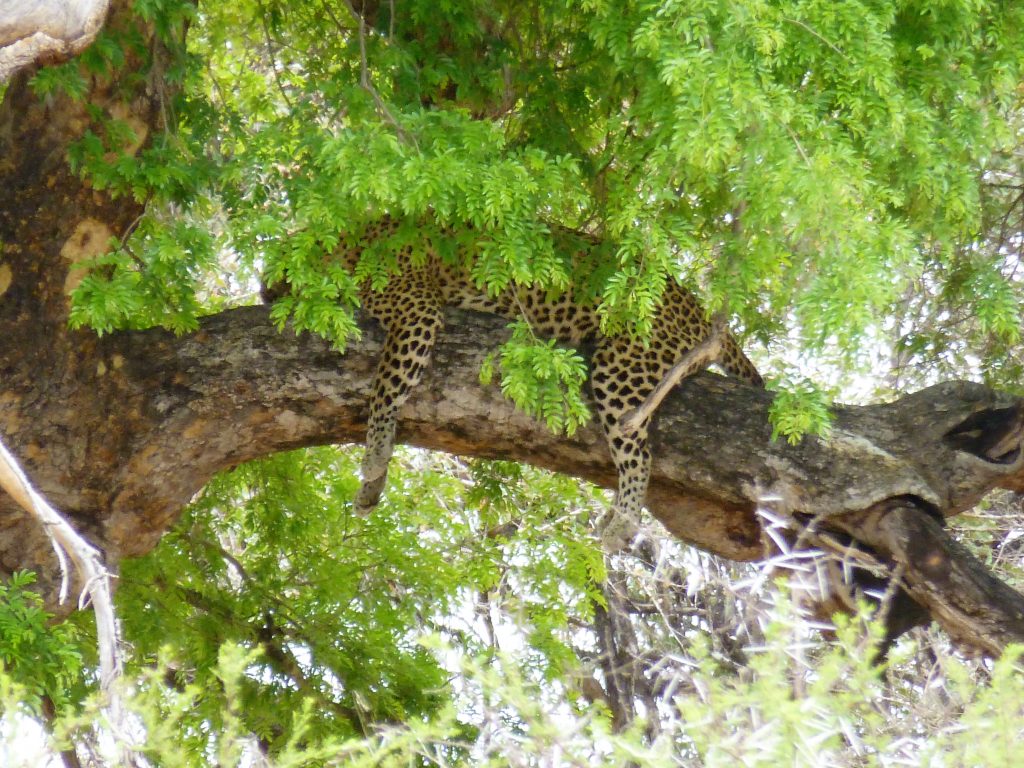
Would you? You can just make out a branch on the bottom right, and on the first photo you can just see those paws hanging down.
What a day. I had seen everything I’d hoped for and never once got bored in the back of that vehicle. Constantly scanning, constantly rewarded. I noticed in the previous days that I tended to spot animals before the others in the group — the trained eye comes in handy.
Day 4 — Blyde River Canyon and the Three Rondavels
The last day arrived and we left Kruger National Park behind. The day was mostly the drive back to Johannesburg, but we made a wonderful stop at the Three Rondavels — a spectacular viewpoint that’s genuinely worth stopping for if you’re passing.
Local vendors set up here too, knowing that nearly every tourist stops for the view.
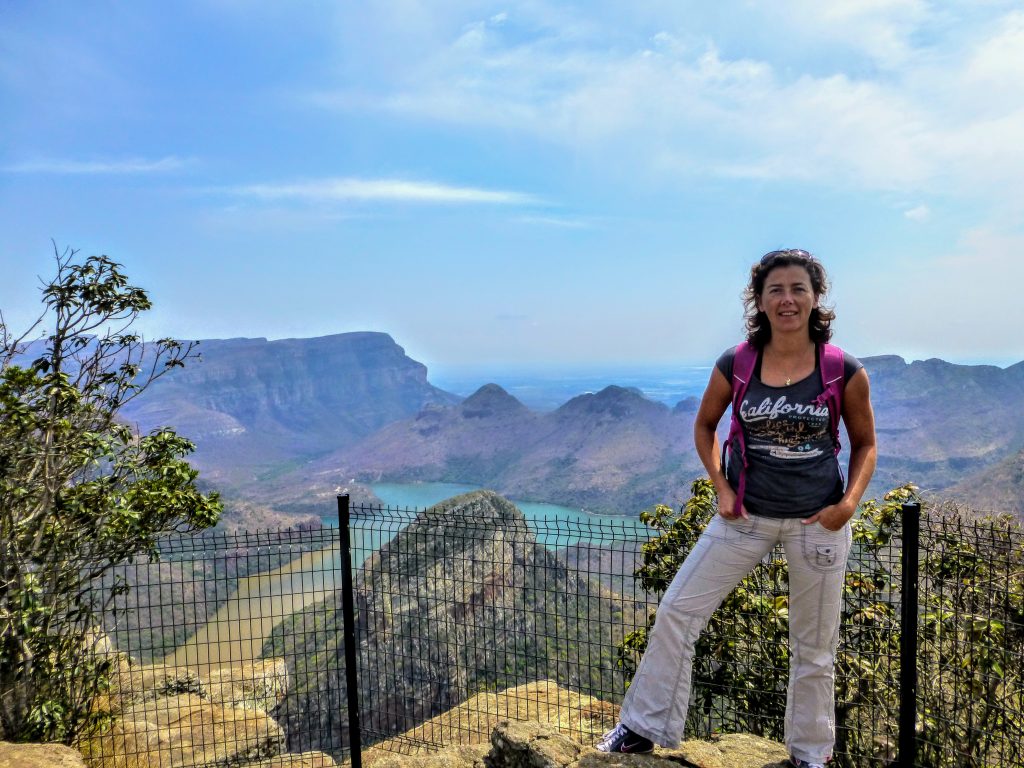
What a way to end a safari in Kruger National Park.
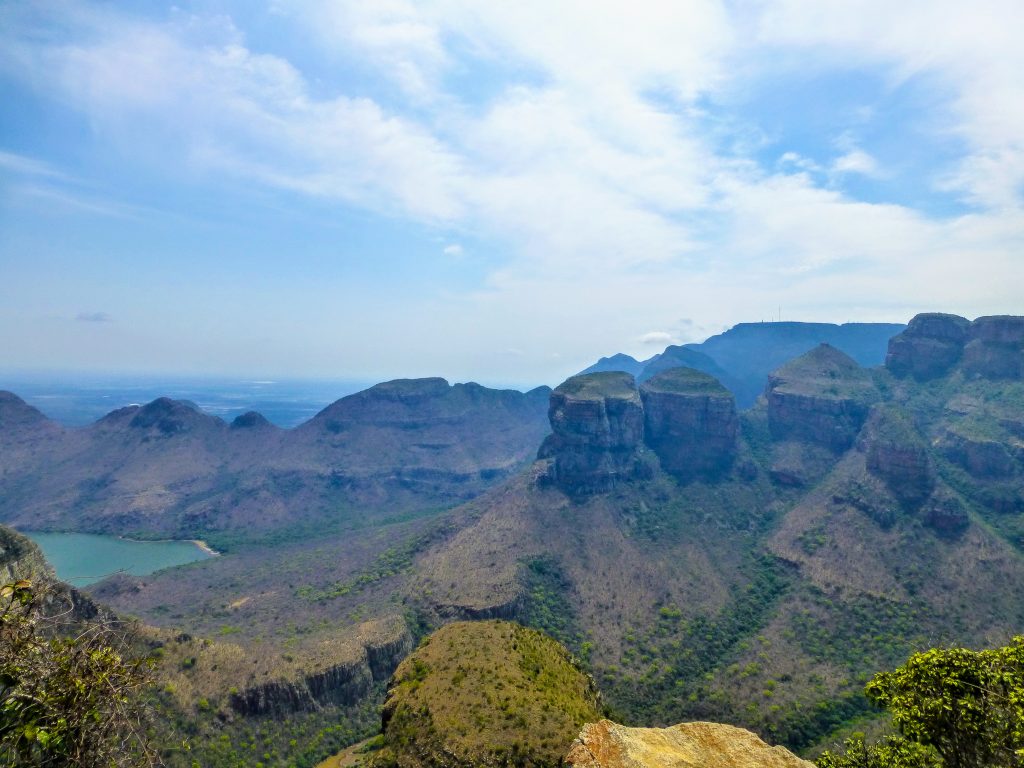
I had truly wonderful days in the South African wilderness. A resort with a proper room on one night, a real safari tent on another. The best of both worlds.
What to Do Around Kruger National Park
- On the last day we visited the Three Rondavels and Blyde River Canyon, both absolutely worth the stop. There are also several other parks and attractions worth exploring near Kruger:
- The Letaba Elephant Hall museum is dedicated to elephants and their relationship with humans, including a full elephant skeleton.
- Bourke’s Luck Potholes is a unique geological site where swirling water has carved extraordinary formations into the rock, with well-maintained walking trails through the area.
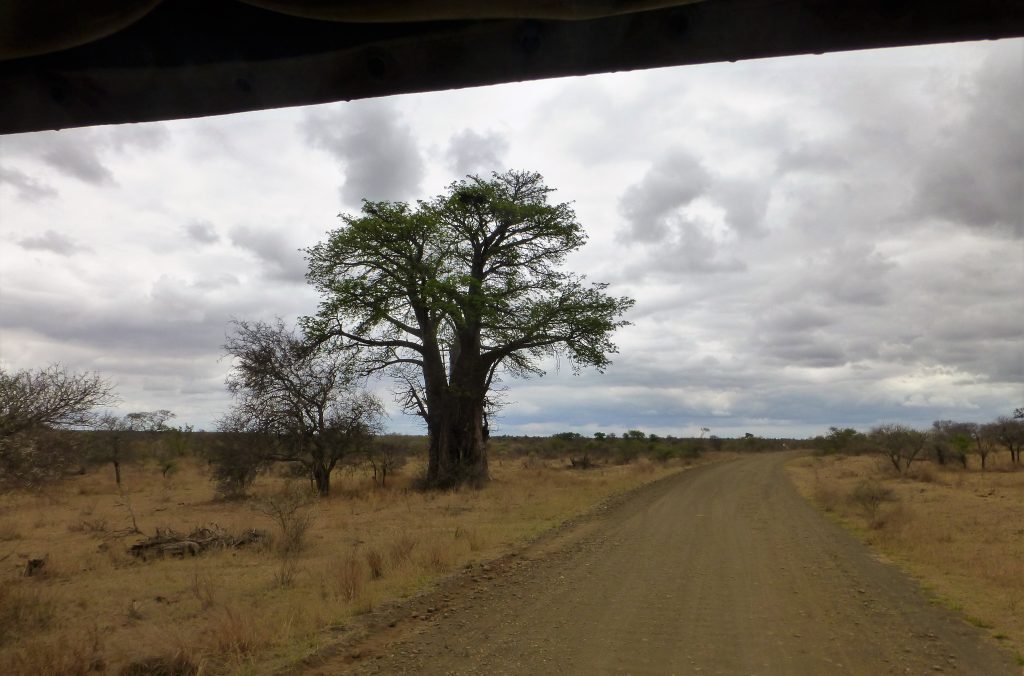
- If you want to see the enormous baobab trees, the Musina Nature Reserve is home to the largest and oldest specimens in South Africa.
Practical Tips for Your Safari in Kruger National Park
How to Get There
From Johannesburg, it’s approximately a five-hour drive to the southern gates of Kruger National Park via the N4 towards Nelspruit. The nearest entry points are Crocodile Bridge Gate and Malelane Gate. You can also fly from Johannesburg to Kruger Mpumalanga International Airport near Nelspruit, or to Hoedspruit Eastgate Airport slightly further north. If you don’t have a car, an organised multi-day safari from Johannesburg is the easiest option — you’ll be picked up, driven around and returned.
When to Go
The best time for a safari in Kruger National Park is the dry season: May through September. Vegetation is thinner, animals congregate around permanent water sources and are much easier to spot. The malaria season runs from September to May — protect yourself well against mosquito bites during those months. The summer months (November to March) are hot and rainy; the park is greener but wildlife spotting is more difficult.
How Long to Stay
Allow at least three to four days for a meaningful visit to Kruger National Park. The park is enormous and no two days are the same. With four days you have time for multiple game drives, a walking safari and a full day inside the national park itself. If you want to add the Panorama Route and Blyde River Canyon, plan for five to six days in this part of South Africa.
Where to Stay
On an organised safari through an operator like Detour Africa, you’ll stay in lodges and reserves bordering the park, such as Tremisana Lodge (next to York Nature Reserve) and Marc’s Treehouse Lodge. If you’re exploring independently, you can stay in one of the park’s own rest camps such as Satara or Skukuza — simple but right in the heart of the wilderness. Private lodges in the Greater Kruger offer a more exclusive experience with off-road game drives and fewer crowds, at a higher price.
What Does a Safari in Kruger National Park Cost?
The trip I booked cost me around €400 at the time — in 2026 you’re looking at roughly €650 for a similar package. Safaris are not cheap, and if you’re travelling solo an organised trip is really the most practical option. You get access to great locations and end up spending a few days with an interesting mix of fellow travellers.
You can book this 3-day Kruger safari in advance — recommended, as spots fill up fast in high season. Less time available? You can also book a 1-day safari in Kruger National Park in advance.
Is Kruger National Park Safe to Visit?
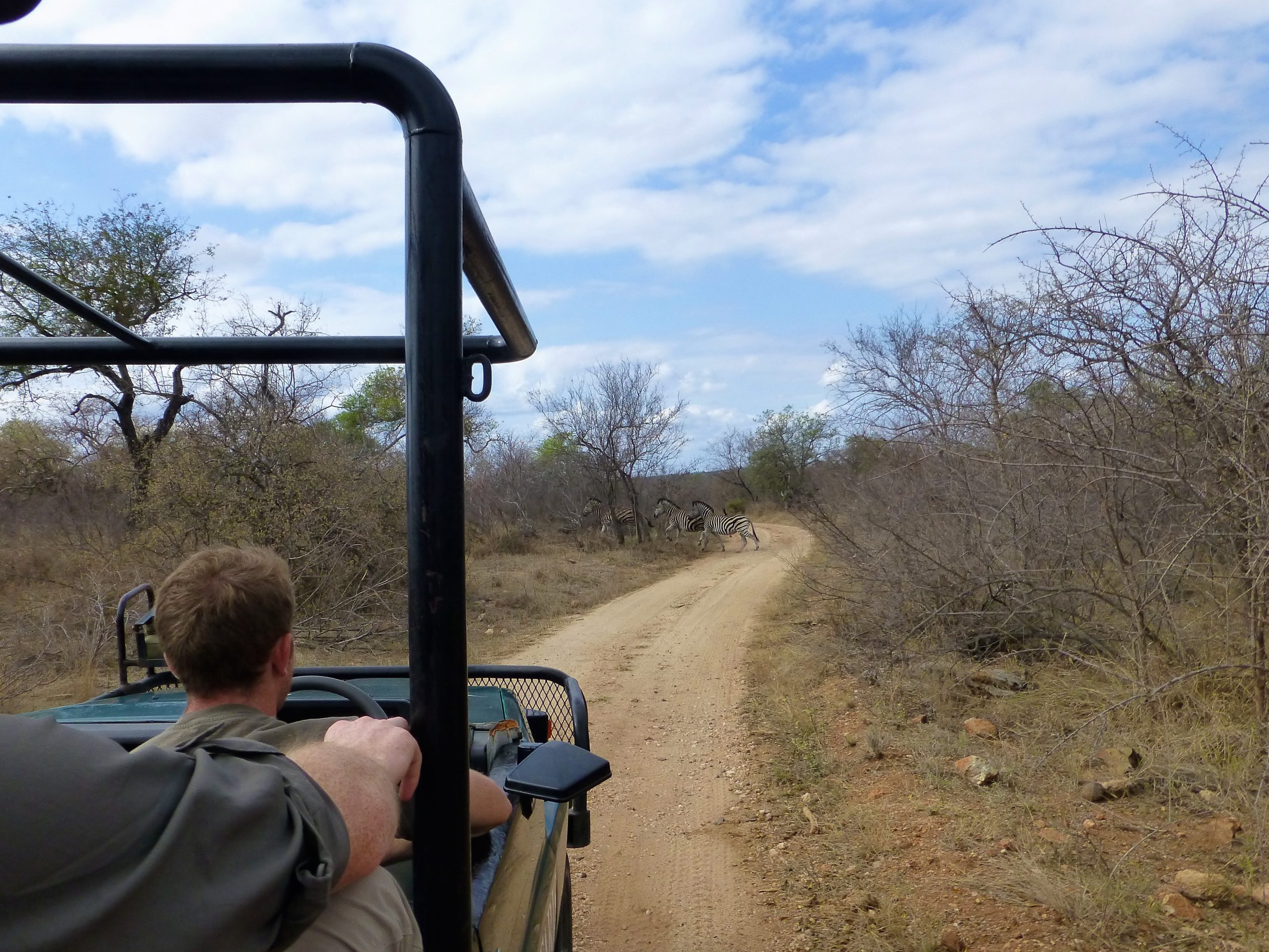
Yes — Kruger National Park is safe to visit. As long as you stay in your vehicle, there is generally nothing to worry about. The moment you step out or move around outside the car, your safety can no longer be guaranteed. Read my tips for a safe safari.
Is There Malaria in Kruger National Park?
Yes, there is a small risk of malaria in Kruger National Park. Protect yourself well against mosquito bites during your visit. The malaria season runs from September through May — be especially alert during those months.
Order your anti-insect spray with 50% DEET #ad — compact size that fits in carry-on luggage.
Also read
- Hiking the Famous Knysna Heads, Featherbed NP – Knysna
- Visiting the Prison on Robben Island – Cape Town
- 3 Day Safari at the Masai Mara – Kenya
- Discover Morocco in 4 days – 3 nights
- Having Dinner with the Locals – Resirest – The Gambia
This article contains affiliate links. If you book or purchase something through one of these links, we may receive a small commission at no extra cost to you.