
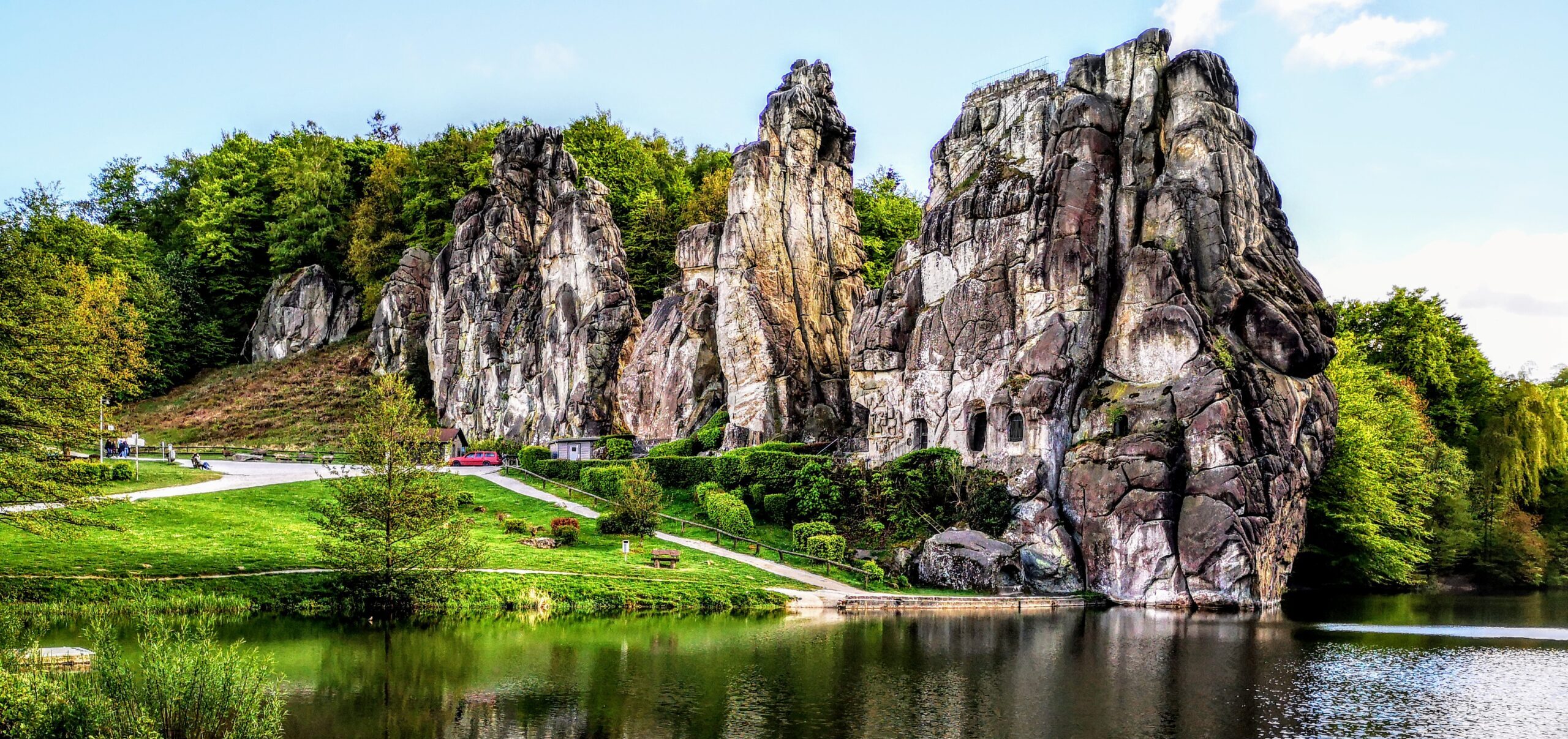
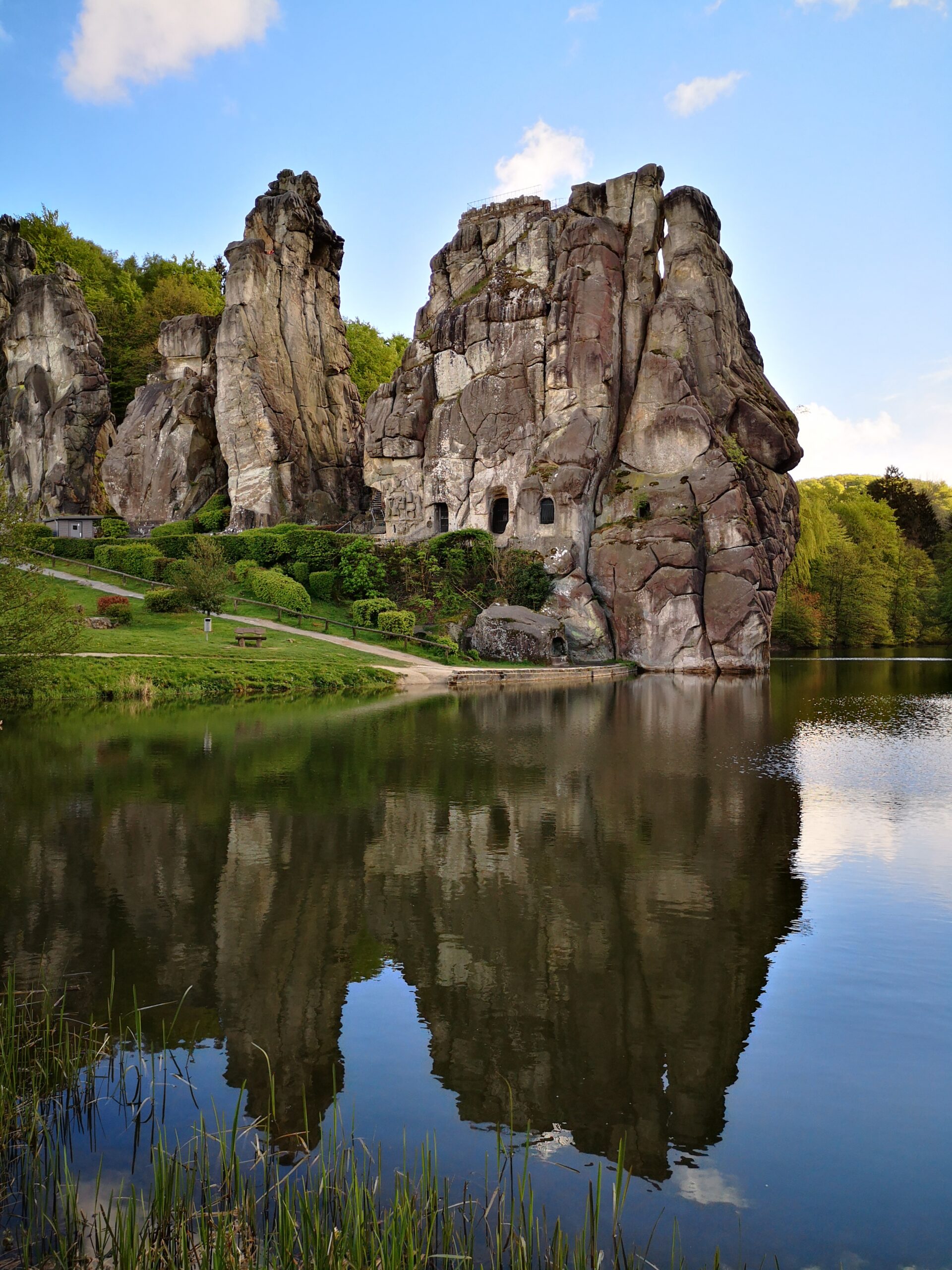
You’re walking through the forest, the landscape gently rolling and green, nothing unusual. And then, suddenly, there they are. The Externsteine: thirteen narrow sandstone pillars shooting abruptly from the earth, up to 40 metres high. No warning, no build-up. Just there.
What are these? Why are they here? And why does this place feel so different from the rest of the Teutoburg Forest?
People have been asking those questions for thousands of years. Nobody has fully answered them. That’s what makes Externsteine Germany one of the most compelling places to visit in this part of Europe. I walked three days on the Hermannshöhen trail right here — and understood immediately why people keep coming back.
Where to find the Externsteine
The Externsteine are located in the Teutoburg Forest near Horn-Bad Meinberg, about 45 km from Bielefeld and 25 km from Paderborn in North Rhine-Westphalia. From the Dutch border, it’s roughly a two-and-a-half-hour drive — close enough for a long weekend.
The car park is at Externsteiner Str. 33, about 350 metres from the rock formation. Parking costs a few euros, but access to the grounds themselves is free.
What are the Externsteine?
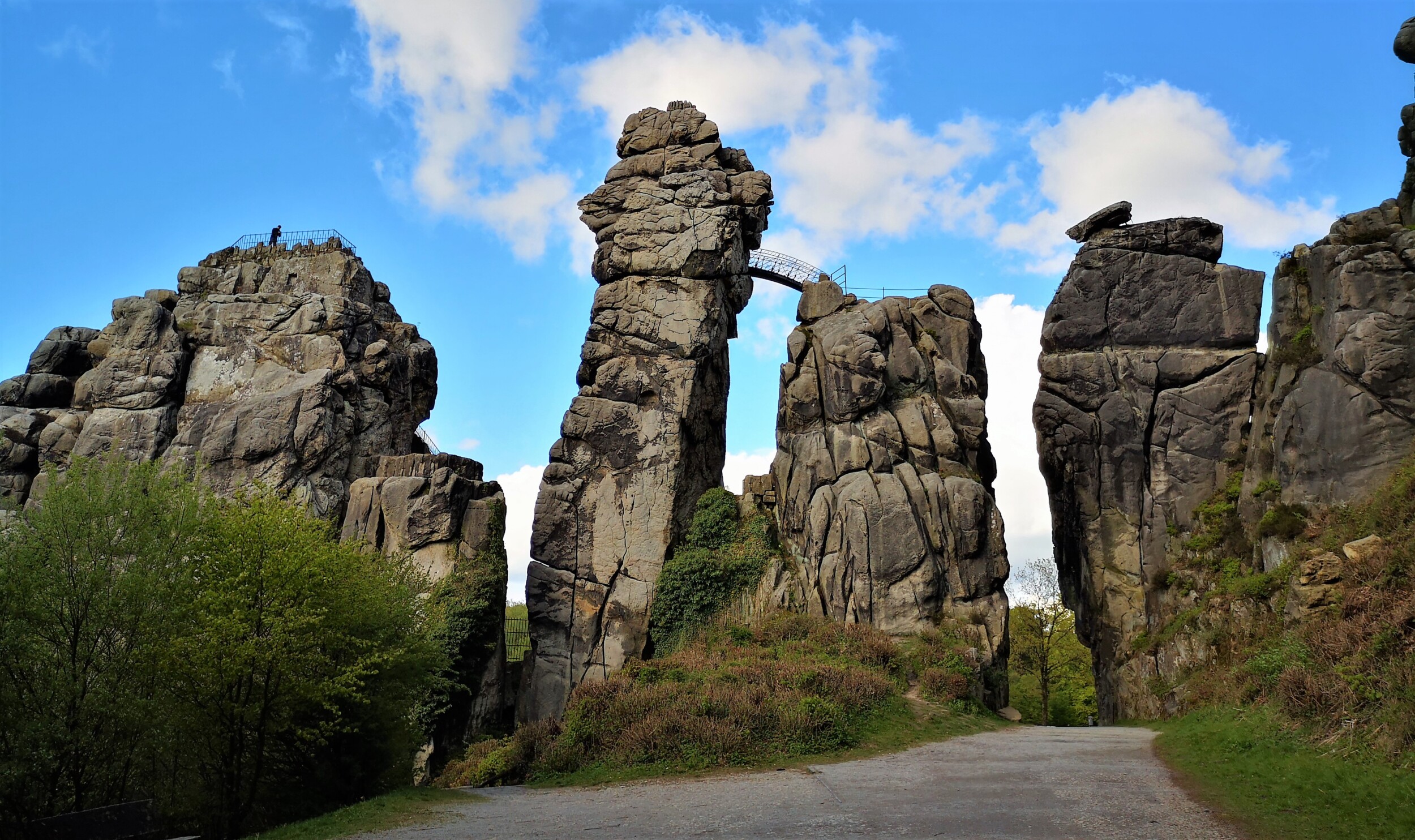
The Externsteine are a sandstone rock formation: thirteen narrow, vertical pillars rising abruptly from the forested hills, up to 40 metres tall. They formed during the Cretaceous period, around 120 million years ago, when this area was covered by a shallow sea. Sand and sediment were compressed into sandstone. Tectonic forces pushed the rock layers upward, and erosion by wind and water gradually shaped the striking forms you see today.
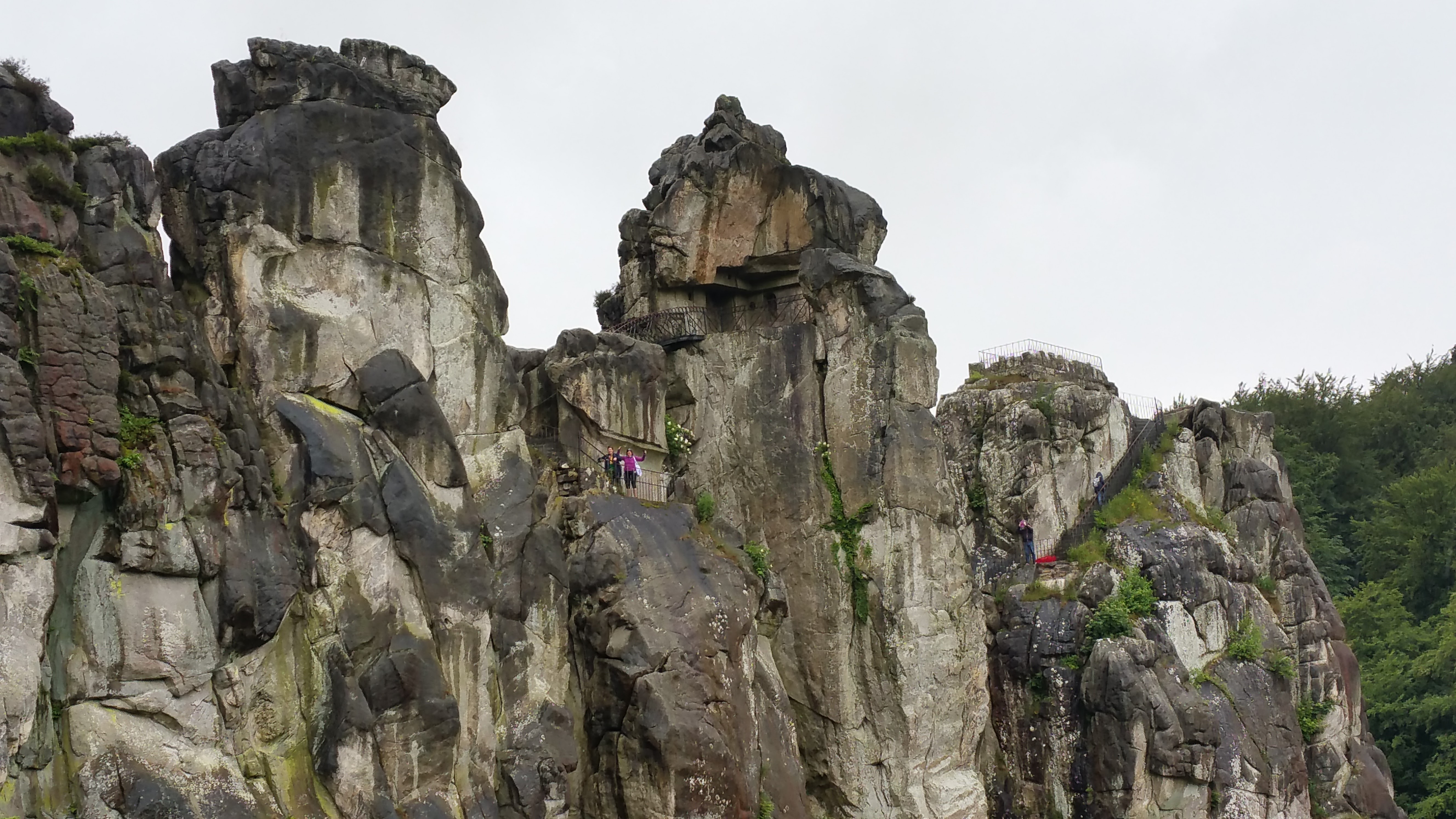
What makes the experience so striking: the surrounding forest hides them completely until you’re almost there. Then they appear in front of you, all at once. My colleagues Chantal and Sandra climbed them when we passed by in 2016. I stood in the rain staring up at them, too surprised to move.
Climbing the Externsteine
To climb the rocks, buy a ticket at the entrance booth next to the stones — around €4 for adults, €2 for children up to 14. You make your way up via steep staircases and through dark chambers carved into the rock. From the top, you have a wide view over a large part of the Teutoburg Forest.
- Climbing is possible from mid-March to early November, daily from 10:00 to 18:00. Want to explore the area without climbing? You can walk the grounds any time, for free.
- Right next to the car park you’ll find a visitor centre with information about the geology and history of the site, and a restaurant for a break.
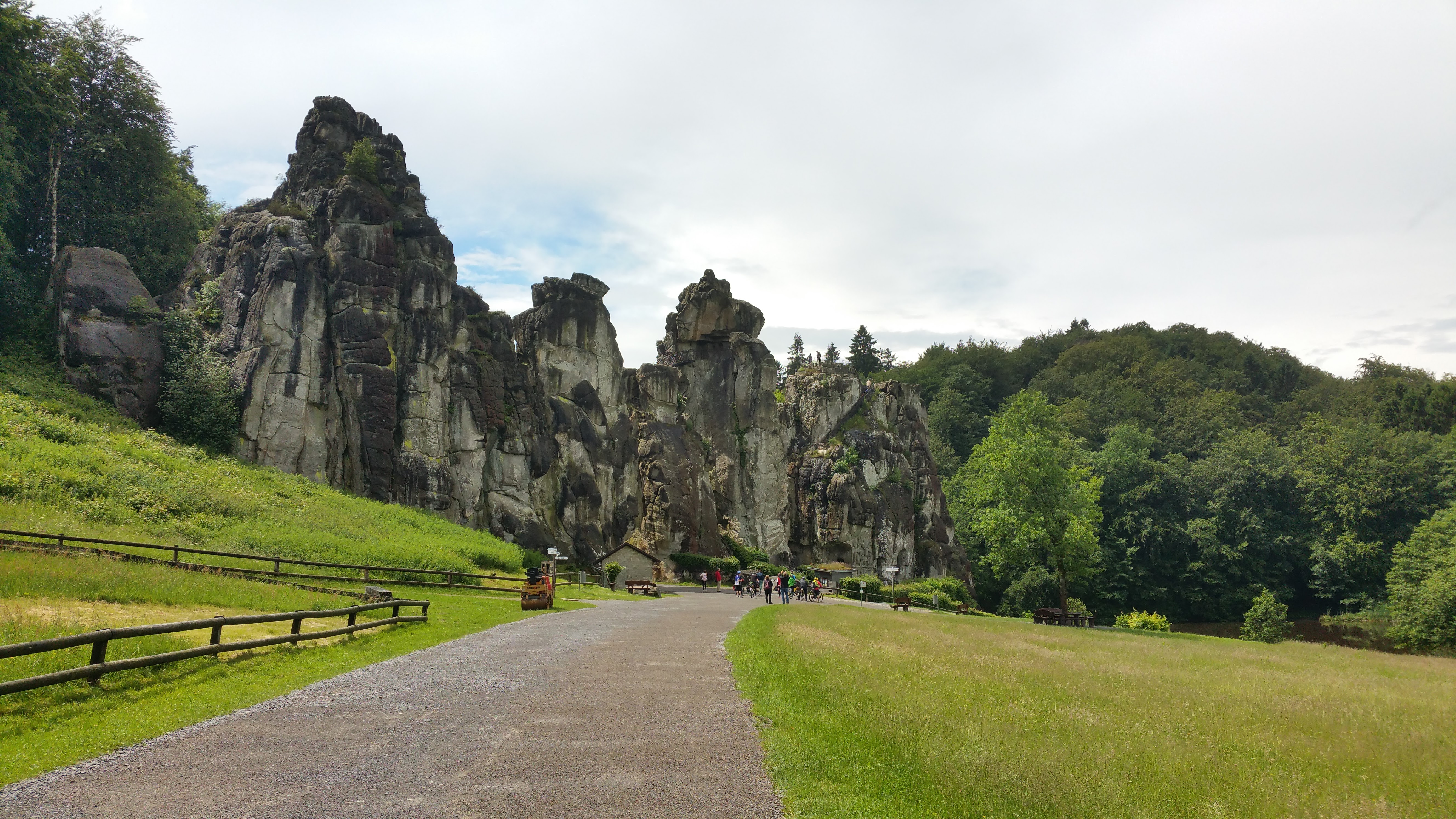
Pagan sanctuary, Christian pilgrimage site or place of power?
The Externsteine have been the subject of debate for centuries. Are they the remains of a Germanic pagan sanctuary? A medieval Christian pilgrimage site? Or a location once built to replicate the Holy City of Jerusalem?
What is certain: people have come here for thousands of years. Stone Age finds prove that humans lived in the area around 10,000 BC. In the Middle Ages, a chapel was carved into the rock and pilgrims made their way here. Around 1150, the Descent from the Cross relief was chiselled into the rock face — considered one of the most significant Romanesque sculptures in all of Northwest Europe.
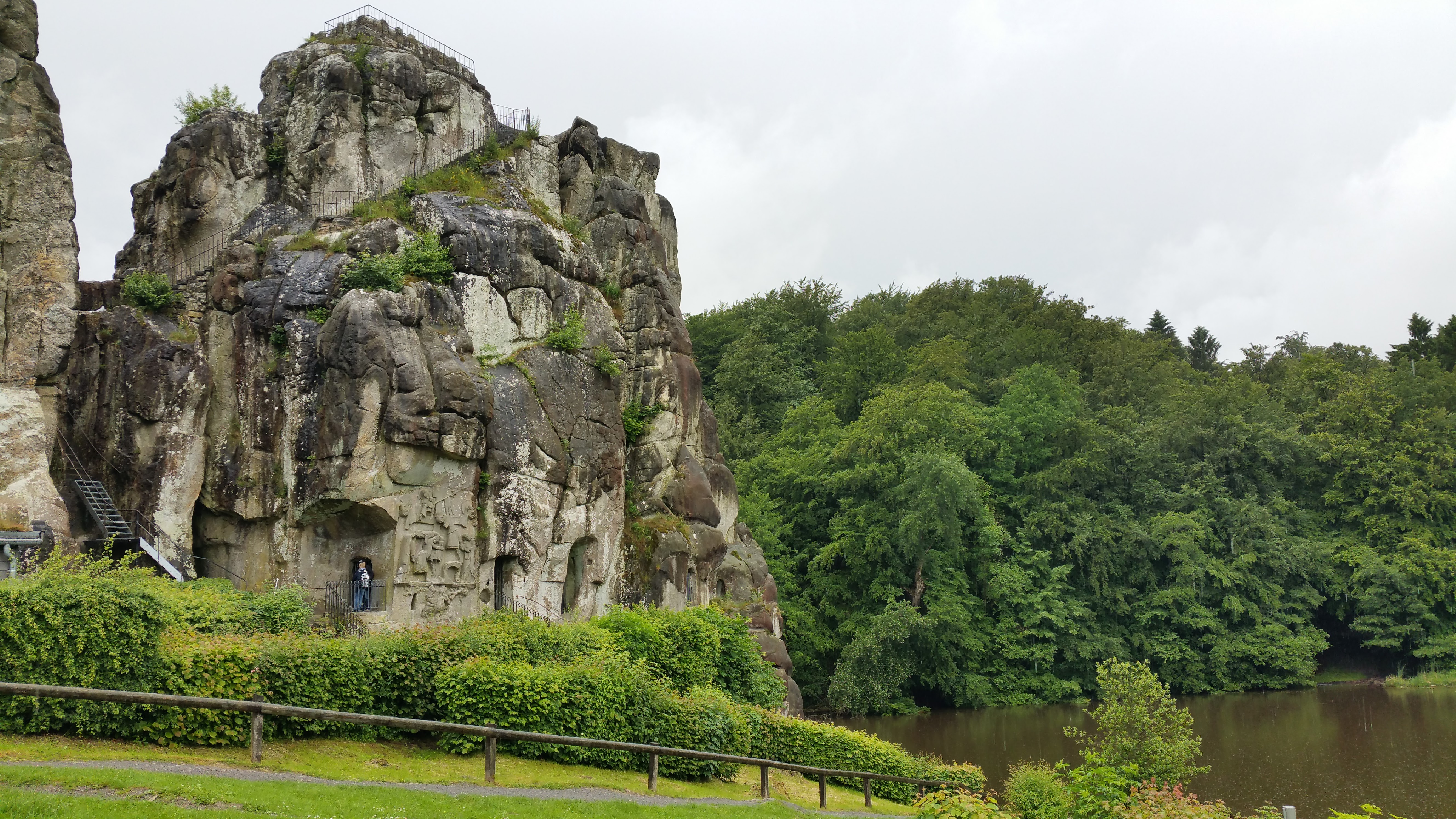
You can still see this relief today on the right side of the main rock. It depicts Jesus being taken down from the cross.
Even today, the site draws unusual gatherings. During Walpurgis Night (1 May) and the summer solstice, esoteric and spiritual groups meet here. Wild camping and alcohol are prohibited on the grounds.
Hiking at the Externsteine
Several short GPS nature trails have been marked out around the rocks, including the Bärenstein Route (2.5 km), which passes the Externsteine twice and takes about an hour and a half. A good option if you want to take in the area without a major effort.
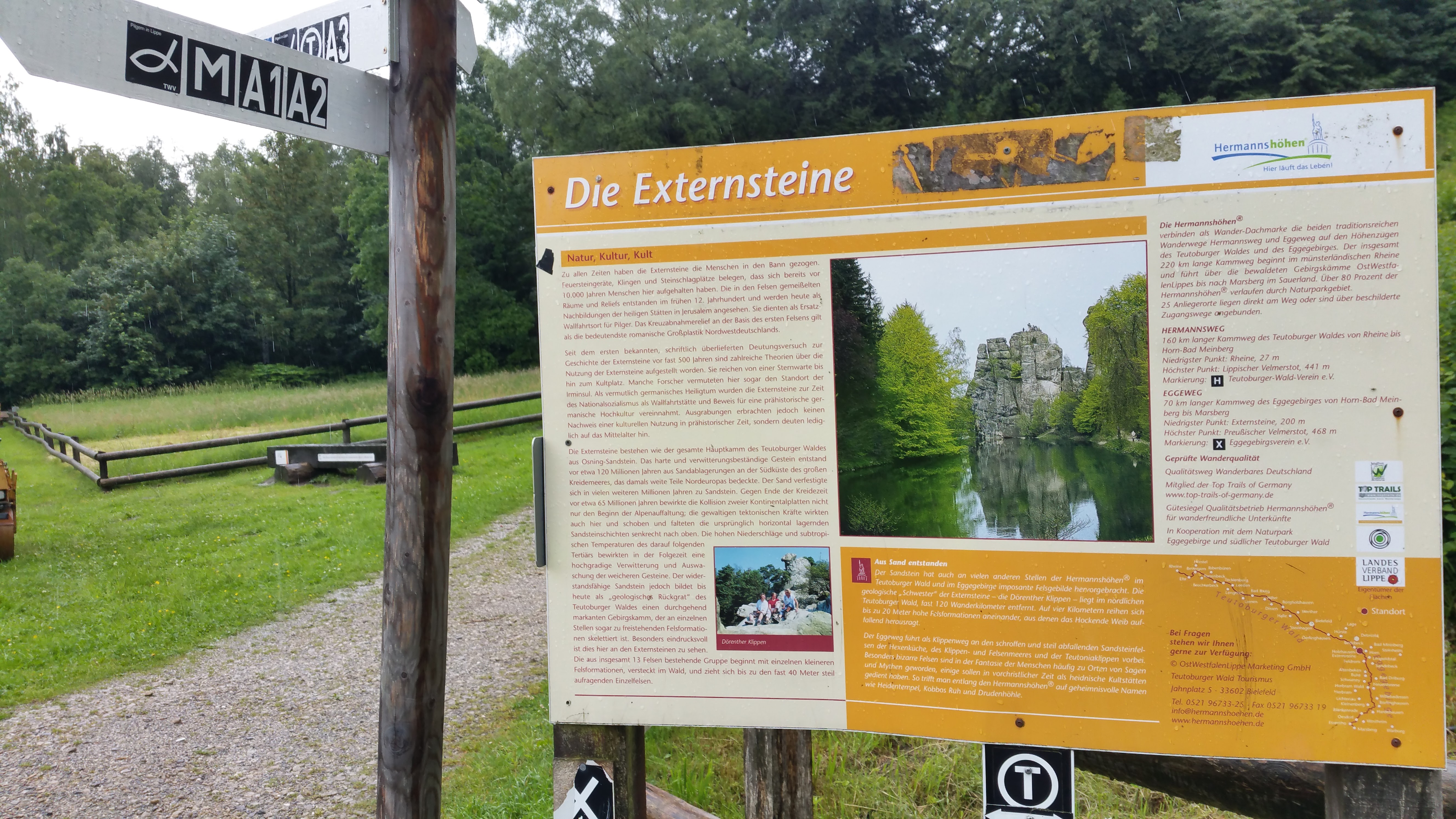
For longer walks, the Hermannshöhen is a 226 km long-distance trail that passes right through here. I walked several days of it myself and loved every one. Part of it — the Hermannsweg — runs 160 km from Rheine to Horn-Bad Meinberg along the wooded ridges of the Teutoburg Forest.
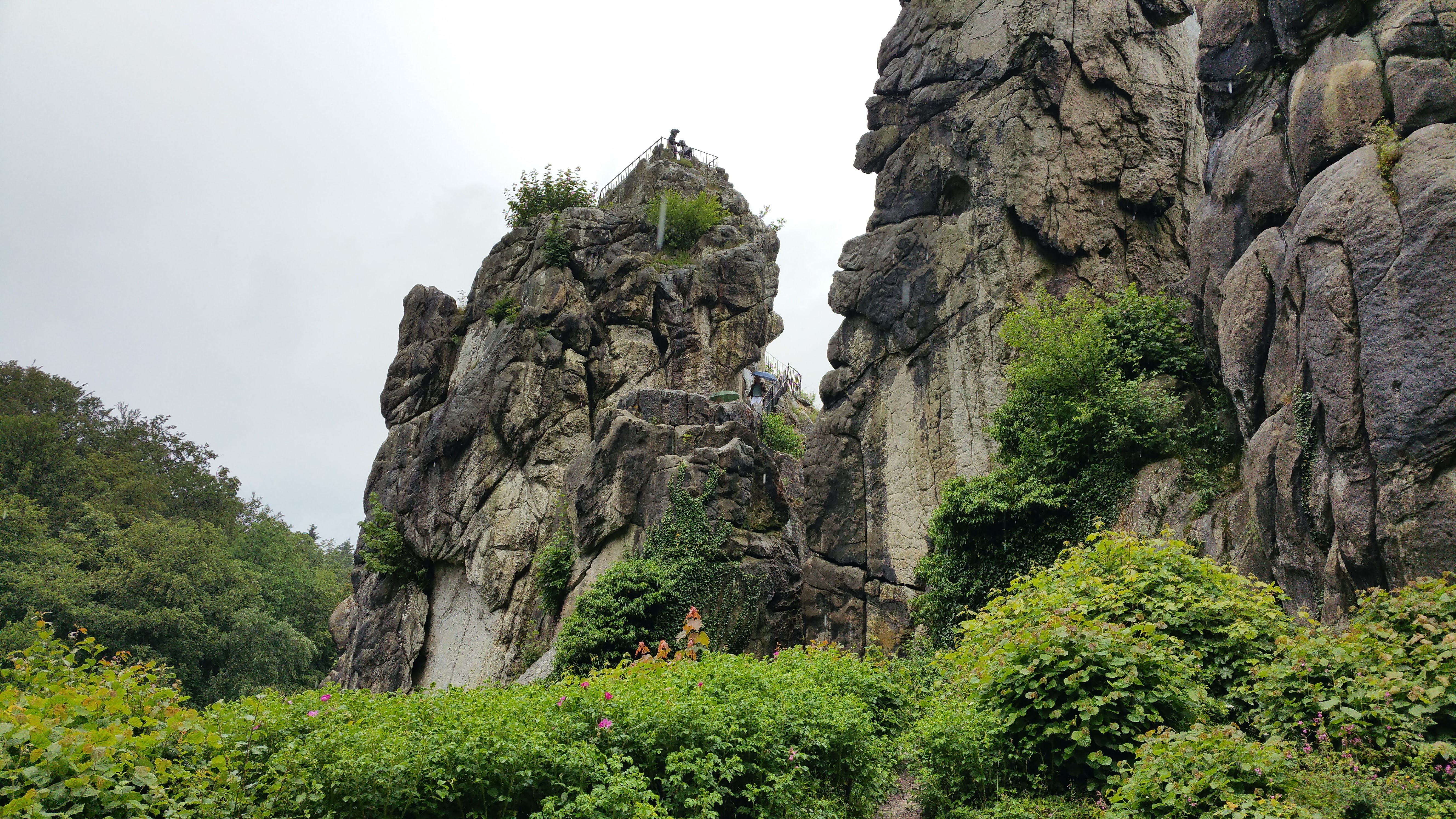
Another option is the Eggeweg: 70 km from Horn-Bad Meinberg to Marsberg. Both routes combine nature, forest walking and cultural-historical highlights along the way.
The Externsteine in Teutoburg Forest
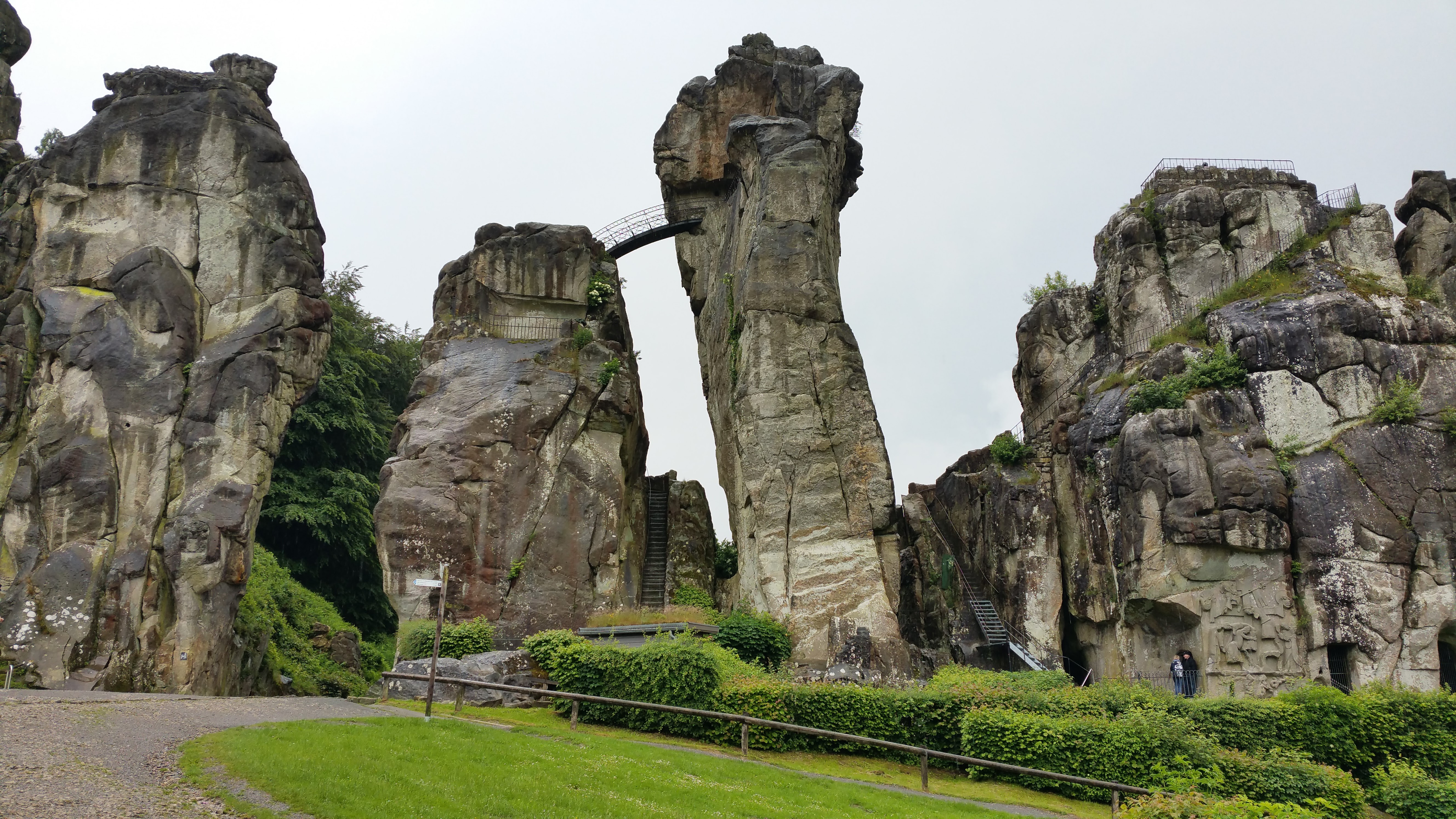
How I first found this place
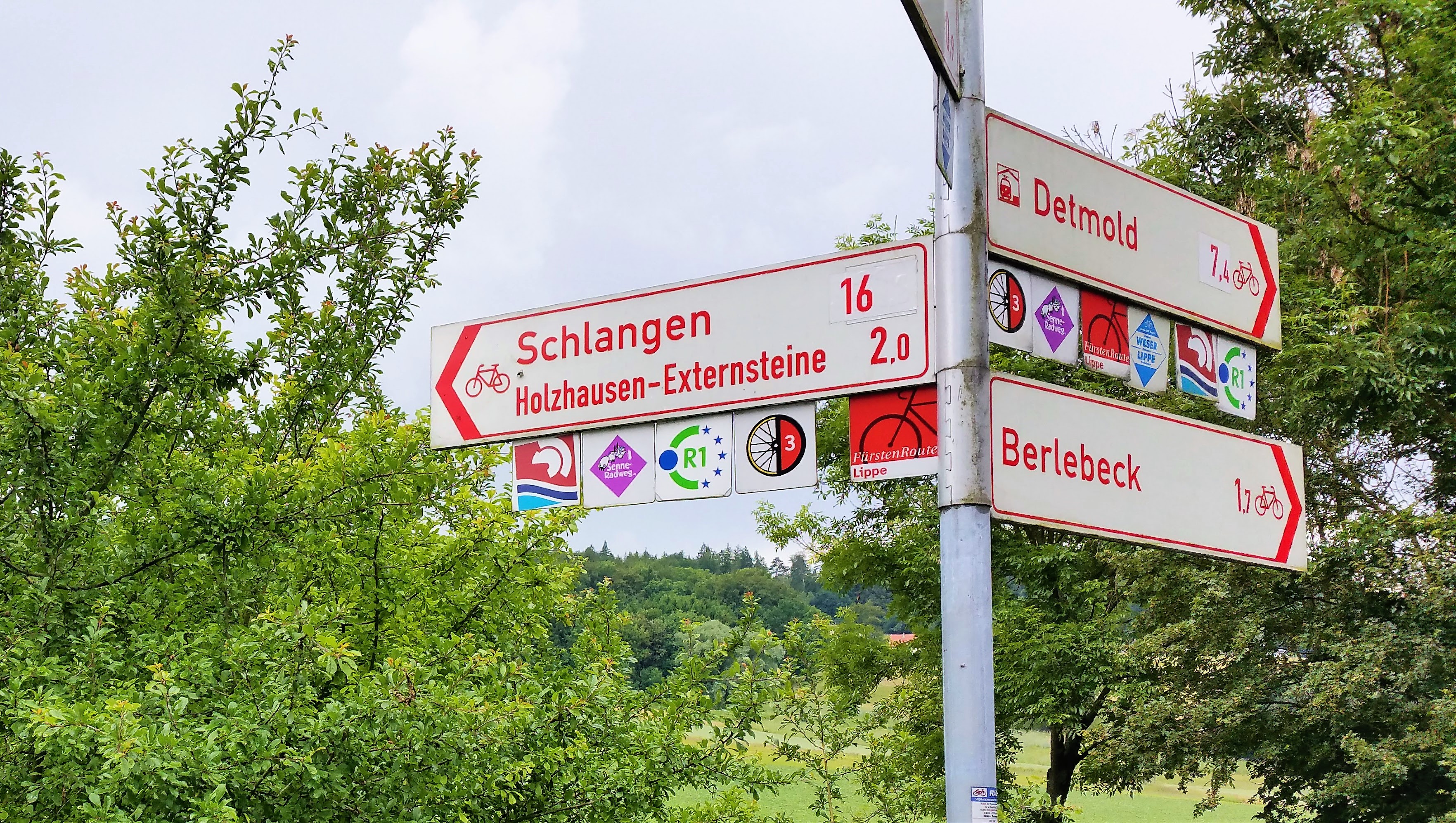
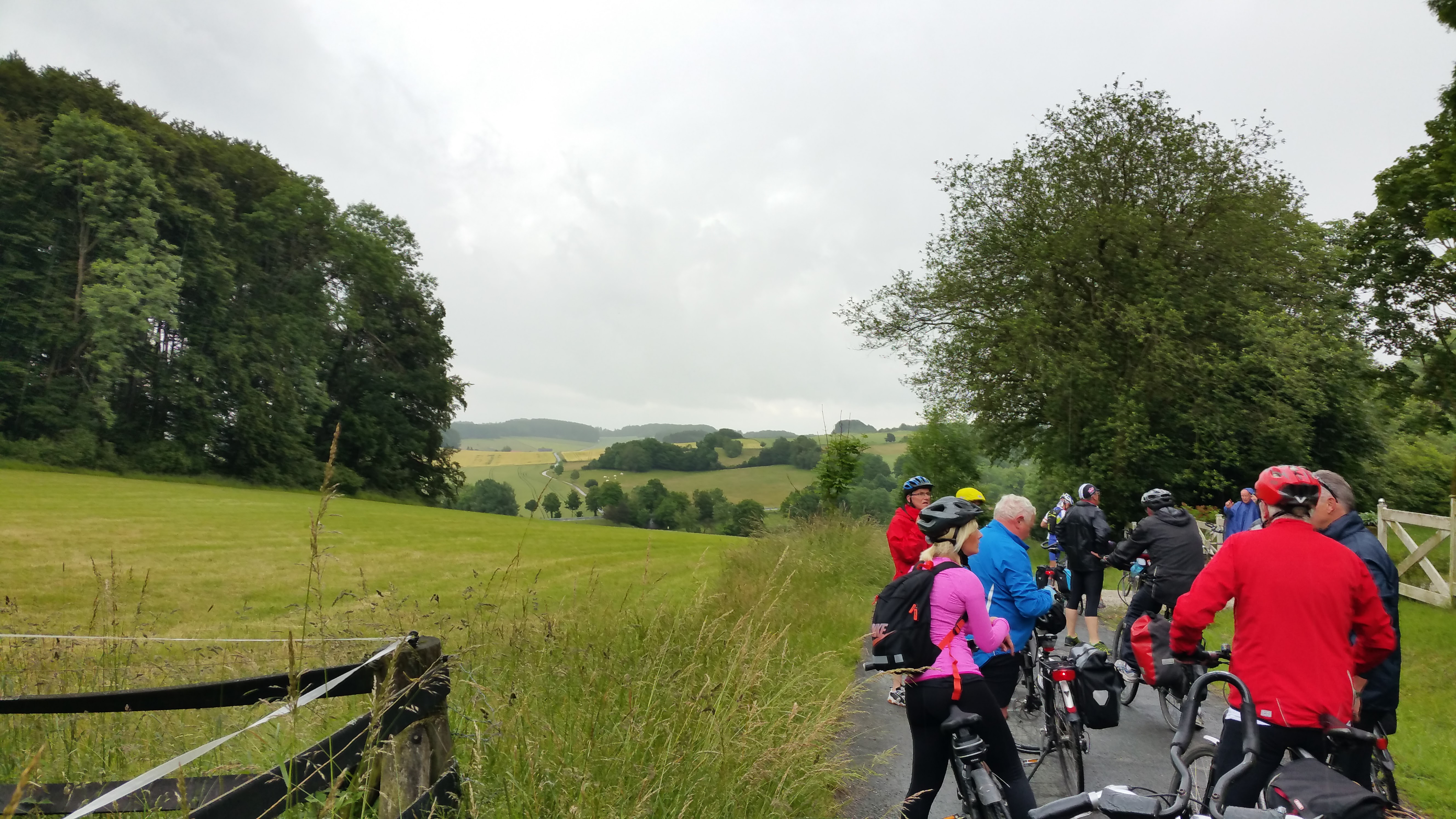
The first time I saw the Externsteine, I was cycling the R1 — a 3,250 km European cycle route running from Boulogne-sur-Mer in France all the way to Saint Petersburg in Russia. Most of the route is signposted. We came across the rocks almost by accident, cycling through the gently rolling landscape around Detmold. And then, out of nowhere, the Externsteine appeared.
On every trip I bring my own refillable water bottle #ad My mission is to cut out single-use plastic, and refilling instead of buying is one of the easiest ways to do that as a traveller. A foldable bag #ad for small purchases also helps reduce unnecessary plastic on the road.
Getting there
The Externsteine are located near Horn-Bad Meinberg in North Rhine-Westphalia, Germany. Navigate to: Externsteiner Str. 33, 32805 Horn-Bad Meinberg. By car from the Dutch border, count on around two hours. On weekends, a tourist bus (line 792) runs from Detmold to the Externsteine.
How long to stay
A visit to the Externsteine itself takes half a day. Combine it with a multi-day hike on the Hermannshöhen or Hermannsweg and you’re easily looking at two to four days. A long weekend from the Netherlands or Belgium is very manageable.
Where to stay
- Paderborn (25 km) – A pleasant city with a well-preserved historic centre. The Galeriehotel sits in a beautiful old building right in the heart of town.
- Bielefeld (50 km) – Staying at the Stiegenberger castle hotel in the centre, opposite the train station, is a memorable experience.
- Detmold (15 km) – The closest town to the Externsteine and a charming base if you’re planning to walk the Hermannshöhen.
- Hamelin (40 km) – Known as the home of the Pied Piper, with a lovely old town worth exploring.
Read also
- Hiking the Rheinsteig: the best stages around Braubach and Koblenz
- Hiking trip around Winterberg, Germany
- Visit Medieval Monschau – Eifel – Germany
- Discover Fortress Muiden – Netherlands
This article contains affiliate links. If you book or purchase something through one of these links, we may receive a small commission at no extra cost to you.